G minor series — 16 Paintings by Arnaud Quercy
ART-SER0016
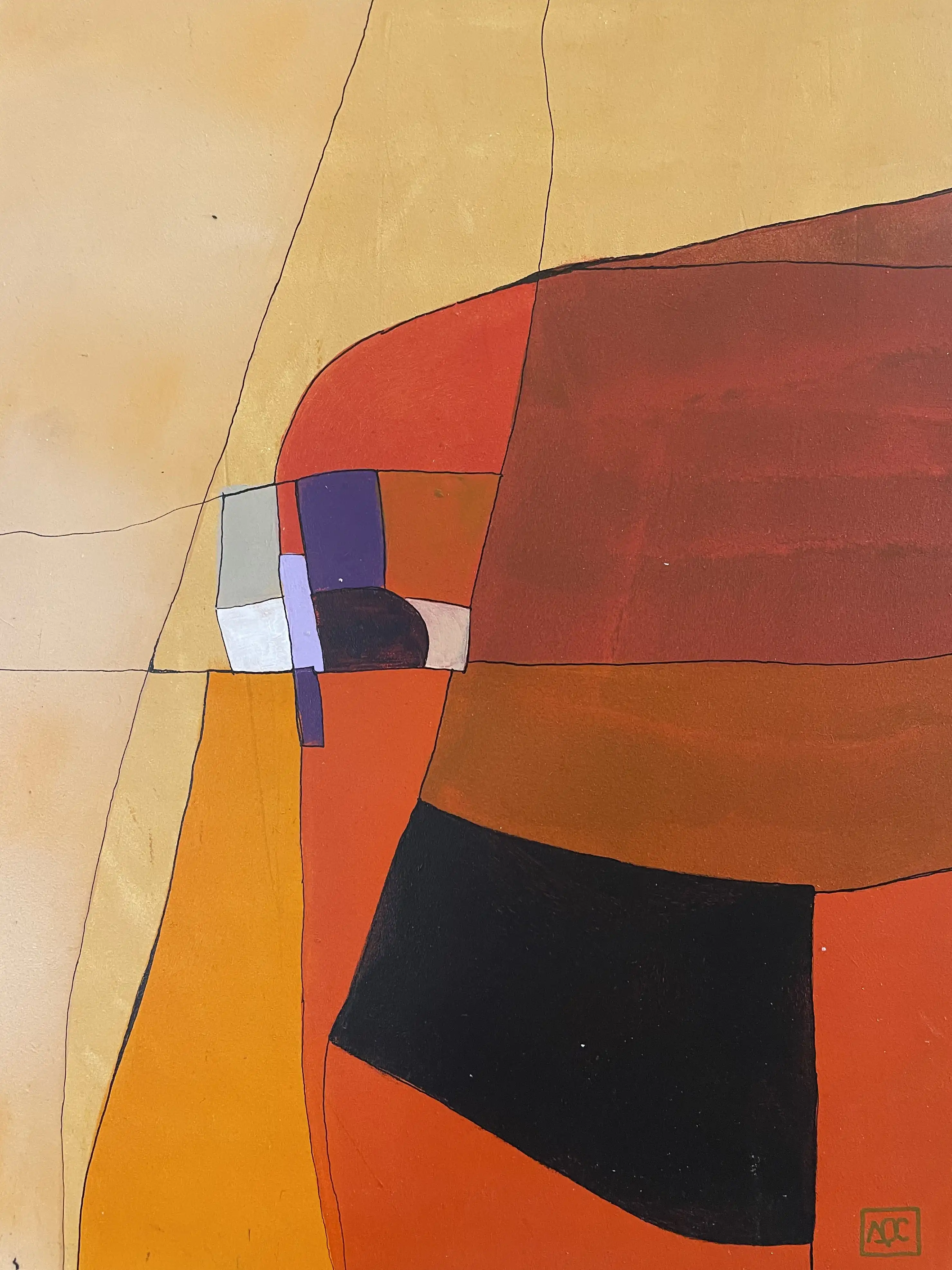
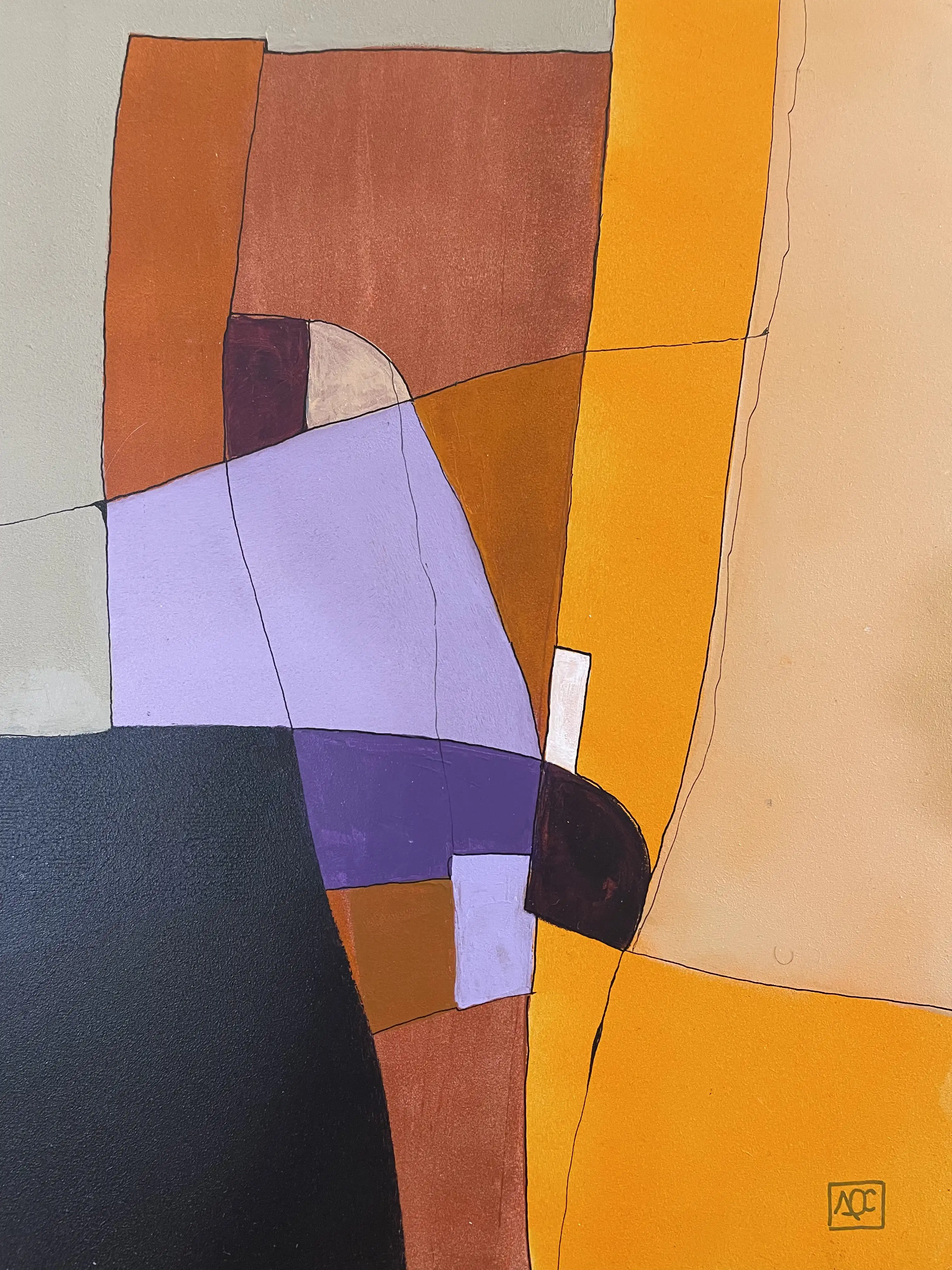
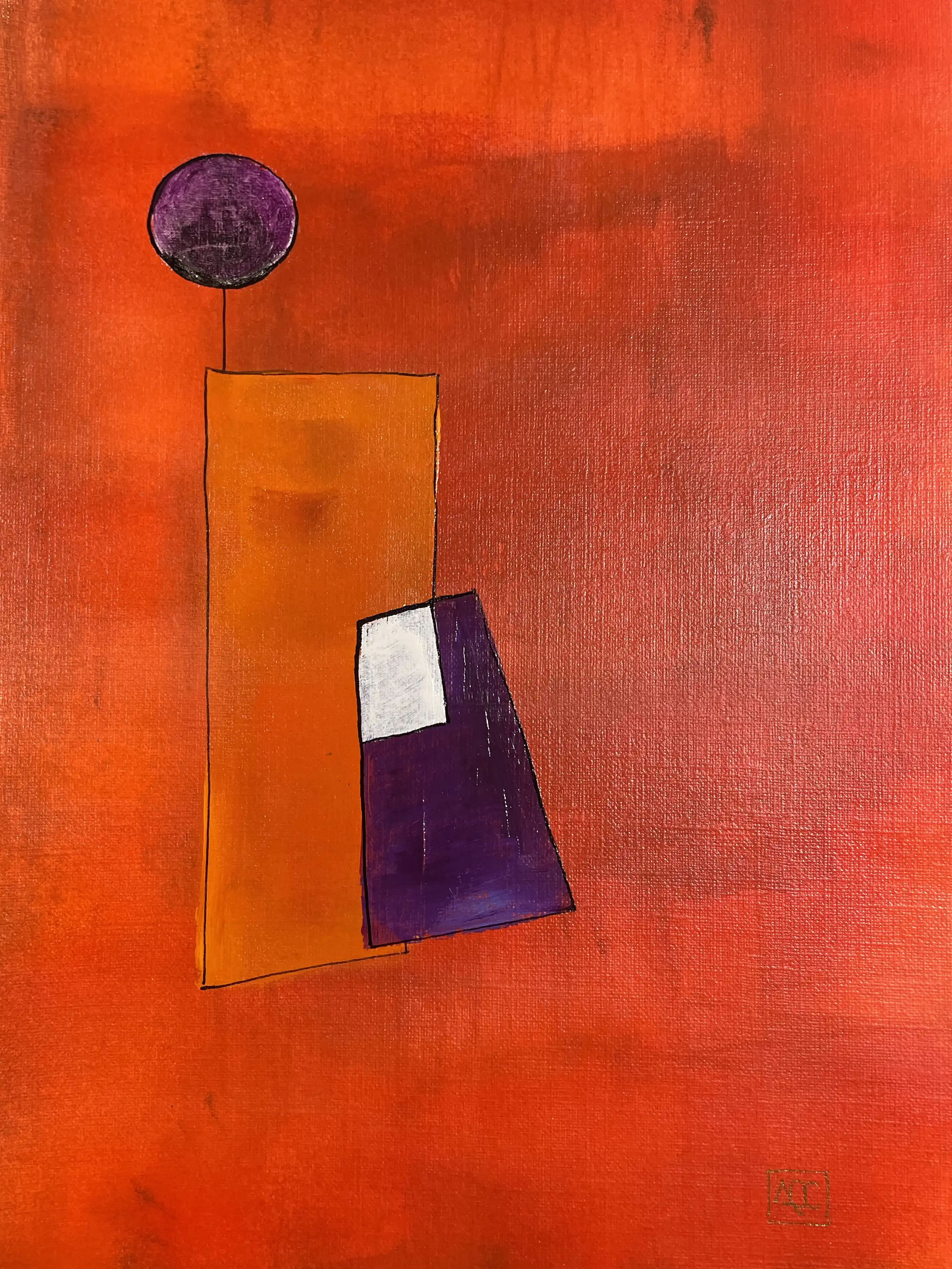
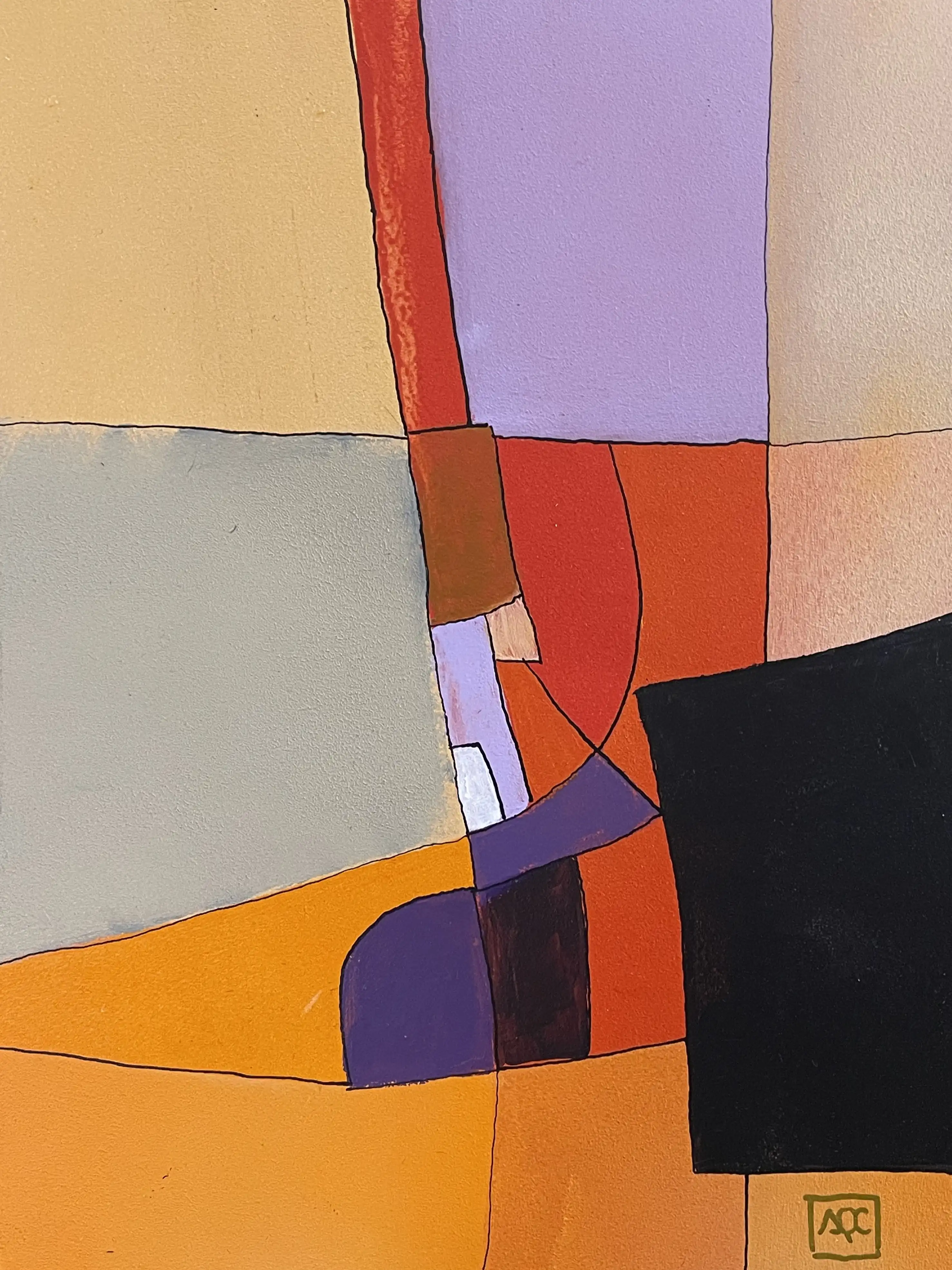
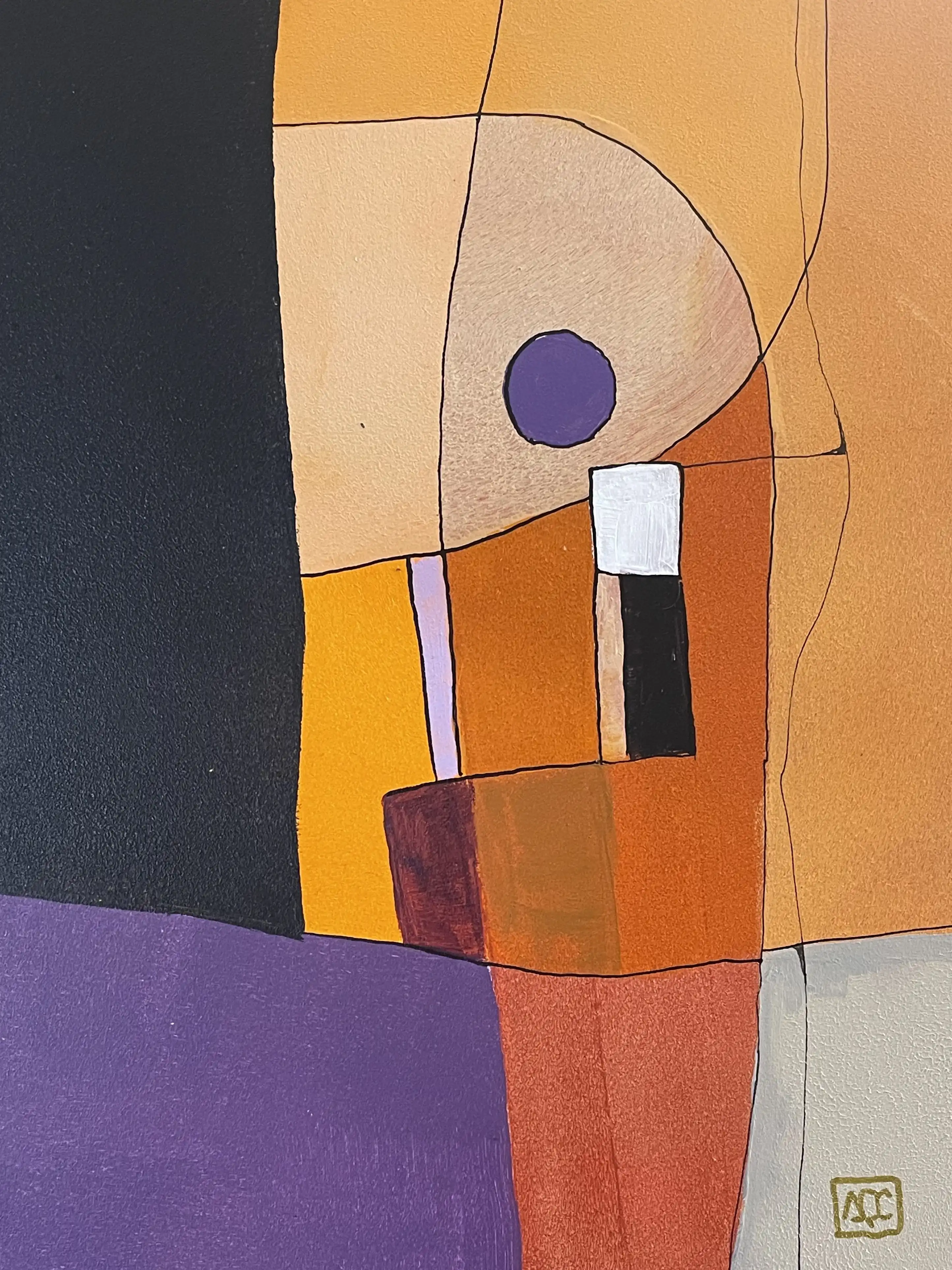
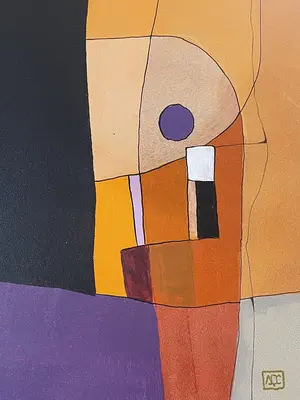
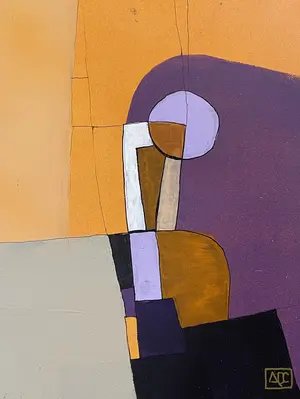
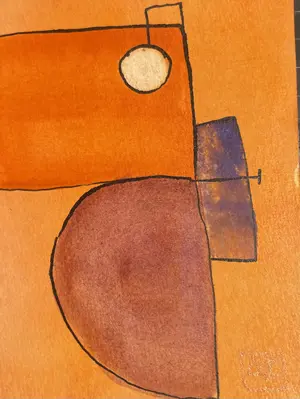
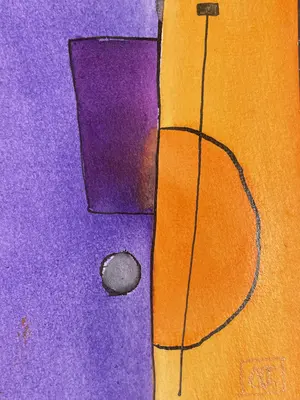
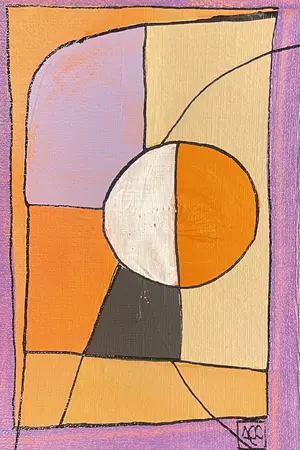
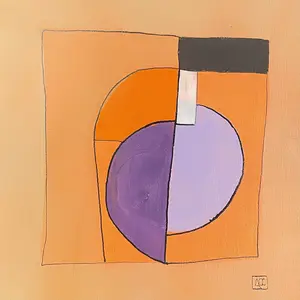
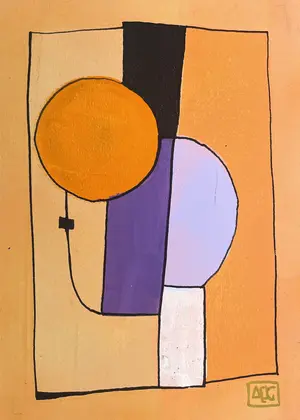
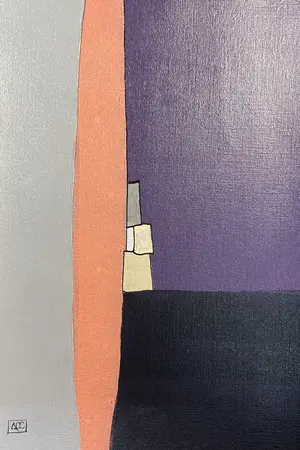
G minor is a series of 16 paintings by Arnaud Quercy, created between 2024 and 2026 in acrylic on paper, acrylic on wood panel, watercolor on paper and watercolor on wood panel. Formats range from 10×15 cm to 30×42 cm. 12 works are held in private collections (Mexico City, Mexico, London, UK, Le Lavandou, France, New York, USA, New-York, USA, West Hollywood, USA, Paris, France, London, United Kingdom). 4 remain available for acquisition at Art Quam Anima, 28 rue du Dragon, Paris. Works presented at: Rencontres au Marché de la Création, Salon d'art contemporain – Metamorphose, Paris and Permanent Collection 2025 – Resonance in Form and 7 more.
G minor carries a particular gravity in Western harmony. Mozart reached for it in his Symphony No. 40, the strings entering with that famous restless urgency; Chopin returned to it in nocturnes and ballades, finding in its two flats a darkness that never fully resolves. The triad — G, Bb, D — is defined by the intrusion of the minor third: Bb's violet, cool and slightly unsettled, pressing against the red-orange warmth of G and the orange of D. It is a chord with an interior conflict built in.
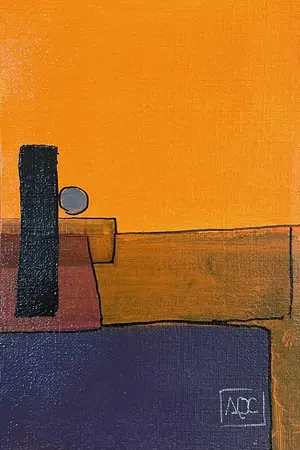
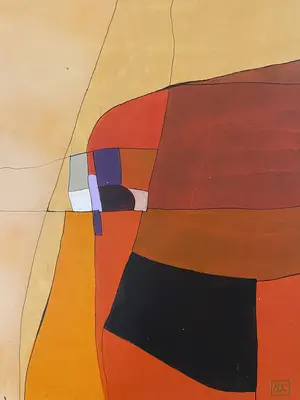
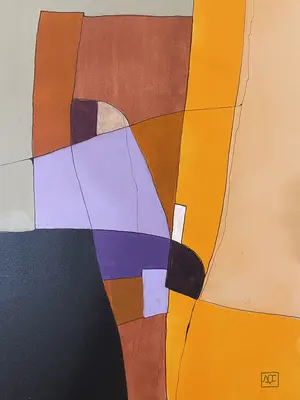
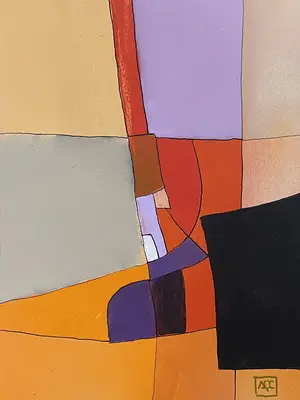
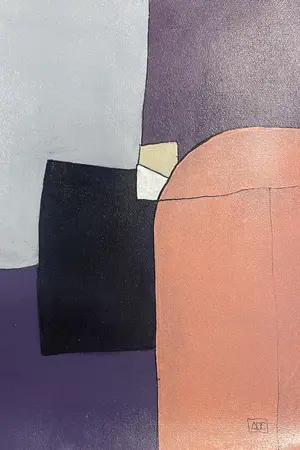
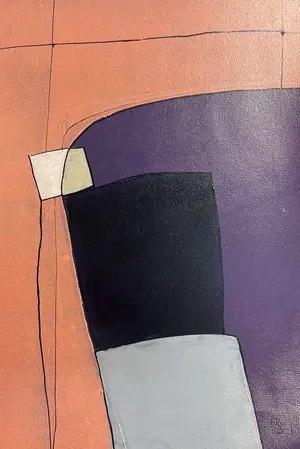
Through harmonic-chromatic, G minor translates as a palette of warm tones interrupted by a persistent cool. G reads as red-orange across all registers, deepening toward near-black in the low bass and brightening to a more saturated tone in the middle range. D carries orange — straightforwardly warm, the fifth providing a bridge between root and third. Bb introduces violet, the chord's distinguishing color: mid-violet in the middle register, pale violet and near-white silver in the extreme upper range, always cooler than its neighbors. The overall temperature is mixed — warm dominated, with violet as a recurring counterweight. In the low register, even the violet darkens toward shadow. Only in the high treble does Bb7 finally shed its weight and approach a pale, silvered brightness.
Arnaud Quercy explores this uneasy balance across sixteen études, painted between 2024 and 2026 in acrylic and watercolor on paper and wood panel. Formats range from intimate studies at 10×15 cm to larger works at 30×42 cm. The dominant character is slow and restrained: most variations are played Lent, at a quiet mp, with legato touch. The bell arch is the series' primary contour — low bass, rising through the chord's body, cresting somewhere in the violet upper range, then returning — and triple meter provides the underlying pulse for a majority of the works. A smaller number move in walking time, their four-beat tread lending a steadier, more deliberate quality. The note count ranges from three to nine, the phrase spans from a single compressed octave to nearly seven.
Three études mark the series' extremes. Variation 3 — the largest work, 30×42 cm on wood panel — takes each chord tone twice at different heights: G1 and G3/G4 anchoring the bass, D5 bridging the middle, and Bb6/Bb7 crowning the upper field. The arc is a continuous brightening, from near-black root to near-white silver at the crest. At the other extreme, Variation 10 compresses the chord into a single octave: D4, Bb4, D5, the root entirely absent, the bell shape reduced to what the artist describes as "a single inhalation held without movement" — an almost featureless field of warm intermediate color where the arc exists only as a formal trace. Variation 14 stands entirely apart: the series' sole Animé study, played at mf, nine tones ascending in a waltz that turns quickly. Four Bb's climb through the violet family in consecutive stages from near-black to pale, three G's distribute the red-orange across the phrase — the chord's familiar materials deployed at an unaccustomed pace, the series' characteristic stillness broken by a single decisive rupture.
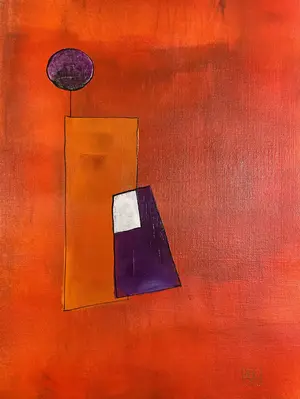
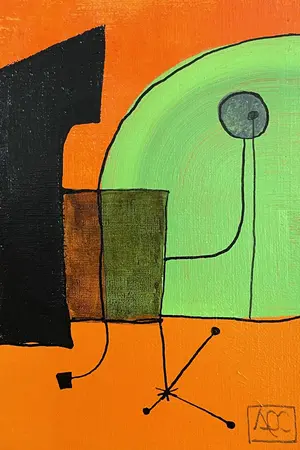
On the canvas, G minor presents as a three-way conversation between warmth and coolness. The red-orange of G anchors the bottom of each painting in darkness — G1 and G2 recurring throughout as a near-black foundation that the phrase must rise from. Above this foundation, the orange of D appears as a warm middle body, the chord's most straightforwardly luminous tone. Then violet arrives, the Bb tones carrying a coolness that neither conflicts with nor fully surrenders to the warmth surrounding them. In the works that reach Bb7, this cool tone finally opens into pale silver near-light. In the more compressed études, the violet stays in its mid-register, hovering. The visual rhythm of the series comes from watching the same three colors renegotiate their proportions across sixteen variations — sometimes shadow-heavy, sometimes luminous, sometimes held in an almost uniform midtone field.
G minor is a chord that lives between resolution and restlessness. Sixteen variations test every configuration of its three tones: the darkness of deep bass, the compression of a single octave, the nine-tone density of the series' one fast study, the long slow climb to a near-white Bb7 that arrives but does not quite settle. Several of these paintings have found their way to collections in Mexico City, London, and across the United States — the chord's traveling tension carried far from where it began, in collections that will hold it as long as they choose.
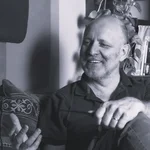
Arnaud Quercy is a Parisian artist working across painting, music, and sculpture. His practice is grounded in Ideamorphism — the principle that a work of art does not carry meaning, but triggers it. Each piece is engineered to diffract differently through each person who encounters it.
He creates and exhibits at Art Quam Anima, his gallery-atelier at 28 rue du Dragon, Saint-Germain-des-Prés, Paris.
Works — G minor
Related hubs
- Collection: Harmonic Crossing
Exhibitions 10
- Rencontres au Marché de la Création (2024-04-23 → 2024-12-31, Marché de la Création – Paris Montparnasse, Paris)
- Salon d'art contemporain – Metamorphose, Paris (2024-12-26 → 2025-01-05, Halle des Blancs Manteaux, Paris)
- Permanent Collection 2025 – Resonance in Form (2025-01-01 → 2025-12-31, arnaudquercy.art, Paris)
- Paris Studio Visit (2025-02-18 → 2025-02-18, Artist's Studio, Paris)
- Marché d'Art Contemporain – Seine Port (2025-05-17 → 2025-05-17, MAC Seine-Port, Seine-Port)
- Nuit des Artistes, St Germain-en-Laye, France (2025-05-24 → 2025-05-24, La Nuit des Artistes, Saint-Germain-en-Laye)
- Marché de l'Art de Saint-Germain-en-Laye, 17ème édition – France (2025-06-14 → 2025-06-14, Marché de l'Art, Saint-Germain-en-Laye)
- Through the Aperture — Research on Harmony (2026-03-09 → 2026-04-30, Art Quam Anima, Paris)
- Salon d'art contemporain – Metamorphose 2025–2026, Paris (2025-12-26 → 2026-01-04, Halle des Blancs Manteaux, Paris)
- Art Quam Anima – Pre-opening (2026-01-31 → 2026-02-28, Art Quam Anima, Paris)
Other series in this collection 35
Documented at 1
Catalogue raisonné entries 16
- G minor - Research on Harmony
- G minor - Research on Harmony - Variation 1
- G minor - Research on Harmony - Variation 2
- G Minor - Research on Harmony - Variation 3
- G Minor - Research on Harmony - Variation 4
- G Minor - Research on Harmony - Variation 5
- G Minor - Research on Harmony - Variation 6
- G Minor - Research on Harmony - Variation 7
- G Minor - Research on Harmony - Variation 10
- G Minor - Research on Harmony - Variation 8
- G Minor - Research on Harmony - Variations 11
- G Minor - Research on Harmony - Variations 12
- G Minor - Research on Harmony - Variations 13
- G Minor - Research on Harmony - Variations 14
- G Minor - Research on Harmony - Variations 15
- G Minor - Research on harmony - Variation 16