B minor series — 11 Paintings by Arnaud Quercy
ART-SER0024
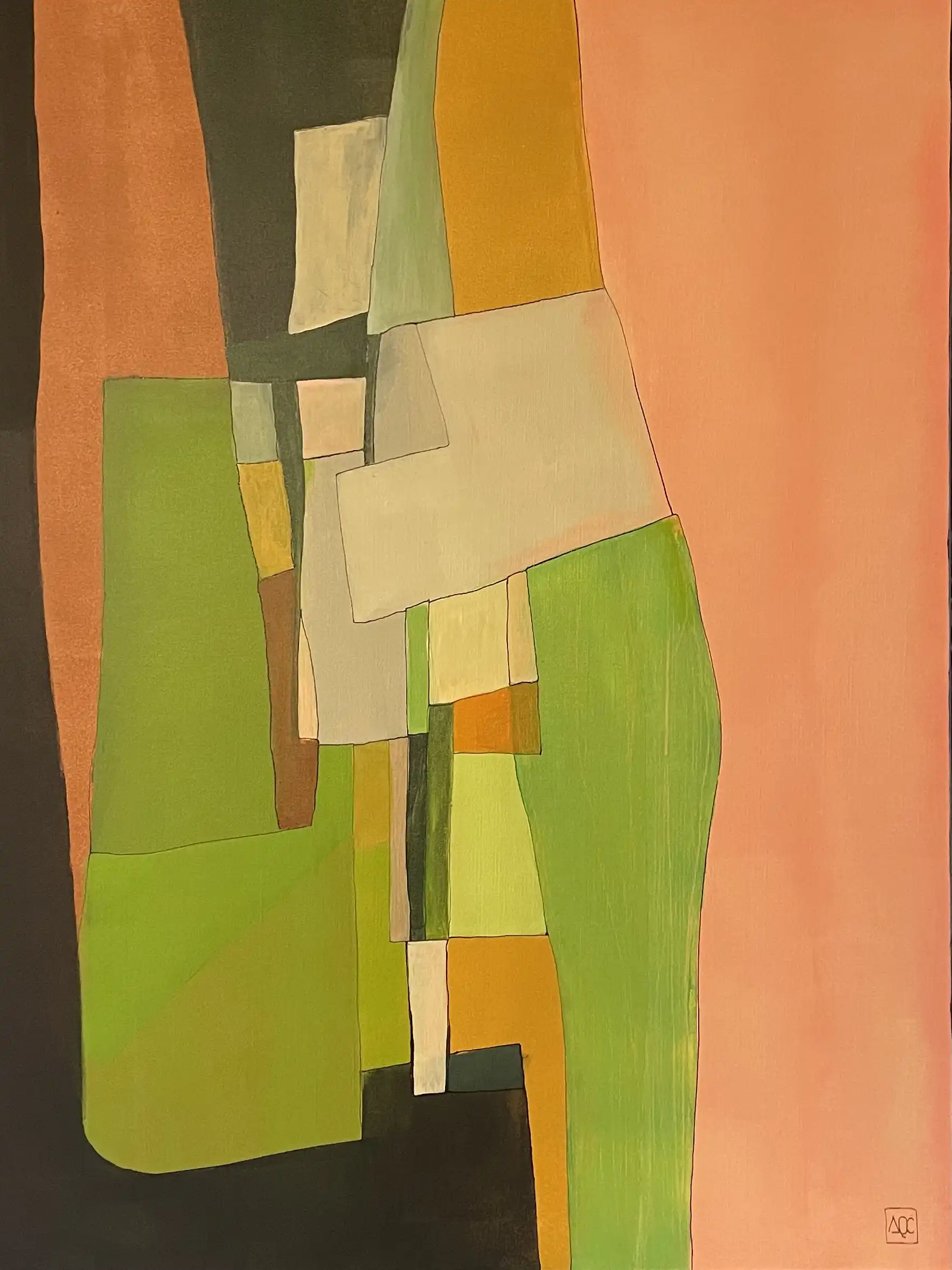
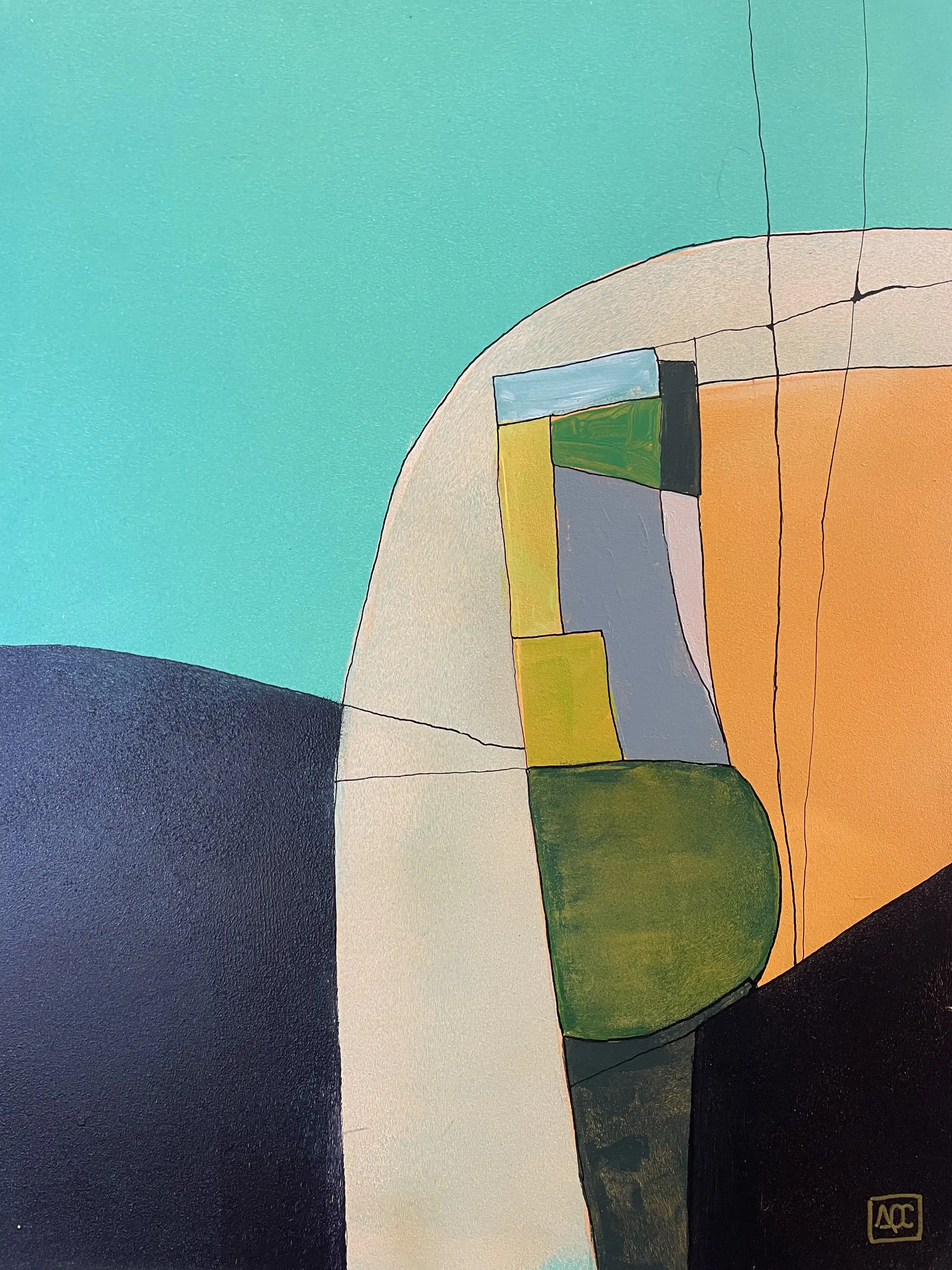
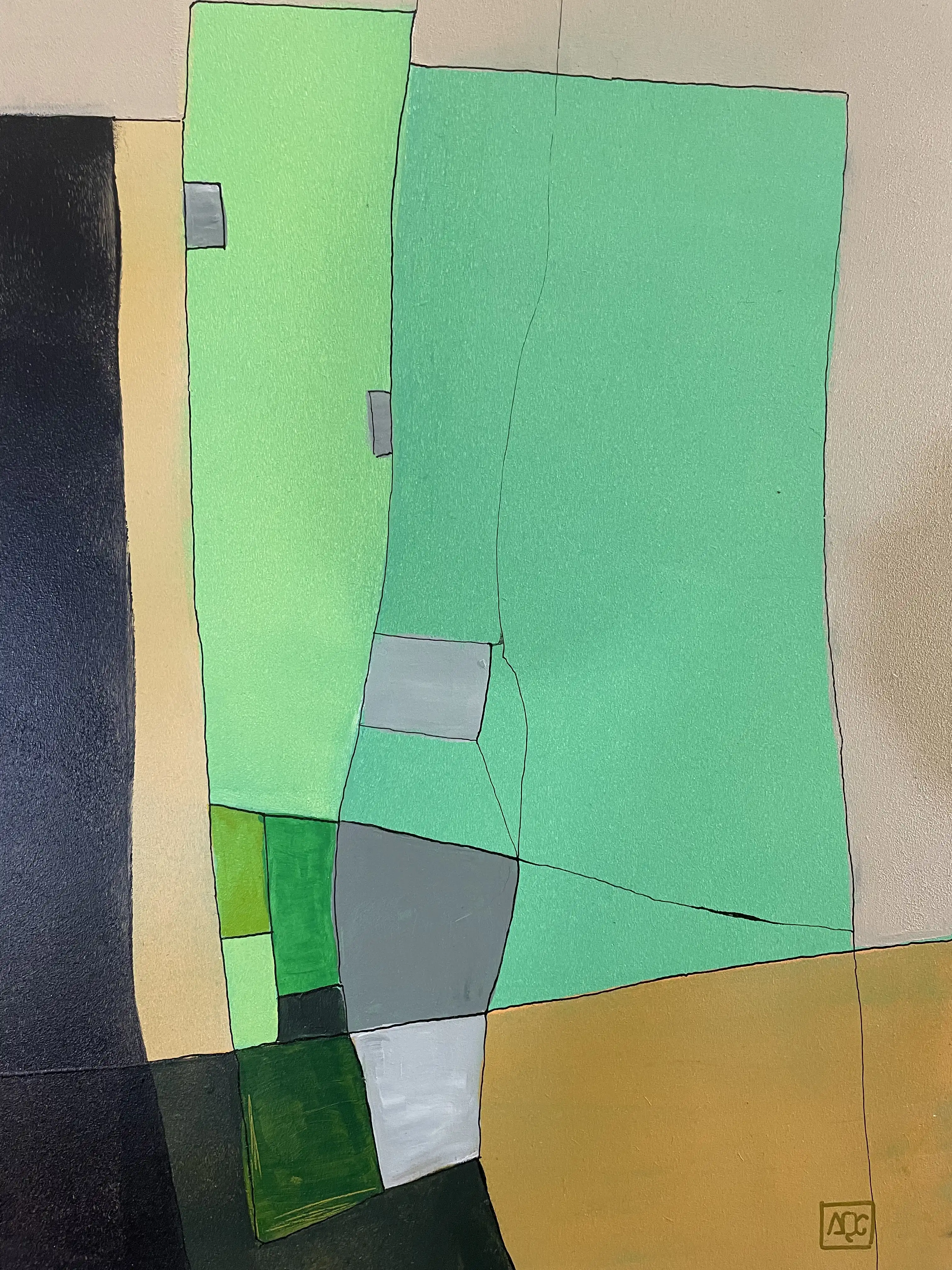
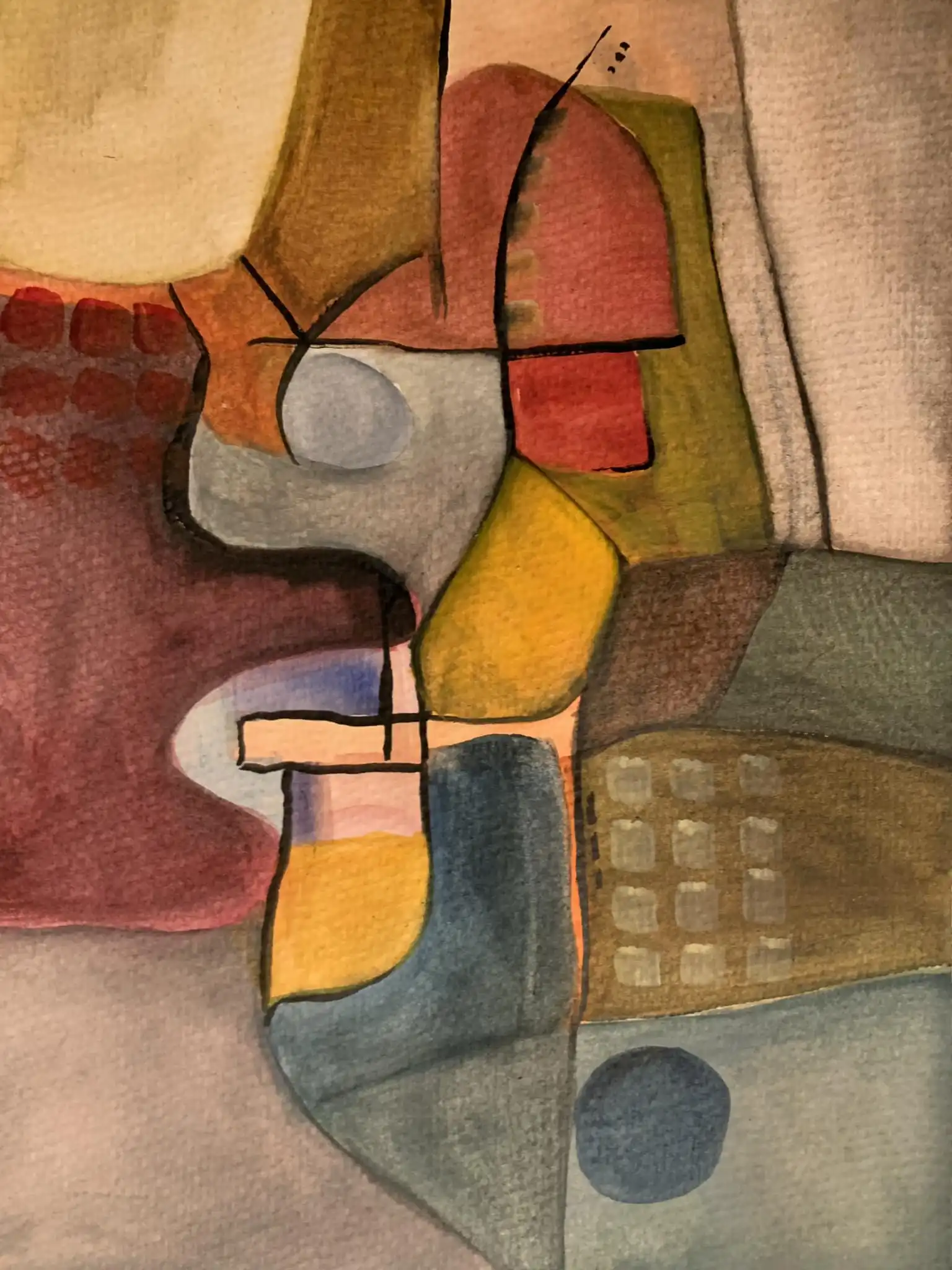
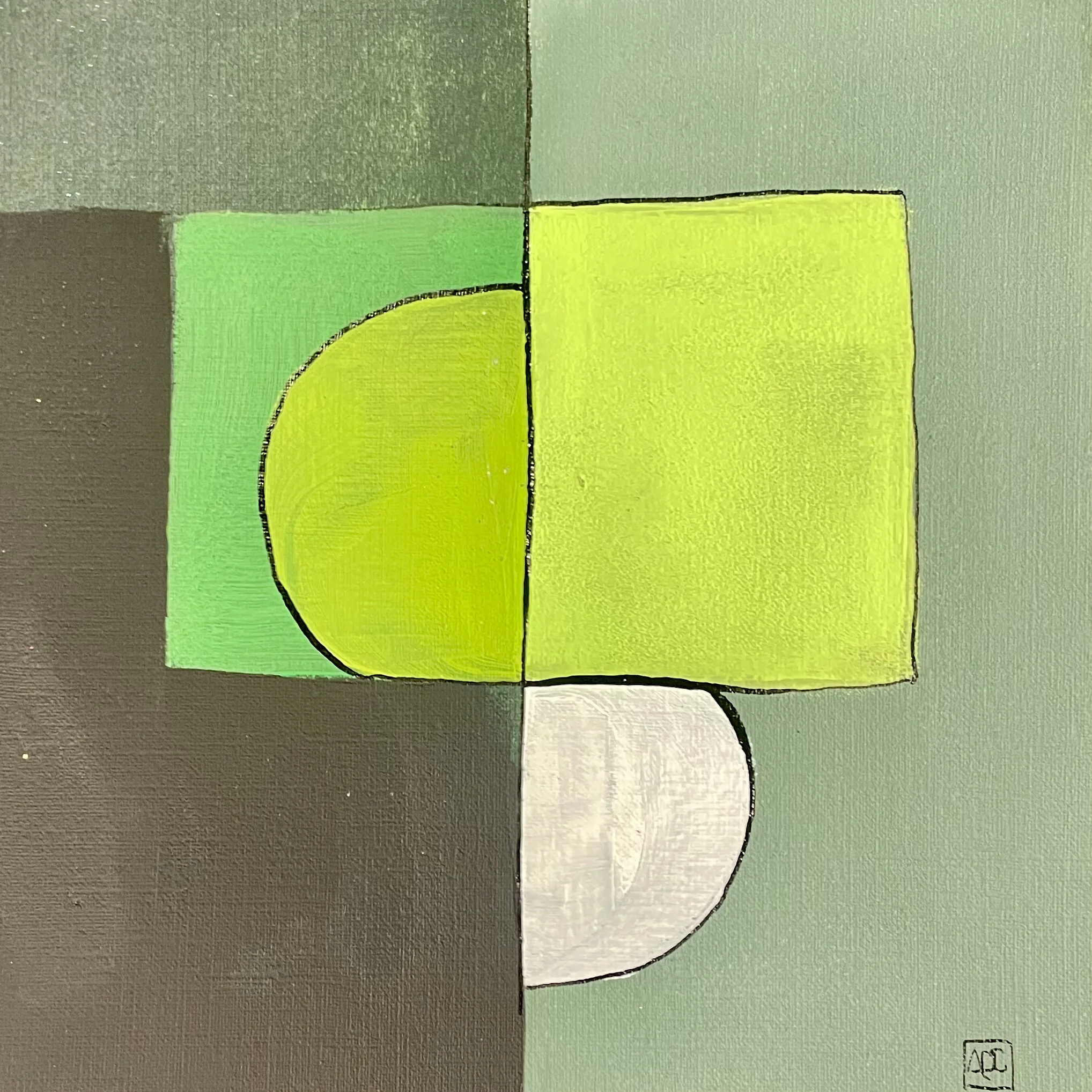
B minor is a series of 11 paintings by Arnaud Quercy, created between 2022 and 2025 in acrylic on canvas, acrylic on paper, acrylic on wood panel and watercolor on paper. Formats range from 10.5×15 cm to 73×92 cm. 8 works are held in private collections (Boulogne-Billancourt, France, Chicago, USA, Vienna, Austria, Paris, France, Istanbul, Turkey). 2 remain available for acquisition at Art Quam Anima, 28 rue du Dragon, Paris. Works presented at: Transcendence – World Premiere of Ephemera Arts, Rencontres au Marché de la Création and Salon d'art contemporain – Metamorphose, Paris and 8 more.
B minor is built from a root, a minor third, and a fifth — B, D, F-sharp — three tones that together produce one of Western harmony's most introspective intervals. The key has drawn composers toward inwardness: Chopin's Third Sonata unfolds in B minor, as does Tchaikovsky's Pathétique Symphony, both works where darkness is not despair but a deepening of feeling. It is a chord that holds tension without demanding resolution, a quality that makes it particularly suited to sustained exploration.
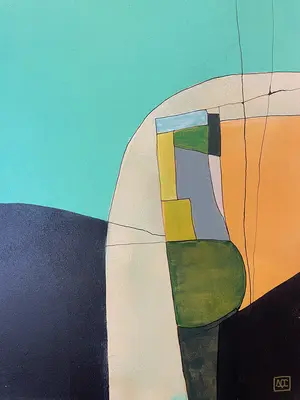
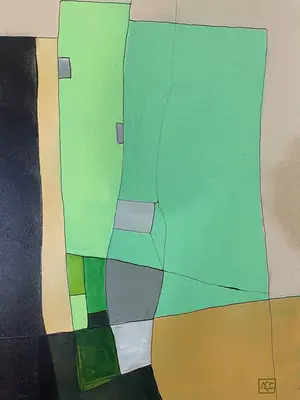
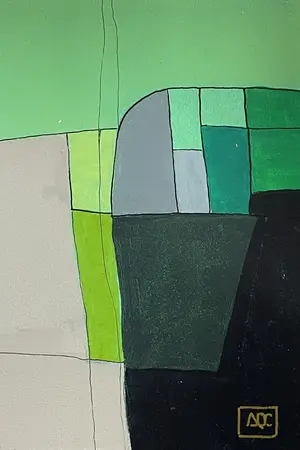
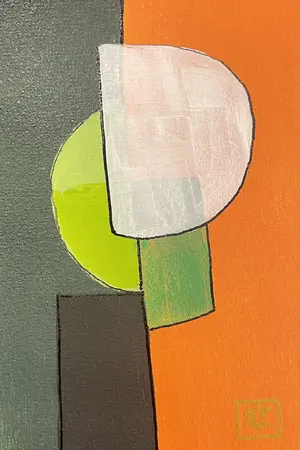
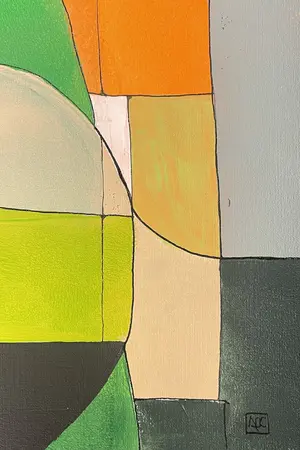
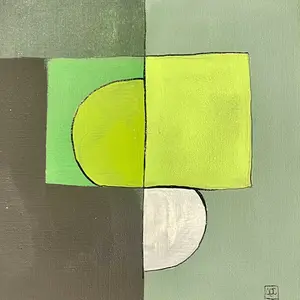
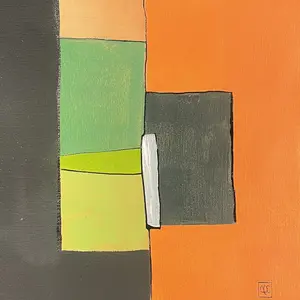
Through harmonic-chromatic translation, B renders as yellow-green — tending toward black in the low register, brightening to a saturated mid-shade in the middle, and lightening as it climbs. D, the minor third, maps to orange: warm and present, the emotional color of the chord. F-sharp, the fifth, appears as blue-green when it surfaces — a cooler grounding element. The overall palette is warm but shadowed, the yellow-green and orange dominant, with darkness pulling from below and pale light washing out the upper extremes.
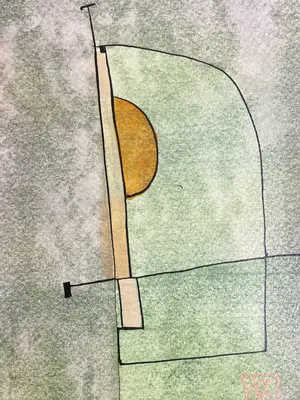
The series comprises eleven études spanning works on paper, wood panel, and canvas, created between 2022 and 2025. The dominant character divides cleanly: slow bell arches played Lent and legato on one side, animated valley shapes at 88 on the other. Waltzes appear throughout — ascending, descending, swaying — and a single Modéré stands alone at mid-tempo. The range of variation is exceptional, from two octaves gathered in the middle register to six octaves stretching from B0 at the edge of audibility to D7 near the top of the keyboard. Most études stay within the chord's own tones, but two admit outside notes — a violet accent on A-sharp and a blue-green intrusion on G-sharp — that press briefly against the palette before yielding.
Variation 1 is the series' largest format: acrylic on canvas at 73 by 92 centimetres, a slow arch rising from dark root to orange crest and folding back. It establishes the bell shape that recurs through the series and demonstrates the chord's capacity for stillness. At the opposite extreme, Variation 5 distils B minor to just four notes — two roots, two minor thirds — in a descending waltz on paper, the canvas flooded with light. Between them, Variation 8 pushes the chord to its physical limit, climbing from B1 in deep black through six octaves to D7's near-white apex, where the artist writes that "the color fading as the pitch rises toward the limit of ordinary piano range."
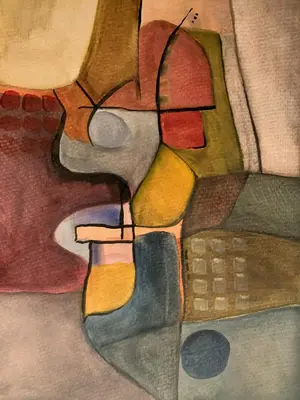
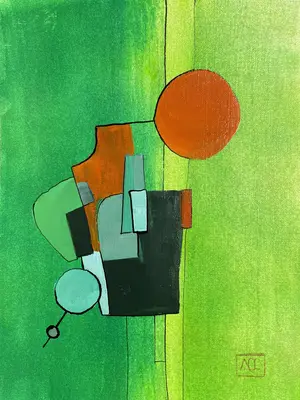
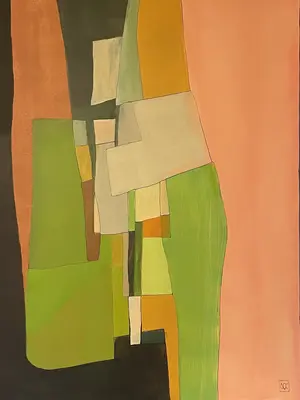
Across the collection, the viewer encounters a palette that oscillates between shadow and warmth. The low registers pull the yellow-green toward black, grounding each work in darkness, while the upper registers wash the orange toward pale brightness. Midtones carry the weight of most compositions, the chord's core colors at their most saturated in the middle of the keyboard. When the fifth appears — in blue-green — it sits apart, unabsorbed, adding a cooler counterpoint. The visual rhythm across the series emerges from repetition with displacement: the same two colors reappearing in different registers, densities, and contours, each work shifting the balance between dark and light.
Eleven études, and B minor reveals itself not as a single mood but as a temperament — capable of energy and stillness, of six-octave climbs and four-note distillations. As the artist's own description of the opening étude affirms, "B minor can move with energy, not only contemplate." These works, now held in collections from France to Istanbul, trace a chord that deepens through repetition, each variation uncovering another register of what the same three tones can say.

Arnaud Quercy is a Parisian artist working across painting, music, and sculpture. His practice is grounded in Ideamorphism — the principle that a work of art does not carry meaning, but triggers it. Each piece is engineered to diffract differently through each person who encounters it.
He creates and exhibits at Art Quam Anima, his gallery-atelier at 28 rue du Dragon, Saint-Germain-des-Prés, Paris.
Works — B minor
Related hubs
- Collection: Harmonic Crossing
Exhibitions 11
- Rencontres au Marché de la Création (2024-04-23 → 2024-12-31, Marché de la Création – Paris Montparnasse, Paris)
- Salon d'art contemporain – Metamorphose, Paris (2024-12-26 → 2025-01-05, Halle des Blancs Manteaux, Paris)
- Permanent Collection 2025 – Resonance in Form (2025-01-01 → 2025-12-31, arnaudquercy.art, Paris)
- Paris Studio Visit (2025-02-18 → 2025-02-18, Artist's Studio, Paris)
- Marché d'Art Contemporain – Seine Port (2025-05-17 → 2025-05-17, MAC Seine-Port, Seine-Port)
- Nuit des Artistes, St Germain-en-Laye, France (2025-05-24 → 2025-05-24, La Nuit des Artistes, Saint-Germain-en-Laye)
- Marché de l'Art de Saint-Germain-en-Laye, 17ème édition – France (2025-06-14 → 2025-06-14, Marché de l'Art, Saint-Germain-en-Laye)
- Salon d'art contemporain – Metamorphose 2025–2026, Paris (2025-12-26 → 2026-01-04, Halle des Blancs Manteaux, Paris)
- Art Quam Anima – Pre-opening (2026-01-31 → 2026-02-28, Art Quam Anima, Paris)
- Through the Aperture — Research on Harmony (2026-03-09 → 2026-04-30, Art Quam Anima, Paris)
- Transcendence – World Premiere of Ephemera Arts (2023-10-29 → 2023-11-15, Koblenzer Kunstverein e.V., Koblenz)
Other series in this collection 35
Documented at 1
Catalogue raisonné entries 11
- B minor - Reflexions 6
- B minor - Research on Harmony
- B minor - Research on Harmony - Variation 1
- B Minor - Research on Harmony - Variation 2
- B Minor - Research on Harmony - Variation 3
- B Minor - Research on Harmony - Variation 4
- B Minor - Research on Harmony - Variation 5
- B Minor - Research on Harmony - Variations 6
- B Minor - Research on Harmony - Variations 7
- B Minor - Research on Harmony - Variations 8
- B Minor - Research on Harmony - Variations 9