Tritone series — 8 Paintings by Arnaud Quercy
ART-SER0047
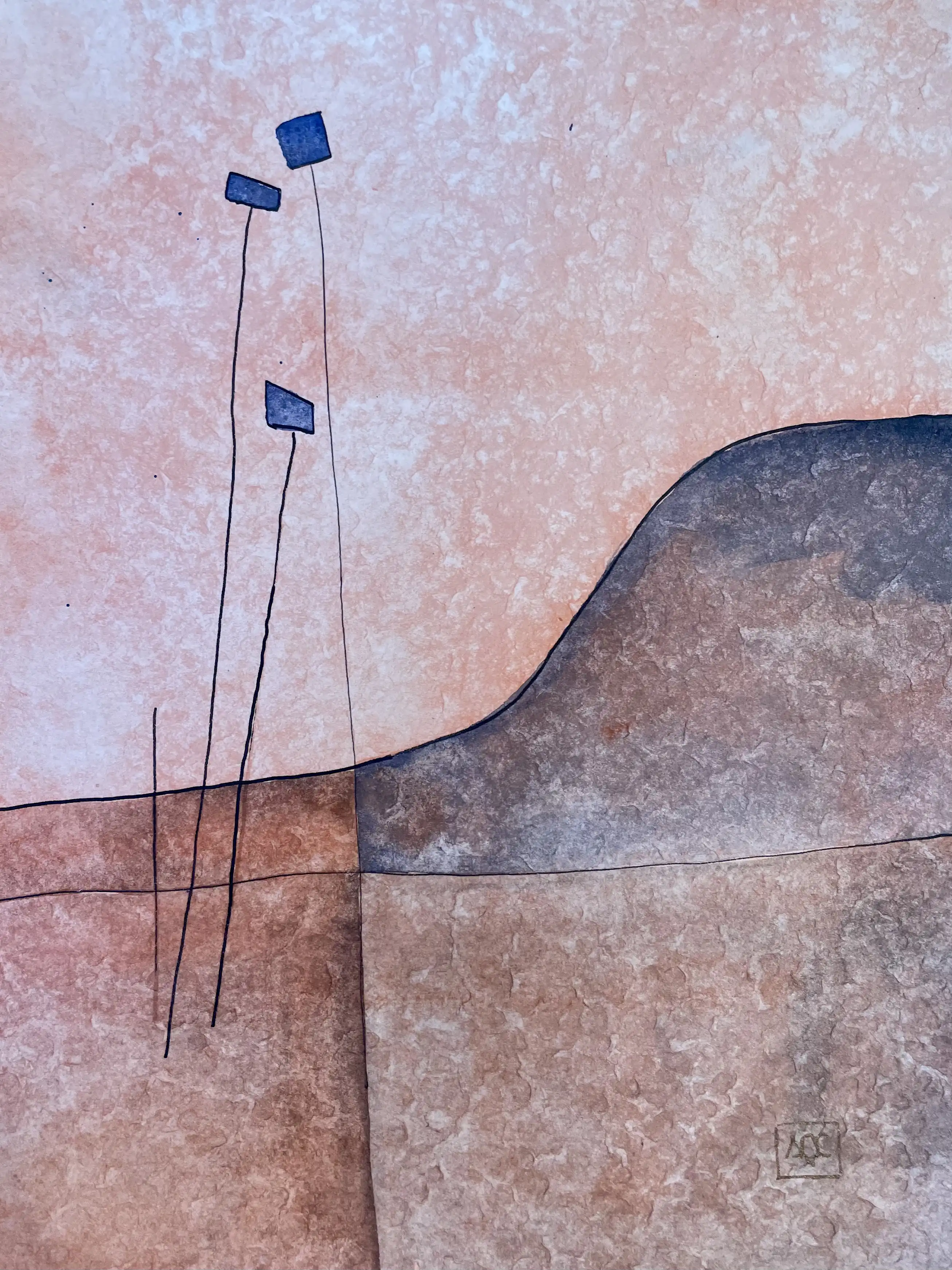
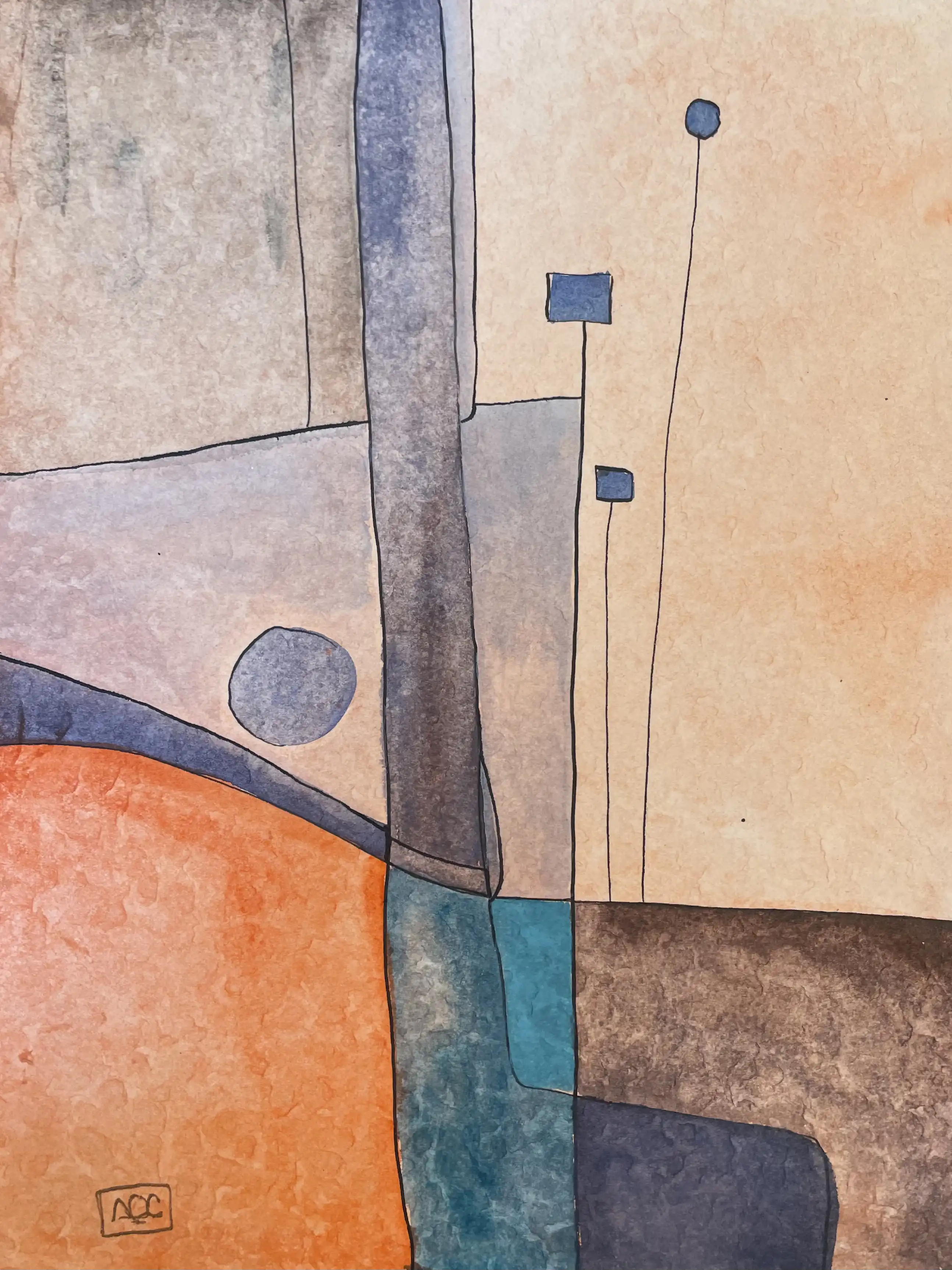
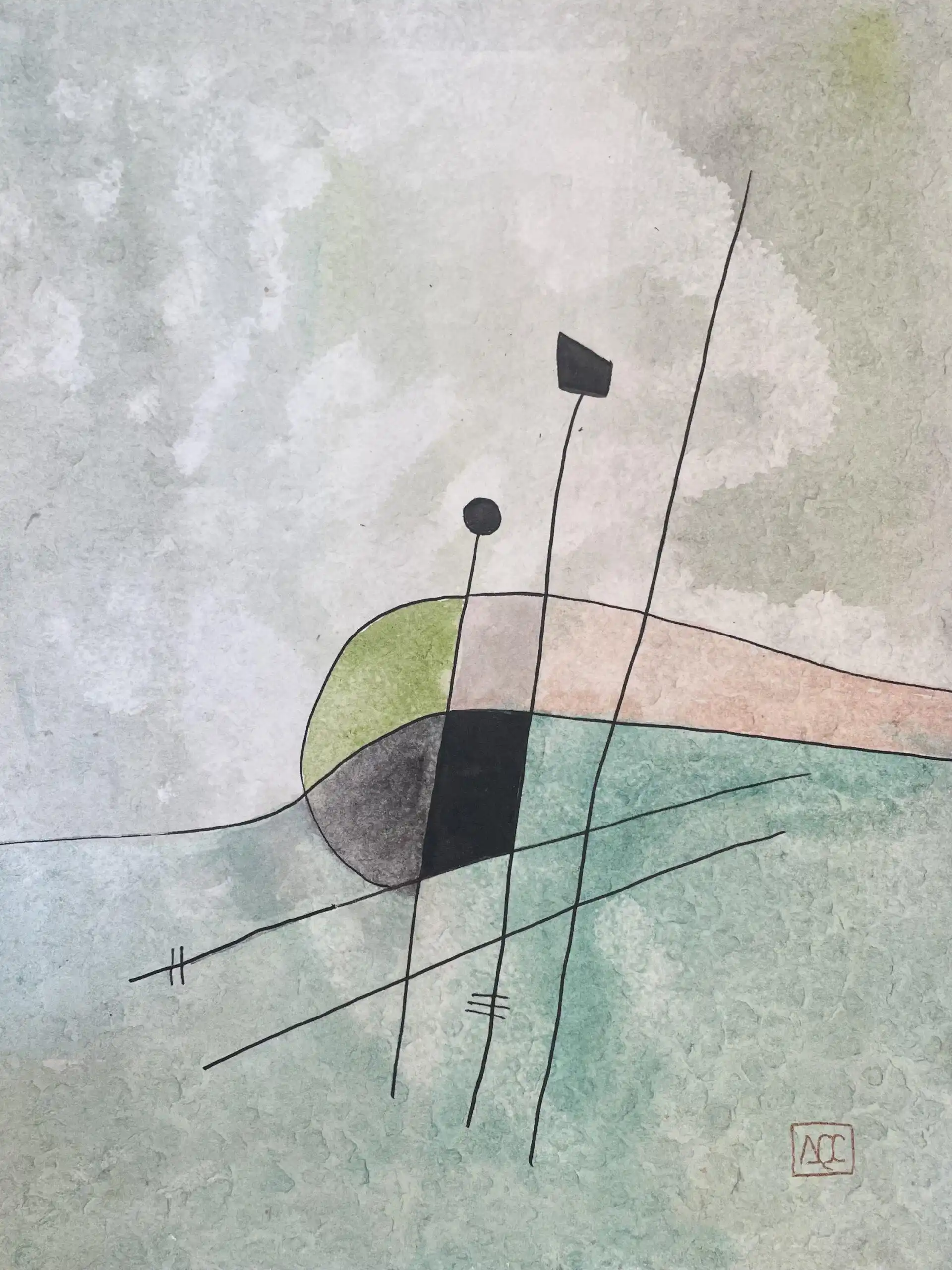
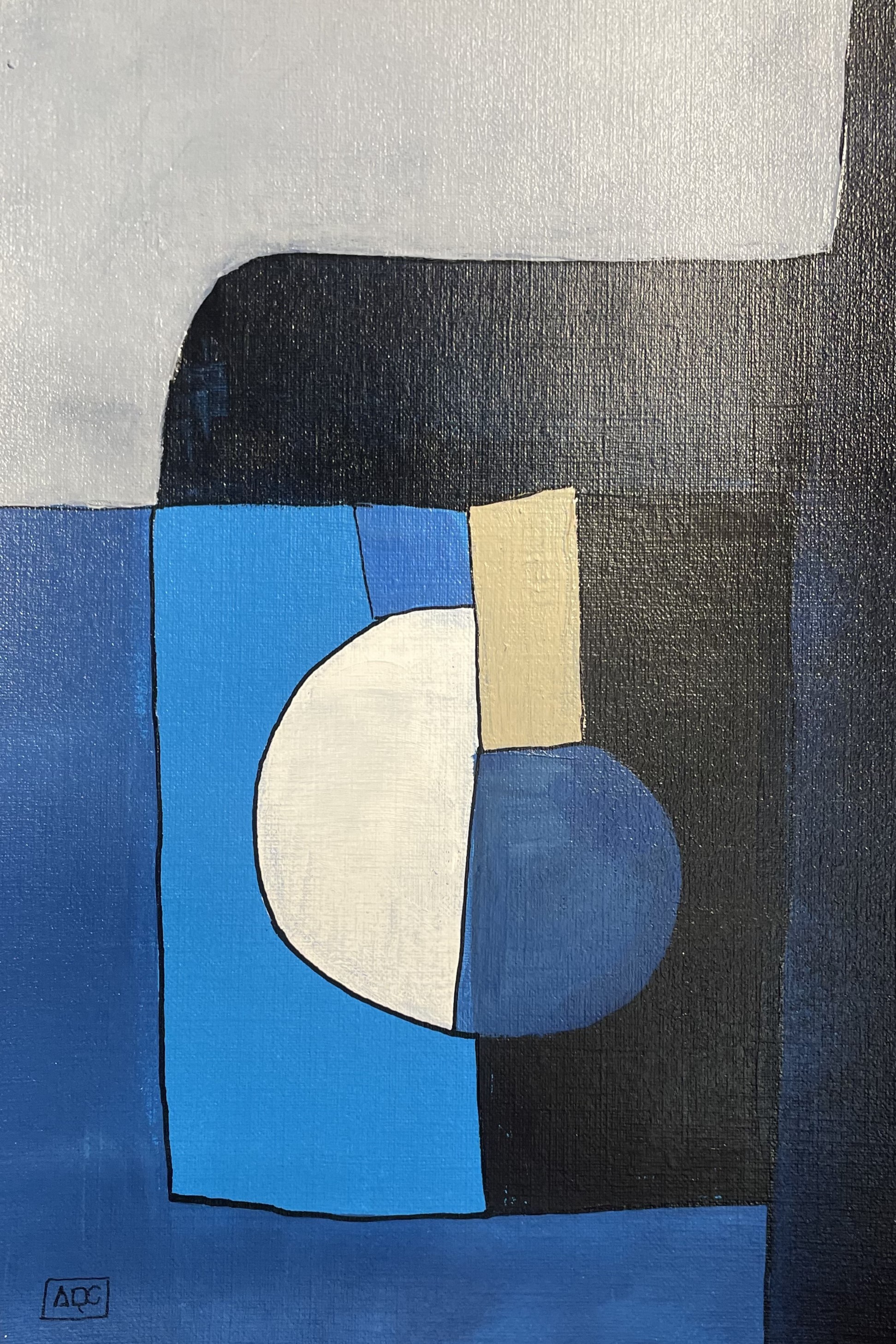
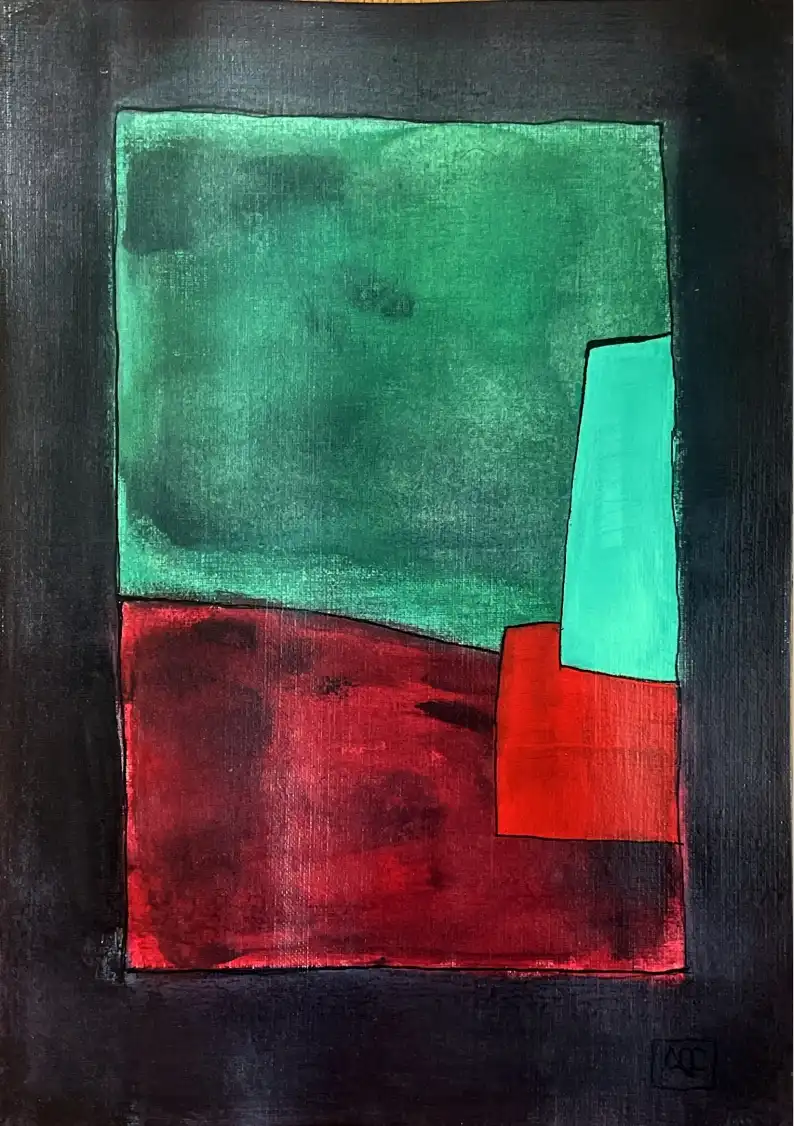
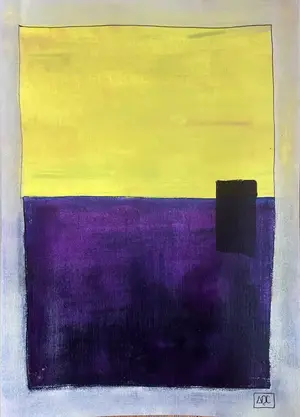
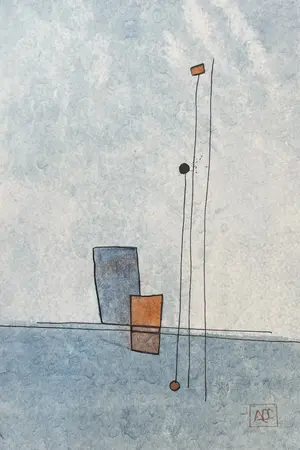
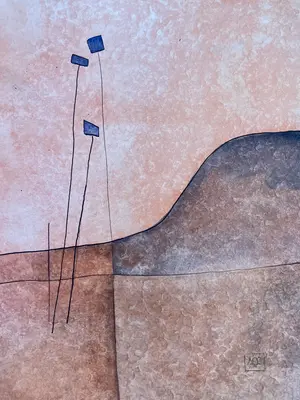
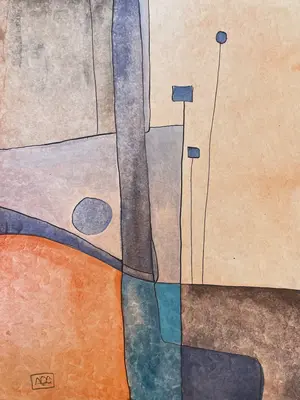
Tritone is a series of 8 paintings by Arnaud Quercy, created between 2023 and 2026 in acrylic on paper and watercolor on paper. Formats range from 16×24 cm to 24×32 cm. 7 works are held in private collections (USA, Ajaccio, France, Paris, France, Melbourne, Australia, Montréal, Canada, Italy). 1 remains available for acquisition at Art Quam Anima, 28 rue du Dragon, Paris. Works presented at: Transcendence – World Premiere of Ephemera Arts, Rencontres au Marché de la Création and Salon d'art contemporain – Metamorphose, Paris and 8 more.
The tritone — two notes separated by exactly three whole tones, splitting the octave precisely in half — is the most unstable interval in Western harmony. Medieval theorists called it diabolus in musica and prohibited it in sacred polyphony; Baroque composers used it to signal anguish or the demonic. It never quite resolves on its own terms. In Leonard Bernstein’s "Maria," the tritone leap at the opening is the whole point: a yearning that cannot land. In jazz, it is the engine of the ii-V-I, the tritone substitution that allows any dominant chord to slip sideways into resolution. The interval wants to move — and refuses.
Through harmonic-chromatic, the tritone does something visually striking: it produces complementary colors. C and F# translate to red and green. D and G# become orange and blue. E and Bb yield yellow and blue-violet. Eb and A split into blue-violet and yellow-orange. In each case, the two pitches land at opposite poles of the color wheel — harmonic-chromatic confirmation of what the ear already feels: these two notes are as far apart as possible, pulling in opposite directions. The lower note compresses toward black in the deep bass, its color emerging gradually as it rises through the registers; the upper note often arrives pale and metallic in the high treble, bleached by altitude. The interval is never warm and cool at the same time: it is always two opposed temperatures in one phrase.
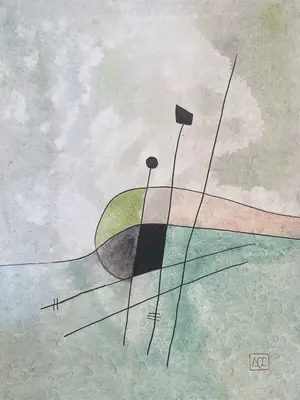
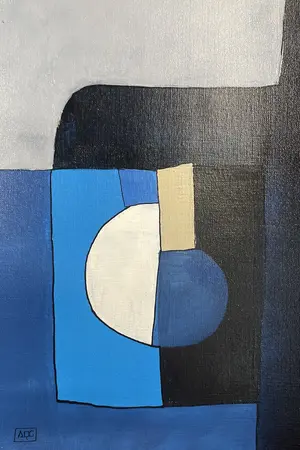
Arnaud Quercy explores this most restless of intervals across eight études, painted between 2023 and 2026 in acrylic and watercolor on paper. The formats are compact — 21×29.5 cm and 24×32 cm — intimate studies rather than large statements, the physical scale deliberately modest against the harmonic weight of the subject. Nearly all are played Animé, with a forward pulse, legato, at mp or p: the animated tempo keeps the tension alive rather than letting it settle. Most contours are ascending or valley-shaped, the phrase climbing from the dark bass toward the light of the upper register and sometimes folding back. One étude alone departs: a slow waltz, played Lent, the phrase descending from pale violet into near-black — the tritone moving against the current of the series. Note counts range from four to nine, and the density of each work reflects a different strategy for holding the interval open: some state the two poles starkly, others wind through five or six octaves of one pitch before the partner appears.
Three works mark the series’ poles. AQC0964 — the most recent and the starkest — places three Eb notes against two A notes with four octaves of empty canvas between them: blue-violet below, yellow-orange above, nothing in between, the loudest dynamic in the collection (mf) pressing the interval open across the widest possible gap. AQC0456, the densest étude, sends nine notes from D1 to D5 in a valley contour — five octaves of the root explored before the tritone partner enters, "a valley through the warm-cool divide" — orange descending into near-black before the blue of G# arrives at mid-register. At the other extreme, AQC0669 distils the D/G# tritone to five notes played softly at p: "the two opposed colors pulsing gently back and forth without resolution," orange and blue trading places in a hushed, steady rhythm across four registers — the most intimate study in the collection.
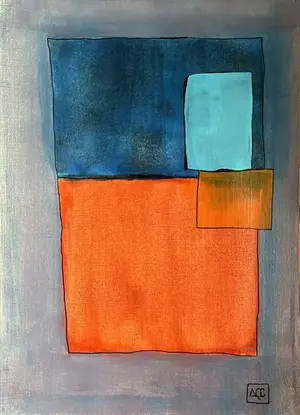
On the canvas, the tritone series reads as a collection of divided paintings. Each work holds two distinct color hemispheres — warm against cool, dark against light — with varying degrees of separation between them. Some études layer the two colors in alternation, the orange and blue exchanging across the registers in a rhythm the eye can follow. Others place the colors in stark horizontal zones, the gap between them a visible silence. Accents appear occasionally: yellow-orange visiting the crest of a C/F# phrase, red warming the middle of a D/G# descent, warm orange and red-orange interrupting an E/Bb ascent. These intrusions do not resolve the tension — they heighten it, adding a third temperature to an already divided canvas.
The tritone is the interval that taught Western harmony its own limits. After eight studies, Quercy does not resolve it — that is not the point. What the series demonstrates is that the interval’s refusal to settle can be inhabited, explored, and made visible in paint. Three-quarters of these works have already traveled into collections from Paris to Melbourne to Montreal, the devil’s interval carried quietly into living rooms across three continents — still unresolved, still pulling.
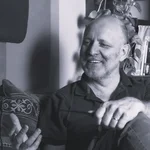
Arnaud Quercy is a Parisian artist working across painting, music, and sculpture. His practice is grounded in Ideamorphism — the principle that a work of art does not carry meaning, but triggers it. Each piece is engineered to diffract differently through each person who encounters it.
He creates and exhibits at Art Quam Anima, his gallery-atelier at 28 rue du Dragon, Saint-Germain-des-Prés, Paris.
Works — Tritone
Related hubs
- Collection: Harmonic Crossing
Exhibitions 11
- Rencontres au Marché de la Création (2024-04-23 → 2024-12-31, Marché de la Création – Paris Montparnasse, Paris)
- Salon d'art contemporain – Metamorphose, Paris (2024-12-26 → 2025-01-05, Halle des Blancs Manteaux, Paris)
- Permanent Collection 2025 – Resonance in Form (2025-01-01 → 2025-12-31, arnaudquercy.art, Paris)
- Paris Studio Visit (2025-02-18 → 2025-02-18, Artist's Studio, Paris)
- Marché d'Art Contemporain – Seine Port (2025-05-17 → 2025-05-17, MAC Seine-Port, Seine-Port)
- Nuit des Artistes, St Germain-en-Laye, France (2025-05-24 → 2025-05-24, La Nuit des Artistes, Saint-Germain-en-Laye)
- Marché de l'Art de Saint-Germain-en-Laye, 17ème édition – France (2025-06-14 → 2025-06-14, Marché de l'Art, Saint-Germain-en-Laye)
- Salon d'art contemporain – Metamorphose 2025–2026, Paris (2025-12-26 → 2026-01-04, Halle des Blancs Manteaux, Paris)
- Transcendence – World Premiere of Ephemera Arts (2023-10-29 → 2023-11-15, Koblenzer Kunstverein e.V., Koblenz)
- Art Quam Anima – Pre-opening (2026-01-31 → 2026-02-28, Art Quam Anima, Paris)
- Through the Aperture — Research on Harmony (2026-03-09 → 2026-04-30, Art Quam Anima, Paris)