B Major series — 11 Paintings by Arnaud Quercy
ART-SER0023
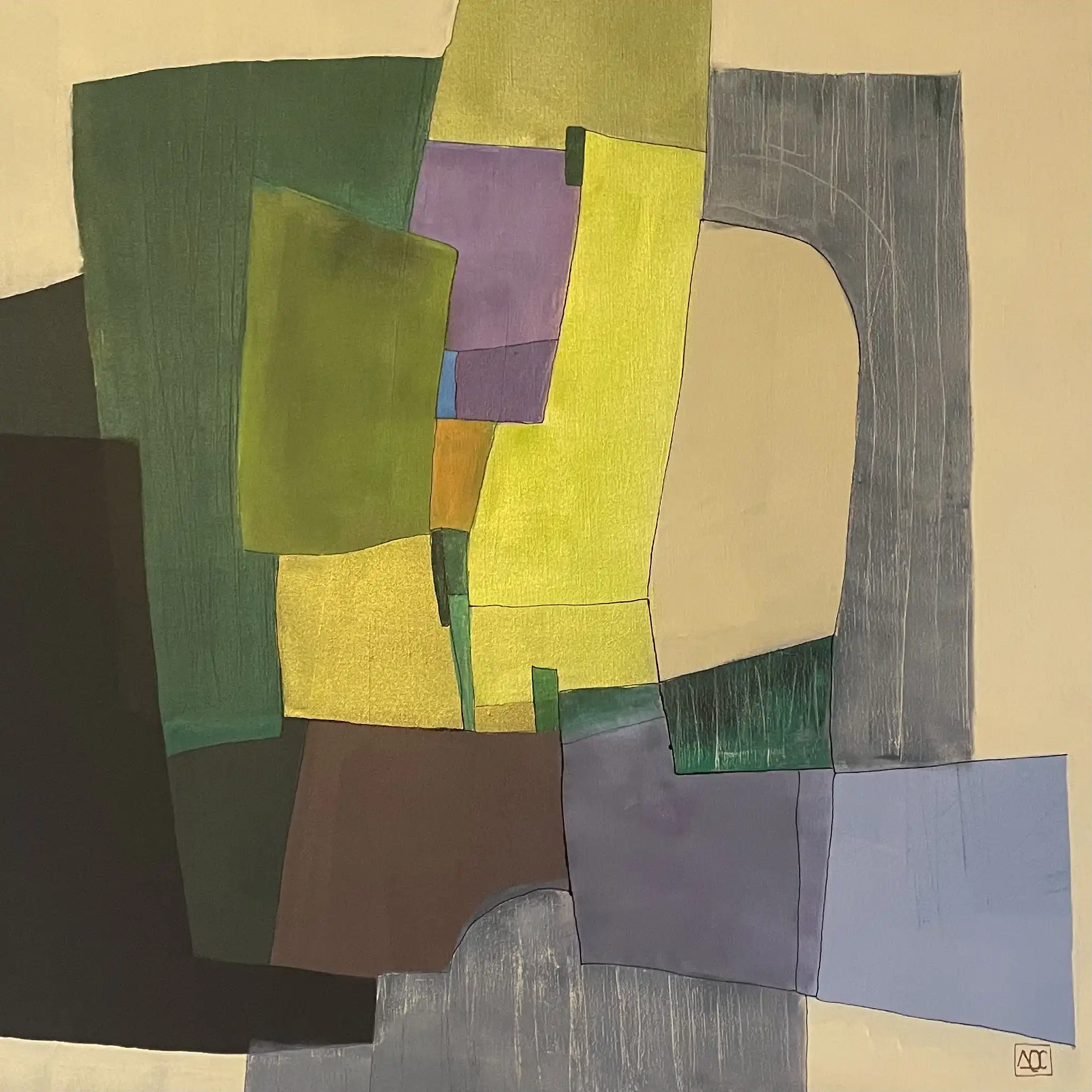
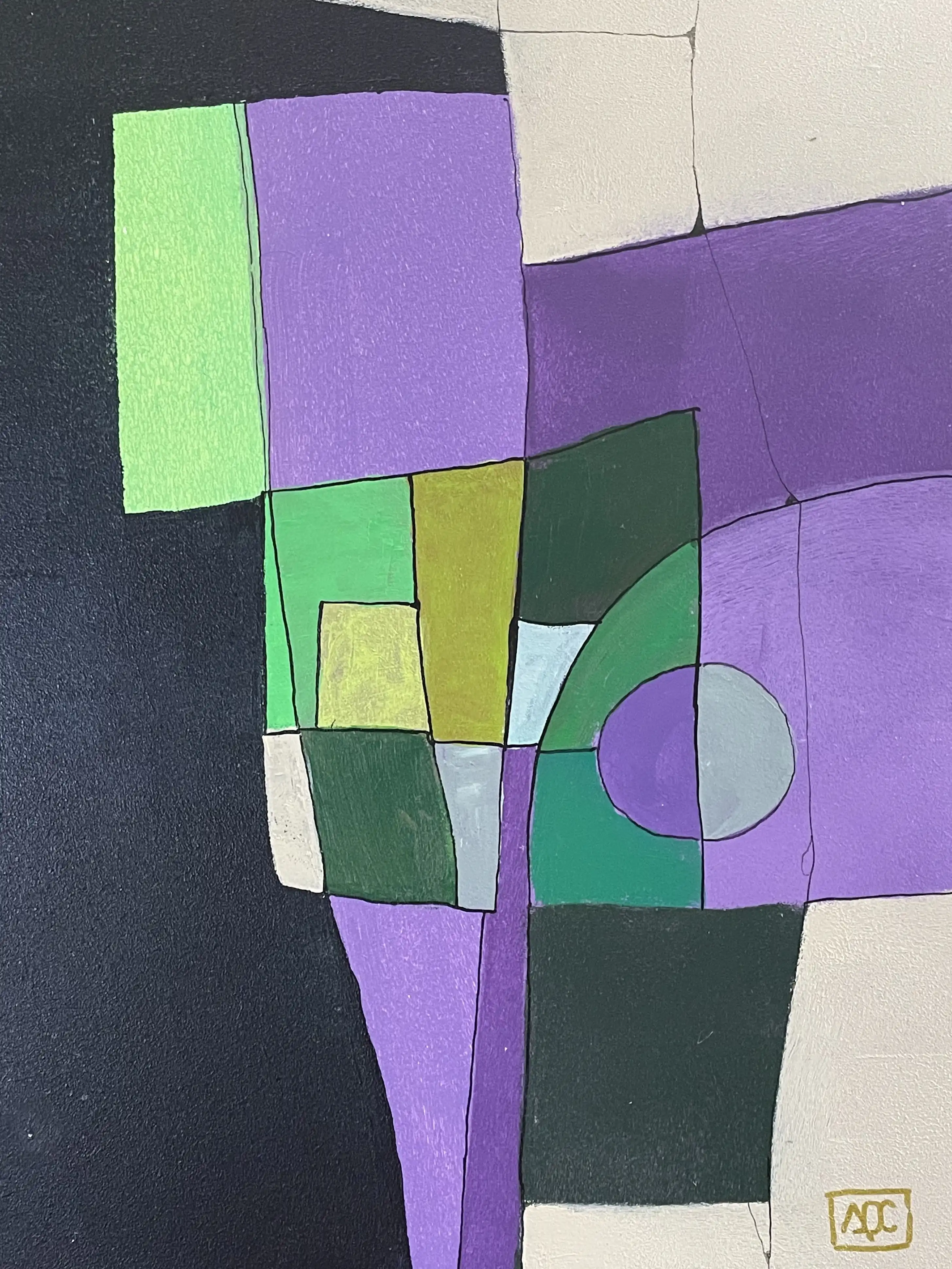
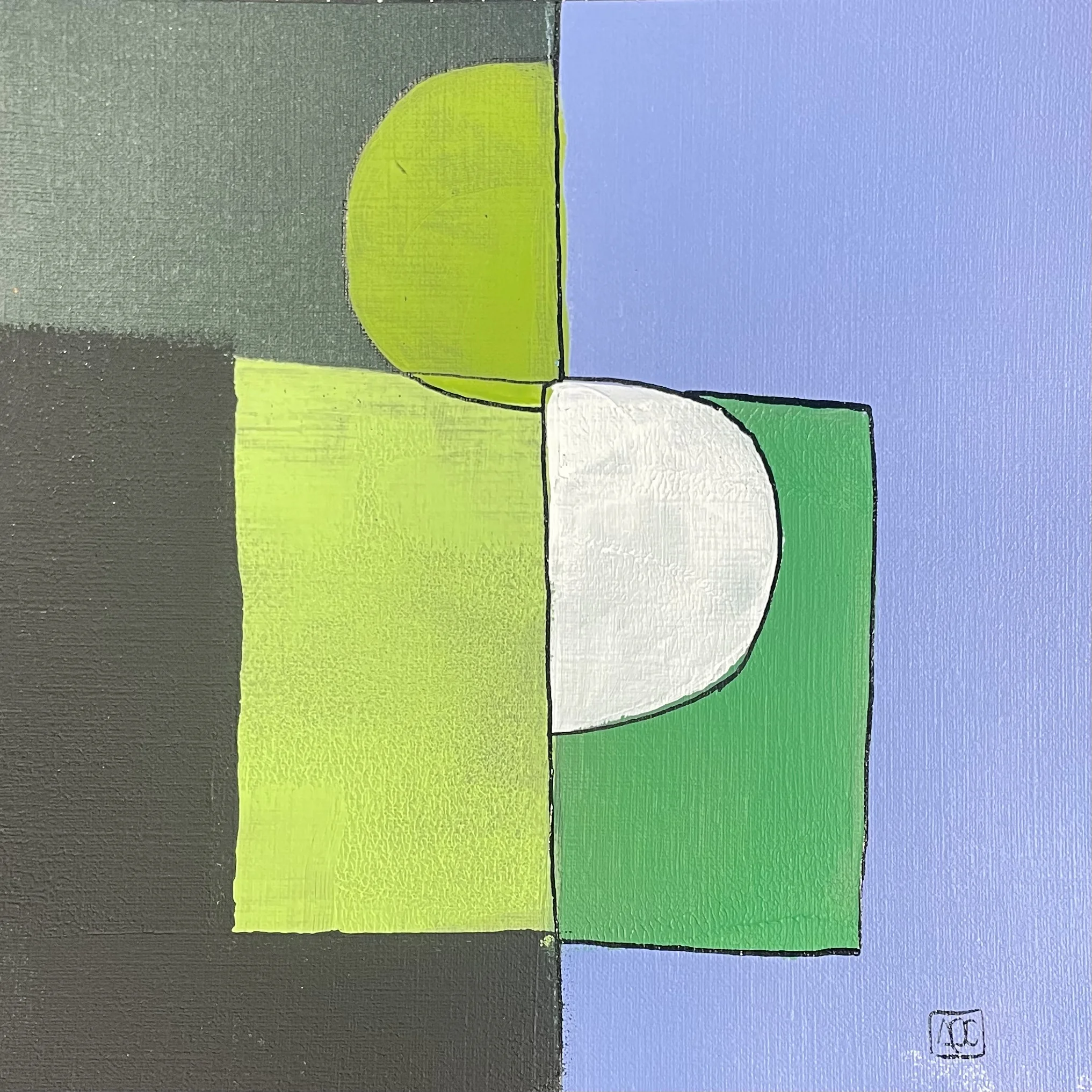
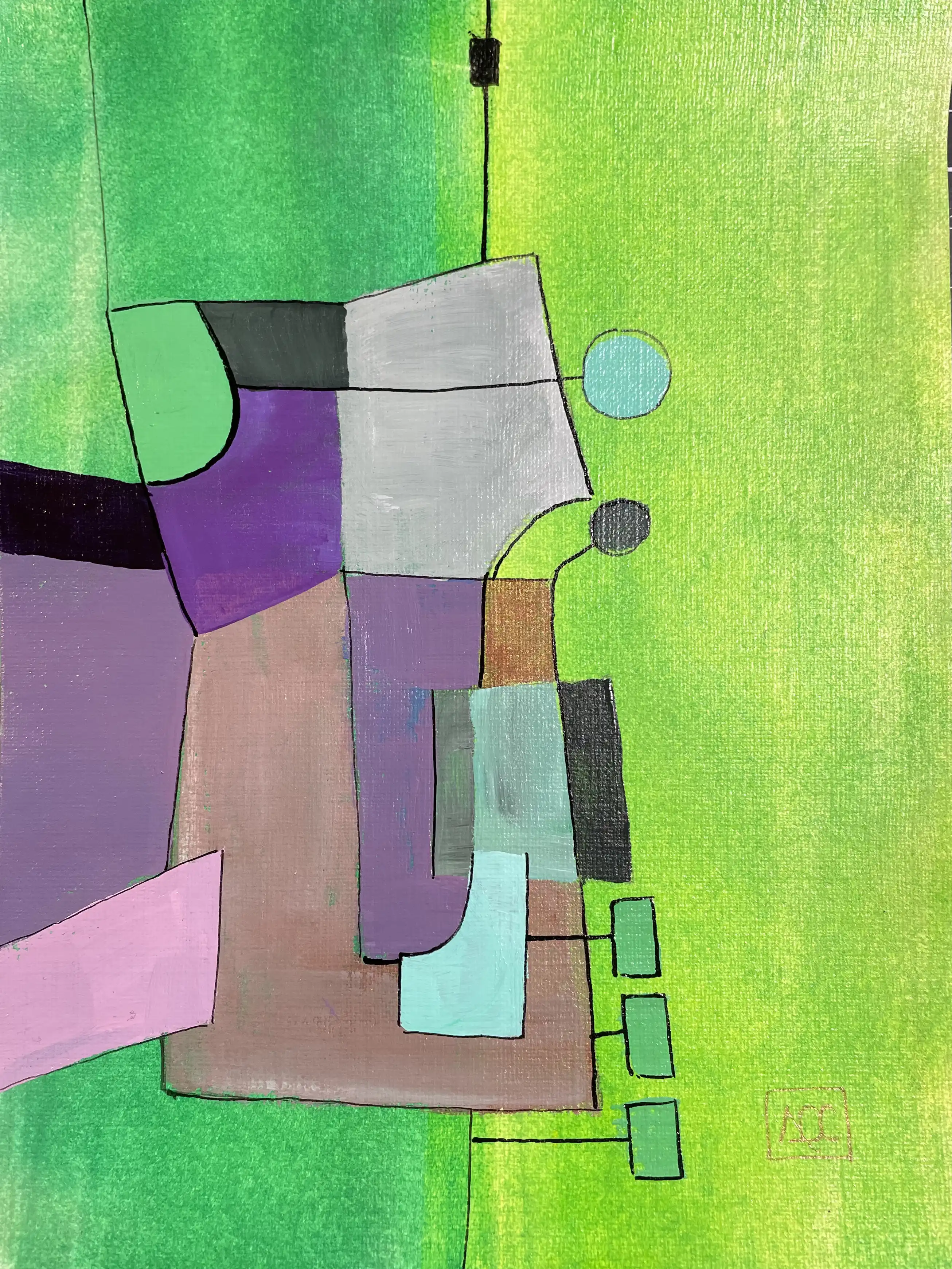
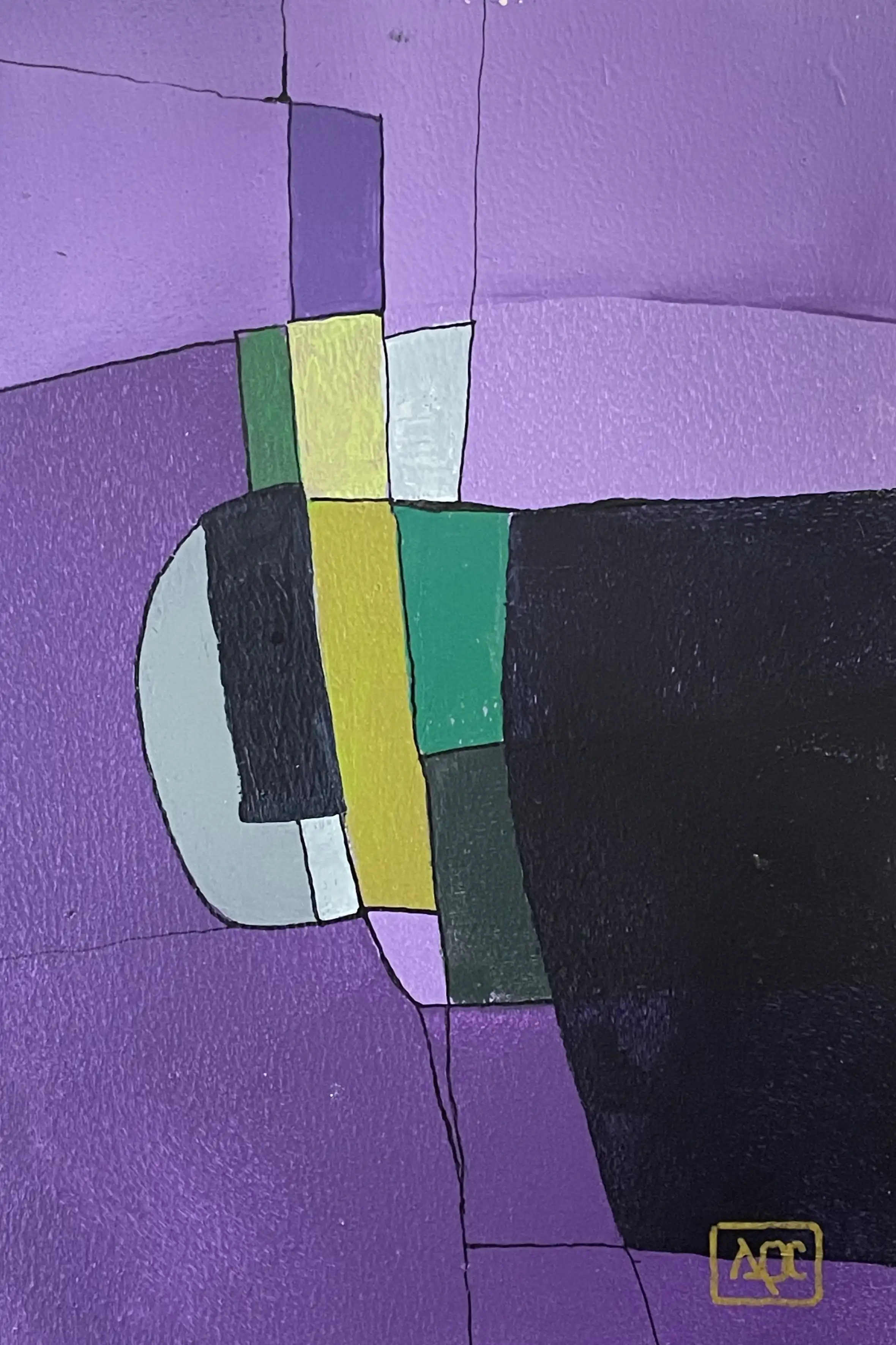
B Major is a series of 11 paintings by Arnaud Quercy, created between 2024 and 2025 in acrylic on linen canvas, acrylic on paper, acrylic on wood panel and watercolor on paper. Formats range from 10×15 cm to 80×80 cm. 6 works are held in private collections (Le Lavandou, France, Tahoe, USA, Zürich, Switzerland). 4 remain available for acquisition at Art Quam Anima, 28 rue du Dragon, Paris. Works presented at: Rencontres au Marché de la Création, Salon d'art contemporain – Metamorphose, Paris and Permanent Collection 2025 – Resonance in Form and 7 more.
B Major is built on three intervals — root, major third, perfect fifth — that place it among the brighter major triads, though its enharmonic complexity (every chord tone carries a sharp) gives it a luminous edge. Chopin favored B Major for moments of lyrical brilliance; in jazz, it sits comfortably under horn keys, a sharp-side brightness that rewards precise intonation. The triad carries an energy that is neither warm nor cool but poised between the two, a clarity that reveals itself slowly.
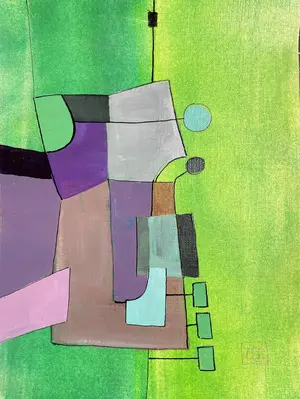
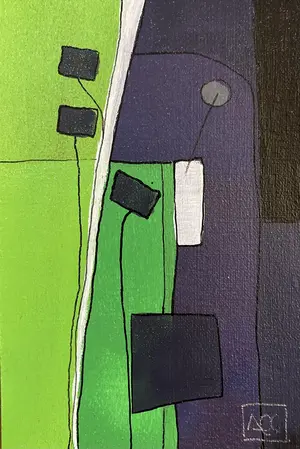
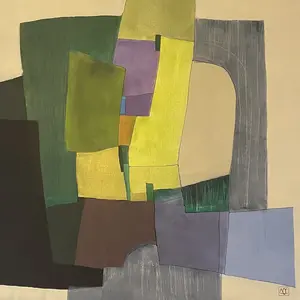
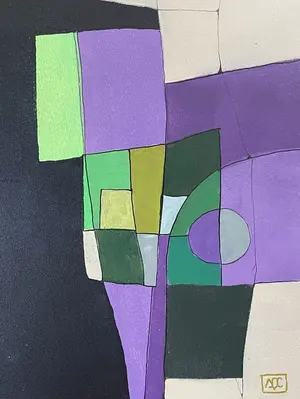
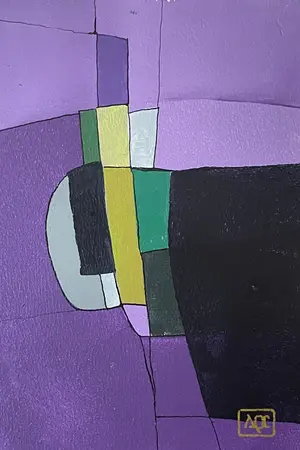
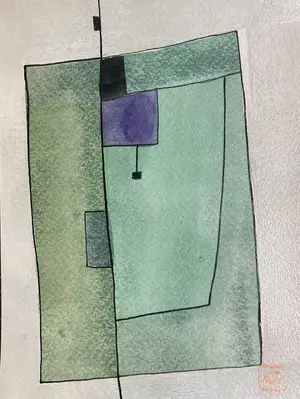
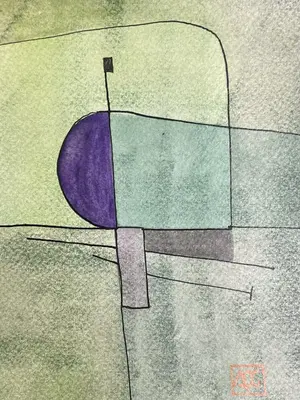
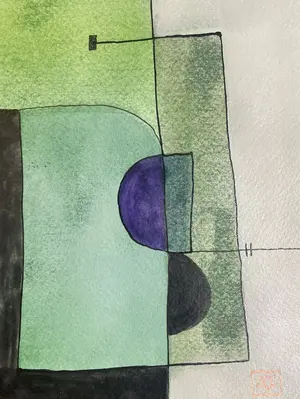
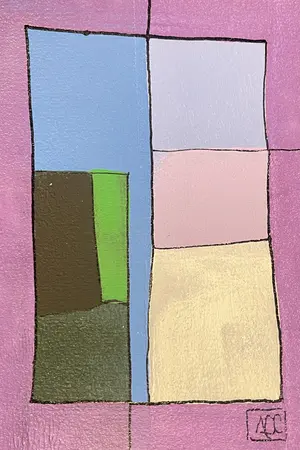
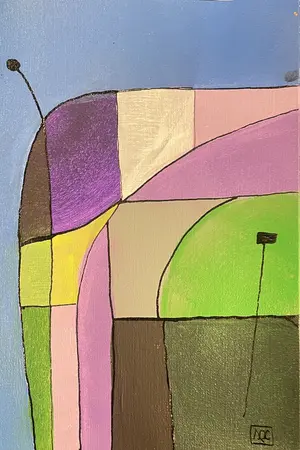
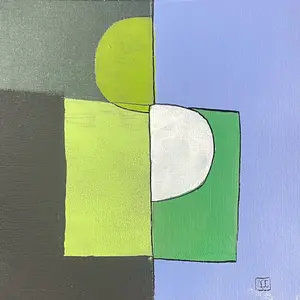
Through harmonic-chromatic, the chord’s three tones translate into a distinctive palette. B produces yellow-green — an earthy, vegetal hue that darkens toward black in the bass and fades to near-white in the upper registers. D-sharp, the major third, reads as green, cooler and more saturated than the root. F-sharp, the fifth, arrives as blue-violet edging into violet, the coolest presence in the triad. Together these tones create a palette that runs from forest shadow to cool twilight, with warm chromatic accents — orange, yellow-orange, red-orange, red, red-violet — appearing as non-chord tensions wherever the études depart from pure harmony.
The series comprises eleven études, predominantly ascending in contour, with waltzes in triple time dominating the collection. Nine of the eleven carry an Animé tempo marking, giving the series a prevailing forward momentum. Dynamics sit mostly at mp, with one étude at p and one at mf — a narrow dynamic corridor that keeps the series intimate. Note counts range from four (the leanest) to ten (the densest), and spans reach from three octaves to a full five. Most études carry one or two warm chromatic accents — orange and yellow-orange appear most often — though two works introduce cooler red and red-violet tensions. The series includes two bell arches and one valley amid its ascending majority, and closes with a pure-triad statement carrying no accents at all.
Variation 2 is the series’ largest format: an 80-by-80-centimetre acrylic on linen canvas, a slow bell arch marked Lent at sixty beats per minute. It is the only work in the series at that measured pace, its arch cresting on a warm yellow-orange accent rather than a chord tone — “a meditative arch in the parallel major’s warm palette,” as the artist describes it. At the opposite extreme, Variation 1 descends to B0, one of the deepest pitches on the keyboard, producing what Quercy calls “the darkest étude in the B Major series” — four spare notes pulling the painting into near-black. Between these poles, Variation 10 closes the series with nine notes of pure B Major triad across five octaves, every pitch belonging to the chord, every color native to the key.
Across the collection, a viewer encounters a world of yellow-green and blue-violet punctuated by warm intrusions. The bass registers translate as near-black or dark blue-violet depending on the étude, while the upper reaches bleach toward silver and pale gray-green. The warm accents — orange threads, red-orange flashes — appear in the midrange, creating visual tension against the chord’s cool dominant palette. Where the études are sparse, the paintings breathe with open fields of a single hue graduating through register. Where the études are dense, the canvases layer green over blue-violet over yellow-green, the chromatic accents burning through like embers in a cool landscape.
What eleven études in the same key reveal is how much character lives in the details — a shift from mp to mf, a valley where nine ascending studies climb, one slow bell among nine animated waltzes. B Major’s palette is cooler than its position among the sharps might suggest, and Quercy’s repeated investigations surface this: a key whose brightness is tinged with violet shadow. Works from the series have found homes in collections in France and Zurich, the chord’s cool luminosity traveling from studio to wall.

Arnaud Quercy is a Parisian artist working across painting, music, and sculpture. His practice is grounded in Ideamorphism — the principle that a work of art does not carry meaning, but triggers it. Each piece is engineered to diffract differently through each person who encounters it.
He creates and exhibits at Art Quam Anima, his gallery-atelier at 28 rue du Dragon, Saint-Germain-des-Prés, Paris.
Works — B Major
Related hubs
- Collection: Harmonic Crossing
Exhibitions 10
- Salon d'art contemporain – Metamorphose 2025–2026, Paris (2025-12-26 → 2026-01-04, Halle des Blancs Manteaux, Paris)
- Art Quam Anima – Pre-opening (2026-01-31 → 2026-02-28, Art Quam Anima, Paris)
- Through the Aperture — Research on Harmony (2026-03-09 → 2026-04-30, Art Quam Anima, Paris)
- Permanent Collection 2025 – Resonance in Form (2025-01-01 → 2025-12-31, arnaudquercy.art, Paris)
- Paris Studio Visit (2025-02-18 → 2025-02-18, Artist's Studio, Paris)
- Marché d'Art Contemporain – Seine Port (2025-05-17 → 2025-05-17, MAC Seine-Port, Seine-Port)
- Nuit des Artistes, St Germain-en-Laye, France (2025-05-24 → 2025-05-24, La Nuit des Artistes, Saint-Germain-en-Laye)
- Marché de l'Art de Saint-Germain-en-Laye, 17ème édition – France (2025-06-14 → 2025-06-14, Marché de l'Art, Saint-Germain-en-Laye)
- Rencontres au Marché de la Création (2024-04-23 → 2024-12-31, Marché de la Création – Paris Montparnasse, Paris)
- Salon d'art contemporain – Metamorphose, Paris (2024-12-26 → 2025-01-05, Halle des Blancs Manteaux, Paris)
Other series in this collection 35
Documented at 1
Catalogue raisonné entries 11
- B Major - Research on Harmony
- B Major - Research on Harmony - Variation 1
- B Major - Research on Harmony - Variation 2
- B Major - Research on Harmony - Variation 3
- B Major - Research on Harmony - Variation 4
- B Major - Research on Harmony - Variation 7
- B Major - Research on Harmony - Variation 5
- B Major - Research on Harmony - Variation 6
- B Major - Research on Harmony - Variations 8
- B Major - Research on Harmony - Variations 9
- B Major - Research on Harmony - Variations 10