C minor series — 16 Paintings by Arnaud Quercy
ART-SER0028
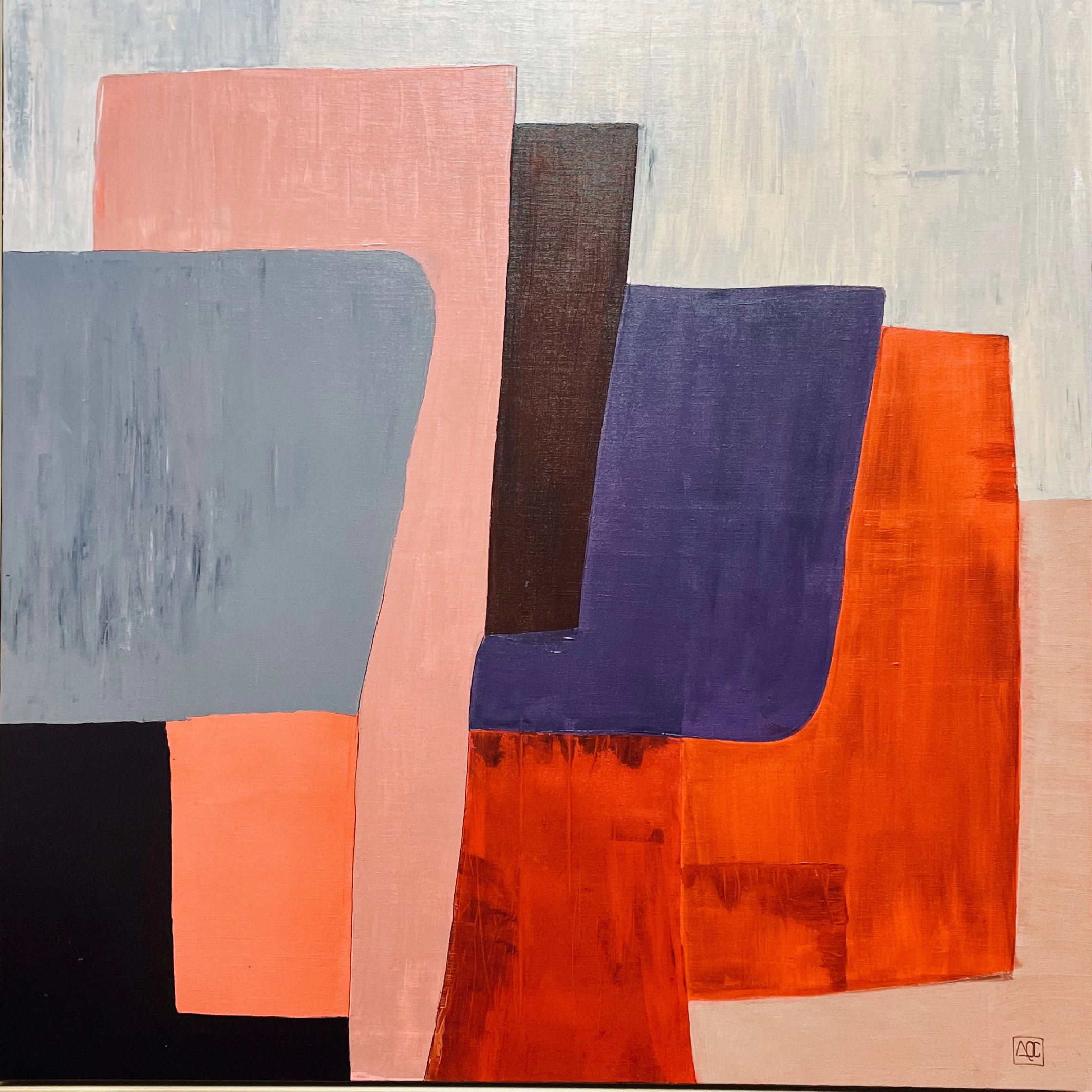
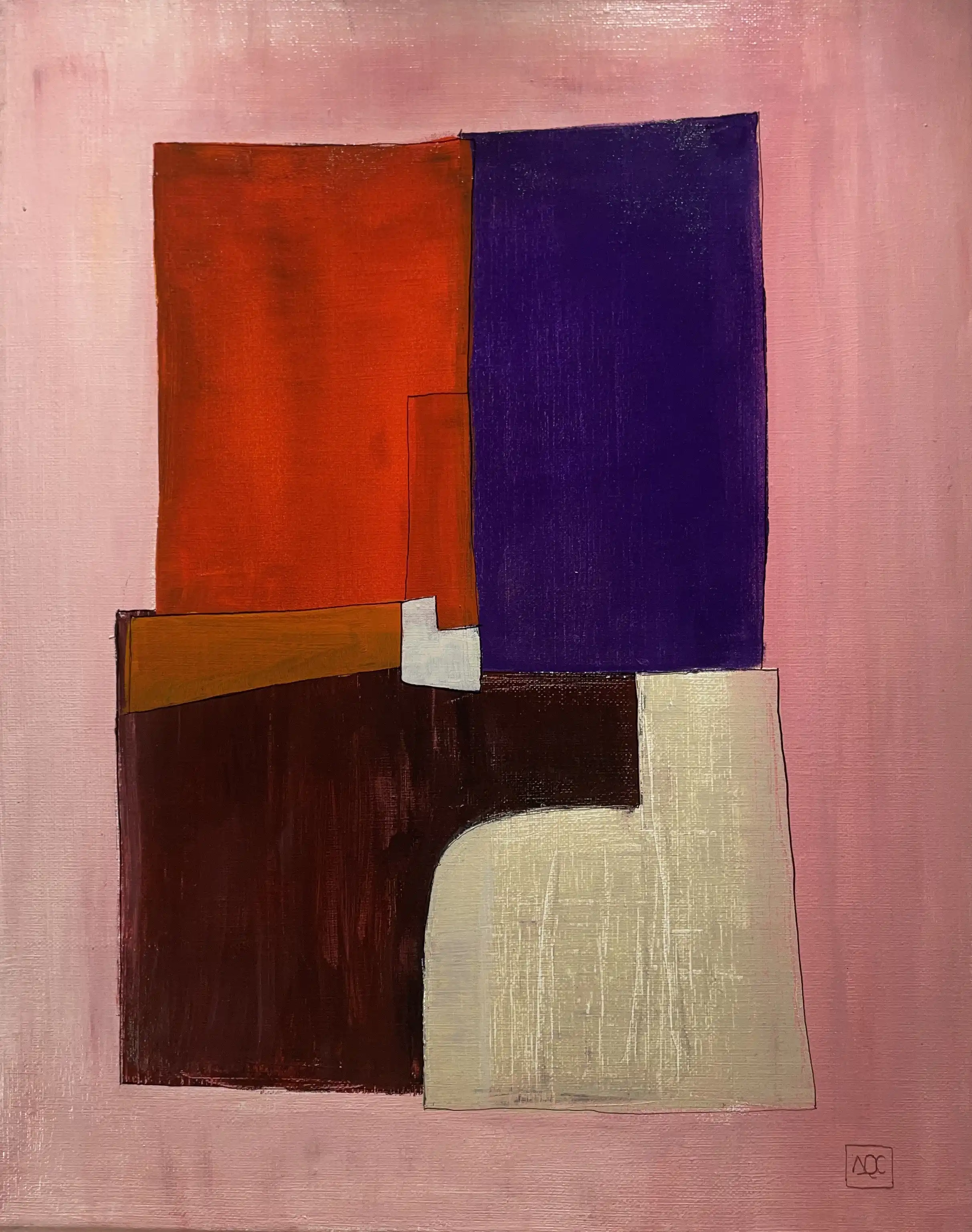
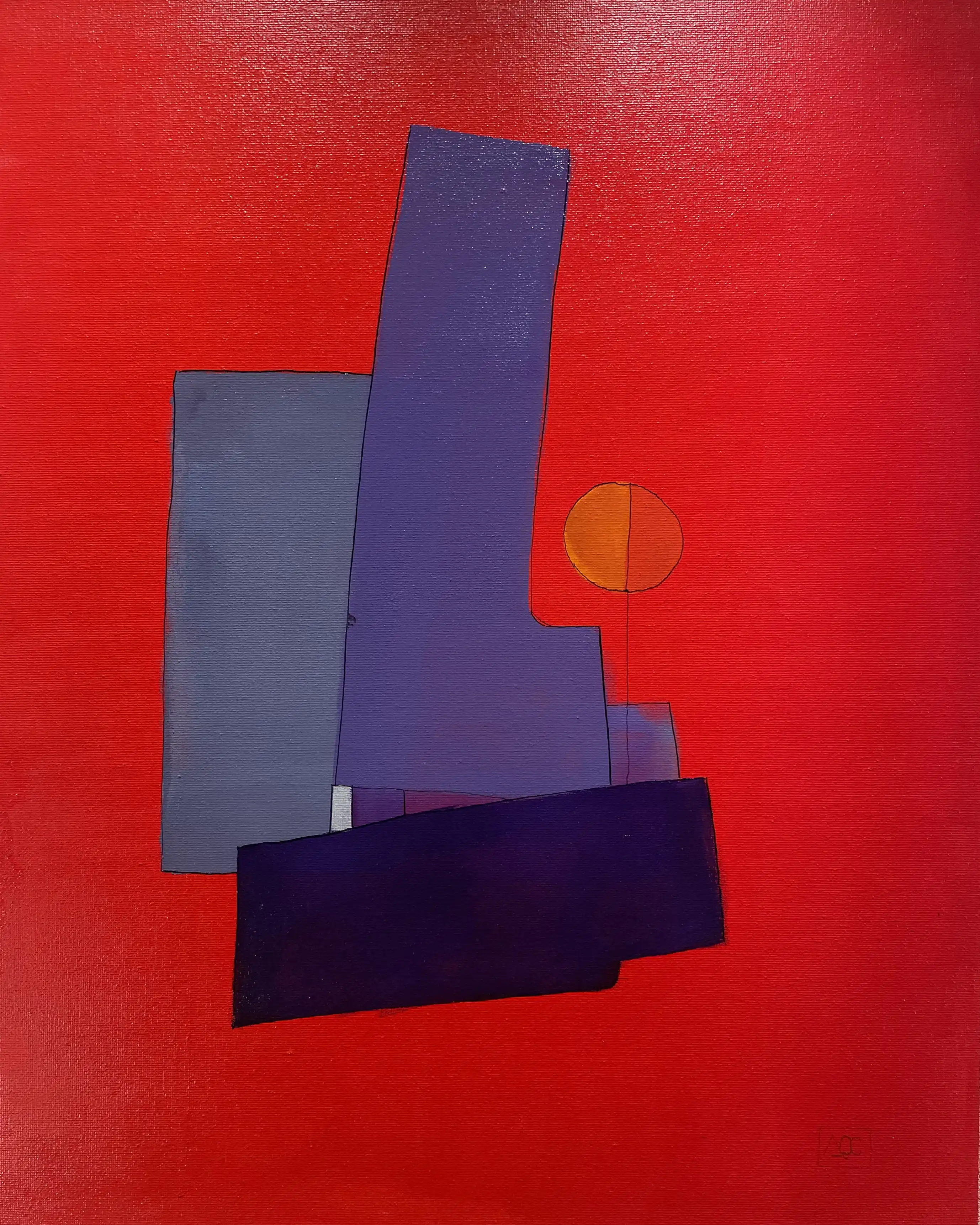
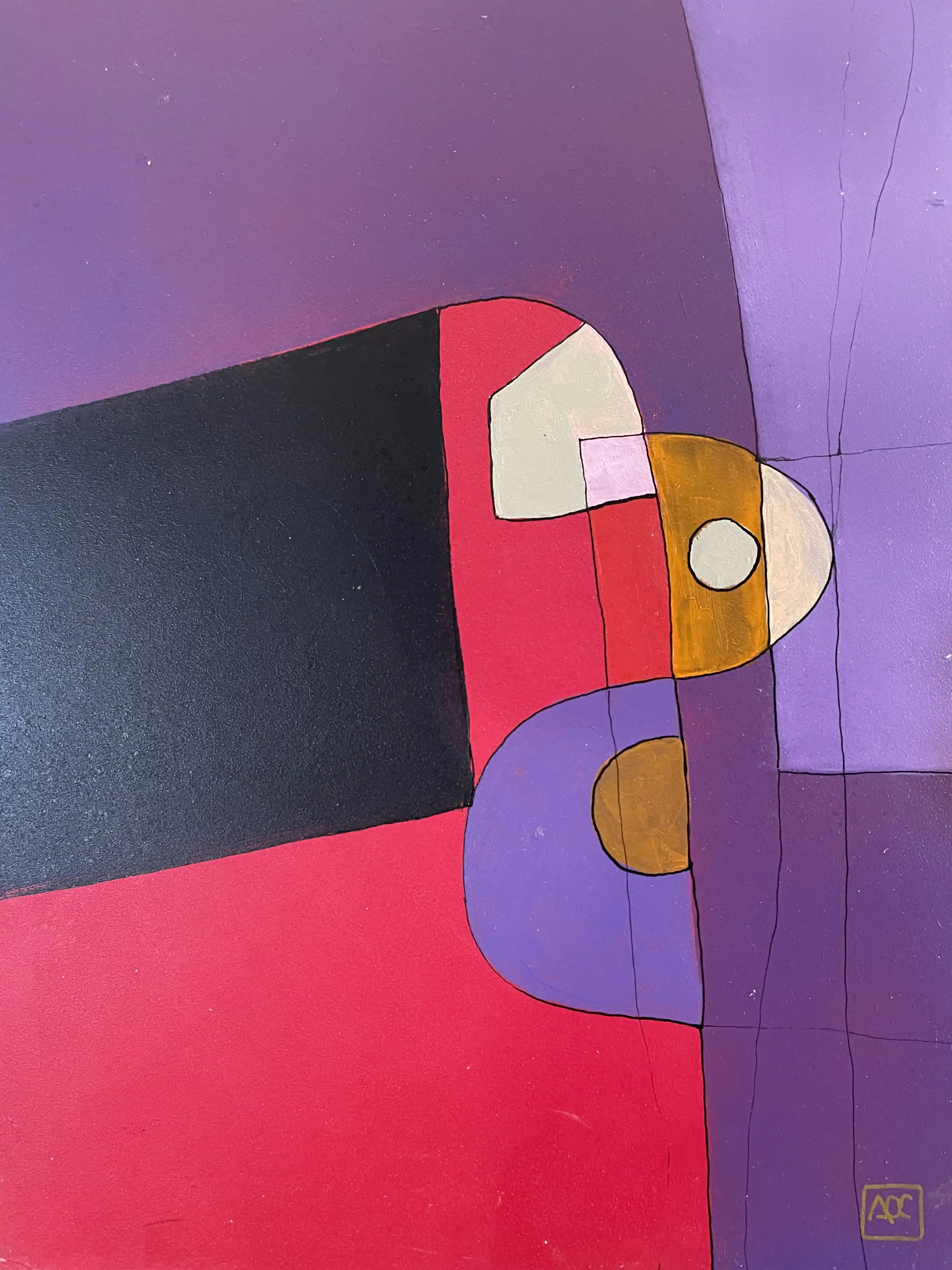
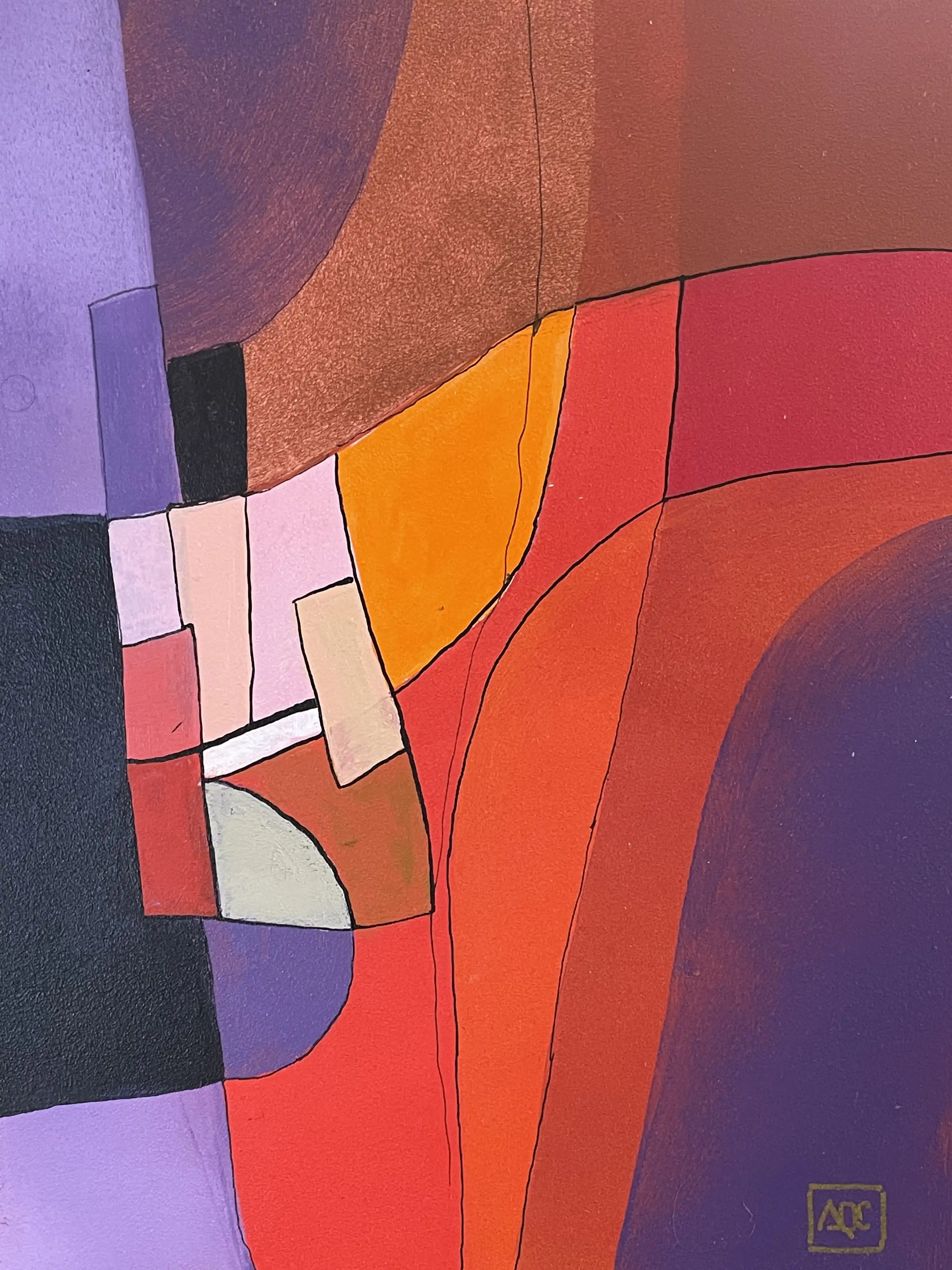
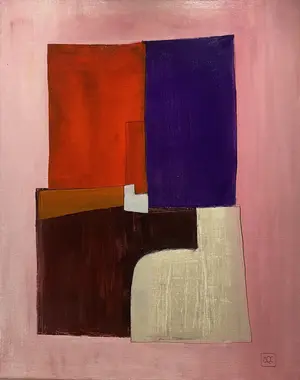
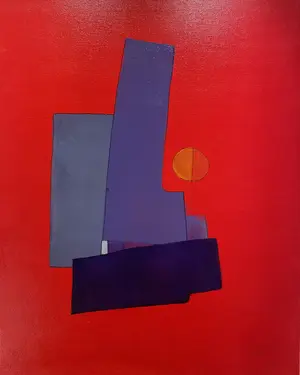
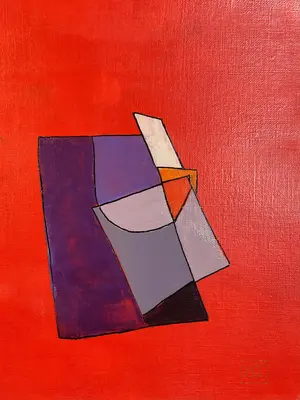
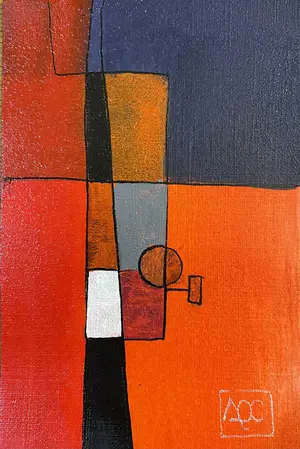
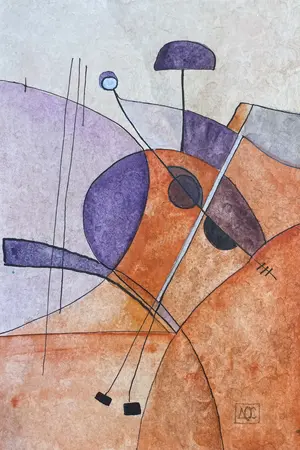
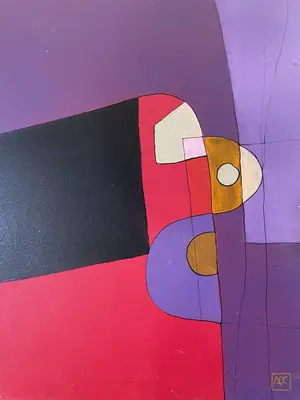
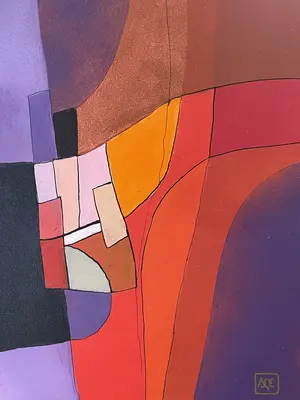
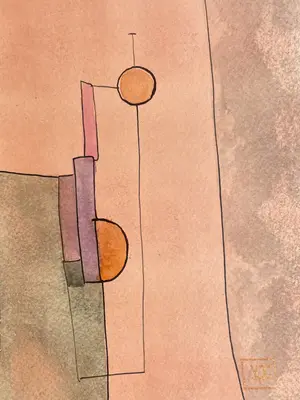
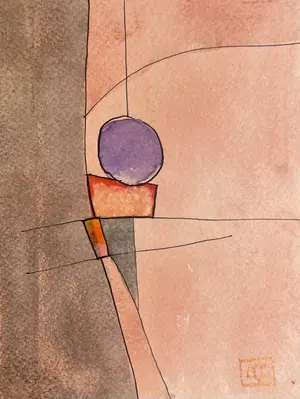
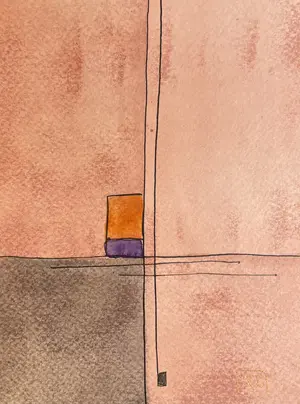
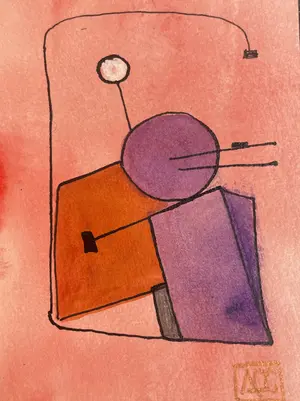
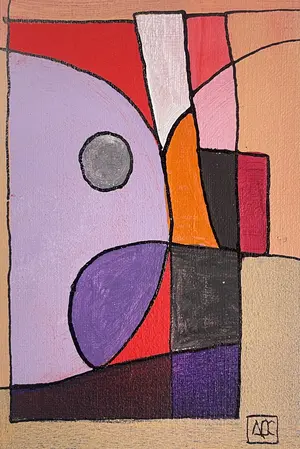
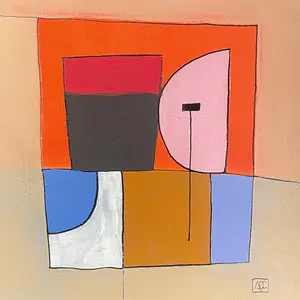
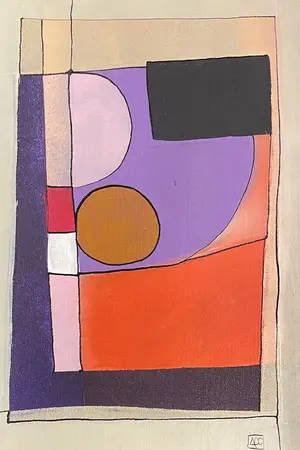
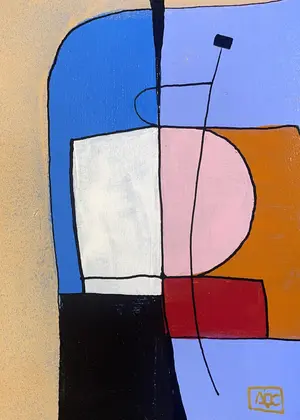
C minor is a series of 16 paintings by Arnaud Quercy, created between 2024 and 2025 in acrylic on canvas, acrylic on linen canvas, acrylic on paper, acrylic on wood panel and watercolor on paper. Formats range from 10×15 cm to 100×100 cm. 14 works are held in private collections (Paris, France, Australia, Luxembourg, Luxembourg, Saint-Michel-le-Cloucq, France, Brussels, Belgium, Caudan, France, Istanbul, Turkey, Sao Paul, Brazil, Germany). 2 remain available for acquisition at Art Quam Anima, 28 rue du Dragon, Paris. Works presented at: Rencontres au Marché de la Création, Salon d'art contemporain – Metamorphose, Paris and Permanent Collection 2025 – Resonance in Form and 7 more.
C minor is built from three pitches — C, Eb, G — spanning a minor third and a perfect fifth. It is among the most storied keys in Western music: the key of Beethoven's Fifth Symphony, of Chopin's Revolutionary Etude, of Brahms's First Symphony. Where major triads resolve, minor triads insist. The interval between root and third — just three half steps — creates a tension that centuries of composers have turned to when gravity, urgency, or sorrow demanded a harmonic home.
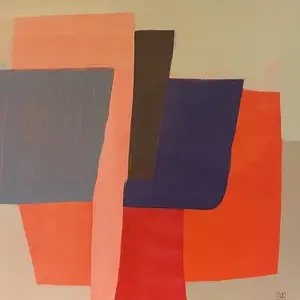
Through harmonic-chromatic, Quercy perceives C as red, darkening toward black in the lowest registers and warming toward saturated red higher up. Eb translates as blue-violet in the bass, shifting through violet to light orange and near-silver at the keyboard's upper extreme. G holds steady as red-orange across most of its range. The resulting palette is dominated by deep reds and dark violets, with red-orange warmth running through the middle registers. Cool blue-violet and warm red-orange meet across a foundation of near-black — a palette whose temperature is divided, its darkness persistent.
Sixteen piano etudes explore this chord across a wide range of densities and registers. The majority move at Lent tempo with legato phrasing and quiet dynamics — piano or mp — giving the series a prevailing character of slow, dark introspection. Bell arches and descending phrases dominate the contours, with waltzes in three accounting for roughly half the works and the rest unfolding in four. The poles are extreme: Variation 1 carries the heaviest shadows of any work in the series, while Variation 8 inverts that weight entirely into brightness. Note counts range from three to nine. Two Anime etudes — Variation 6 and Variation 15 — break the slow gravity with forward motion, and a single Modere (Variation 3) occupies the middle ground. The chromatic accent A appears in five works, introducing yellow-orange warmth outside the chord's natural colors.
Variation 5, the series' largest format at one hundred centimetres square on linen, peaks on A5 — a note outside the chord that translates as yellow-orange, cresting the arch in unexpected warmth where blue-violet or red-orange would be expected. Variation 2, the most distilled study, reduces the chord to just three notes — two roots and one fifth — omitting the minor third entirely. As the artist writes, it is "C minor without its characteristic minor quality — no Eb, no blue-violet," the chord "suspended between minor and major." At the other extreme, Variation 15 closes the series with nine notes, Anime tempo, and normal articulation — the only etude without legato, its four ascending Eb's building "a staircase to silver-white" at the keyboard's upper limit.
Across the collection, darkness is the default and brightness the exception. The early works establish a base of near-black and deep red, the low C roots pulling the palette into shadow. When the register rises — particularly through G4 and G5 — red-orange warmth enters the midground. The high Eb's, from Eb5's pale violet to Eb7's near-silver, provide the only pathway to brightness. The occasional A5 yellow-orange appears as a chromatic warm spot, a brief departure from the chord's inherent cool-dark character. The visual rhythm of the series moves from dense shadow through gradual brightening and back, the same three pitch classes refracting through different registers to produce paintings that range from near-lightless to luminous.
Repetition reveals what a single statement cannot. Sixteen variations of the same three-note chord, and C minor emerges not as one color but as a spectrum — from the near-black gravity of the lowest roots to the silver threshold of the highest Eb. These works now live in collections from Paris to Istanbul, Sao Paulo to the Australian coast, carrying with them the particular tension of this key: warmth framed by darkness, brightness earned only at the extremes of register.

Arnaud Quercy is a Parisian artist working across painting, music, and sculpture. His practice is grounded in Ideamorphism — the principle that a work of art does not carry meaning, but triggers it. Each piece is engineered to diffract differently through each person who encounters it.
He creates and exhibits at Art Quam Anima, his gallery-atelier at 28 rue du Dragon, Saint-Germain-des-Prés, Paris.
Works — C minor
Related hubs
- Collection: Harmonic Crossing
Exhibitions 10
- Art Quam Anima – Pre-opening (2026-01-31 → 2026-02-28, Art Quam Anima, Paris)
- Salon d'art contemporain – Metamorphose 2025–2026, Paris (2025-12-26 → 2026-01-04, Halle des Blancs Manteaux, Paris)
- Through the Aperture — Research on Harmony (2026-03-09 → 2026-04-30, Art Quam Anima, Paris)
- Rencontres au Marché de la Création (2024-04-23 → 2024-12-31, Marché de la Création – Paris Montparnasse, Paris)
- Salon d'art contemporain – Metamorphose, Paris (2024-12-26 → 2025-01-05, Halle des Blancs Manteaux, Paris)
- Permanent Collection 2025 – Resonance in Form (2025-01-01 → 2025-12-31, arnaudquercy.art, Paris)
- Paris Studio Visit (2025-02-18 → 2025-02-18, Artist's Studio, Paris)
- Marché d'Art Contemporain – Seine Port (2025-05-17 → 2025-05-17, MAC Seine-Port, Seine-Port)
- Nuit des Artistes, St Germain-en-Laye, France (2025-05-24 → 2025-05-24, La Nuit des Artistes, Saint-Germain-en-Laye)
- Marché de l'Art de Saint-Germain-en-Laye, 17ème édition – France (2025-06-14 → 2025-06-14, Marché de l'Art, Saint-Germain-en-Laye)
Other series in this collection 35
Documented at 1
Catalogue raisonné entries 16
- C minor - Research on Harmony
- C minor - Research on Harmony - Variation 1
- C minor - Research on Harmony - Variation 2
- C minor - Research on Harmony - Variation 3
- C minor - Research on Harmony - Variation 4
- C Minor - Research on Harmony - Variation 6
- C Minor - Research on Harmony - Variation 7
- C Minor - Research on Harmony - Variation 8
- C Minor - Research on Harmony - Variation 9
- C Minor - Research on Harmony - Variation 10
- C Minor - Research on Harmony - Variation 11
- C Minor - Research on Harmony - Variations 12
- C Minor - Research on Harmony - Variations 13
- C Minor - Research on Harmony - Variations 14
- C Minor - Research on Harmony - Variations 15
- C minor - Research on Harmony - Variation 5