F Major series — 16 Paintings by Arnaud Quercy
ART-SER0011
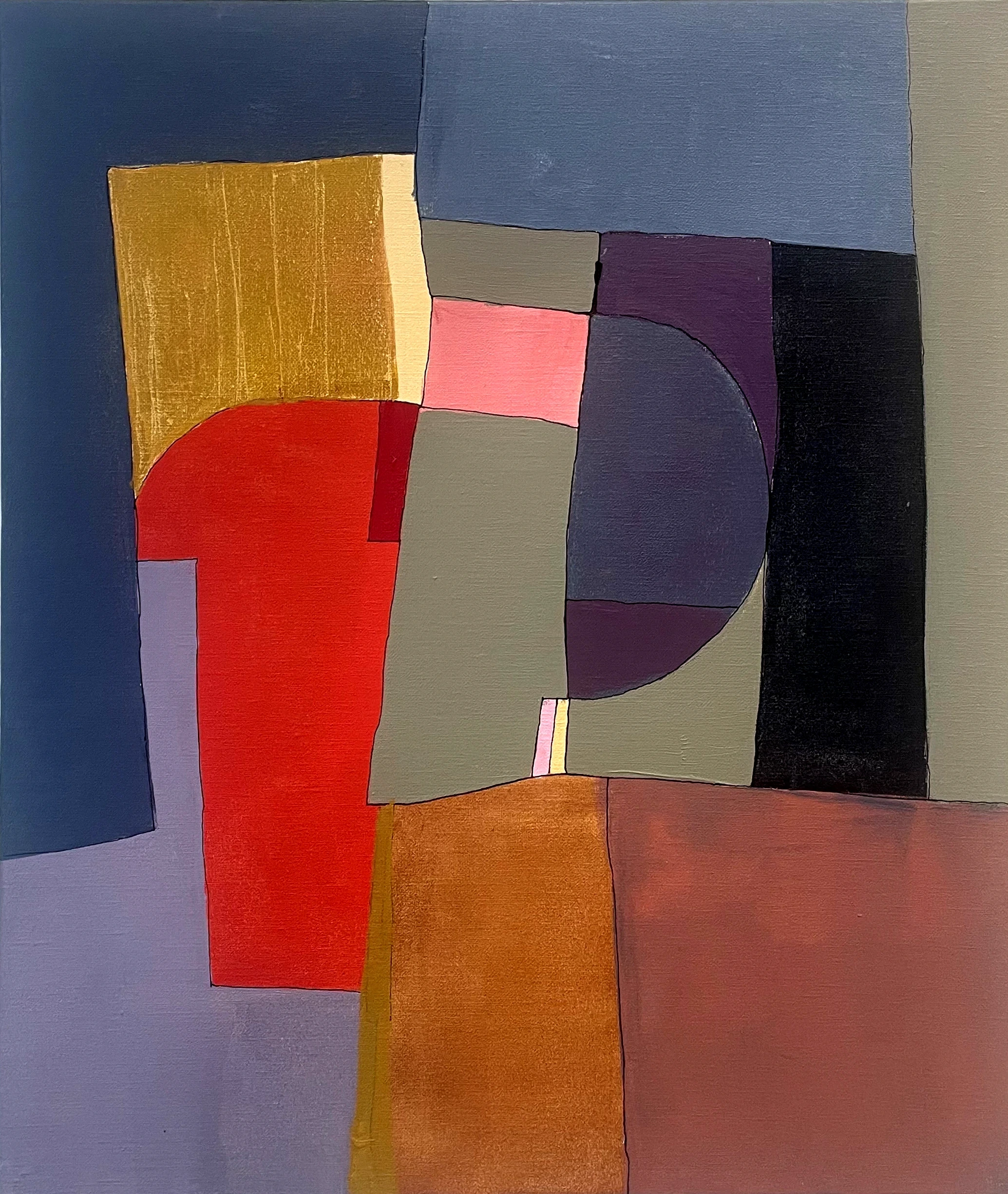
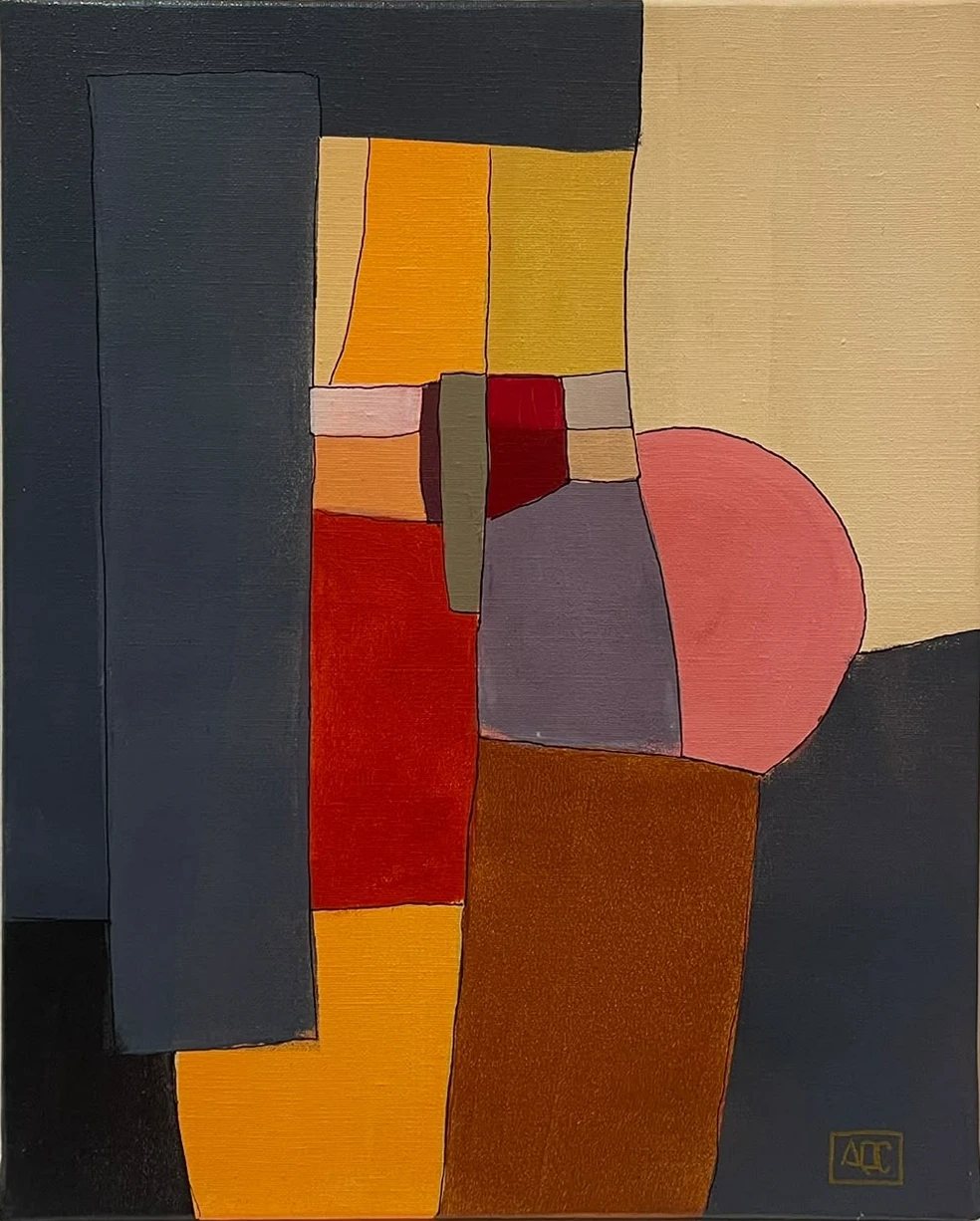
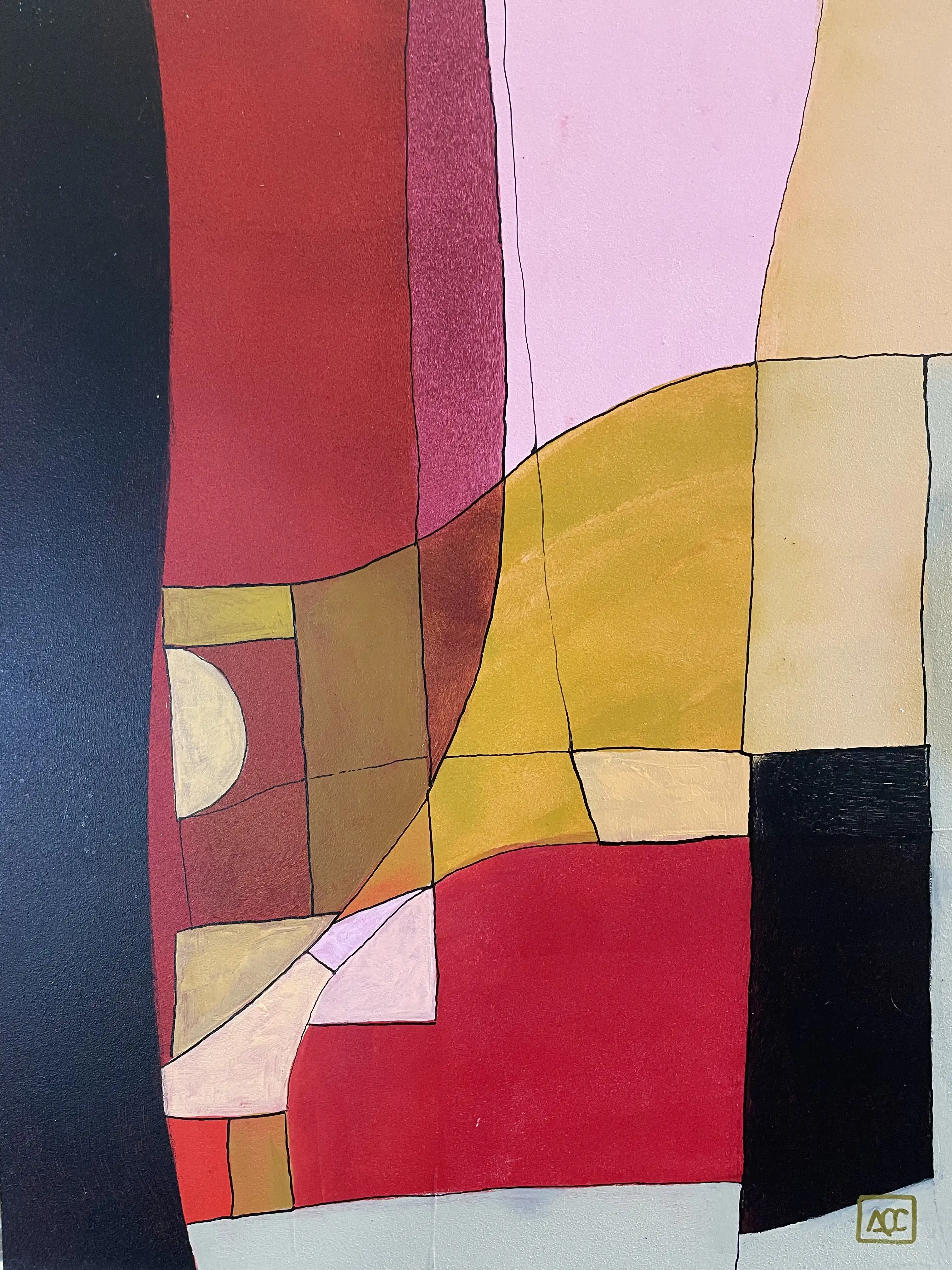
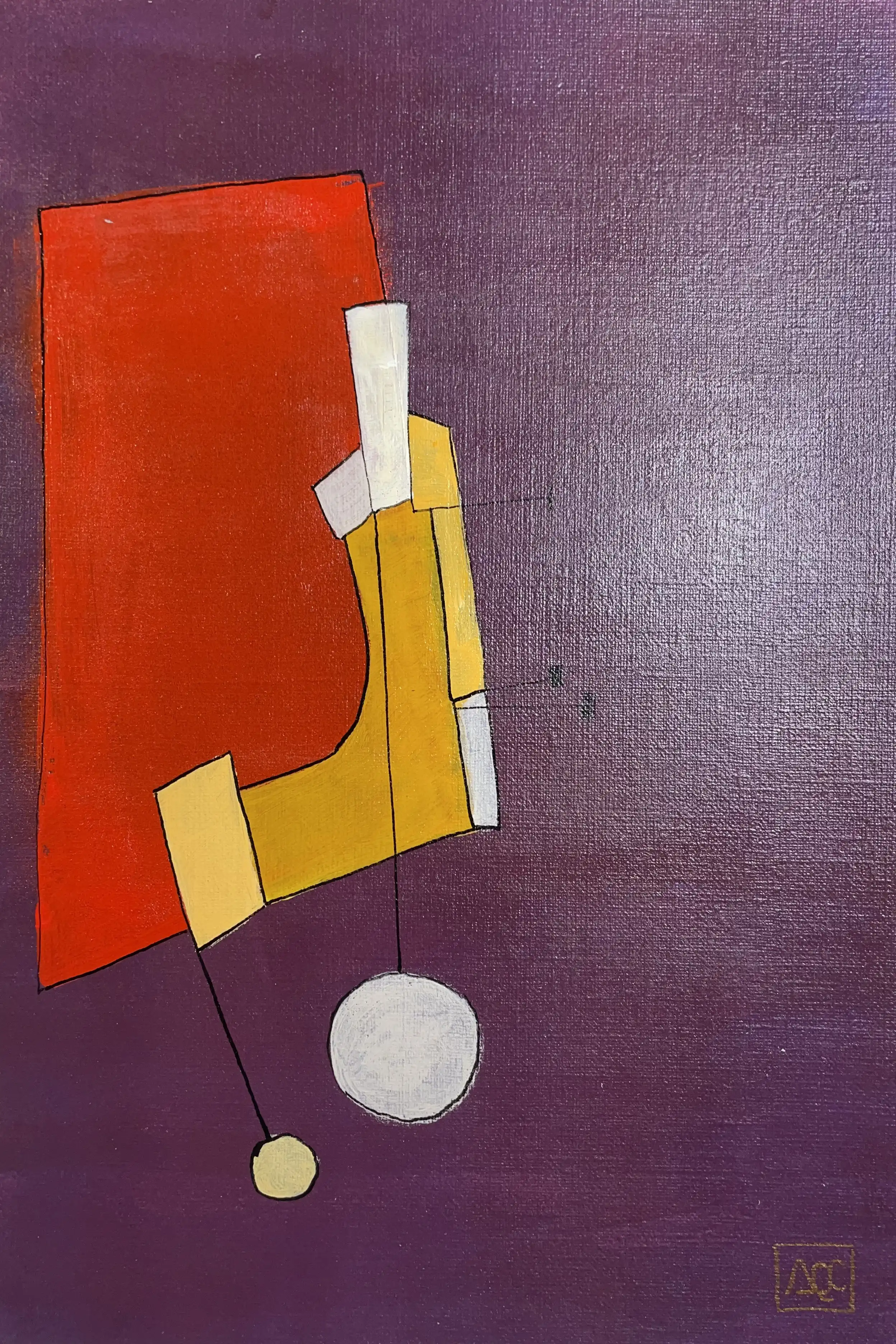
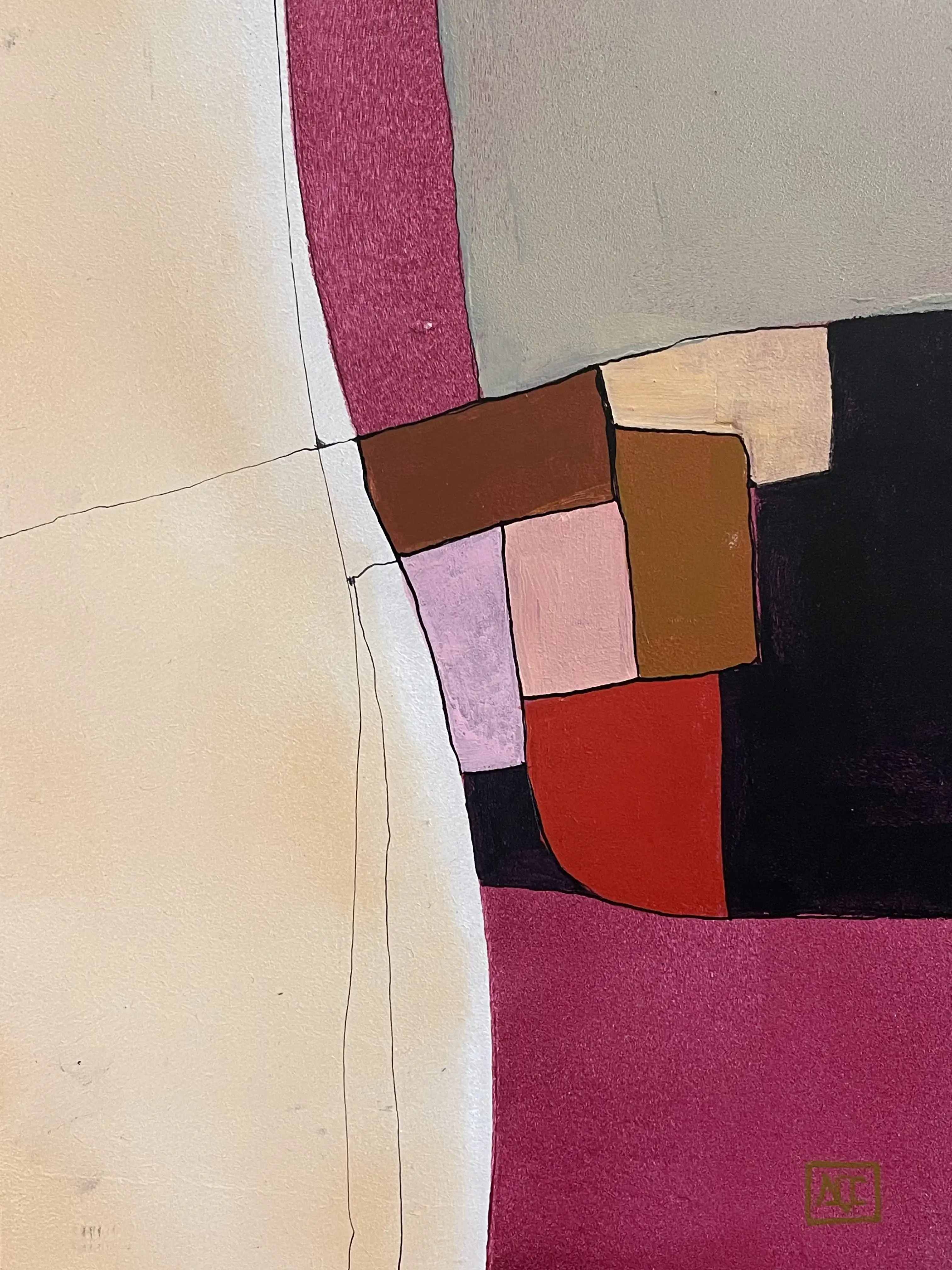
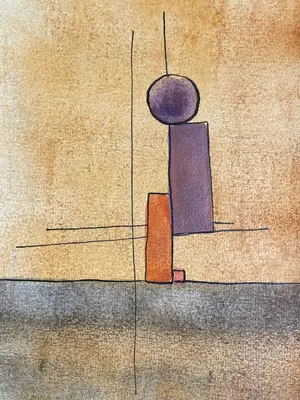
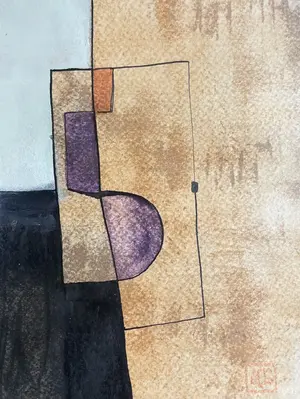
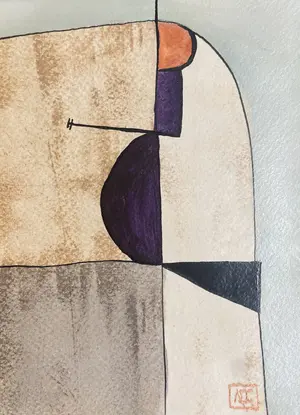
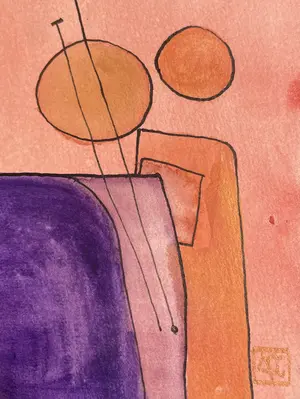
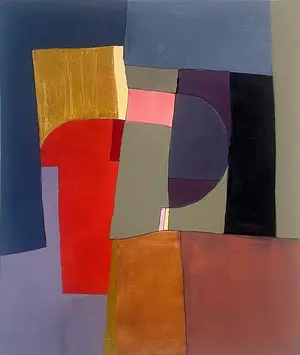
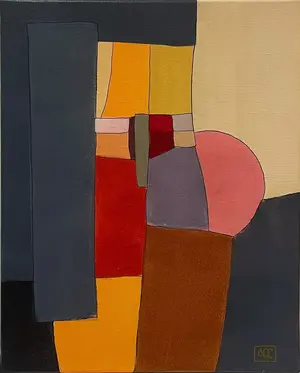
F Major is a series of 16 paintings by Arnaud Quercy, created between 2024 and 2026 in acrylic on linen canvas, acrylic on paper, acrylic on wood panel and watercolor on paper. Formats range from 10×15 cm to 46×55 cm. 9 works are held in private collections (Carmel, USA, Franc, Istanbul, Turkey, Paris, France, Greece, New-York, USA, San Francisco, USA). 5 remain available for acquisition at Art Quam Anima, 28 rue du Dragon, Paris. Works presented at: Rencontres au Marché de la Création, Salon d'art contemporain – Metamorphose, Paris and Permanent Collection 2025 – Resonance in Form and 8 more.
F Major is the pastoral key of Western music — one flat, a triad built on the intervals that Beethoven chose for his Sixth Symphony and Ravel for his Piano Concerto in G's slow movement. The chord sits a fifth below C Major, one step into the flat side of the circle, and carries a particular quality of openness: bright without brilliance, warm without heat. In the harmonic traditions of the eighteenth and nineteenth centuries, F Major was the key of fields and flowing water, of unhurried afternoon light.
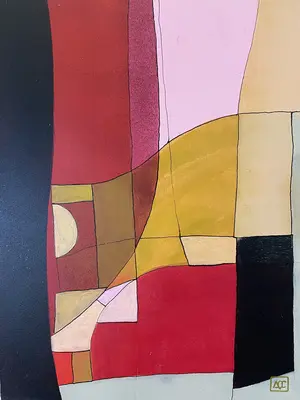
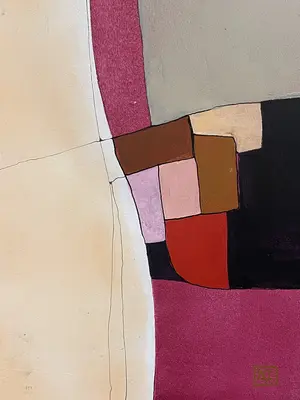
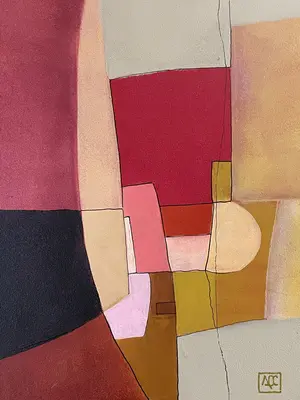
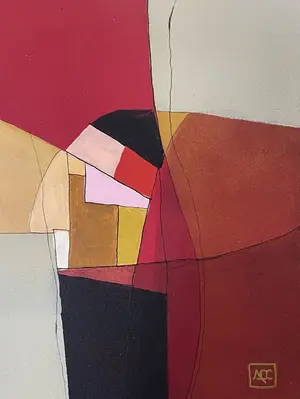
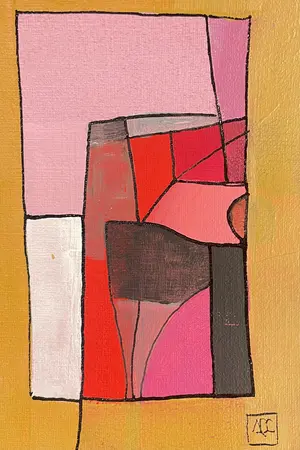
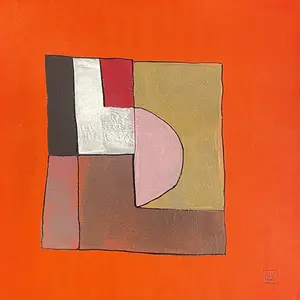
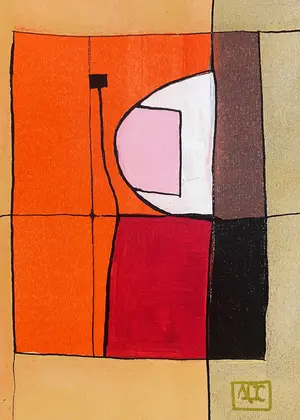
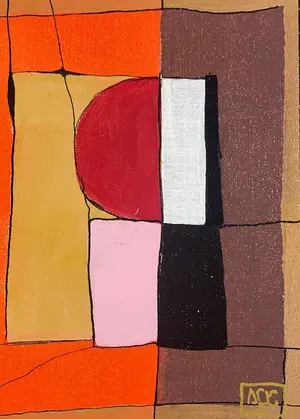
Through the harmonic-chromatic process, the F Major triad translates into a palette drawn entirely from the warm half of the color wheel. The root, F, produces red-violet — a deep, slightly cool anchor. The third, A, yields yellow-orange that shifts toward red as the register rises. The fifth, C, appears as red deepening into red-orange. Together, these three pitch-classes create a sunset-adjacent family of warm hues: violets, reds, oranges, and yellows clustering without any cool counterpoint. Register alters saturation and value — F1 in the deep bass is near-black, A7 at the keyboard's upper extreme thins to silver, and the middle octaves carry the palette's fullest warmth.
Fourteen piano etudes comprise the F Major series, spanning a register from F1 to A7 — nearly six octaves. The dominant tempo is Lent, with only two etudes (Variations 2 and 7) stepping to Modere. Dynamics range from a single mf in the opening study to the prevailing mp and two soft p markings in Variations 5 and 9. Bell arches — phrases rising from the bass to a crest and folding back — define the majority of contours, though six etudes trace descending lines and one, Variation 7, carves the series' only valley. Waltz meter and common time divide the set roughly in half. Note counts vary widely, from three pitches in the most distilled study to eleven in the densest, and occasional chromatic accents — blue-green, blue, blue-violet — surface as cool tensions against the prevailing warmth.
Variation 2 is the largest work in the series, painted in acrylic on wood panel at 30 by 42 centimeters. It is also the only ascending etude: a waltz climbing from F1 to A6 in ten notes at Modere tempo, with a blue accent mid-phrase — "the only etude in the series that climbs and stops at the top rather than folding back." At the opposite extreme, Variation 11 reduces the bell arch to three pitches spanning five octaves: F2, A4, A7 — root, third, third again at the silver peak. No fifth appears anywhere in the phrase. Between these poles, Variation 1 carries eleven notes from F1 to A7, its blue-green and blue chromatic accents described as "cool islands in a warm sea."
Across the fourteen canvases, what a viewer encounters is a collection unified by warmth. Red-violet anchors the lower registers, red-orange inhabits the middle, and yellow-orange brightens toward the upper range, thinning to silver only at the extreme. The chromatic accents — present in just three of the fourteen works — appear as brief cool intrusions, isolated blue and blue-violet passages that heighten the surrounding warmth by contrast. Darkness lives in the bass, where the root sits in near-black, and brightness accumulates wherever the third repeats through the upper octaves. Several descending etudes weight their paintings toward highlights despite falling phrases, because the upper-register pitches carry disproportionate visual brightness. The repetition of the same three pitch-classes under different arrangements reveals how register, density, and contour reshape the same harmonic material into distinct visual experiences.
Quercy's F Major series confirms what the pastoral tradition has long suggested about this key: it favors directness over complexity, warmth over drama. The fourteen etudes do not argue or insist — they occupy their warm spectrum with the patience of slow phrases and unhurried arches. Half of these works have found homes in private collections from the United States to France, from Istanbul to Greece, suggesting that the series' quiet warmth translates across geographies as readily as it translates across senses. In a practice built on the systematic translation of harmony into color, F Major stands as the collection's most consistently warm body of work — a key whose character remains legible whether heard as a chord or seen as a painting.
Arnaud Quercy is a Parisian artist working across painting, music, and sculpture. His practice is grounded in Ideamorphism — the principle that a work of art does not carry meaning, but triggers it. Each piece is engineered to diffract differently through each person who encounters it.
He creates and exhibits at Art Quam Anima, his gallery-atelier at 28 rue du Dragon, Saint-Germain-des-Prés, Paris.
Works — F Major
Related hubs
- Collection: Harmonic Crossing
Exhibitions 10
- Salon d'art contemporain – Metamorphose 2025–2026, Paris (2025-12-26 → 2026-01-04, Halle des Blancs Manteaux, Paris)
- Art Quam Anima – Pre-opening (2026-01-31 → 2026-02-28, Art Quam Anima, Paris)
- Through the Aperture — Research on Harmony (2026-03-09 → 2026-04-30, Art Quam Anima, Paris)
- Rencontres au Marché de la Création (2024-04-23 → 2024-12-31, Marché de la Création – Paris Montparnasse, Paris)
- Salon d'art contemporain – Metamorphose, Paris (2024-12-26 → 2025-01-05, Halle des Blancs Manteaux, Paris)
- Permanent Collection 2025 – Resonance in Form (2025-01-01 → 2025-12-31, arnaudquercy.art, Paris)
- Paris Studio Visit (2025-02-18 → 2025-02-18, Artist's Studio, Paris)
- Marché d'Art Contemporain – Seine Port (2025-05-17 → 2025-05-17, MAC Seine-Port, Seine-Port)
- Nuit des Artistes, St Germain-en-Laye, France (2025-05-24 → 2025-05-24, La Nuit des Artistes, Saint-Germain-en-Laye)
- Marché de l'Art de Saint-Germain-en-Laye, 17ème édition – France (2025-06-14 → 2025-06-14, Marché de l'Art, Saint-Germain-en-Laye)
Other series in this collection 35
Documented at 1
Catalogue raisonné entries 16
- F Major - Research on Harmony
- F Major - Research on Harmony - Variation 1
- F Major - Research on Harmony - Variation 2
- F Major - Research on Harmony - Variation 3
- F Major - Research on Harmony - Variation 4
- F Major - Research on Harmony - Variation 5
- F Major - Research on Harmony - Variation 6
- F Major - Research on Harmony - Variation 7
- F Major - Research on Harmony - Variation 8
- F Major - Research on Harmony - Variation 9
- F Major - Research on Harmony - Variations 10
- F Major - Research on Harmony - Variations 11
- F Major - Research on Harmony - Variations 13
- F Major - Research on Harmony - Variations 12
- F Major - Research on Harmony - Variations 14
- F Major - Research on Harmony - Variations 15