Eb Major series — 8 Paintings by Arnaud Quercy
ART-SER0009
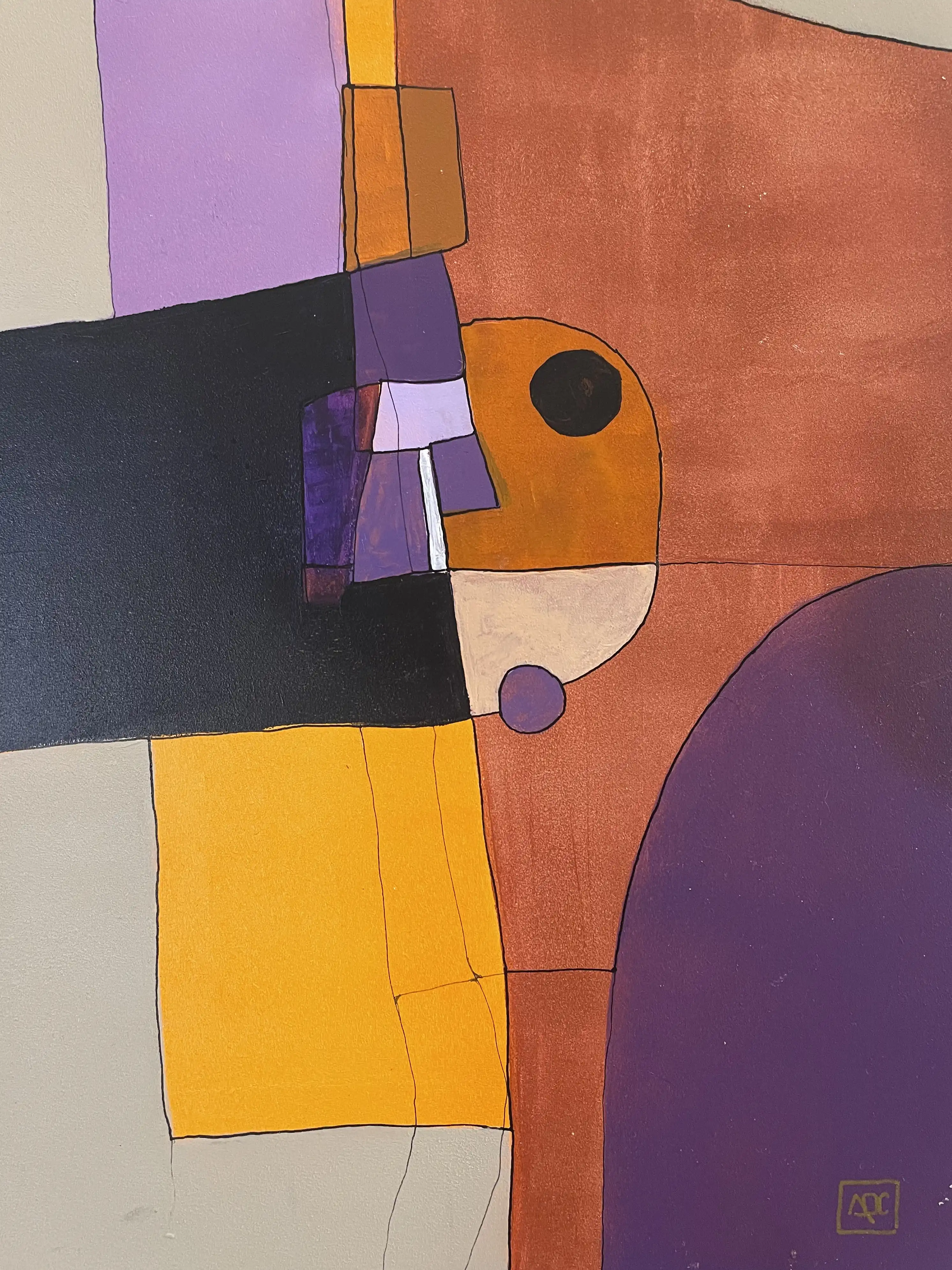
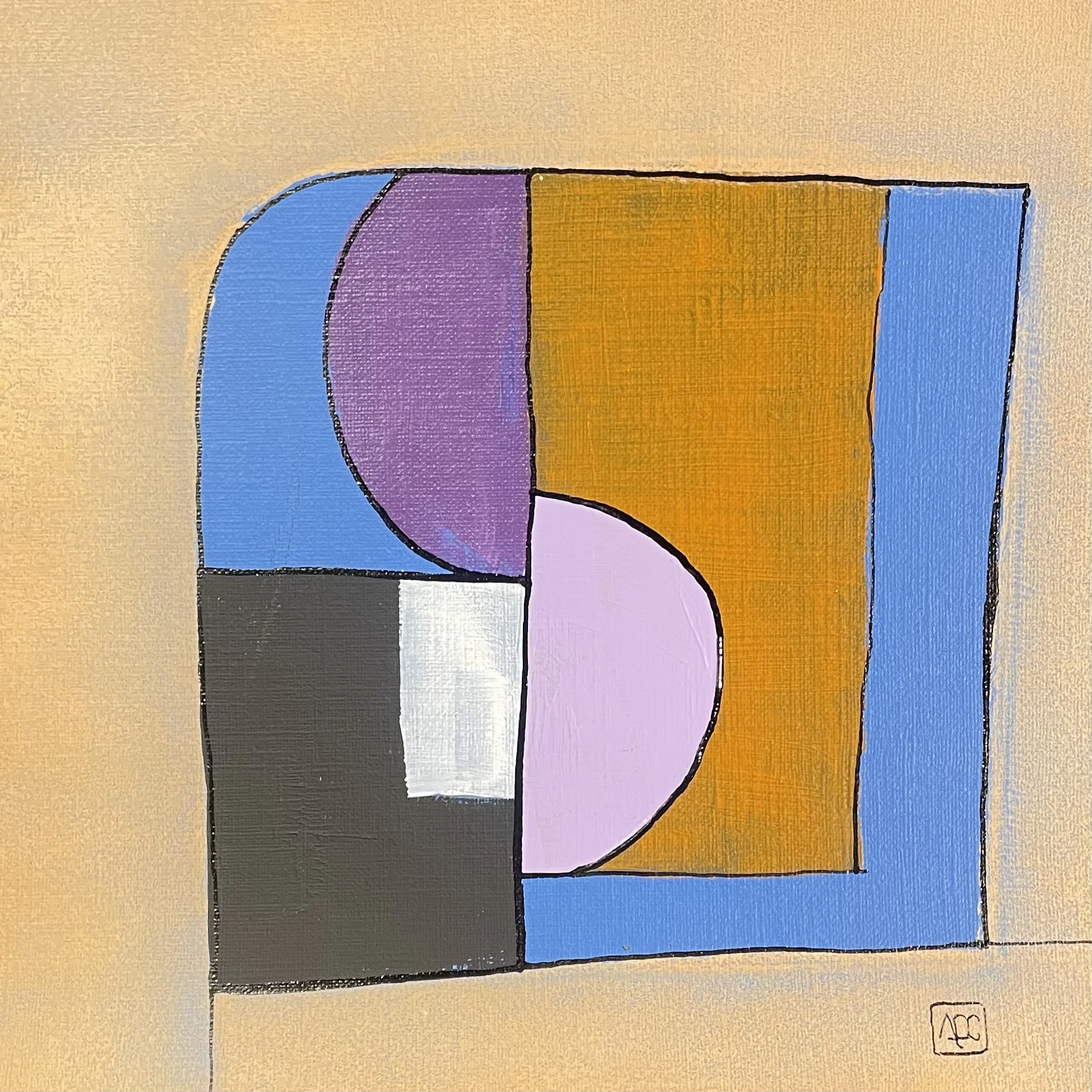
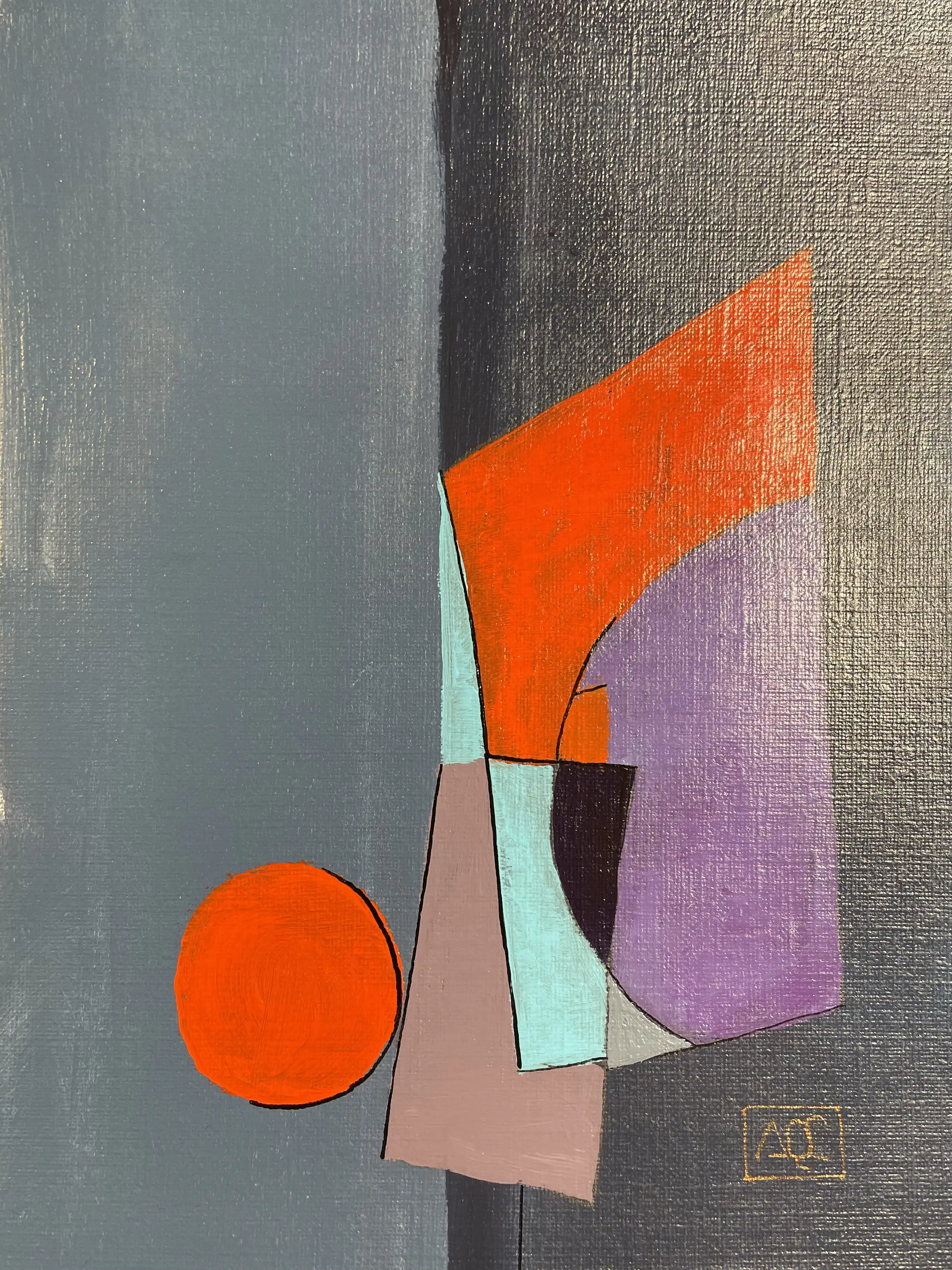
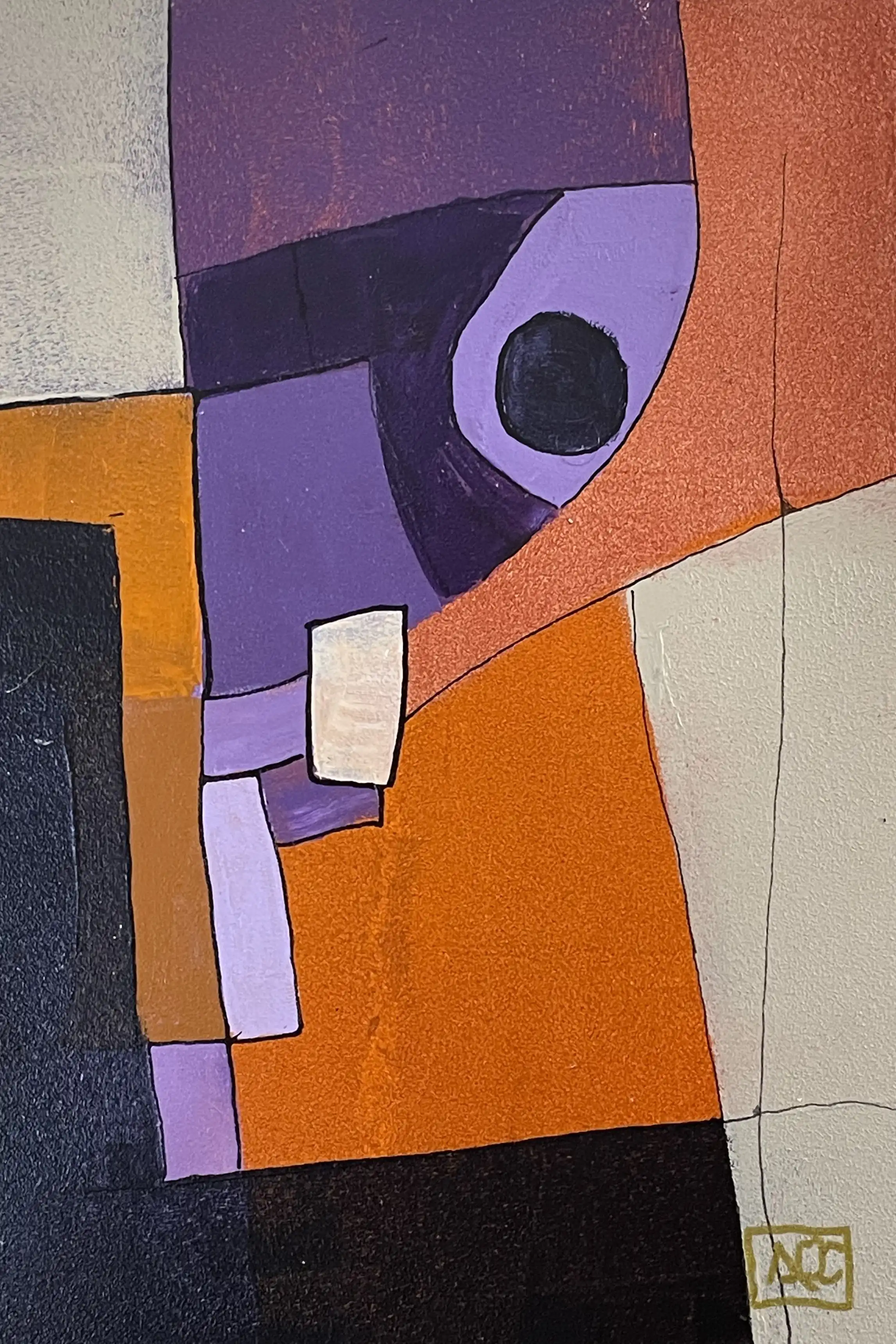
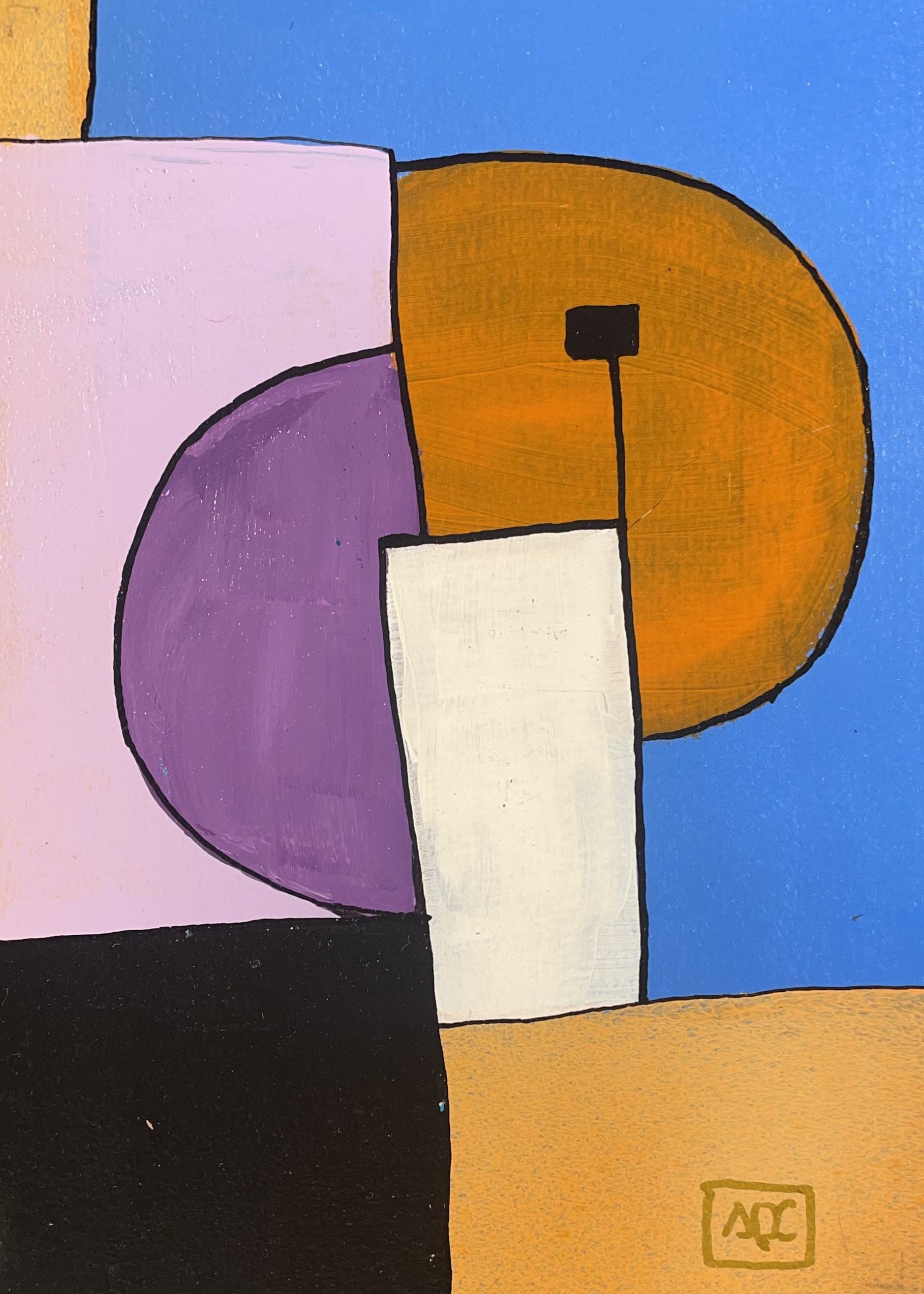
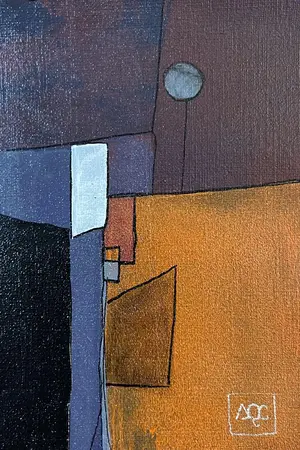
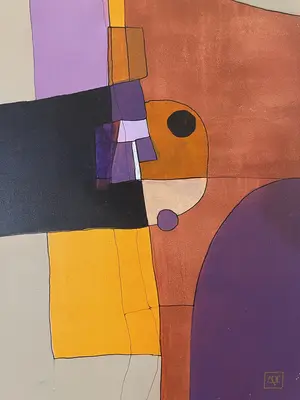
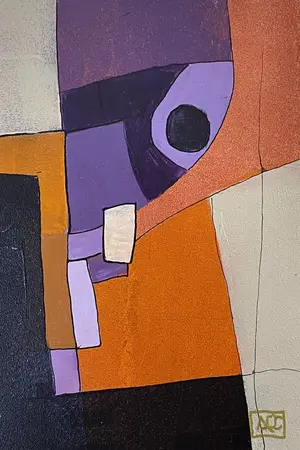
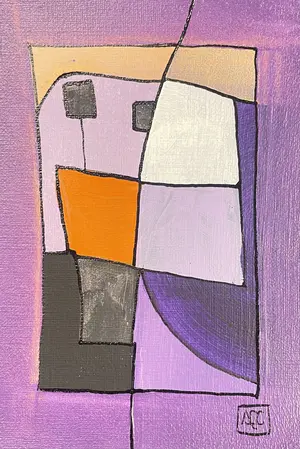
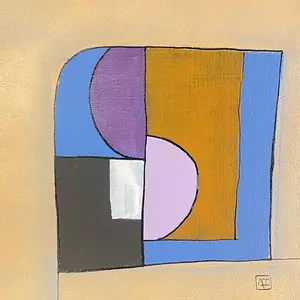
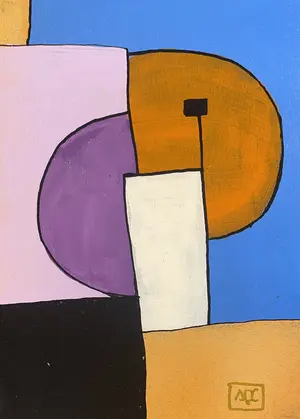
Eb Major is a series of 8 paintings by Arnaud Quercy, created between 2024 and 2025 in acrylic on paper and acrylic on wood panel. Formats range from 10×15 cm to 30×42 cm. All 8 works in this series are held in private collections (Paris, France, Washington, USA, San-Francisco, USA, Saint-Doulchard, France, Zürich, Switzerland). Works presented at: Rencontres au Marché de la Création, Salon d'art contemporain – Metamorphose, Paris and Permanent Collection 2025 – Resonance in Form and 7 more.
E-flat Major carries the weight of heroism in Western music. Three flats shape a triad — Eb, G, Bb — that Beethoven chose for both the Eroica Symphony and the Emperor Concerto, the key he reached for when the subject was grandeur. Its interval structure is identical to any major chord, but tradition has given it a particular gravity: ceremonial, broad-shouldered, suited to proclamation. In harmonic-chromatic translation, however, Eb Major is something quieter than its reputation.
The root, Eb, produces a blue-violet that cools the foundation of every phrase. The third, G, brings the chord's only real warmth — a red-orange that glows in the middle register, fading toward silver above the sixth octave. The fifth, Bb, reads as a muted violet, close in temperature to the root, reinforcing the prevailing coolness. The overall palette runs cool at both extremes and warm only at the center, where the third asserts itself. Low Eb darkens toward near-black; high G dissolves into silver and near-white. Between those poles, the mid-register holds a tension between the root's blue-violet and the third's red-orange — a dignity of contrasts rather than a blaze of warmth.
Arnaud Quercy explores this tension across eight études, painted in 2024 and 2025 in acrylic — on paper and on wood panel, in formats ranging from 10 by 15 centimeters to 30 by 42. The register is notably compact for most of the series, rarely venturing beyond Eb2 to G7, with several études staying within a single octave of the mid-keyboard. Tempos divide among Lent, Animé, and Modéré — two slow, three walking, two at a middle pace. Every phrase is legato, the dynamic held at mp or mf, never louder. The contours favor valleys and descents, the phrases sinking or curving downward more often than they rise. Only one variation traces a bell arch, and only one climbs without looking back. Most carry a yellow-orange accent from the note A, a warm outsider that mediates between the chord's cool root and cool fifth. One variation — the last — replaces that warmth with something unexpected.
Variation 3, painted on wood panel at 30 by 42 centimeters, is the largest format and the sparsest phrase: five notes, two of them outsiders, the chord barely holding its shape beneath the accents. It is also the only bell contour, an arch that rises before falling back — "the most balanced painting in the series," shadow, midtone, and highlight distributed in nearly equal shares. At the opposite extreme, Variation 6 gathers nine notes and every member of the triad plus two warm accents, producing what the artist calls "the widest palette, the most notes, the most light — Eb Major at its most generous." Between these poles, Variation 7 closes the series with a blue-green accent at Db4 — the only non-warm outsider in the entire cycle, a cool intrusion that shifts the chord's familiar tension and leaves the series on an unresolved breath.
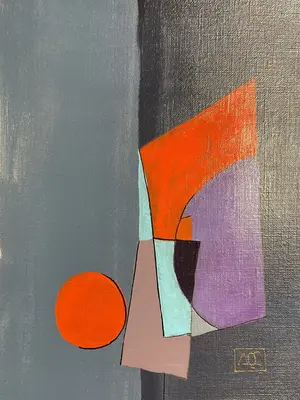
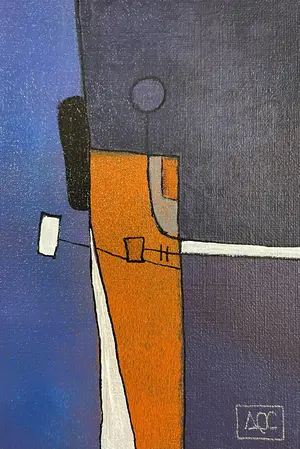
On canvas, Eb Major reads as a dialogue between violet and silver. The root's blue-violet anchors the base of nearly every painting, darkening toward near-black in the low register. The fifth reinforces that coolness through the middle in muted violet. Only the third breaks the temperature — red-orange surfacing as a warm glow wherever G appears in the fourth or fifth octave, then fading to pale silver as it climbs. The warm accents, when present, read as small points of gold or sand against the prevailing cool field. The visual rhythm across the eight études is one of compression: the same cool chord examined within a narrow register, the heroic key kept deliberately intimate.
This is Eb Major heard from close range. Where Beethoven filled concert halls, Quercy works at the scale of a hand, testing how grandeur sounds when the dynamic stays at mezzo-piano and the canvas measures fifteen centimeters. The answer, across eight variations, is that the heroic key does not need volume — it needs the quiet dignity of blue-violet held against red-orange, the same contrast repeated until it becomes a conviction. Five of these études have already found homes in collections from Paris to Washington to Zurich, the Emperor's key travelling light.
Arnaud Quercy is a Parisian artist working across painting, music, and sculpture. His practice is grounded in Ideamorphism — the principle that a work of art does not carry meaning, but triggers it. Each piece is engineered to diffract differently through each person who encounters it.
He creates and exhibits at Art Quam Anima, his gallery-atelier at 28 rue du Dragon, Saint-Germain-des-Prés, Paris.
Works — Eb Major
Related hubs
- Collection: Harmonic Crossing
Exhibitions 10
- Rencontres au Marché de la Création (2024-04-23 → 2024-12-31, Marché de la Création – Paris Montparnasse, Paris)
- Salon d'art contemporain – Metamorphose, Paris (2024-12-26 → 2025-01-05, Halle des Blancs Manteaux, Paris)
- Permanent Collection 2025 – Resonance in Form (2025-01-01 → 2025-12-31, arnaudquercy.art, Paris)
- Paris Studio Visit (2025-02-18 → 2025-02-18, Artist's Studio, Paris)
- Marché d'Art Contemporain – Seine Port (2025-05-17 → 2025-05-17, MAC Seine-Port, Seine-Port)
- Nuit des Artistes, St Germain-en-Laye, France (2025-05-24 → 2025-05-24, La Nuit des Artistes, Saint-Germain-en-Laye)
- Marché de l'Art de Saint-Germain-en-Laye, 17ème édition – France (2025-06-14 → 2025-06-14, Marché de l'Art, Saint-Germain-en-Laye)
- Salon d'art contemporain – Metamorphose 2025–2026, Paris (2025-12-26 → 2026-01-04, Halle des Blancs Manteaux, Paris)
- Art Quam Anima – Pre-opening (2026-01-31 → 2026-02-28, Art Quam Anima, Paris)
- Through the Aperture — Research on Harmony (2026-03-09 → 2026-04-30, Art Quam Anima, Paris)
Other series in this collection 35
Documented at 1
Catalogue raisonné entries 8
- Eb Major - Research on Harmony
- Eb Major - Research on Harmony - Variation 1
- Eb Major - Research on Harmony - Variation 2
- Eb Major - Research on Harmony - Variation 3
- Eb Major - Research on Harmony - Variation 4
- Eb Major - Research on Harmony - Variations 5
- Eb Major - Research on Harmony - Variations 6
- Eb Major - Research on Harmony - Variations 7