C Major series — 25 Paintings by Arnaud Quercy
ART-SER0001
Works for sale
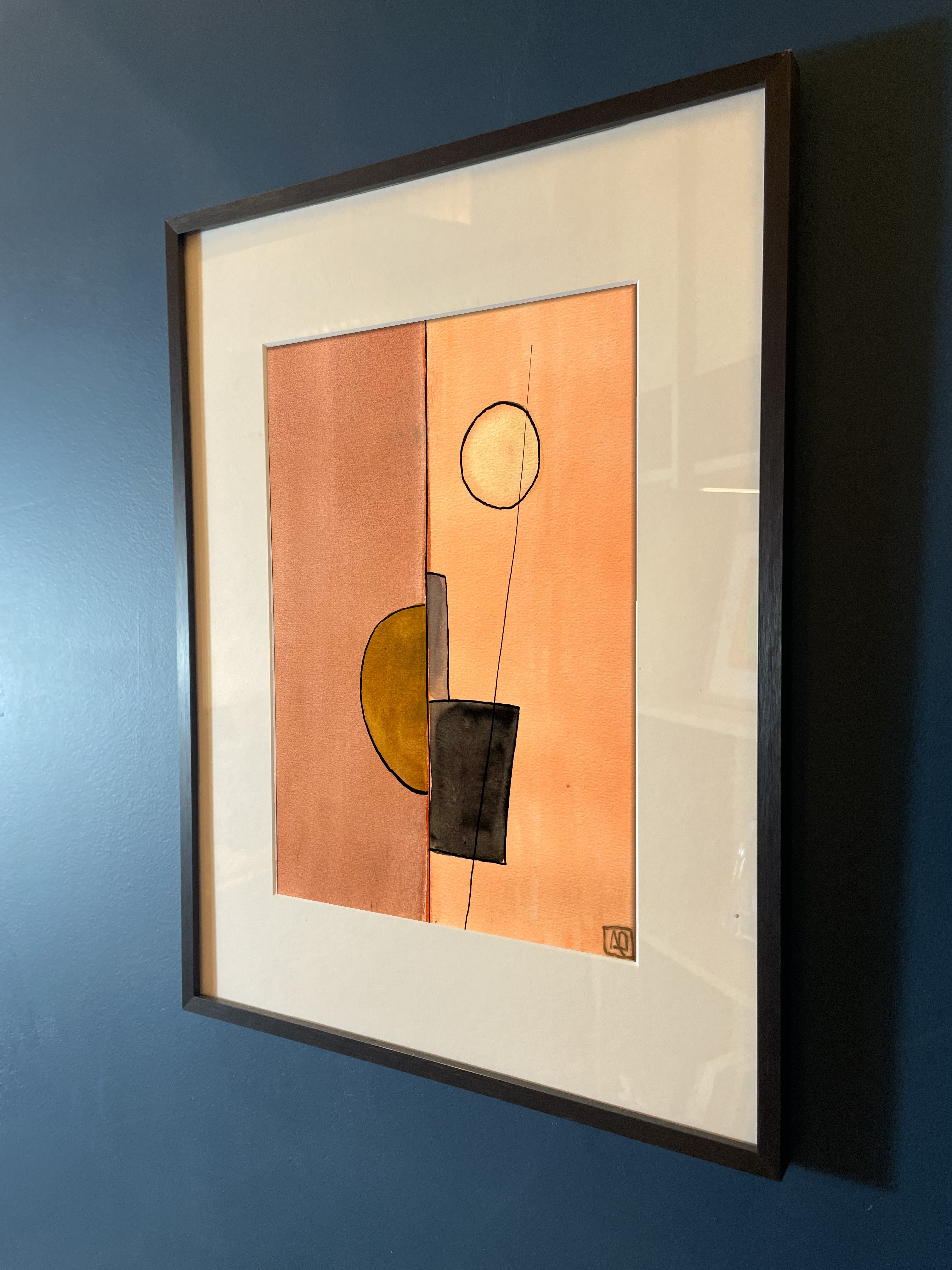
No work matches these filters.
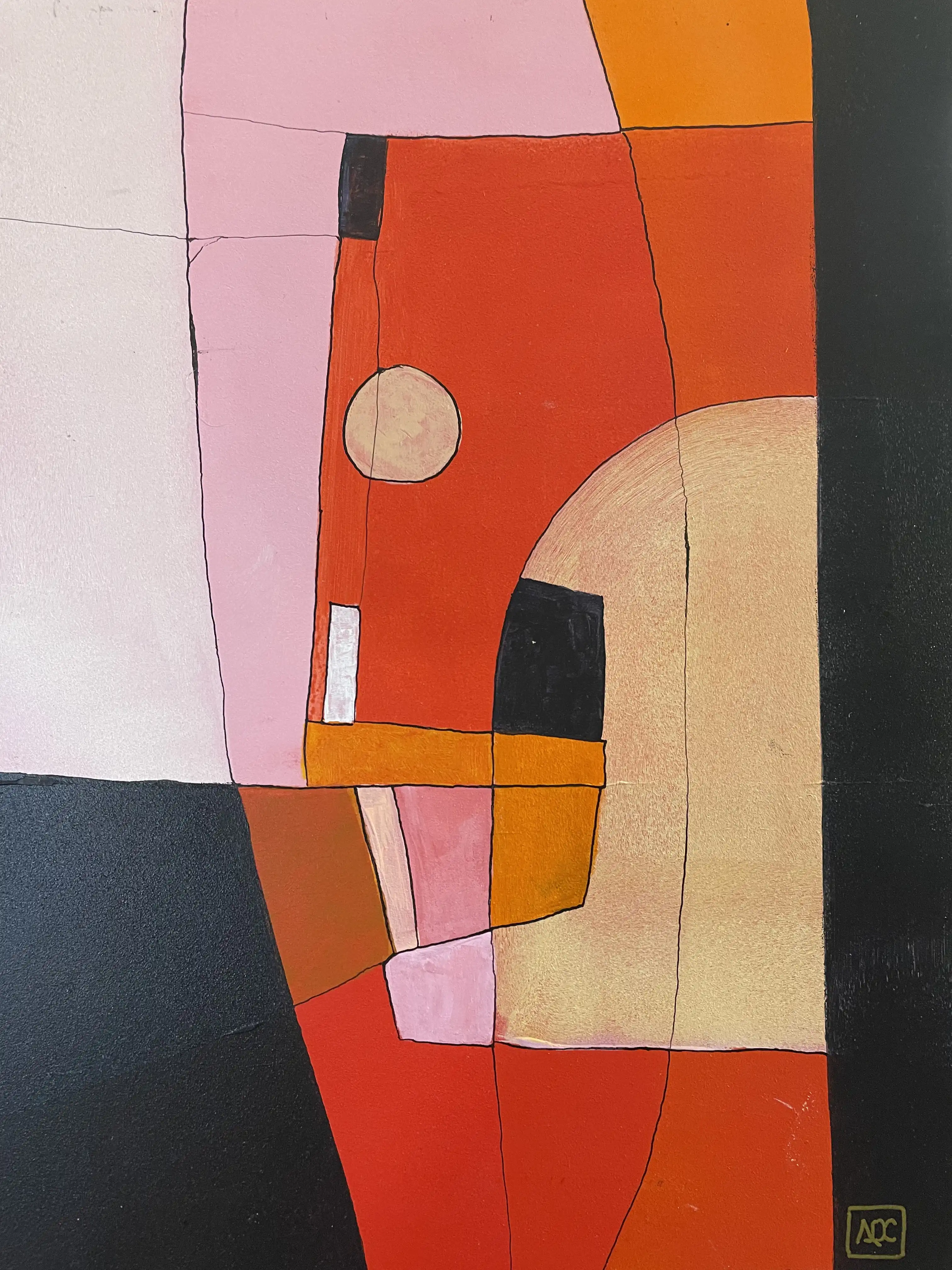
C Major is where Western harmony begins. No sharps, no flats — the white-key triad, the chord every pianist learns first. It is the key of Mozart's Sonata Facile, of the opening bars of the Well-Tempered Clavier, of a thousand folk songs and hymns. In harmonic-chromatic translation, C Major burns warm: the red of C, the yellow of E, the red-orange of G. Three primary-adjacent colors, nothing cool, nothing ambiguous. A chord that hides nothing.
The harmonic-chromatic palette runs from near-black in the low bass to near-white in the upper treble. C below the third octave darkens toward black — a deep, felt red that reads as darkness on the canvas. E above the sixth octave bleaches to silver, almost white. Between these extremes, the mid-register holds the chord's true warmth: saturated red at C4, bright yellow at E4, clear red-orange at G4. The fifth, G, provides the warmest middle ground — orange that mediates between root and third. There is no cool color anywhere in the triad. Every tone is warm.
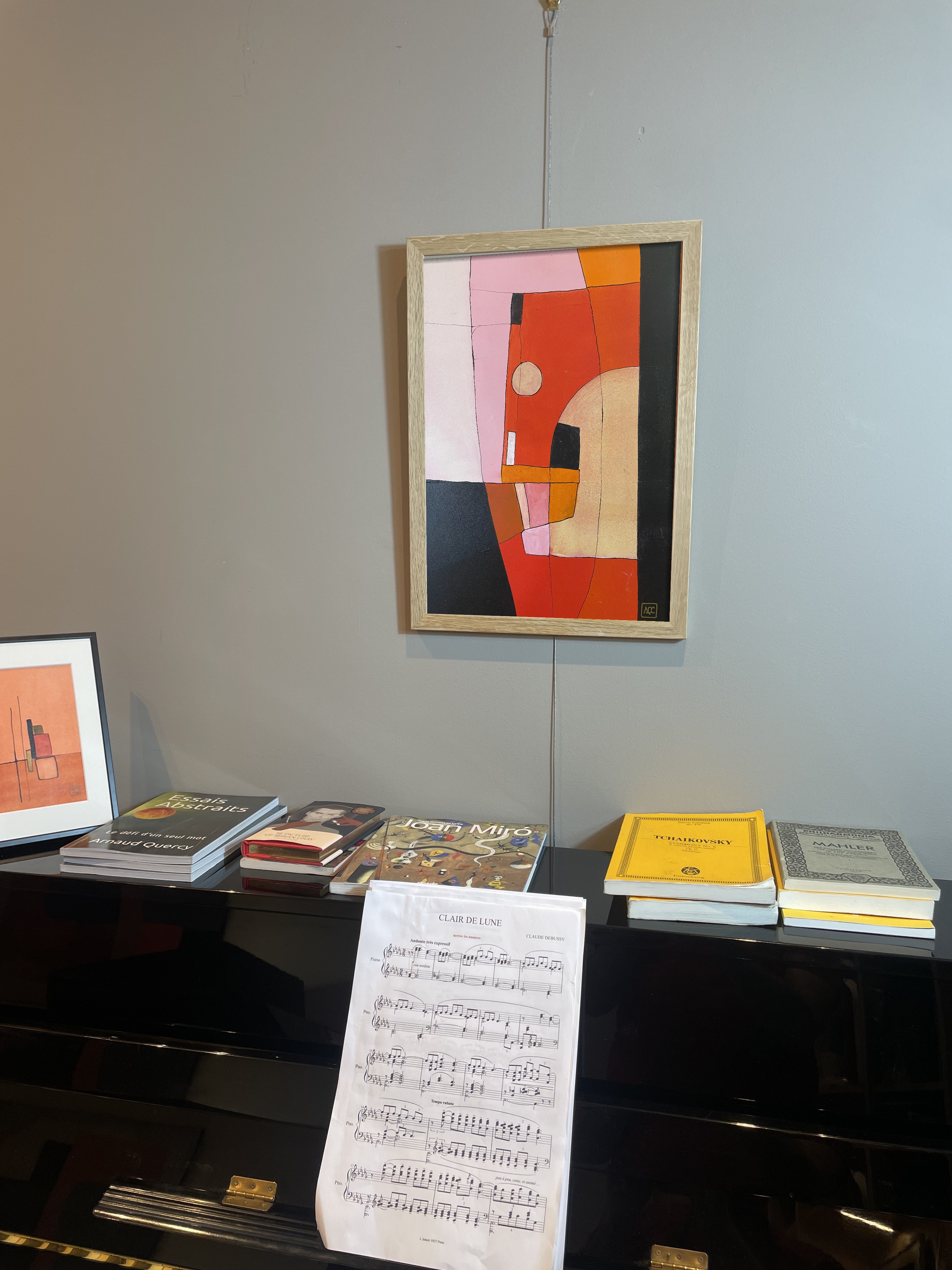
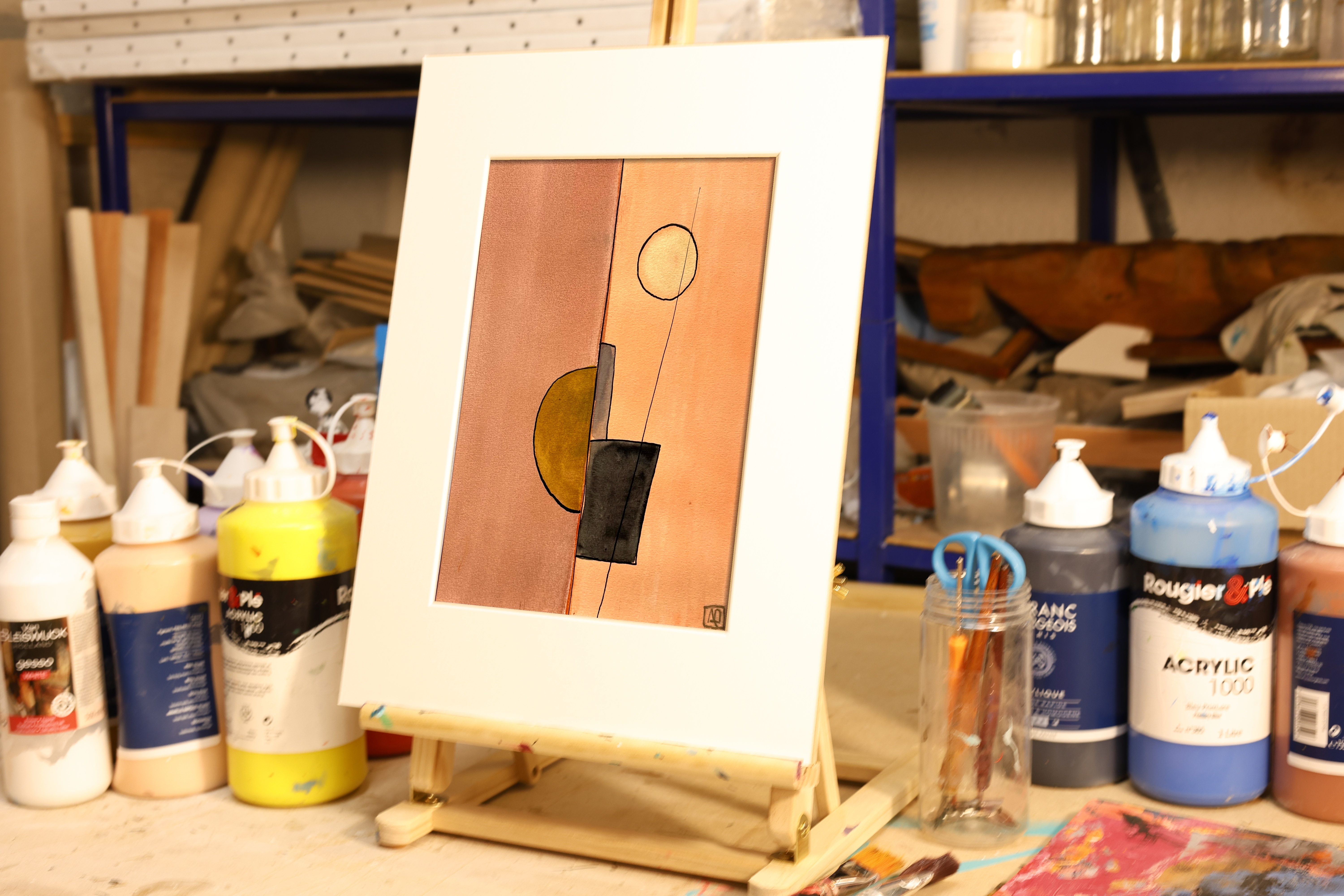
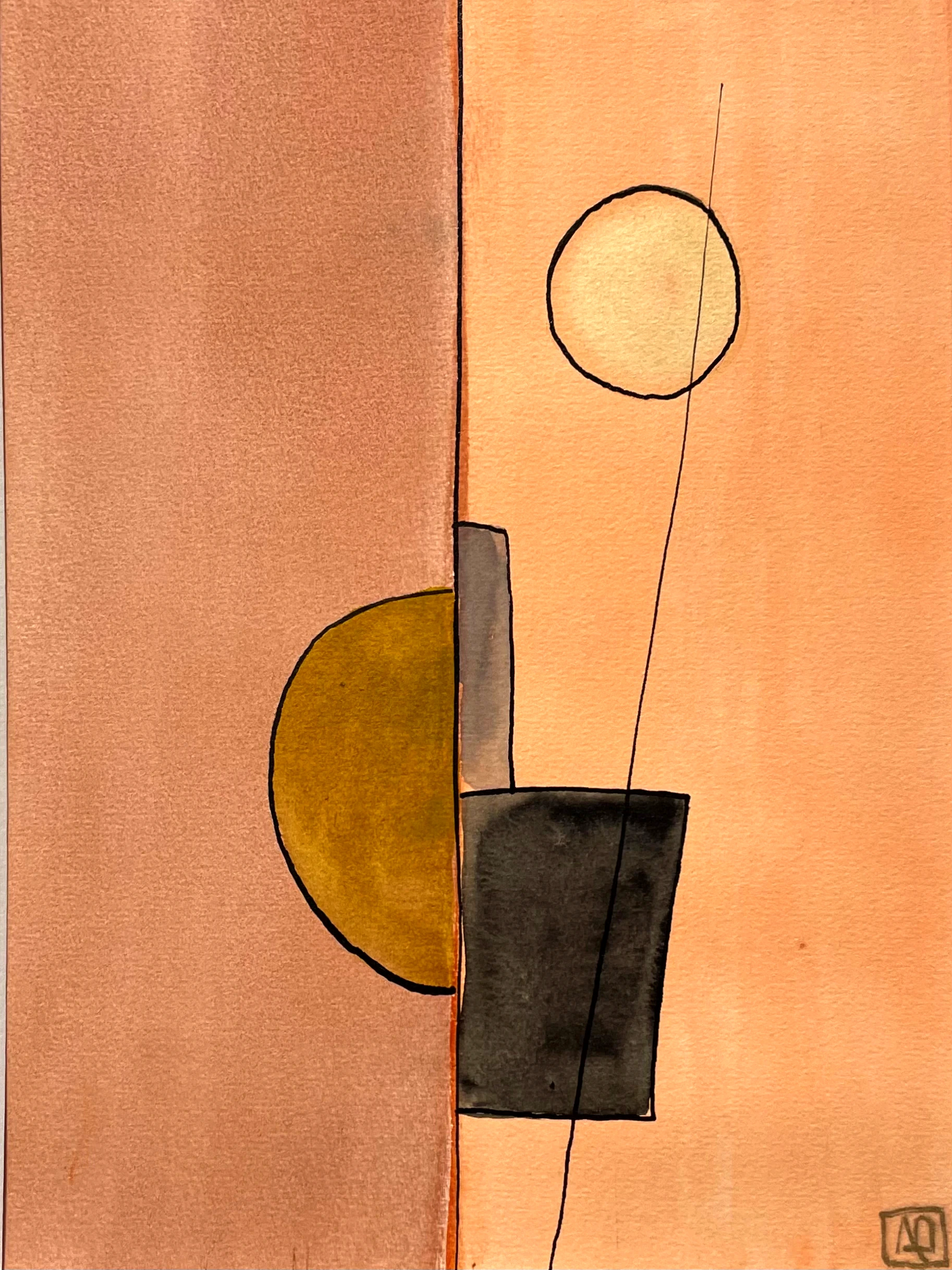
Arnaud Quercy explores this elemental palette across twenty études, painted between 2024 and 2025 in acrylic and watercolor — on paper, on wood panel, one on linen canvas. The formats range from intimate studies at 10×15 cm to a single large-scale work at 73×92 cm. Most are played Lent, at a quiet mp or p, legato — slow, meditative, unhurried. The contours divide evenly between bell arches in four and descending waltzes in three. One variation breaks the pattern with a Modéré tempo, and one introduces a Bb accent — the only non-chord tone in the entire series. The note count ranges from three to eight, the sparsest études distilling the triad to its irreducible minimum.
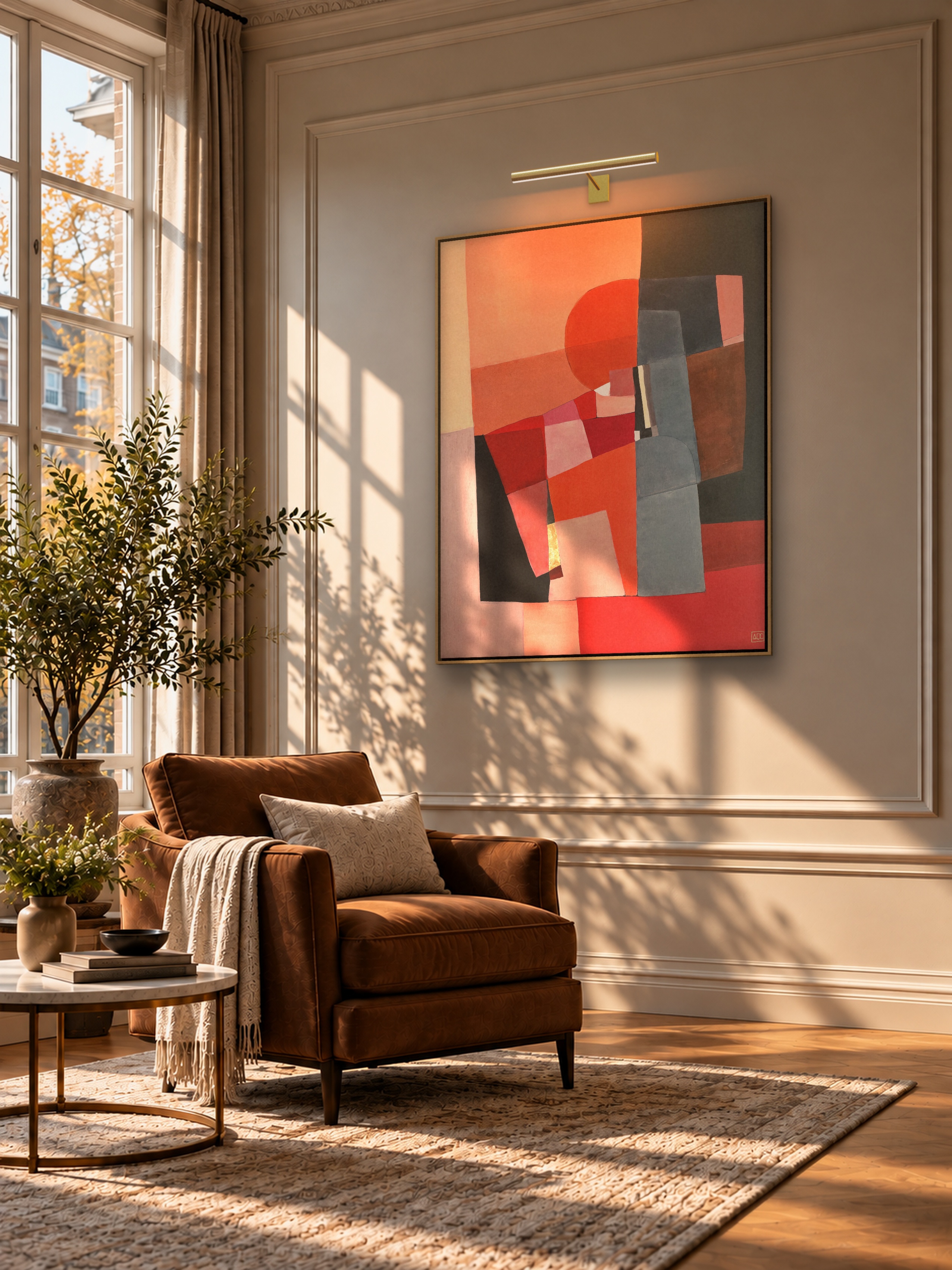
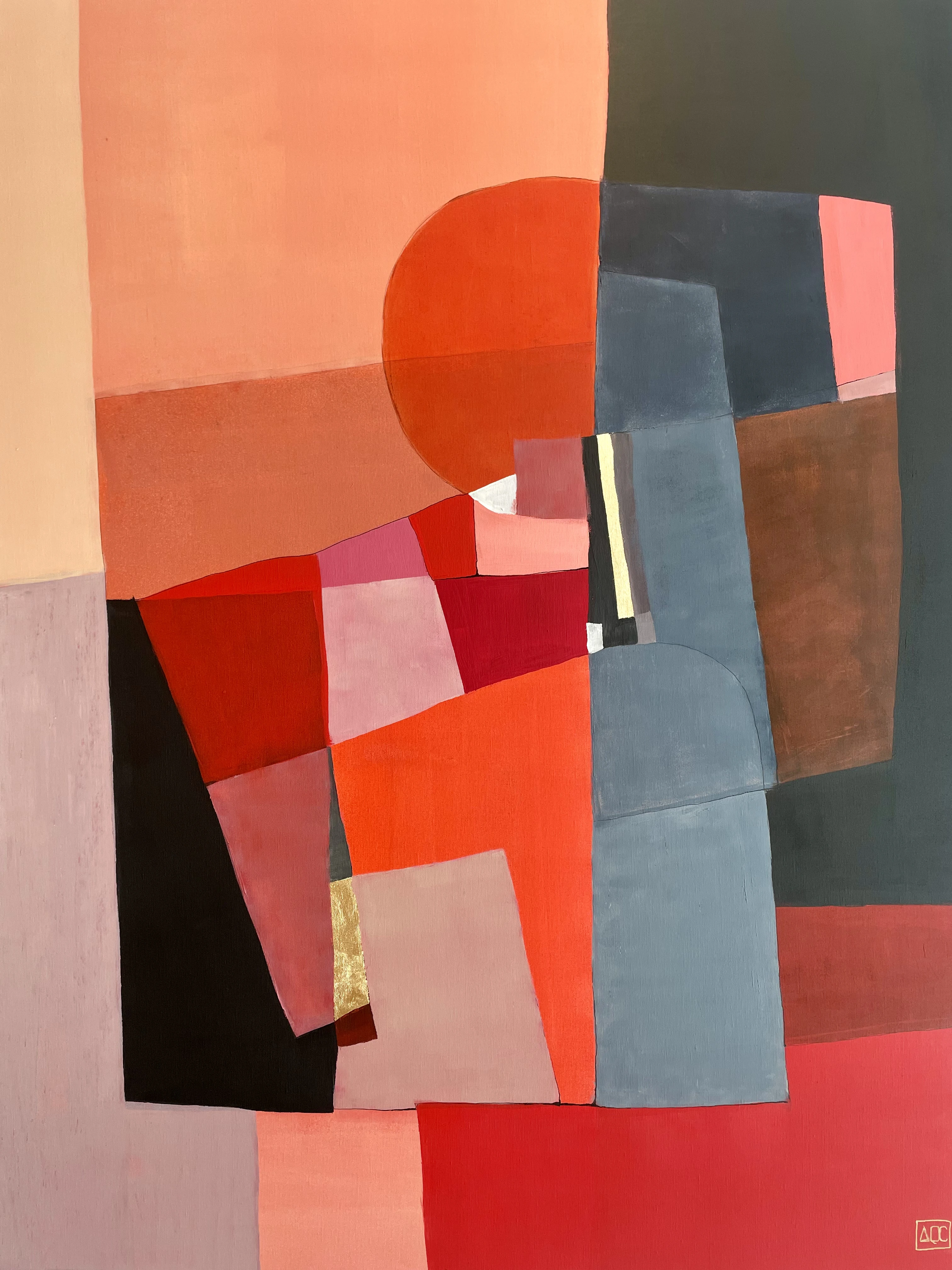
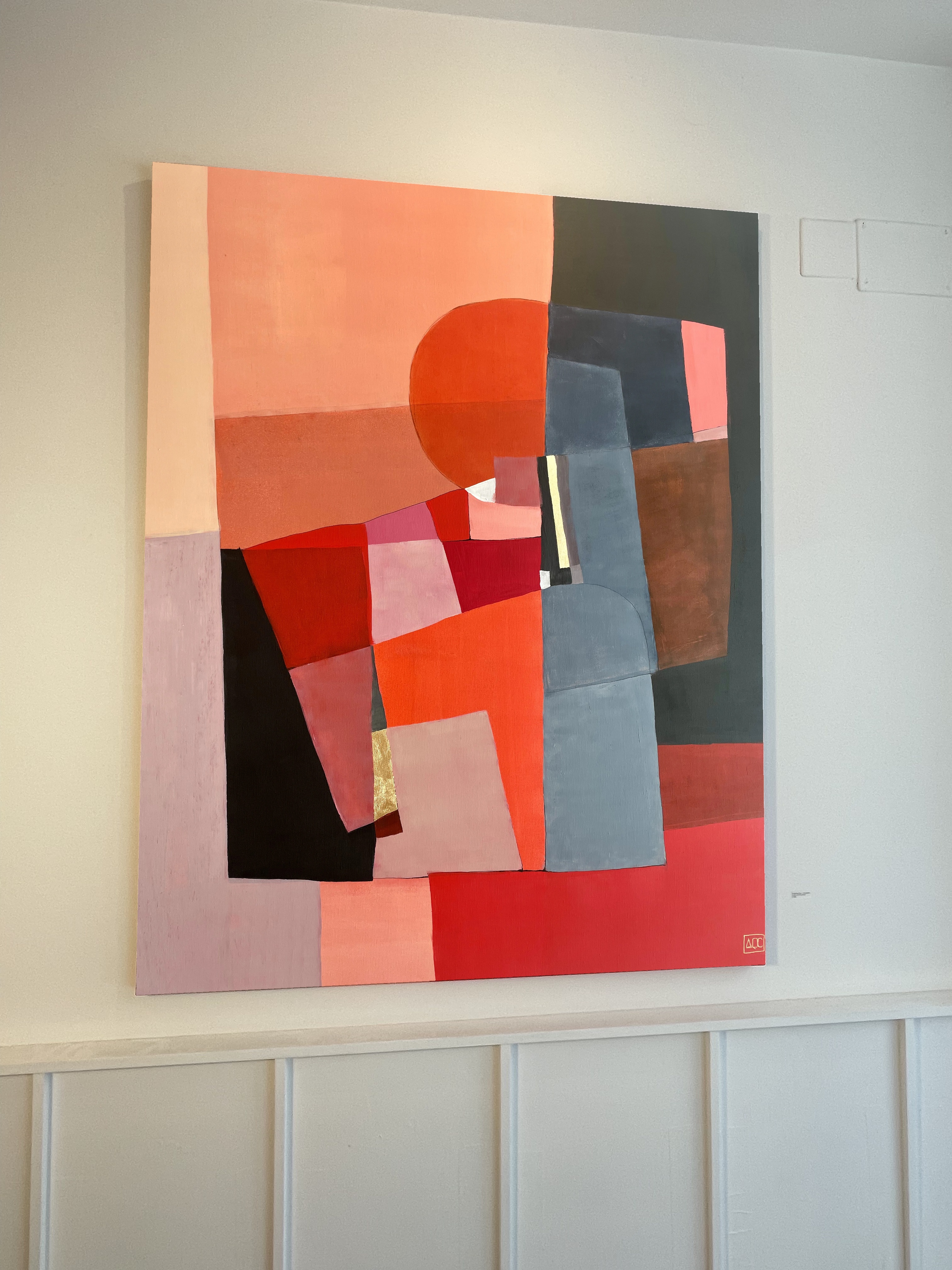
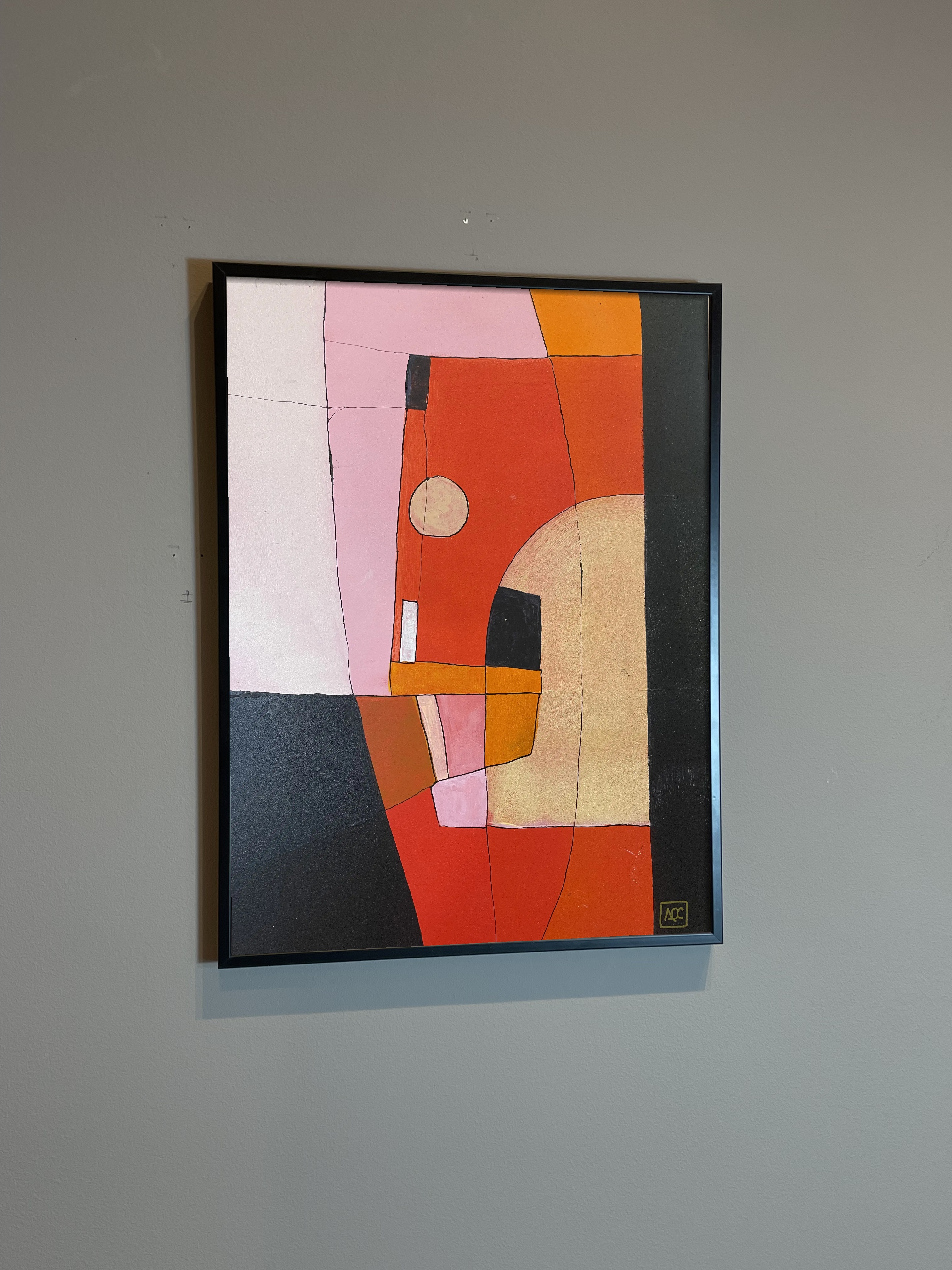
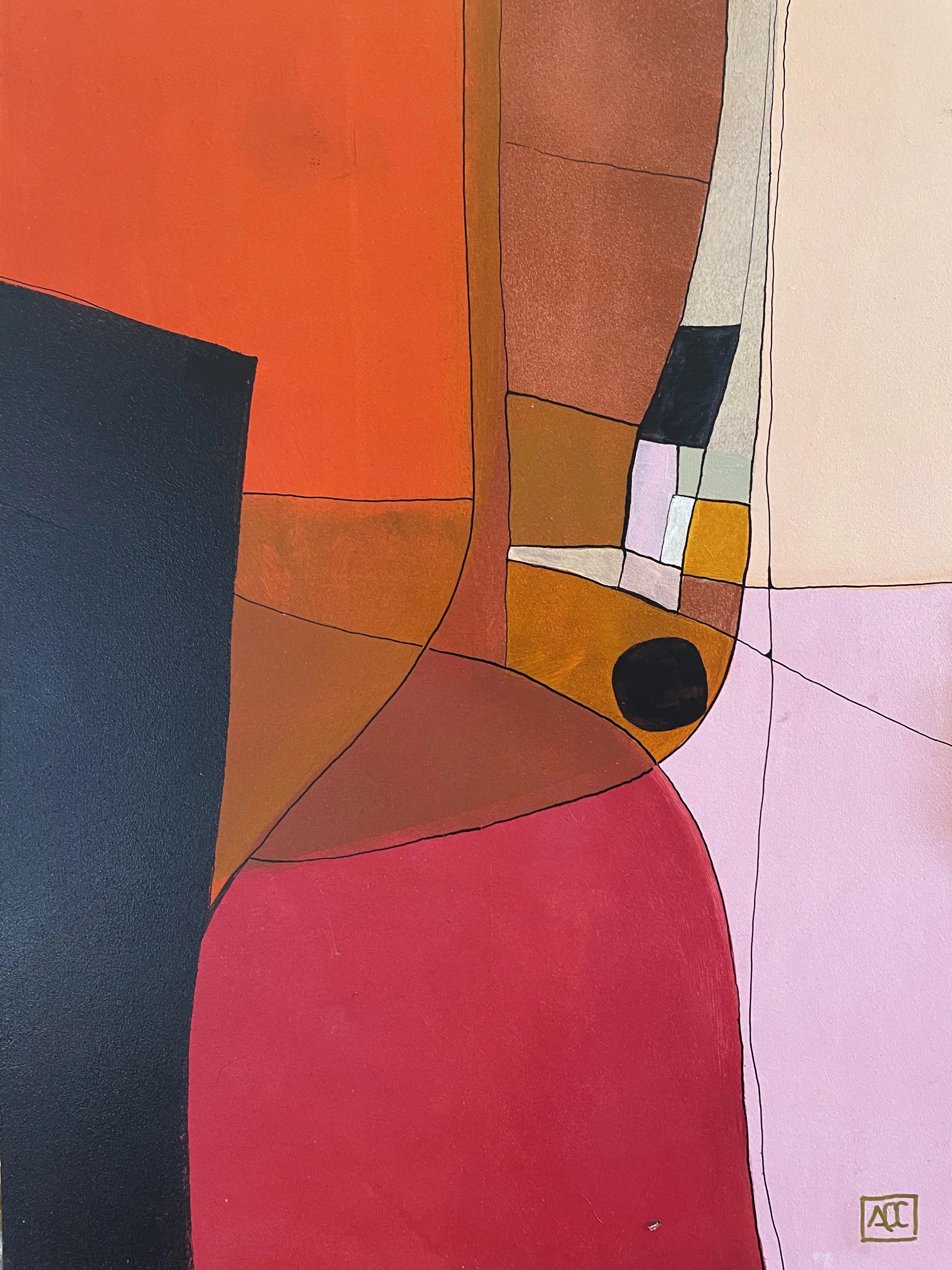
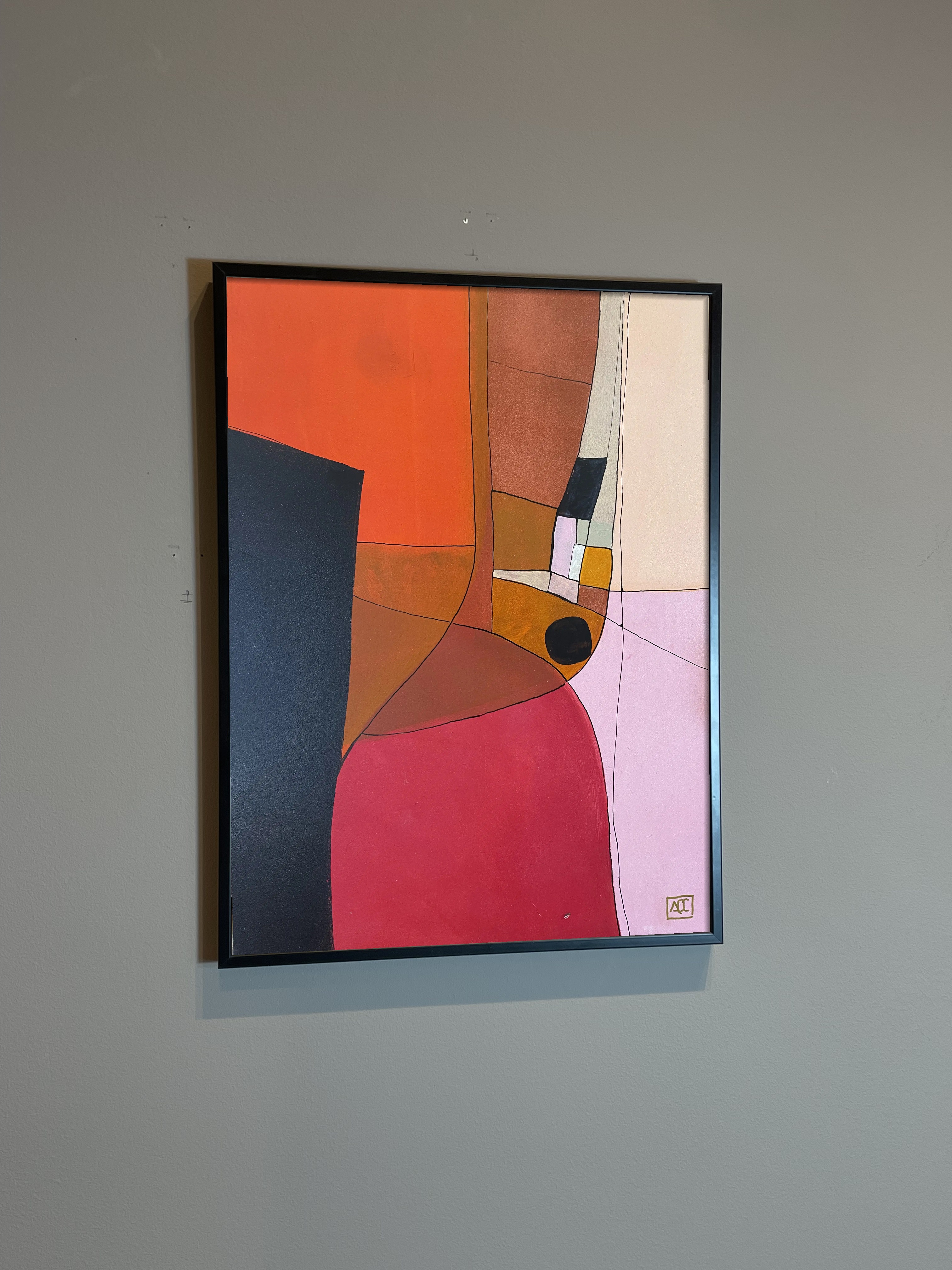
Three works illustrate the series' range. Variation 1 — the largest canvas, 73×92 cm on linen — draws on the quality Quercy describes as "graceful circling, warmth held without urgency," after Sergio Mihanovich's waltz "Sometime Ago." Four notes only, the melody taking one long stride from near-black bass to warm orange. Variation 7 reaches below the piano: C0 at 16 Hz, a frequency felt in the body rather than heard, its harmonic-chromatic translation so dark it reads as absence — the melody climbs from there through seven notes, building warmth out of silence. At the other extreme, Variation 9 distils C Major to three notes — E6, G5, C1 — what the artist calls "the irreducible minimum of a triad, a waltz in three words: light, middle, ground."
On the canvas, C Major reads as a warm gradient. The low register anchors each painting in darkness — the near-black of C1 or C2 at the base. The upper register dissolves into pale yellows and whites where E6 and E7 catch the light. Between floor and ceiling, the reds and oranges of the chord's middle octaves fill the canvas with the warmth that defines this key. The visual rhythm comes from repetition with variation: the same three colors, rebalanced in each étude by the number of notes, their register, and the space between them. Some canvases are nearly empty — three notes, vast silence. Others are dense, seven or eight tones filling the field from bass to treble.
C Major is the simplest chord in this practice, and that simplicity is the point. There is nowhere to hide in three notes of unalloyed warmth. Each étude tests the same question: how many ways can red, yellow, and orange occupy a surface? After twenty variations, the chord never exhausts itself. Several of these études were first shown at the Salon Metamorphose at the Halle des Blancs Manteaux in Paris, and more than half the series has since found its way into collections from New York to Zurich to São Paulo — the home key travelling far from home, carrying its warmth with it.
Sold works
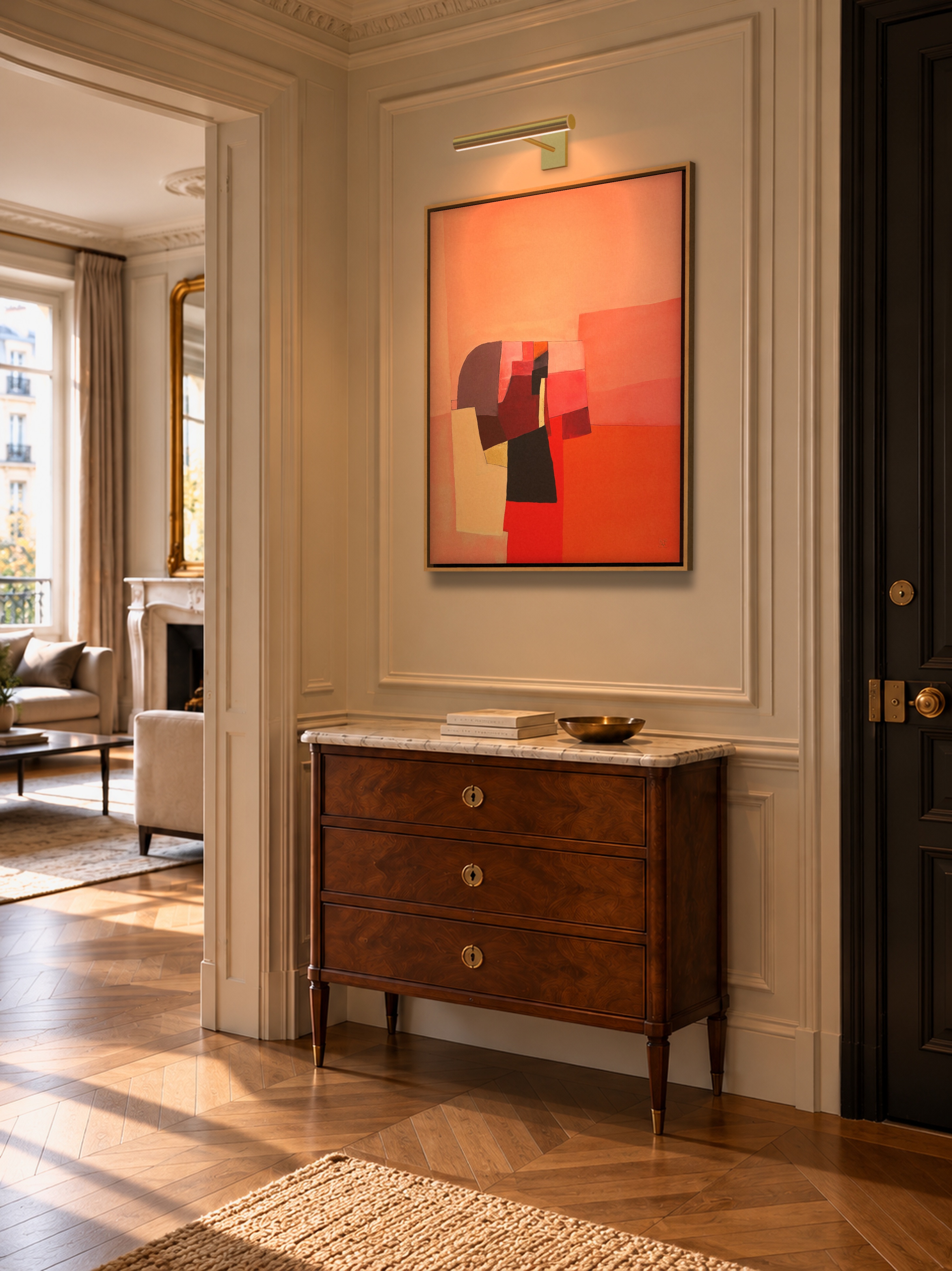
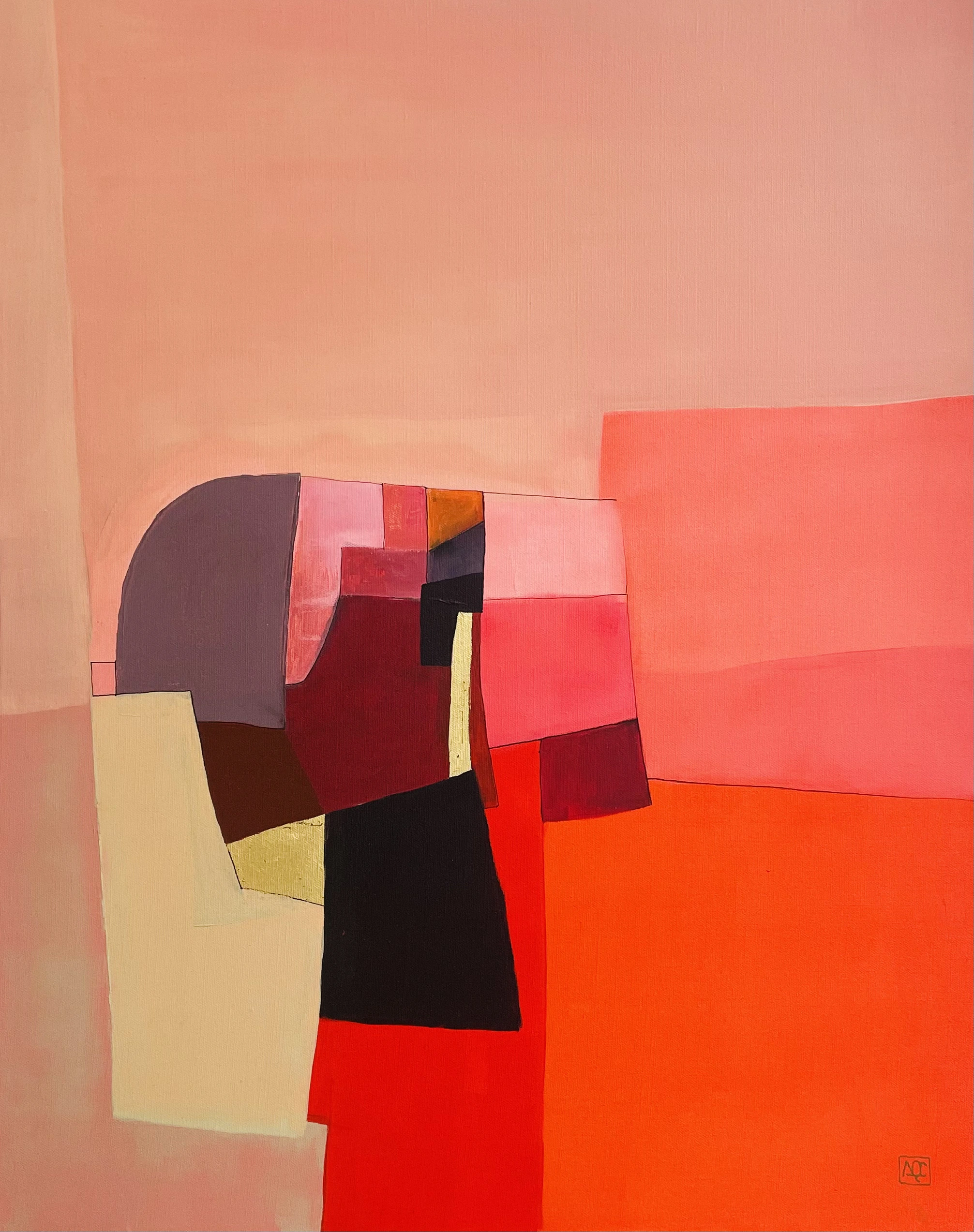 C Major - Research on Harmony - Variation 1Acrylic · 92 × 73 cmSold · New York, USA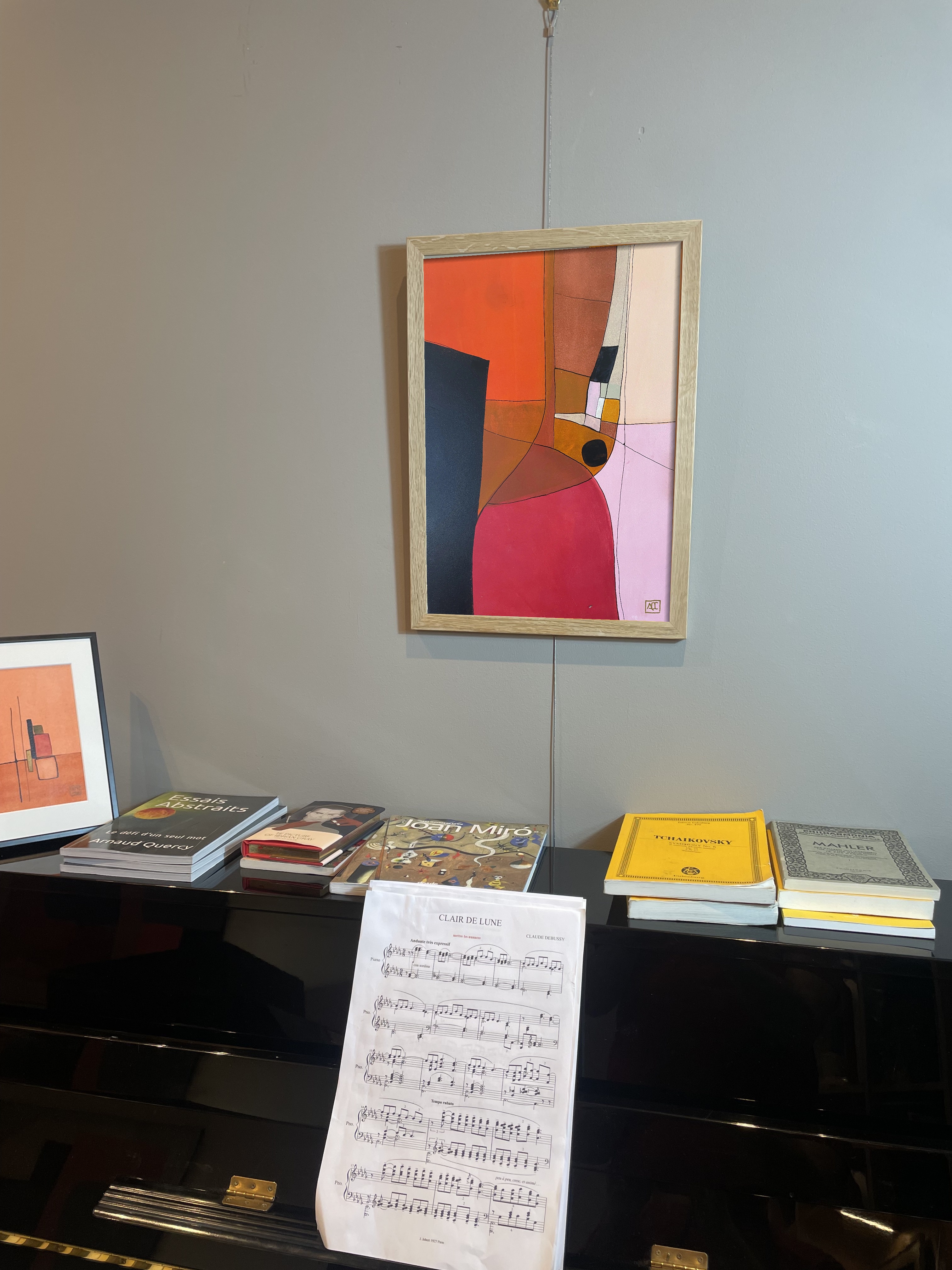
 C Major - Research on Harmony - Variation 18Acrylic · 42 × 30 cmNot available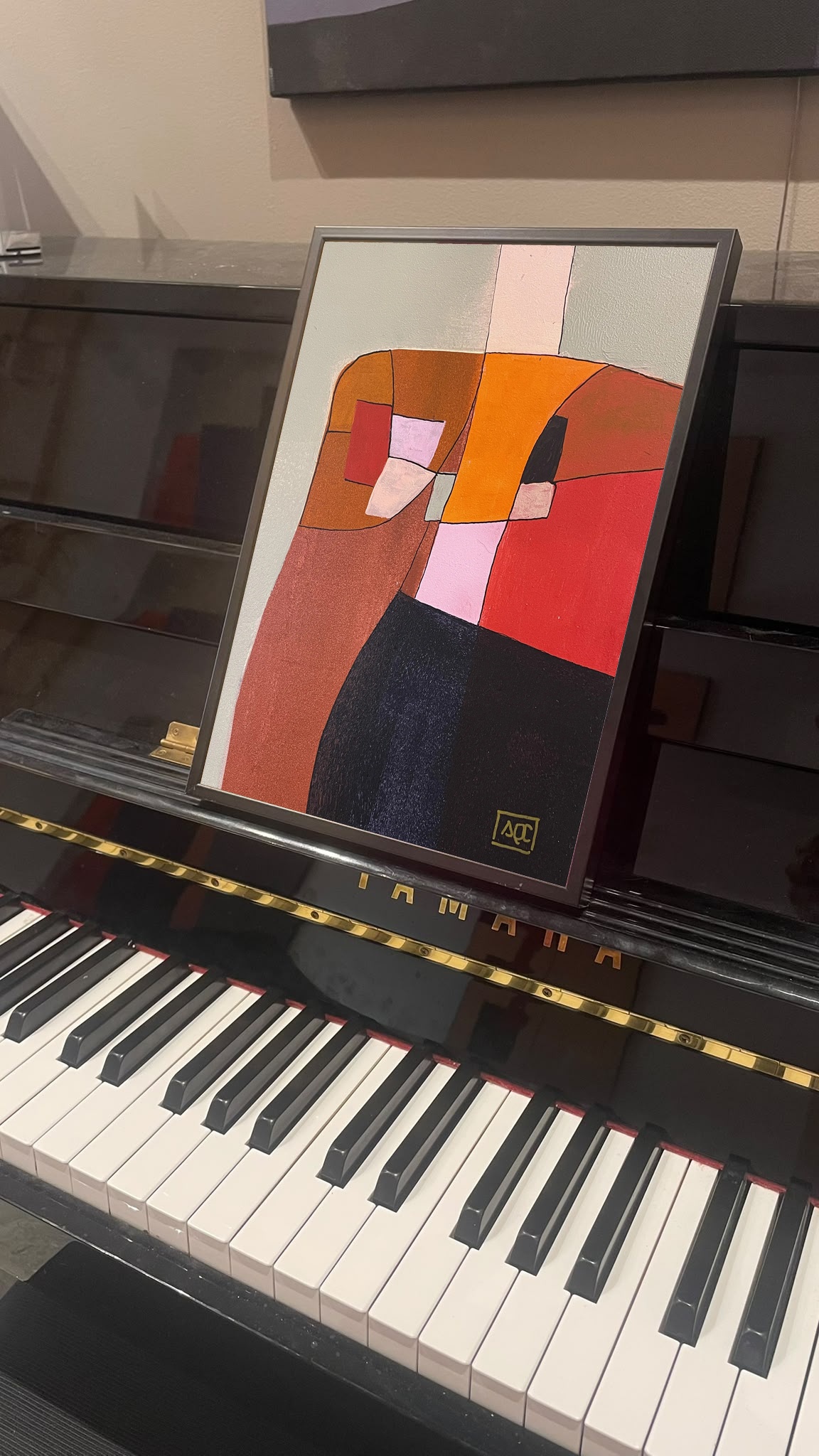
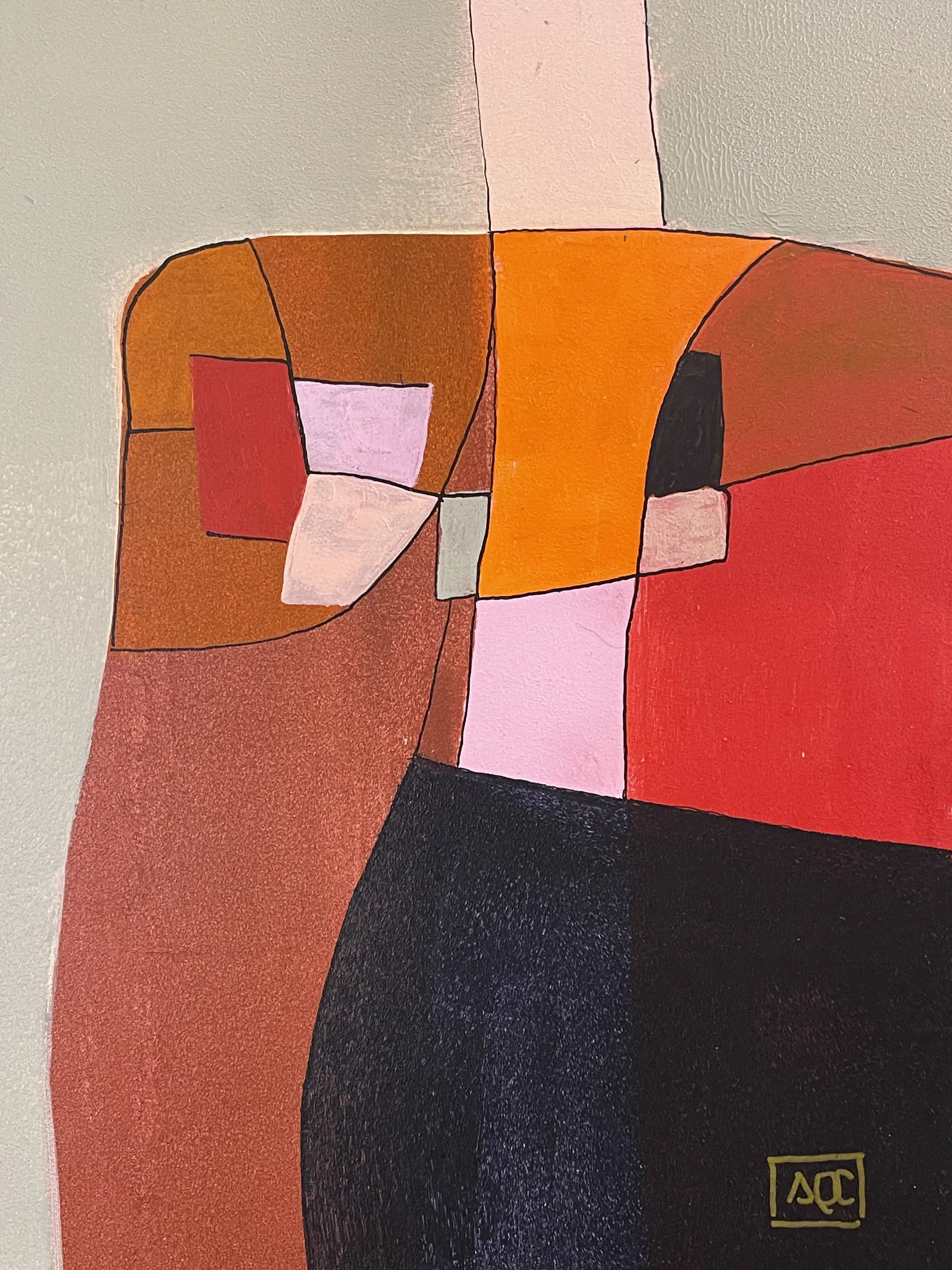
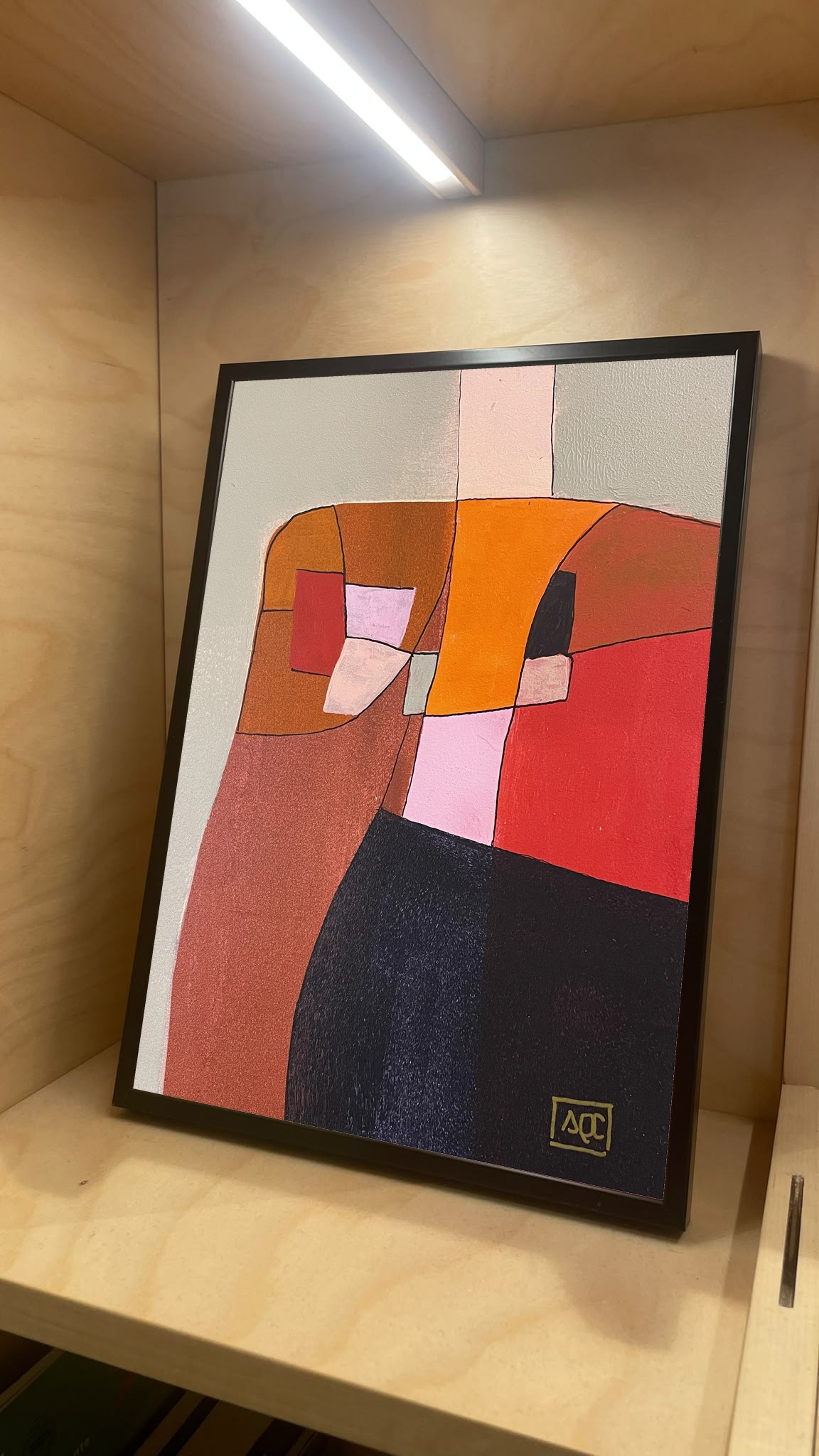 C Major - Research on Harmony - Variation 3Acrylic · 30 × 21 cmSold · USA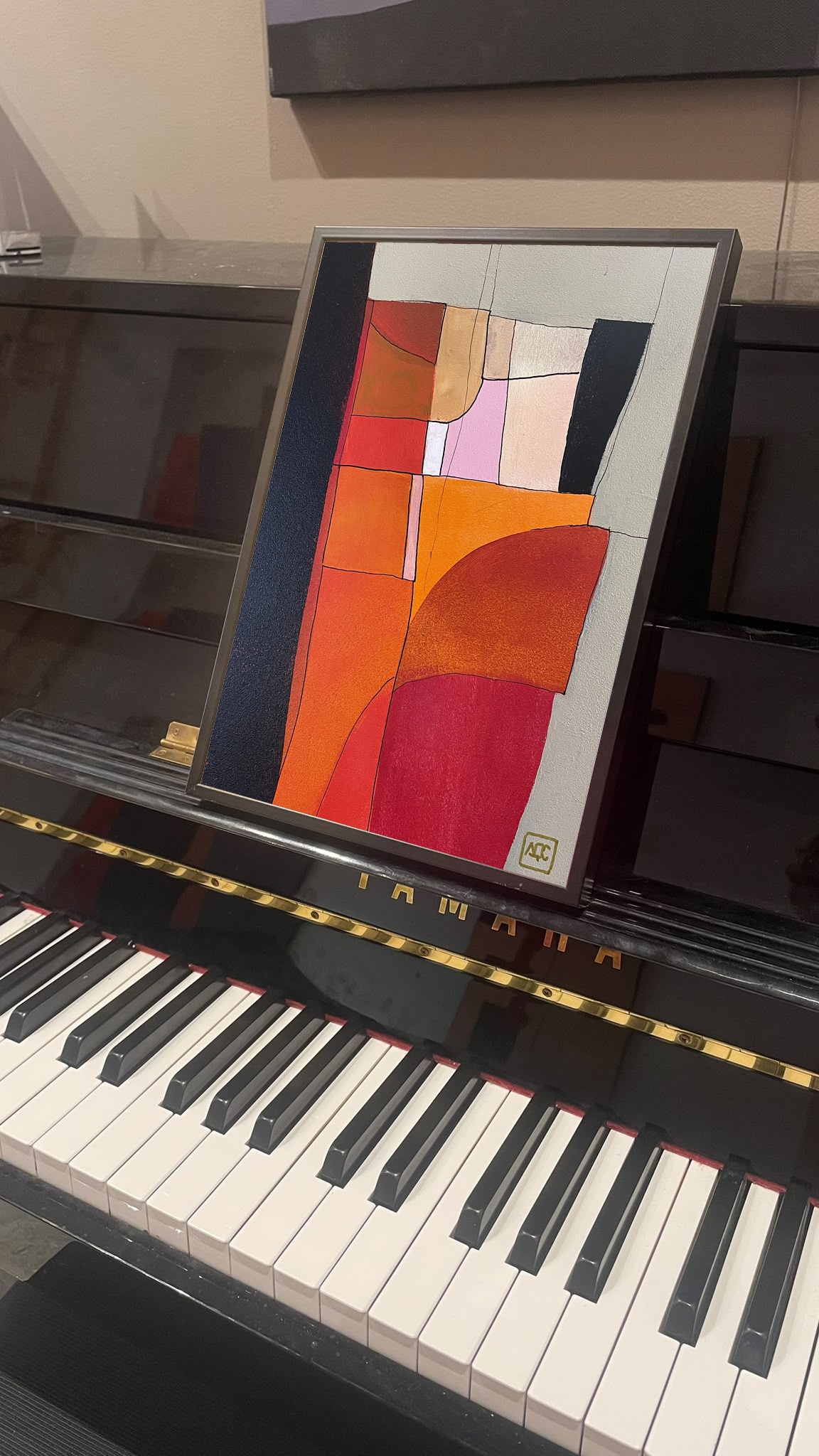
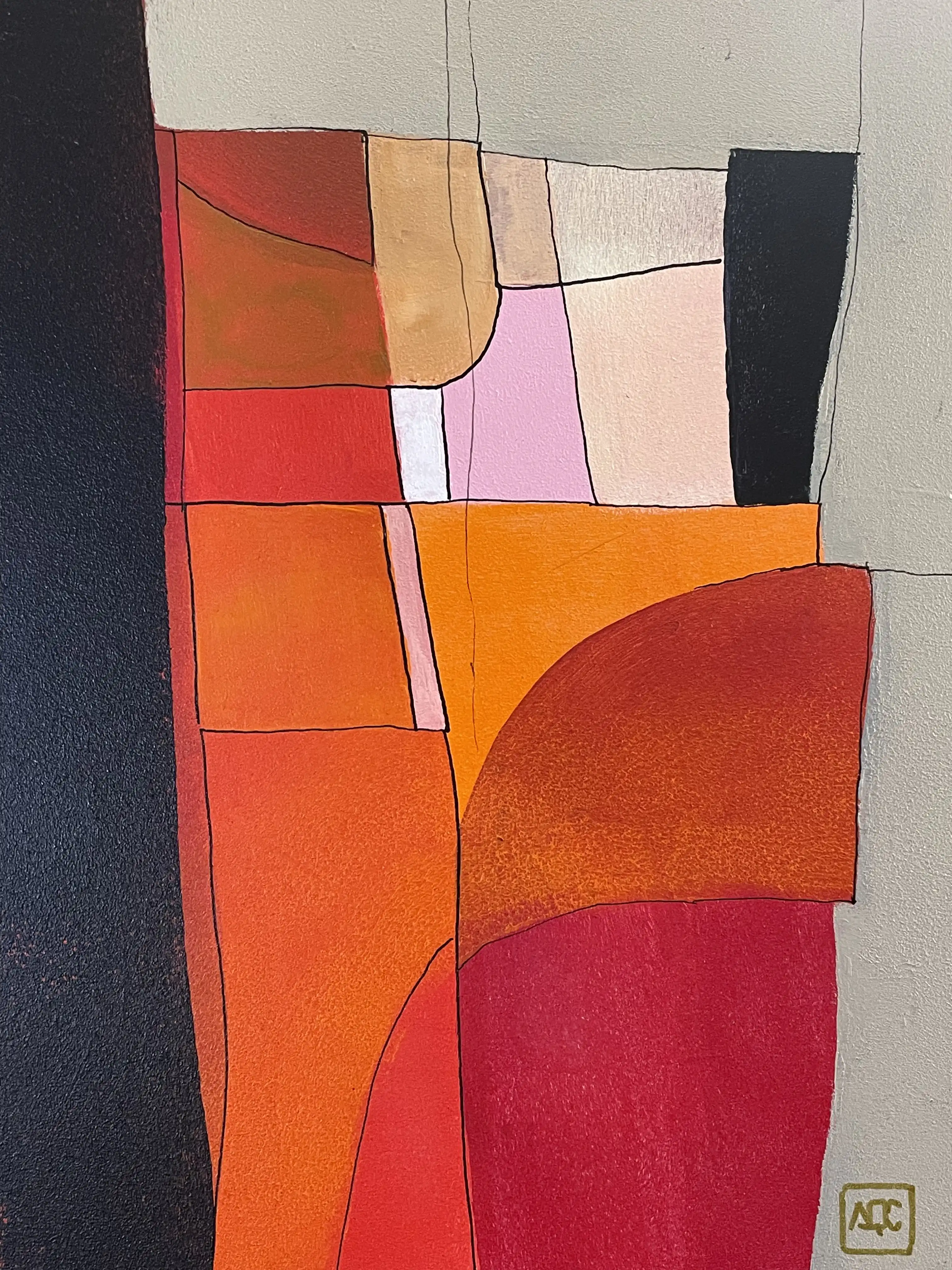
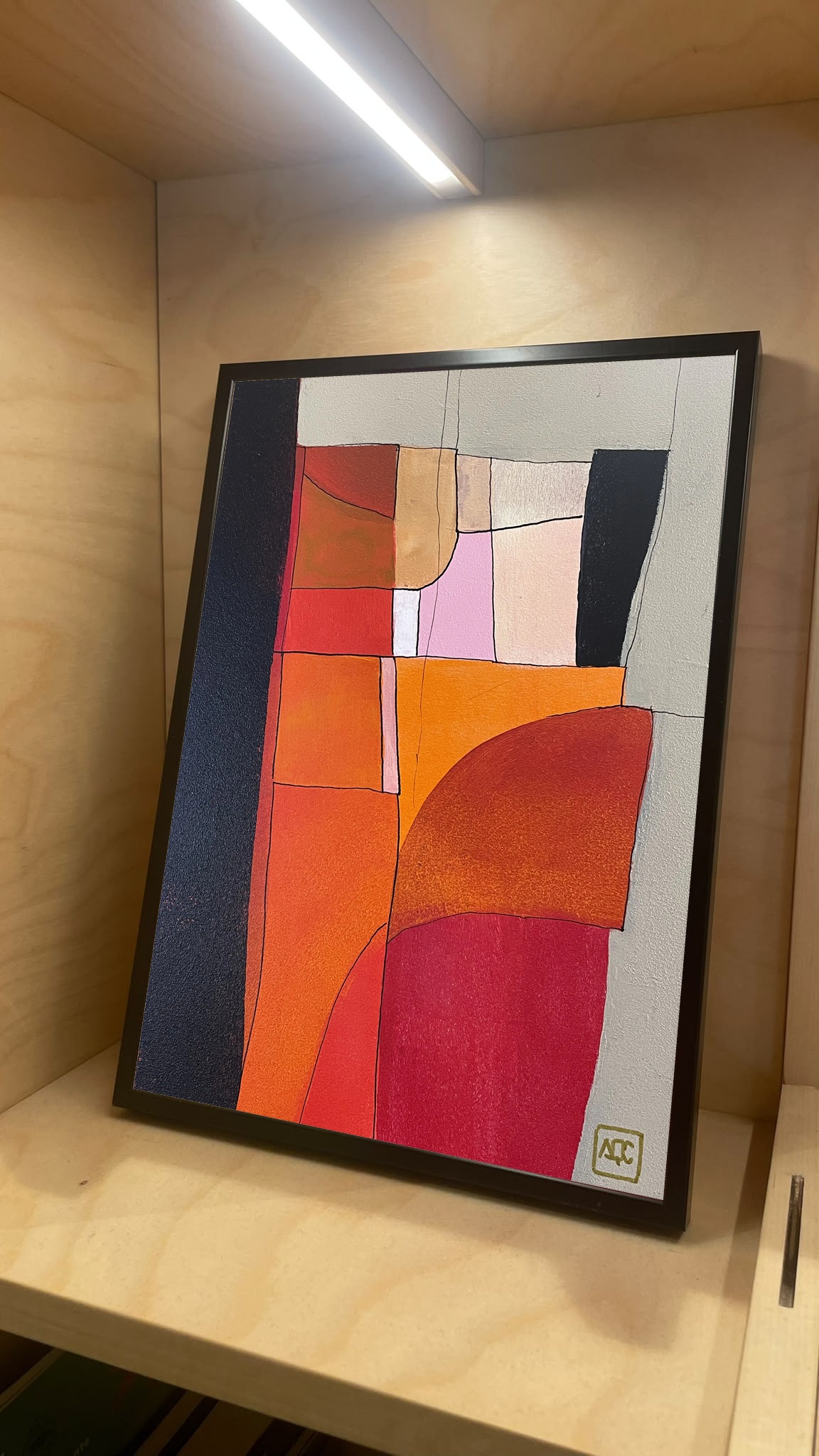 C Major - Research on Harmony - Variation 4Acrylic · 30 × 21 cmSold · Los Angeles, USA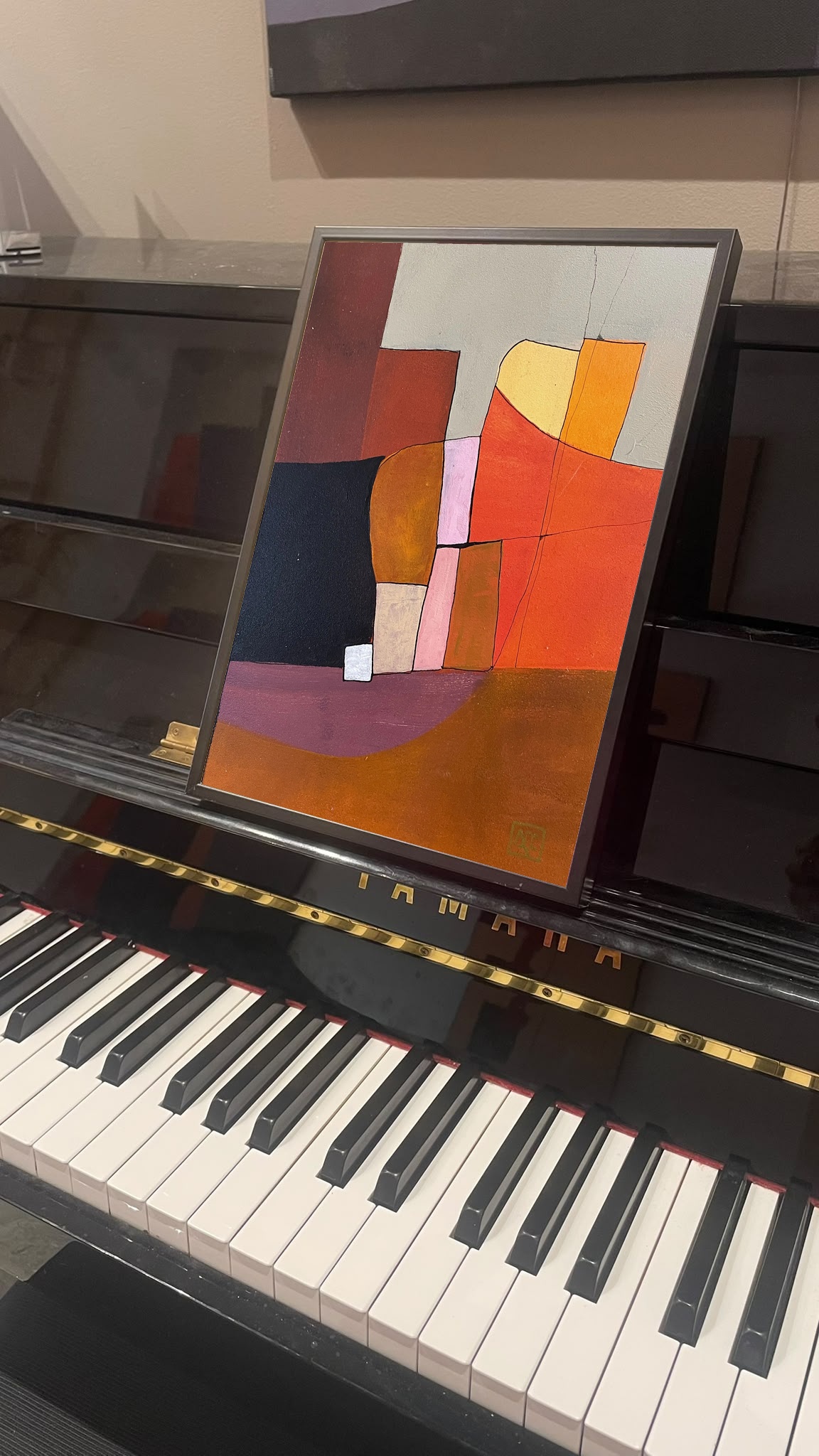
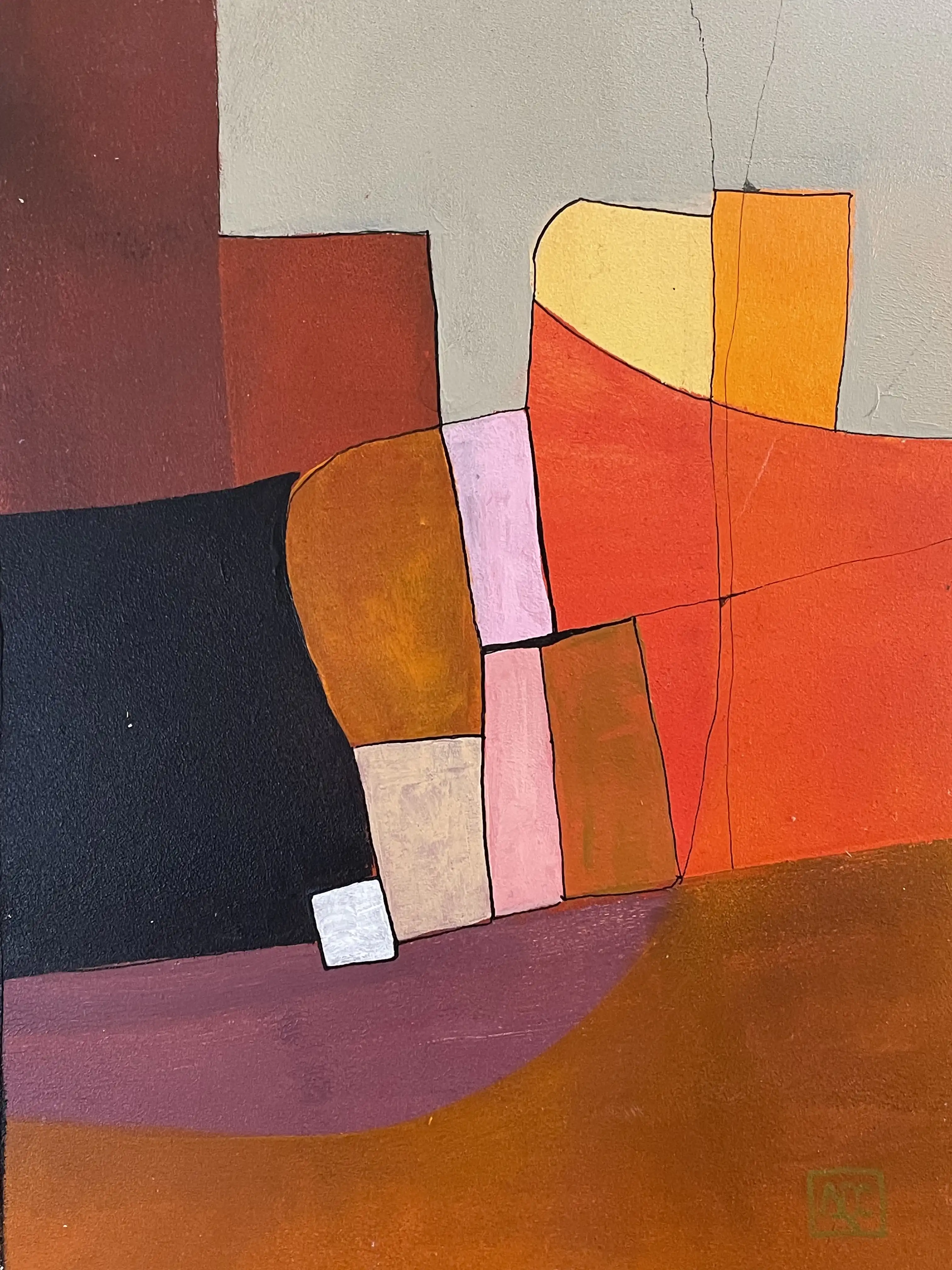
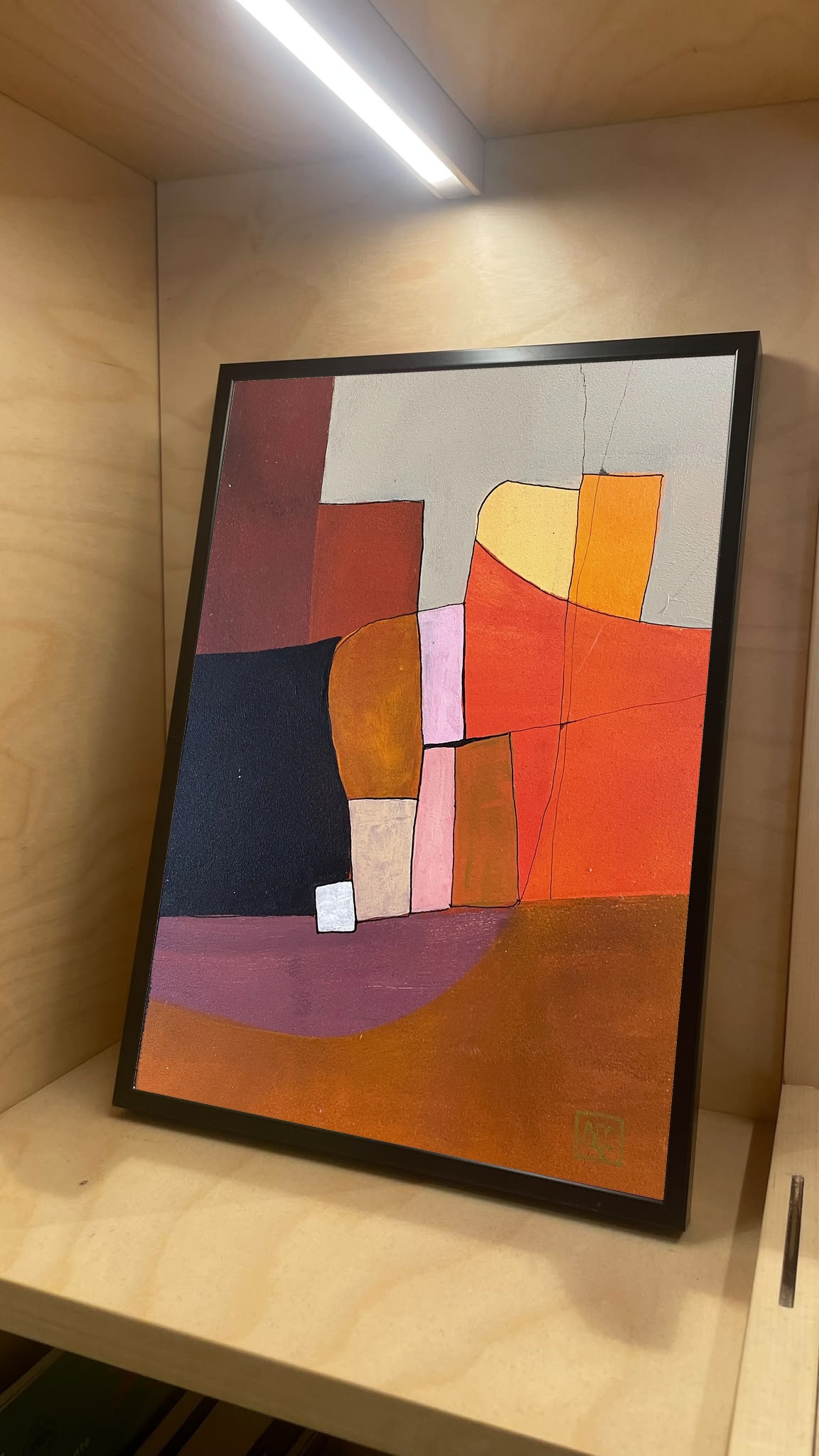 C Major - Research on Harmony - Variation 5Acrylic · 30 × 21 cmSold · Boulogne-Billancourt, France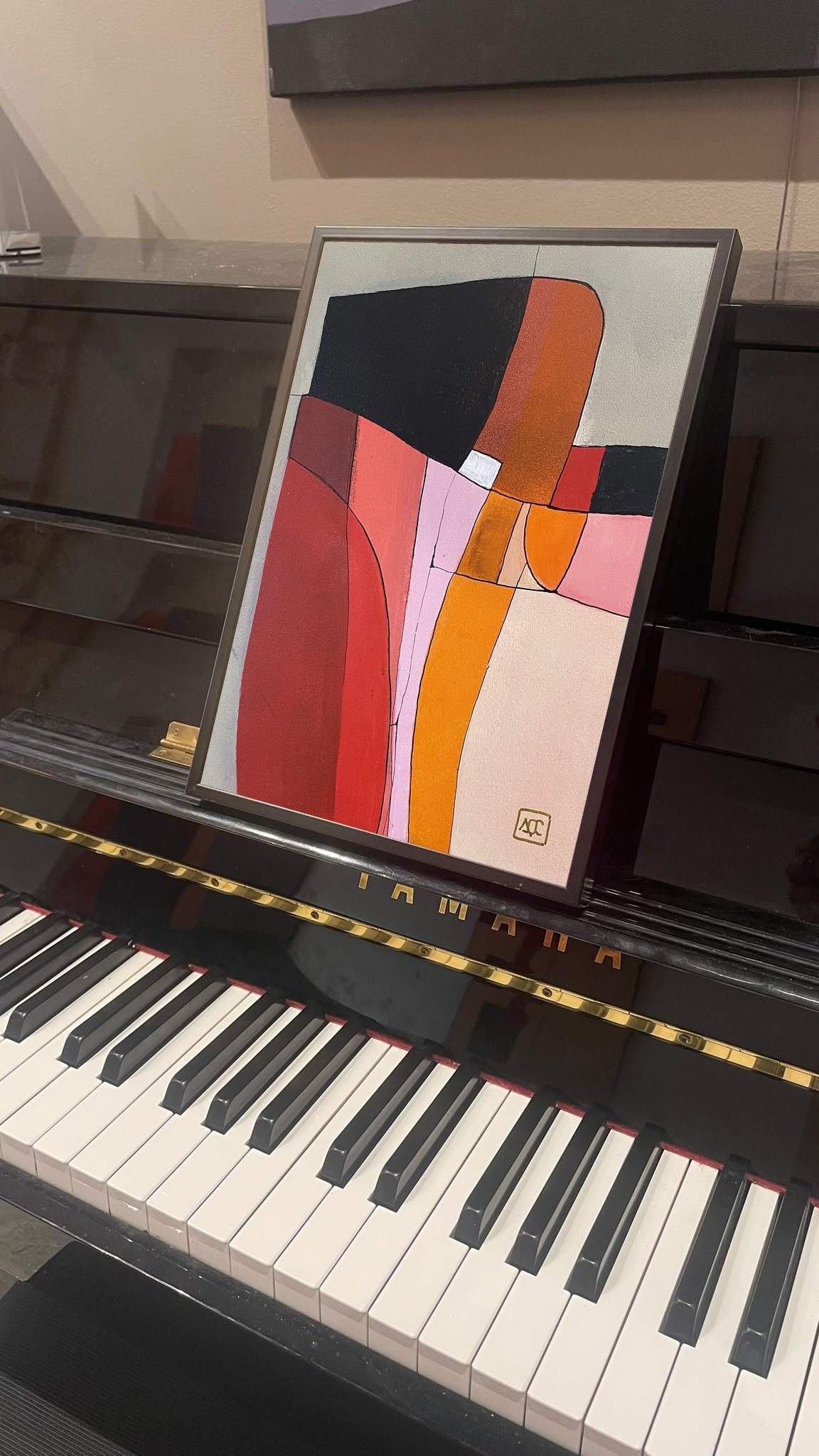
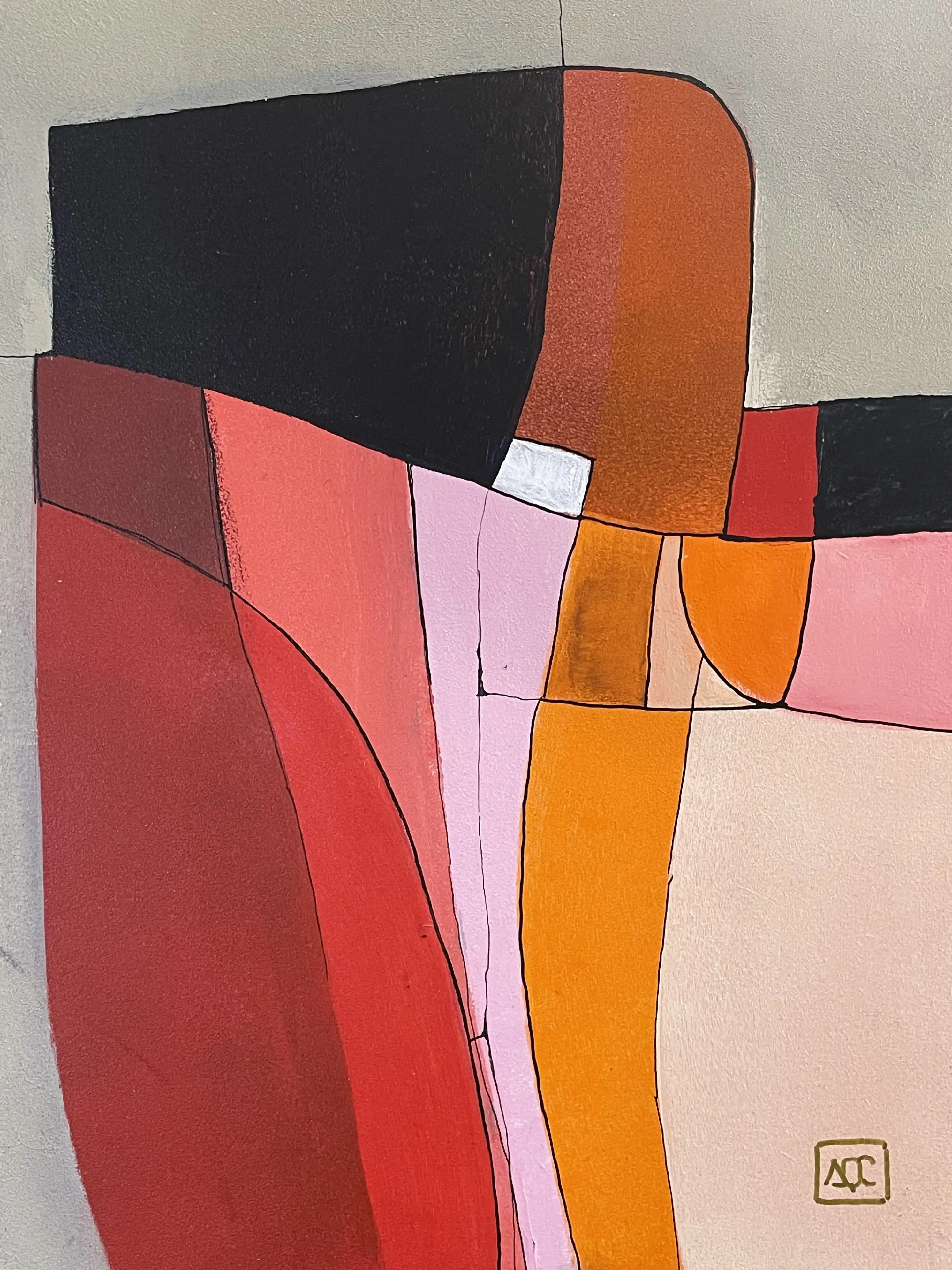
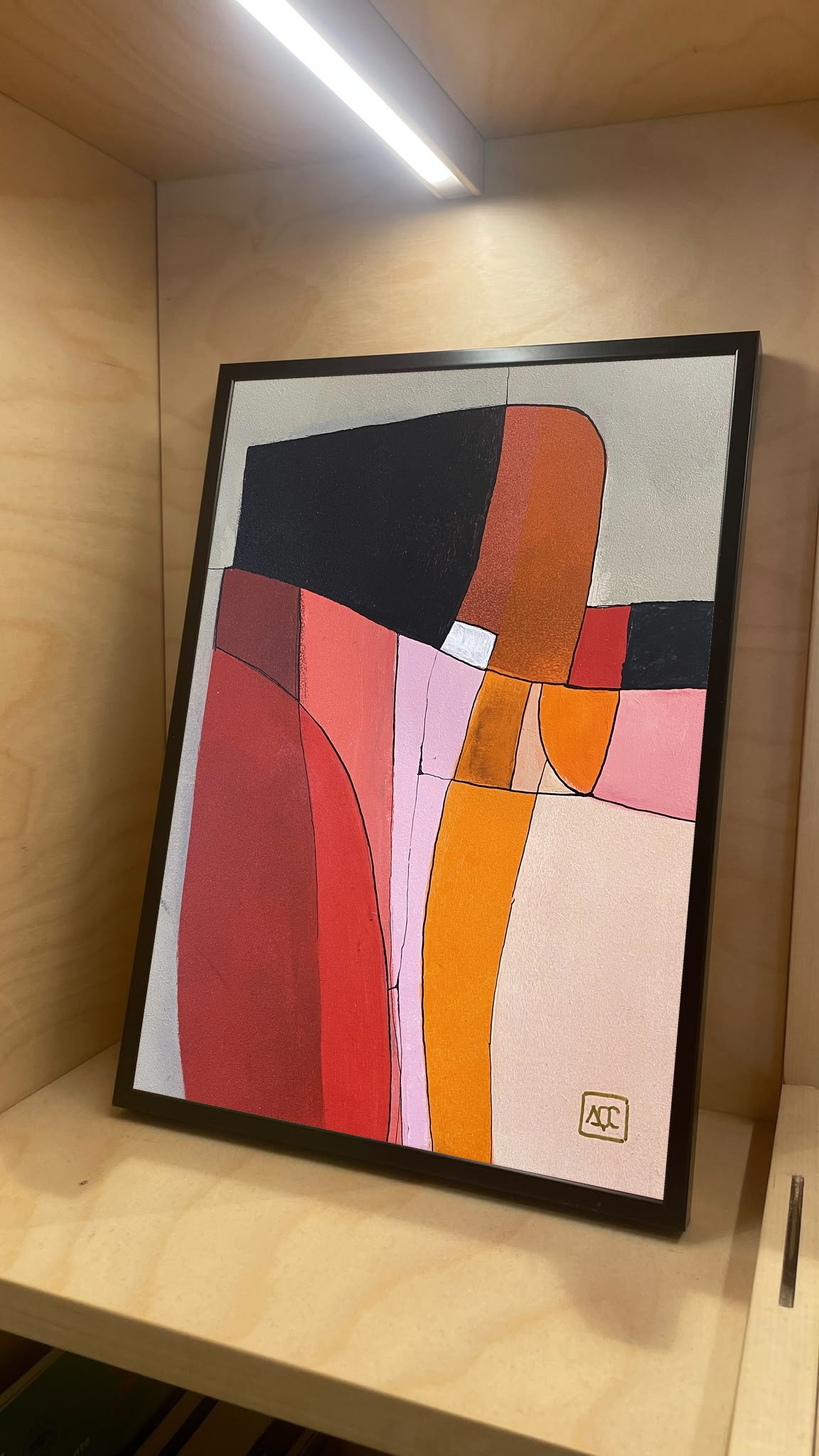 C Major - Research on Harmony - Variation 6Acrylic · 30 × 21 cmSold · Le Lavandou, France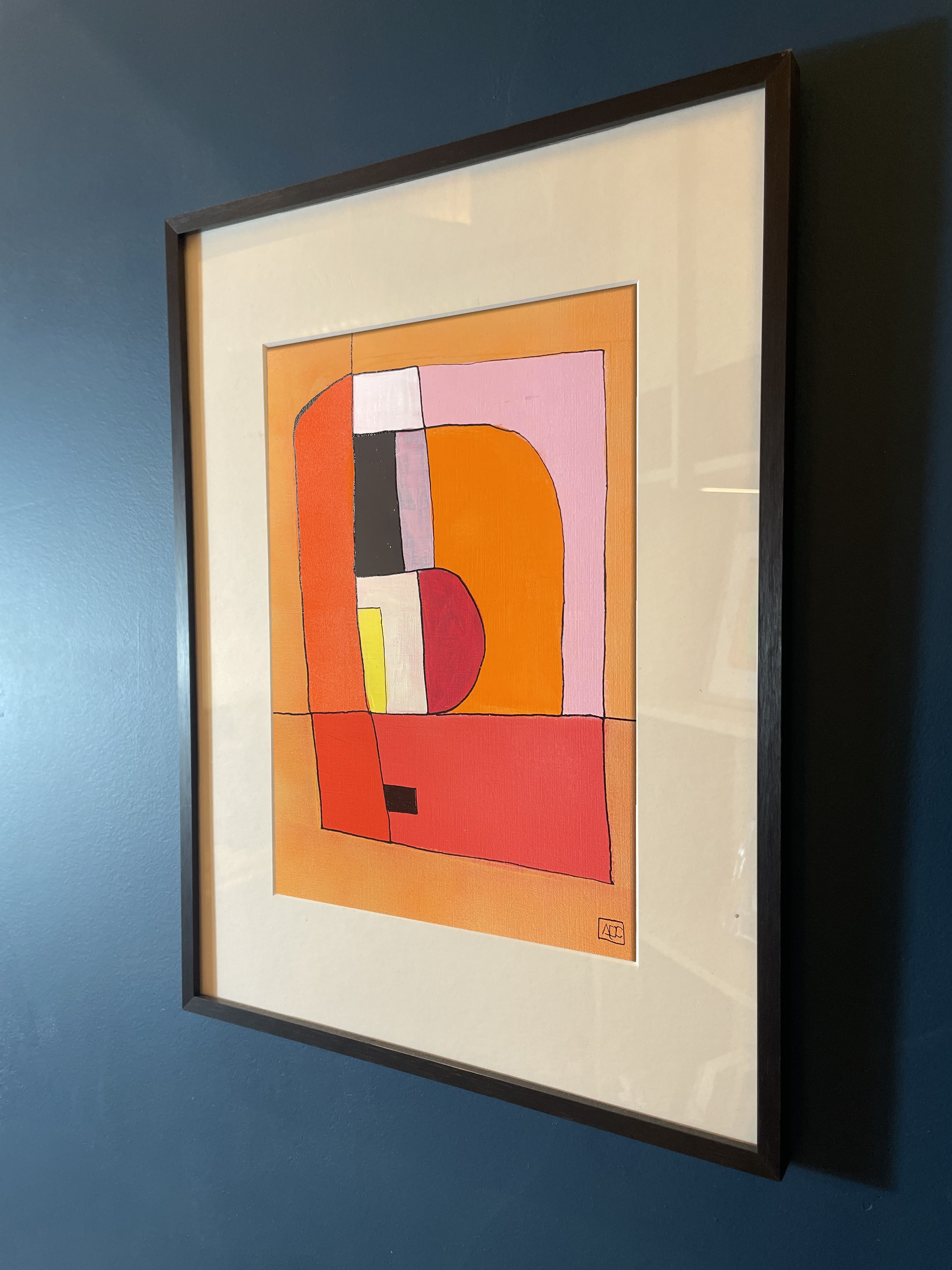
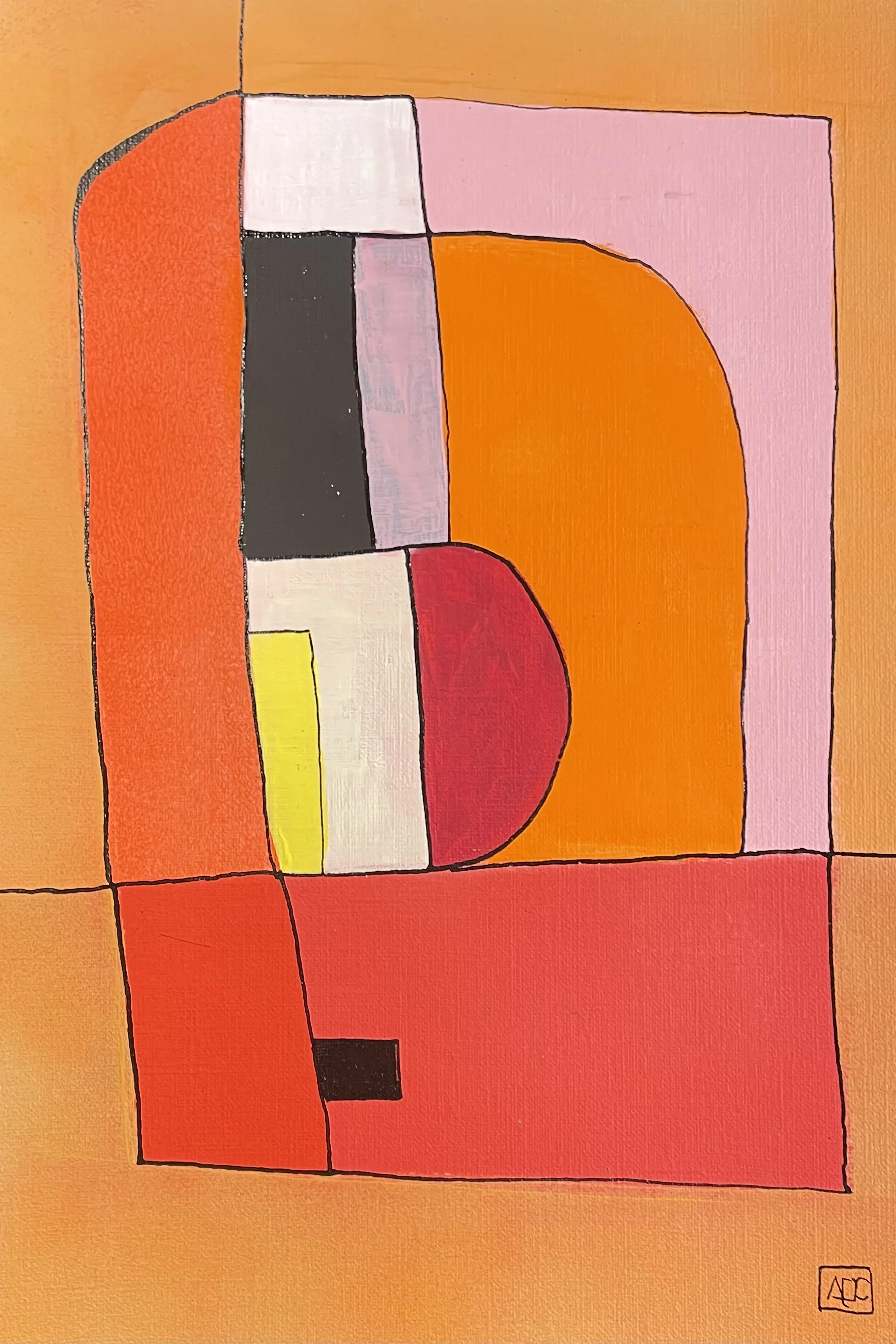
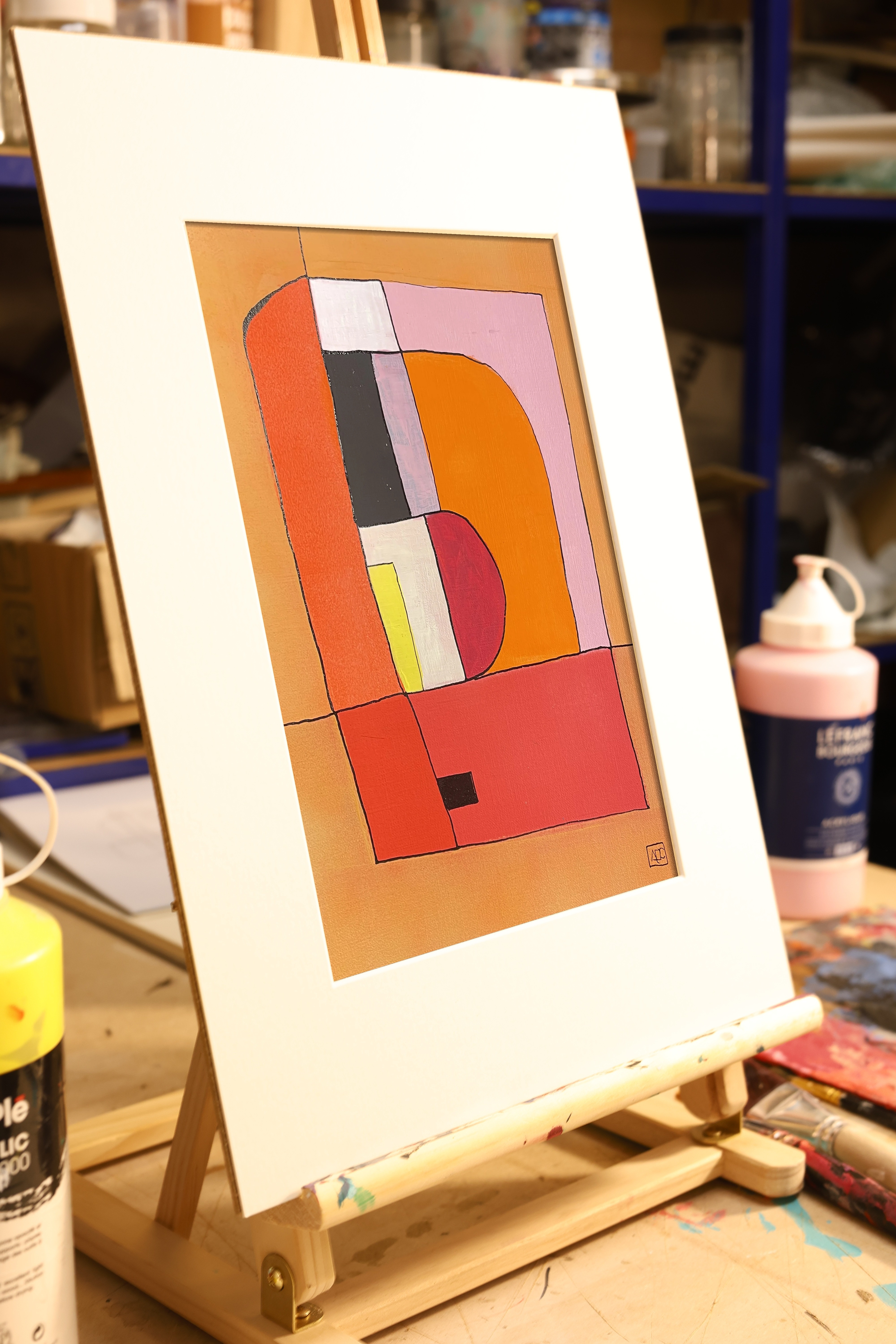 C Major - Research on Harmony - Variations 16Acrylic · 30 × 21 cmSold · São Paulo, Brazil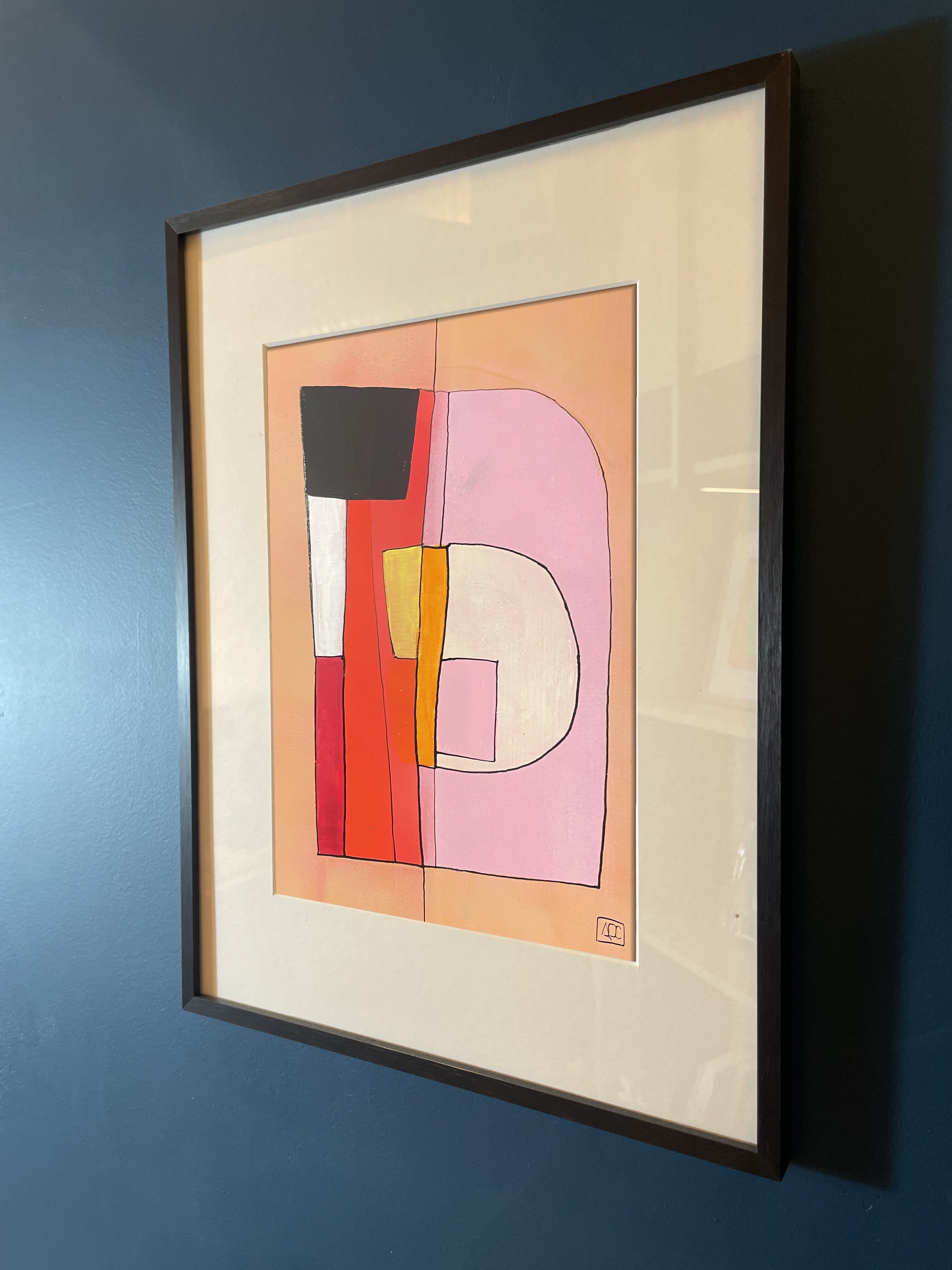
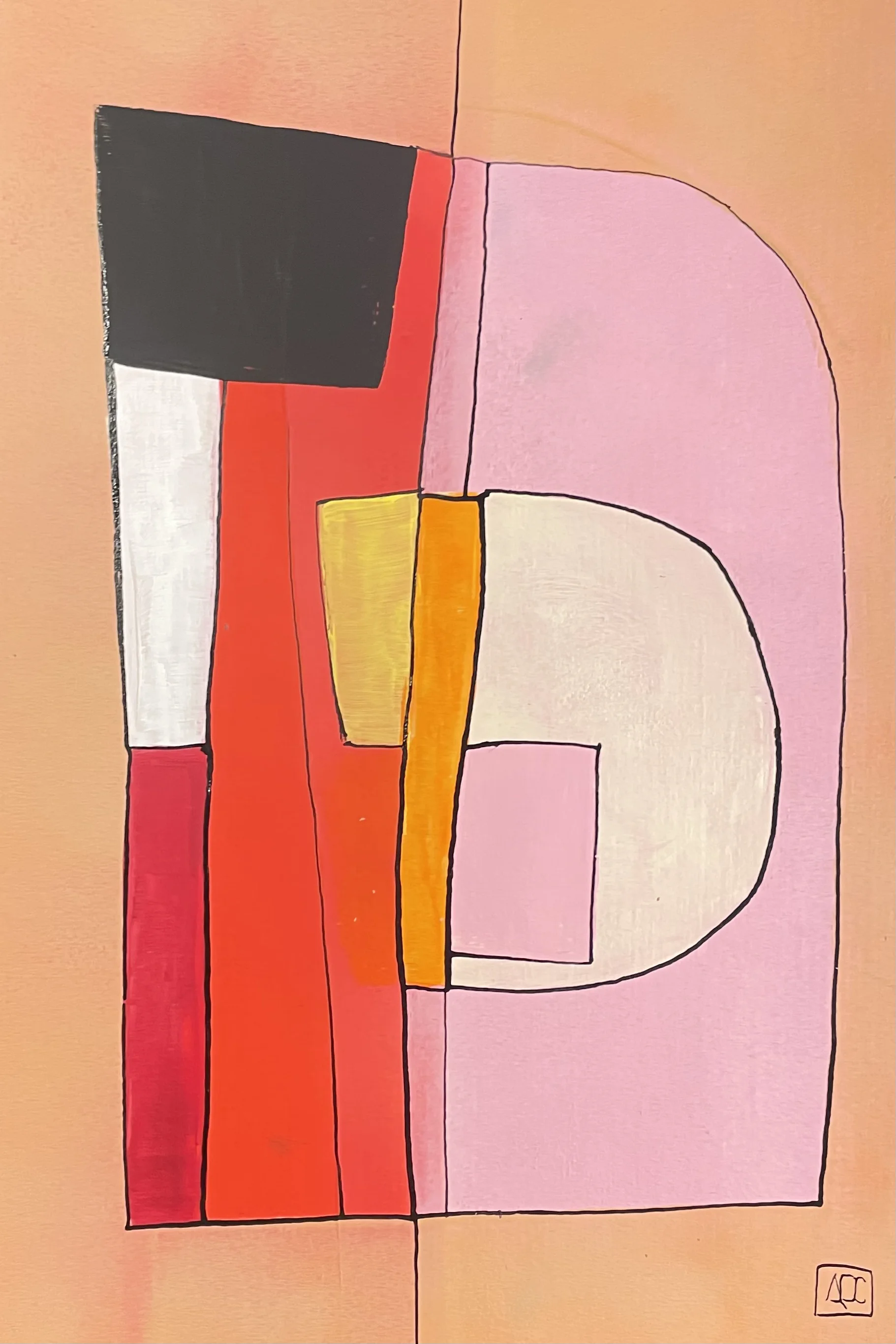
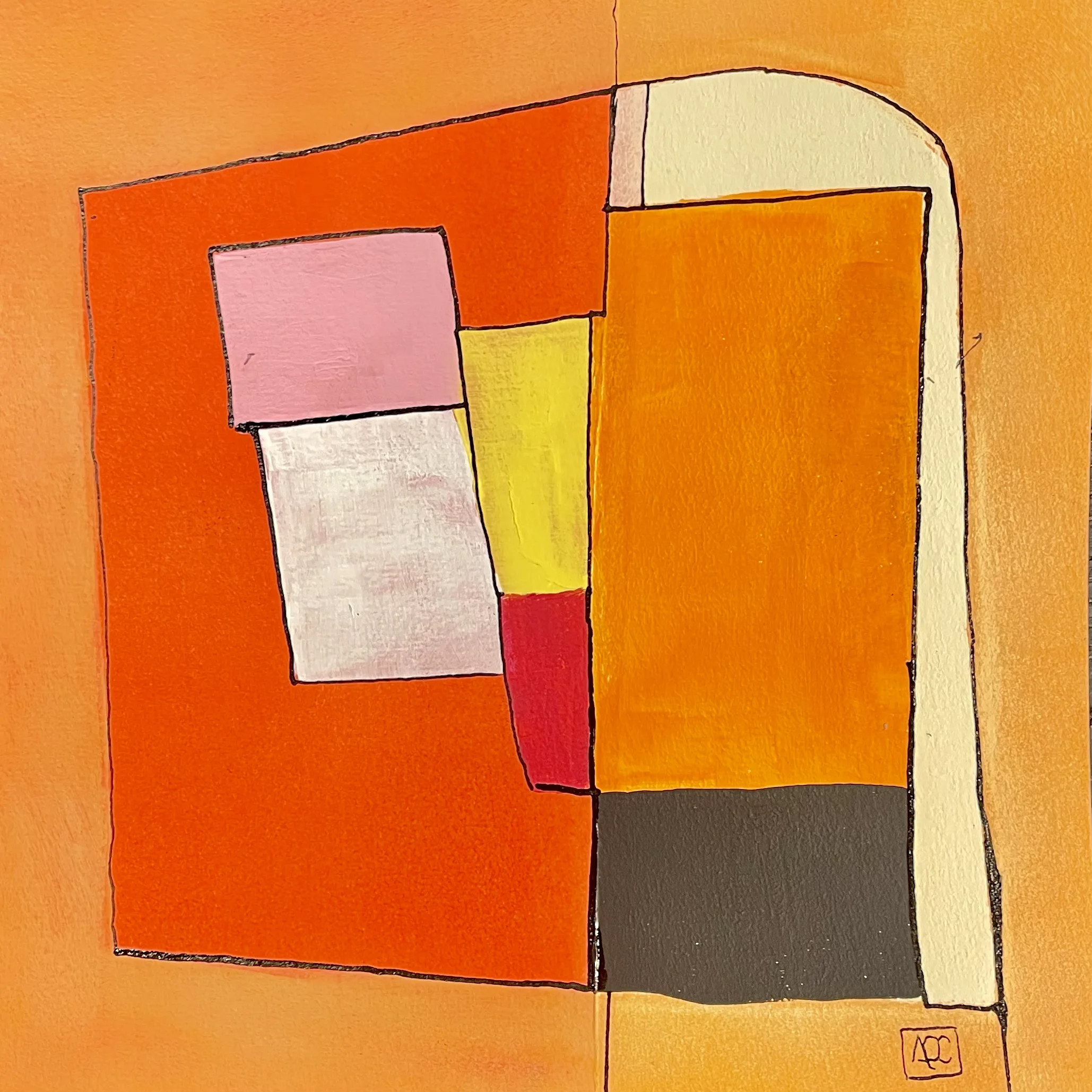
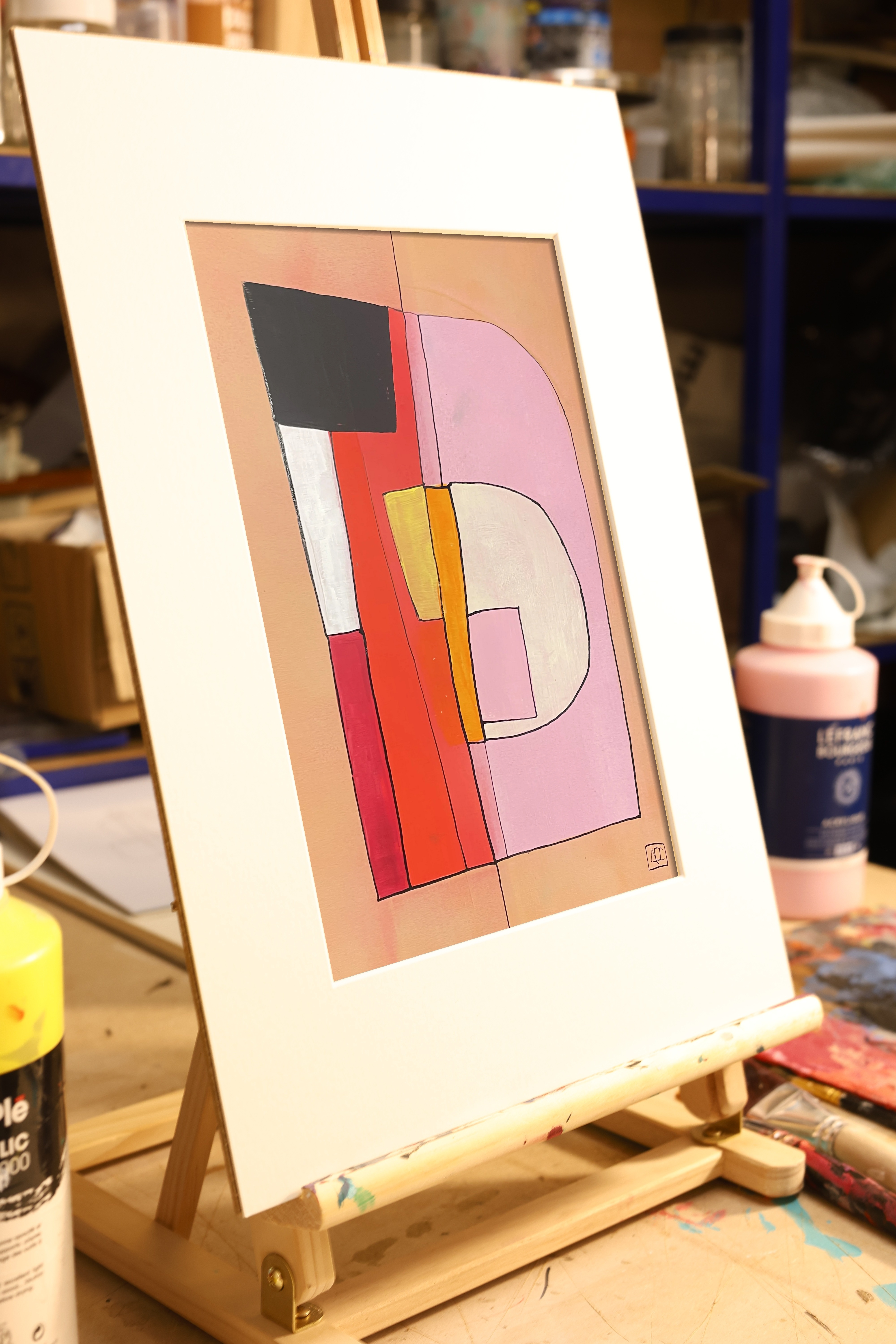 C Major - Research on Harmony - Variations 17Acrylic · 30 × 21 cmSold · New-York, USA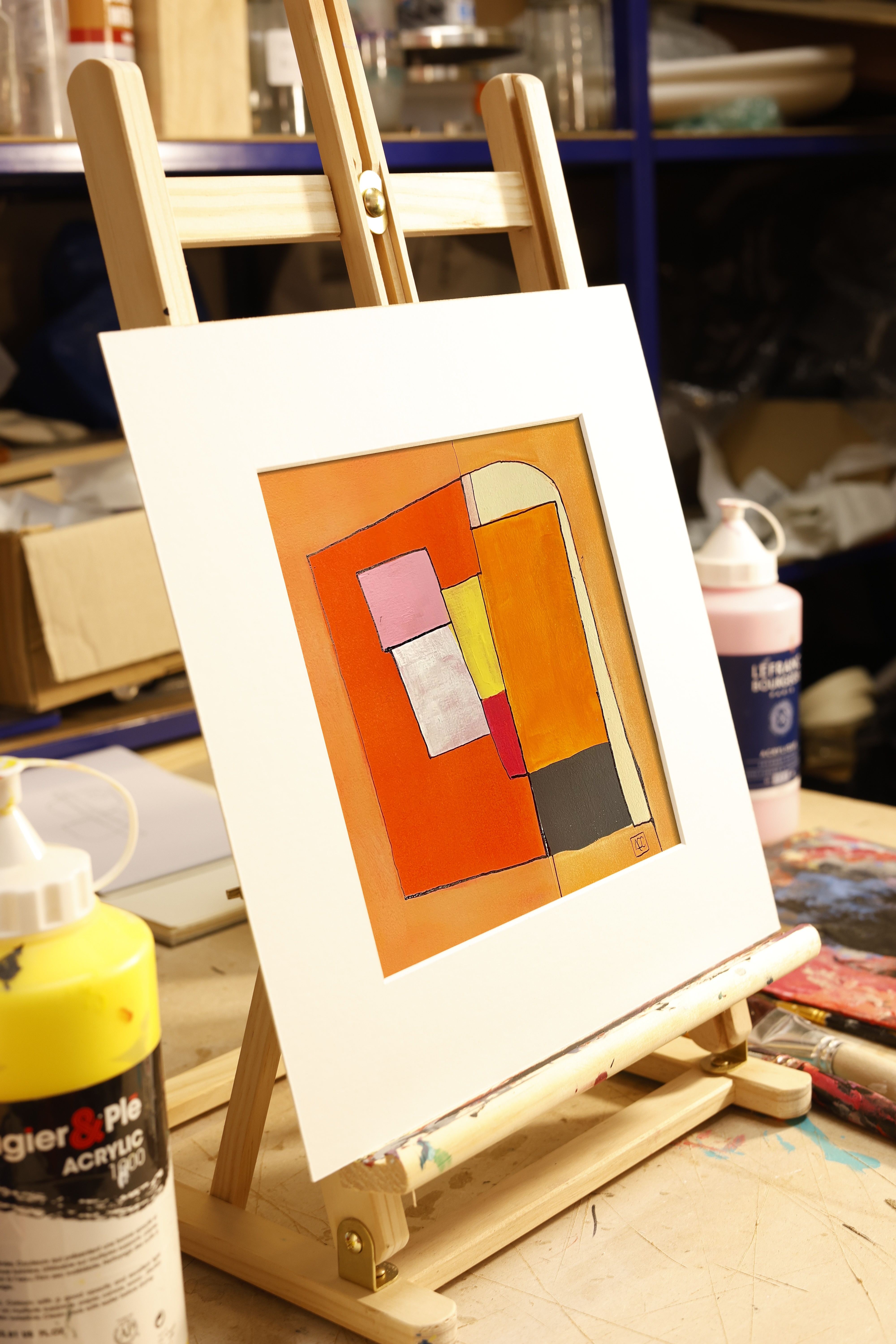
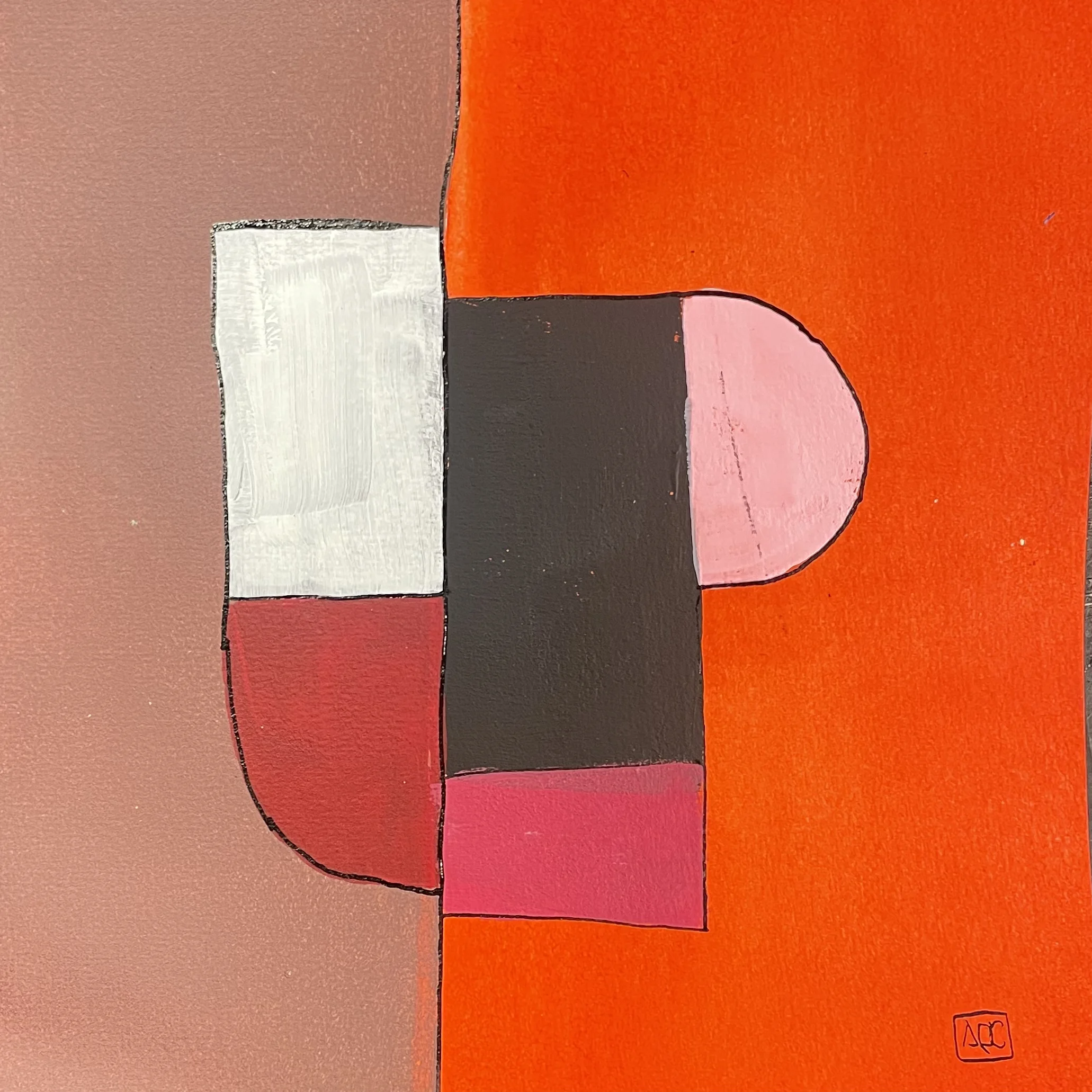
 C Major - Research on Harmony - Variations 15Acrylic · 21 × 21 cmSold · San Francisco, USA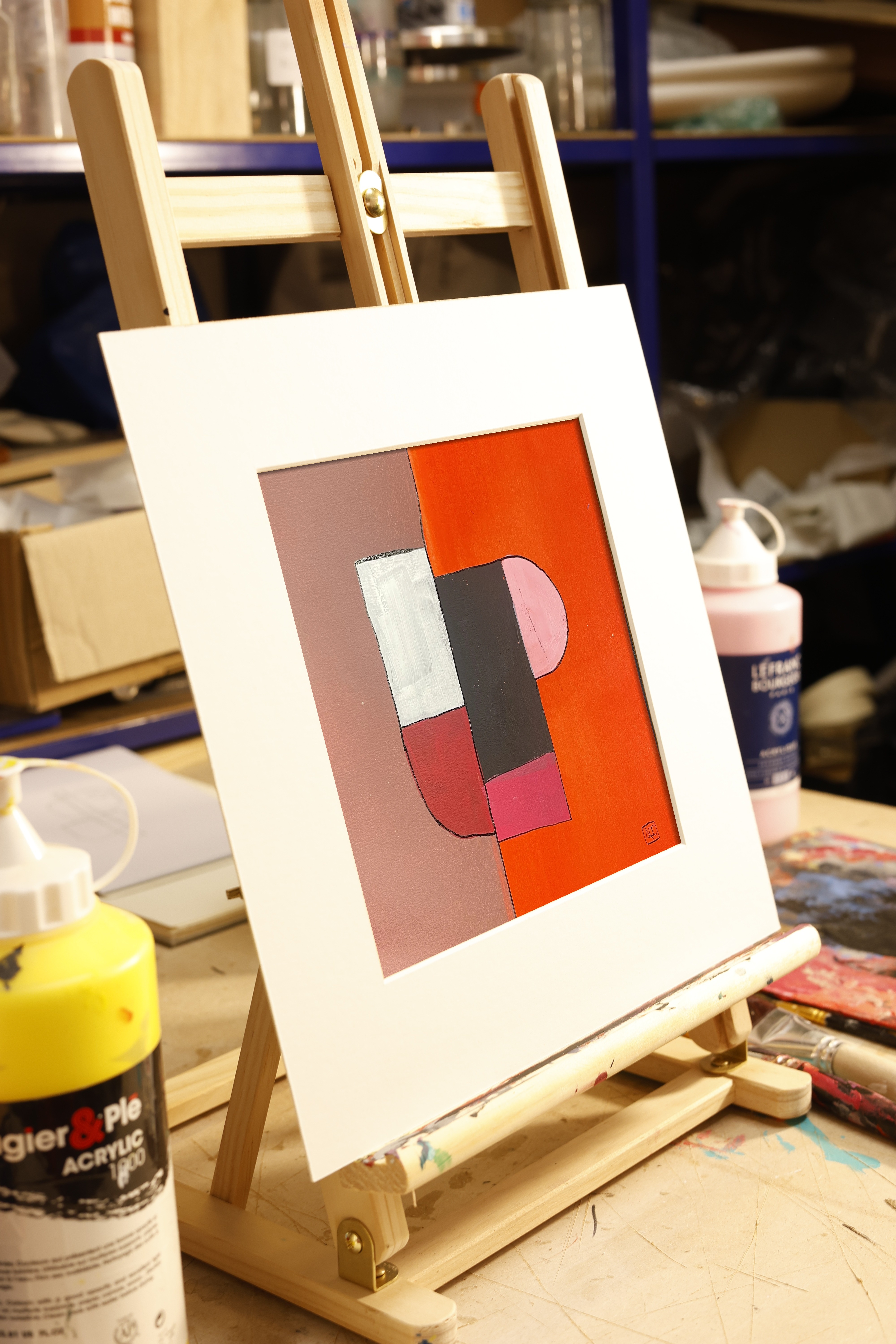
 C Major - Research on Harmony - Variations 19Acrylic · 21 × 21 cmSold · Zürich, Switzerland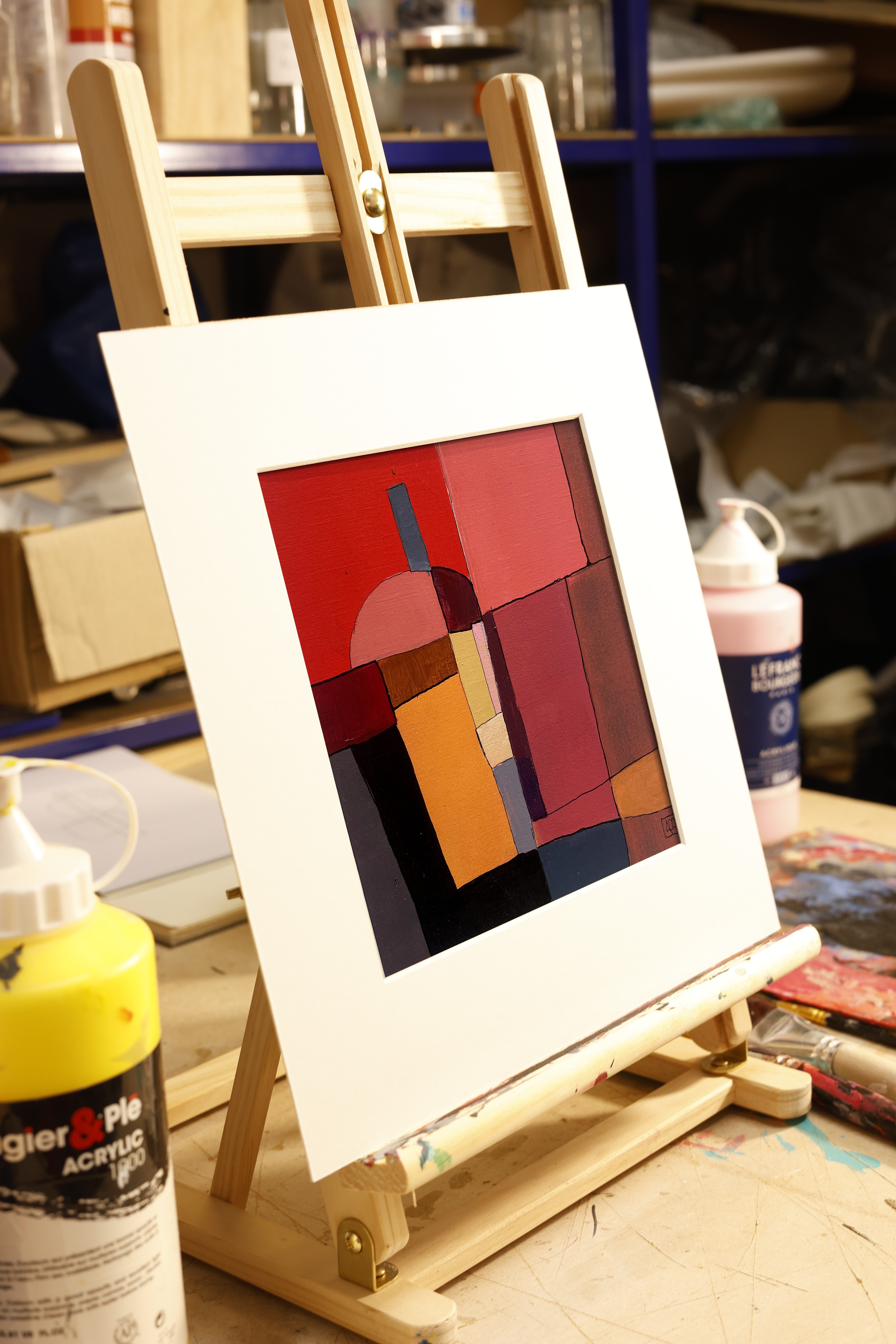
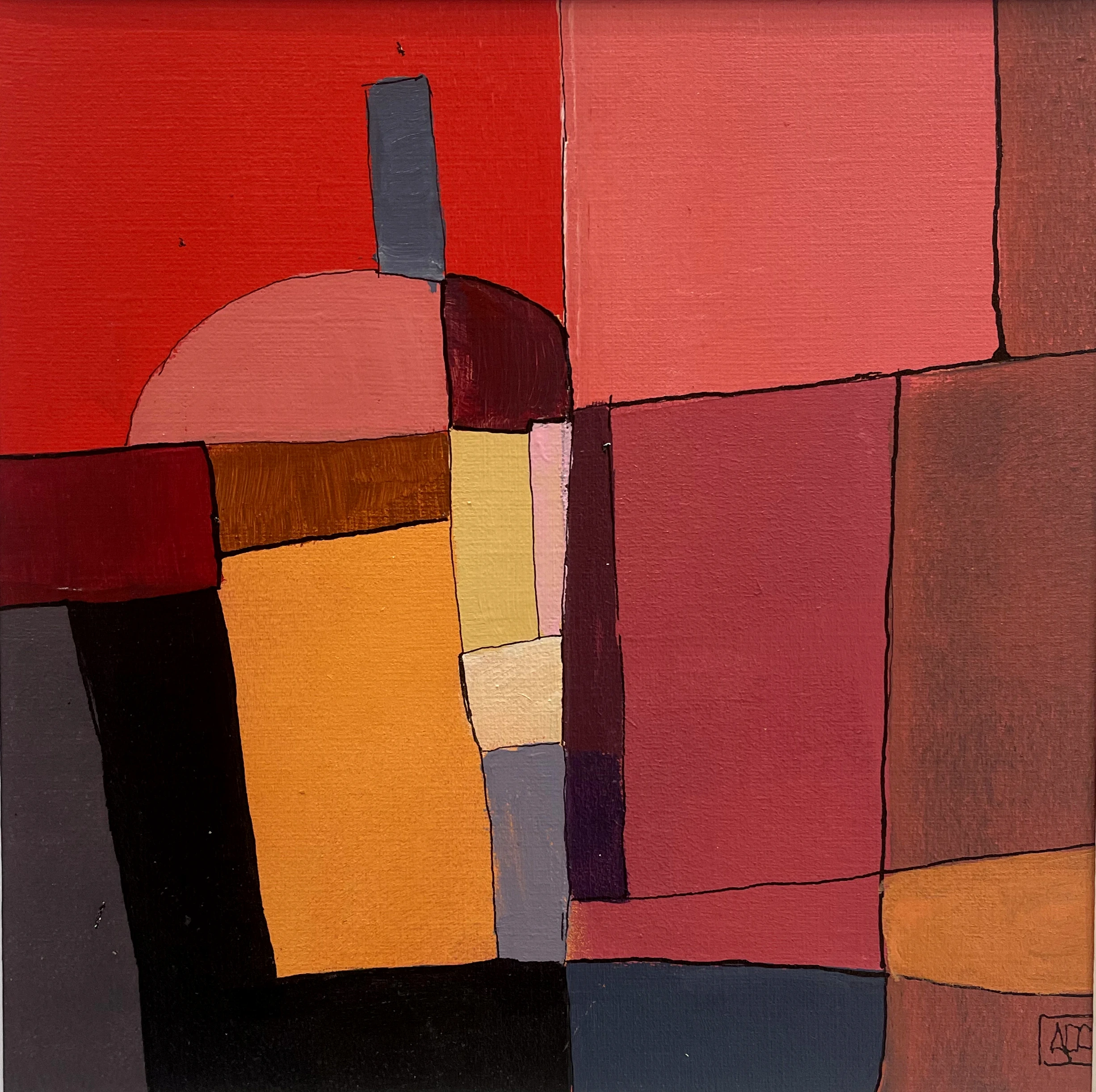 C Major - Research on Harmony - Variations 20Acrylic · 21 × 21 cmSold · Bogota, Colombia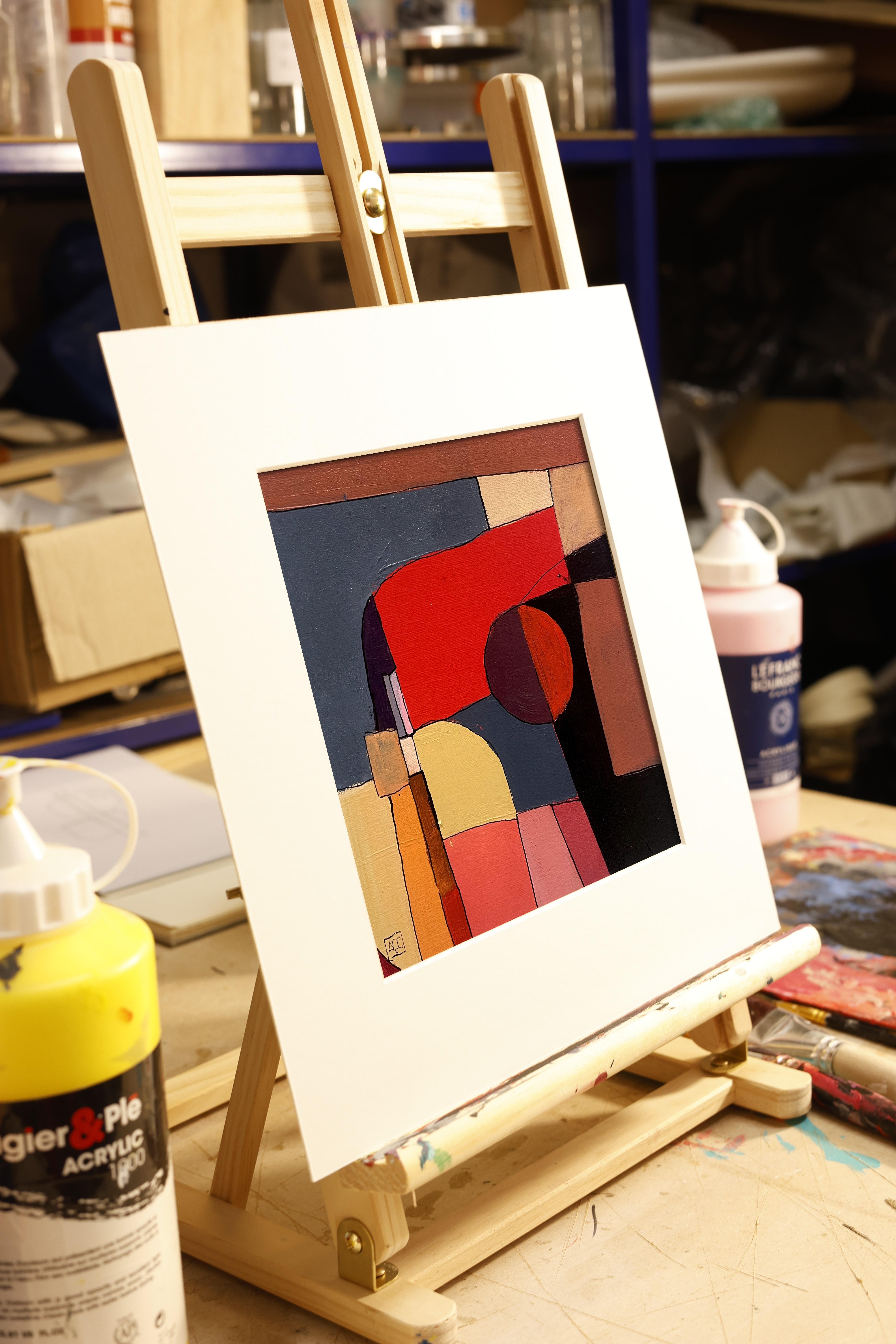
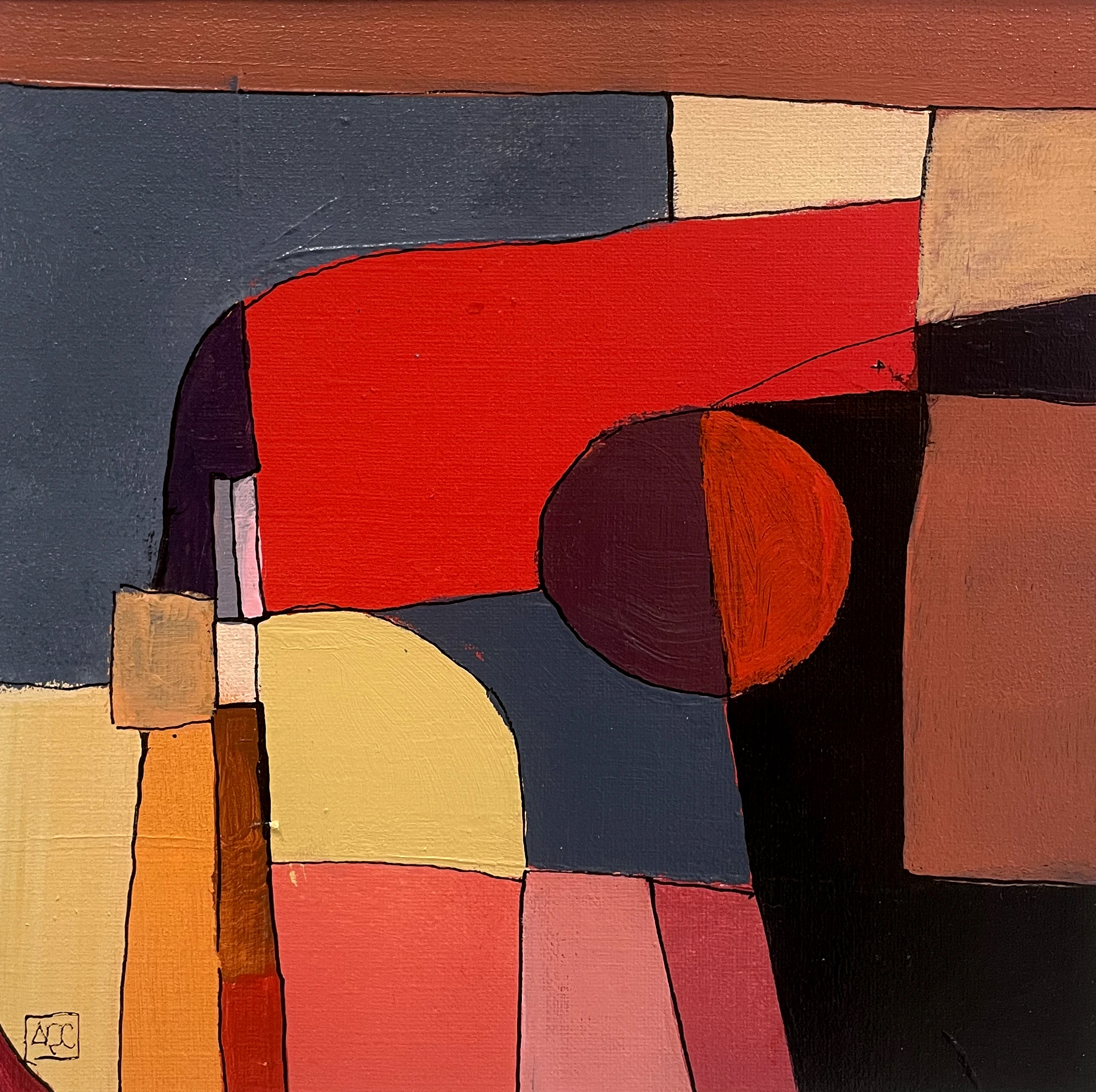 C Major - Research on Harmony - Variations 21Acrylic · 21 × 21 cmSold · Bogota, Colombia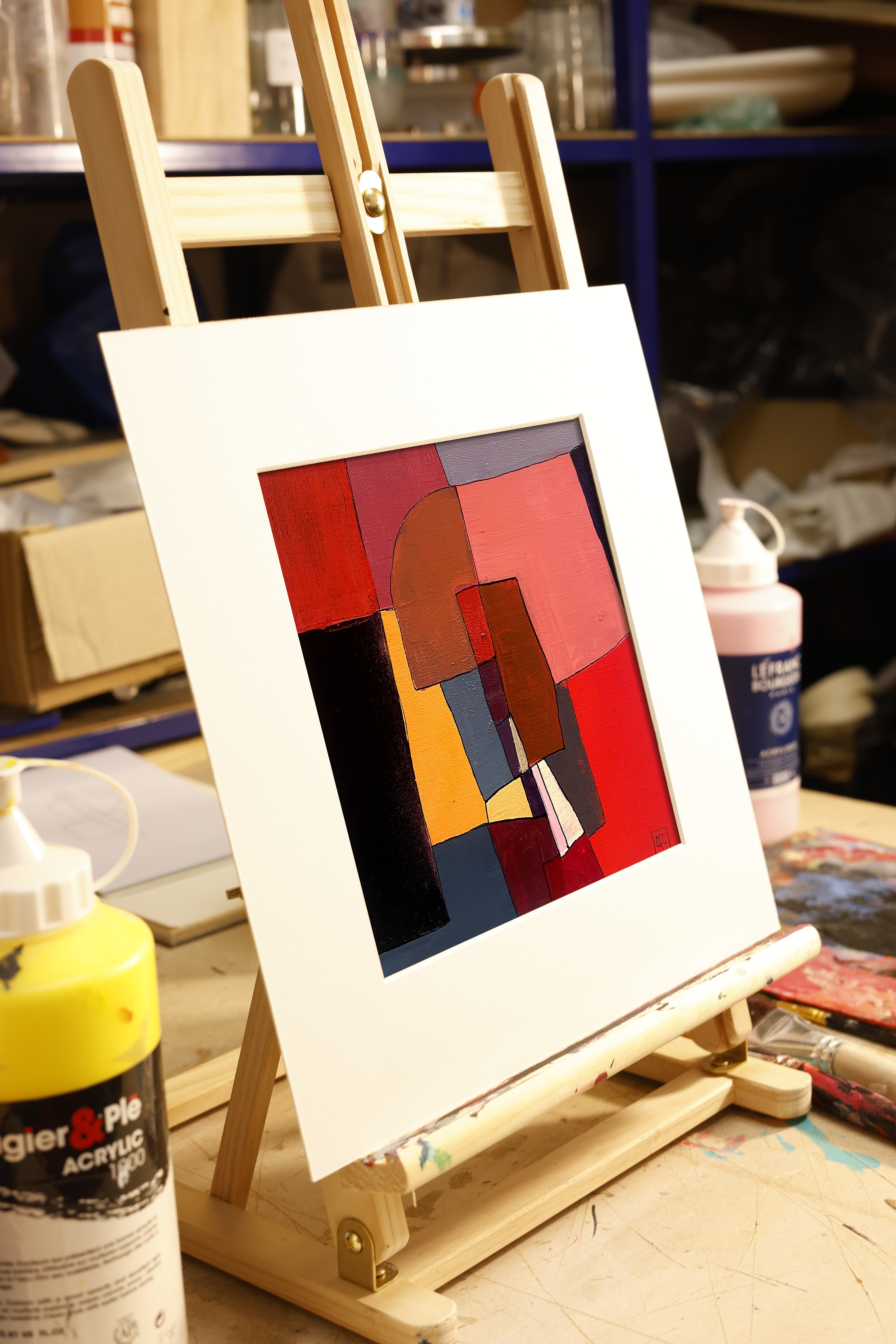
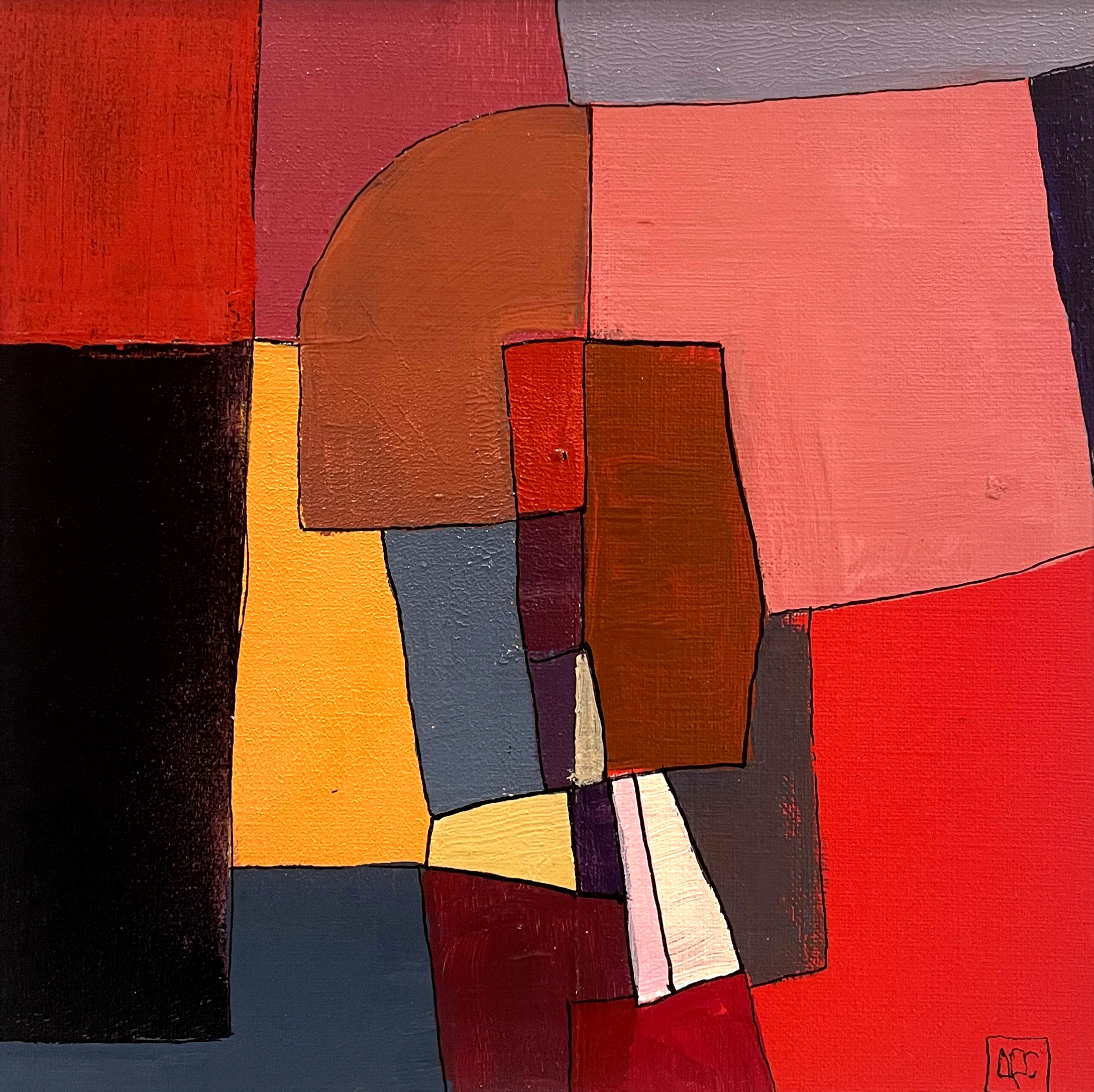 C Major - Research on Harmony - Variations 22Acrylic · 21 × 21 cmSold · Oslo, Norway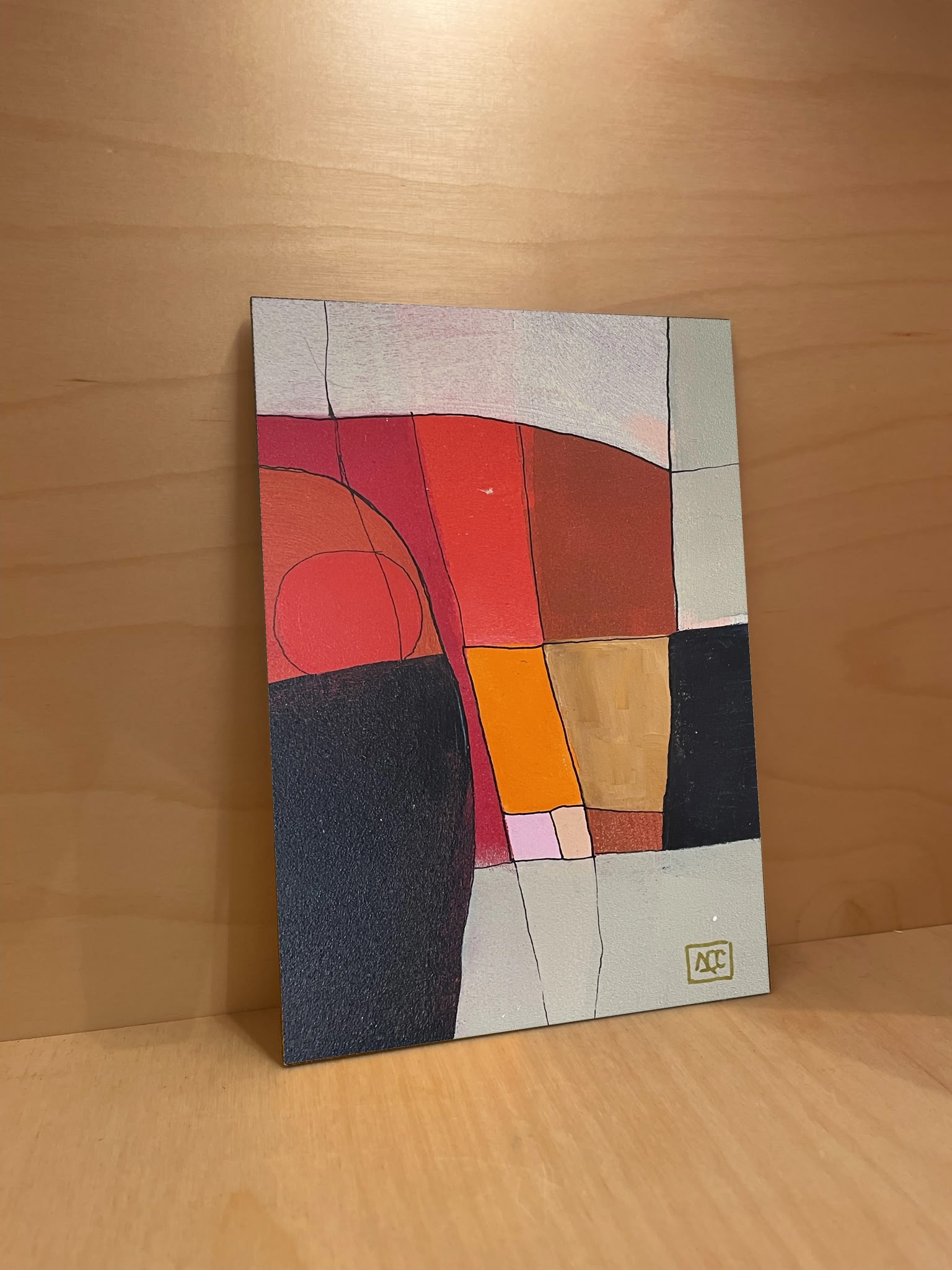
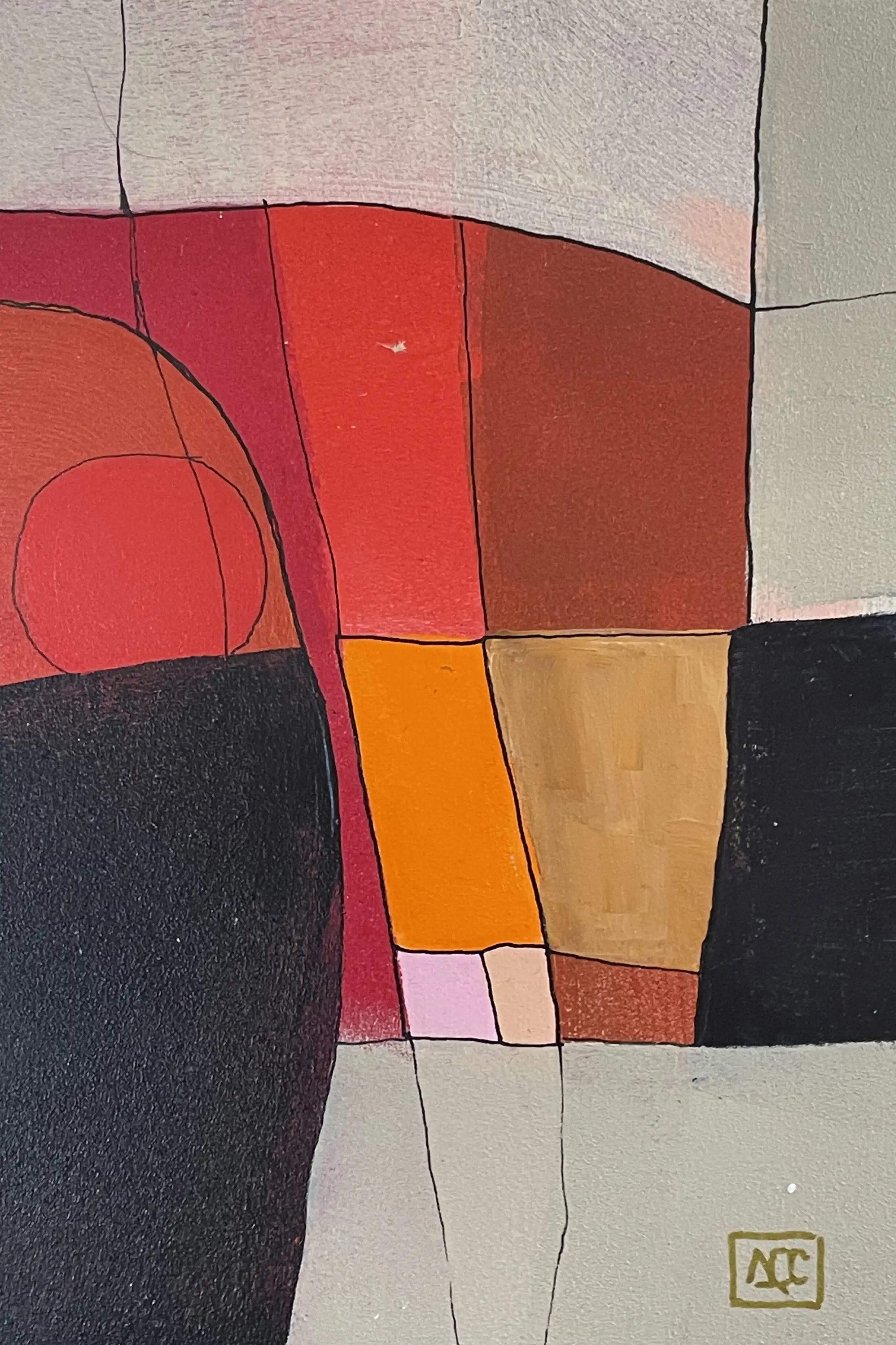
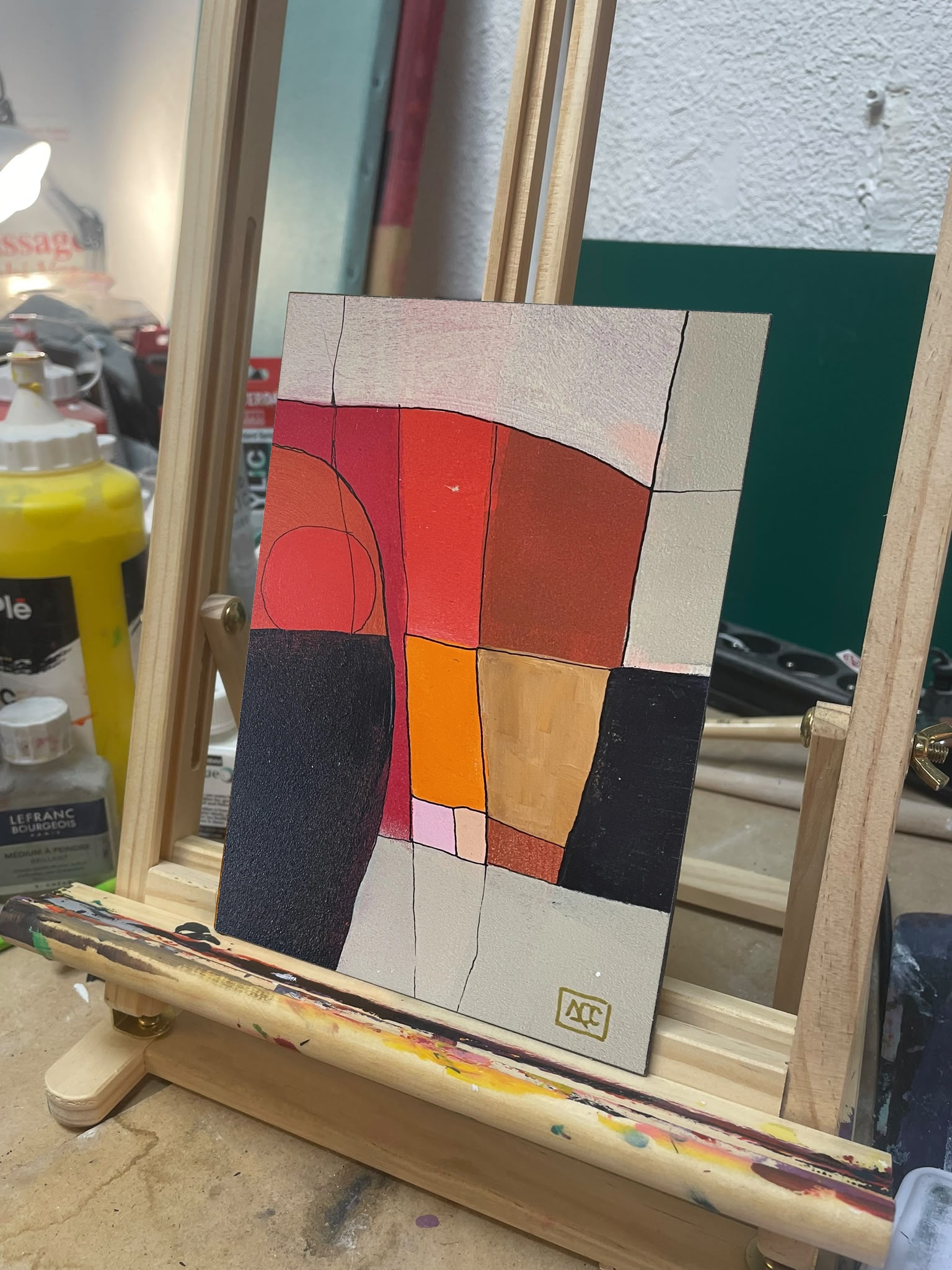 C Major - Research on Harmony - Variation 7Acrylic · 21 × 15 cmSold · Corbeil-Essonnes, France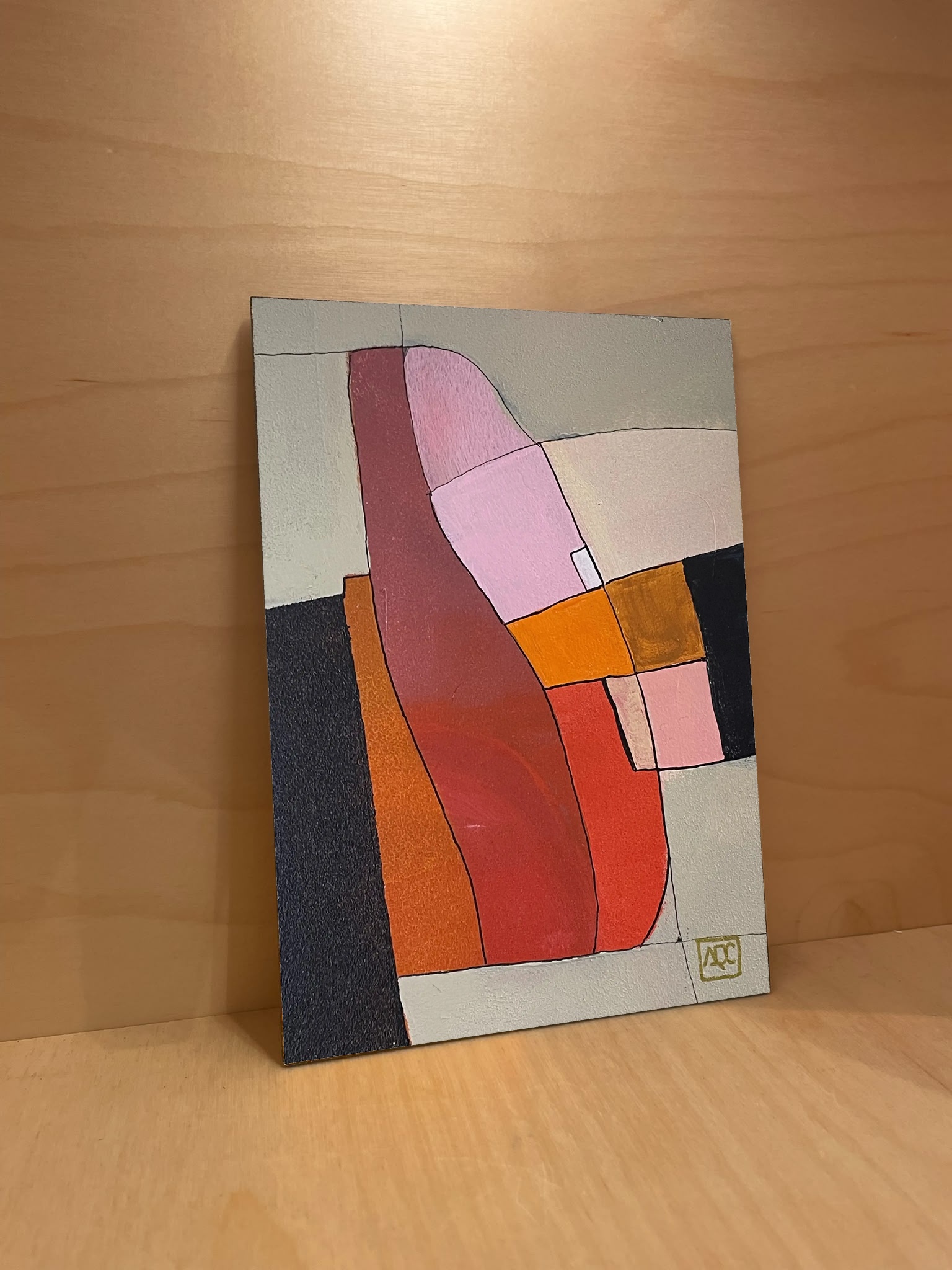
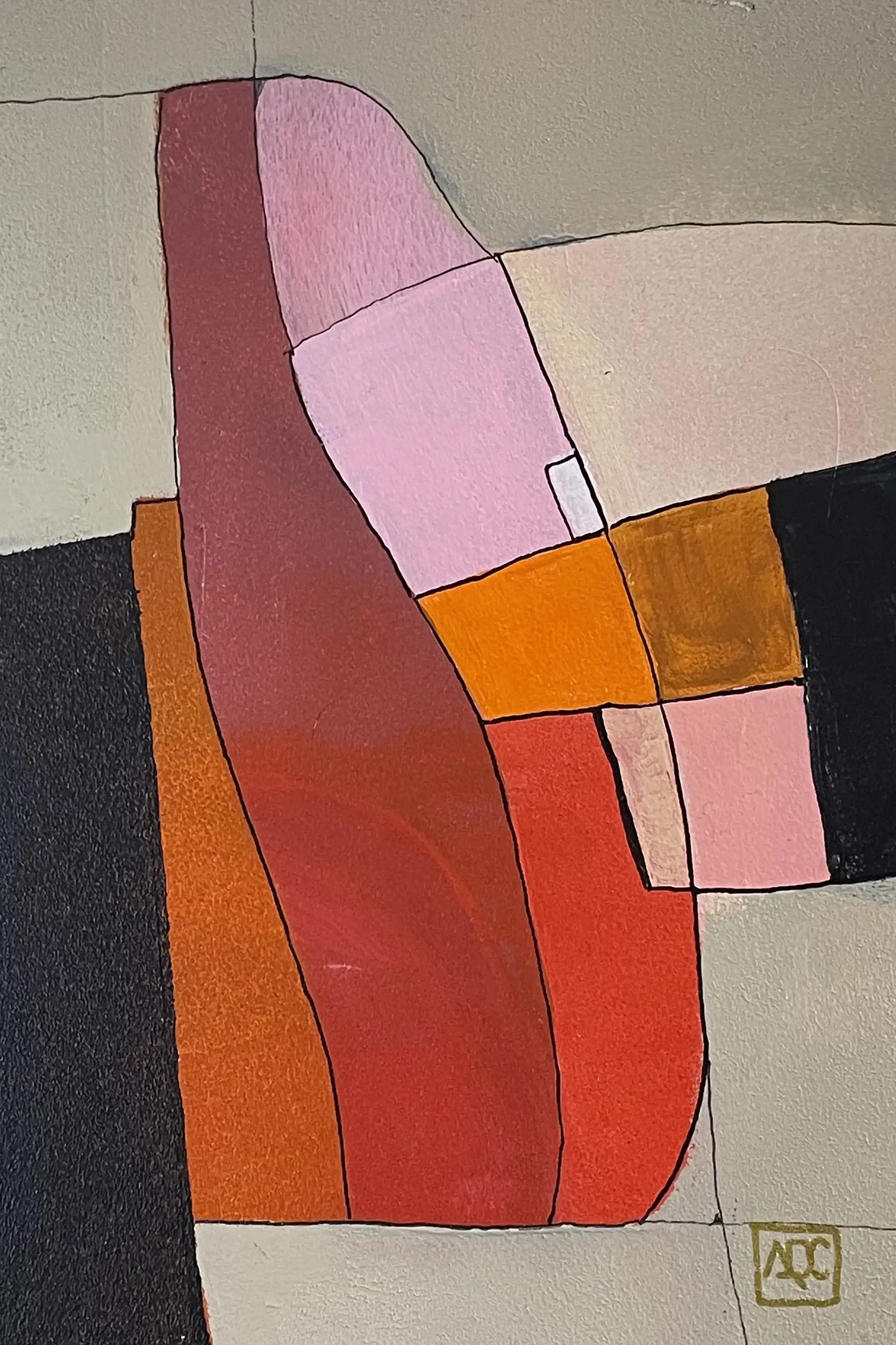
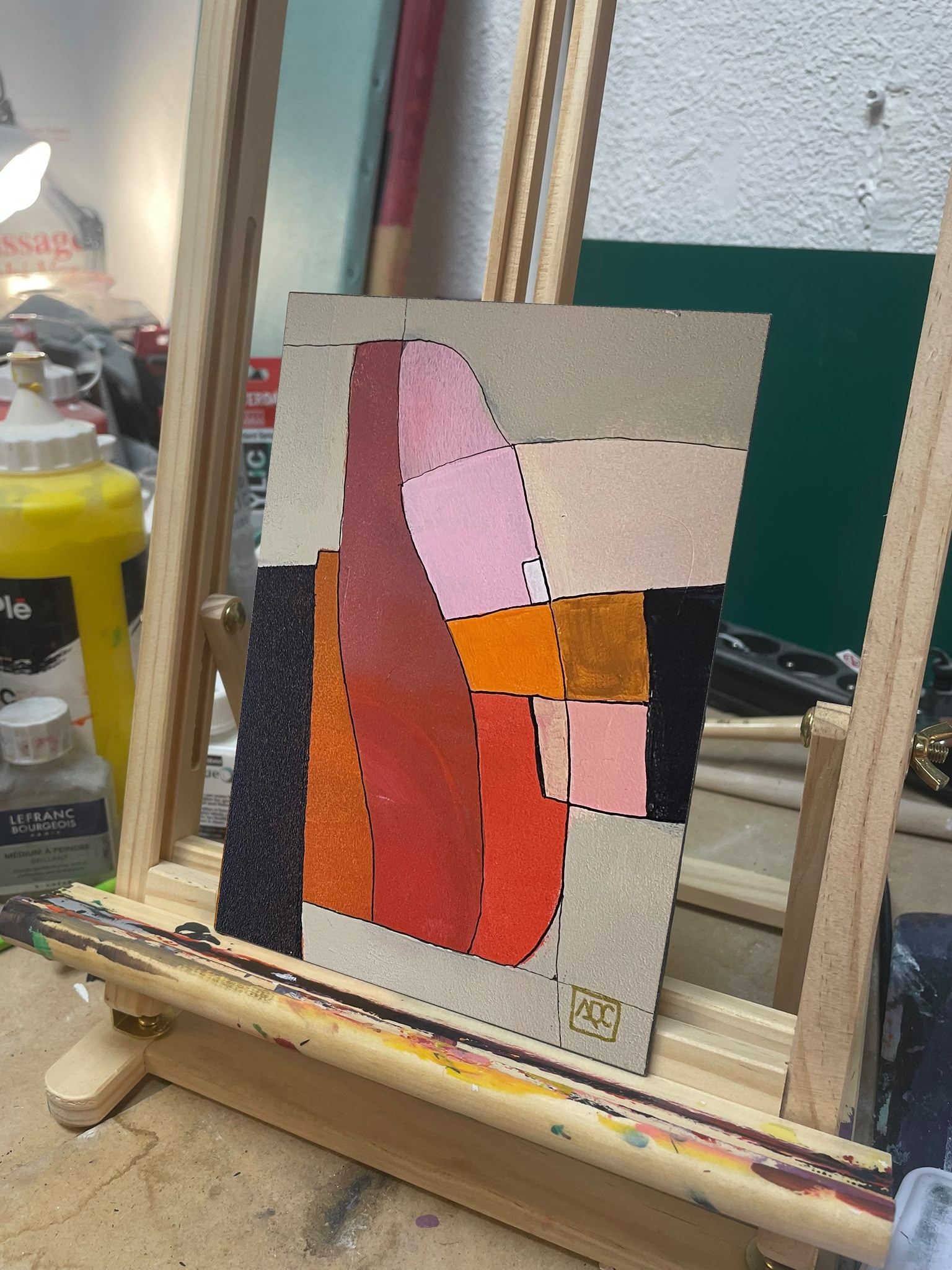 C Major - Research on Harmony - Variation 8Acrylic · 21 × 15 cmSold · San-Francisco, USA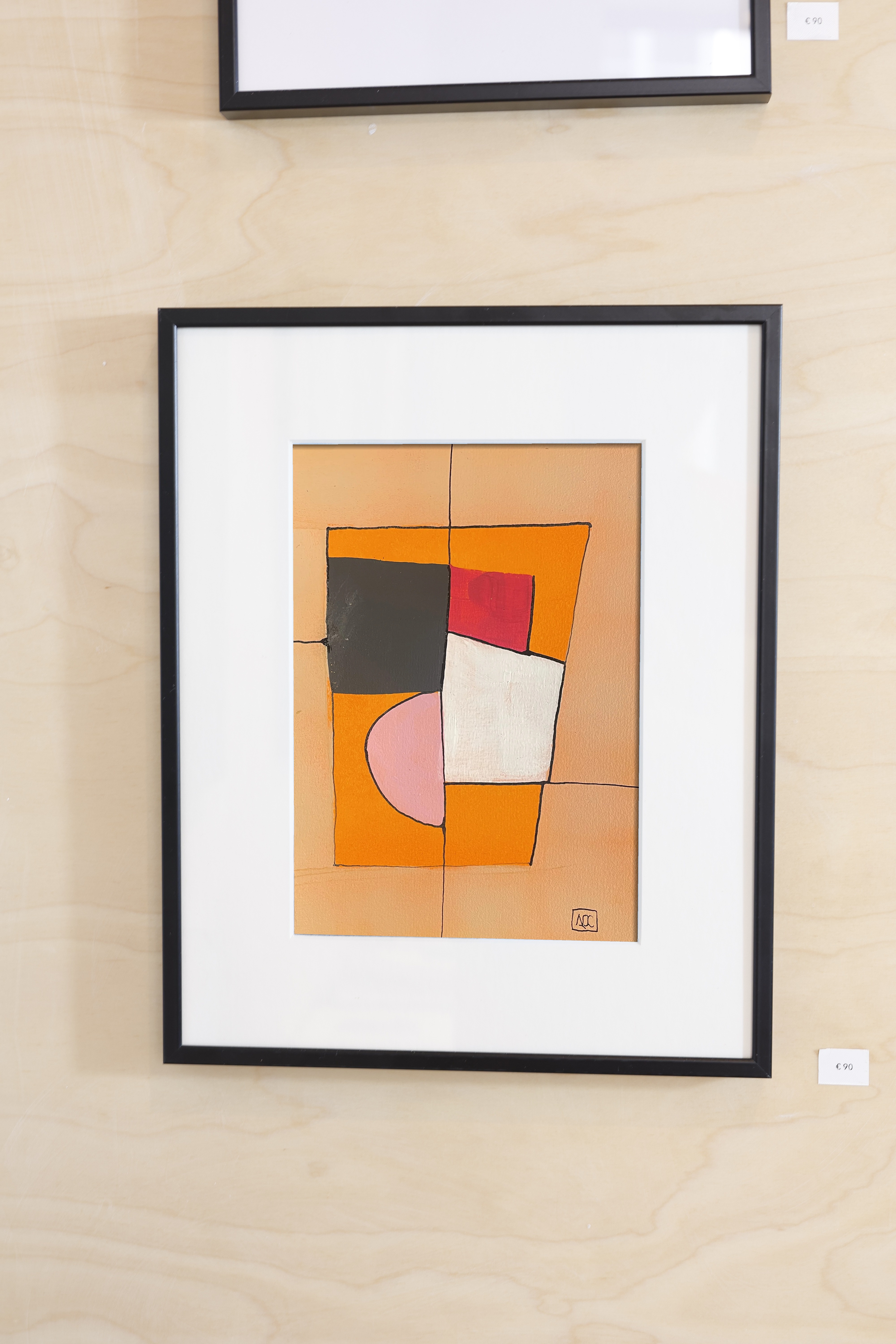
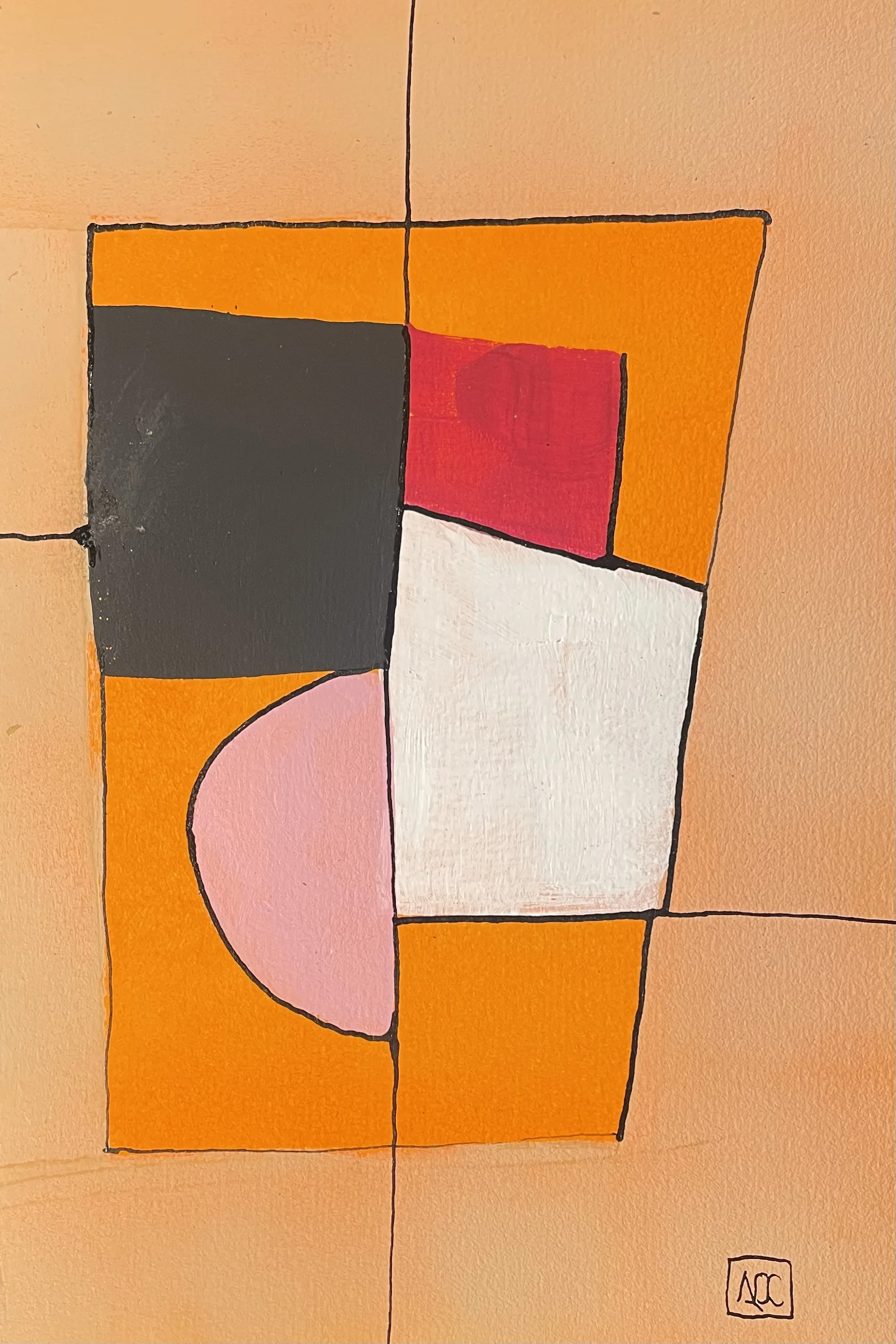
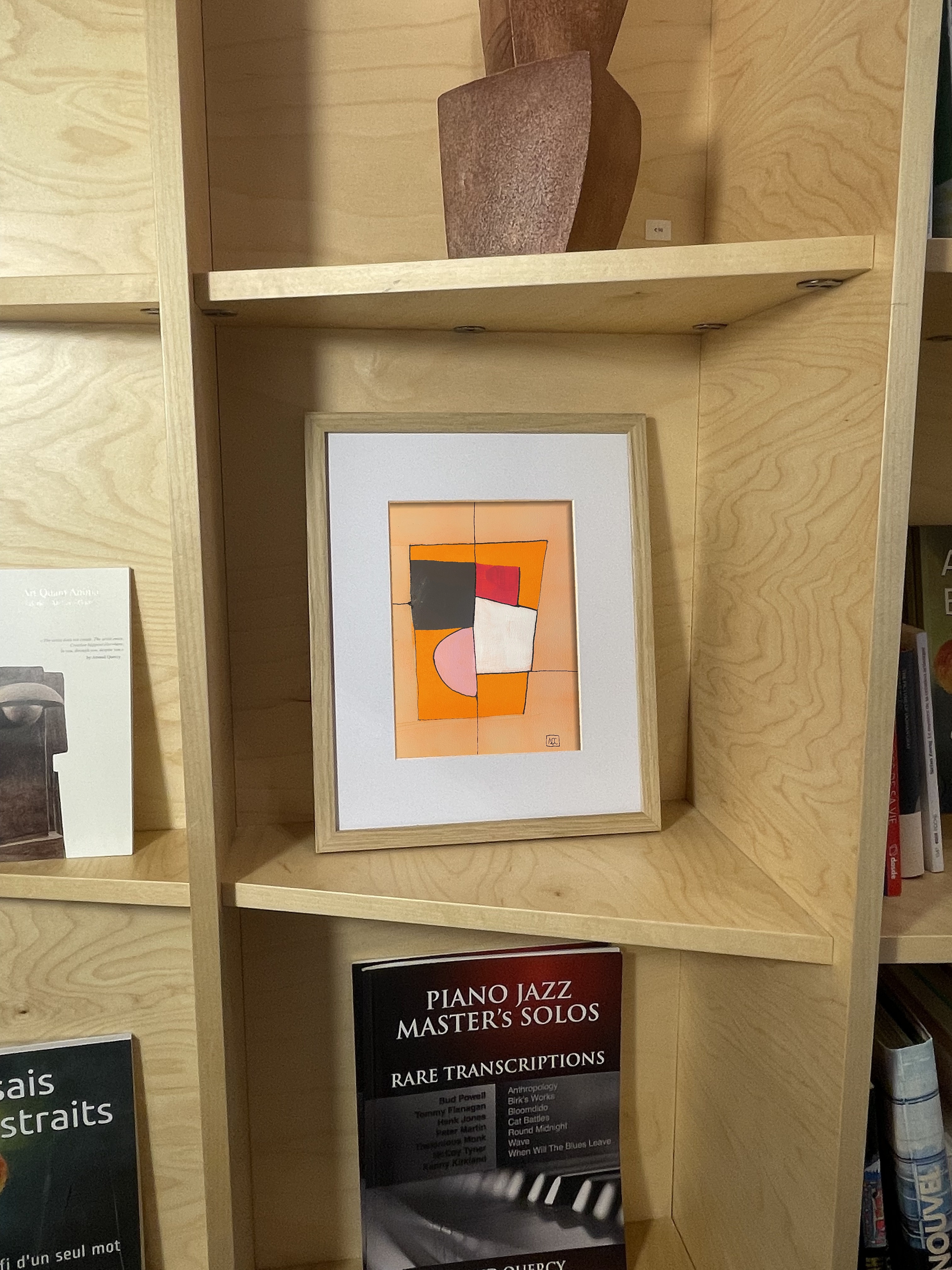 C Major - Research on Harmony - Variations 14Acrylic · 21 × 15 cmSold · New York, USA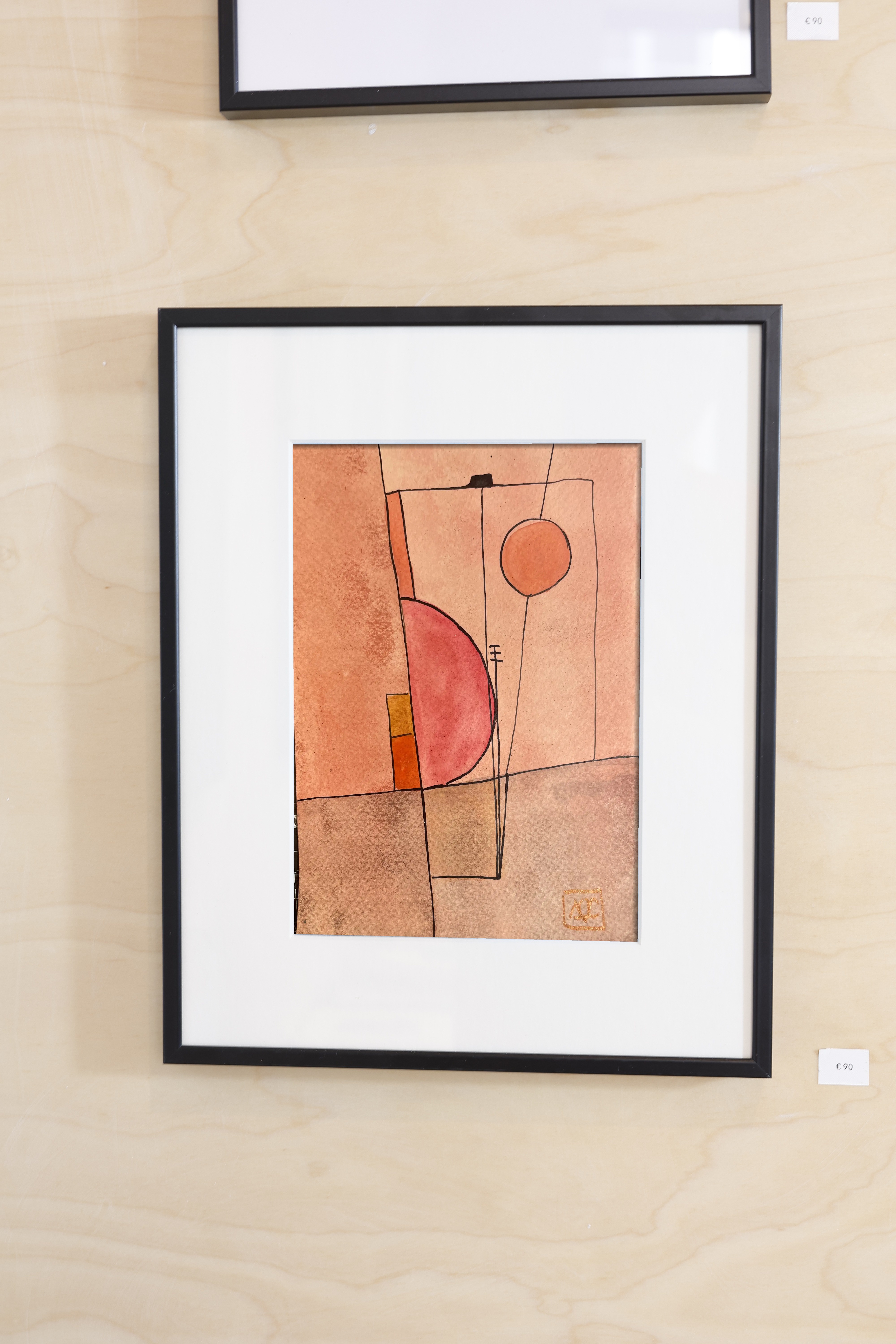
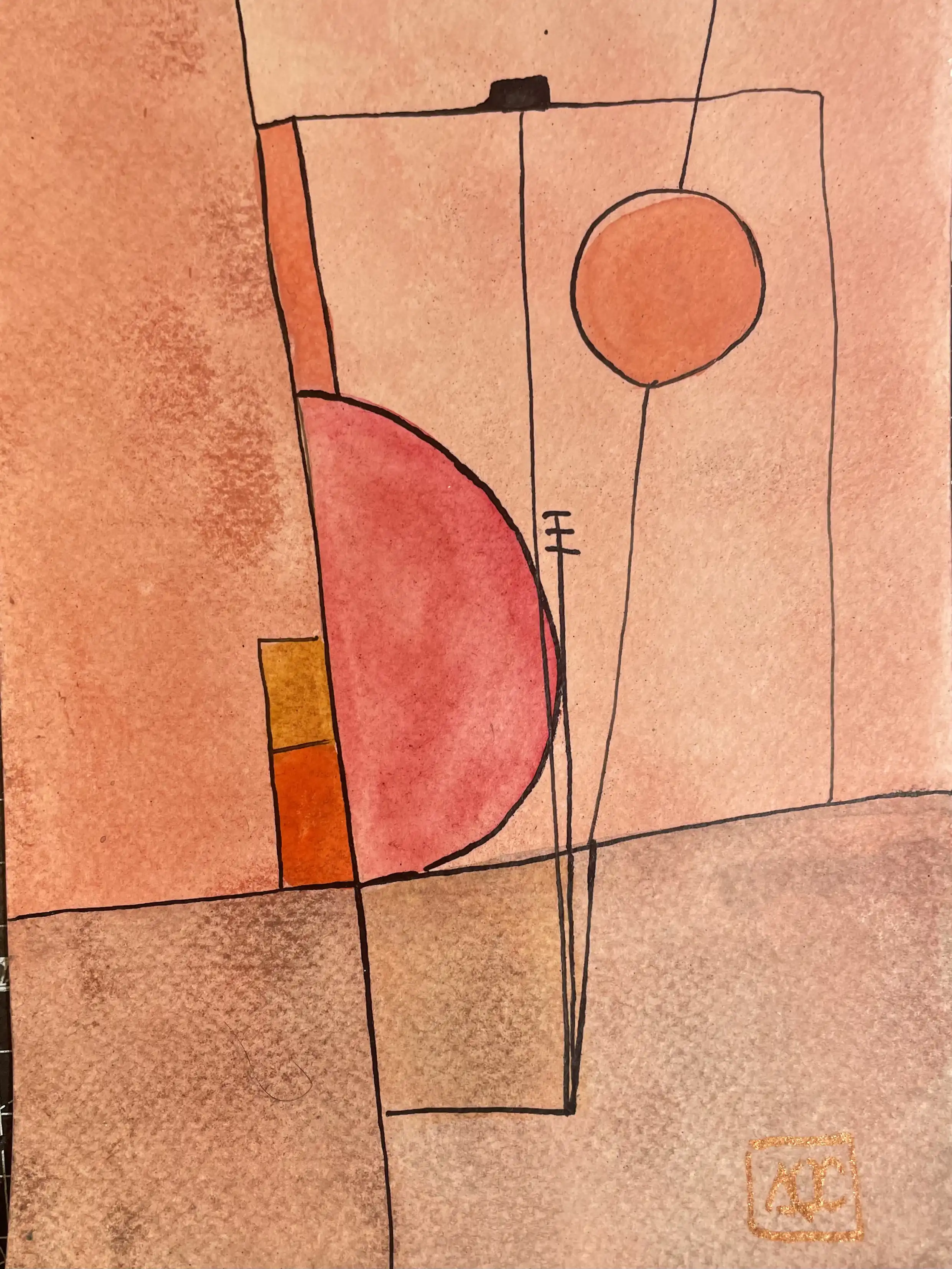
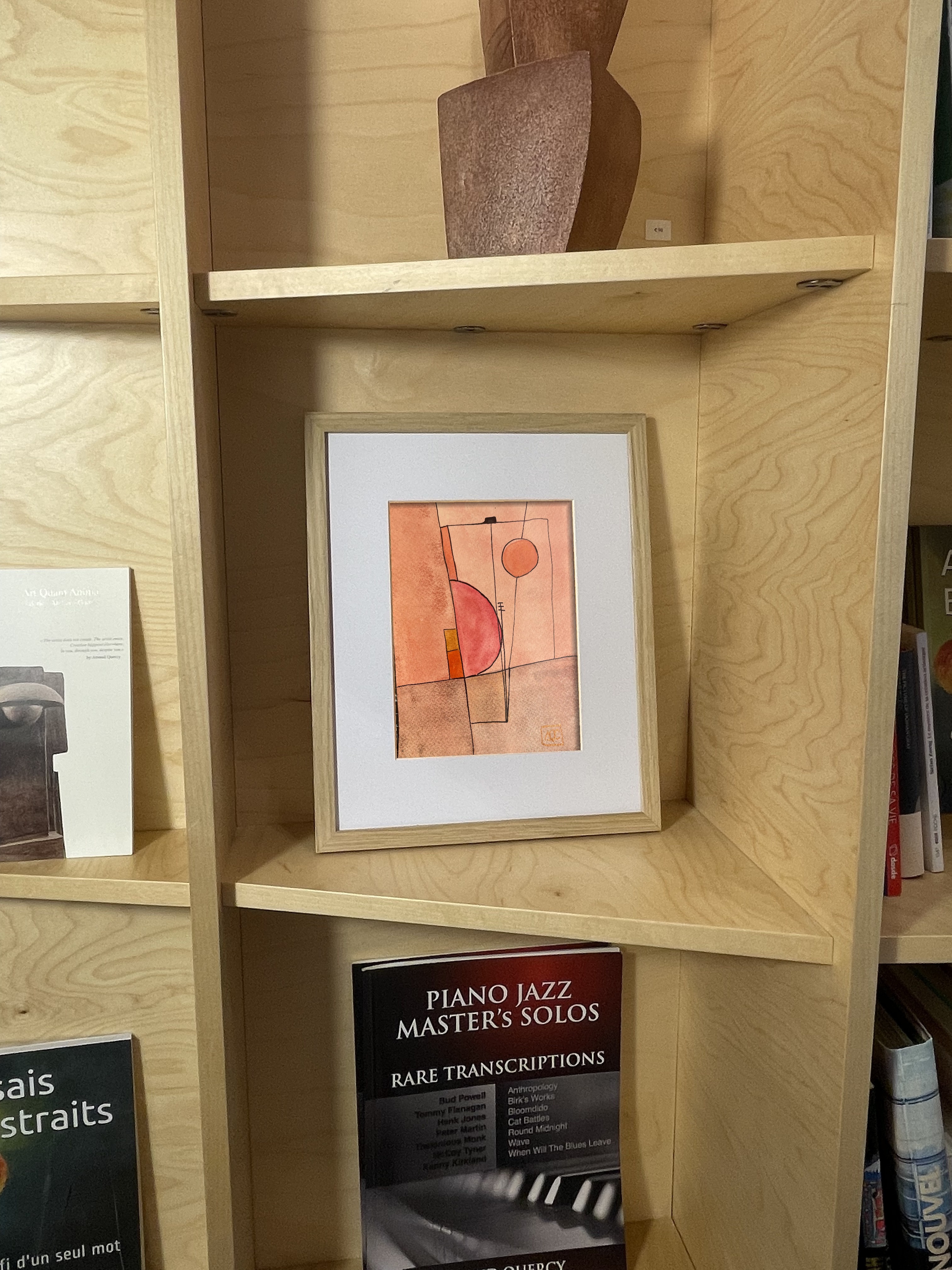 C Major - Research on Harmony - Variation 10Watercolor · 21 × 14.8 cmSold · New-York, USA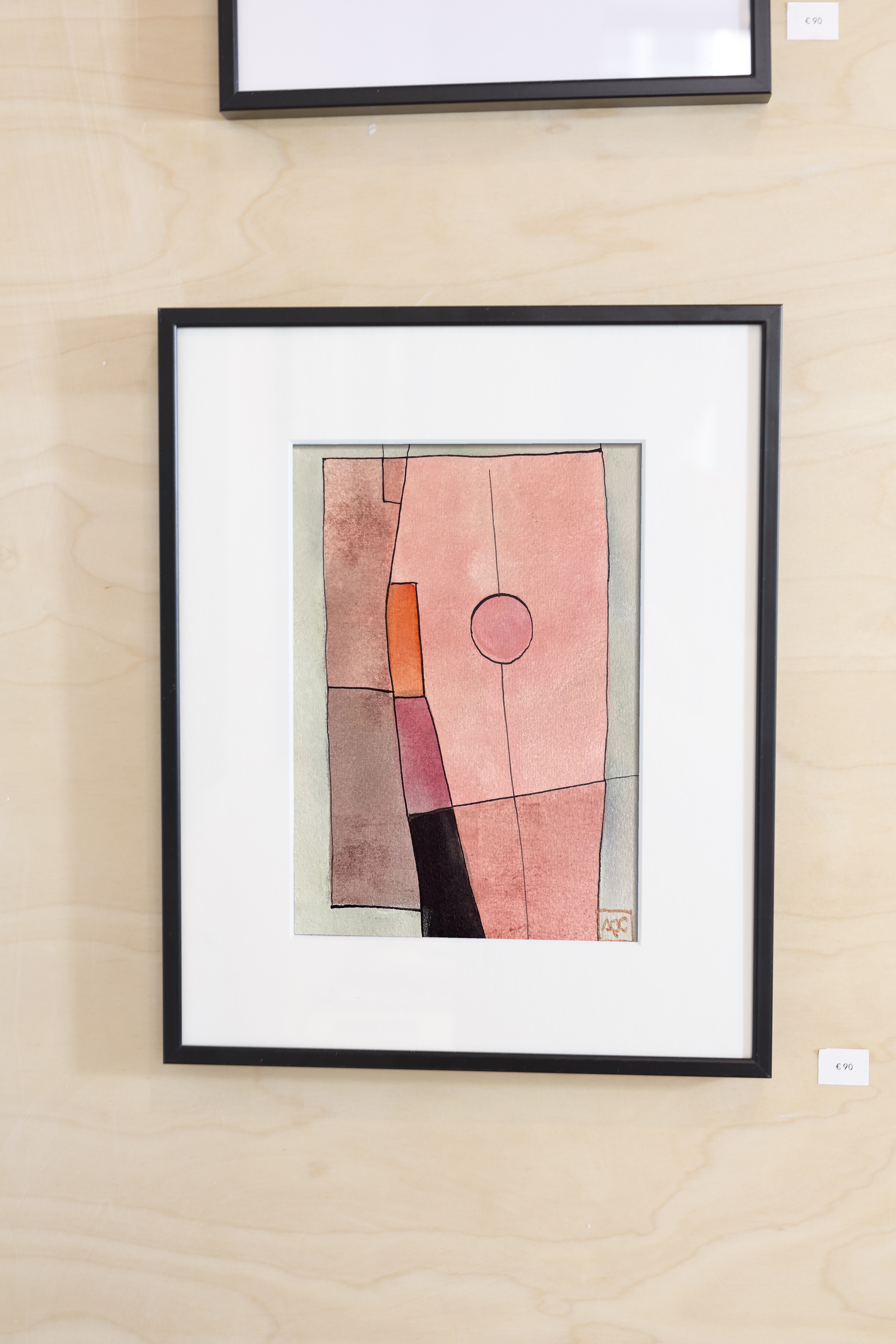
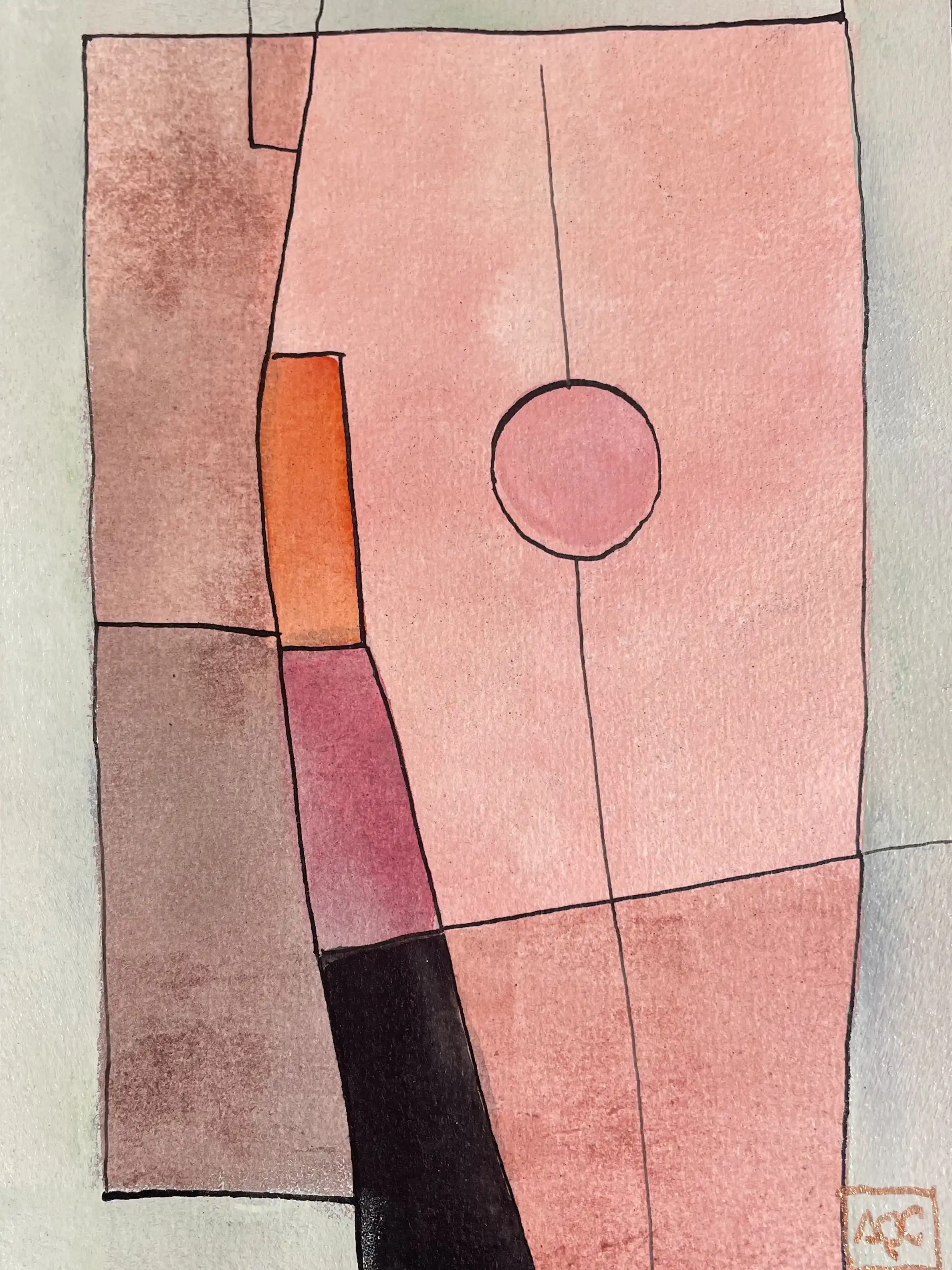
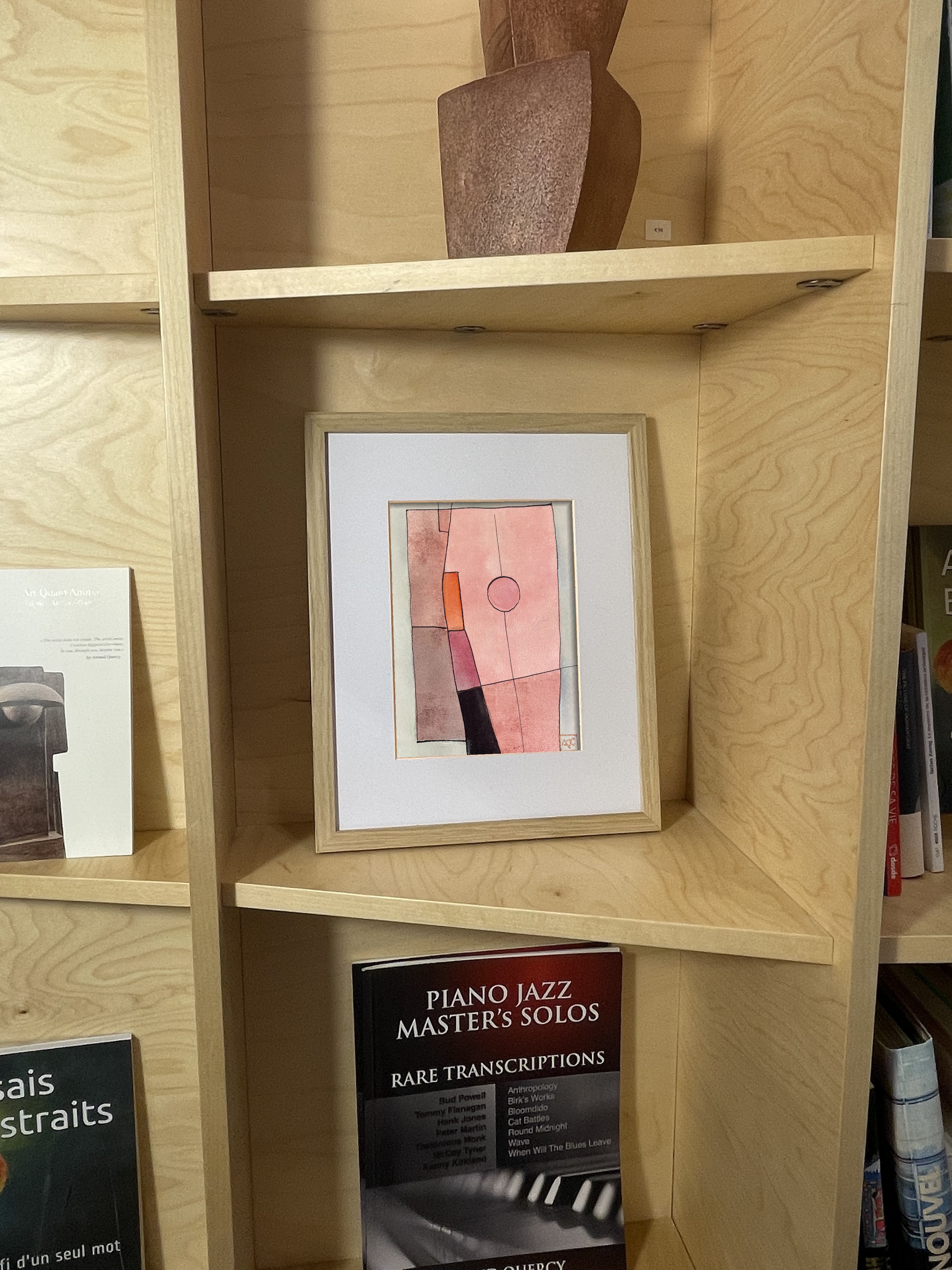 C Major - Research on Harmony - Variation 9Watercolor · 21 × 14.8 cmSold · USA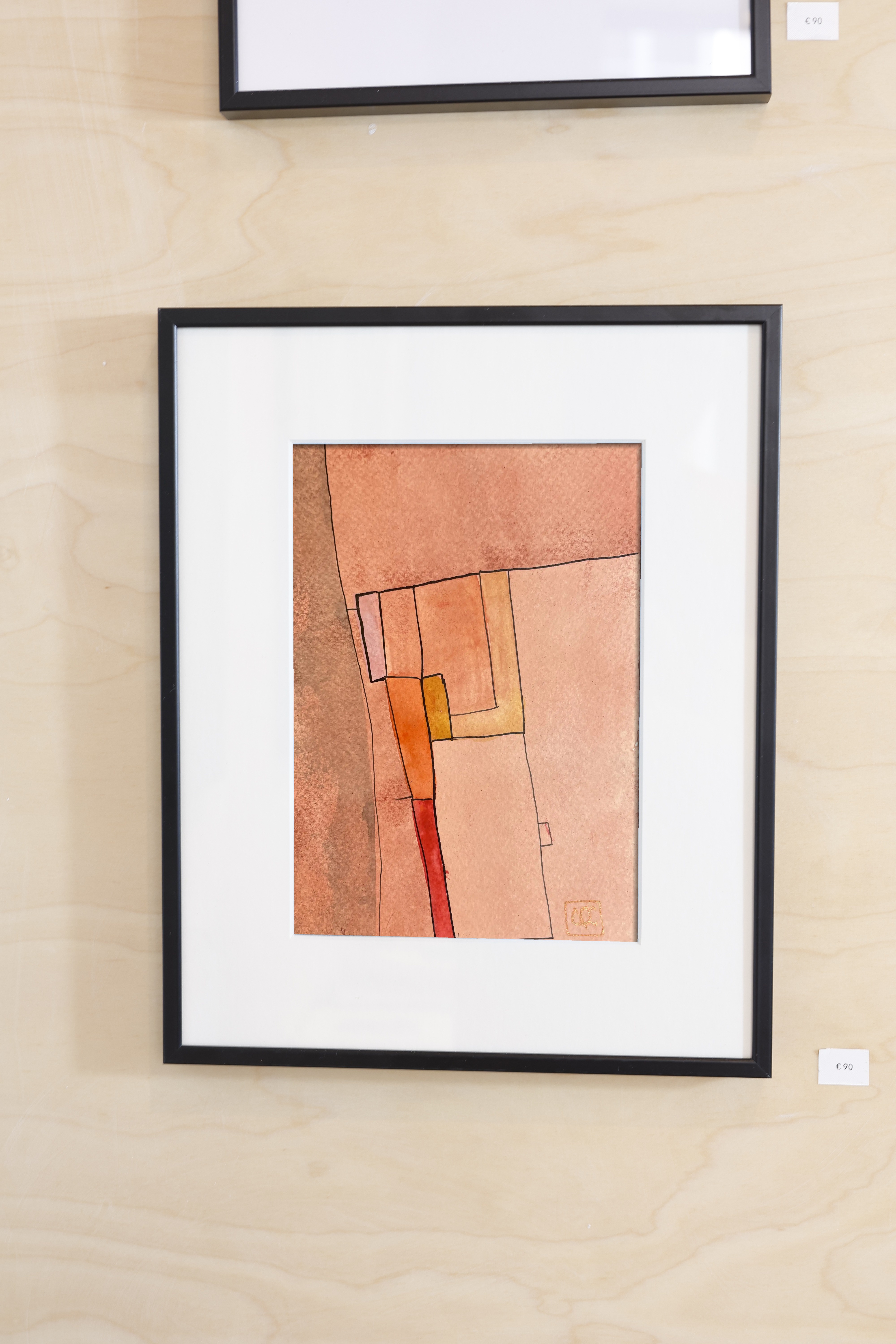
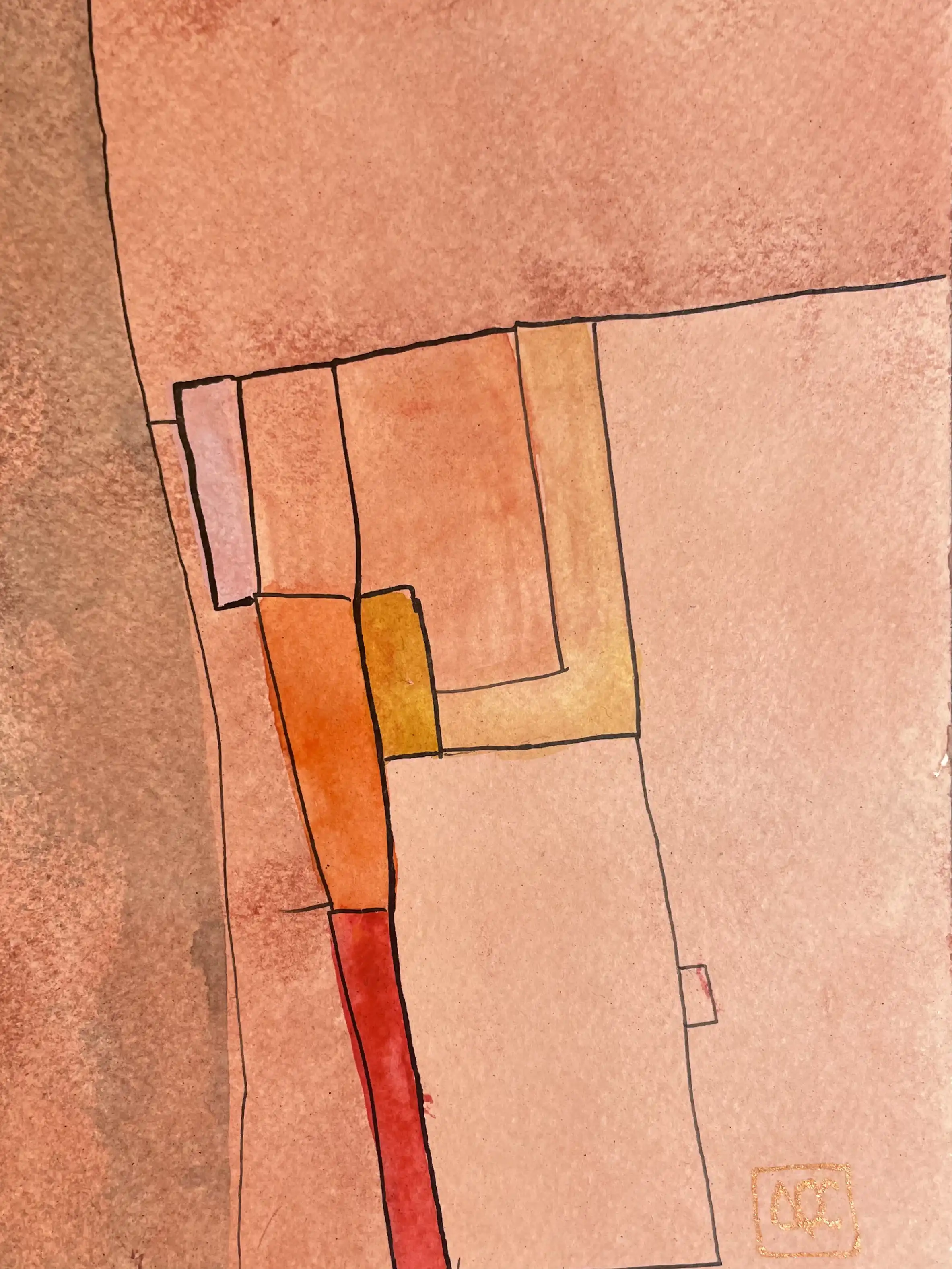
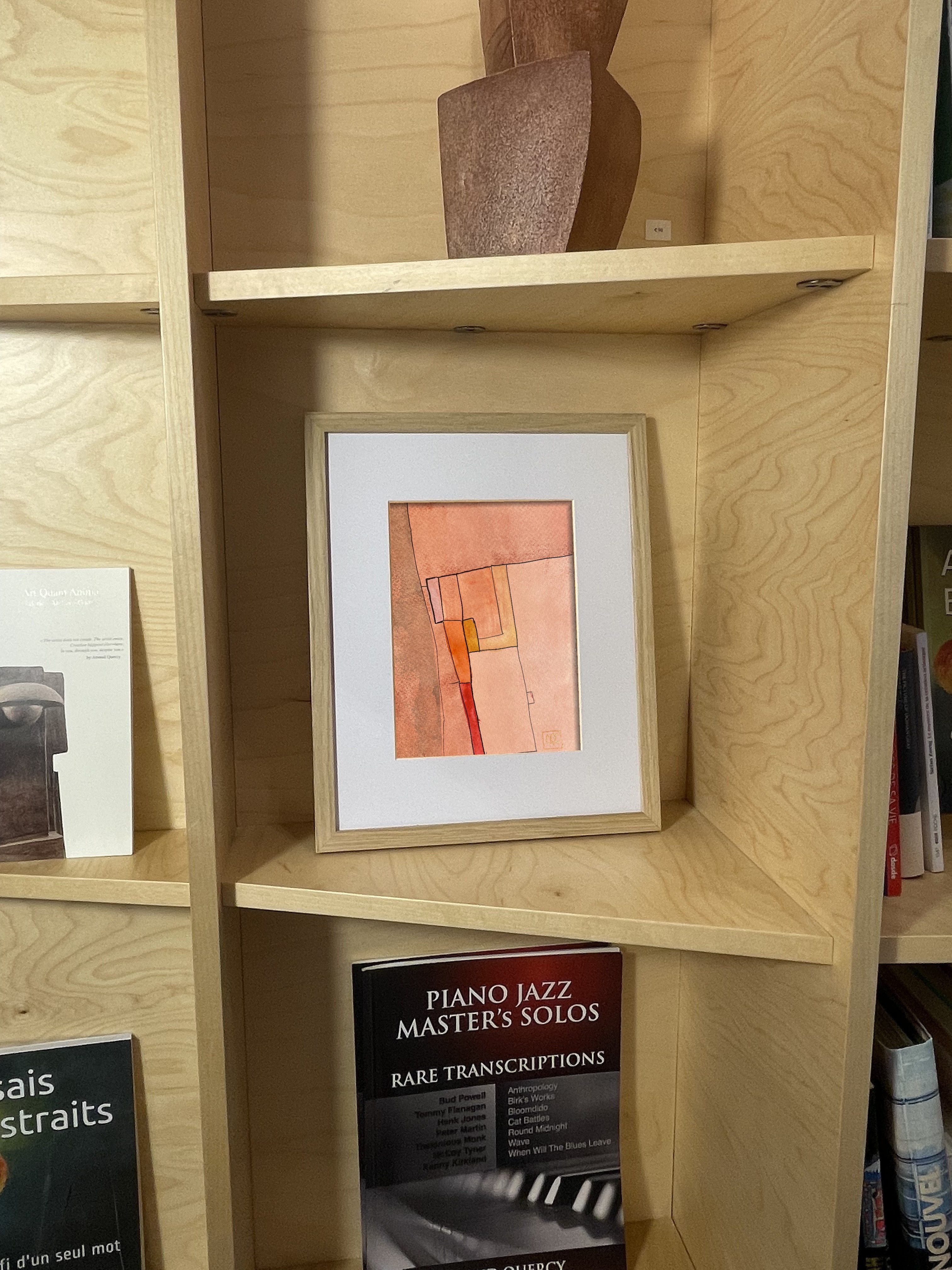 C Major - Research on Harmony - Variation 11Watercolor · 21 × 14.8 cmSold · Luxembourg, Luxembourg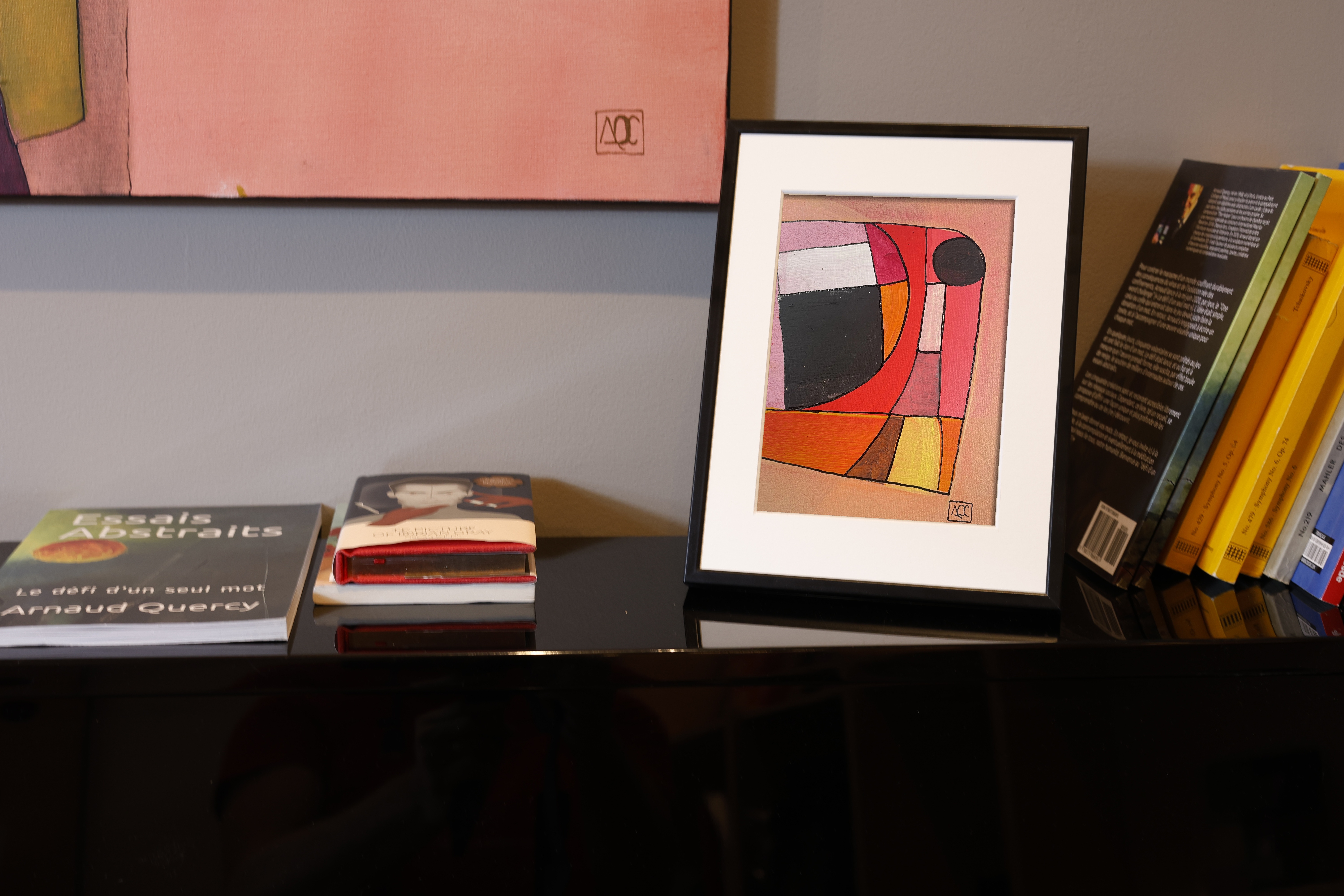
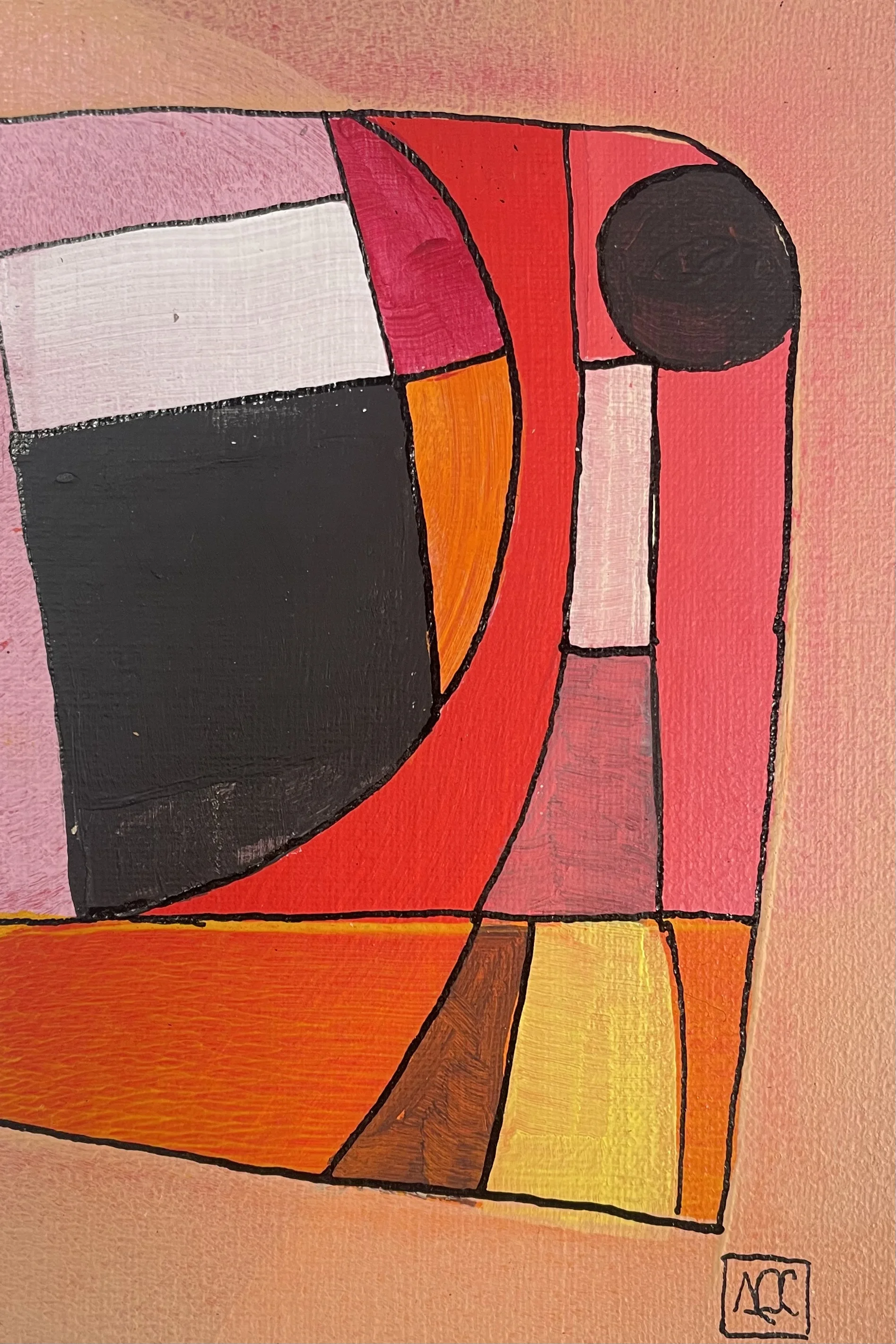
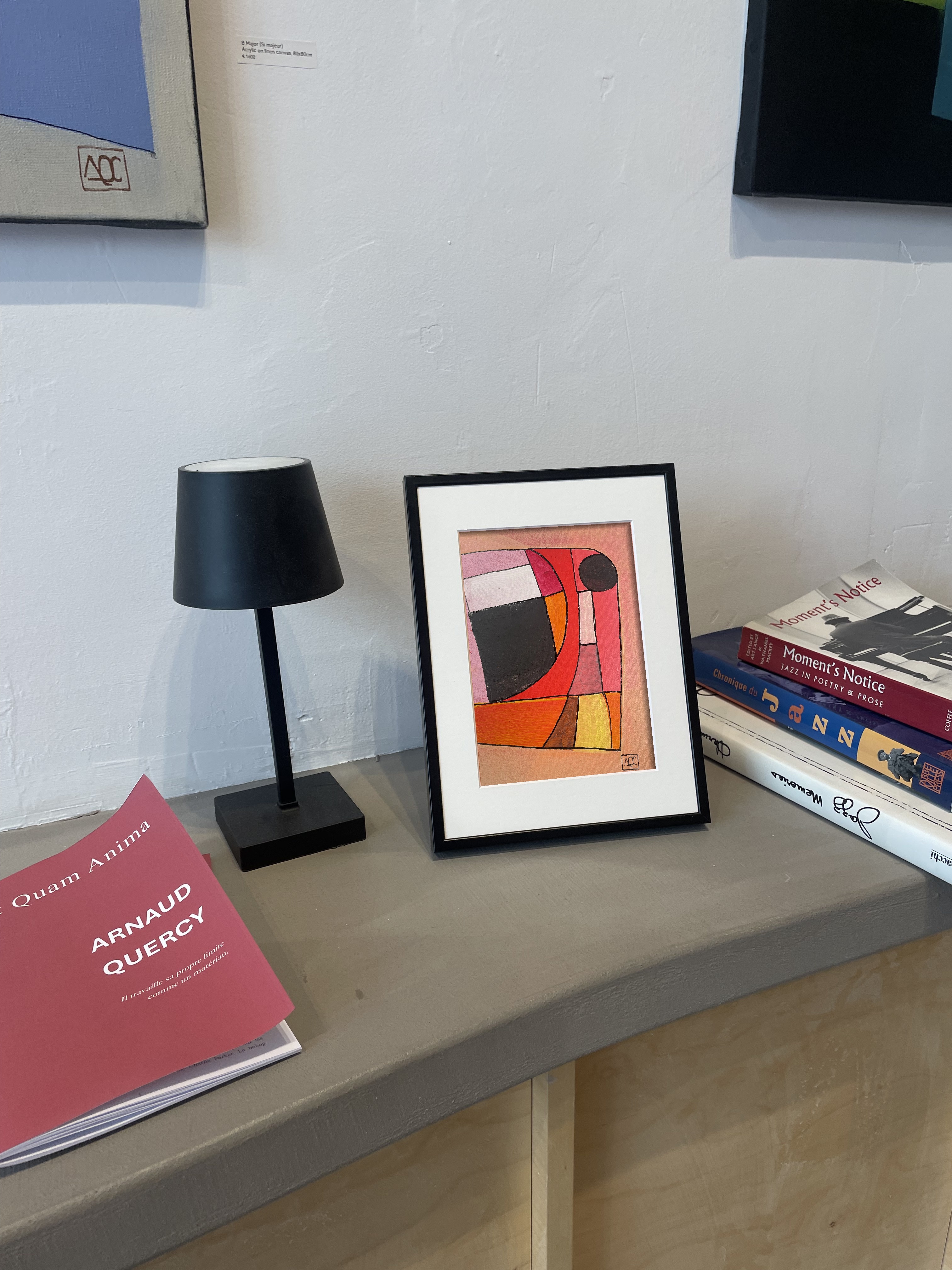 C Major - Research on Harmony - Variations 13Acrylic · 15 × 10.5 cmSold · France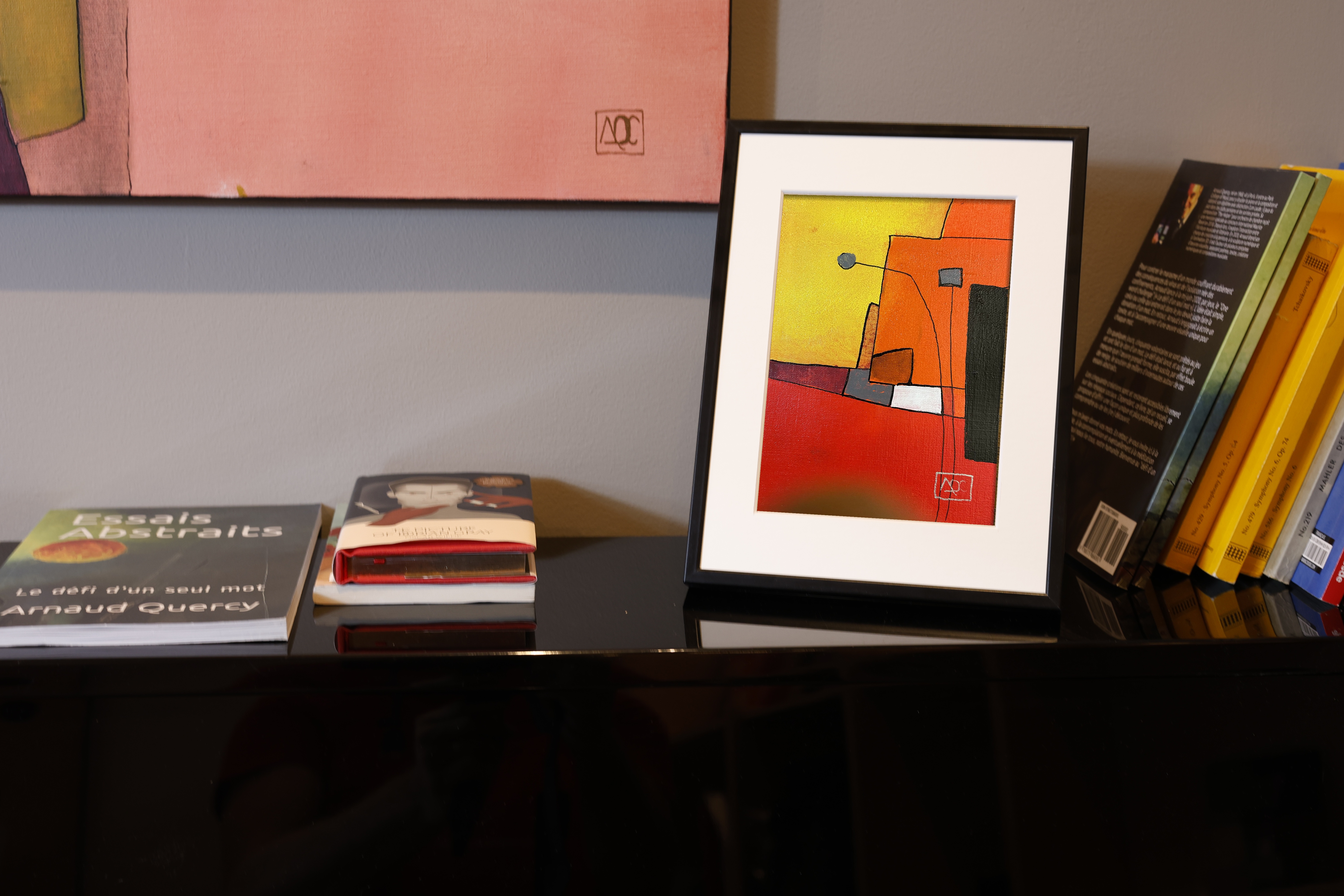
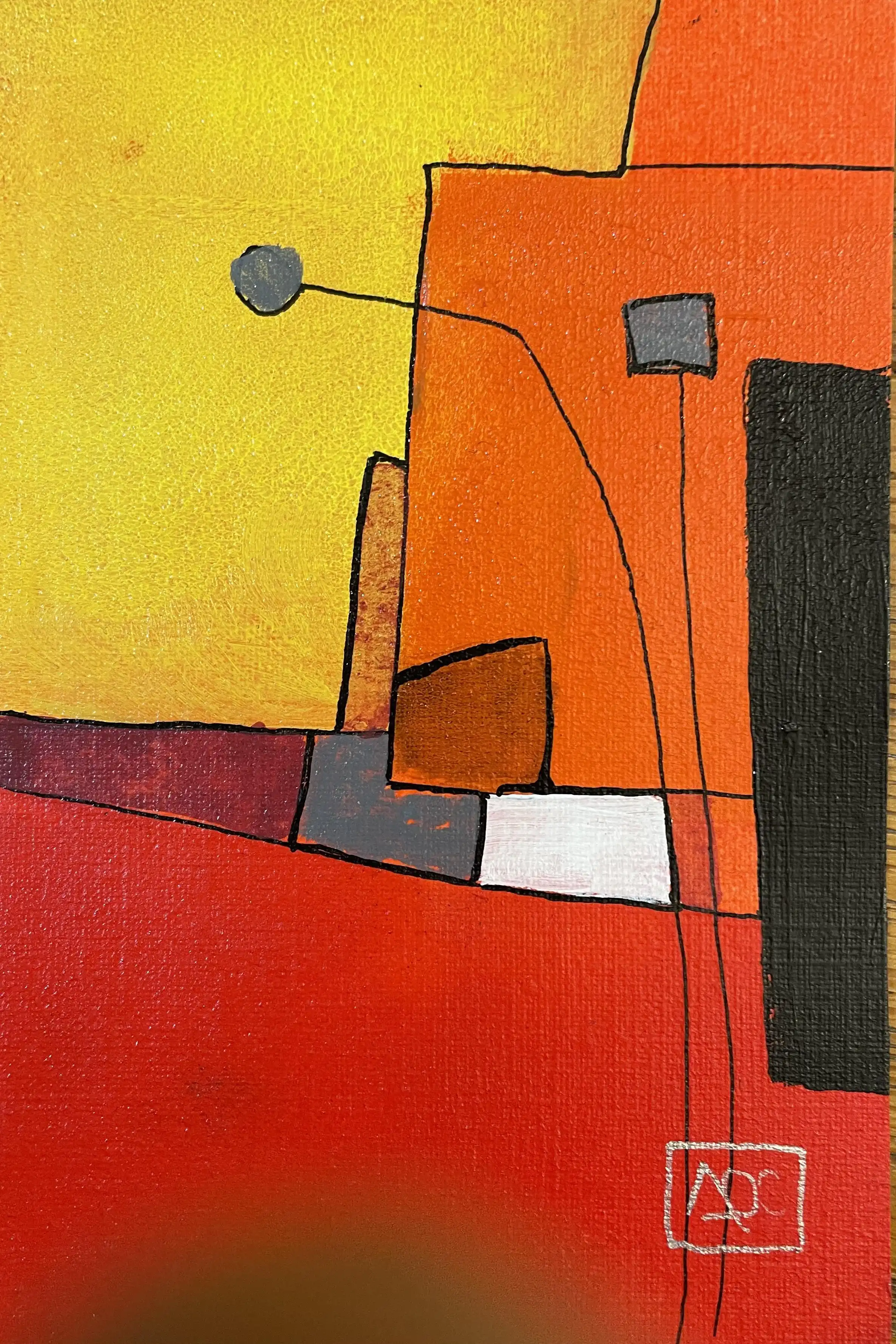
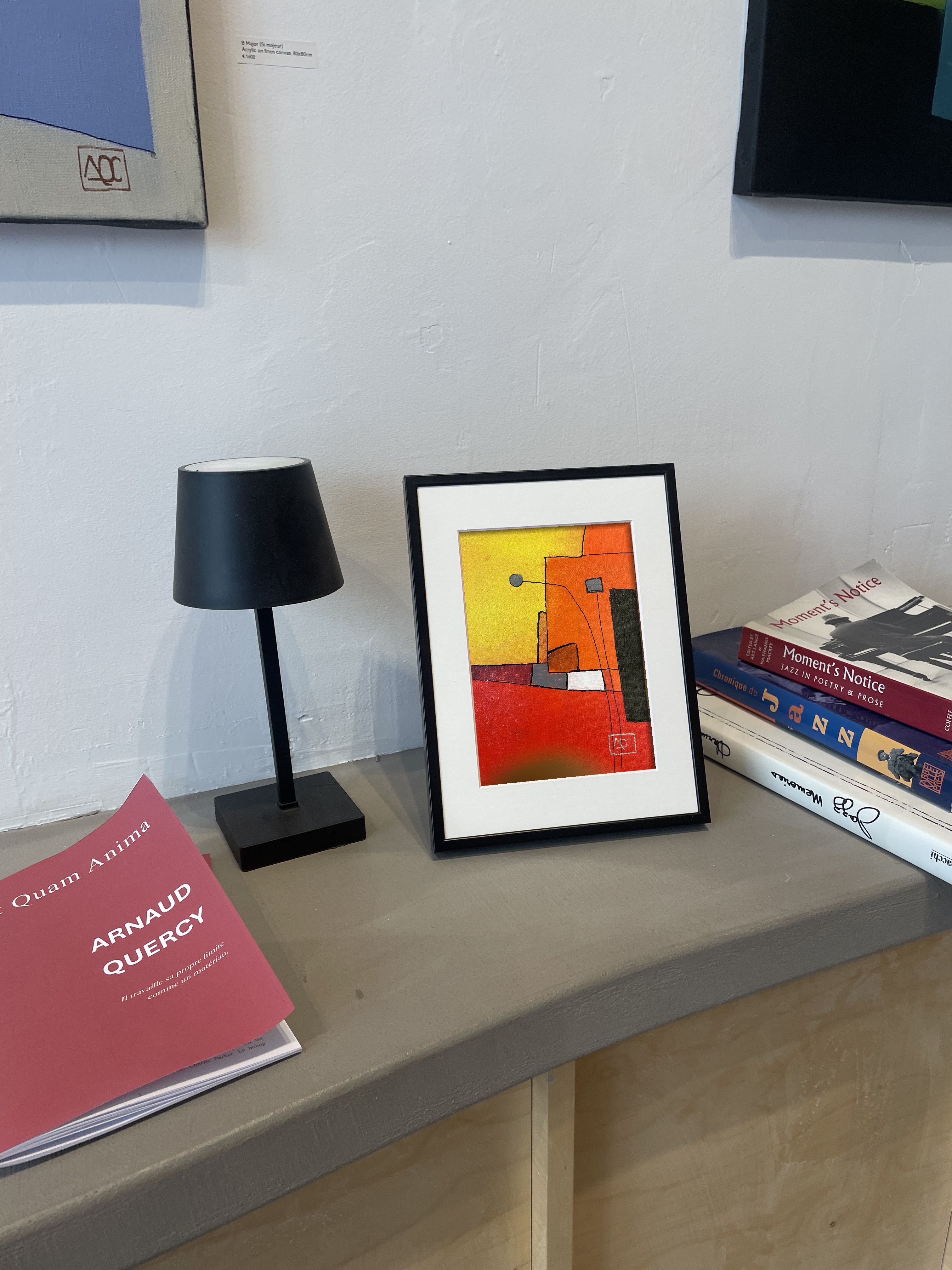 C Major - Research on HarmonyAcrylic · 15 × 10 cmSold · Paris, France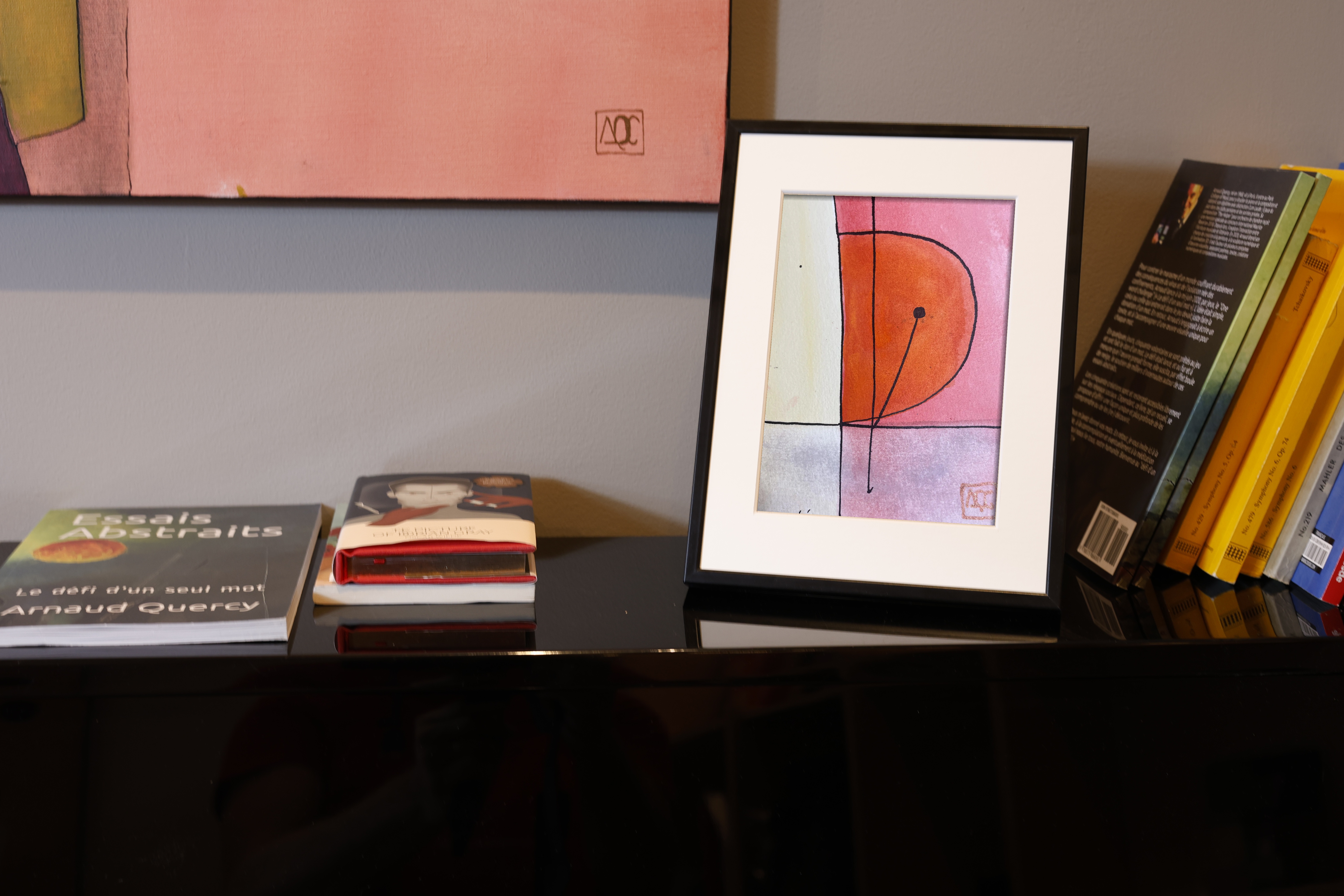
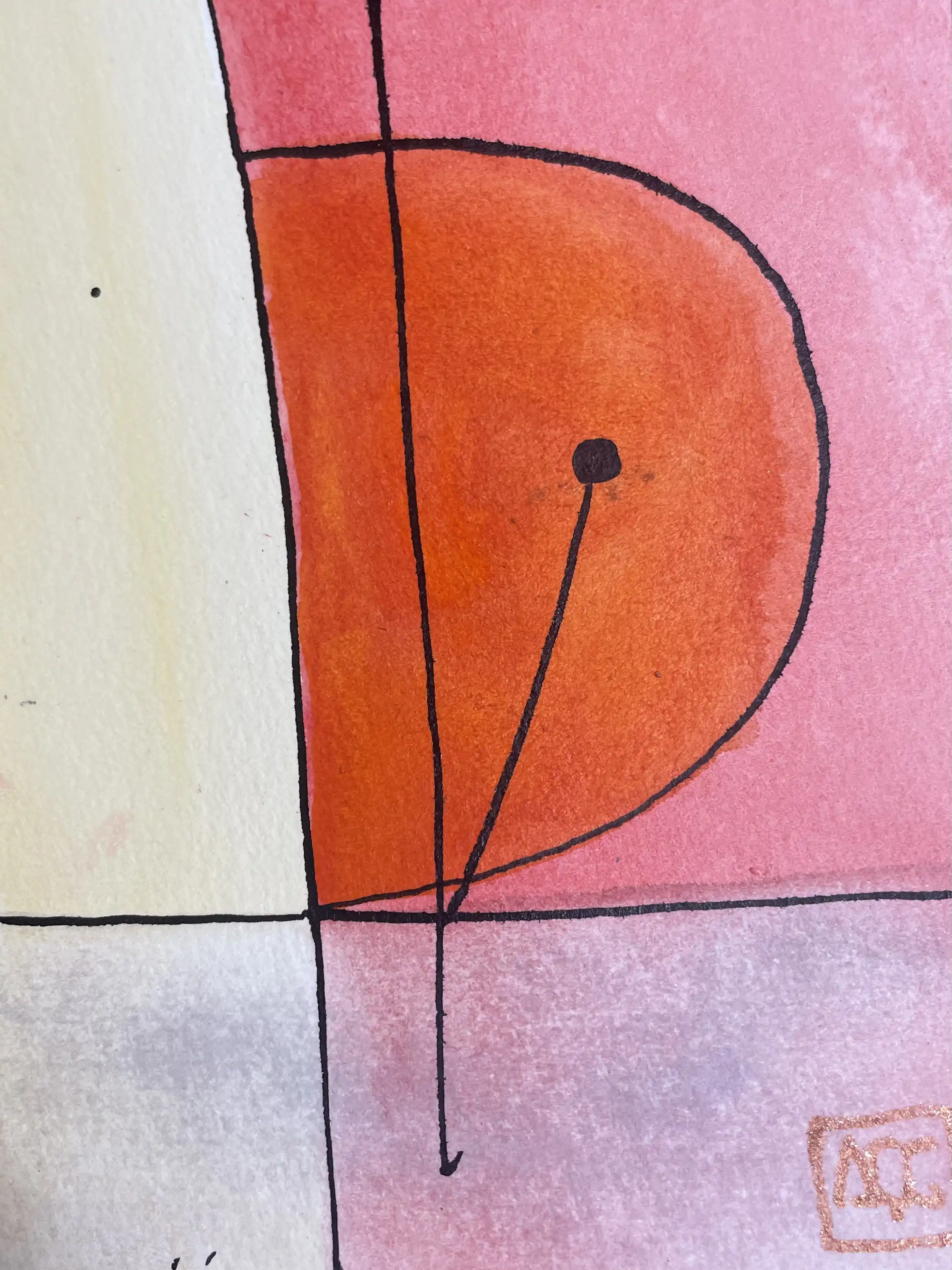
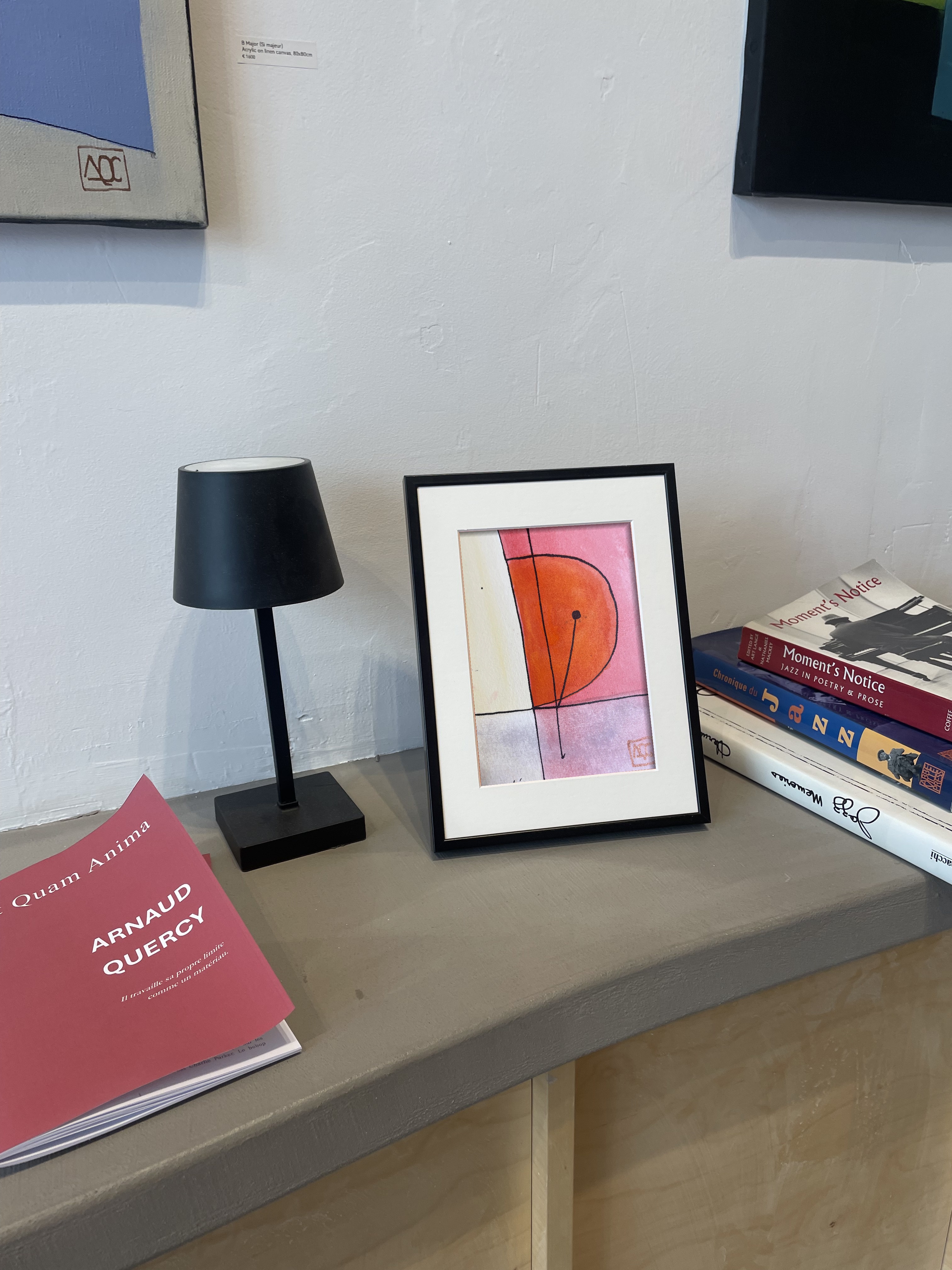 C Major - Research on Harmony - Variation 12Watercolor · 15 × 10 cmSold · UK
No work matches these filters.
Hover over a country

Arnaud Quercy is a Parisian artist working across painting, music, and sculpture. His practice is grounded in Ideamorphism — the principle that a work of art does not carry meaning, but triggers it. Each piece is engineered to diffract differently through each person who encounters it.
He creates and exhibits at Art Quam Anima, his gallery-atelier at 28 rue du Dragon, Saint-Germain-des-Prés, Paris.
Related hubs
- Collection: Harmonic Crossing
Exhibitions 10
- Rencontres au Marché de la Création (2024-04-23 → 2024-12-31, Marché de la Création – Paris Montparnasse, Paris)
- Salon d'art contemporain – Metamorphose, Paris (2024-12-26 → 2025-01-05, Halle des Blancs Manteaux, Paris)
- Permanent Collection 2025 – Resonance in Form (2025-01-01 → 2025-12-31, arnaudquercy.art, Paris)
- Paris Studio Visit (2025-02-18 → 2025-02-18, Artist's Studio, Paris)
- Marché d'Art Contemporain – Seine Port (2025-05-17 → 2025-05-17, MAC Seine-Port, Seine-Port)
- Nuit des Artistes, St Germain-en-Laye, France (2025-05-24 → 2025-05-24, La Nuit des Artistes, Saint-Germain-en-Laye)
- Marché de l'Art de Saint-Germain-en-Laye, 17ème édition – France (2025-06-14 → 2025-06-14, Marché de l'Art, Saint-Germain-en-Laye)
- Salon d'art contemporain – Metamorphose 2025–2026, Paris (2025-12-26 → 2026-01-04, Halle des Blancs Manteaux, Paris)
- Art Quam Anima – Pre-opening (2026-01-31 → 2026-02-28, Art Quam Anima, Paris)
- Through the Aperture — Research on Harmony (2026-03-09 → 2026-04-30, Art Quam Anima, Paris)
Other series in this collection 35
Documented at 1
Catalogue raisonné entries 25
- C Major - Research on Harmony
- C Major - Research on Harmony - Variation 1
- C Major - Research on Harmony - Variation 2
- C Major - Research on Harmony - Variation 18
- C Major - Research on Harmony - Variation 3
- C Major - Research on Harmony - Variation 4
- C Major - Research on Harmony - Variation 5
- C Major - Research on Harmony - Variation 6
- C Major - Research on Harmony - Variation 7
- C Major - Research on Harmony - Variation 8
- C Major - Research on Harmony - Variation 10
- C Major - Research on Harmony - Variation 9
- C Major - Research on Harmony - Variation 11
- C Major - Research on Harmony - Variation 12
- C Major - Research on Harmony - Variations 13
- C Major - Research on Harmony - Variations 14
- C Major - Research on Harmony - Variations 15
- C Major - Research on Harmony - Variations 19
- C Major - Research on Harmony - Variations 16
- C Major - Research on Harmony - Variations 17
- Sometimes Ago - C Major
- Watercolor Study in C Major No. 2
- C Major - Research on Harmony - Variations 20
- C Major - Research on Harmony - Variations 21
- C Major - Research on Harmony - Variations 22