Bb minor series — 16 Paintings by Arnaud Quercy
ART-SER0026
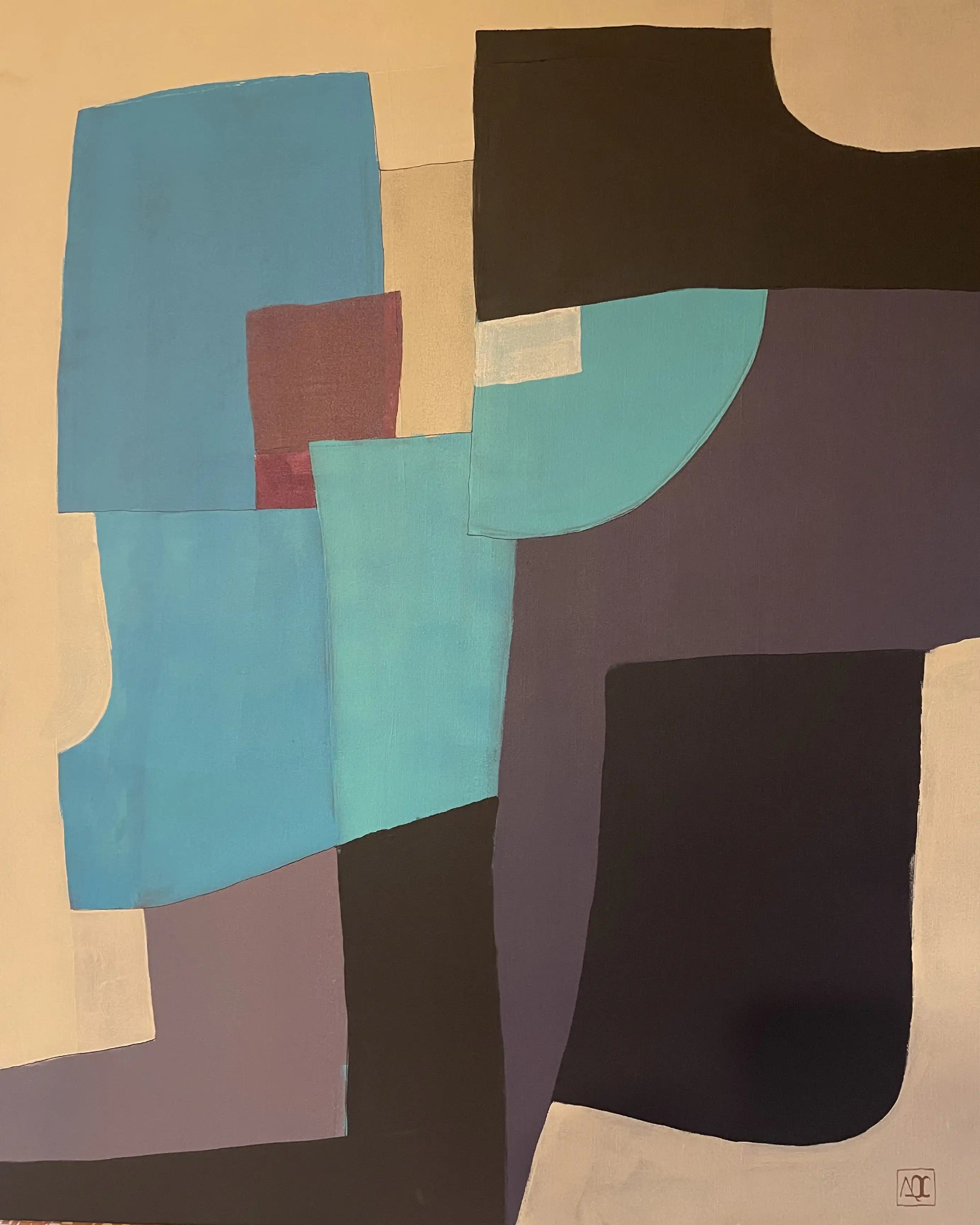
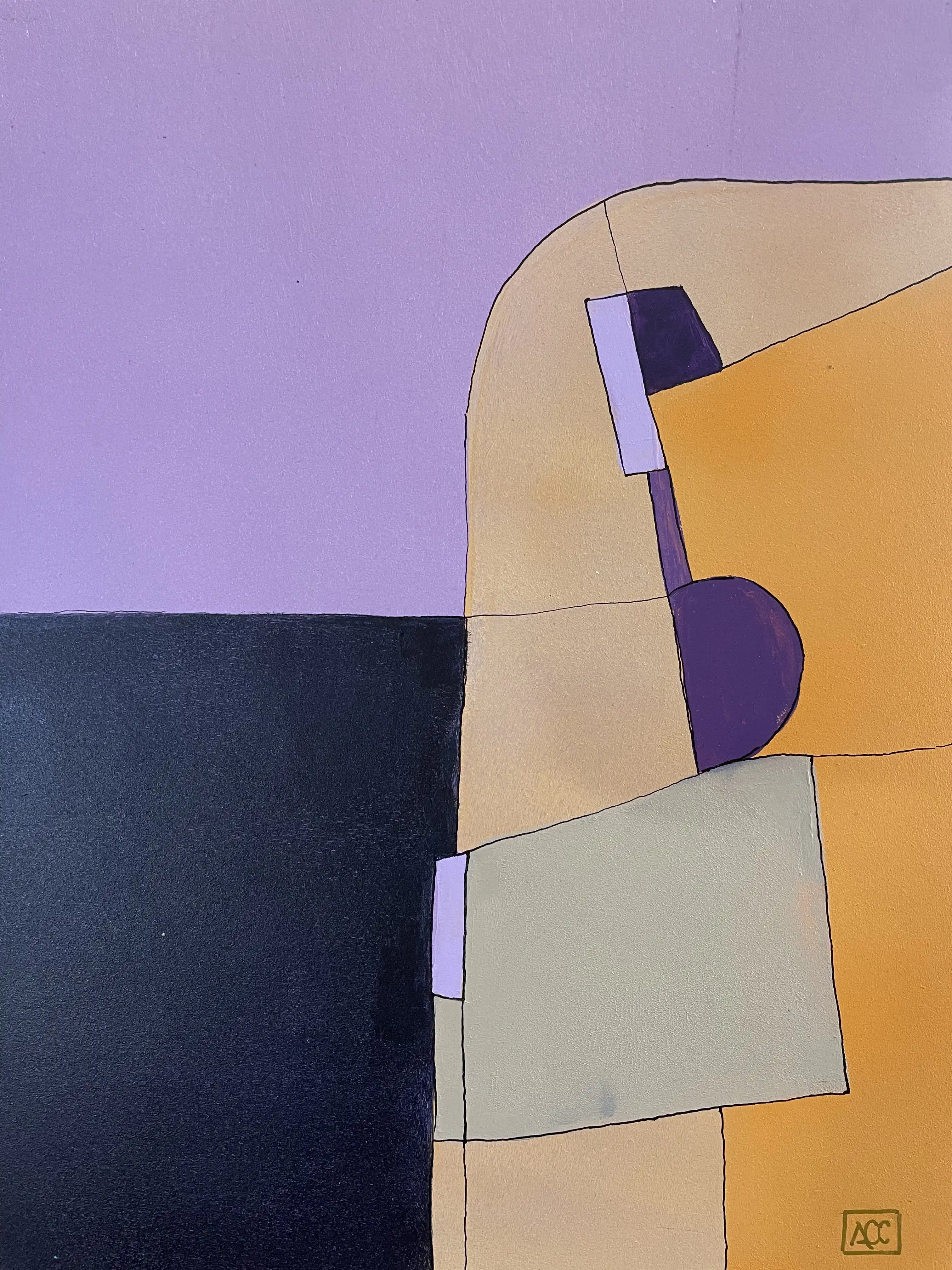
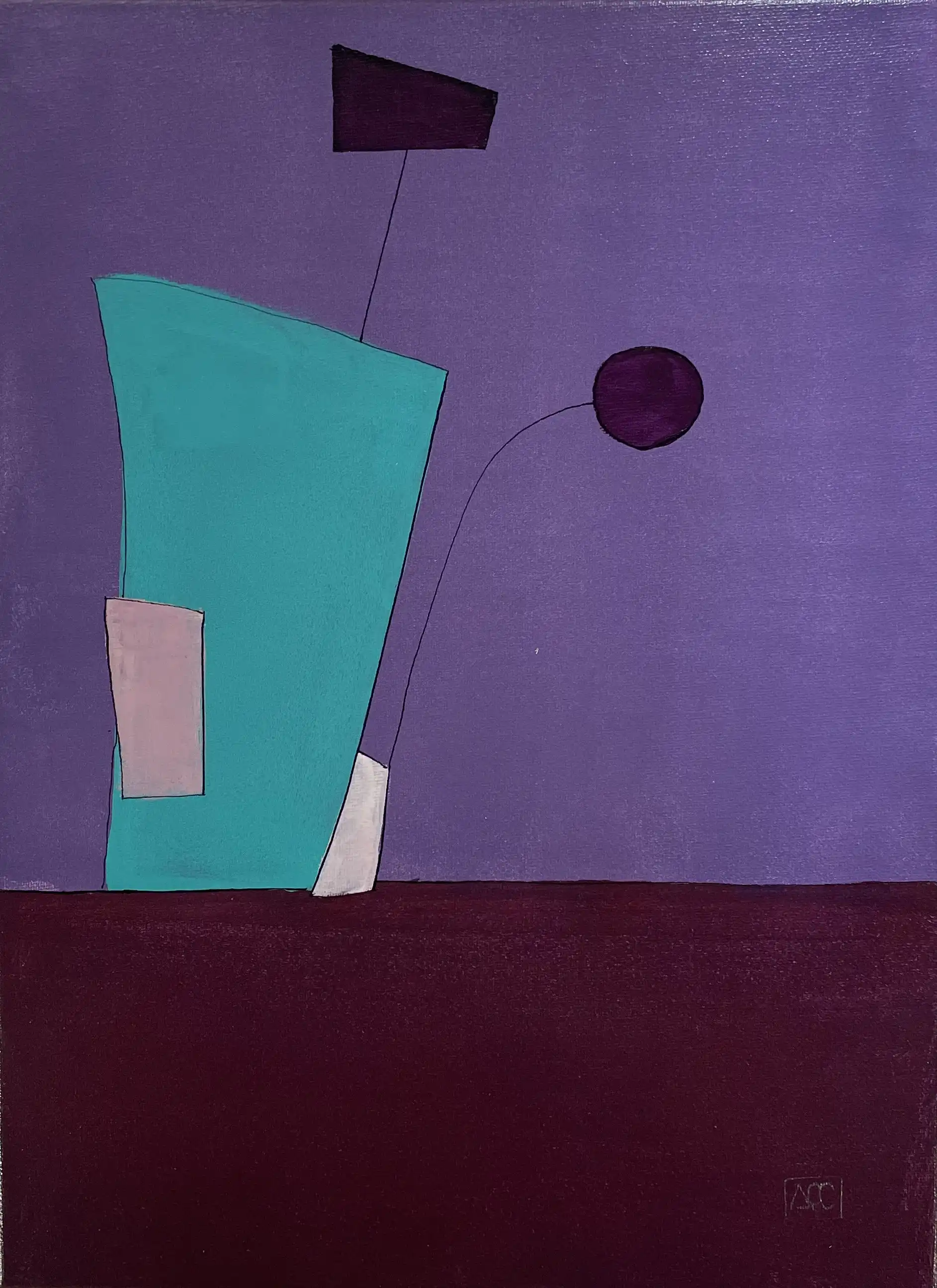
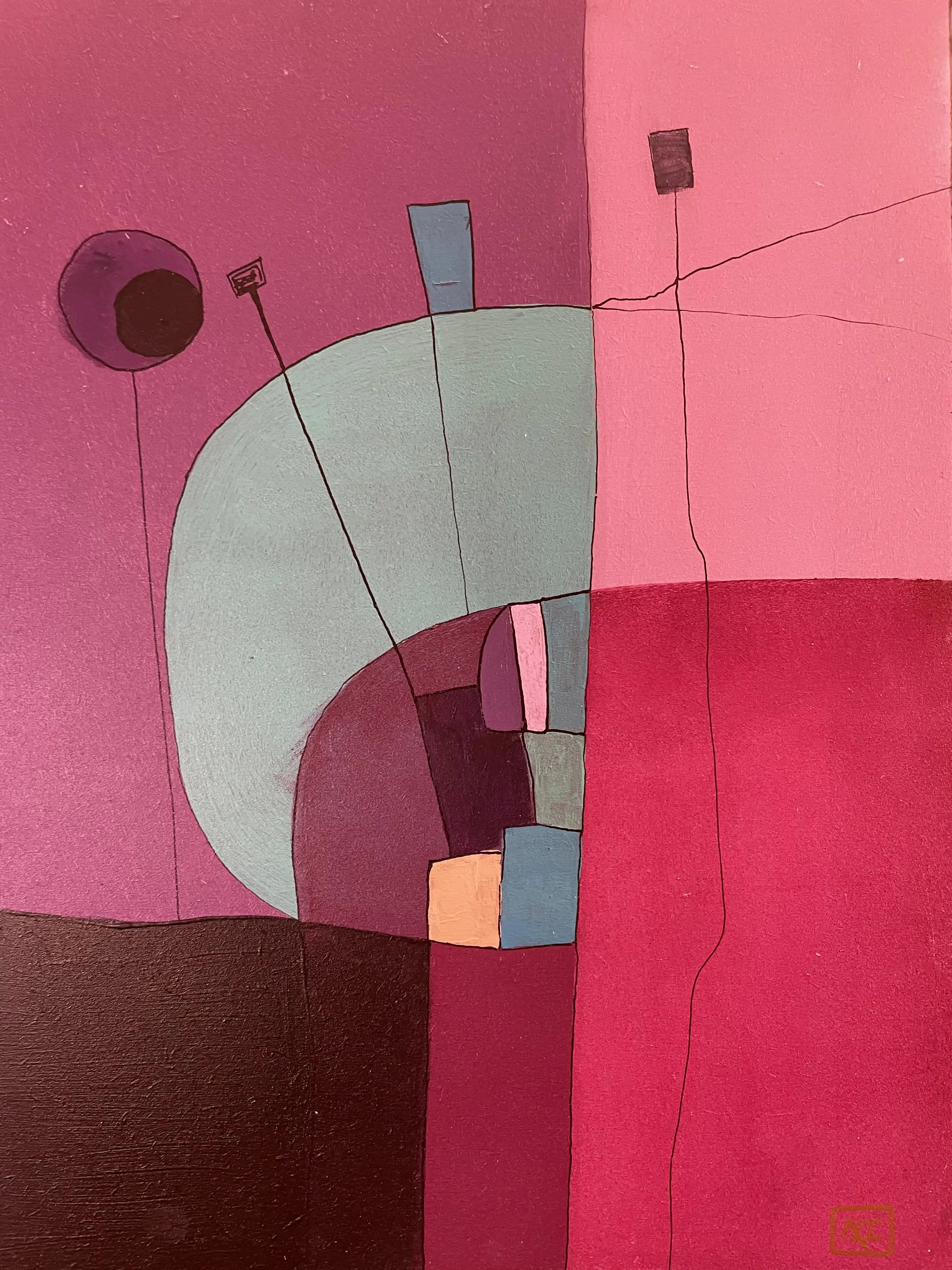
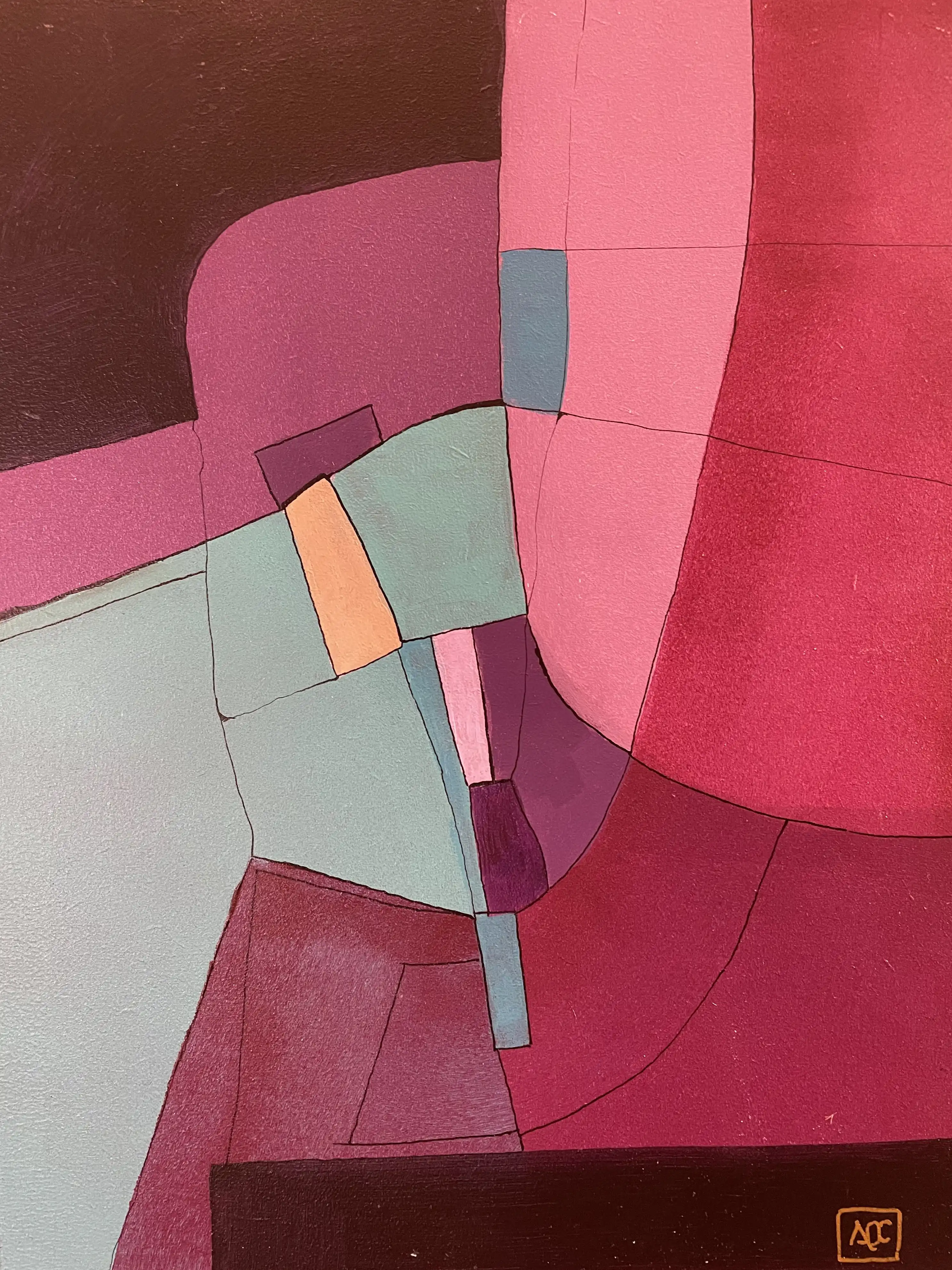
Bb minor is a series of 16 paintings by Arnaud Quercy, created between 2024 and 2025 in acrylic on canvas, acrylic on linen canvas, acrylic on paper, acrylic on wood panel and watercolor on paper. Formats range from 10×15 cm to 73×92 cm. 9 works are held in private collections (London, UK, Australia, Ciudad de México, Mexico, Tahoe, USA, Saint-Macaire, France, St Maur, France, Montrouge, France, Brazil). 7 remain available for acquisition at Art Quam Anima, 28 rue du Dragon, Paris. Works presented at: Rencontres au Marché de la Création, Salon d'art contemporain – Metamorphose, Paris and Permanent Collection 2025 – Resonance in Form and 7 more.
B-flat minor carries five flats and centuries of gravity. It is the key of Chopin’s Funeral March, the slow movement of Rachmaninoff’s Second Piano Concerto — a tonality that Western harmony has long associated with solemnity, weight, and inward darkness. The triad is built from Bb, Db, and F: root, minor third, and perfect fifth, three tones that sit low and close together, the intervals compact, the mood unmistakably somber.
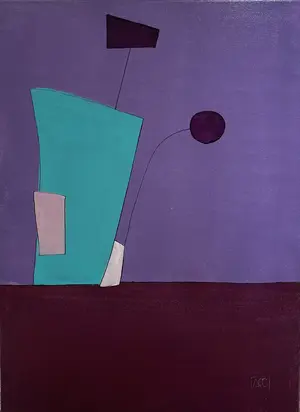
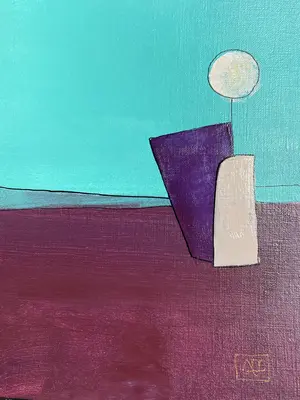
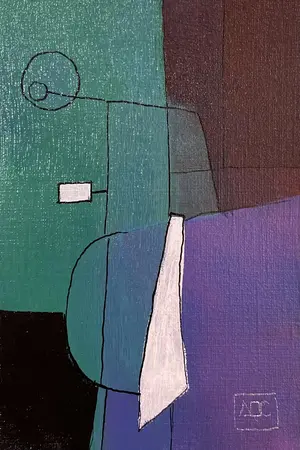
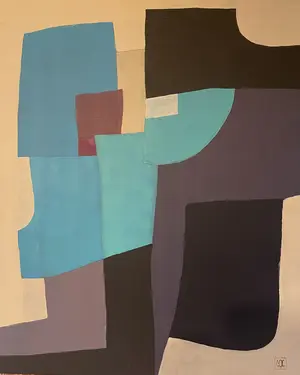
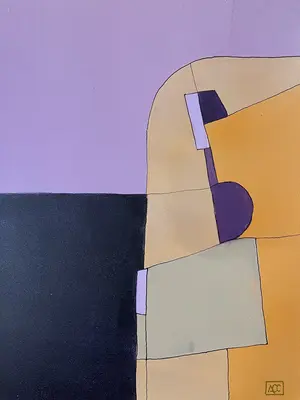
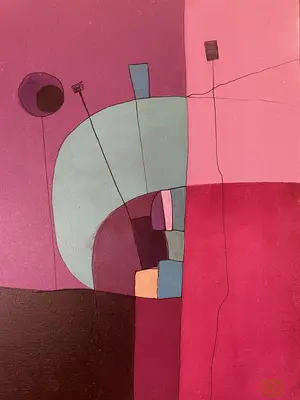
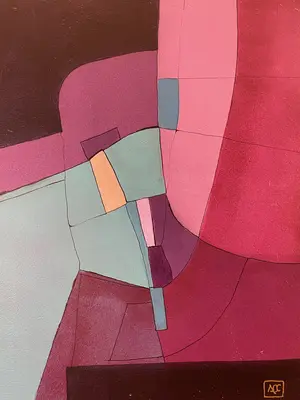
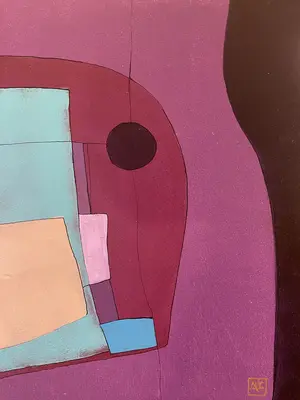
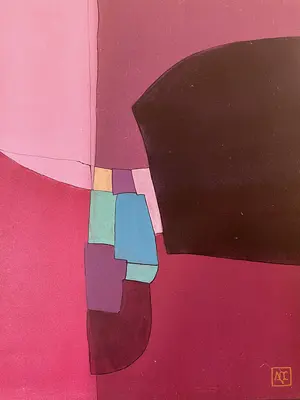
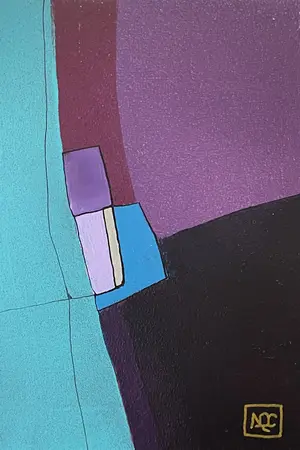
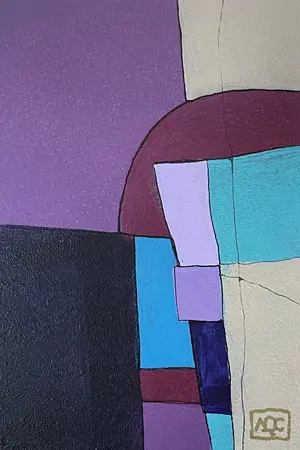
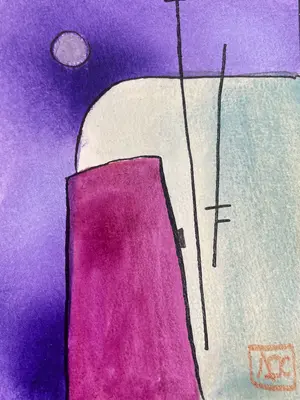
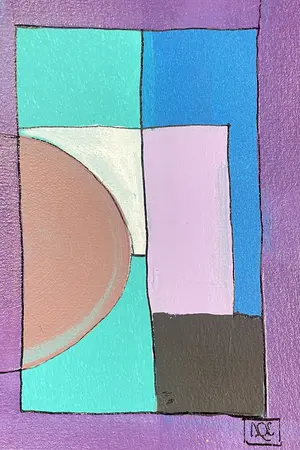
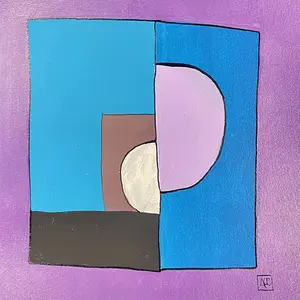
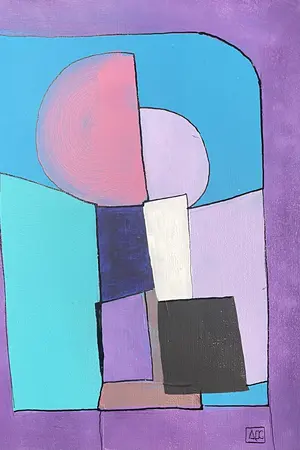
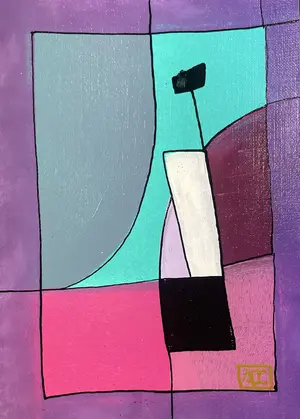
Through harmonic-chromatic, these three tones translate into an almost entirely cool palette. Bb produces violet — dark and muted in the low registers, graying as it rises through the middle octaves. Db, the minor third, yields blue-green: saturated teal in the midrange, brightening toward silver and near-white as it climbs. F, the fifth, carries red-violet, the only tone that introduces a faint warmth. Together they produce a palette of shadow and cool depth, where darkness is not absence but presence — violet layered upon violet, blue-green threading between.
Sixteen études explore this compressed, cool territory — one of the largest minor-key series in the Harmonic Crossing collection. The dominant character is quiet and legato: most works move at Animé tempo in piano or mezzo-piano, with a handful of slower Lent studies offering a more contemplative pace. The series divides roughly between common time and triple time, the waltzes tending toward ascending contours while the four-beat works favor the inverted-bell shape that dips into the bass before returning. Density ranges dramatically, from five-note distillations to an eleven-note phrase spanning six octaves. Non-chord tones — orange from D, red-orange from G, yellow-orange from A — appear frequently as warm intrusions in an otherwise cool field, their presence a recurring tension the series never fully resolves.
Variation 3 is the largest format in the series: acrylic on linen canvas at 73 by 92 centimeters. It is also the sparsest — five isolated notes, the triad half-stated before the phrase wanders upward into foreign warmth that, as the artist writes, "the chord never asked for." At the opposite extreme, Variation 12 packs eleven notes across six octaves in an ascending waltz, the full triad deployed through nearly every available register — "the series’ most expansive statement." Between these poles, Variation 14 stands apart as the only work marked mezzo-forte, its ten notes filling the canvas with a declarative weight the series’ habitual quiet does not permit.
Viewed together, the sixteen paintings form a corridor of violet and blue-green. Dark near-black anchors the lower registers in most works; muted gray-violet occupies the middle ground; blue-green appears as accent or field depending on how prominently Db figures in each phrase. Where non-chord tones enter — and they enter often — red-orange and orange cut warm bands across the cool surround, small fires in a cold architecture. The rare moments of saturated color stand out sharply: Variation 11 reveals what the root’s violet looks like freed from shadow, vivid and full in the upper-middle register, while Variation 13 pushes the palette to its coolest extreme, the entire canvas a study in cold luminosity.
Quercy returns sixteen times to the same three tones and finds, in that discipline, a surprising range of expression. The opening étude withholds the fifth entirely, declaring the key through root and third alone; the closing study restores it, the triad finally complete. Between first and last, the series moves through monochrome violet fields, warm red-orange intrusions, registral gaps wide enough to feel like silence, and ascending waltzes that fill every available octave. These works have found their way into collections from London to Mexico City, from France to Brazil — Bb minor’s cool gravity traveling farther than its compact register might suggest.

Arnaud Quercy is a Parisian artist working across painting, music, and sculpture. His practice is grounded in Ideamorphism — the principle that a work of art does not carry meaning, but triggers it. Each piece is engineered to diffract differently through each person who encounters it.
He creates and exhibits at Art Quam Anima, his gallery-atelier at 28 rue du Dragon, Saint-Germain-des-Prés, Paris.
Works — Bb minor
Related hubs
- Collection: Harmonic Crossing
Exhibitions 10
- Salon d'art contemporain – Metamorphose 2025–2026, Paris (2025-12-26 → 2026-01-04, Halle des Blancs Manteaux, Paris)
- Art Quam Anima – Pre-opening (2026-01-31 → 2026-02-28, Art Quam Anima, Paris)
- Through the Aperture — Research on Harmony (2026-03-09 → 2026-04-30, Art Quam Anima, Paris)
- Rencontres au Marché de la Création (2024-04-23 → 2024-12-31, Marché de la Création – Paris Montparnasse, Paris)
- Salon d'art contemporain – Metamorphose, Paris (2024-12-26 → 2025-01-05, Halle des Blancs Manteaux, Paris)
- Permanent Collection 2025 – Resonance in Form (2025-01-01 → 2025-12-31, arnaudquercy.art, Paris)
- Paris Studio Visit (2025-02-18 → 2025-02-18, Artist's Studio, Paris)
- Marché d'Art Contemporain – Seine Port (2025-05-17 → 2025-05-17, MAC Seine-Port, Seine-Port)
- Nuit des Artistes, St Germain-en-Laye, France (2025-05-24 → 2025-05-24, La Nuit des Artistes, Saint-Germain-en-Laye)
- Marché de l'Art de Saint-Germain-en-Laye, 17ème édition – France (2025-06-14 → 2025-06-14, Marché de l'Art, Saint-Germain-en-Laye)
Other series in this collection 35
Documented at 1
Catalogue raisonné entries 16
- Bb minor - Research on Harmony
- Bb minor - Research on Harmony - Variation 1
- Bb minor - Research on Harmony - Variation 2
- Bb minor - Research on Harmony - Variation 3
- Bb Minor - Research on Harmony - Variation 4
- Bb Minor - Research on Harmony - Variation 5
- Bb Minor - Research on Harmony - Variation 6
- Bb Minor - Research on Harmony - Variation 7
- Bb Minor - Research on Harmony - Variation 8
- Bb Minor - Research on Harmony - Variation 9
- Bb Minor - Research on Harmony - Variation 10
- Bb Minor - Research on Harmony - Variation 11
- Bb Minor - Research on Harmony - Variations 9
- Bb Minor - Research on Harmony - Variations 10
- Bb Minor - Research on Harmony - Variations 11
- Bb Minor - Research on Harmony - Variations 12