Db Minor series — 6 Paintings by Arnaud Quercy
ART-SER0006
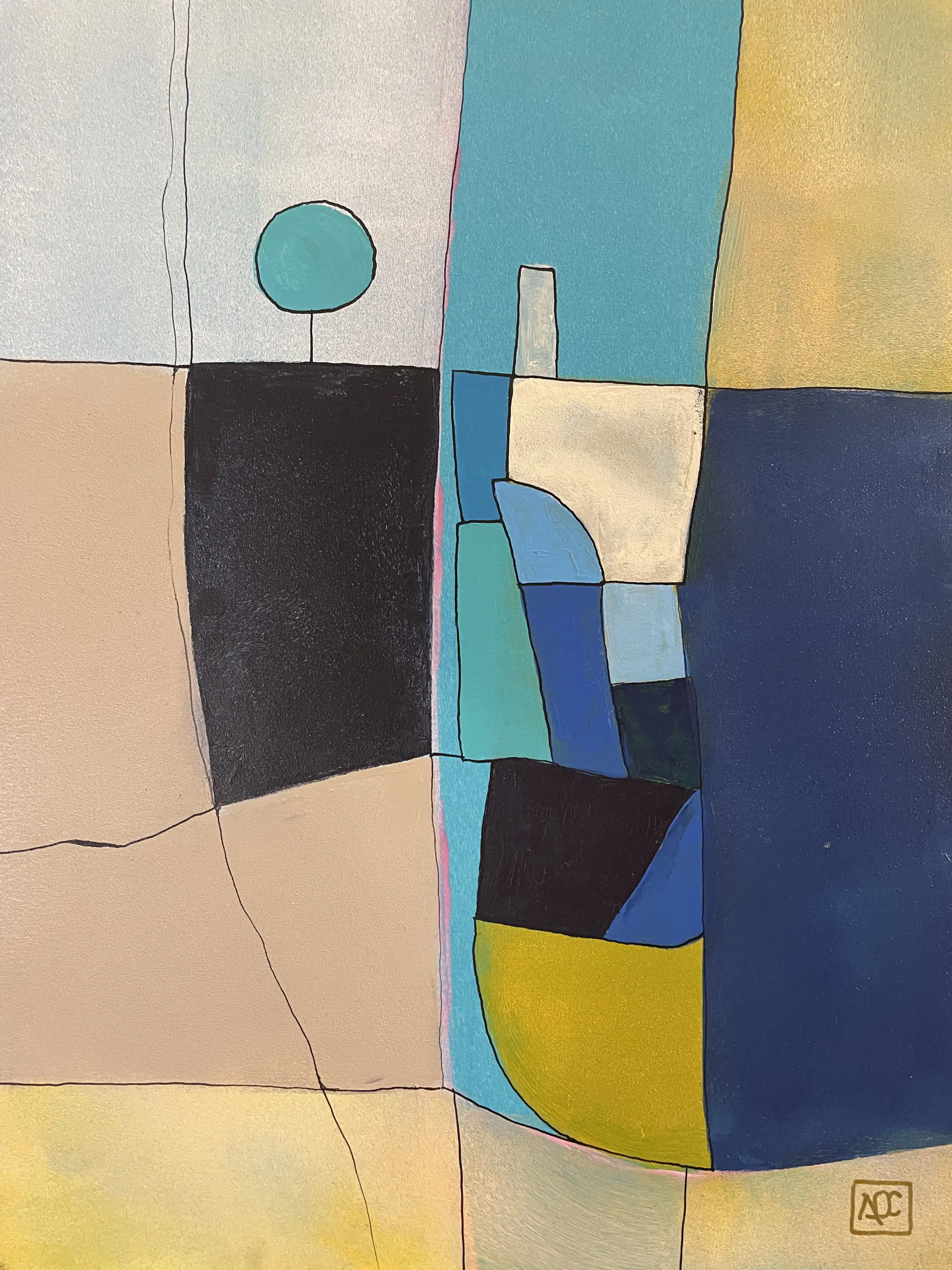
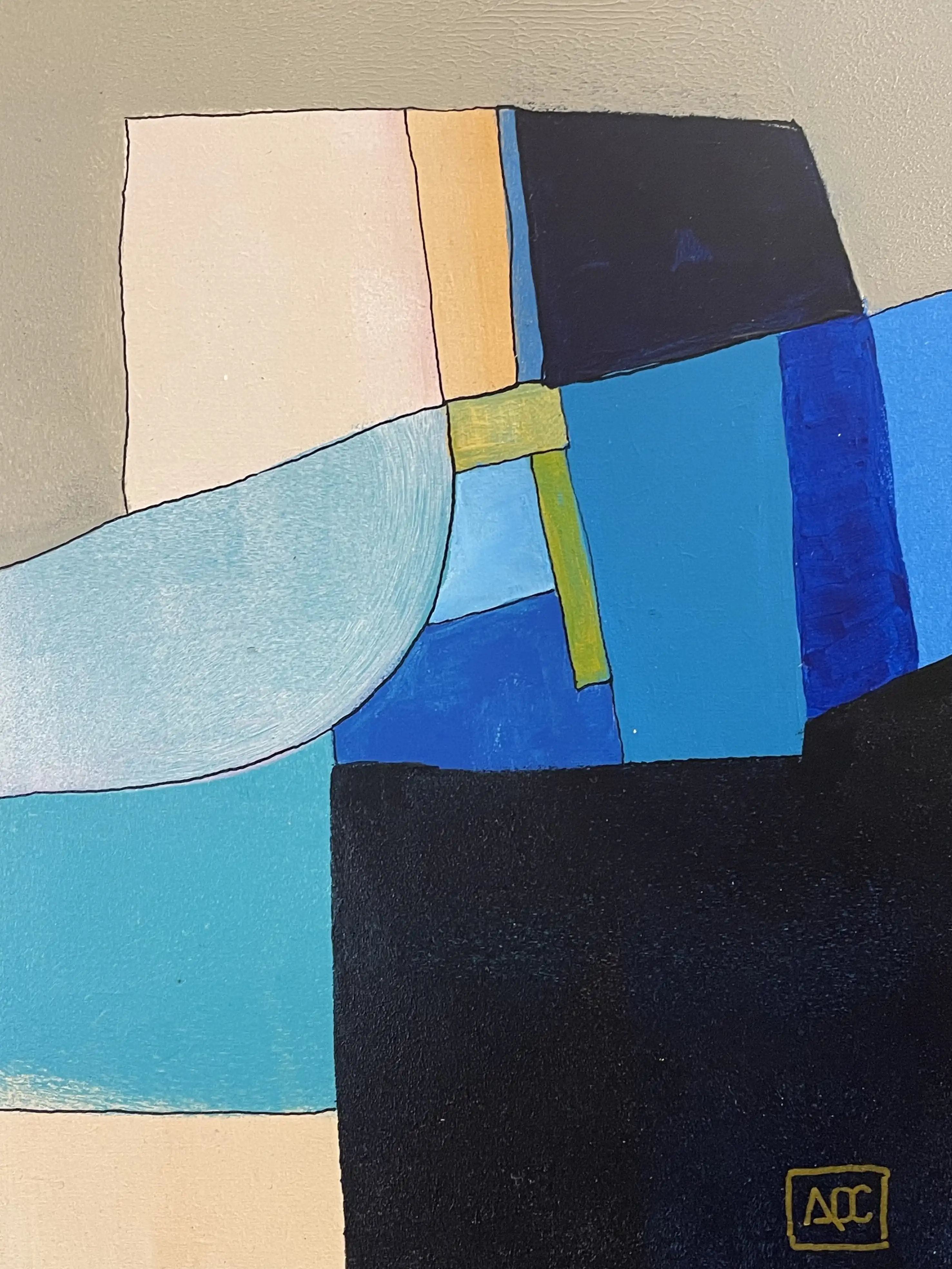
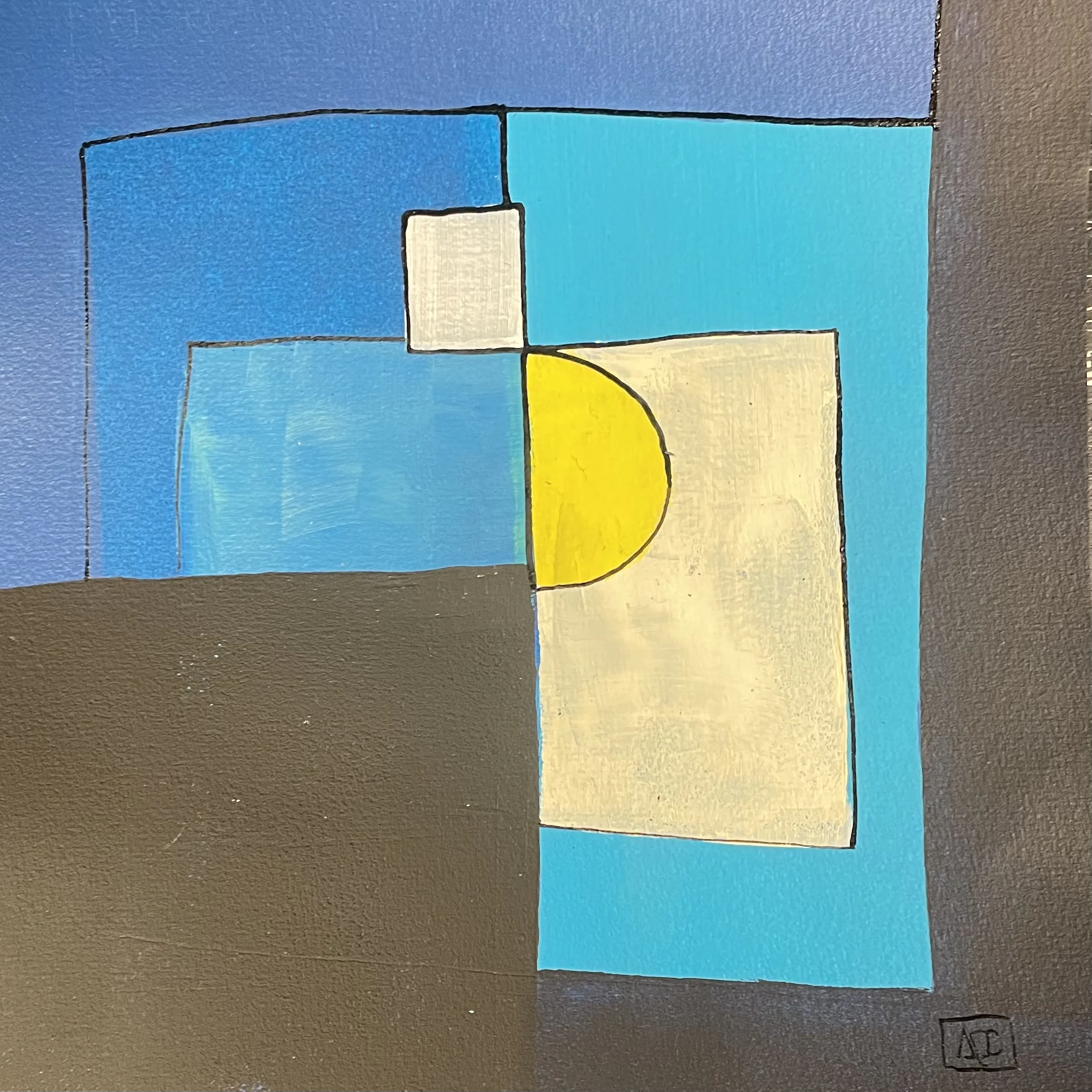
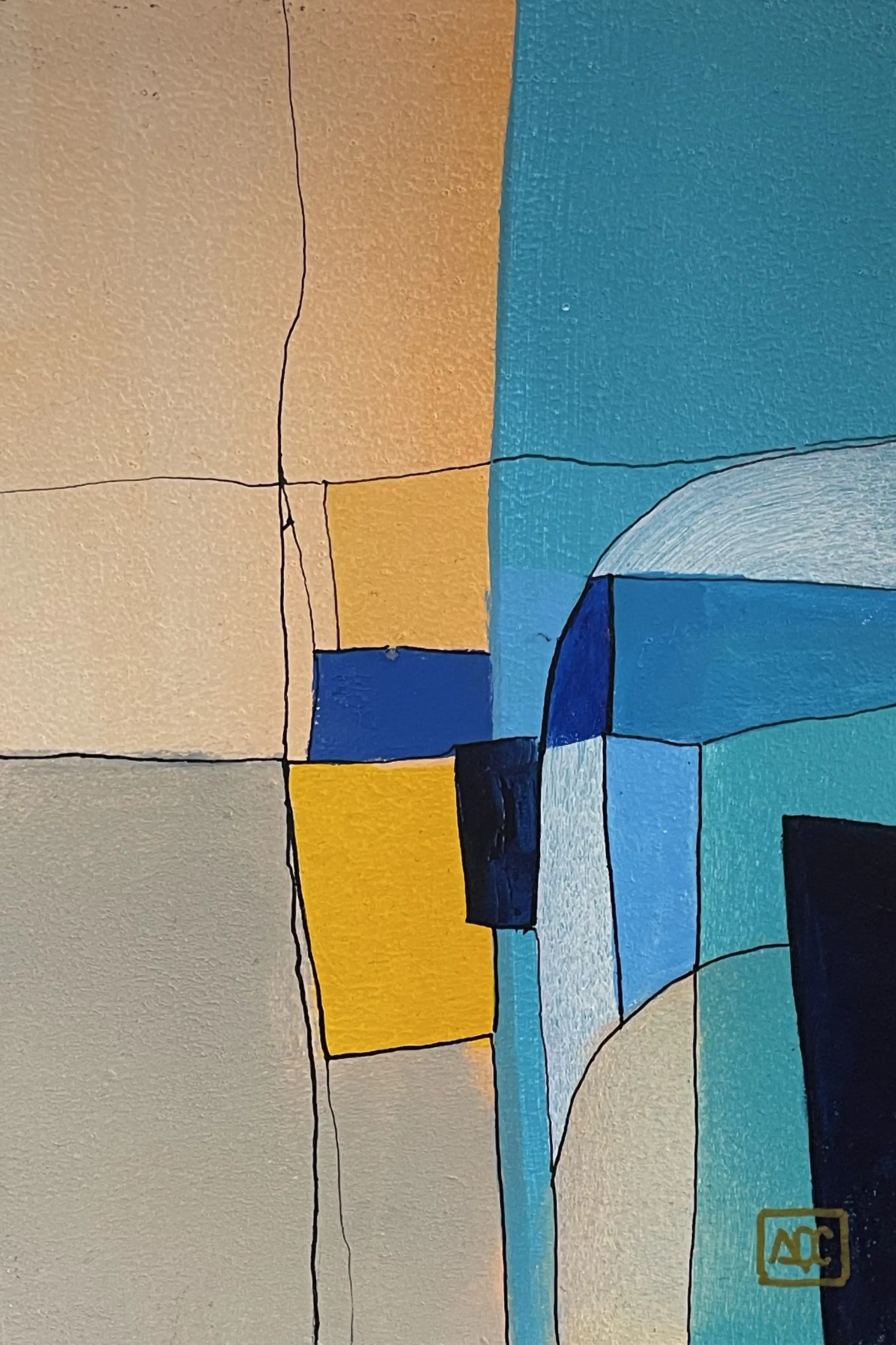
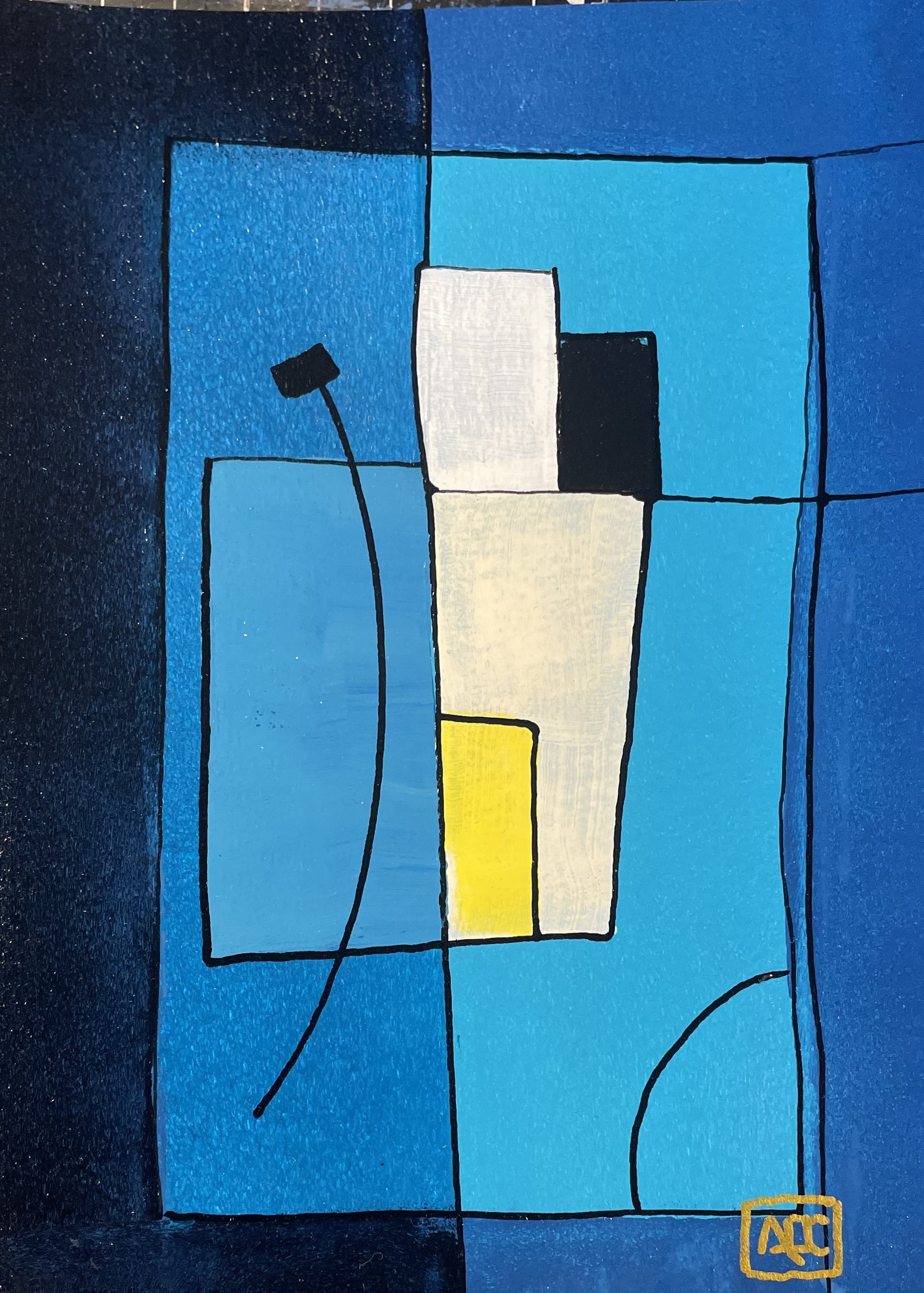
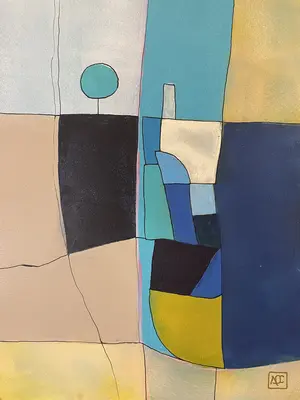
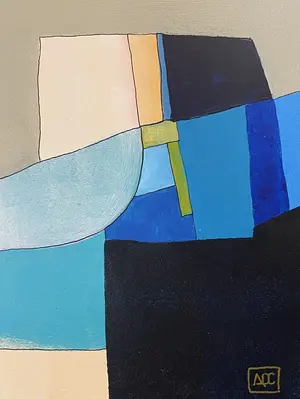
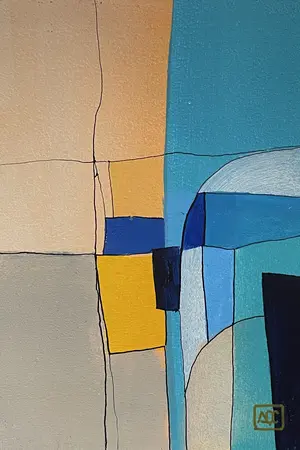
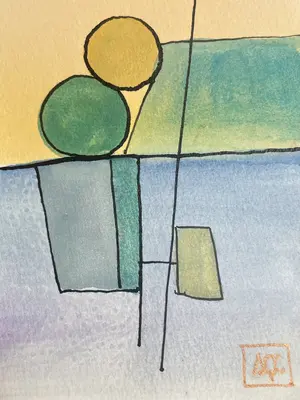
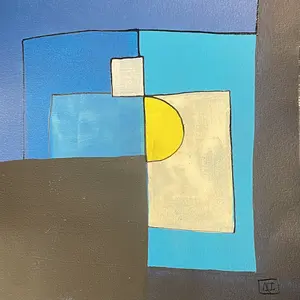
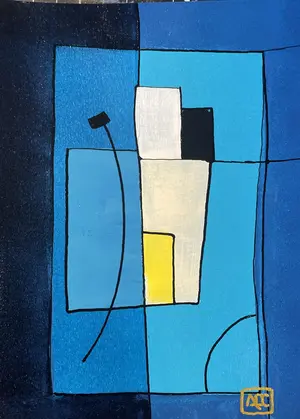
Db Minor is a series of 6 paintings by Arnaud Quercy, created between 2024 and 2025 in acrylic on paper, acrylic on wood panel and watercolor on paper. Formats range from 10×15 cm to 30×42 cm. 3 works are held in private collections (London, United Kingdom, Santa Monica, USA, Boulogne-Billancourt, France). 1 remains available for acquisition at Art Quam Anima, 28 rue du Dragon, Paris. Works presented at: Rencontres au Marché de la Création, Salon d'art contemporain – Metamorphose, Paris and Permanent Collection 2025 – Resonance in Form and 7 more.
Db minor is a triad that barely registers in the classical canon. Most composers respell it as C-sharp minor — Chopin’s familiar territory, Rachmaninoff’s brooding landscapes. But the flat-side spelling carries its own gravity, a harmonic shadow that tilts the ear toward darker, more obscure ground. Built from a root, minor third, and perfect fifth, the chord sits in one of the least-visited corners of tonal music, a key that must be sought rather than stumbled upon.
Through harmonic-chromatic translation, the three chord tones produce a cool, deep palette. The root appears as blue-green — a color that darkens toward black in the sub-bass and softens to steel-gray in the middle registers. The minor third, E, translates as yellow, brightening from brown in the low octaves to silver and near-white at the top of the keyboard. The fifth, Ab, holds steady as blue. Together they form a landscape of cold luminosity, where the yellow of the third cuts across the prevailing blue-green like a fault line of light.
Six études make up the Db Minor series, spanning Variations 5 through 10. All are marked Animé, played piano or mezzo-piano, and five of the six flow legato — phrases that bind their notes into continuous lines. Five trace valley contours in common time, dipping into the sub-bass before climbing back through the registers. The sixth and final work breaks both patterns: a waltz in triple time, ascending without return. Note counts range from seven to ten, and non-chord tones appear in all but the closing study — warm visitors in red, orange, and violet drifting through the cool field. The register spans from Db1 to E7, nearly the full extent of the keyboard.
Variation 9 stretches widest, reaching from Db1 to E7 in a phrase that touches both extremes yet lives in the middle — "the chord’s color at its most understated," as the artist describes it. At the opposite pole, Variation 8 is the brightest étude in the series, a watercolor on paper where the minor third appears in four consecutive octaves, each iteration lighter than the last, the canvas flooded with pale yellow and silver. Variation 10 closes the series as its darkest work and only waltz — seven notes ascending from the sub-bass, every one a chord tone, the painting weighted toward black with only a small opening of light at the top.
Across the six canvases, the palette moves between shadow and brilliance with surprising range for a single triad. The sub-bass roots anchor each work in near-black, while the upper thirds dissolve into pale yellow at altitude. Blue appears in the middle registers wherever the fifth sounds, a steady presence between the extremes. Where non-chord tones enter — the red-orange of G, the orange of D, the violet of Bb — they read as earth tones or dark smudges, warm intrusions that soften the chord’s austerity. In Variation 7, the accents crowd the center so densely that they nearly overtake the chord tones, creating what the artist calls "a cool phrase with a warm interior." The mediums themselves vary — wood panel, watercolor paper, acrylic paper — each surface absorbing the palette differently.
Db minor reveals itself through repetition as a key of contrasts held in tension: bright thirds against dark roots, cool fields disrupted by warm accidents, valleys that dip and return against one waltz that only rises. These works have found homes on both sides of the Atlantic, from Boulogne-Billancourt to Santa Monica. The closing étude carries the series’ lesson in its gesture — Db minor finally lifting upward, but bringing its darkness along, unwilling to leave its weight behind.
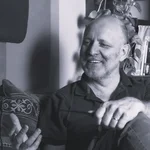
Arnaud Quercy is a Parisian artist working across painting, music, and sculpture. His practice is grounded in Ideamorphism — the principle that a work of art does not carry meaning, but triggers it. Each piece is engineered to diffract differently through each person who encounters it.
He creates and exhibits at Art Quam Anima, his gallery-atelier at 28 rue du Dragon, Saint-Germain-des-Prés, Paris.
Works — Db Minor
Related hubs
- Collection: Harmonic Crossing
Exhibitions 10
- Rencontres au Marché de la Création (2024-04-23 → 2024-12-31, Marché de la Création – Paris Montparnasse, Paris)
- Salon d'art contemporain – Metamorphose, Paris (2024-12-26 → 2025-01-05, Halle des Blancs Manteaux, Paris)
- Permanent Collection 2025 – Resonance in Form (2025-01-01 → 2025-12-31, arnaudquercy.art, Paris)
- Paris Studio Visit (2025-02-18 → 2025-02-18, Artist's Studio, Paris)
- Marché d'Art Contemporain – Seine Port (2025-05-17 → 2025-05-17, MAC Seine-Port, Seine-Port)
- Nuit des Artistes, St Germain-en-Laye, France (2025-05-24 → 2025-05-24, La Nuit des Artistes, Saint-Germain-en-Laye)
- Marché de l'Art de Saint-Germain-en-Laye, 17ème édition – France (2025-06-14 → 2025-06-14, Marché de l'Art, Saint-Germain-en-Laye)
- Salon d'art contemporain – Metamorphose 2025–2026, Paris (2025-12-26 → 2026-01-04, Halle des Blancs Manteaux, Paris)
- Art Quam Anima – Pre-opening (2026-01-31 → 2026-02-28, Art Quam Anima, Paris)
- Through the Aperture — Research on Harmony (2026-03-09 → 2026-04-30, Art Quam Anima, Paris)