C Major9 series — 15 Paintings by Arnaud Quercy
ART-SER0027
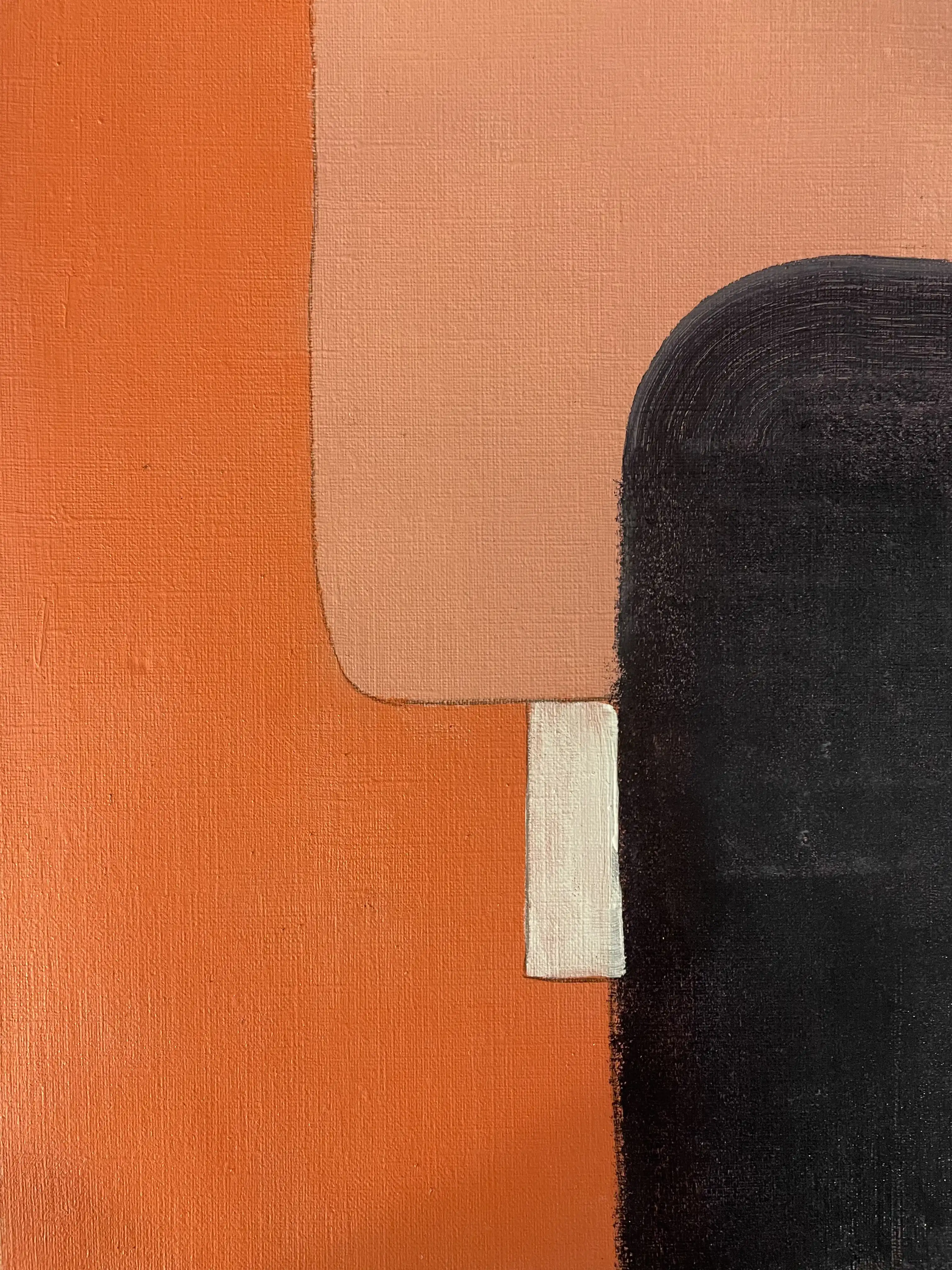
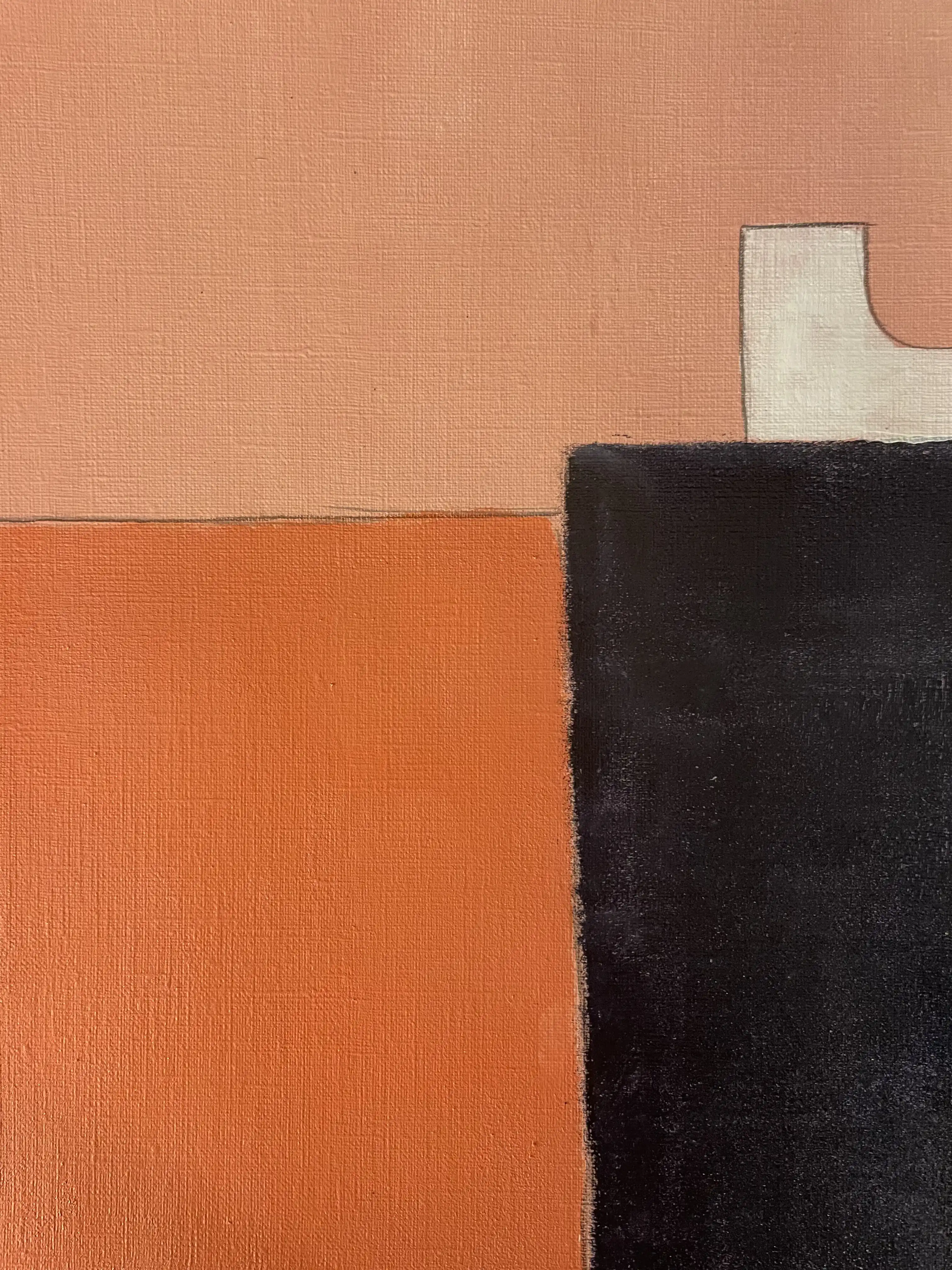
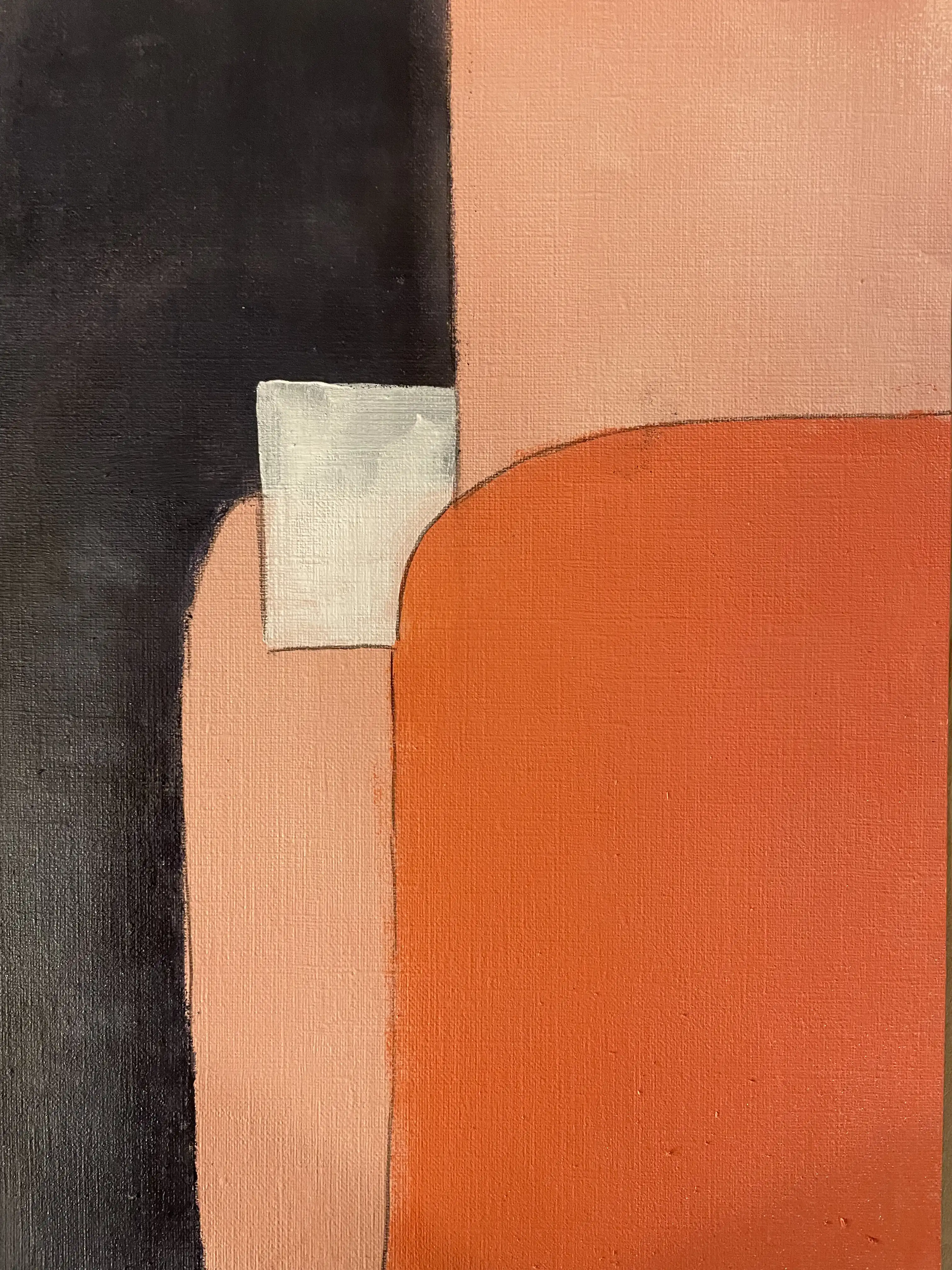
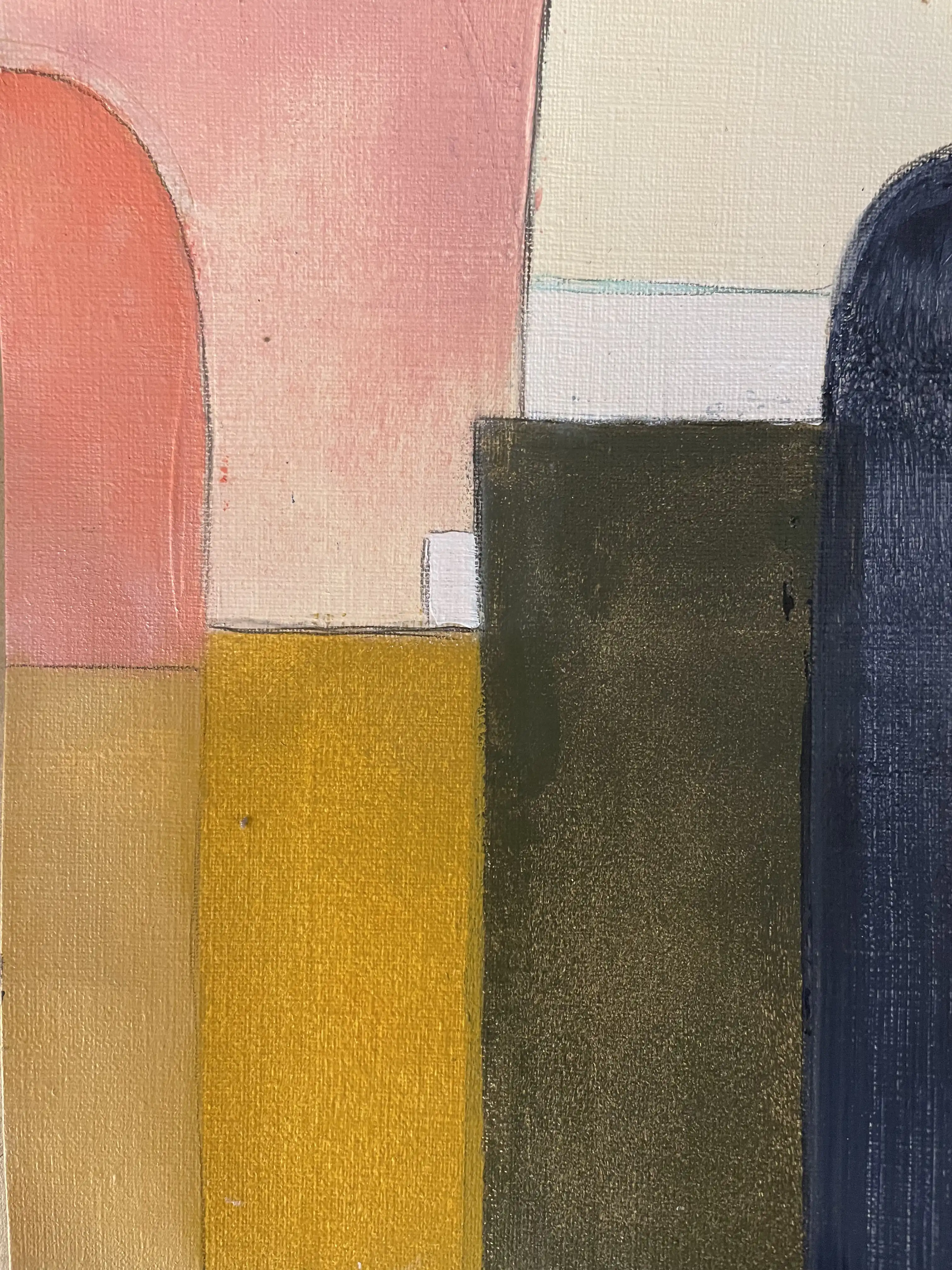
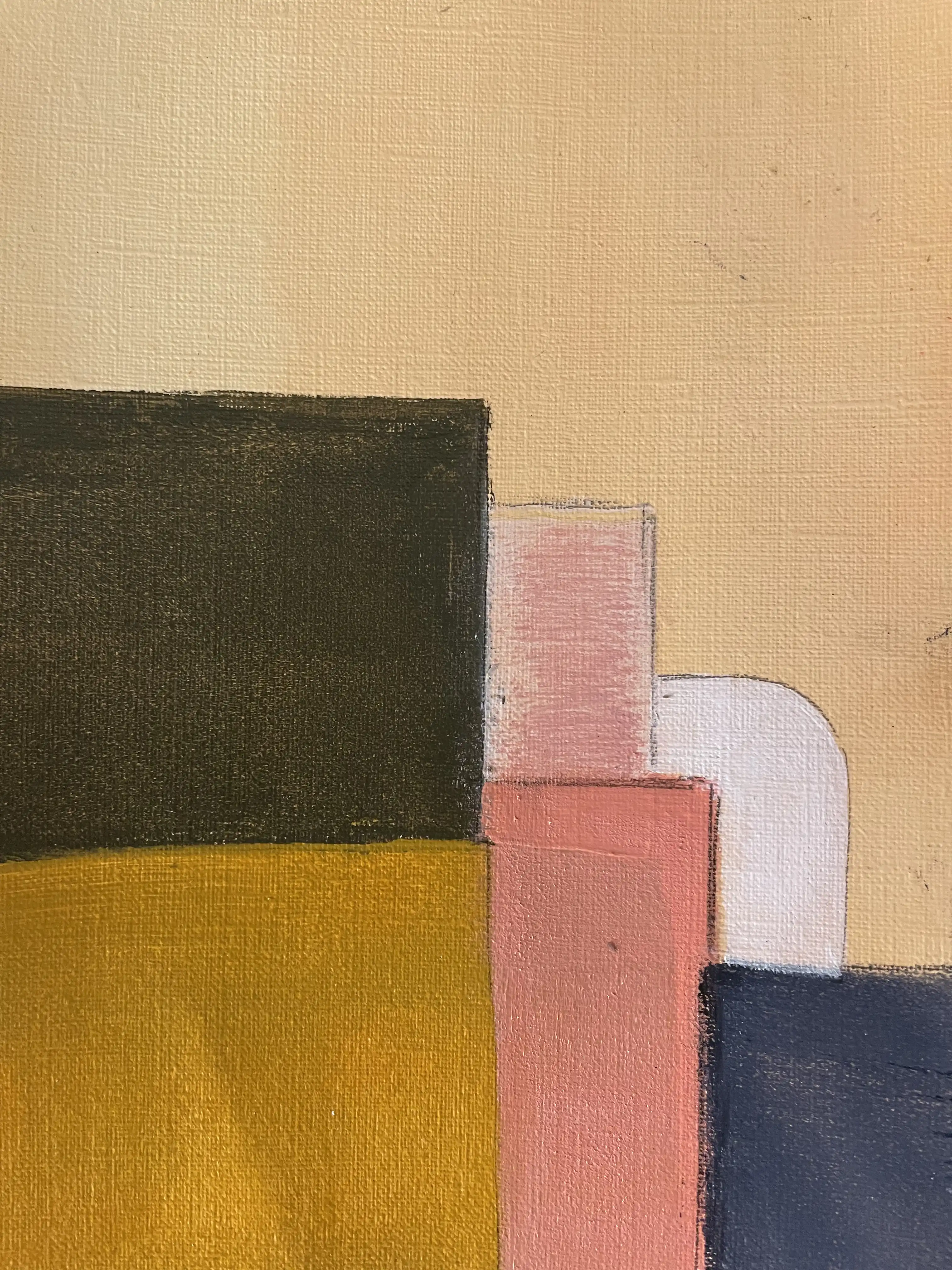
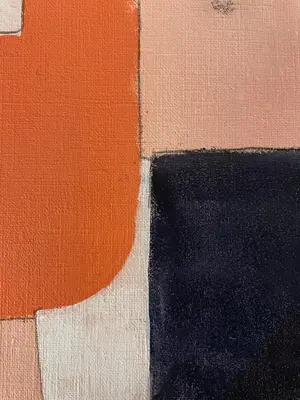
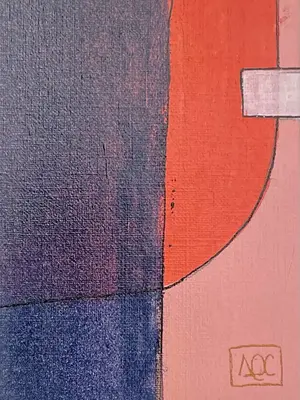
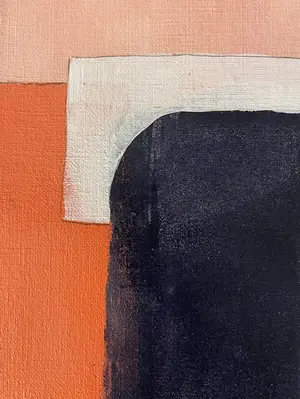
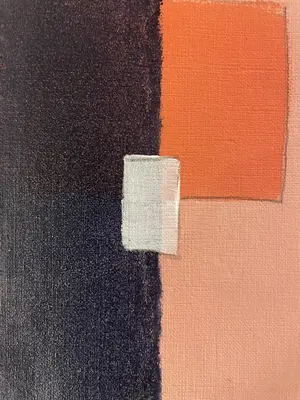
C Major9 is a series of 15 paintings by Arnaud Quercy, created in 2024 in acrylic on paper. Formats range from 10×15 cm to 21×29.5 cm. All 15 works in this series are held in private collections (Paris, France, New York, USA, Brunswick, Australia, Boston, USA, Japan, UK). Works presented at: Rencontres au Marché de la Création, Salon d'art contemporain – Metamorphose, Paris and Permanent Collection 2025 – Resonance in Form and 5 more.
The C major ninth — C, E, G, B, D — is a chord of five tones that emerged fully in the harmonic language of impressionism. Debussy let it shimmer in the middle voices of his preludes; Ravel built whole textures around its open warmth. In jazz, Gil Evans used ninth chords in lush brass arrangements, and bossa nova composers settled into them as a resting harmony — rich enough to fill a phrase, calm enough to need no resolution. The major ninth adds two upper extensions to the triad, broadening C major’s clarity into something more layered, more orchestral.
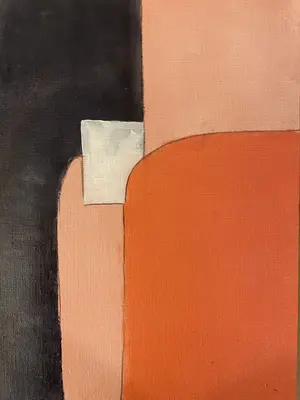
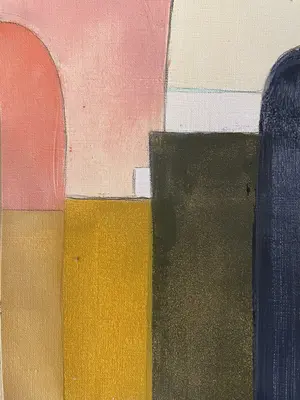
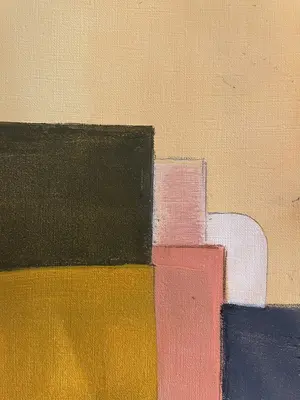
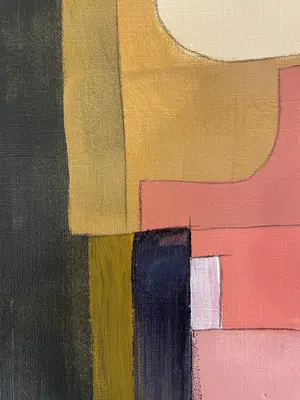
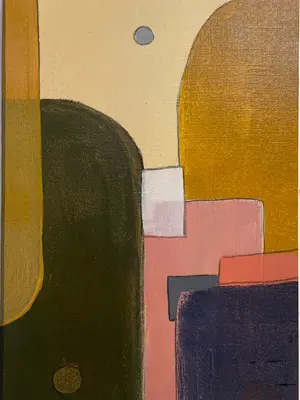
Through harmonic-chromatic, the five pitch classes produce an almost entirely warm palette. C, the root, translates as red — near-black in the lowest octaves, deepening to dark earth below C3. E, the third, reads as yellow, but in this series it most often appears at the keyboard’s extreme heights, where yellow bleaches to silver. G, the fifth, carries red-orange, a steady mediating warmth. B, the major seventh, brings yellow-green — the one tone that nudges toward cool — while D, the ninth, burns orange, the dominant warm hue of the collection. Register shifts the palette dramatically: C0 and C1 are darkness before color begins; E7 is light drained of saturation.
Quercy explores this five-color territory across fifteen études, all painted in 2024, acrylic on paper. The opening work spans the largest format at 21.0 by 29.5 centimetres; the later variations settle into smaller pages, 14.8 by 21.0 and 10.0 by 15.0, as the investigation tightens. The dominant character is Lent, mp, legato — slow, quiet, meditative — with most phrases tracing bell arches in common time. Three waltzes introduce triple meter; two moderate-tempo variations arrive late in the sequence. The series is remarkably consistent in its restraint, a collection of études that vary note count rather than mood. Yet within that restraint, the range is wide: from four notes to nine, from a span of three octaves to nearly seven, from pure chord-tone canvases to works carrying cool accents — violet and blue intrusions from outside the harmony.
The opening étude (AQC0548) declares the full span, seven notes arching from C1 to E7, “the warm palette declared across the full span, the slow arch touching every color in the chord before returning to darkness.” At the other extreme, Variation 4 (AQC0552) reduces the chord to its barest interval — root and ninth only, D appearing in three consecutive octaves while C anchors the bass alone. The canvas becomes a gradient of a single warm hue. Variation 9 (AQC0557), the series’ only Animé, breaks the quiet: louder, faster, with violet and blue accents crowding the middle register — “for once, holds blue alongside orange.” It is the one étude where the warm chord admits a genuinely cool disruption.
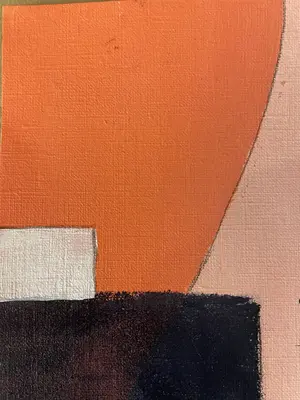
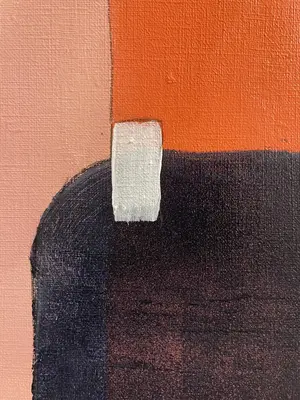
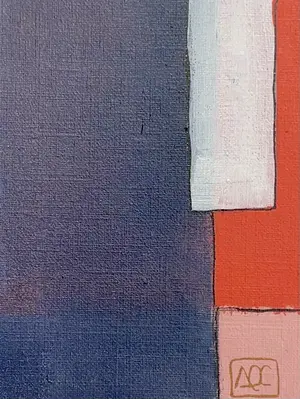
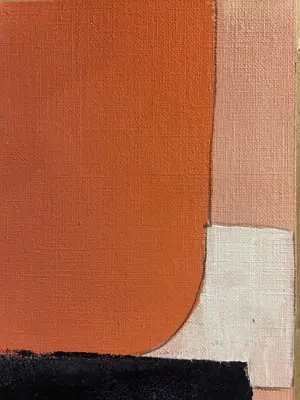
Viewed together, the fifteen paintings compose a warm field with dark foundations. The bass registers live in near-black and deep gray — the root’s red compressed beyond recognition. The middle of each canvas glows with orange and red-orange, the ninth and fifth asserting themselves as the series’ visual center of gravity. Yellow and silver appear only at the extremes, where the third arrives in the highest octaves, bleached and luminous. Across the collection, one colour gains prominence: the ninth’s orange, recurring in nearly every work, present in multiple octaves, claiming the center. The occasional violet or blue-green accent — in Variations 3, 5, 9, and 11 — punctuates the warmth like a passing dissonance in an otherwise consonant phrase.
The C major ninth, through fifteen variations, reveals itself as a fundamentally warm harmony — not the bright primary warmth of the C major triad, but something richer, more autumnal. The added seventh and ninth fill the middle register with orange and yellow-green, colours that turn C major’s red-and-yellow simplicity into a palette closer to earth and firelight. Every work in the series has found a home, in collections from Paris to New York, Boston to Brunswick, from Japan to the United Kingdom — a quiet confirmation that the chord’s warmth translates beyond the studio.
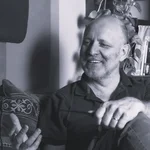
Arnaud Quercy is a Parisian artist working across painting, music, and sculpture. His practice is grounded in Ideamorphism — the principle that a work of art does not carry meaning, but triggers it. Each piece is engineered to diffract differently through each person who encounters it.
He creates and exhibits at Art Quam Anima, his gallery-atelier at 28 rue du Dragon, Saint-Germain-des-Prés, Paris.
Works — C Major9
Related hubs
- Collection: Harmonic Crossing
Exhibitions 8
- Rencontres au Marché de la Création (2024-04-23 → 2024-12-31, Marché de la Création – Paris Montparnasse, Paris)
- Salon d'art contemporain – Metamorphose, Paris (2024-12-26 → 2025-01-05, Halle des Blancs Manteaux, Paris)
- Permanent Collection 2025 – Resonance in Form (2025-01-01 → 2025-12-31, arnaudquercy.art, Paris)
- Paris Studio Visit (2025-02-18 → 2025-02-18, Artist's Studio, Paris)
- Marché d'Art Contemporain – Seine Port (2025-05-17 → 2025-05-17, MAC Seine-Port, Seine-Port)
- Nuit des Artistes, St Germain-en-Laye, France (2025-05-24 → 2025-05-24, La Nuit des Artistes, Saint-Germain-en-Laye)
- Marché de l'Art de Saint-Germain-en-Laye, 17ème édition – France (2025-06-14 → 2025-06-14, Marché de l'Art, Saint-Germain-en-Laye)
- Salon d'art contemporain – Metamorphose 2025–2026, Paris (2025-12-26 → 2026-01-04, Halle des Blancs Manteaux, Paris)
Other series in this collection 35
Documented at 1
Catalogue raisonné entries 15
- C Major9 - Research on Harmony
- C Major9 - Research on Harmony - Variation 1
- C Major9 - Research on Harmony - Variation 2
- C Major9 - Research on Harmony - Variation 3
- C Major9 - Research on Harmony - Variation 4
- C Major9 - Research on Harmony - Variation 5
- C Major9 - Research on Harmony - Variation 6
- C Major9 - Research on Harmony - Variation 7
- C Major9 - Research on Harmony - Variation 8
- C Major9 - Research on Harmony - Variation 9
- C Major9 - Research on Harmony - Variation 10
- C Major9 - Research on Harmony - Variation 11
- C Major9 - Research on Harmony - Variation 12
- C Major9 - Research on Harmony - Variation 13
- C Major9 - Research on Harmony - Variation 14