C# minor series — 5 Paintings by Arnaud Quercy
ART-SER0030
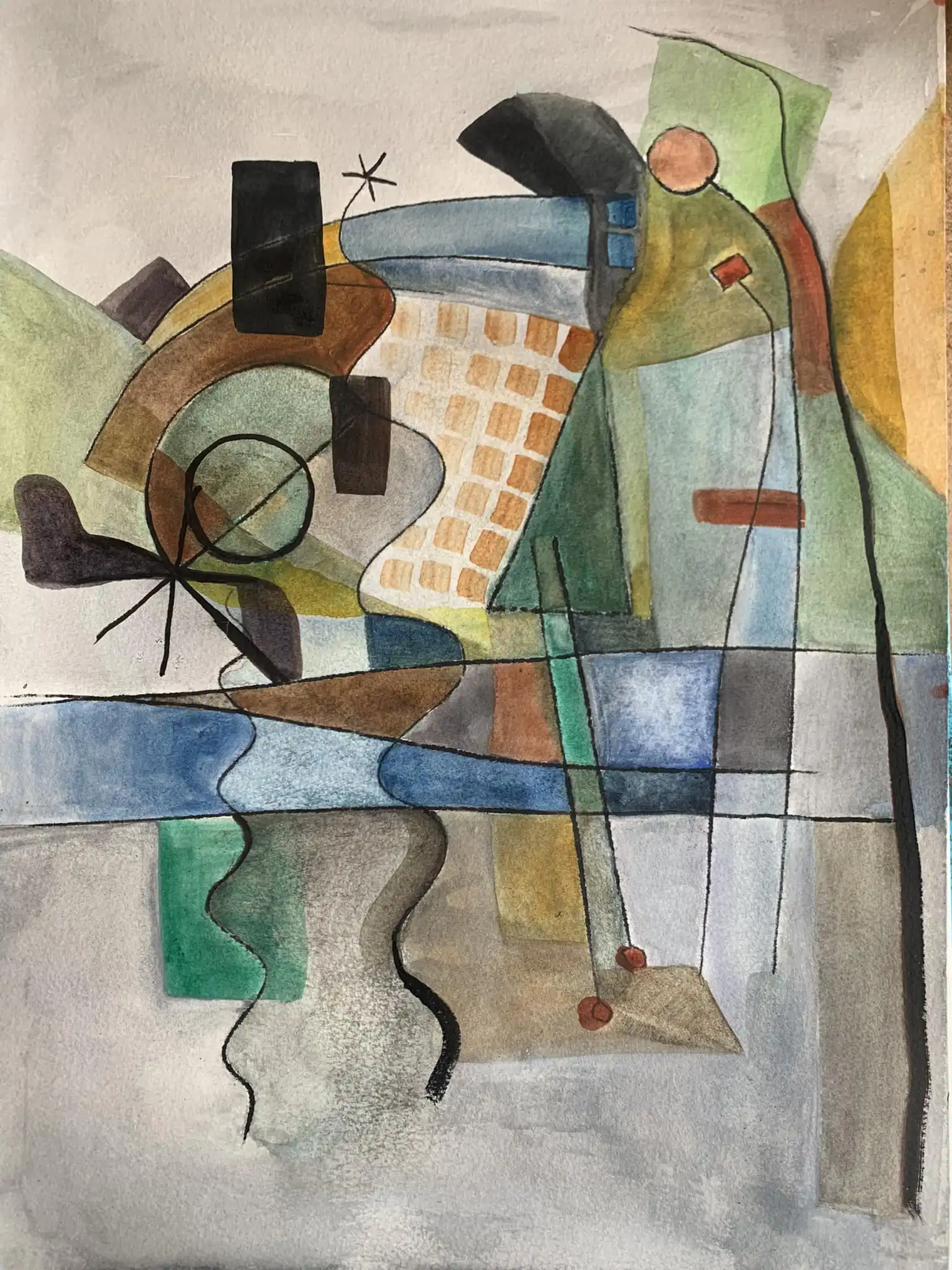
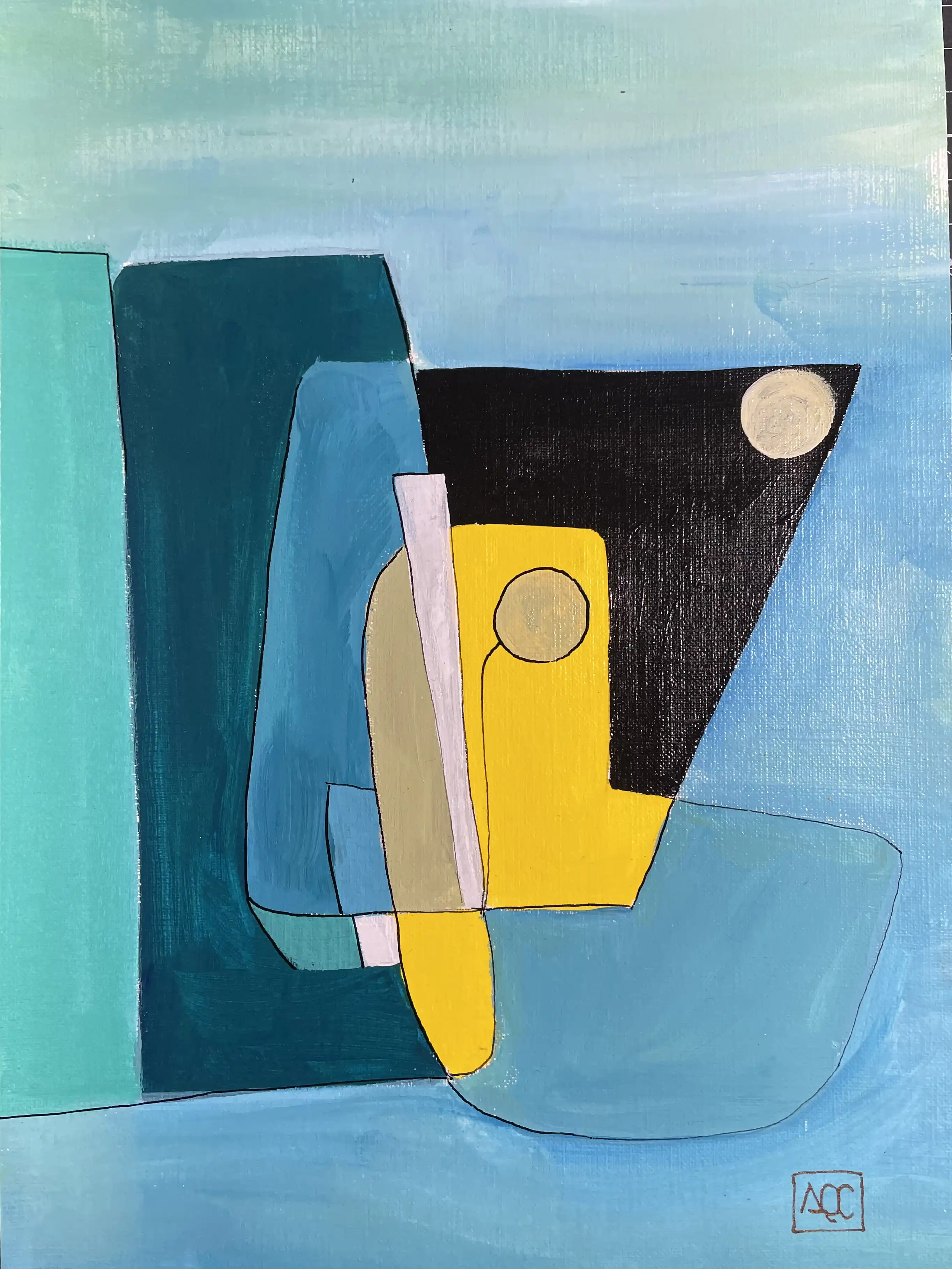
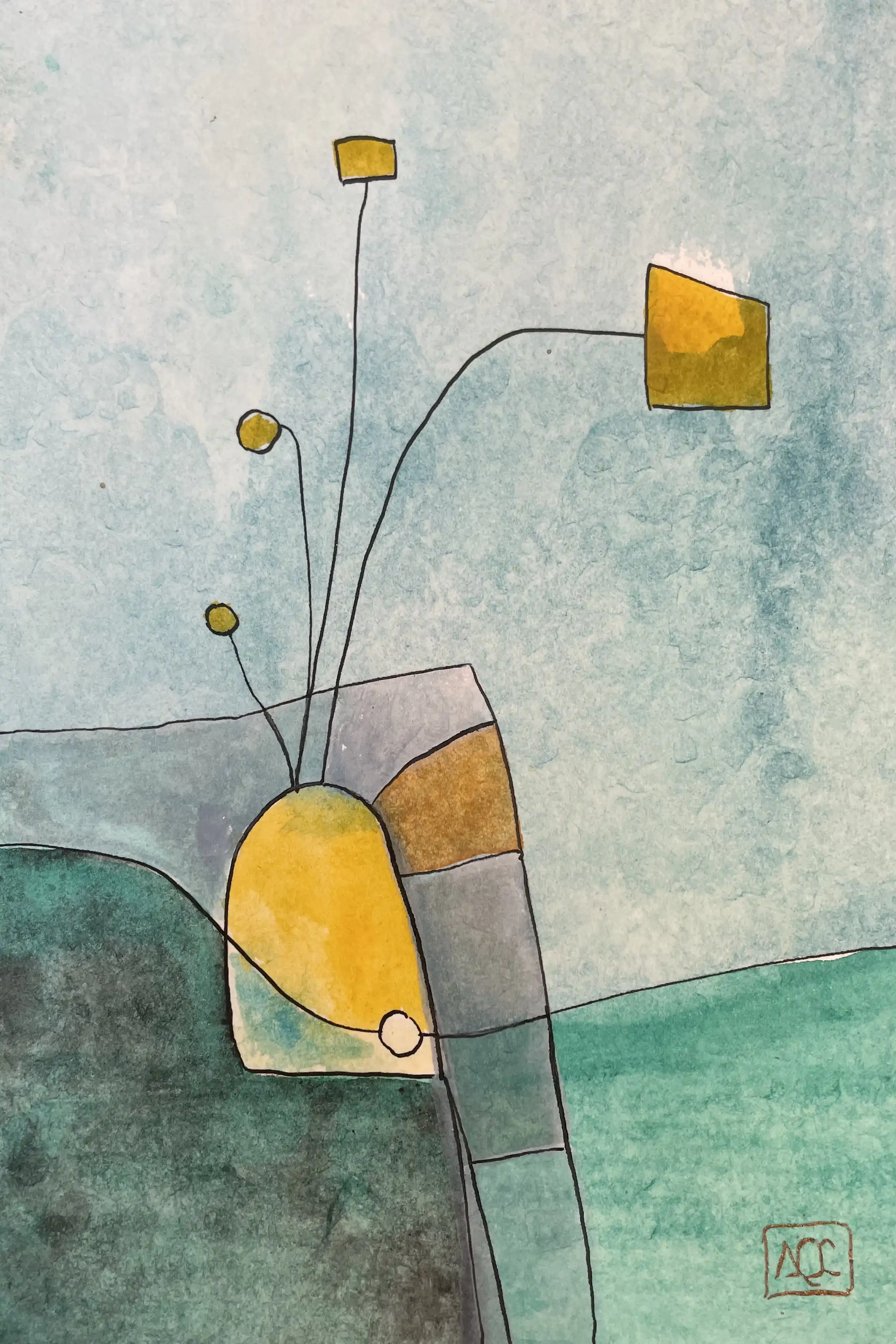
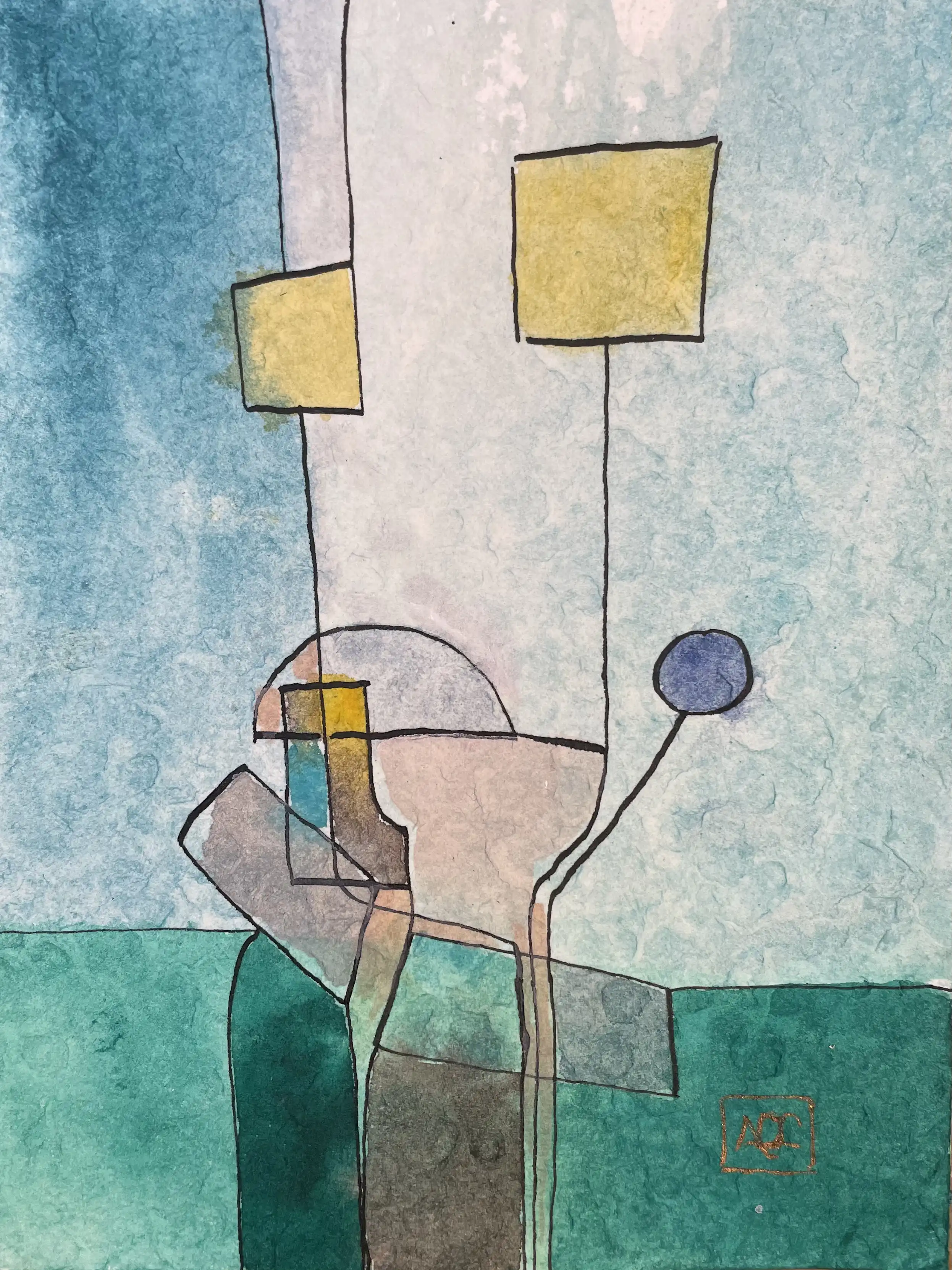
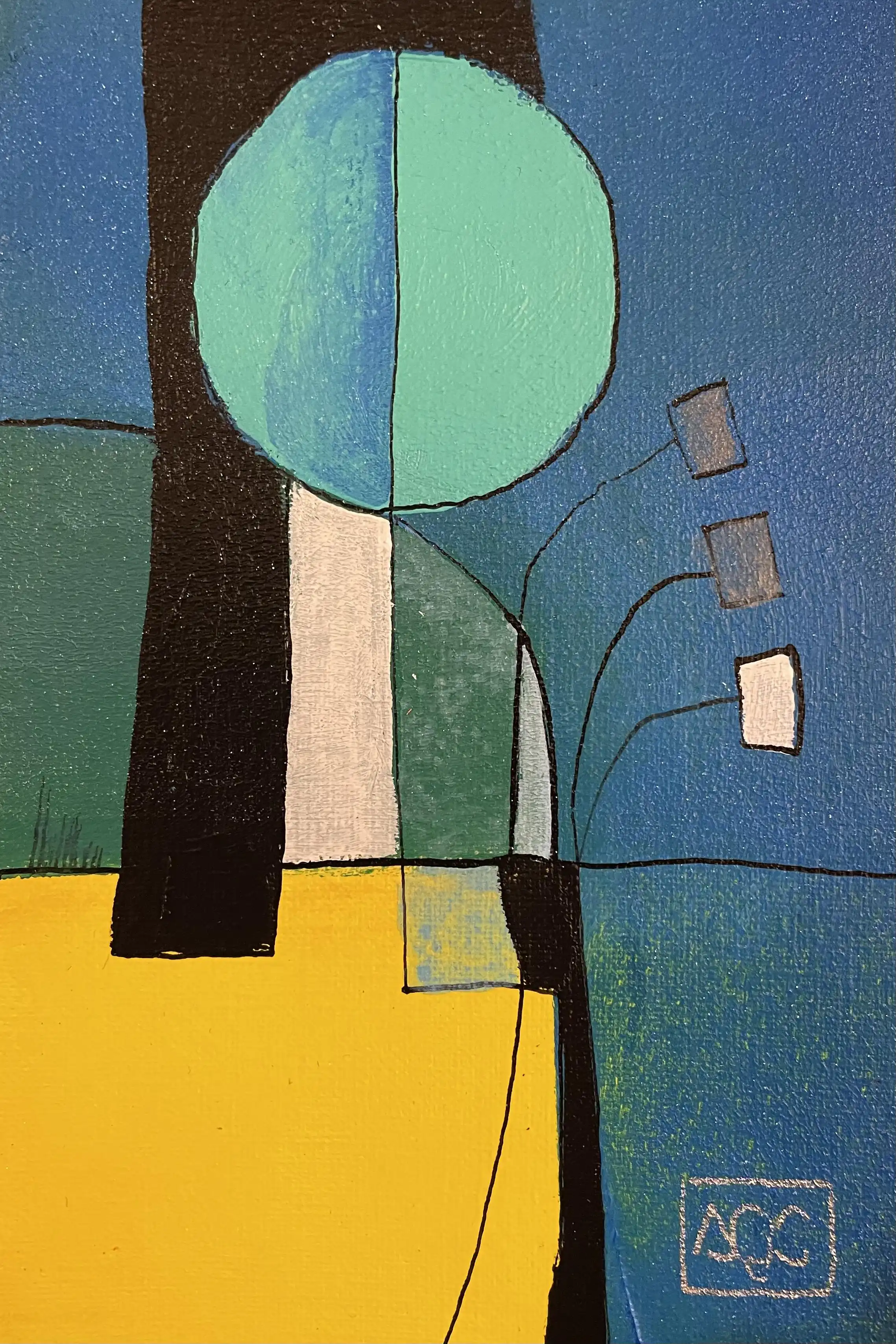
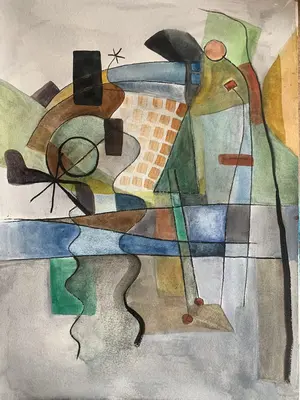
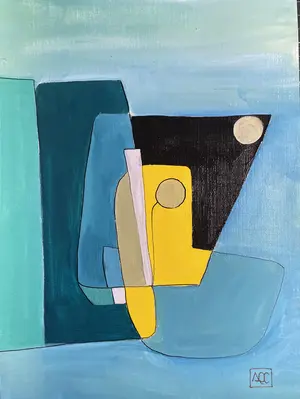
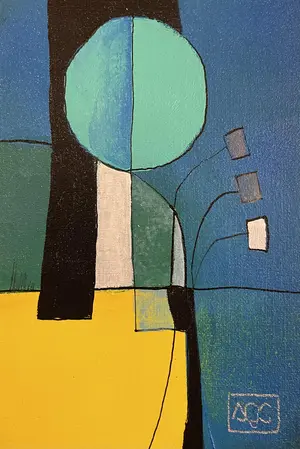
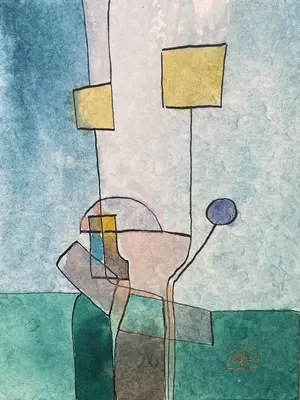
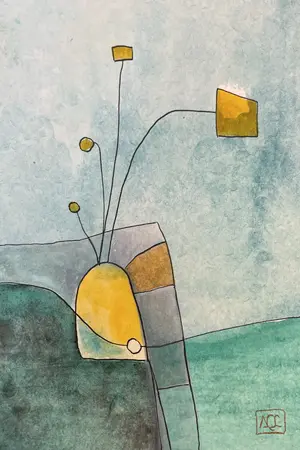
C# minor is a series of 5 paintings by Arnaud Quercy, created between 2023 and 2024 in acrylic on paper and watercolor on paper. Formats range from 10×15 cm to 30×42 cm. All 5 works in this series are held in private collections (St Charles, USA, Geneva, USA). Works presented at: Transcendence – World Premiere of Ephemera Arts, Rencontres au Marché de la Création and Salon d'art contemporain – Metamorphose, Paris.
C-sharp minor is built from a root, a minor third, and a perfect fifth — three tones whose interval structure places the semitone low, between root and third, giving the chord its particular inward gravity. Beethoven chose this key for the first movement of the Moonlight Sonata, and Chopin returned to it for his most turbulent Scherzo. It is a key that broods in the bass and, when it rises, rises toward something luminous.
Through harmonic-chromatic, Quercy perceives C-sharp as blue-green — cool and oceanic in the middle register, compressing toward near-black in the bass. The minor third, E, translates as yellow: warm, bright, the one color in the triad that breaks the cold field. The fifth, G-sharp, appears as blue, cooler than the root but distinct from it, a deeper presence. Together these three tones produce a palette dominated by cool hues, with yellow entering like a shaft of light through dark water — the minor third’s warmth the more vivid for being surrounded by blue-green and blue.
Five piano études explore C-sharp minor across an extreme register, from the sub-bass rumble of C-sharp in the first octave to E7’s near-white shimmer at the keyboard’s upper limit. All five are marked Animé and legato, played at mezzo piano or piano — soft, steady, unhurried. Two ascend through waltz meter; three walk in four beats through inverted-bell contours that dip before they rise. The density ranges from ten pitches in the most populated study to just five in the sparsest. Two études carry a non-chord tone — D natural, which registers as orange, a brief chromatic warmth beside the root. The fifth, G-sharp, is present in four of the five works but vanishes entirely from the last, leaving the chord stripped to root and third. Across the set, the dominant motion is vertical: phrases begin in darkness and climb toward brightness, the cool palette gradually yielding to the yellow of the minor third as the register ascends.
The flagship work, the original Research on Harmony, is a watercolor on paper at 30 by 42 centimeters — the largest format in the series and the most complete harmonic statement, nine notes spanning six octaves with all three chord tones present. Variation 1, an acrylic on paper, is the densest study at ten pitches, its inverted bell packing the full triad into close spacing in the middle register where blue-green, yellow, and blue weave together at their most concentrated. At the opposite extreme, Variation 4 reduces the chord to its barest tension: "five notes only, and the third overwhelms everything" — four octaves of yellow rising from warm to near-white while the root whispers once in the dark bass, the fifth entirely absent.
Viewed as a group, the five canvases describe a landscape of cold depth and sudden warmth. Blue-green dominates the lower registers in every work, darkening toward shadow in the bass, saturating in the middle. Yellow arrives later and higher — sometimes as early as E3, sometimes not until E6 — but always ascending, always lightening as it climbs. Blue appears sparingly, a single anchoring presence in the mid-range when the fifth sounds. The inverted bells weight their paintings toward darkness, the ascending waltzes distribute color more evenly from bottom to top. In Variation 2, "the darkest of the inverted bells," the phrase lingers so long in the low registers that brightness arrives only as a single pale flash at the extreme top. Across all five, the eye moves upward through cool shadow toward the yellow of the minor third.
C-sharp minor, through repetition, reveals itself as a key of contrasts held in tension — the cool ocean of the root against the warm light of the third, darkness below and luminance above. Five variations are enough to map this polarity from its most populated statement to its most distilled. All five works have found homes in collections across the United States, the complete series now held privately — a measure of how directly this key’s peculiar balance of melancholy and brightness speaks to those who encounter it.

Arnaud Quercy is a Parisian artist working across painting, music, and sculpture. His practice is grounded in Ideamorphism — the principle that a work of art does not carry meaning, but triggers it. Each piece is engineered to diffract differently through each person who encounters it.
He creates and exhibits at Art Quam Anima, his gallery-atelier at 28 rue du Dragon, Saint-Germain-des-Prés, Paris.
Works — C# minor
Related hubs
- Collection: Harmonic Crossing
Exhibitions 3
- Rencontres au Marché de la Création (2024-04-23 → 2024-12-31, Marché de la Création – Paris Montparnasse, Paris)
- Salon d'art contemporain – Metamorphose, Paris (2024-12-26 → 2025-01-05, Halle des Blancs Manteaux, Paris)
- Transcendence – World Premiere of Ephemera Arts (2023-10-29 → 2023-11-15, Koblenzer Kunstverein e.V., Koblenz)