E minor series — 9 Paintings by Arnaud Quercy
ART-SER0008
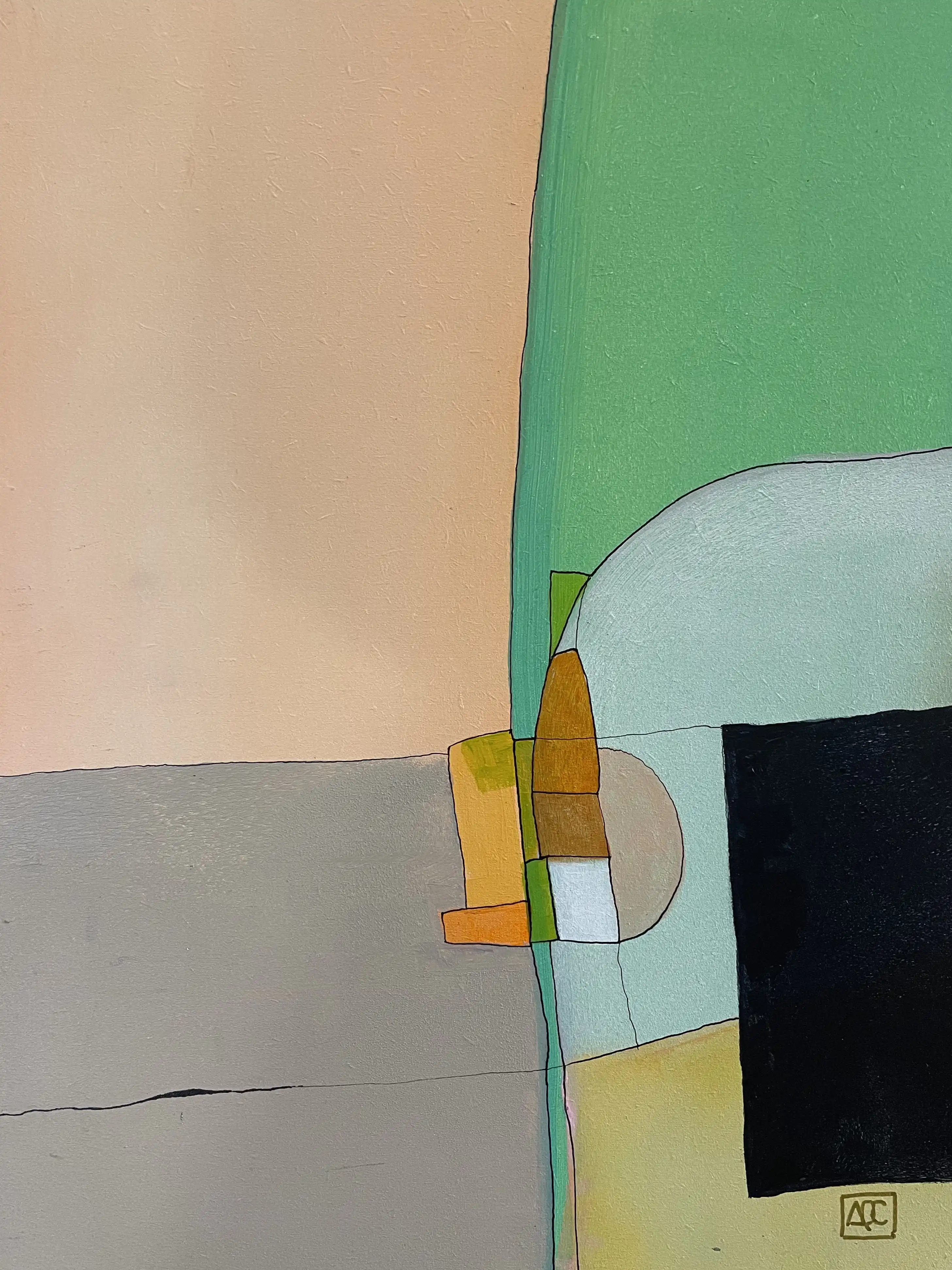
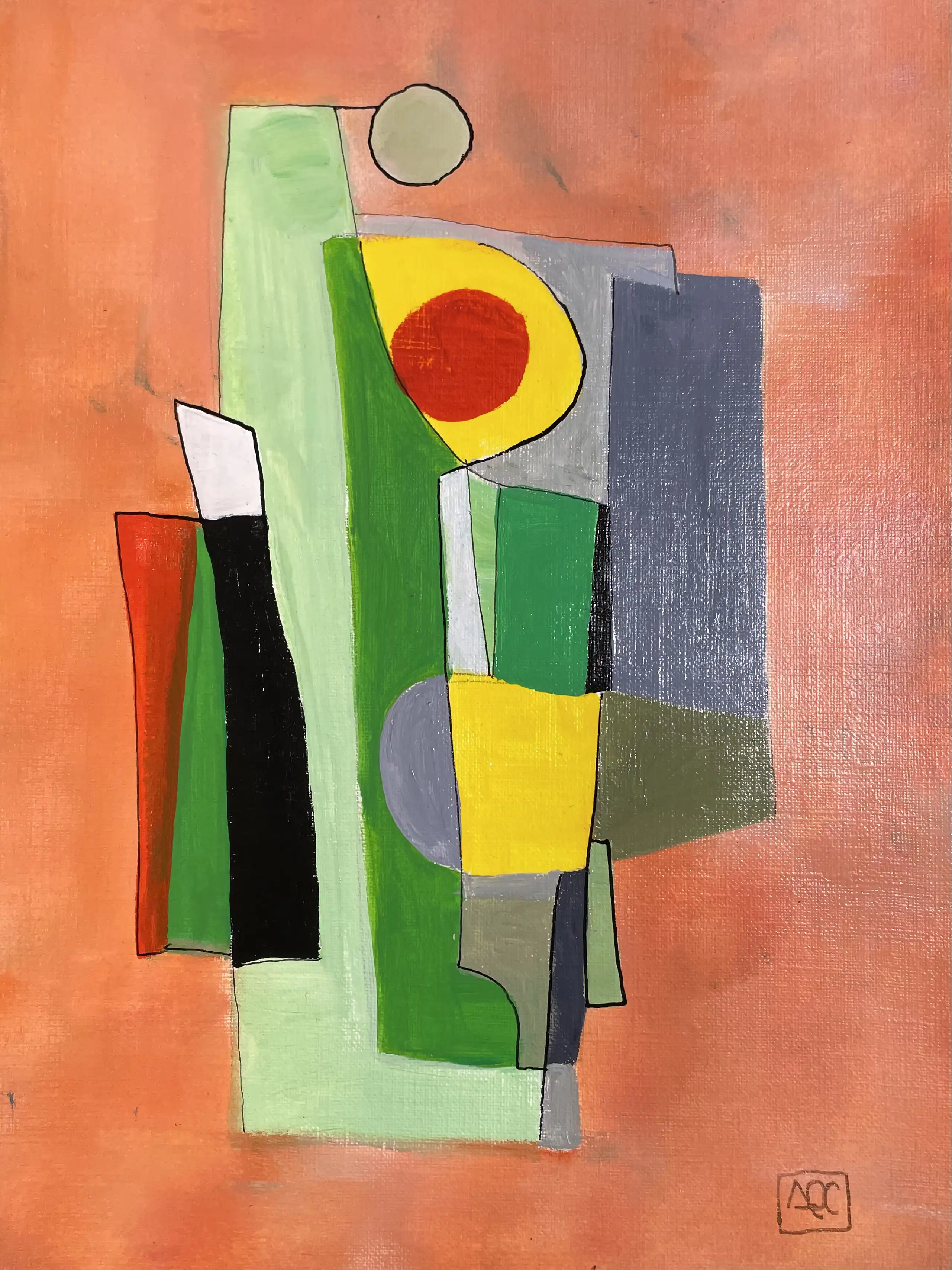
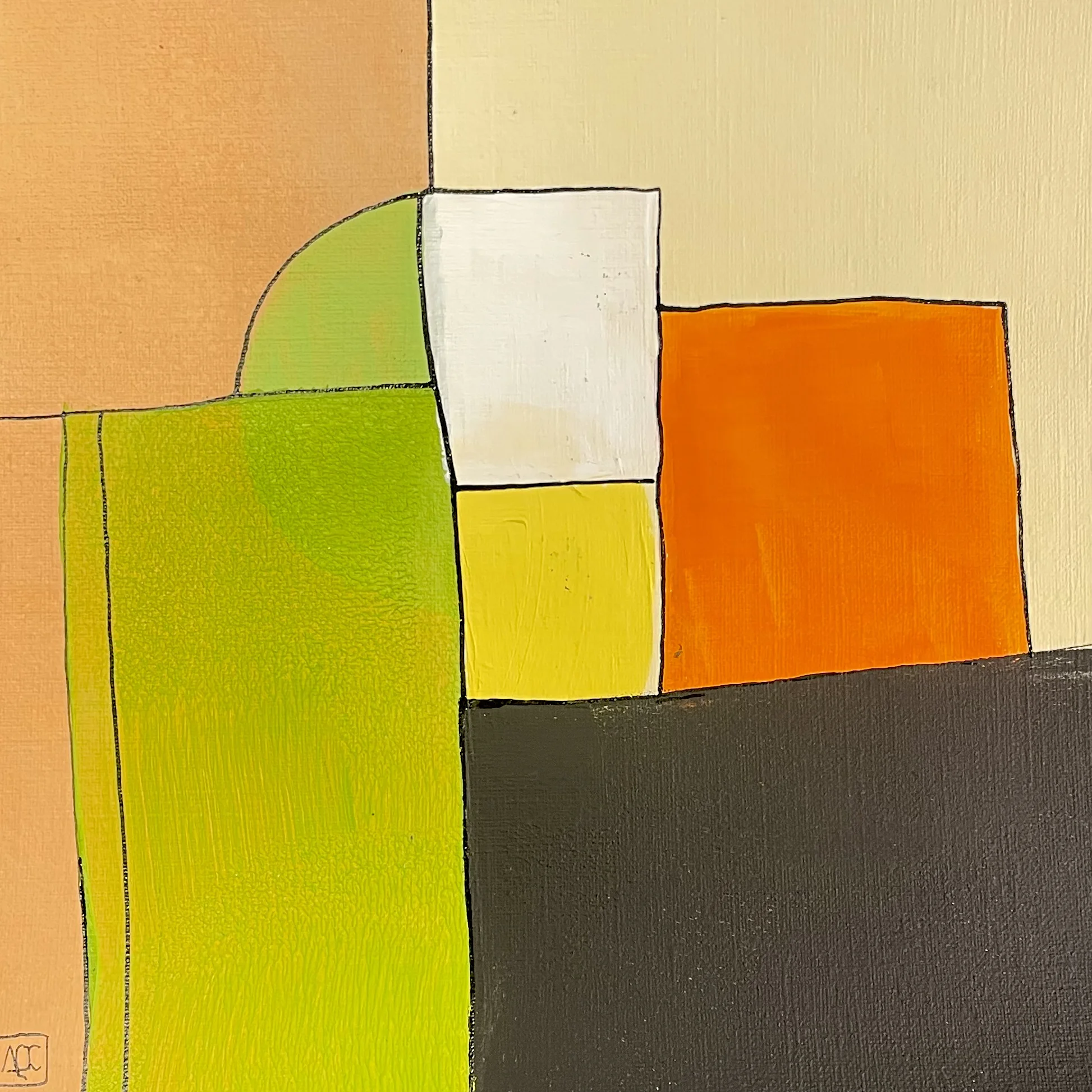
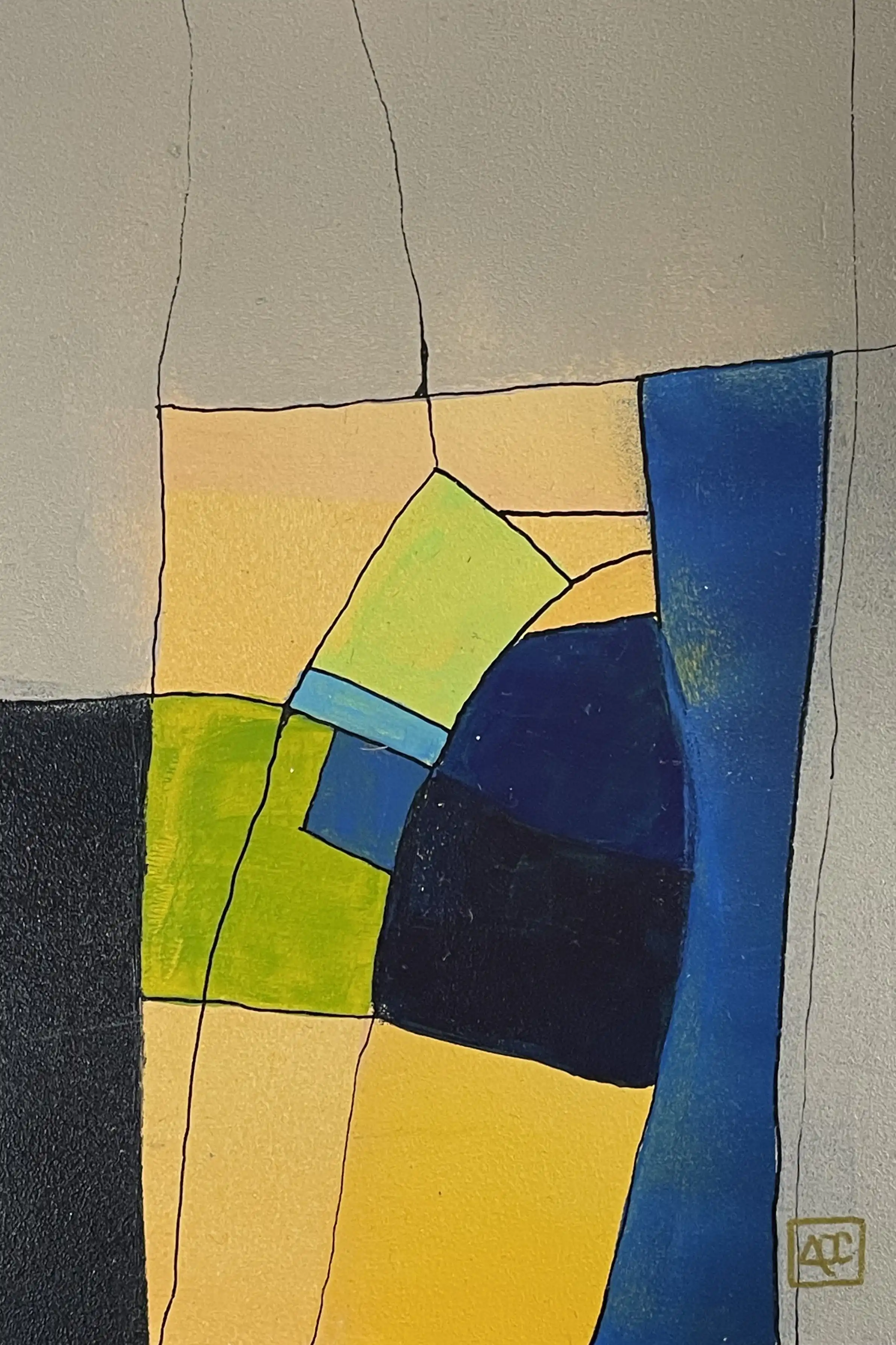
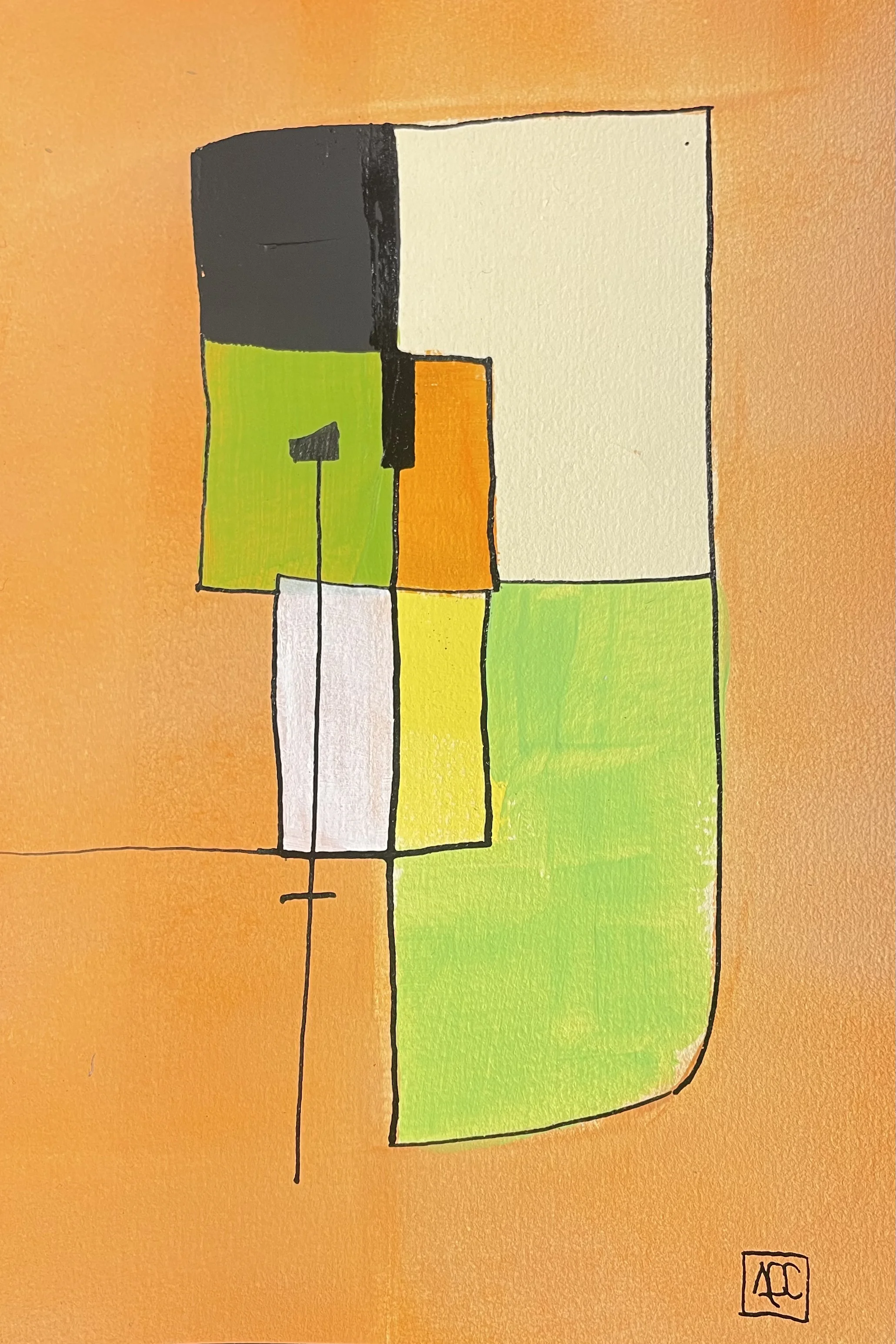
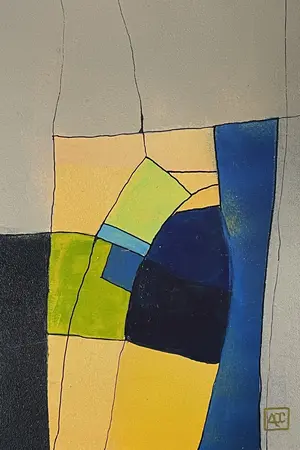
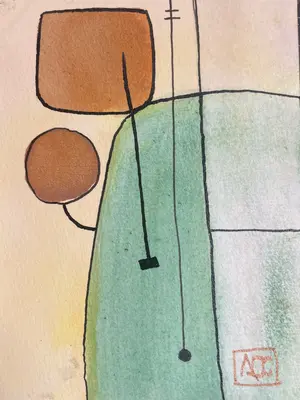
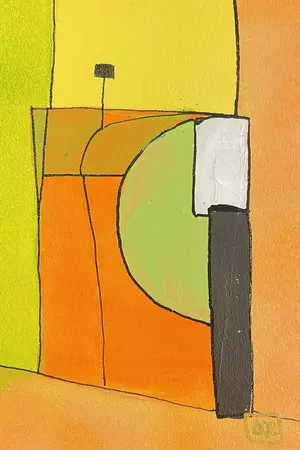
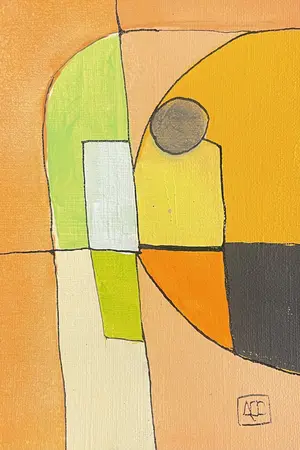
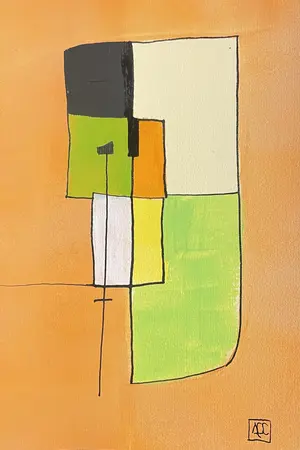
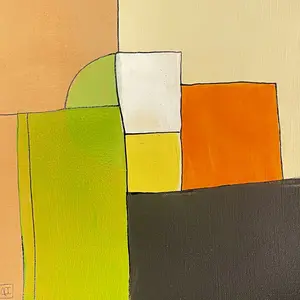
E minor is a series of 9 paintings by Arnaud Quercy, created between 2024 and 2025 in acrylic on paper, acrylic on wood panel and watercolor on paper. Formats range from 10×15 cm to 30×40 cm. All 9 works in this series are held in private collections (Sao Paul, Brazil, Paris, France, New York, USA, San-Francisco, USA, Oliveira do Mondego, Portugal, Italy, Las Vegas, USA). Works presented at: Rencontres au Marché de la Création, Salon d'art contemporain – Metamorphose, Paris and Permanent Collection 2025 – Resonance in Form and 7 more.
E minor is built from three notes — E, G, B — the simplest minor triad, one sharp, the most natural home key for the guitar and the folk lament. In Western harmony it carries a particular gravity: the key of Bach's Partita No. 2, Chopin's Prelude Op. 28 No. 4, the tonality that draws the ear downward without insistence. Its interval structure — root, minor third, fifth — is the foundation of melancholy, though its character here proves more complex than sorrow alone.
Through harmonic-chromatic translation, E minor yields an unexpectedly warm palette. E renders as yellow — bright in the middle register, darkening toward black in the bass. G, the minor third, produces red-orange, the warmest tone in the triad. B, the fifth, translates to yellow-green, cool and fresh against the other two. Together these three hues form a narrow, almost analogous color family: no blue, no violet from the chord tones themselves. The melancholy of E minor, in Quercy's harmonic-chromatic system, is not cold but autumnal — warmth that remembers rather than warmth that burns.
Nine études explore this chord across a register spanning E1 to G7. The series divides evenly between Lent and Animé tempos, all at mezzo piano, the dynamic of private conversation. Bell arches predominate — phrases that rise from a dark root to a bright crest and fold back — with two waltzes and two valleys providing structural contrast. The opening étude is the densest, nine notes descending from G6 to E1; the later variations progressively distill the chord, arriving at studies of five, six, and finally three notes. The Animé cluster (Variations 2, 3, 4) injects forward motion into the middle of the series before the final études return to Lent stillness.
Variation 2 is the largest format in the series — acrylic on wood panel, 30 by 40 centimetres — and the most extreme in range, spanning six octaves from E1 to G7. Its valley shape dips to black before climbing to near-white at the highest G, where the red-orange has entirely washed out; a blue-green accent at C-sharp 3 provides the only cool intrusion. At the opposite pole, Variation 6 distills E minor to just three notes — E4, G5, G6 — the most compact and most luminous study in the series. "This is the chord in light, examined from a high, well-lit vantage" — from the artist's description of Variation 6. Between these extremes, Variation 3 stands as the chromatic outlier: ten notes carrying three different blue-family accents, the only étude in the series with more than one non-chord tone.
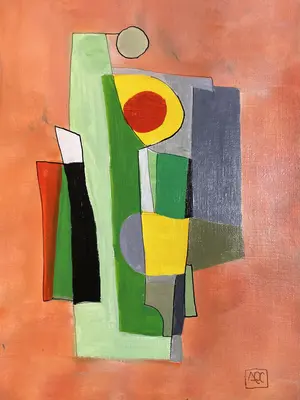
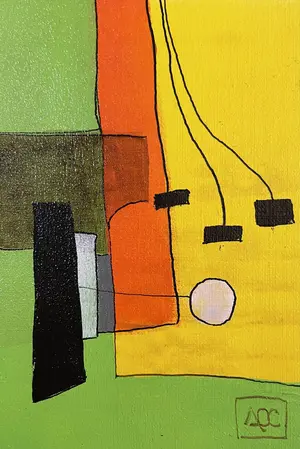
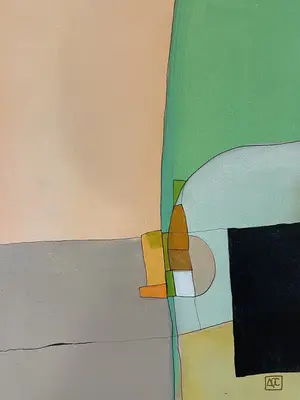
Across the collection, the palette returns again and again to the same warm triad — yellow root, red-orange third, yellow-green fifth — but register transforms everything. Low E's darken toward black, mid-register G's glow with saturated orange, and high B's and G's bleach toward pale yellow and light green. The later variations explore concentration within this palette: Variation 7 stacks three G's in ascending registers, building red-orange that brightens progressively; Variation 8 answers with three E's at the base, the root stated in depth before the upper notes open the phrase. The visual rhythm across all nine works is one of warmth modulated by height — the same narrow hue family shifting from shadow to highlight as the notes climb.
E minor, through nine variations, reveals itself as a minor key that holds warmth rather than chill. Repetition of the same triad under different shapes — arches, valleys, waltzes — teaches that melancholy can live in yellow and orange, that sadness is not always blue. These works have found homes in collections from Sao Paulo to Paris, from Portugal to Las Vegas, carrying their autumnal light to four continents. Within the Harmonic Crossing practice, E minor stands as proof that a chord's emotional character and its harmonic-chromatic color are not always what convention predicts — this is the warmest minor key in the collection, its nine études a sustained meditation on "the color of things remembered in late afternoon light."

Arnaud Quercy is a Parisian artist working across painting, music, and sculpture. His practice is grounded in Ideamorphism — the principle that a work of art does not carry meaning, but triggers it. Each piece is engineered to diffract differently through each person who encounters it.
He creates and exhibits at Art Quam Anima, his gallery-atelier at 28 rue du Dragon, Saint-Germain-des-Prés, Paris.
Works — E minor
Related hubs
- Collection: Harmonic Crossing
Exhibitions 10
- Salon d'art contemporain – Metamorphose 2025–2026, Paris (2025-12-26 → 2026-01-04, Halle des Blancs Manteaux, Paris)
- Art Quam Anima – Pre-opening (2026-01-31 → 2026-02-28, Art Quam Anima, Paris)
- Through the Aperture — Research on Harmony (2026-03-09 → 2026-04-30, Art Quam Anima, Paris)
- Rencontres au Marché de la Création (2024-04-23 → 2024-12-31, Marché de la Création – Paris Montparnasse, Paris)
- Salon d'art contemporain – Metamorphose, Paris (2024-12-26 → 2025-01-05, Halle des Blancs Manteaux, Paris)
- Permanent Collection 2025 – Resonance in Form (2025-01-01 → 2025-12-31, arnaudquercy.art, Paris)
- Paris Studio Visit (2025-02-18 → 2025-02-18, Artist's Studio, Paris)
- Marché d'Art Contemporain – Seine Port (2025-05-17 → 2025-05-17, MAC Seine-Port, Seine-Port)
- Nuit des Artistes, St Germain-en-Laye, France (2025-05-24 → 2025-05-24, La Nuit des Artistes, Saint-Germain-en-Laye)
- Marché de l'Art de Saint-Germain-en-Laye, 17ème édition – France (2025-06-14 → 2025-06-14, Marché de l'Art, Saint-Germain-en-Laye)
Other series in this collection 35
Documented at 1
Catalogue raisonné entries 9
- E minor - Research on Harmony
- E minor - Research on Harmony - Variation 1
- E Minor - Research on Harmony - Variation 2
- E Minor - Research on Harmony - Variation 3
- E Minor - Research on Harmony - Variation 4
- E Minor - Research on Harmony - Variations 5
- E Minor - Research on Harmony - Variations 6
- E Minor - Research on Harmony - Variations 7
- E Minor - Research on Harmony - Variations 8