Eb minor series — 10 Paintings by Arnaud Quercy
ART-SER0010
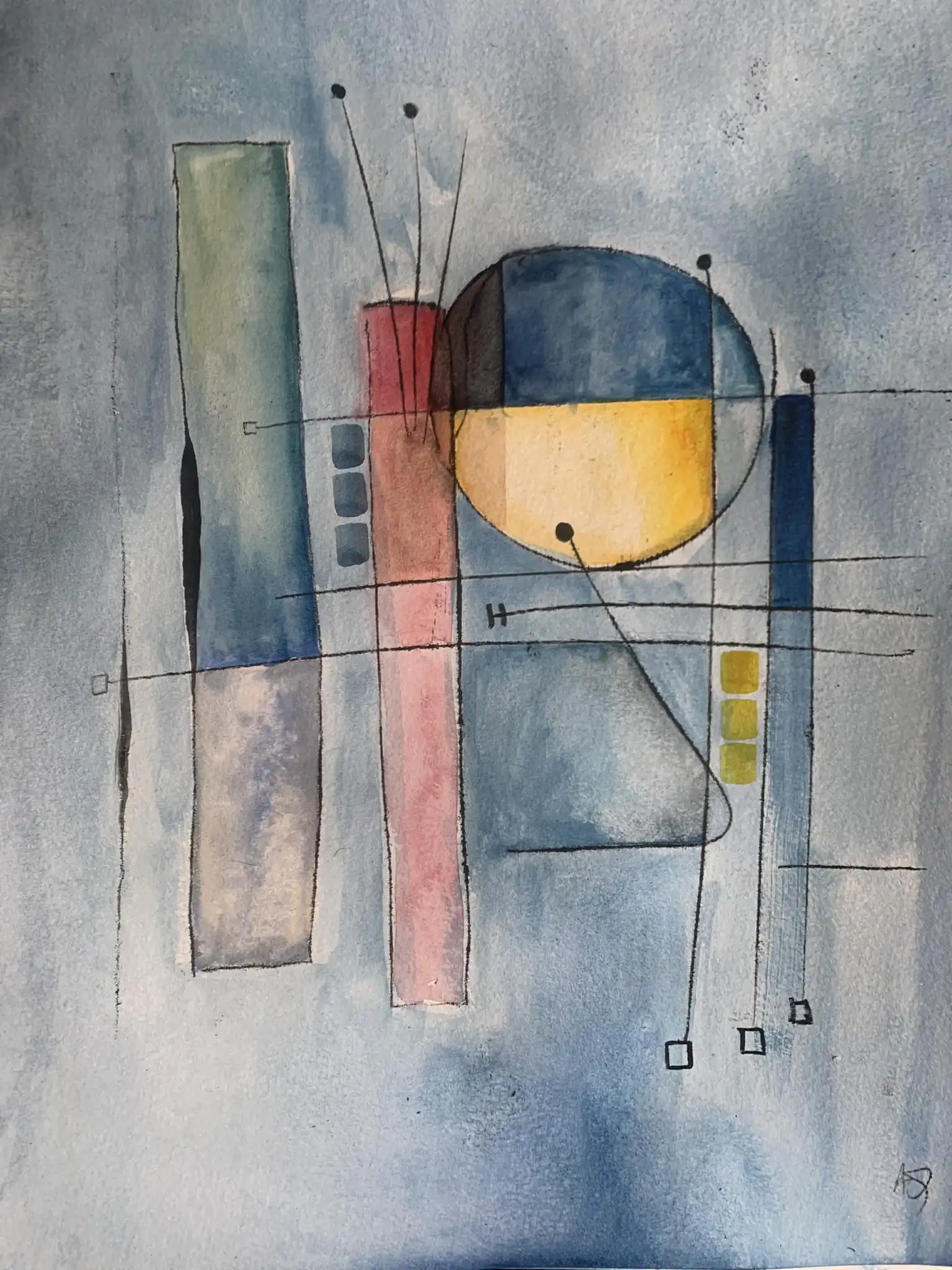
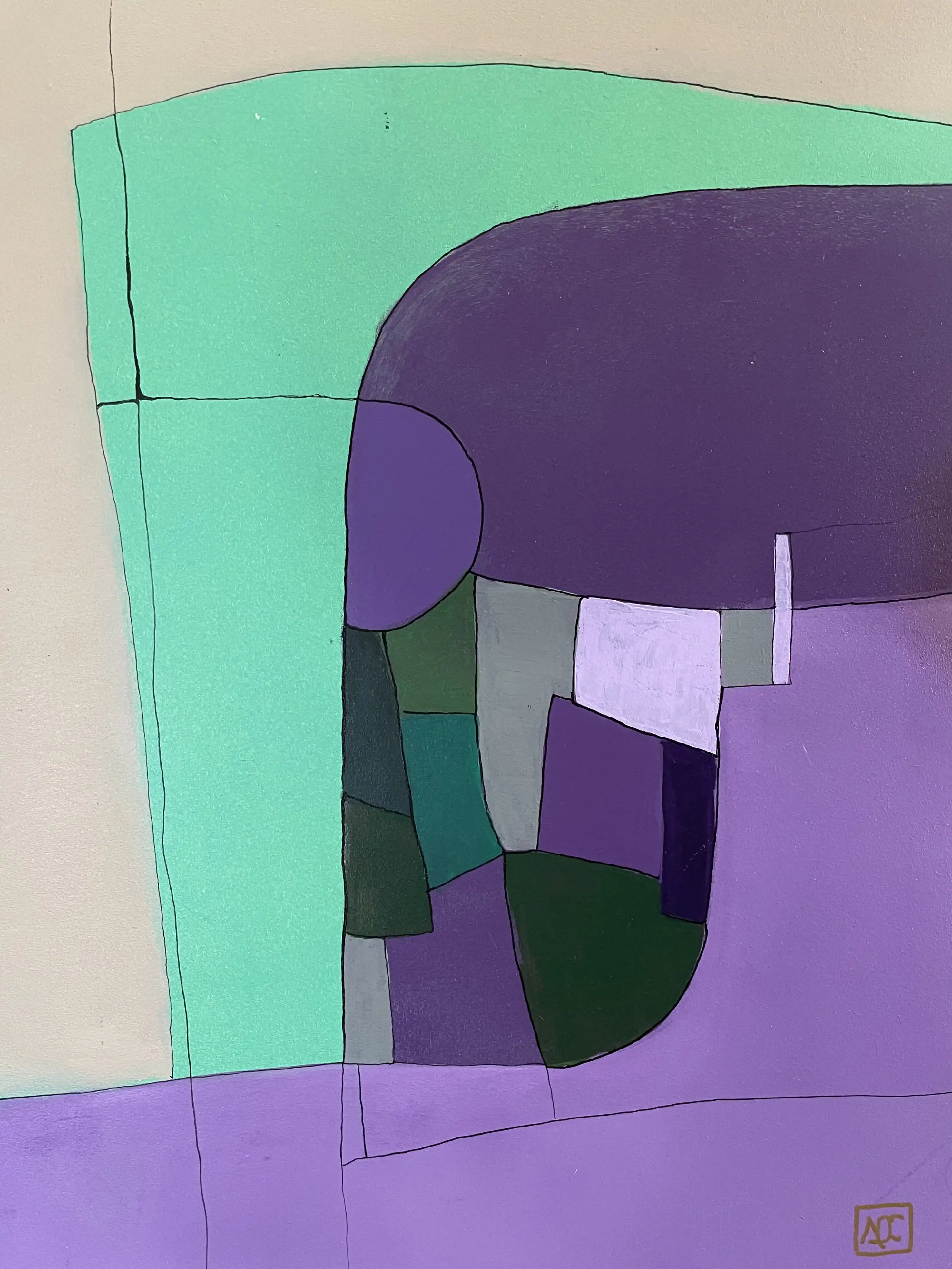
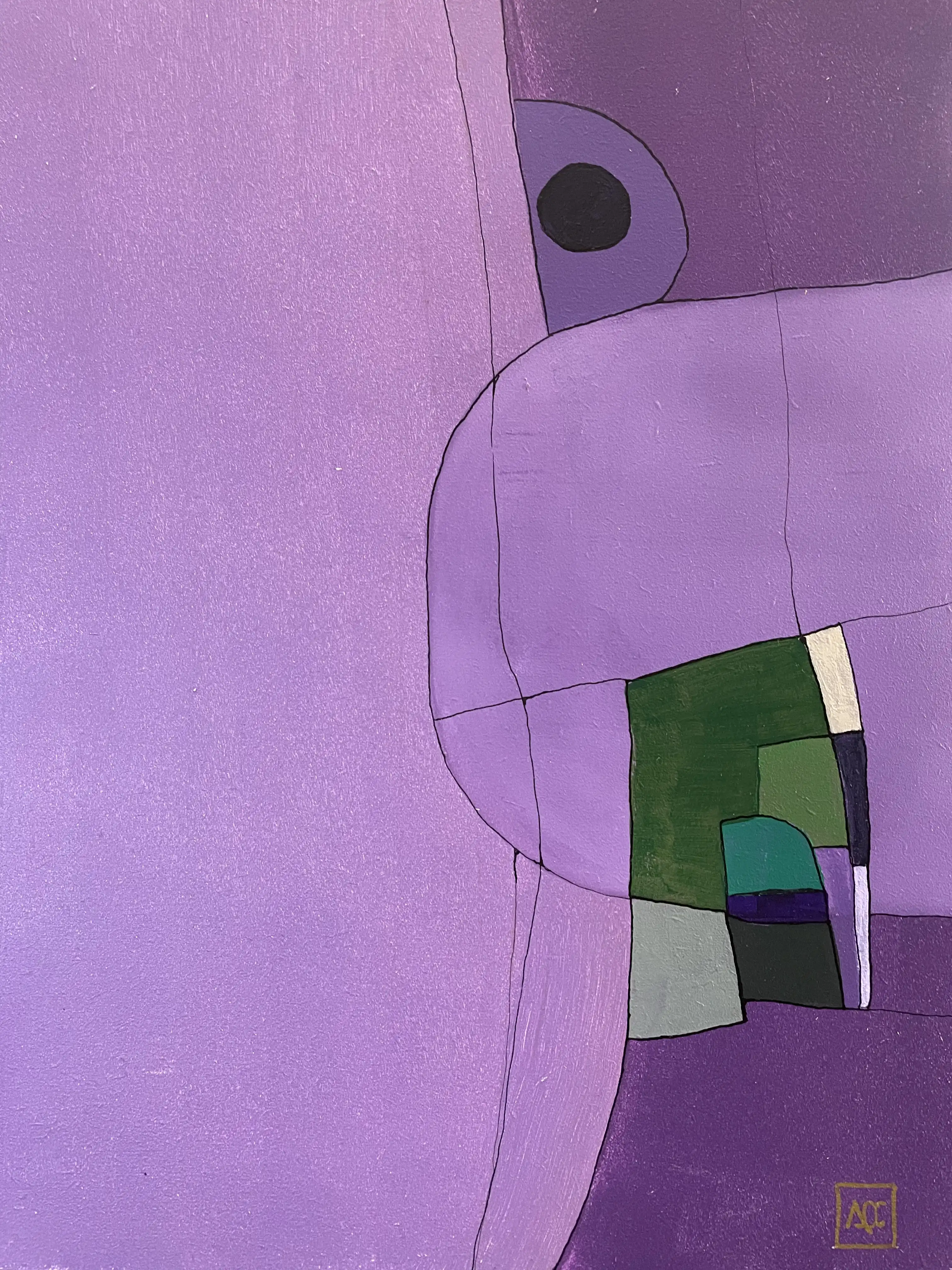
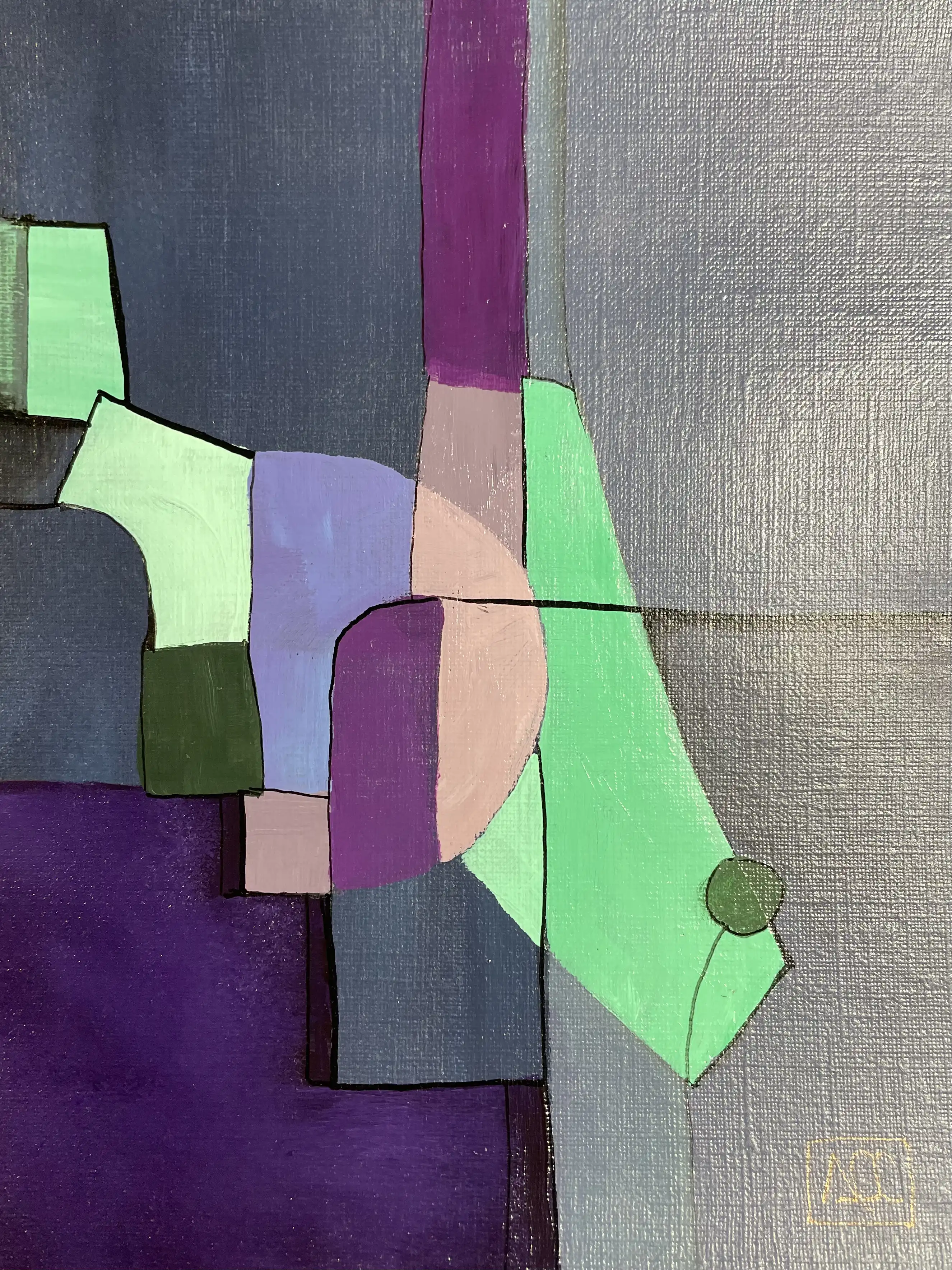
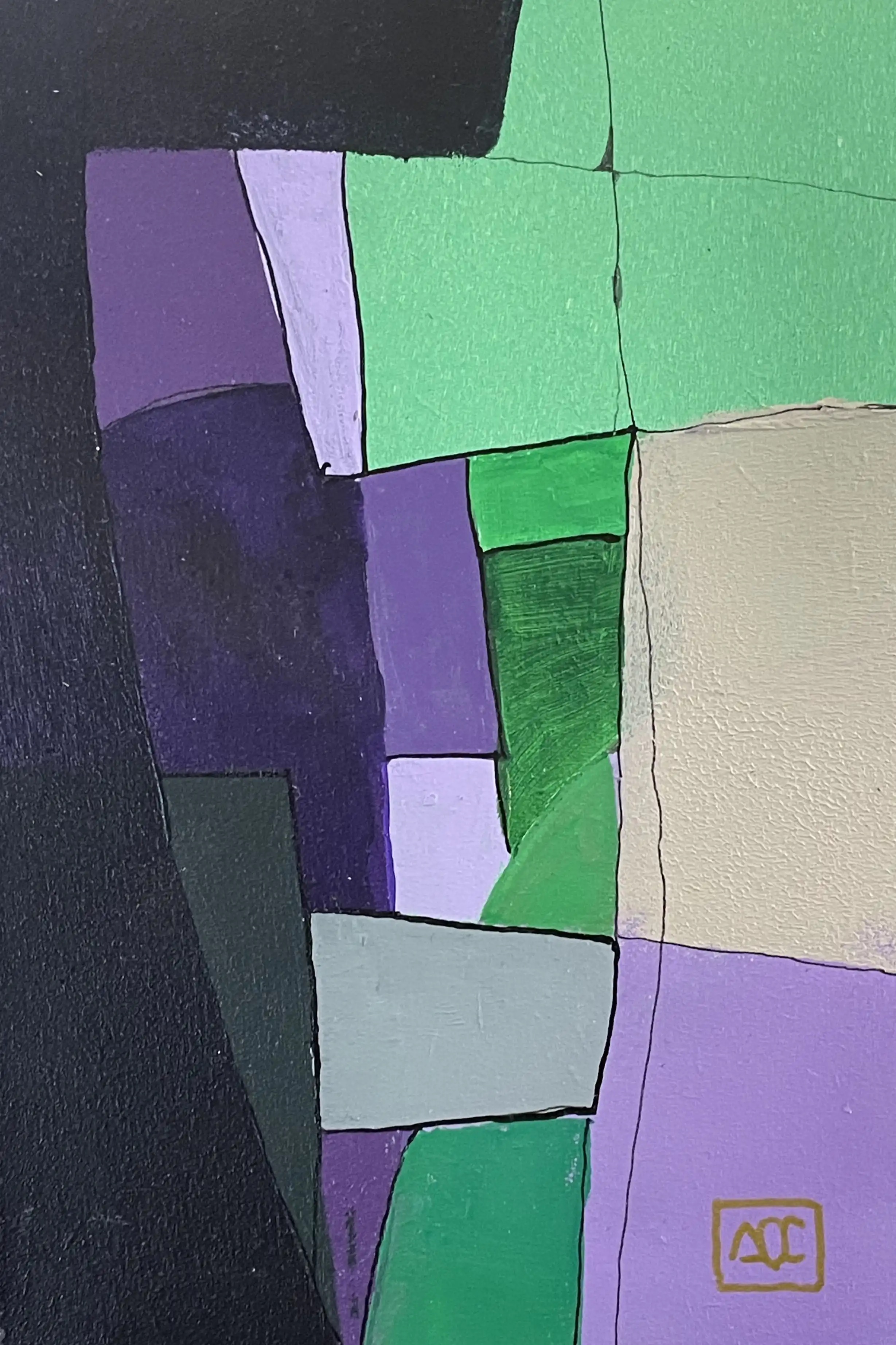
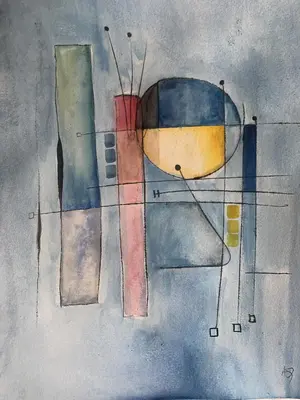
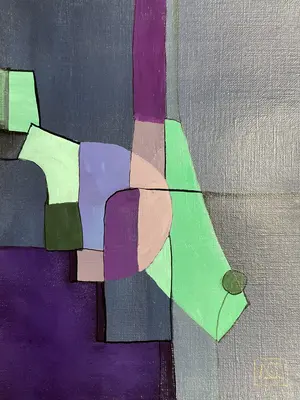
Eb minor is a series of 10 paintings by Arnaud Quercy, created between 2023 and 2025 in acrylic on paper, acrylic on wood panel and watercolor on paper. Formats range from 10×15 cm to 30×42 cm. 5 works are held in private collections (Paris, France, Tel Aviv, Israel). 3 remain available for acquisition at Art Quam Anima, 28 rue du Dragon, Paris. Works presented at: Transcendence – World Premiere of Ephemera Arts, Rencontres au Marché de la Création and Salon d'art contemporain – Metamorphose, Paris and 8 more.
Eb Minor is a chord of six flats, the enharmonic twin of D-sharp minor — a key so darkly voiced that composers have historically avoided it. Chopin, who feared no key signature, ventured there in his Sonata No. 1, Op. 4, finding in it a severity that later Romantic composers would largely sidestep. In jazz, Eb minor surfaces as a passing shadow, a momentary deepening within longer harmonic progressions. The triad — Eb, Gb, Bb — carries the weight of its six flats in every interval: a minor third pulling downward, a perfect fifth holding steady beneath.
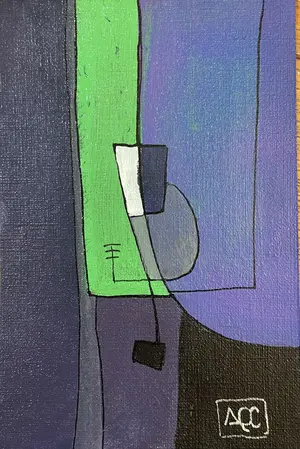
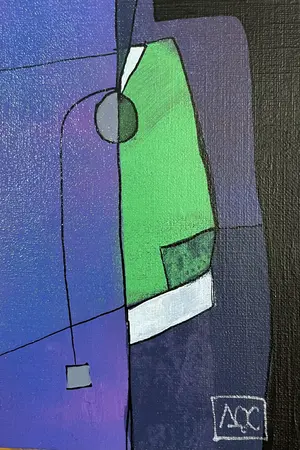
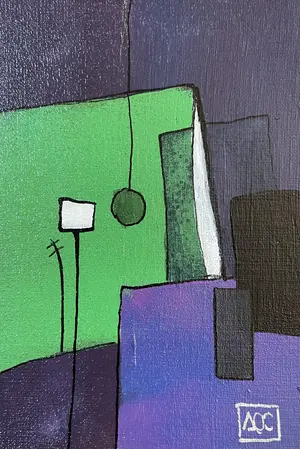
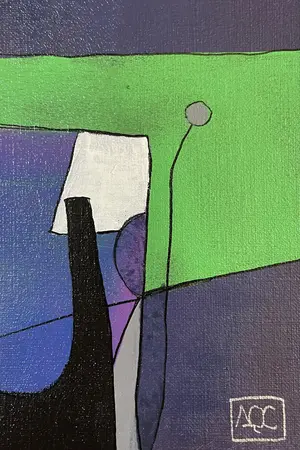
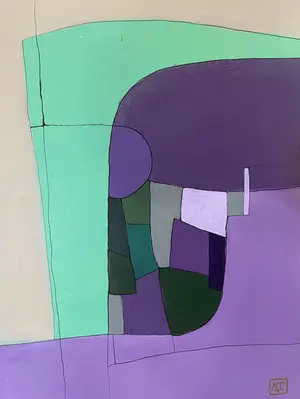
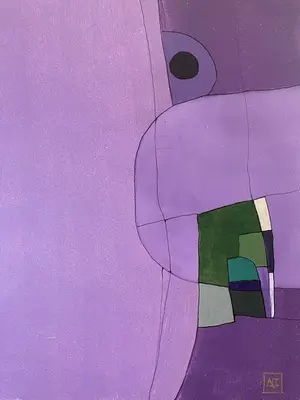
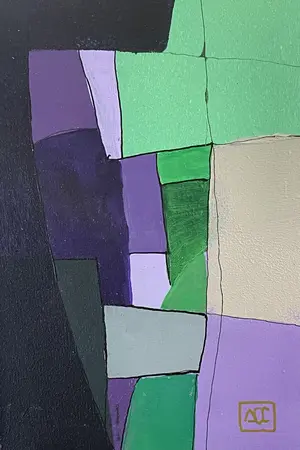
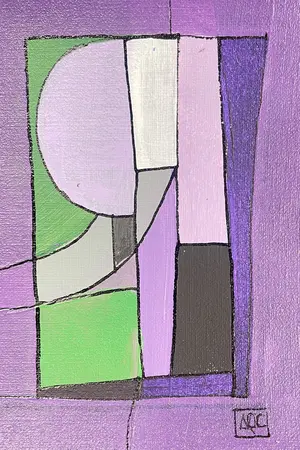
Through harmonic-chromatic, the Eb Minor triad produces an unusual and predominantly cool palette. The root, Eb, translates as blue-violet — dense and weighted in the low register, graying toward near-black below the staff, lightening toward lavender as it climbs. The minor third, Gb, brings green, an organic intrusion into an otherwise twilight field. The fifth, Bb, reads as violet, completing a triad of cool hues that rarely warm. Register shifts the colors predictably: low notes compress toward darkness, middle octaves carry the truest saturation, and the upper register bleaches everything toward pale silver.
Ten piano études make up the series, spanning from a 2023 watercolor that predates the Research on Harmony cycle to a 2025 closing study. All ten are marked Animé, legato — a lively pulse tempered by connected phrasing. Eight move in waltz time; two shift to quadruple meter with inverted-bell contours that dip before they rise. The dynamic range stays restrained: most studies sit at mp, three push to mf, and two withdraw to p. Note counts range from five to ten, spanning as little as four octaves and as much as six. Three variations — the third, fourth, and eighth — use only chord tones, producing paintings of pure cool color. The remaining seven admit non-chord accents in orange, yellow, and red-orange, warm sparks that briefly interrupt the prevailing blue-violet and green.
Variation 5 is the largest work in the series, painted on a 30 × 42 cm wood panel. It is also the quietest — the only p marking in waltz-free quadruple time, its phrase dipping into an orange accent at D3 before climbing through violet and green. "Soft, four beats, a valley that sinks before it rises" — from the artist’s description of Variation 5. At the opposite extreme, Variation 4 distills the chord to its minimum: five notes across four octaves, every pitch a chord tone, the waltz carrying just enough to state the harmony before falling silent. Between these poles, Variation 2 offers a striking structural choice — four consecutive Eb’s from octave 1 to octave 4 building "a monochrome column of cool darkness" before a single yellow-orange accent at A4 breaks the field.
Across the series, viewers encounter a palette that operates within narrow boundaries yet never feels monotonous. Blue-violet dominates the lower registers, compressing toward near-black at the sub-bass. Violet claims the midrange, where the fifth builds its truest saturation across multiple octaves. Green surfaces where the minor third appears — always cooler, always organic, sometimes shifting toward red-violet in the highest registers as the closing study reveals. The non-chord accents in orange and yellow sit like brief heated moments within the prevailing coolness, concentrated in the upper-middle register where they catch the eye before the chord tones reclaim the phrase. The visual rhythm across ten canvases is one of subtle variation within a fixed temperature: cool darkness rising toward pale light, the same three colors rearranged and reweighted with each study.
Eb Minor is among the most harmonically unified series in the Harmonic Crossing collection. Where other keys scatter warm and cool tones in roughly equal measure, this key insists on its coolness — three of ten studies contain no warm accents at all, and the rest admit them sparingly. Repetition here does not dilute the chord’s character; it reveals how much can shift within a single triad when register, density, and contour change around it. These works now live in collections from Paris to Tel Aviv, the twilight palette of six flats finding homes far from its remote key signature.
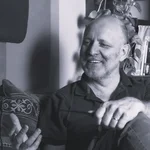
Arnaud Quercy is a Parisian artist working across painting, music, and sculpture. His practice is grounded in Ideamorphism — the principle that a work of art does not carry meaning, but triggers it. Each piece is engineered to diffract differently through each person who encounters it.
He creates and exhibits at Art Quam Anima, his gallery-atelier at 28 rue du Dragon, Saint-Germain-des-Prés, Paris.
Works — Eb minor
Related hubs
- Collection: Harmonic Crossing
Exhibitions 11
- Rencontres au Marché de la Création (2024-04-23 → 2024-12-31, Marché de la Création – Paris Montparnasse, Paris)
- Salon d'art contemporain – Metamorphose, Paris (2024-12-26 → 2025-01-05, Halle des Blancs Manteaux, Paris)
- Permanent Collection 2025 – Resonance in Form (2025-01-01 → 2025-12-31, arnaudquercy.art, Paris)
- Paris Studio Visit (2025-02-18 → 2025-02-18, Artist's Studio, Paris)
- Marché d'Art Contemporain – Seine Port (2025-05-17 → 2025-05-17, MAC Seine-Port, Seine-Port)
- Nuit des Artistes, St Germain-en-Laye, France (2025-05-24 → 2025-05-24, La Nuit des Artistes, Saint-Germain-en-Laye)
- Marché de l'Art de Saint-Germain-en-Laye, 17ème édition – France (2025-06-14 → 2025-06-14, Marché de l'Art, Saint-Germain-en-Laye)
- Salon d'art contemporain – Metamorphose 2025–2026, Paris (2025-12-26 → 2026-01-04, Halle des Blancs Manteaux, Paris)
- Art Quam Anima – Pre-opening (2026-01-31 → 2026-02-28, Art Quam Anima, Paris)
- Through the Aperture — Research on Harmony (2026-03-09 → 2026-04-30, Art Quam Anima, Paris)
- Transcendence – World Premiere of Ephemera Arts (2023-10-29 → 2023-11-15, Koblenzer Kunstverein e.V., Koblenz)
Other series in this collection 35
Documented at 1
Catalogue raisonné entries 10
- Eb minor - Reflexions 2
- Eb minor - Research on Harmony
- Eb minor - Research on Harmony - Variation 1
- Eb minor - Research on Harmony - Variation 2
- Eb minor - Research on Harmony - Variation 3
- Eb minor - Research on Harmony - Variation 4
- Eb Minor - Research on Harmony - Variation 5
- Eb Minor - Research on Harmony - Variation 6
- Eb Minor - Research on Harmony - Variation 7
- Eb Minor - Research on Harmony - Variations 8