Ab minor series — 9 Paintings by Arnaud Quercy
ART-SER0022
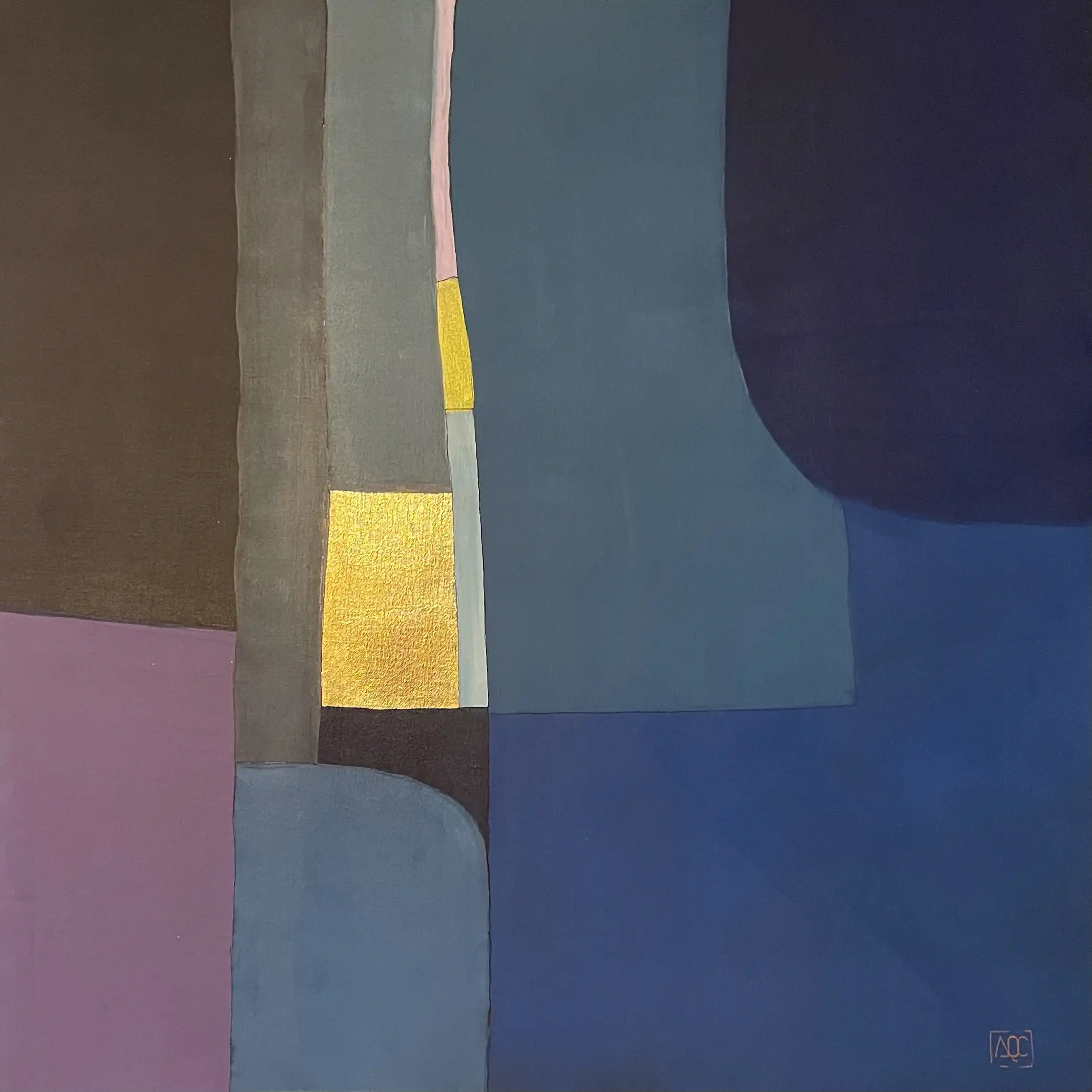
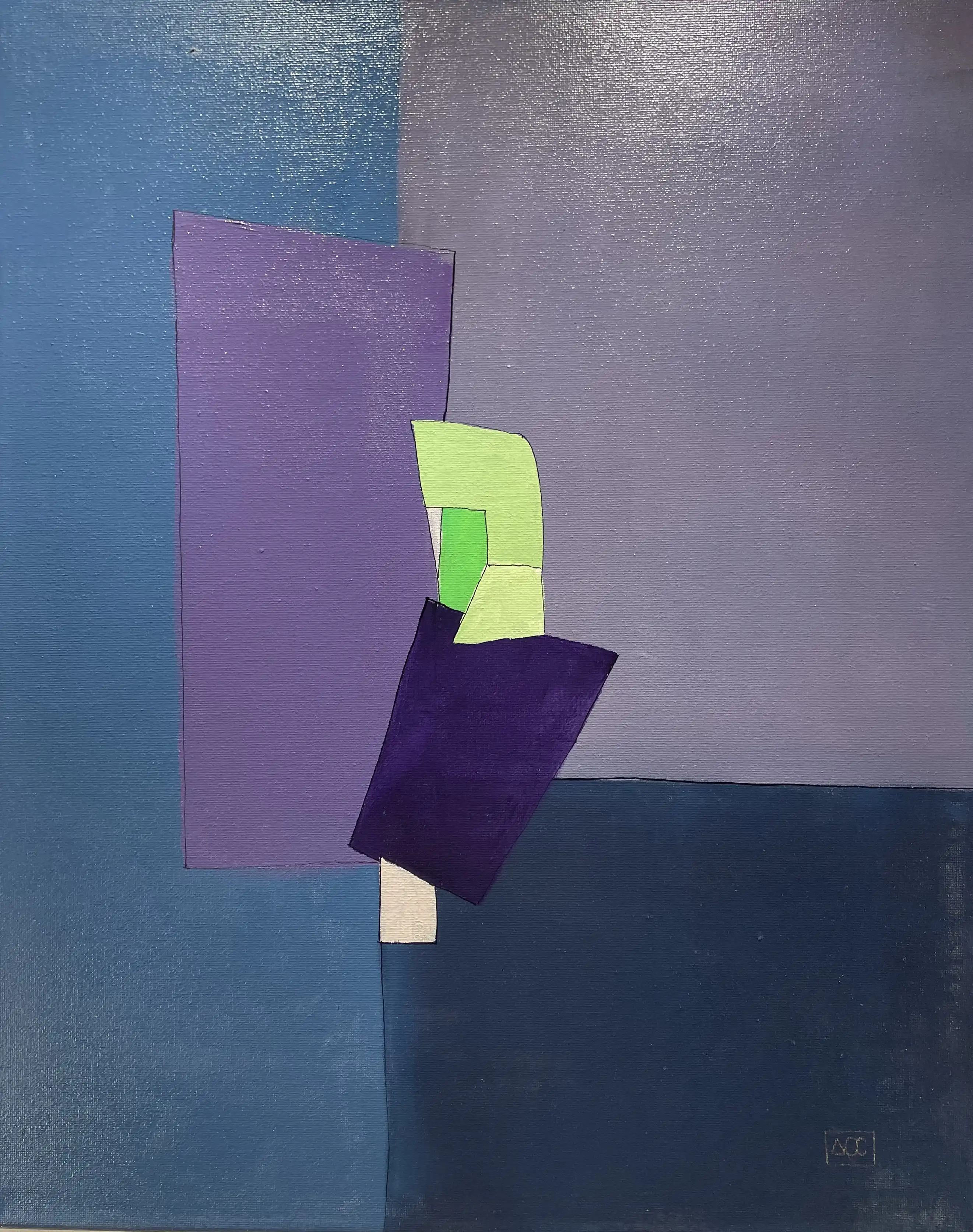
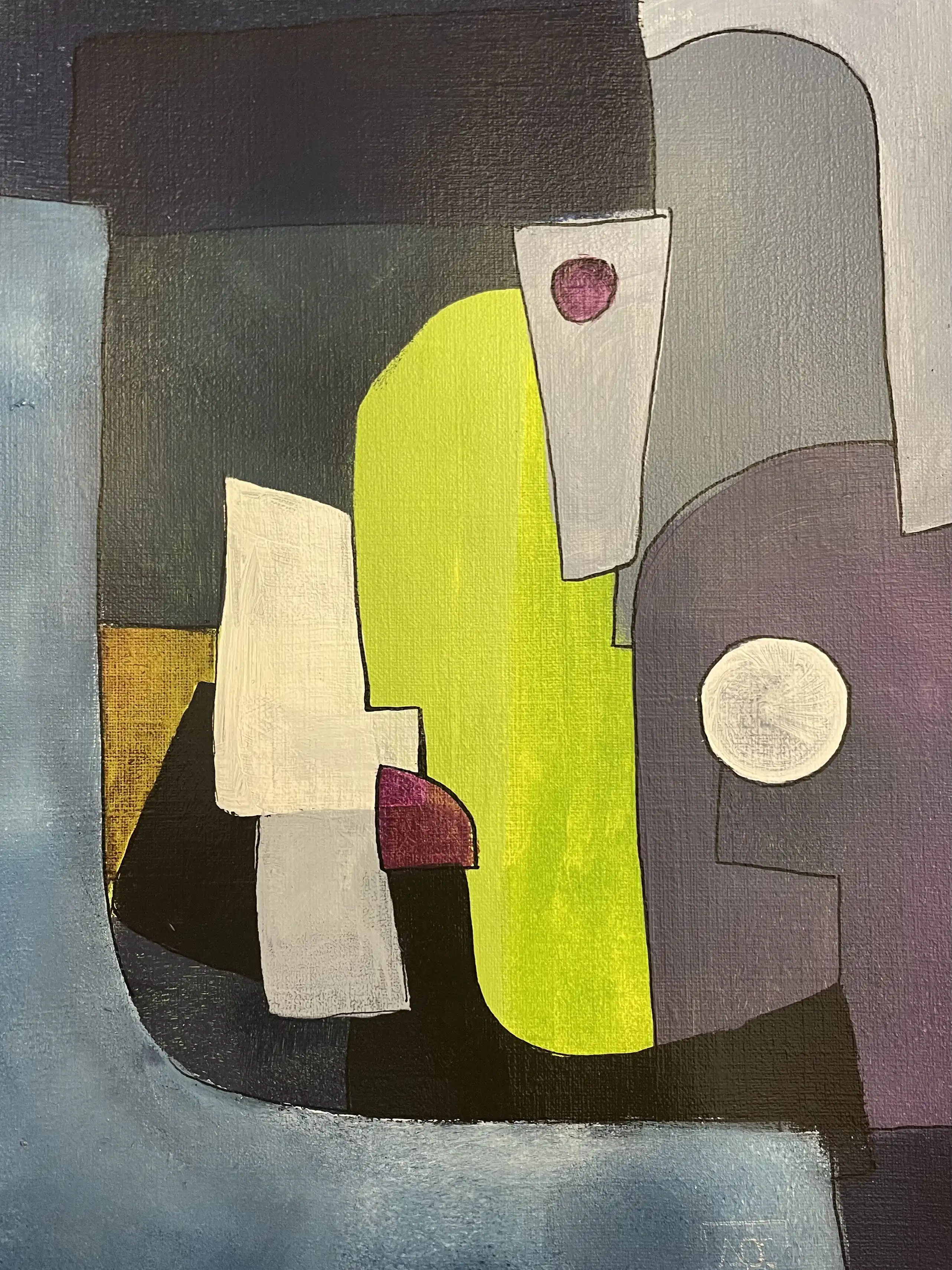
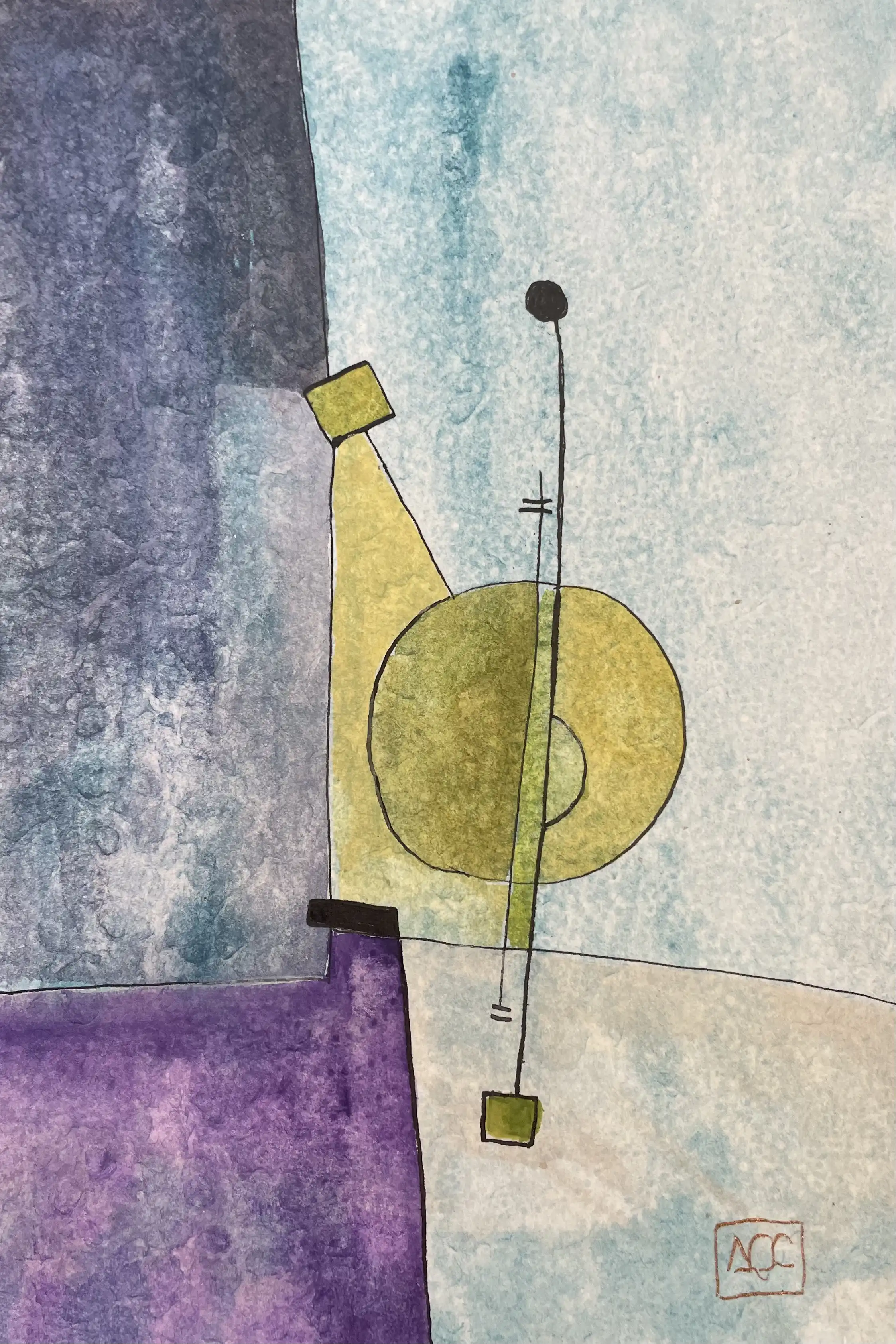
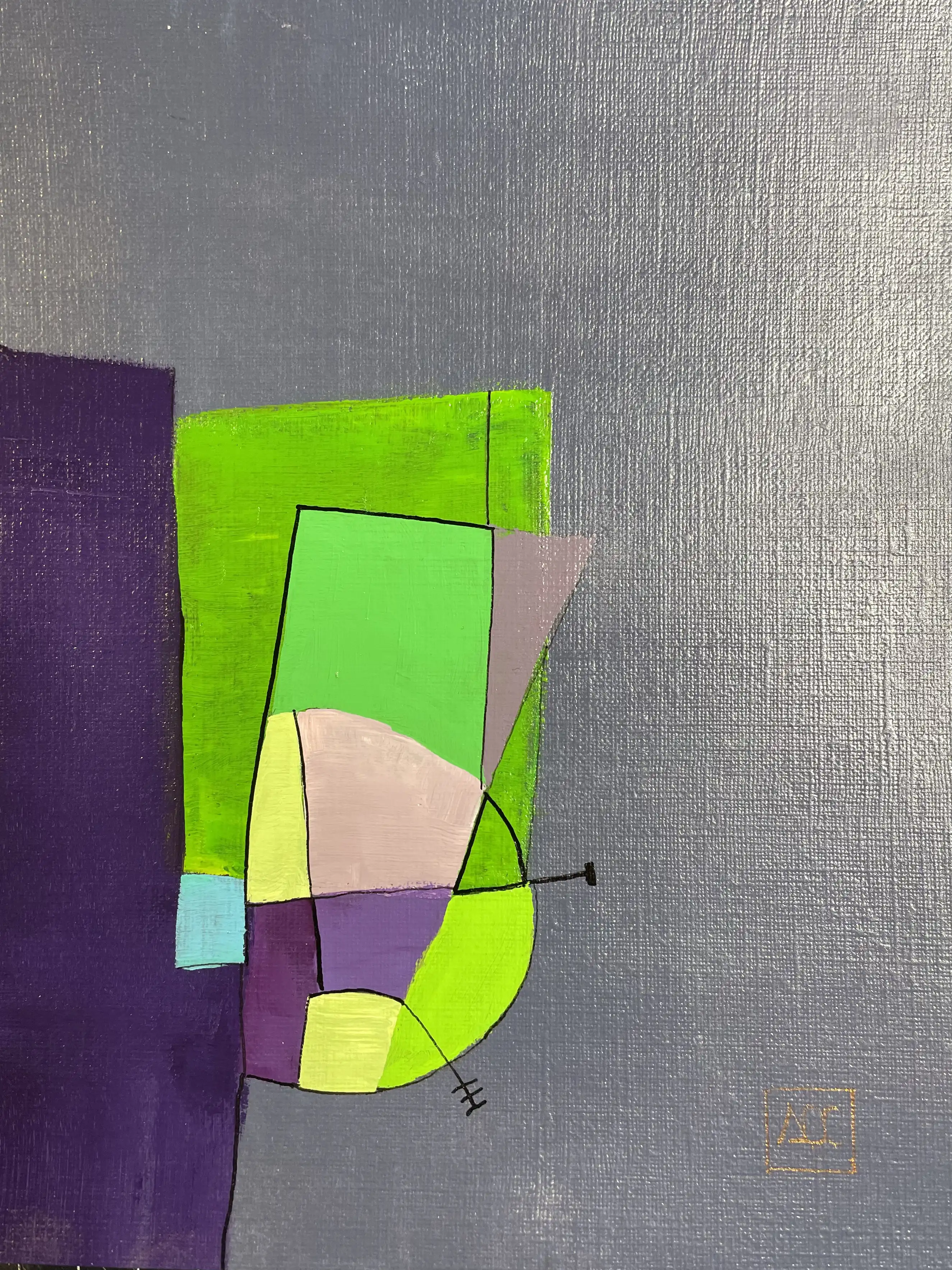
Ab minor is a series of 9 paintings by Arnaud Quercy, created between 2024 and 2025 in acrylic on canvas, acrylic on linen canvas, acrylic on paper and watercolor on paper. Formats range from 10×15 cm to 80×80 cm. 8 works are held in private collections (Paris, France, West Hollywood, USA, Mexico City, Mexico, Germany). 1 remains available for acquisition at Art Quam Anima, 28 rue du Dragon, Paris. Works presented at: Rencontres au Marché de la Création, Salon d'art contemporain – Metamorphose, Paris and Permanent Collection 2025 – Resonance in Form and 7 more.
Ab minor carries seven flats — the theoretical edge of tonal harmony, a key most composers approach with caution. Chopin wrote his Etude Op. 10 No. 4 in C-sharp minor, the enharmonic twin, preferring sharps to the same darkness. Rachmaninoff circled this territory in his Moments Musicaux, finding in these low-lying tonalities a gravity that pulls the music inward. The triad is built from Ab, B, and Eb: root, minor third, fifth. In the harmonic-chromatic ear, it is an almost entirely cool chord — blue, yellow-green, and blue-violet, with no warm color native to the harmony itself.
Through harmonic-chromatic, Ab translates as blue — a saturated, grounded blue in the middle octaves that deepens to near-black below the third octave and fades to silver above the sixth. B, the minor third, reads as yellow-green: the only trace of warmth in the triad, though it belongs to the cool side of the spectrum. In the upper register, where several of these études place it, yellow-green thins to near-white — the warmth dissolving into light. Eb, the fifth, produces blue-violet, the coolest tone in the chord. Together, the three notes create a palette of blues and blue-greens against which any outside tone — red, orange, yellow-orange — registers as a vivid intrusion.
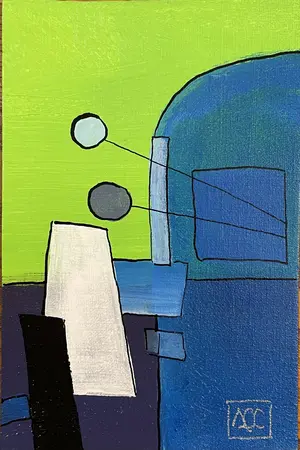
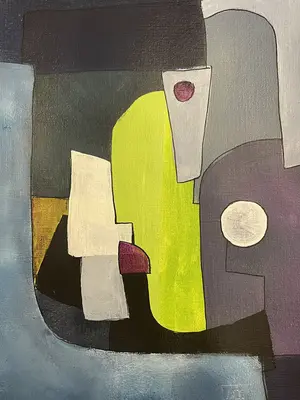
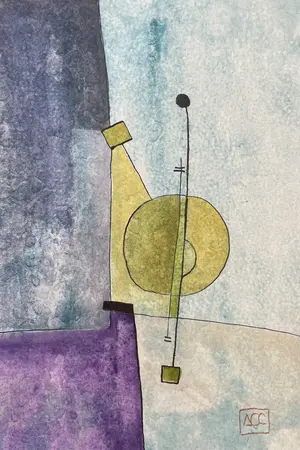
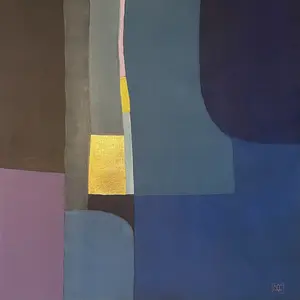
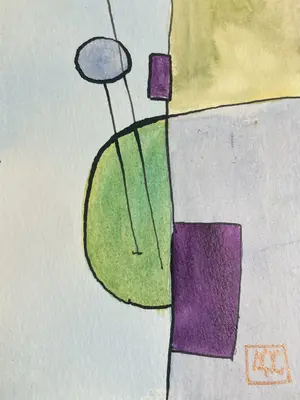
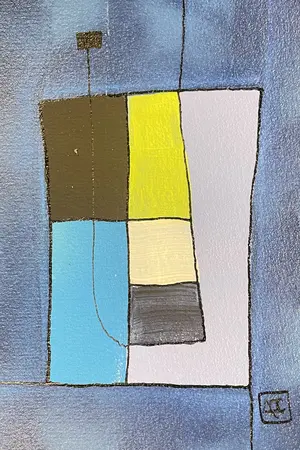
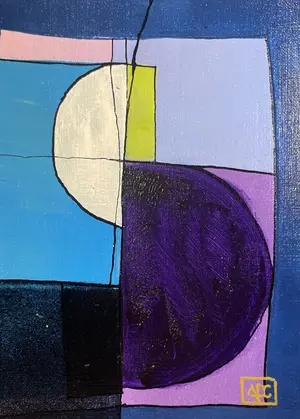
Quercy explores this cool triad across nine études, painted between 2024 and 2025 in acrylic and watercolor — on paper, on canvas, one on linen. The formats range from small studies at 10 by 15 cm to a single large-scale work at 80 by 80 cm. Most are played Animé in four, legato, at dynamics between piano and mezzo-forte. Three variations break into waltz time, and one — Variation 3 — slows to Modéré, the only departure from the series' prevailing forward motion. The note count runs from five to ten, the register spanning from Ab0 in the sub-bass to B7 at the extreme treble. Nearly every étude carries warm accents from outside the chord — reds, oranges, yellow-oranges that concentrate in the middle register — but two late variations shed all outside color entirely, presenting the pure triad alone.
Variation 4, the largest work in the series at 80 by 80 cm on linen, is also the darkest. The artist describes it as "inspired by the opening of Stravinsky's Firebird" — the chord gathered low in the bass, played at the softest dynamic in the cycle, the canvas nearly lightless. At the opposite extreme, Variation 2 reaches the widest span: ten notes from Ab0 to B7, seven full octaves, the densest texture and the most outside color. Between these poles, Variation 14 offers the purest statement — six ascending notes in waltz time, every tone belonging to the chord, "pure Ab minor on the canvas" without a single warm interruption.
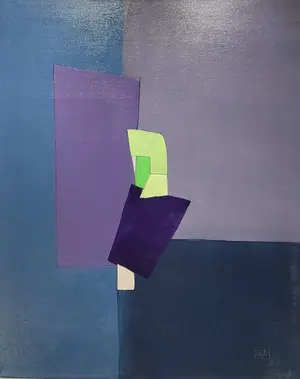
Across the canvases, blue and blue-violet dominate the lower and middle fields, deepening to near-black in the bass register. The yellow-green of B appears most often in the upper portion of each painting, lightening as it rises until it dissolves into near-white at the seventh octave. Warm accents — when they appear — cluster in a narrow band through the middle of the canvas, small nodes of red and orange amid the prevailing cool architecture. The visual rhythm shifts between density and sparseness: some études crowd ten notes into seven octaves, while others stretch five or six tones across the same field, leaving vast expanses of cool color uninterrupted. The two watercolors carry the lightest touch, the pigment thinning where the register climbs highest.
Ab minor reveals itself through restraint. Seven flats impose a discipline — there is no easy brightness here, no open string to ring sympathetically on the piano. The warmth that does appear comes from outside the chord, and the series tracks its presence and absence with the patience of a long study. By the final étude, where the full triad returns dense and cool across six octaves, the chord has been examined from sub-bass to extreme treble, from the lightest piano to a clear mezzo-forte, from pure triad to warm-accented complexity. These works have found their way into collections from Paris to West Hollywood to Mexico City — the coolest chord in this practice carried across three continents, its seven flats traveling far from the key signature.
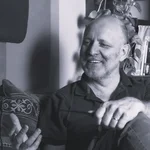
Arnaud Quercy is a Parisian artist working across painting, music, and sculpture. His practice is grounded in Ideamorphism — the principle that a work of art does not carry meaning, but triggers it. Each piece is engineered to diffract differently through each person who encounters it.
He creates and exhibits at Art Quam Anima, his gallery-atelier at 28 rue du Dragon, Saint-Germain-des-Prés, Paris.
Works — Ab minor
Related hubs
- Collection: Harmonic Crossing
Exhibitions 10
- Rencontres au Marché de la Création (2024-04-23 → 2024-12-31, Marché de la Création – Paris Montparnasse, Paris)
- Salon d'art contemporain – Metamorphose, Paris (2024-12-26 → 2025-01-05, Halle des Blancs Manteaux, Paris)
- Permanent Collection 2025 – Resonance in Form (2025-01-01 → 2025-12-31, arnaudquercy.art, Paris)
- Paris Studio Visit (2025-02-18 → 2025-02-18, Artist's Studio, Paris)
- Marché d'Art Contemporain – Seine Port (2025-05-17 → 2025-05-17, MAC Seine-Port, Seine-Port)
- Nuit des Artistes, St Germain-en-Laye, France (2025-05-24 → 2025-05-24, La Nuit des Artistes, Saint-Germain-en-Laye)
- Marché de l'Art de Saint-Germain-en-Laye, 17ème édition – France (2025-06-14 → 2025-06-14, Marché de l'Art, Saint-Germain-en-Laye)
- Salon d'art contemporain – Metamorphose 2025–2026, Paris (2025-12-26 → 2026-01-04, Halle des Blancs Manteaux, Paris)
- Art Quam Anima – Pre-opening (2026-01-31 → 2026-02-28, Art Quam Anima, Paris)
- Through the Aperture — Research on Harmony (2026-03-09 → 2026-04-30, Art Quam Anima, Paris)
Other series in this collection 35
Documented at 1
Catalogue raisonné entries 9
- Ab minor - Research on Harmony
- Ab minor - Research on Harmony - Variation 1
- Ab minor - Research on Harmony - Variation 2
- Ab minor - Research on Harmony - Variation 3
- Ab minor - Research on Harmony - Variation 5
- Ab minor - Research on Harmony - Variation 4
- Ab Minor - Research on Harmony - Variation 6
- Ab Minor - Research on Harmony - Variations 14
- Ab Minor - Research on Harmony - Variations 15