Ab Major 9 series — 8 Paintings by Arnaud Quercy
ART-SER0021
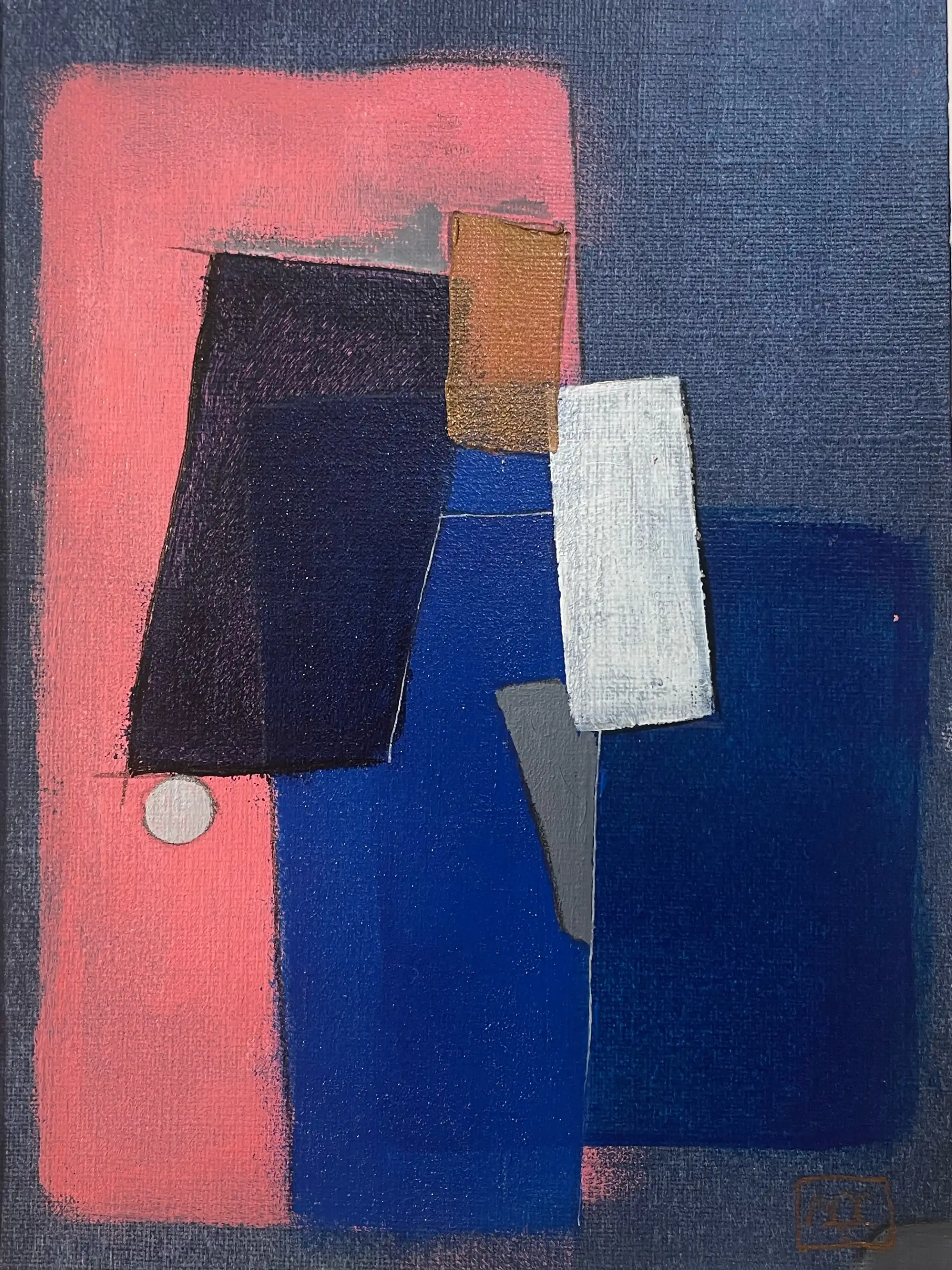
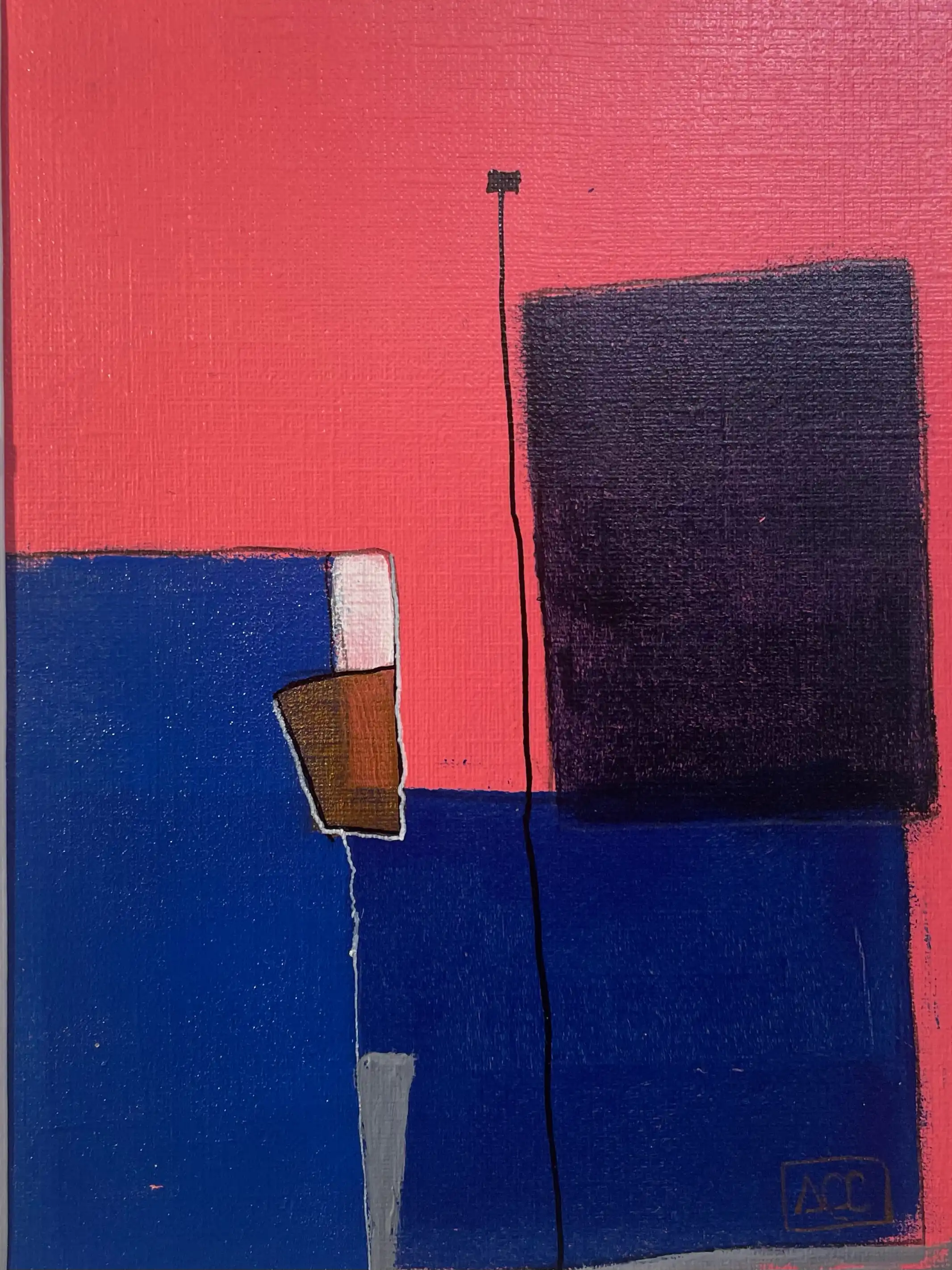
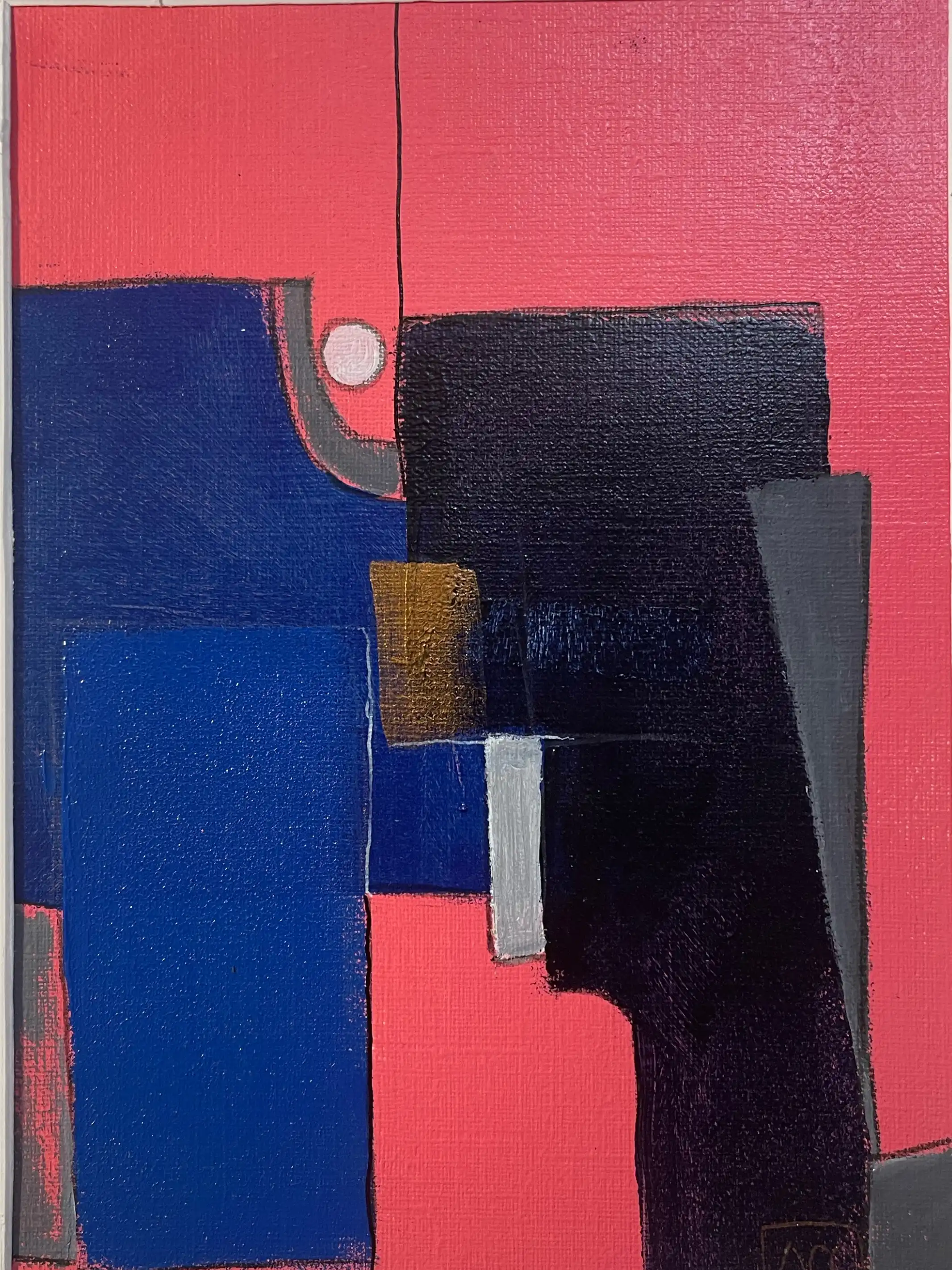
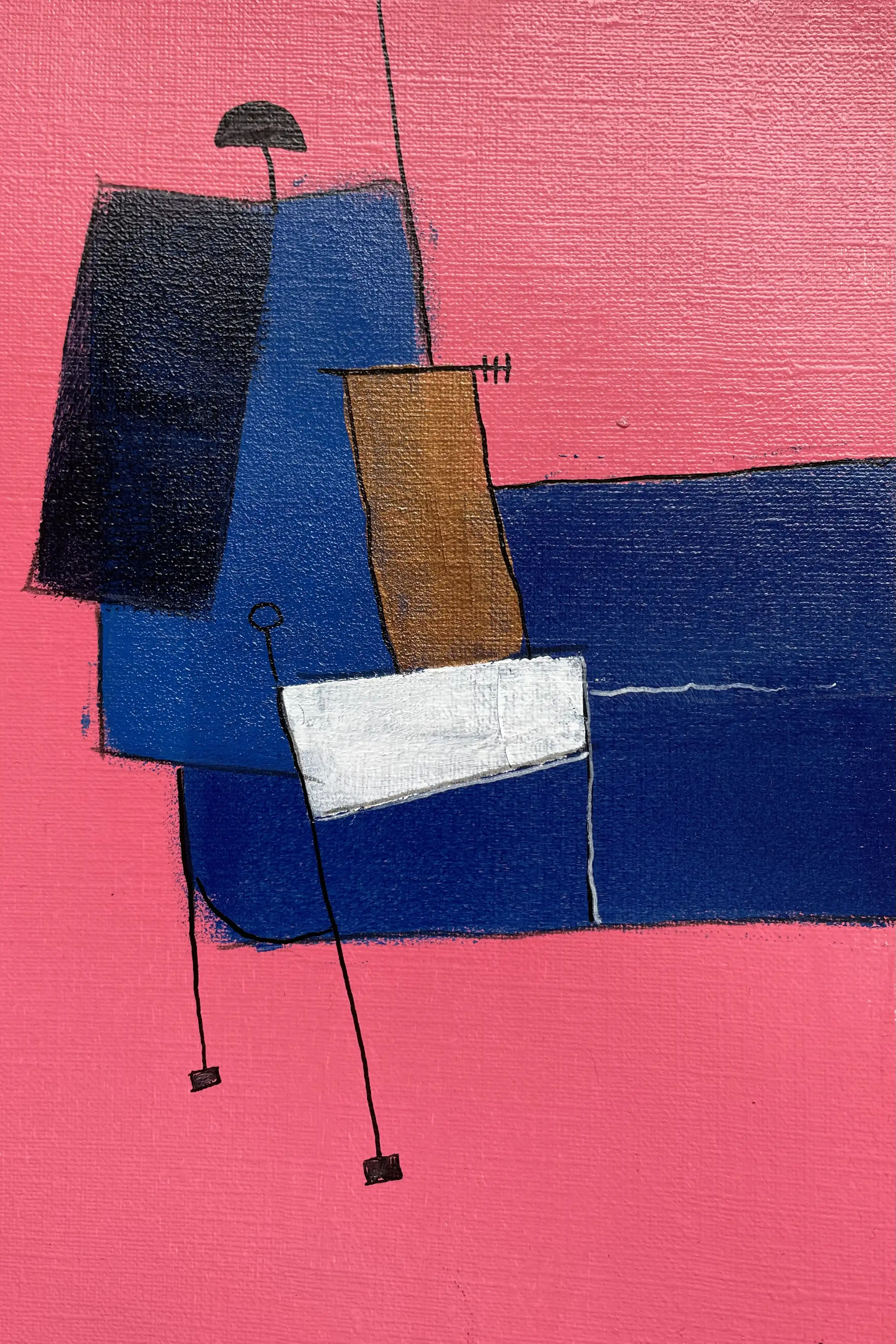
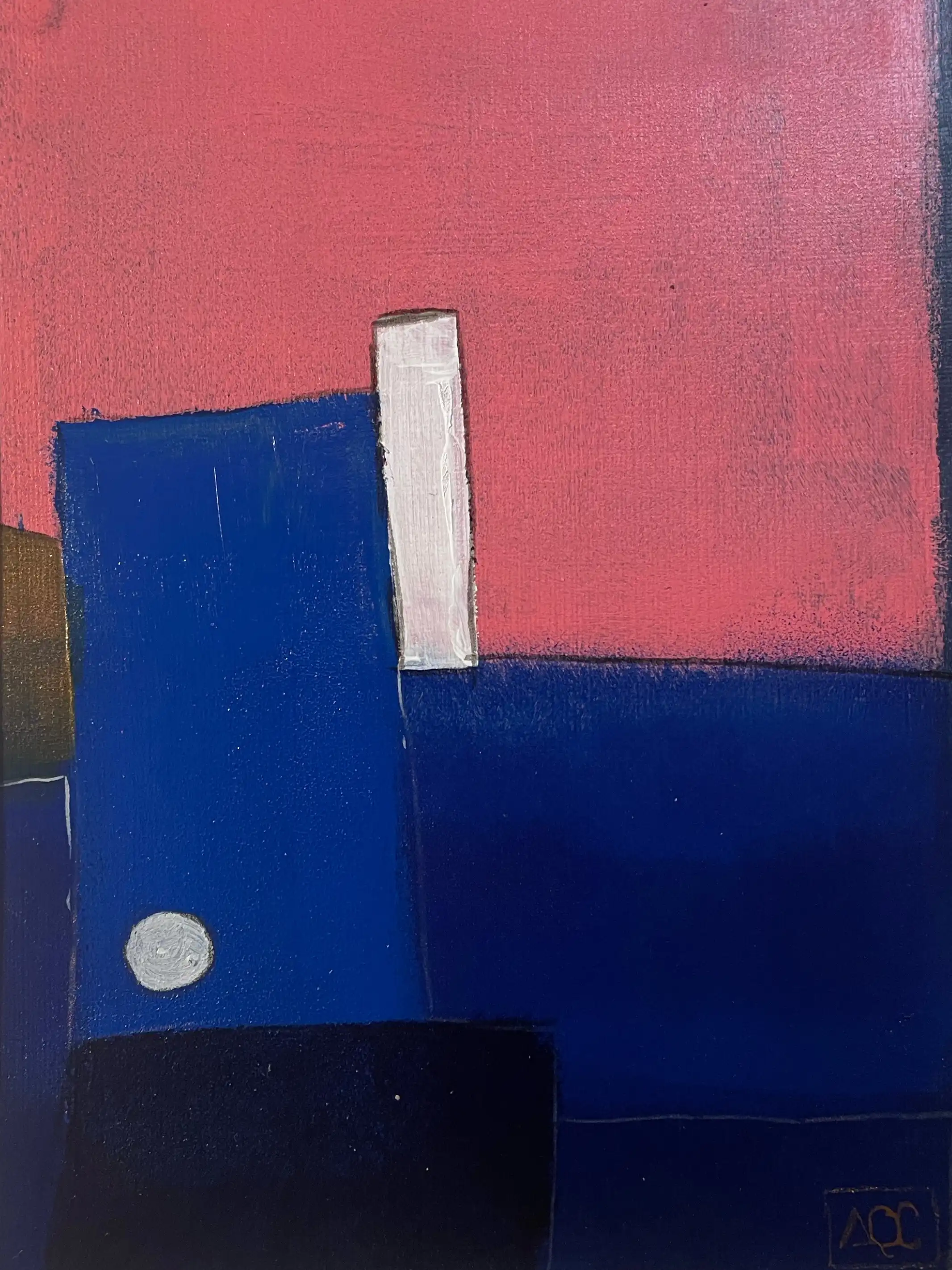
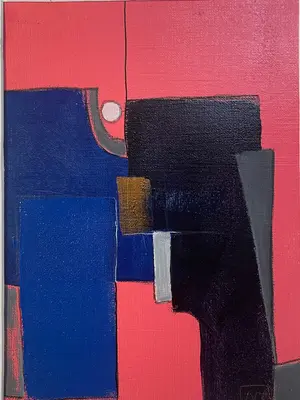
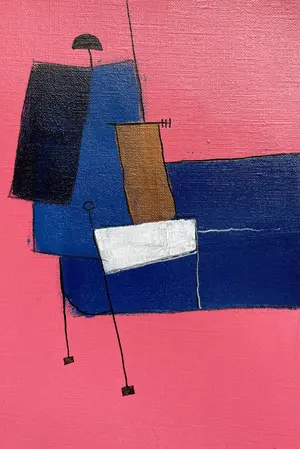
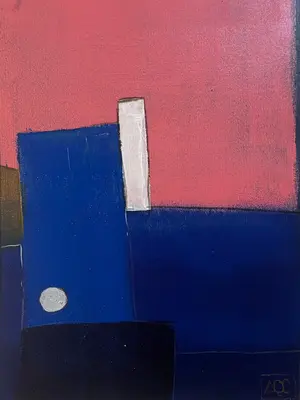
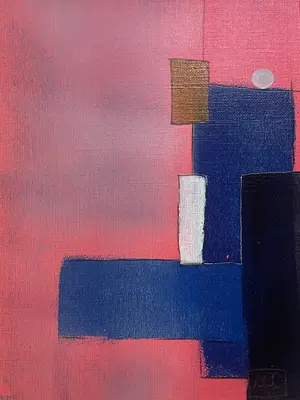
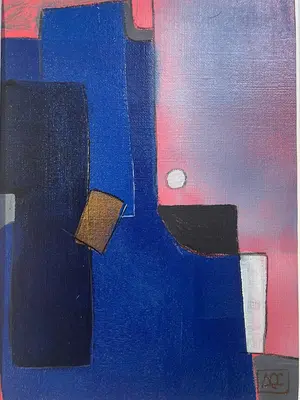
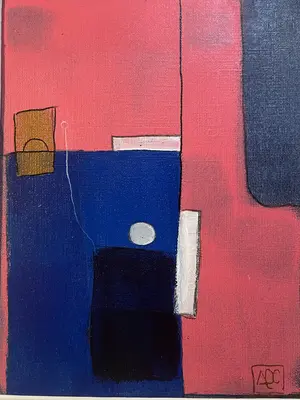
Ab Major 9 is a series of 8 paintings by Arnaud Quercy, created in 2024 in acrylic on paper. Format: 14.8×21 cm. All 8 works in this series are held in private collections (Tel Aviv, Israel, New York, USA, Paris, France, Gagny, France, Montigny-le-Bretonneux, France, Canada). Works presented at: Rencontres au Marché de la Création, Salon d'art contemporain – Metamorphose, Paris and Permanent Collection 2025 – Resonance in Form and 7 more.
Ab major ninth — Ab, C, Eb, G, Bb — is a five-note chord that belongs to the impressionist tradition. It carries the cool gravity of Ab major but extends it with a major seventh and ninth, adding the warmth and ambiguity that Debussy and Ravel wrote into the harmonic language of the early twentieth century. Gil Evans scored ninth chords like this one in open spacings across brass sections; bossa nova guitarists let them ring in the middle of the neck, unresolved and content. The major ninth does not demand resolution. It rests inside its own richness.
Through harmonic-chromatic, each of the five pitch classes translates to a distinct color family. Ab, the root, reads as blue — dark and anchoring in the low register, near-black below the third octave. C, the third, burns red, brightening as it climbs and bleaching to silver above C6. Eb, the fifth, carries blue-violet, a cooler presence that steadies the harmony. G, the major seventh, brings red-orange — the warmest tone in the chord, the color that distinguishes the ninth chord from the triad. Bb, the ninth, translates to violet, a twilight hue that crowns the upper extensions. The palette as a whole moves from cool to warm and back: blue at the foundation, violet and red-orange through the middle, red fading to silver at the top.
Arnaud Quercy explores this five-color palette across eight études, all painted in 2024, acrylic on paper at 14.8 by 21.0 centimetres. Every work is marked Animé, mp, legato — a forward-moving pulse at a moderate dynamic, the notes connected and singing. Five are waltzes in three, three move in four with a walking tread. The note count ranges from six to nine, and the register spans from Ab1 near the bottom of the keyboard to C7 at its upper edge. The character shifts between ascending phrases that climb from darkness to silver and valley shapes that dip into the deep bass before returning. One variation introduces a non-chord tone — a yellow-orange A-natural that sits a semitone above the root, the only warm intruder in an otherwise complete harmony. The series holds together as a set of questions asked of the same five-note chord: how wide, how dense, how dark?
Three works mark the poles. The opening étude declares the full chord across nine notes and five octaves, every extension present, the waltz carrying the phrase from near-black to silver — what the artist describes as "the full chord declared with all its extensions, the waltz carrying every color from floor to ceiling." Variation 3 stretches widest, seven notes across six octaves, the third appearing three times as it climbs and fades — red to pink to silver, the color dissolving at the keyboard's edge. Variation 5 distils the chord to six notes, each pitch class present exactly once, the middle register compact within a single octave — "the chord complete at its most economical, six notes holding the entire harmony."
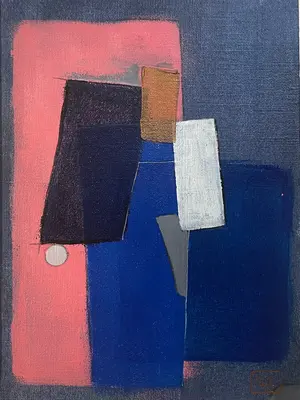
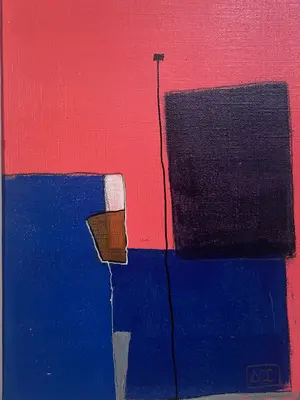
On the canvas, the series reads as a study in cool architecture warmed from within. Blue and blue-violet anchor the bass in every painting, the root and fifth establishing a foundation that ranges from near-black to deep indigo depending on the octave. Violet threads through the middle registers wherever the ninth appears, lending a dusky quality that distinguishes these works from the brighter triadic series. The red-orange of the seventh — G3, G4, G5 — provides the warmest fields, glowing at the centre of the canvas like embers in a cool room. Red appears where the third climbs into the upper registers, shifting toward silver at C6 and C7. The overall impression is of twilight color: not dark, not bright, but saturated and complex, the five families coexisting in a balance that shifts with each variation.
The major ninth chord reveals its character through repetition. Eight variations are enough to show that Ab major ninth is not a single mood but a spectrum — from the compressed density of Variation 2, where the chord folds into barely four octaves of lower-register warmth, to the open verticality of Variation 3, where long leaps scatter the tones across the full keyboard. Seven of the eight études have found their way into collections from Tel Aviv to New York to Paris and across France and Canada — the chord's cool richness travelling widely, its five colors carrying the impressionist tradition into pigment.
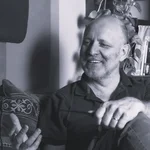
Arnaud Quercy is a Parisian artist working across painting, music, and sculpture. His practice is grounded in Ideamorphism — the principle that a work of art does not carry meaning, but triggers it. Each piece is engineered to diffract differently through each person who encounters it.
He creates and exhibits at Art Quam Anima, his gallery-atelier at 28 rue du Dragon, Saint-Germain-des-Prés, Paris.
Works — Ab Major 9
Related hubs
- Collection: Harmonic Crossing
Exhibitions 10
- Rencontres au Marché de la Création (2024-04-23 → 2024-12-31, Marché de la Création – Paris Montparnasse, Paris)
- Salon d'art contemporain – Metamorphose, Paris (2024-12-26 → 2025-01-05, Halle des Blancs Manteaux, Paris)
- Permanent Collection 2025 – Resonance in Form (2025-01-01 → 2025-12-31, arnaudquercy.art, Paris)
- Paris Studio Visit (2025-02-18 → 2025-02-18, Artist's Studio, Paris)
- Marché d'Art Contemporain – Seine Port (2025-05-17 → 2025-05-17, MAC Seine-Port, Seine-Port)
- Nuit des Artistes, St Germain-en-Laye, France (2025-05-24 → 2025-05-24, La Nuit des Artistes, Saint-Germain-en-Laye)
- Marché de l'Art de Saint-Germain-en-Laye, 17ème édition – France (2025-06-14 → 2025-06-14, Marché de l'Art, Saint-Germain-en-Laye)
- Salon d'art contemporain – Metamorphose 2025–2026, Paris (2025-12-26 → 2026-01-04, Halle des Blancs Manteaux, Paris)
- Art Quam Anima – Pre-opening (2026-01-31 → 2026-02-28, Art Quam Anima, Paris)
- Through the Aperture — Research on Harmony (2026-03-09 → 2026-04-30, Art Quam Anima, Paris)
Other series in this collection 35
Documented at 1
Catalogue raisonné entries 8
- Ab Major 9 - Research on Harmony
- Ab Major 9 - Research on Harmony - Variation 1
- Ab Major 9 - Research on Harmony - Variation 2
- Ab Major 9 - Research on Harmony - Variation 3
- Ab Major 9 - Research on Harmony - Variation 4
- Ab Major 9 - Research on Harmony - Variation 5
- Ab Major 9 - Research on Harmony - Variation 6
- Ab Major 9 - Research on Harmony - Variation 7