F# minor series — 9 Paintings by Arnaud Quercy
ART-SER0014
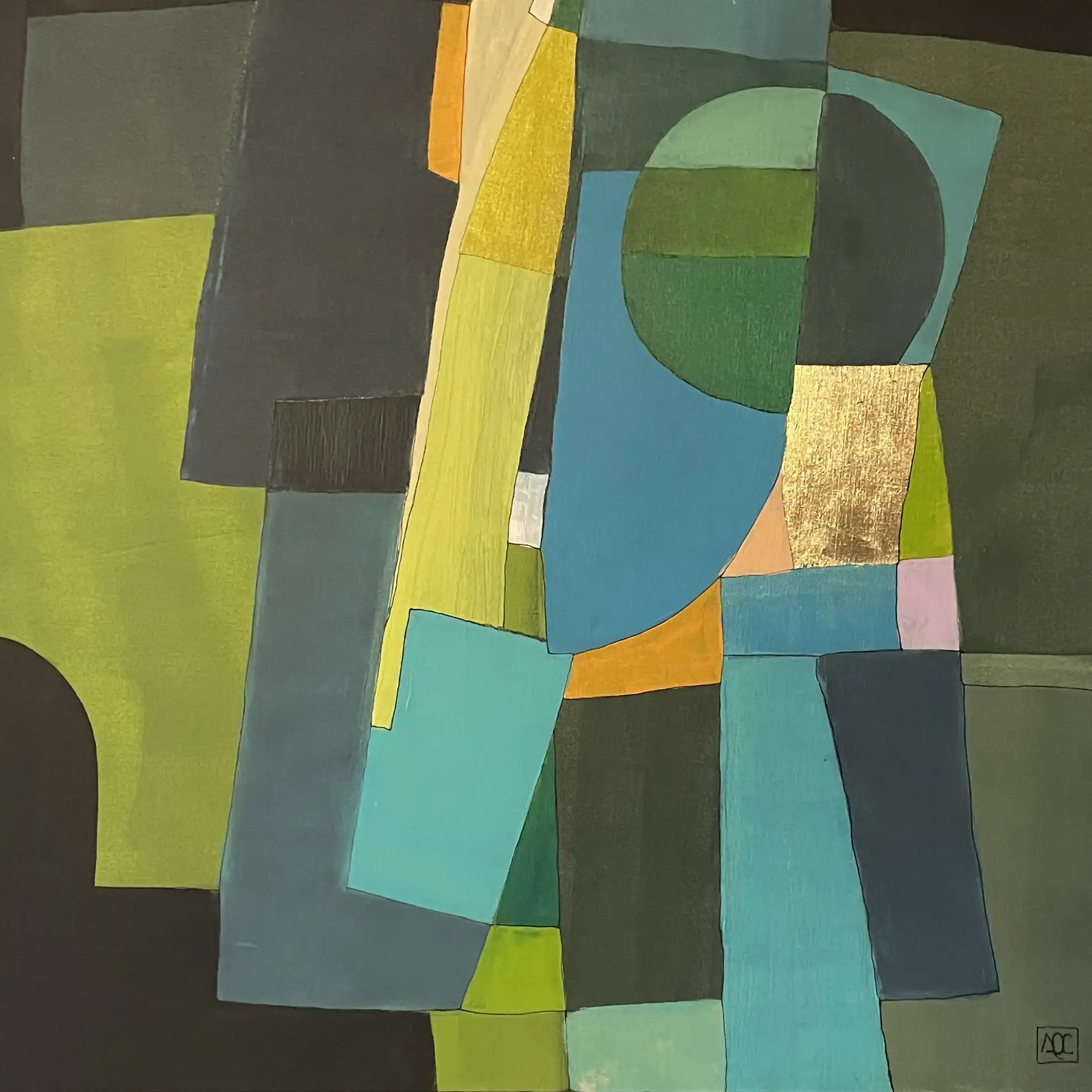
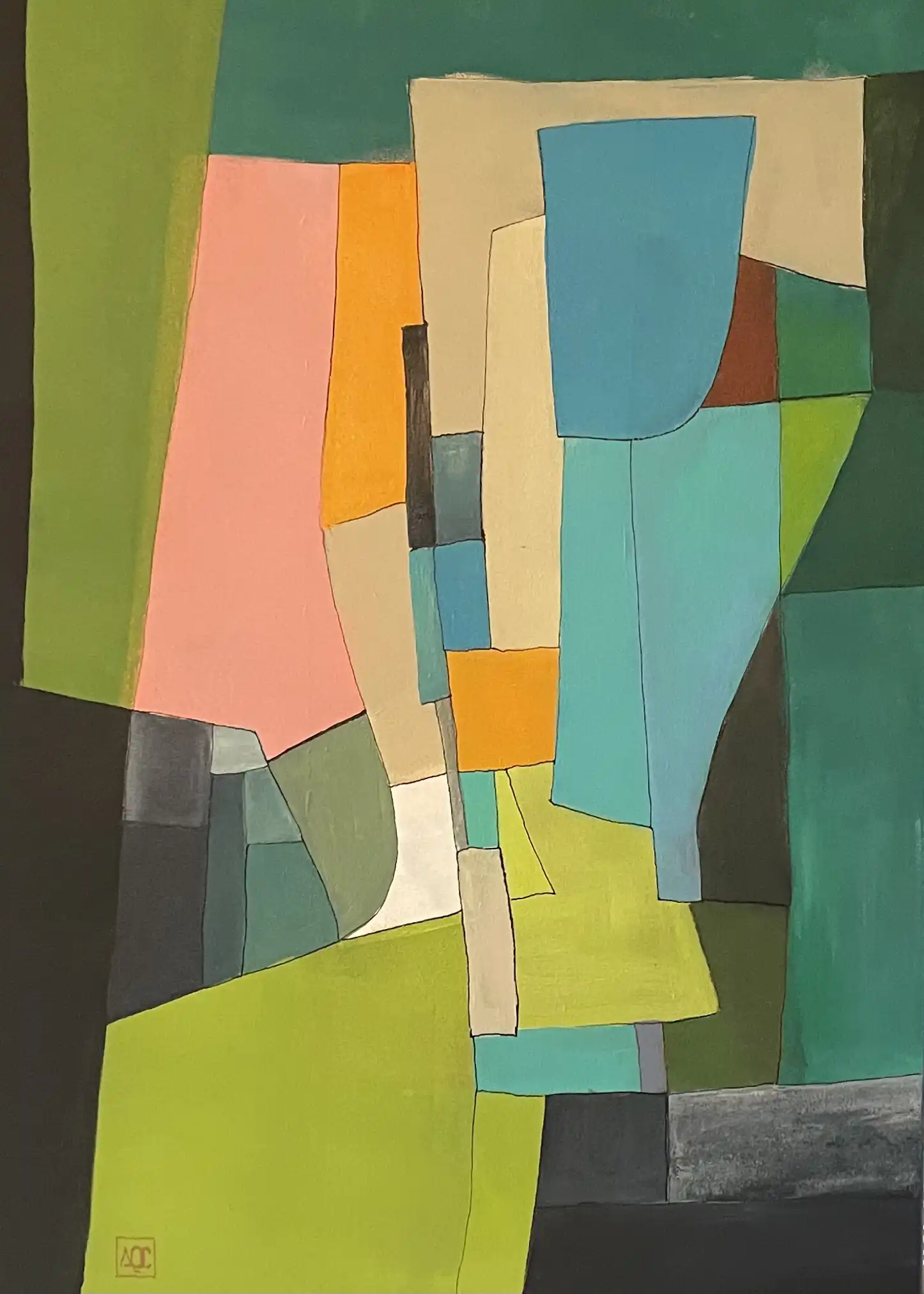
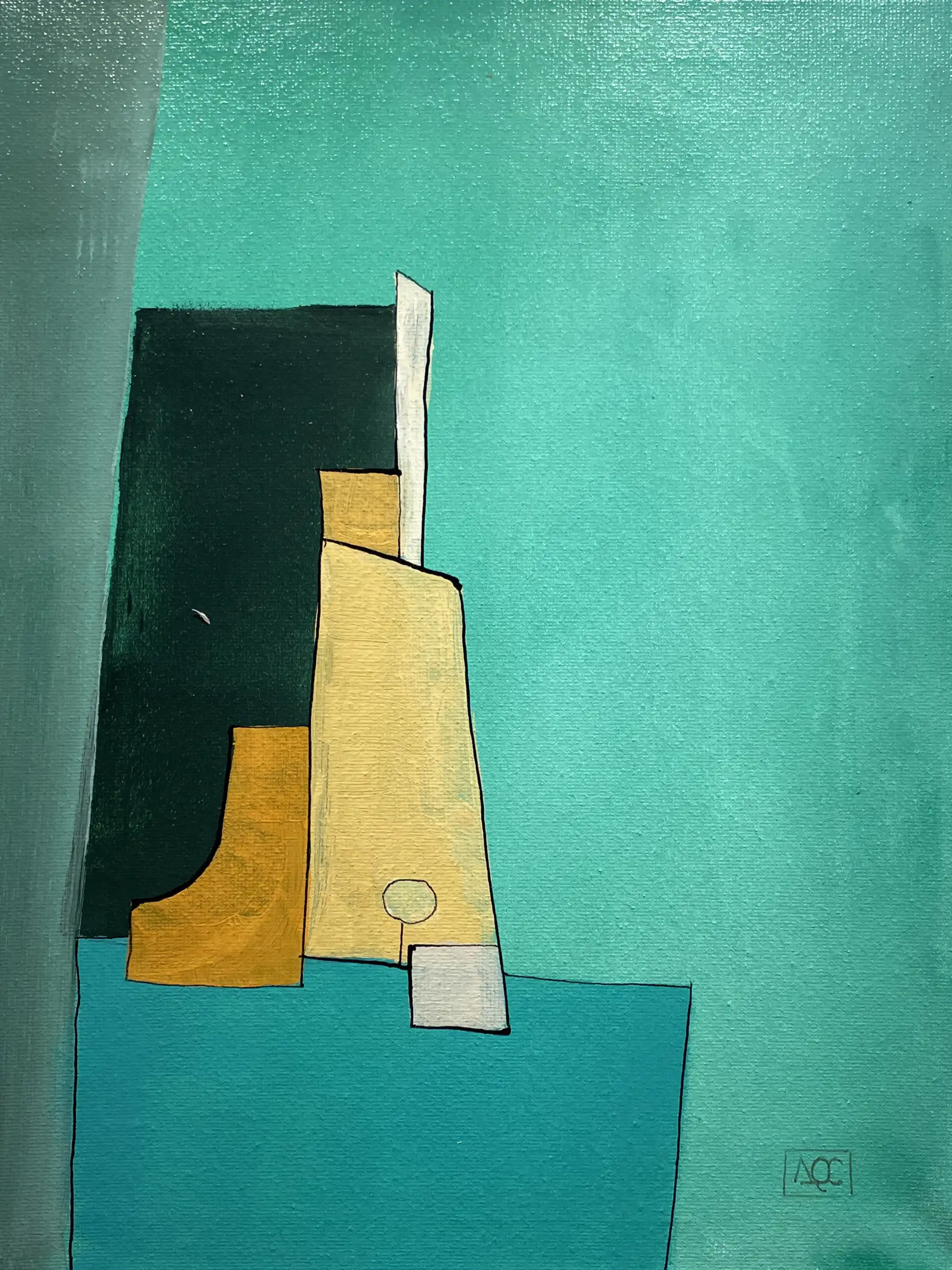
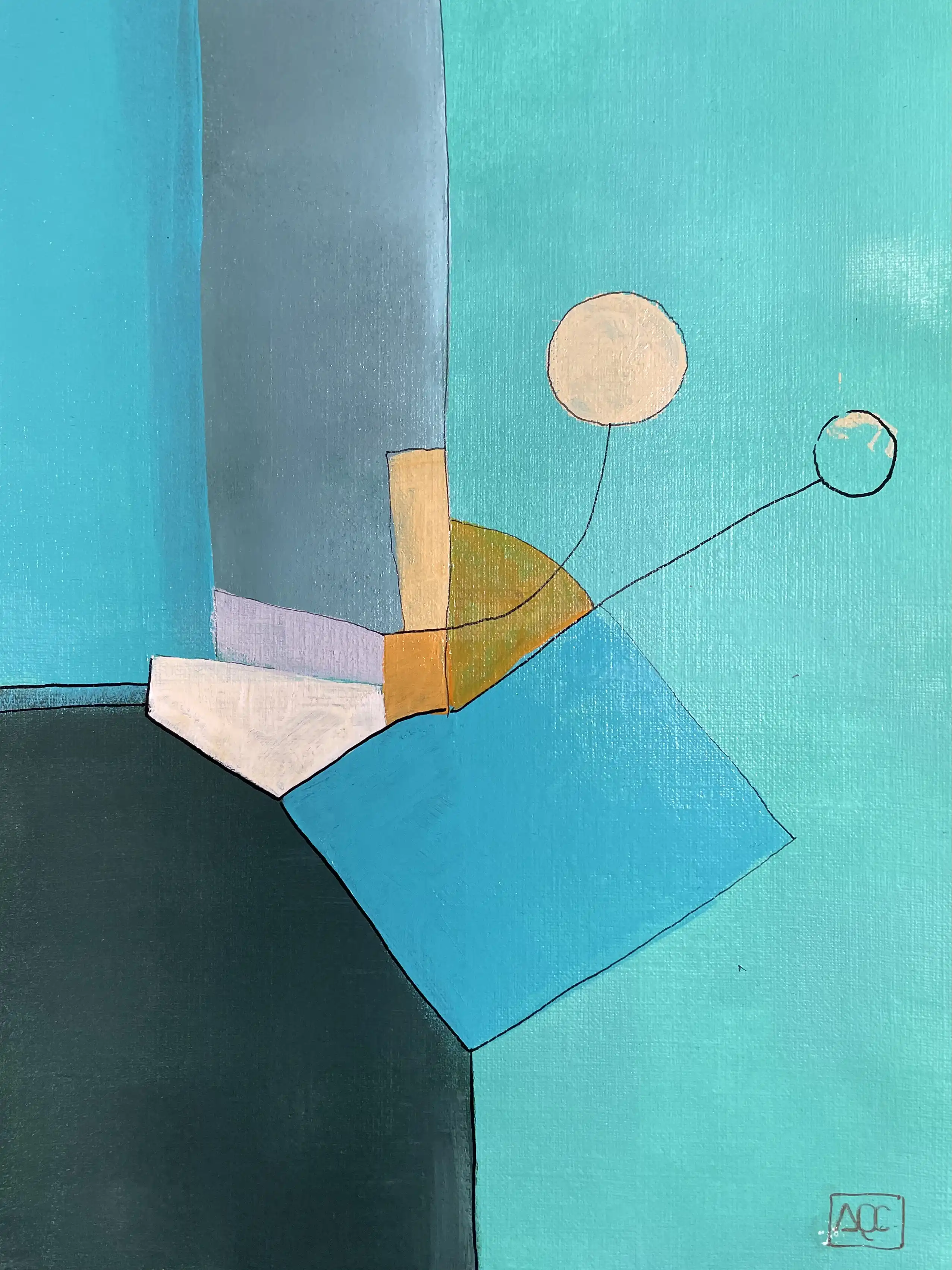
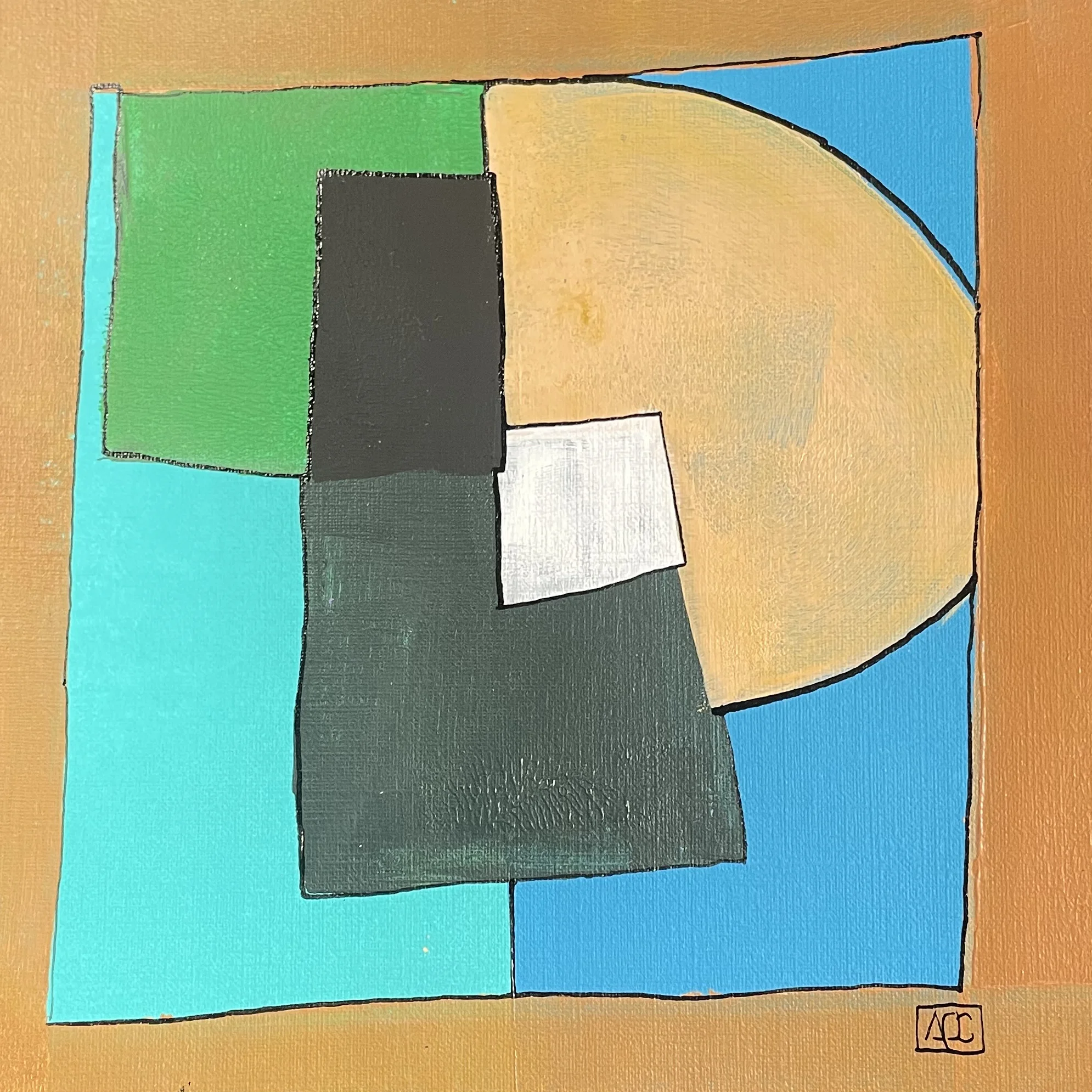
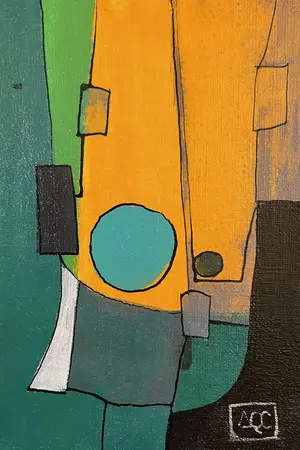
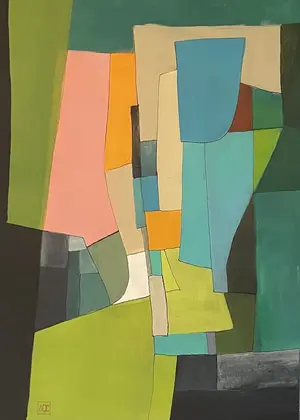
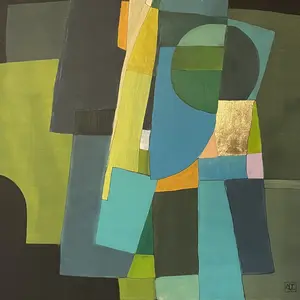
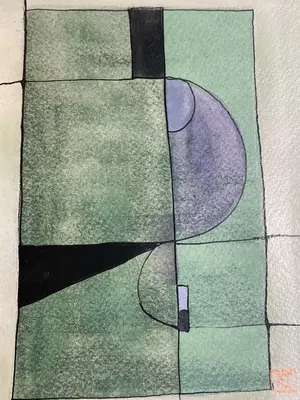
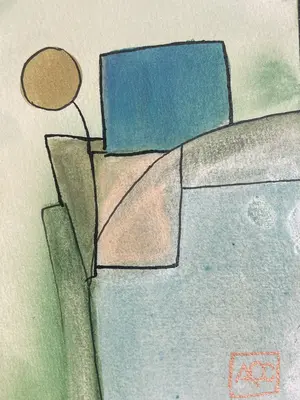
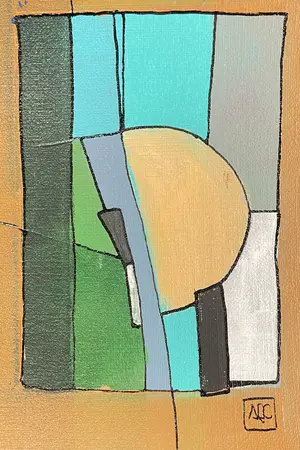
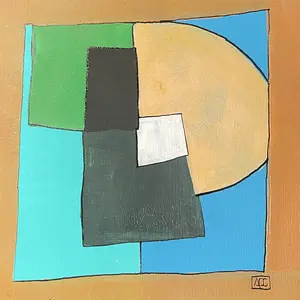
F# minor is a series of 9 paintings by Arnaud Quercy, created between 2024 and 2025 in acrylic on canvas, acrylic on linen canvas, acrylic on paper and watercolor on paper. Formats range from 10×15 cm to 80×80 cm. 4 works are held in private collections (Los Angeles, USA, Chartres, France, Torino, Italy). 4 remain available for acquisition at Art Quam Anima, 28 rue du Dragon, Paris. Works presented at: Rencontres au Marché de la Création, Salon d'art contemporain – Metamorphose, Paris and Permanent Collection 2025 – Resonance in Form and 7 more.
F# minor occupies a particular place in the minor key canon — not the grief of D minor, not the drama of C minor, but something more contained, more inward. Three sharps, a key that carries an edge of restless melancholy. Chopin heard it as combative and ornate — his Polonaise in F# minor is dense, rhythmically insistent, proud. Rachmaninoff returned to it. It is a key that turns in on itself, that keeps its heat close.
Through harmonic-chromatic, F# minor translates into an unusual palette: two cool tones flanking one warm. The root, F#, reads as a muted green — cool, saturated, earthen in the mid-register, compressing toward black in the depths. The fifth, C#, is blue-green: a marine, slightly cool complement to the root. Between them, the third, A, burns in warm yellow-orange — the one flame in a green room. Register shapes each tone in the usual way: low notes darken toward near-black and black, high notes bleach toward silver and near-white. But the prevailing temperature of this chord is cool. The warmth of A is always outnumbered.
Arnaud Quercy explores F# minor across nine études in acrylic, watercolor, and oil — on paper, on linen canvas — painted between 2024 and 2025. The formats run from intimate studies at 10×15 cm to a large-scale 80×80 cm canvas. Every étude is played Animé: the tempo stays active, slightly forward, never settling into the meditative stillness of slower keys. Most are played at mp, with one variation stepping back to a quiet p and another advancing to mf — the loudest in the series. The dominant contour is the valley: the phrase dips into the bass before returning, eight of nine études organized around that deepening gesture. Five of the nine are waltzes in triple time, the waltz rhythm appearing from Variation 4 onward and dominating the second half of the series. The fifth of the chord — C# — is notably reticent: it appears in only four études, leaving many paintings to the dialogue of root and third alone.
Three works chart the series' range. Variation 4 — the largest canvas, 80×80 cm on linen — carries the most direct musical reference: Chopin's Polonaise in F# minor echoes through its ascending waltz in triple time, six notes climbing from near-black to a red-orange accent at G5 that is not a chord tone, a crown that glows warm outside the harmony. The description notes it reads as "F# minor as Chopin might have heard it — dense, contained, the green and gold pressed close, turning gently in waltz time." At the opposite extreme, Variation 6 is the sparsest — four notes only, root and fifth and third spread wide across the keyboard in waltz time, the canvas flooded with silver and near-white, the chord thinned to air. Between these poles, Variation 3 — 50×70 cm on linen — is the series' most democratic étude: all three chord tones present, shadow and midtone and highlight in visible equilibrium, "the green and the gold at rest."
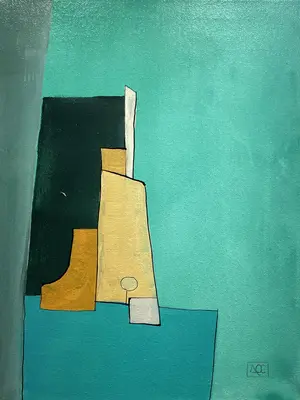
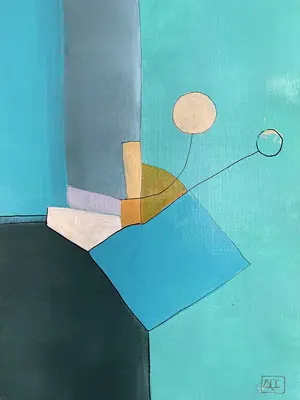
On canvas, F# minor presents as a cool-dominant palette shot through with intermittent gold. Most études build their lower surfaces from green-gray gradients — the stacked roots darkening in successive registers from muted green toward near-black. The warm field of yellow-orange, where A appears in the middle register, punctuates each painting as a single bright corridor, often centered, the only warmth in a prevailing cool. Where the fifth appears, blue-green occupies its own quiet band between root and third. Non-chord accents — a violet, a blue-violet, a red-orange — visit three études, always brief, always the sharpest local contrast against the otherwise cool-and-gold palette. The series' visual arc moves gradually upward: early études are low and heavy, the green dense at the base; later waltzes lift the register and the color temperature rises into silver and pale gold.
F# minor, across these nine études, teaches a specific lesson about cool harmony: warmth is most powerful when scarce. The yellow-orange of A burns more intensely for being surrounded by green and blue-green on every side. Quercy's practice of repeating the same chord across variations makes this visible in accumulation — you do not understand how golden the third is until you have seen it pressed into five dark paintings and watched it hold its light. The two works already in collections — one in France, one in Turin — carry that interior warmth with them. The rest of the series waits, cool and precise, the green room with its single candle still burning.
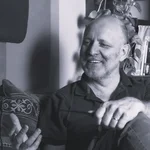
Arnaud Quercy is a Parisian artist working across painting, music, and sculpture. His practice is grounded in Ideamorphism — the principle that a work of art does not carry meaning, but triggers it. Each piece is engineered to diffract differently through each person who encounters it.
He creates and exhibits at Art Quam Anima, his gallery-atelier at 28 rue du Dragon, Saint-Germain-des-Prés, Paris.
Works — F# minor
Related hubs
- Collection: Harmonic Crossing
Exhibitions 10
- Rencontres au Marché de la Création (2024-04-23 → 2024-12-31, Marché de la Création – Paris Montparnasse, Paris)
- Salon d'art contemporain – Metamorphose, Paris (2024-12-26 → 2025-01-05, Halle des Blancs Manteaux, Paris)
- Permanent Collection 2025 – Resonance in Form (2025-01-01 → 2025-12-31, arnaudquercy.art, Paris)
- Paris Studio Visit (2025-02-18 → 2025-02-18, Artist's Studio, Paris)
- Marché d'Art Contemporain – Seine Port (2025-05-17 → 2025-05-17, MAC Seine-Port, Seine-Port)
- Nuit des Artistes, St Germain-en-Laye, France (2025-05-24 → 2025-05-24, La Nuit des Artistes, Saint-Germain-en-Laye)
- Marché de l'Art de Saint-Germain-en-Laye, 17ème édition – France (2025-06-14 → 2025-06-14, Marché de l'Art, Saint-Germain-en-Laye)
- Salon d'art contemporain – Metamorphose 2025–2026, Paris (2025-12-26 → 2026-01-04, Halle des Blancs Manteaux, Paris)
- Art Quam Anima – Pre-opening (2026-01-31 → 2026-02-28, Art Quam Anima, Paris)
- Through the Aperture — Research on Harmony (2026-03-09 → 2026-04-30, Art Quam Anima, Paris)
Other series in this collection 35
Documented at 1
Catalogue raisonné entries 9
- F# minor - Research on Harmony
- F# minor - Research on Harmony - Variation 1
- F# minor - Research on Harmony - Variation 2
- F# Minor - Research on Harmony - Variation 3
- F# Minor - Research on Harmony - Variation 4
- F# Minor - Research on Harmony - Variation 5
- F# Minor - Research on Harmony - Variation 6
- F#Minor - Research on Harmony - Variations 7
- F#Minor - Research on Harmony - Variations 8