D minor series — 12 Paintings by Arnaud Quercy
ART-SER0004
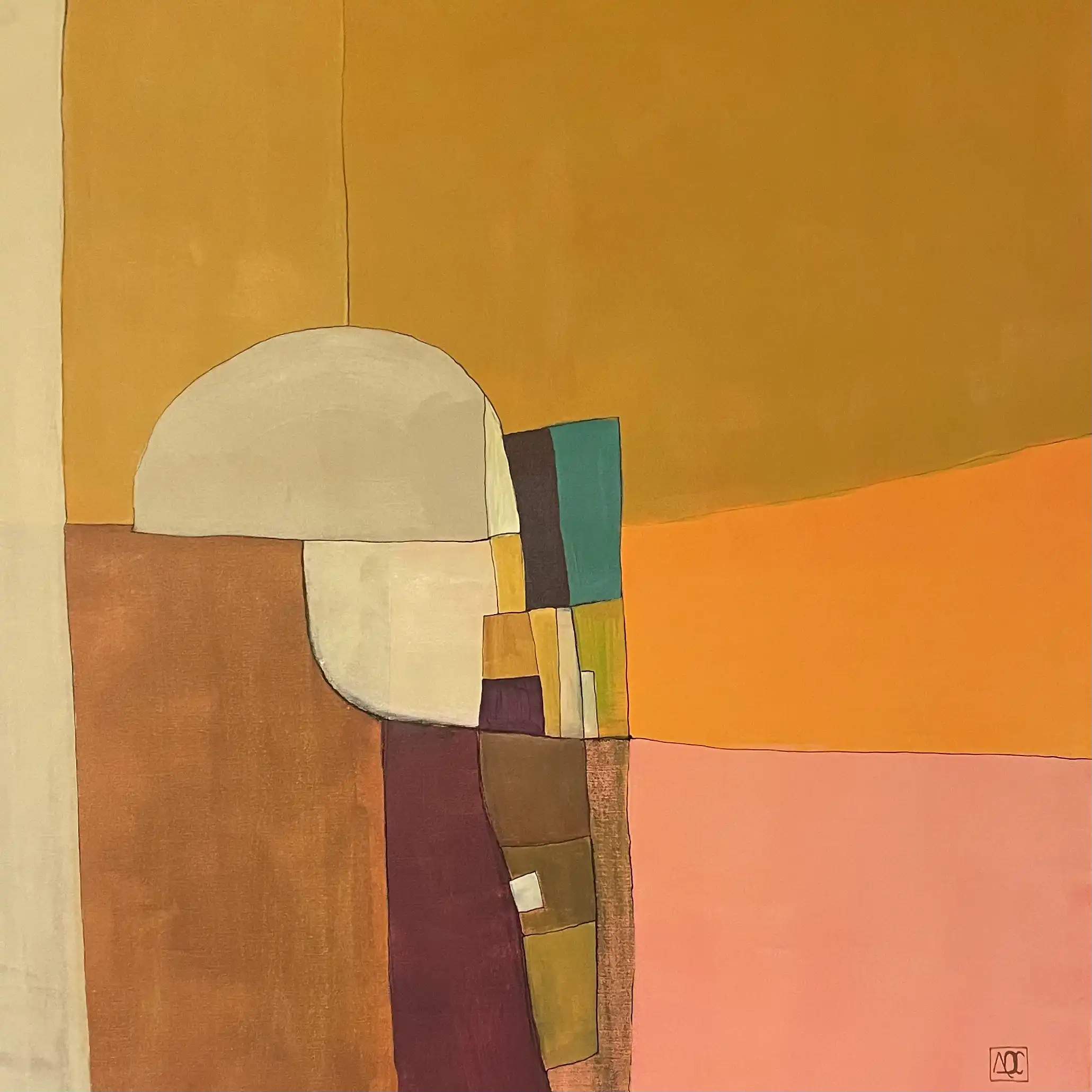
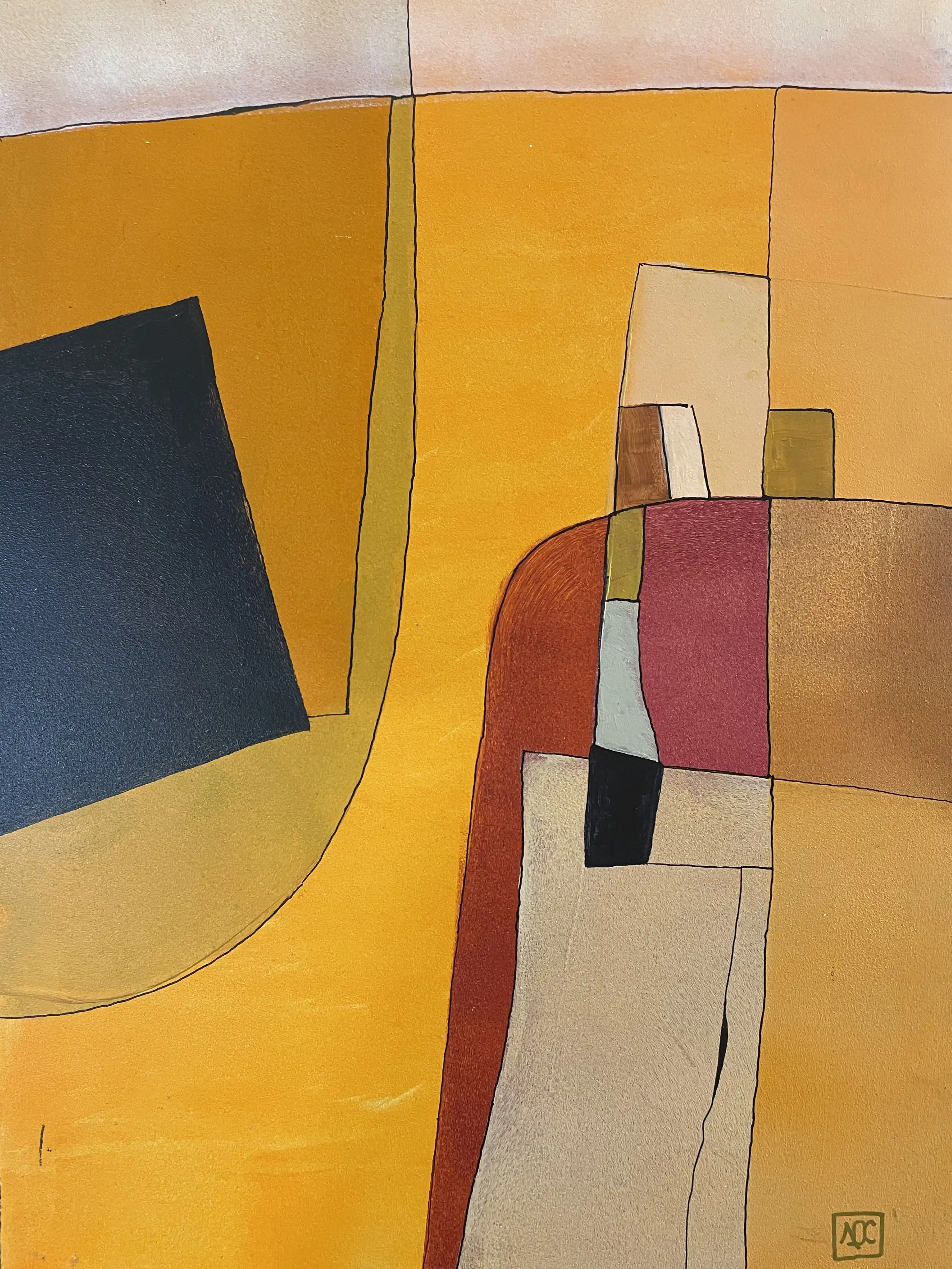
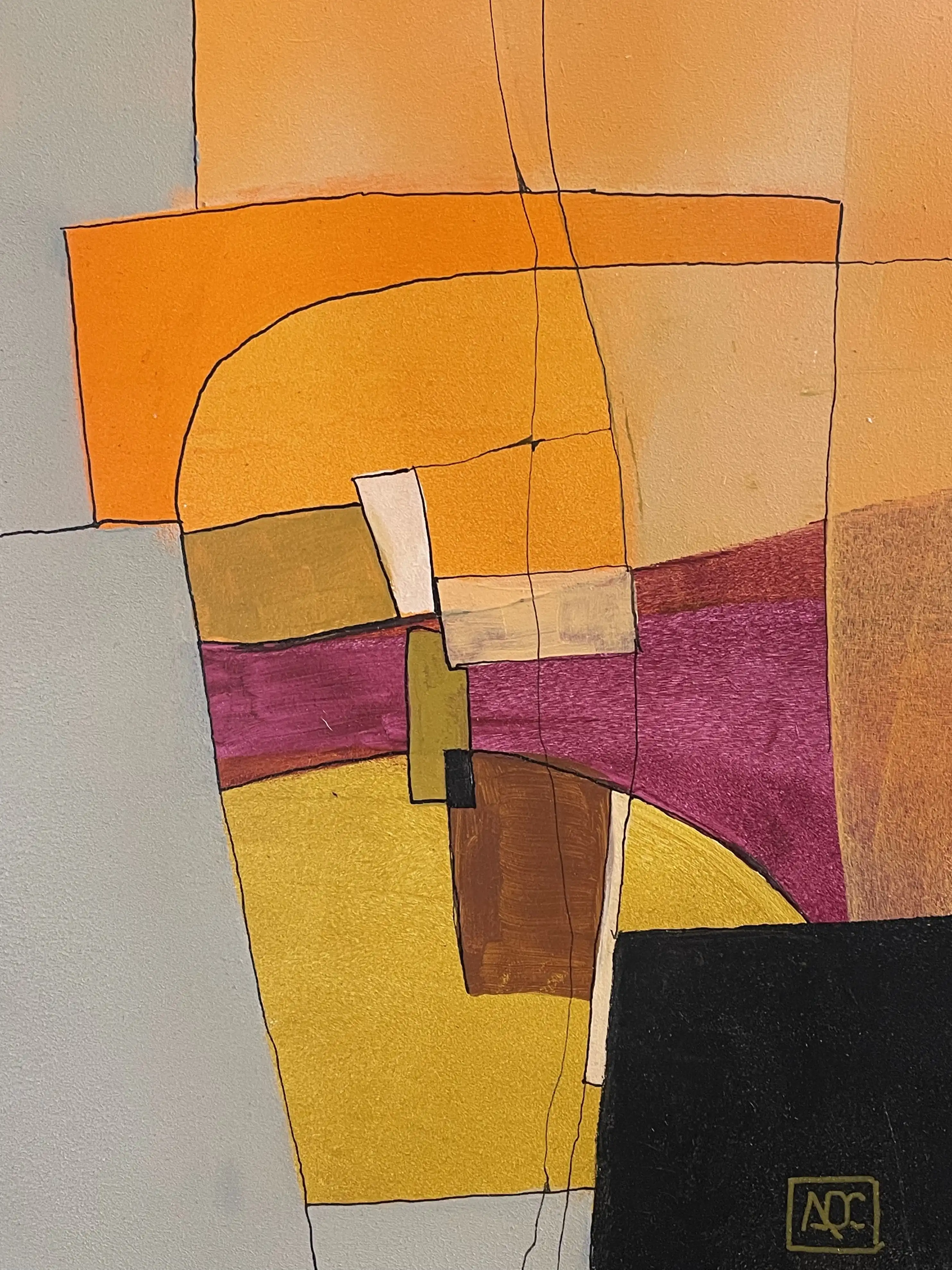
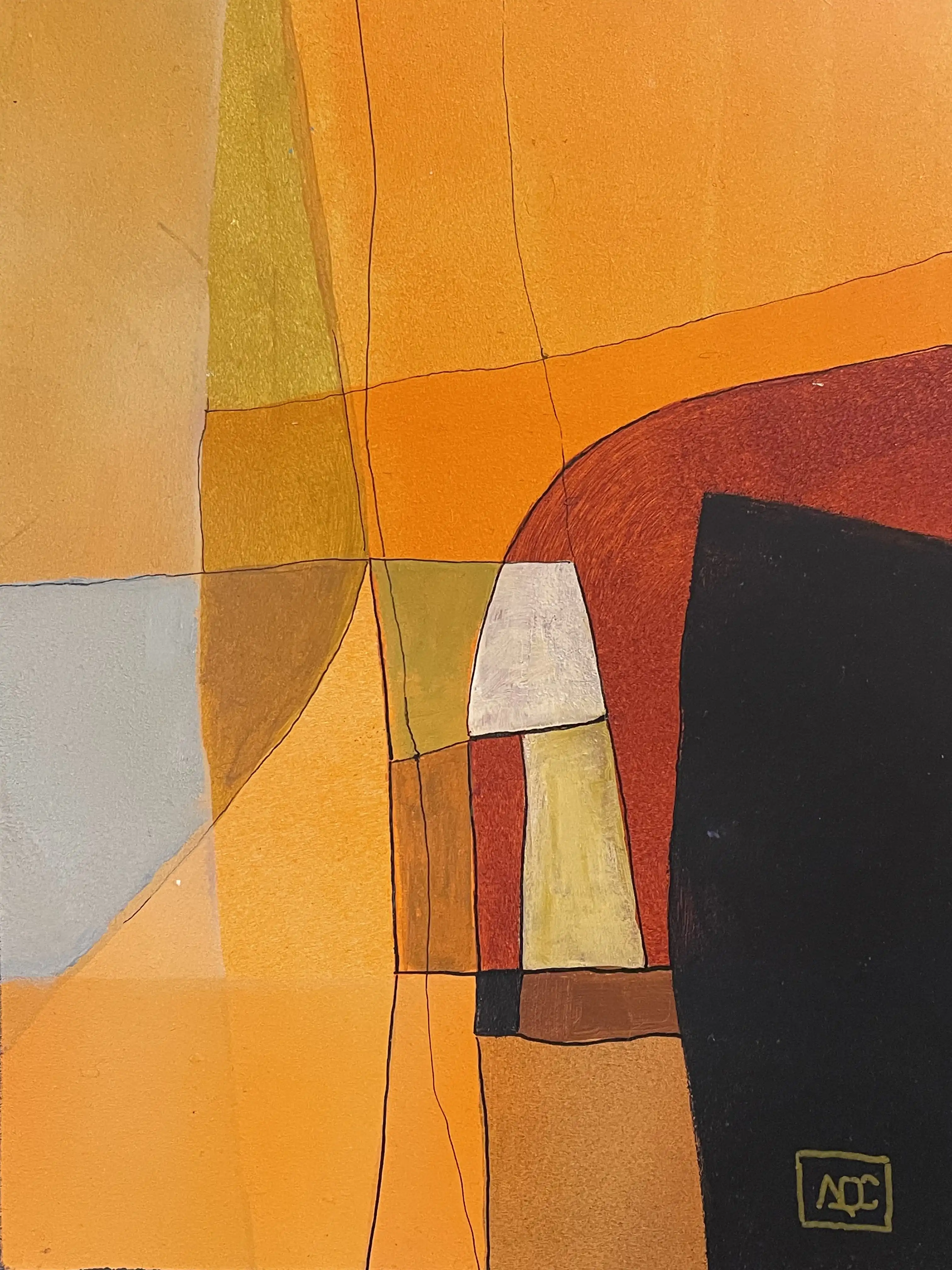
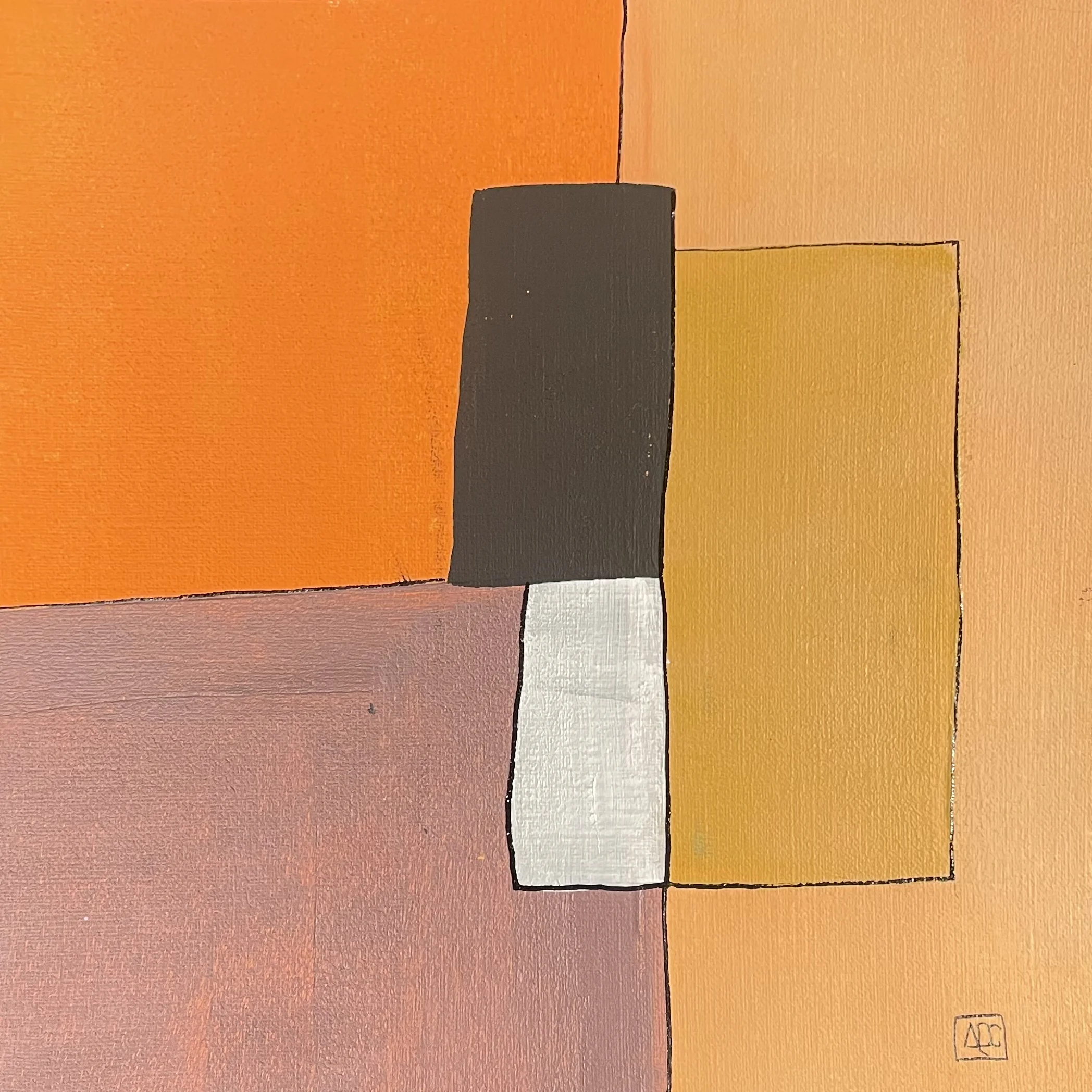
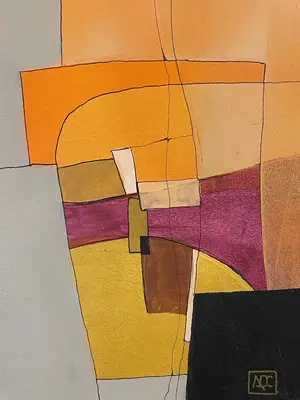
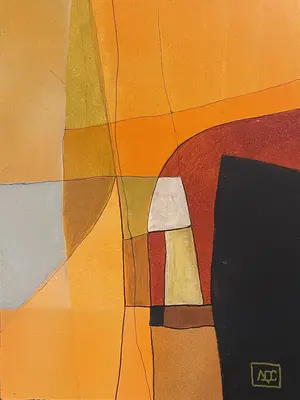
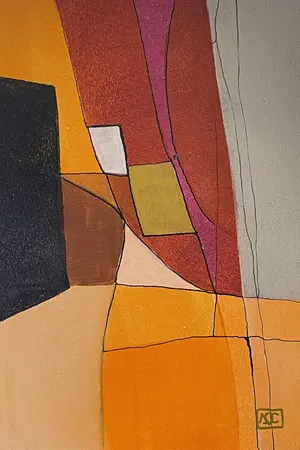
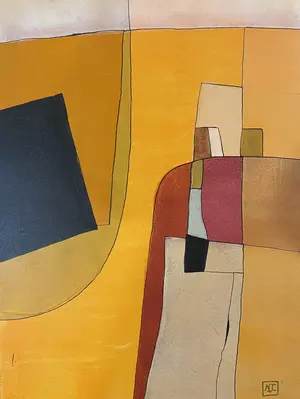
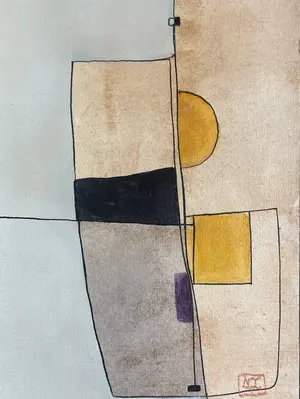
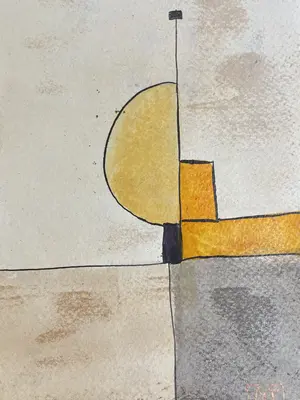
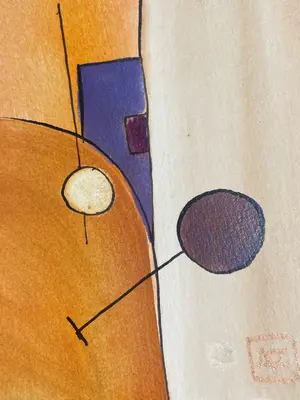
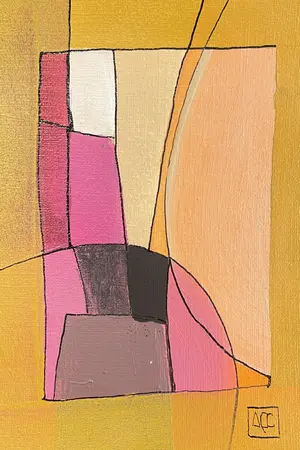
D minor is a series of 12 paintings by Arnaud Quercy, created between 2024 and 2026 in acrylic on linen canvas, acrylic on paper, acrylic on wood panel and watercolor on paper. Formats range from 10×15 cm to 80×80 cm. 10 works are held in private collections (Paris, France, Le Lavandou, France, Brussels, Belgium, Carmel, USA, Saint-Michel-le-Cloucq, France, Australia, Minden, Germany, Oslo, Norway). 2 remain available for acquisition at Art Quam Anima, 28 rue du Dragon, Paris. Works presented at: Rencontres au Marché de la Création, Salon d'art contemporain – Metamorphose, Paris and Permanent Collection 2025 – Resonance in Form and 8 more.
D minor is the key of gravity. Built from D, F, and A — root, minor third, fifth — it forms a triad whose darkness is structural, not ornamental. The interval from D to F, a minor third, is the smallest harmonic step that shifts a chord from brightness to shadow. Mozart chose it for the Requiem; Bach opened the Toccata and Fugue in its depths. In Western harmony, D minor is where solemnity speaks without raising its voice.
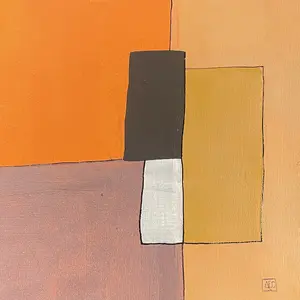
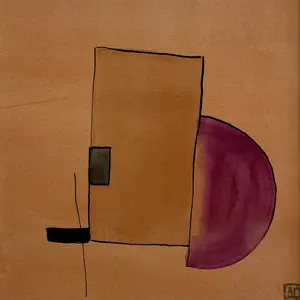
Through harmonic-chromatic, this triad translates to a palette of restrained warmth. D produces orange — saturated and warm in the middle registers, darkening toward near-black in the bass. F, the minor third, yields red-violet, the color that distinguishes the series from D major’s brighter greens. A, the fifth, renders as yellow-orange, providing luminous contrast at the upper end. In the low registers, these hues deepen almost to darkness; in the high, they bleach toward silver and pale yellow. The palette breathes between these extremes — warm but never hot, dark but never opaque.
Eleven piano études comprise the D Minor series, all played at a slow tempo with dynamics ranging from piano to mezzo piano. The études divide between common time and waltz meter, lending the collection a pulse that alternates between meditative breadth and gentle lilt. Bell arches predominate — phrases that rise from a bass foundation to a luminous crest, then fold back — alongside several pure descents. Density ranges from three notes to eight, and the register spans from D0, the lowest D on the keyboard, to F7 at the extreme treble. Several études omit the minor third entirely, presenting the chord as root and fifth alone; others withhold F until the very peak of the phrase. The legato touch is constant throughout, each note connected to the next in an unbroken line.
Variation 1 occupies the largest format in the series — acrylic on linen canvas at eighty by eighty centimetres. Its five notes stay gathered in the upper half of the keyboard, from D4 to F6, producing a palette of almost pure midtones. "The arch within this compressed upper range has a different intimacy than the wide bells," Quercy writes — no darkness below, no extreme brightness above. At the opposite pole, Variation 3 distills the chord to its minimum: three notes, D-A-D, falling through two octaves in waltz time. It is D minor held "within the smallest possible frame." Variation 7, the densest étude, states the chord across eight notes and five registers — the most complete accounting the series offers, rendered at maximum brightness with only two percent shadow.
Across the eleven works, the viewer encounters a palette that moves between deep near-black and luminous silver. The opening étude, anchored by D0 in the sub-bass, carries substantial darkness — the painting weighted by registers that sit below the threshold of ordinary musical perception. As the series progresses, the études increasingly explore the upper registers, and with that shift the paintings grow brighter. Orange recurs as the dominant presence — the root’s color accumulating through every register — while red-violet appears sparingly, often withheld until the phrase’s apex. Yellow-orange provides the warmth at each crest. The later variations, reaching to F7, introduce near-silver at the extreme treble, the minor third’s colour dissolved almost entirely by altitude.
Repetition reveals what a single statement cannot. Across eleven études, D minor discloses itself not as a fixed mood but as a range — from the sub-bass gravity of the opening to the silver dissolution of the final variations. The chord that carried Mozart’s prayer and Bach’s fugue here becomes a sustained inquiry into color under slow, quiet conditions. These works now reside in collections spanning Paris to Carmel, from the German countryside to Australia — a geography as varied as the registers the chord inhabits. D minor, Quercy’s series suggests, does not freeze; it burns slowly.
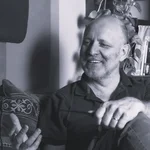
Arnaud Quercy is a Parisian artist working across painting, music, and sculpture. His practice is grounded in Ideamorphism — the principle that a work of art does not carry meaning, but triggers it. Each piece is engineered to diffract differently through each person who encounters it.
He creates and exhibits at Art Quam Anima, his gallery-atelier at 28 rue du Dragon, Saint-Germain-des-Prés, Paris.
Works — D minor
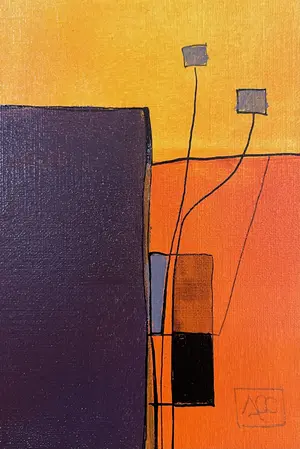
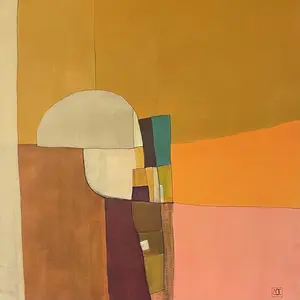
Related hubs
- Collection: Harmonic Crossing
Exhibitions 10
- Salon d'art contemporain – Metamorphose 2025–2026, Paris (2025-12-26 → 2026-01-04, Halle des Blancs Manteaux, Paris)
- Permanent Collection 2025 – Resonance in Form (2025-01-01 → 2025-12-31, arnaudquercy.art, Paris)
- Paris Studio Visit (2025-02-18 → 2025-02-18, Artist's Studio, Paris)
- Marché d'Art Contemporain – Seine Port (2025-05-17 → 2025-05-17, MAC Seine-Port, Seine-Port)
- Rencontres au Marché de la Création (2024-04-23 → 2024-12-31, Marché de la Création – Paris Montparnasse, Paris)
- Salon d'art contemporain – Metamorphose, Paris (2024-12-26 → 2025-01-05, Halle des Blancs Manteaux, Paris)
- Nuit des Artistes, St Germain-en-Laye, France (2025-05-24 → 2025-05-24, La Nuit des Artistes, Saint-Germain-en-Laye)
- Marché de l'Art de Saint-Germain-en-Laye, 17ème édition – France (2025-06-14 → 2025-06-14, Marché de l'Art, Saint-Germain-en-Laye)
- Art Quam Anima – Pre-opening (2026-01-31 → 2026-02-28, Art Quam Anima, Paris)
- Through the Aperture — Research on Harmony (2026-03-09 → 2026-04-30, Art Quam Anima, Paris)
Other series in this collection 35
Cited in 1
Documented at 1
Catalogue raisonné entries 12
- D minor - Research on Harmony
- D minor - Research on Harmony - Variation 1
- D Minor - Research on Harmony - Variation 2
- D Minor - Research on Harmony - Variation 3
- D Minor - Research on Harmony - Variation 4
- D Minor - Research on Harmony - Variation 5
- D Minor - Research on Harmony - Variation 6
- D Minor - Research on Harmony - Variation 7
- D Minor - Research on Harmony - Variation 8
- D Minor - Research on Harmony - Variations 9
- D Minor - Research on Harmony - Variations 10
- Watercolor Study in D Minor No. 2