D Major9 series — 12 Paintings by Arnaud Quercy
ART-SER0003
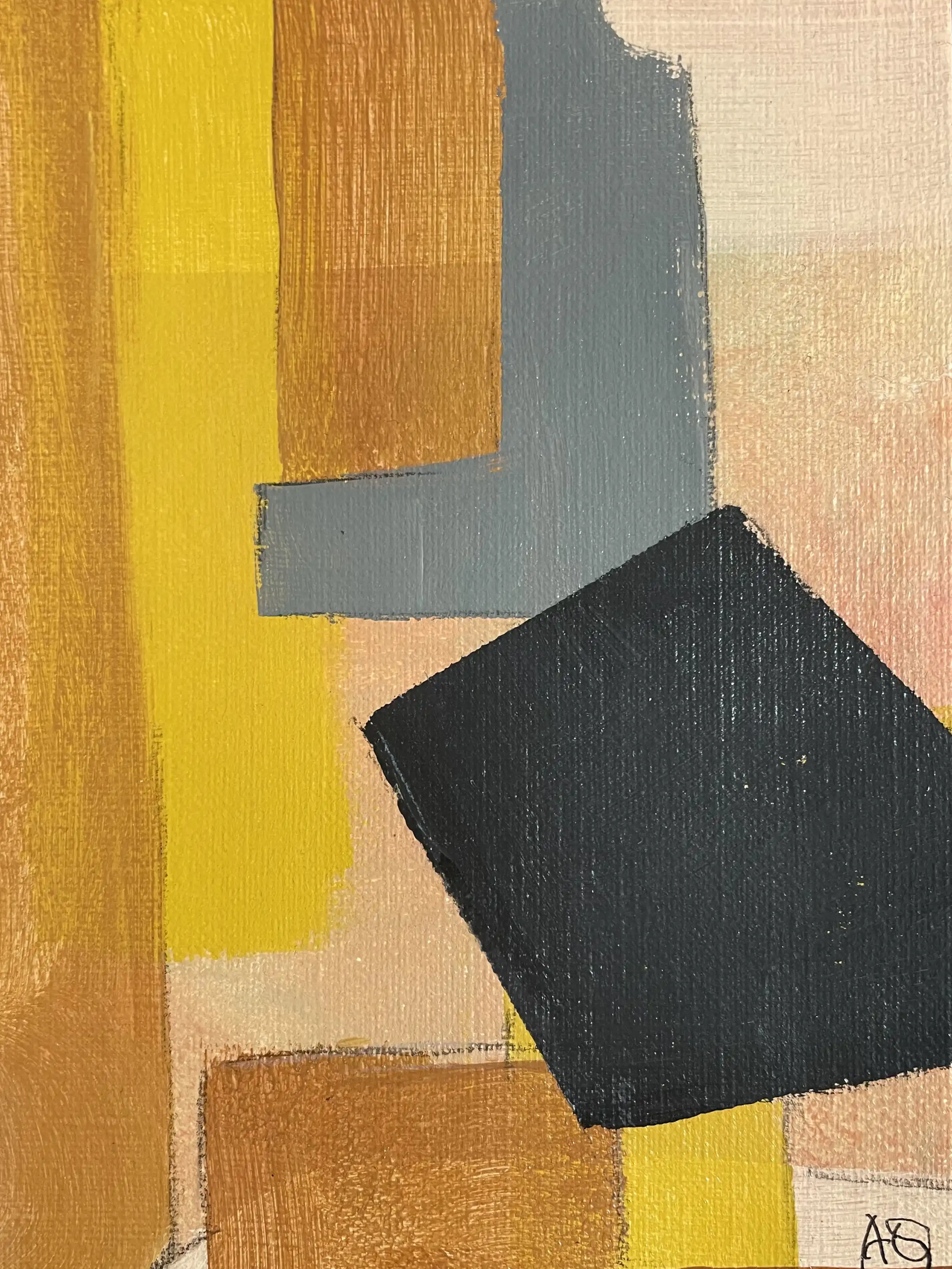
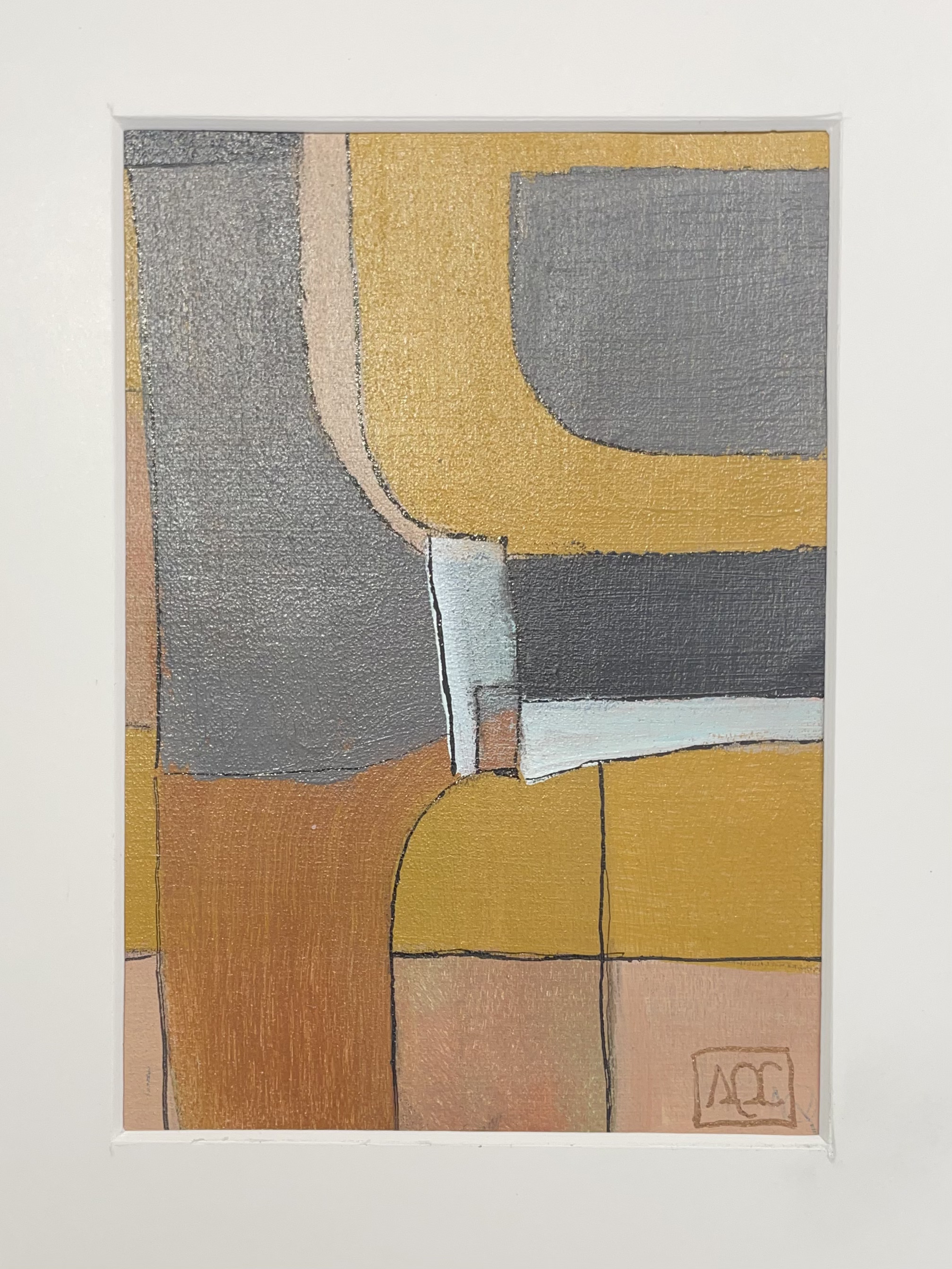
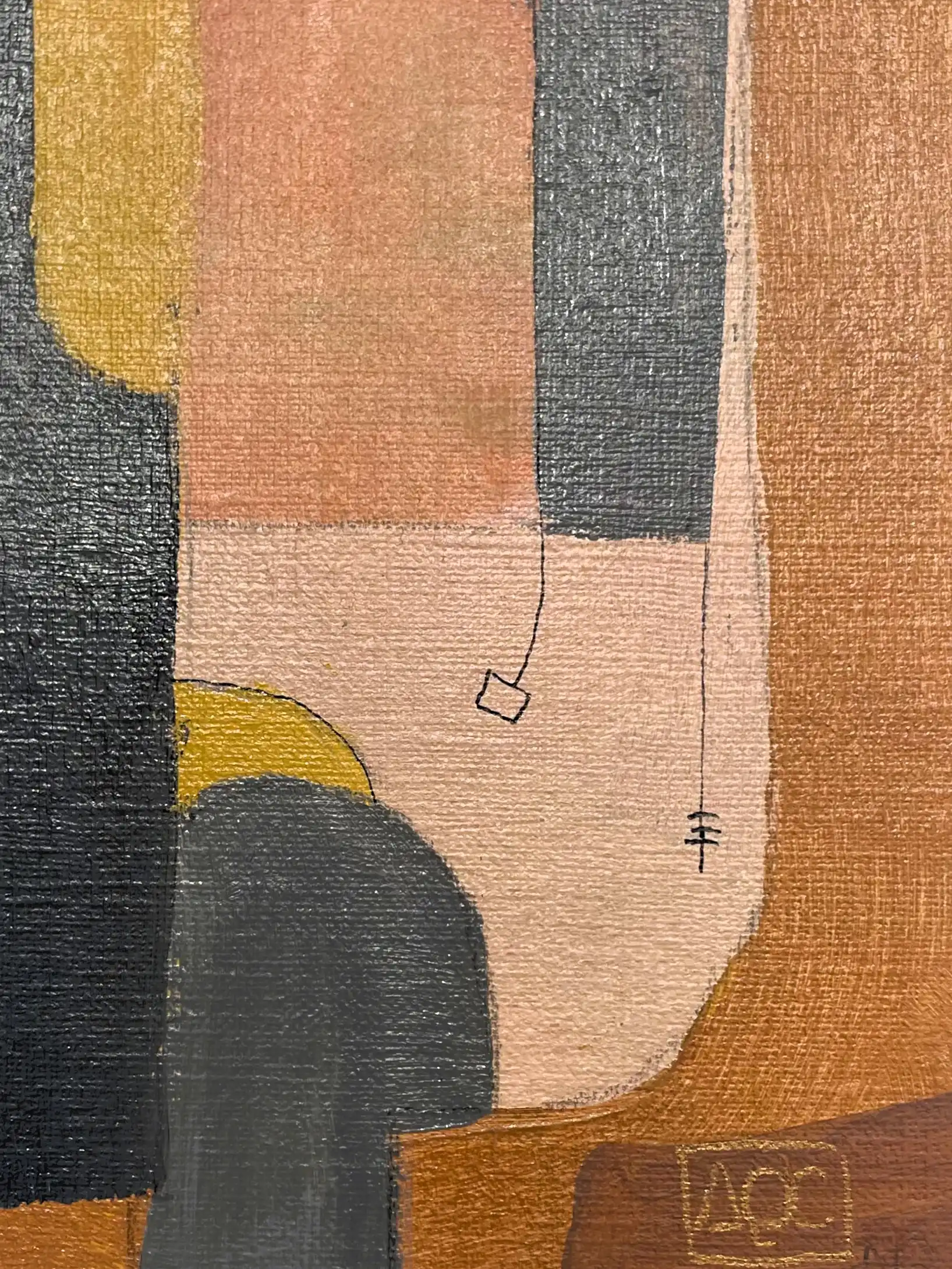
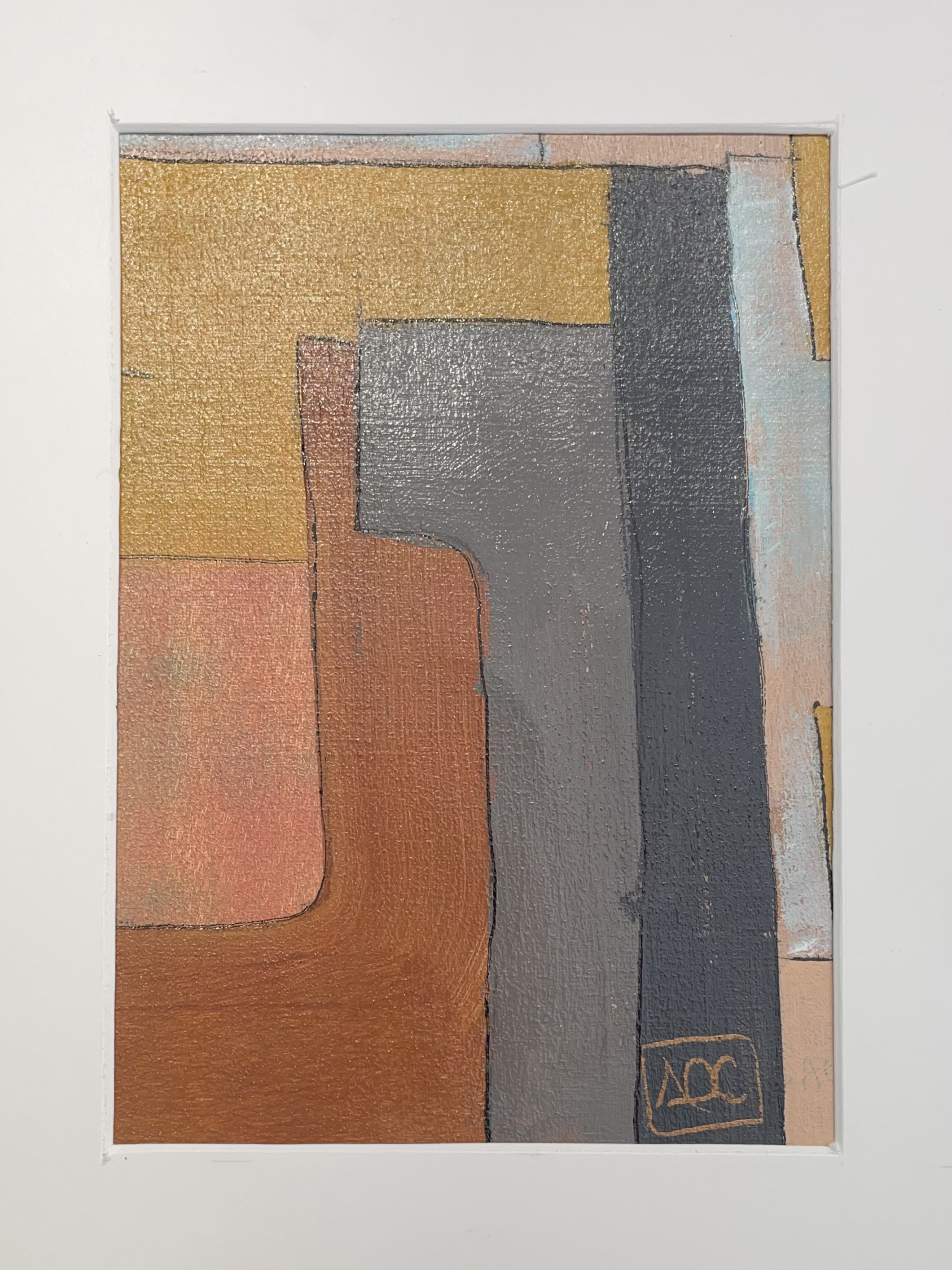
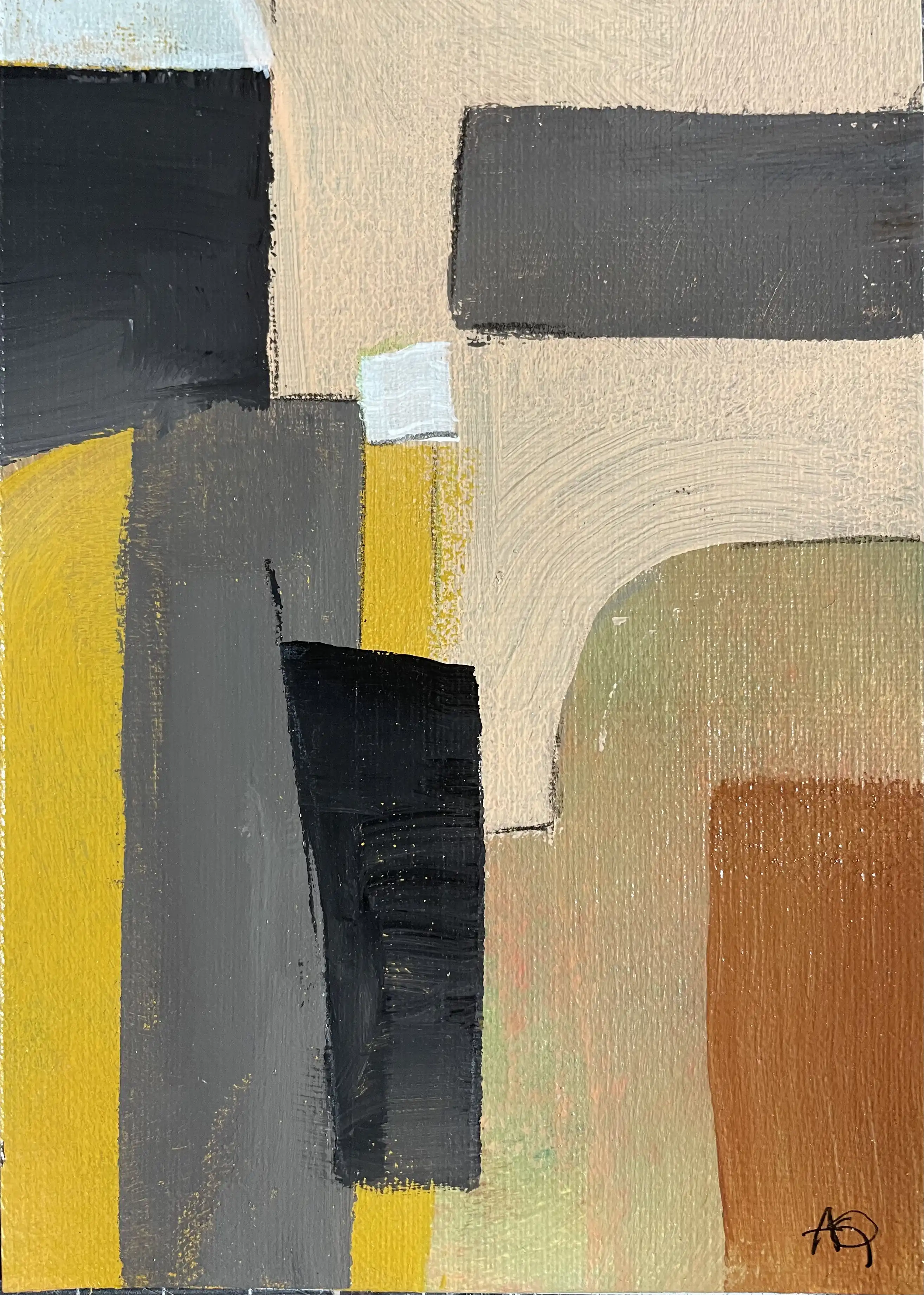
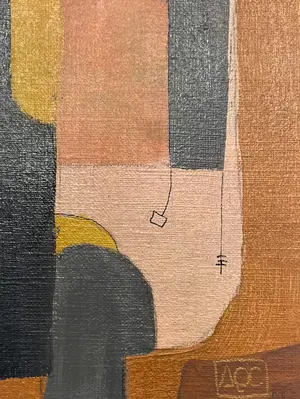
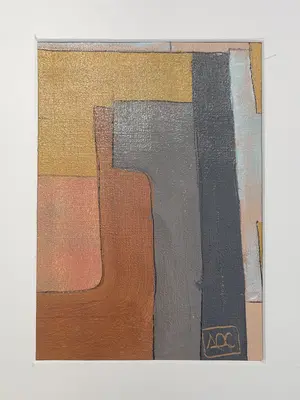
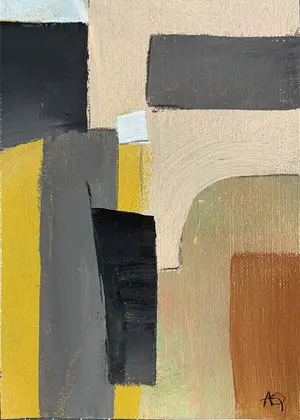
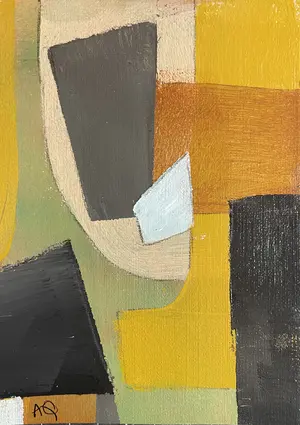
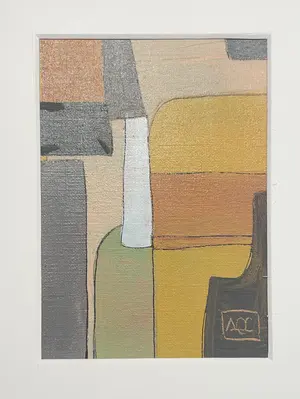
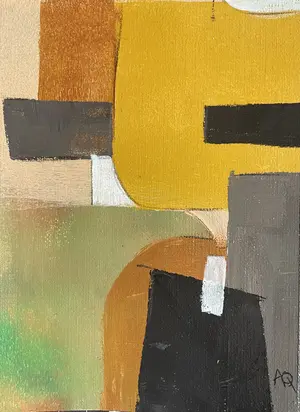
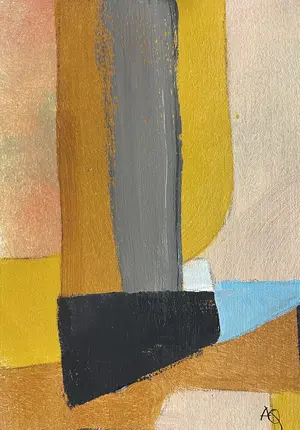
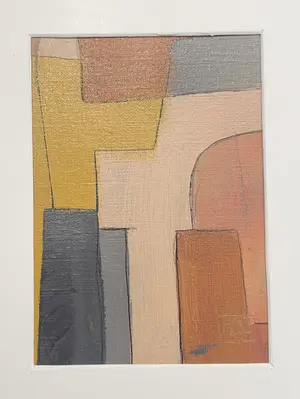
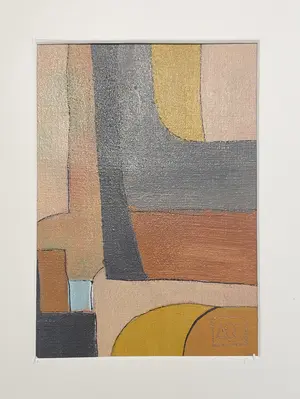
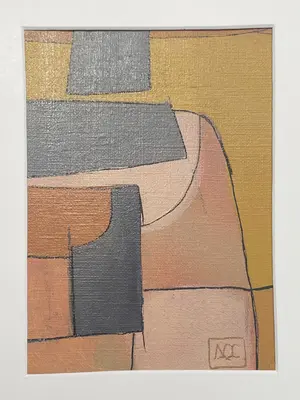
D Major9 is a series of 12 paintings by Arnaud Quercy, created in 2024 in acrylic on paper. Format: 10×15 cm. All 12 works in this series are held in private collections (London, UK, Paris, France, Henderson, USA, Canada, Los Angeles, USA). Works presented at: Rencontres au Marché de la Création, Salon d'art contemporain – Metamorphose, Paris and Permanent Collection 2025 – Resonance in Form and 5 more.
The D major ninth is a chord of warmth made complex. Built from D, F-sharp, A, C-sharp, and E, it layers the bright confidence of D major with the luminous pull of a major seventh and the open air of the added ninth. It is a harmony native to impressionism and modern jazz — the kind of sonority Debussy let hang unresolved in his preludes, the color Gil Evans spread across brass sections for Miles Davis. Rich without being heavy, it invites lingering rather than resolution.
Through harmonic-chromatic, the root D produces a deep, saturated orange that darkens toward black in the lowest octaves and warms to its purest hue in the middle of the keyboard. The third F-sharp translates as green — vivid at mid-register, fading to silver at the instrument’s upper edge. The fifth A yields yellow-orange, a tone close to the root but lighter, more luminous. The seventh C-sharp introduces blue-green, a cool interruption in the otherwise warm field. The ninth E appears as yellow, bright and clear. Together, the five tones produce a palette dominated by orange and earth, punctuated by green, blue-green, and yellow — autumn light complicated by cooler undertones.
Twelve piano études explore this chord across an unusually consistent terrain. Every work is marked Lent and legato; eleven of the twelve are played mezzo piano, with a single étude — Variation 2 — rising to mezzo forte. Ten move in three-four time, slow waltzes descending from the upper registers toward the bass. Only Variations 1 and 3 break the pattern with a four-four pulse and an arching contour that rises before falling. The note count ranges from five to nine, and most variations favor the root heavily — the D repeated across three or four octaves while other chord tones appear sparingly. The seventh surfaces in only three études; the ninth in five. The register spans from D1 to F-sharp 7, though most phrases settle between the second and sixth octaves. The effect is a series weighted toward gravity and shadow, the chord sinking steadily through its own warmth.
Variation 5 is the fullest statement in the series — nine notes spanning seven octaves, every tone of the D major ninth present. "The waltz descending from a single silver point through the complete palette," as the artist describes it: blue-green at C-sharp 5, yellow at E4, green at F-sharp 7, and orange filling the lower half in graduated darkness. At the opposite extreme, Variation 2 strips the chord to five notes — root and fifth only, no third, no seventh, no ninth — producing a nearly monochrome canvas of orange shading to black, the loudest dynamic in the series lending the descent a blunt conviction. Between these poles, Variation 7 dismantles the chord into fragments: five notes scattered across five octaves with a gap of nearly three octaves between A4 and F-sharp 7, "the chord dismantled into fragments with silence between them."
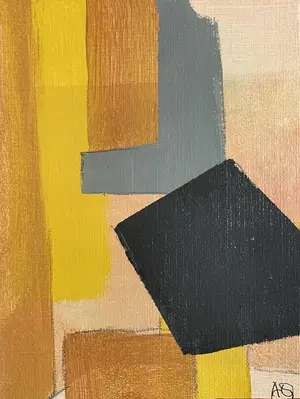
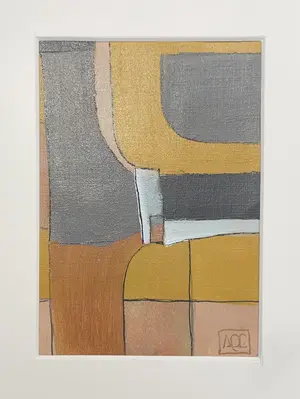
Across the twelve canvases, orange is inescapable. The root’s hue claims the lower two-thirds of nearly every painting, graduating from saturated warmth in the mid-registers through earth tones and gray to near-black at the bottom. Green appears at the top — the third’s signature, bright at F-sharp 6, silvered at F-sharp 7 — a cool cap above the warm body. Where the seventh or ninth enter, blue-green and yellow interrupt the orange field at mid-canvas, brief cool pockets in the prevailing warmth. The visual rhythm across the series is one of repetition and slow variation: the same descent, the same orange gradient, the same green at the crest, but each time the density shifts, the register narrows or widens, and the palette admits or withholds its cooler tones.
What twelve variations of a single ninth chord reveal is how much character lives in the arrangement of familiar tones. The D major ninth never loses its fundamental warmth, but the series teaches the eye to see how that warmth behaves under pressure — thinned to a monochrome descent, complicated by blue-green, or fragmented into isolated color fields. All twelve works on paper now belong to collections in Paris, London, Los Angeles, and across North America. In the language of Quercy’s Harmonic Crossing, D major ninth is the sound of orange learning to breathe.
Arnaud Quercy is a Parisian artist working across painting, music, and sculpture. His practice is grounded in Ideamorphism — the principle that a work of art does not carry meaning, but triggers it. Each piece is engineered to diffract differently through each person who encounters it.
He creates and exhibits at Art Quam Anima, his gallery-atelier at 28 rue du Dragon, Saint-Germain-des-Prés, Paris.
Works — D Major9
Related hubs
- Collection: Harmonic Crossing
Exhibitions 8
- Rencontres au Marché de la Création (2024-04-23 → 2024-12-31, Marché de la Création – Paris Montparnasse, Paris)
- Salon d'art contemporain – Metamorphose, Paris (2024-12-26 → 2025-01-05, Halle des Blancs Manteaux, Paris)
- Permanent Collection 2025 – Resonance in Form (2025-01-01 → 2025-12-31, arnaudquercy.art, Paris)
- Paris Studio Visit (2025-02-18 → 2025-02-18, Artist's Studio, Paris)
- Marché d'Art Contemporain – Seine Port (2025-05-17 → 2025-05-17, MAC Seine-Port, Seine-Port)
- Nuit des Artistes, St Germain-en-Laye, France (2025-05-24 → 2025-05-24, La Nuit des Artistes, Saint-Germain-en-Laye)
- Marché de l'Art de Saint-Germain-en-Laye, 17ème édition – France (2025-06-14 → 2025-06-14, Marché de l'Art, Saint-Germain-en-Laye)
- Salon d'art contemporain – Metamorphose 2025–2026, Paris (2025-12-26 → 2026-01-04, Halle des Blancs Manteaux, Paris)
Other series in this collection 35
Documented at 1
Catalogue raisonné entries 12
- D Major9 - Research on Harmony
- D Major9 - Research on Harmony - Variation 1
- D Major9 - Research on Harmony - Variation 2
- D Major9 - Research on Harmony - Variation 3
- D Major9 - Research on Harmony - Variation 4
- D Major9 - Research on Harmony - Variation 5
- D Major9 - Research on Harmony - Variation 6
- D Major9 - Research on Harmony - Variation 7
- D Major9 - Research on Harmony - Variation 8
- D Major9 - Research on Harmony - Variation 9
- D Major9 - Research on Harmony - Variation 10
- D Major9 - Research on Harmony - Variation 11