A minor series — 15 Paintings by Arnaud Quercy
ART-SER0019
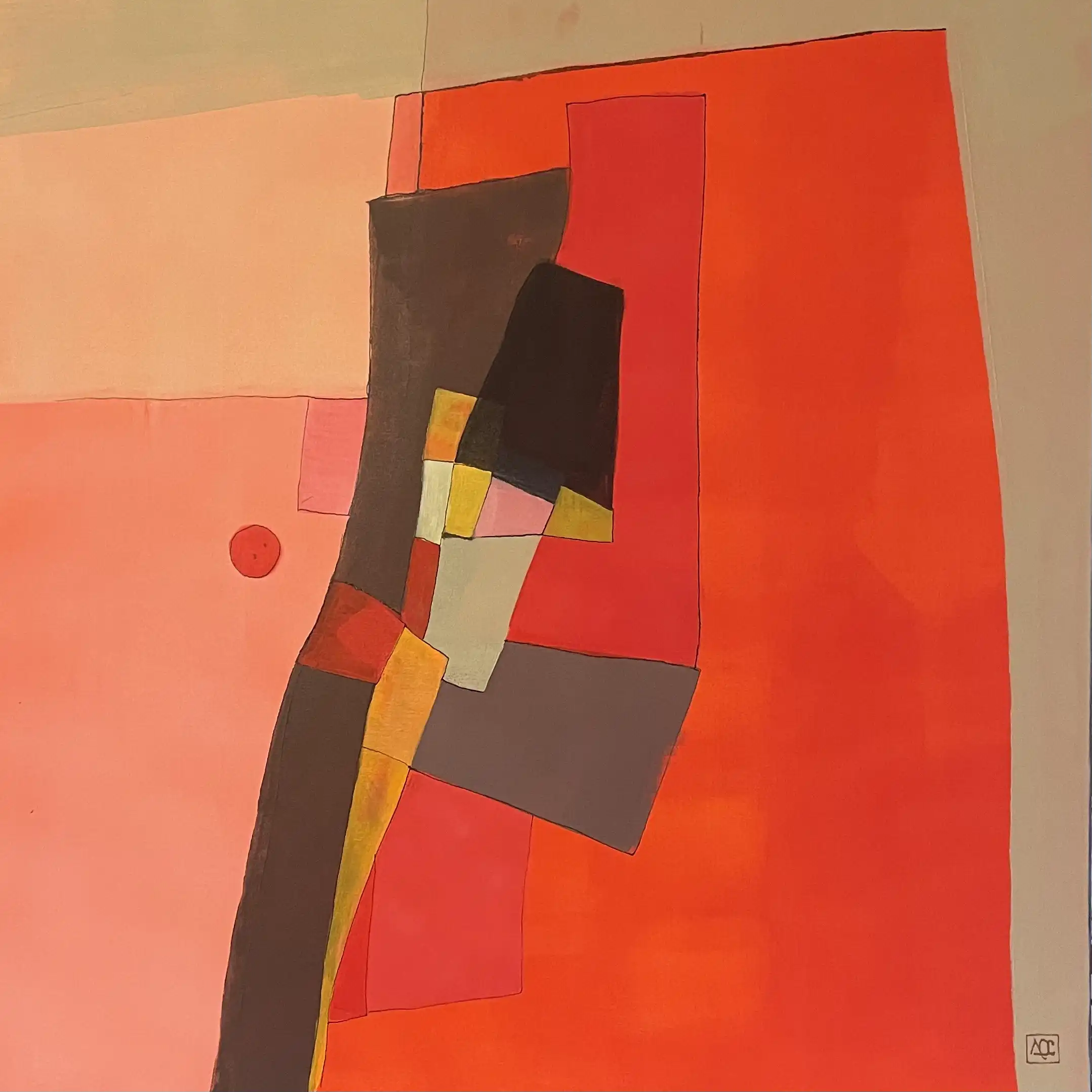
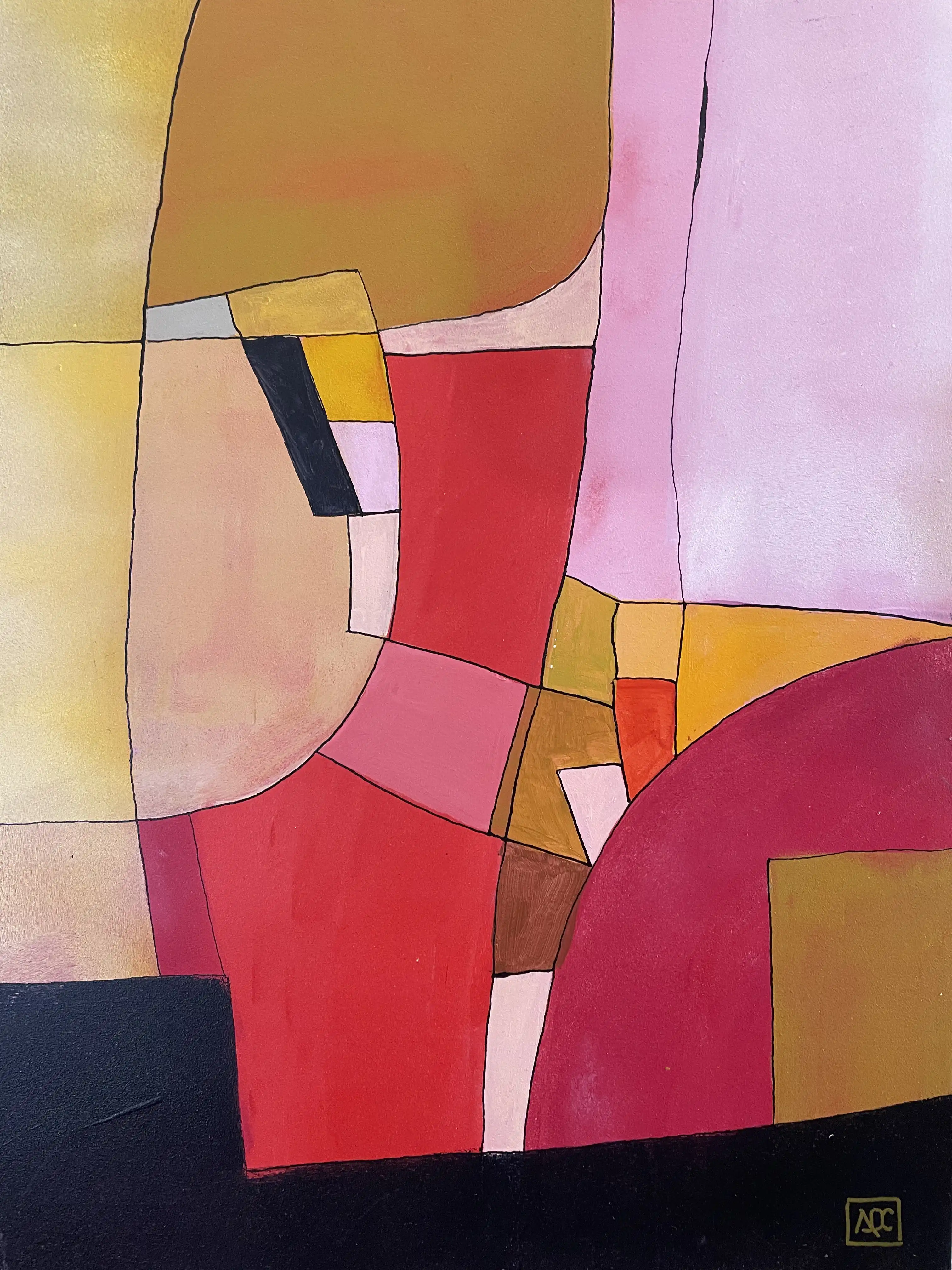
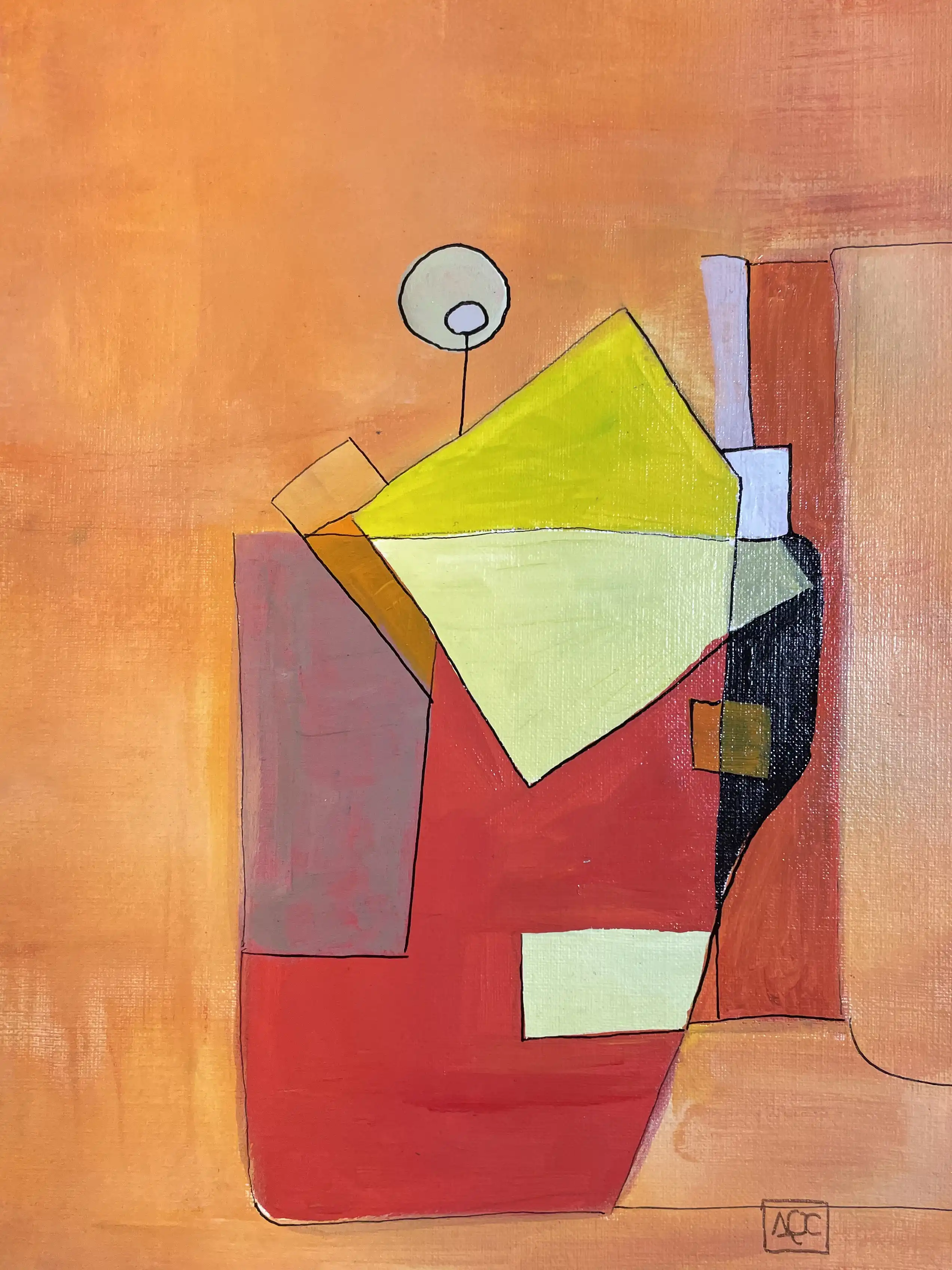
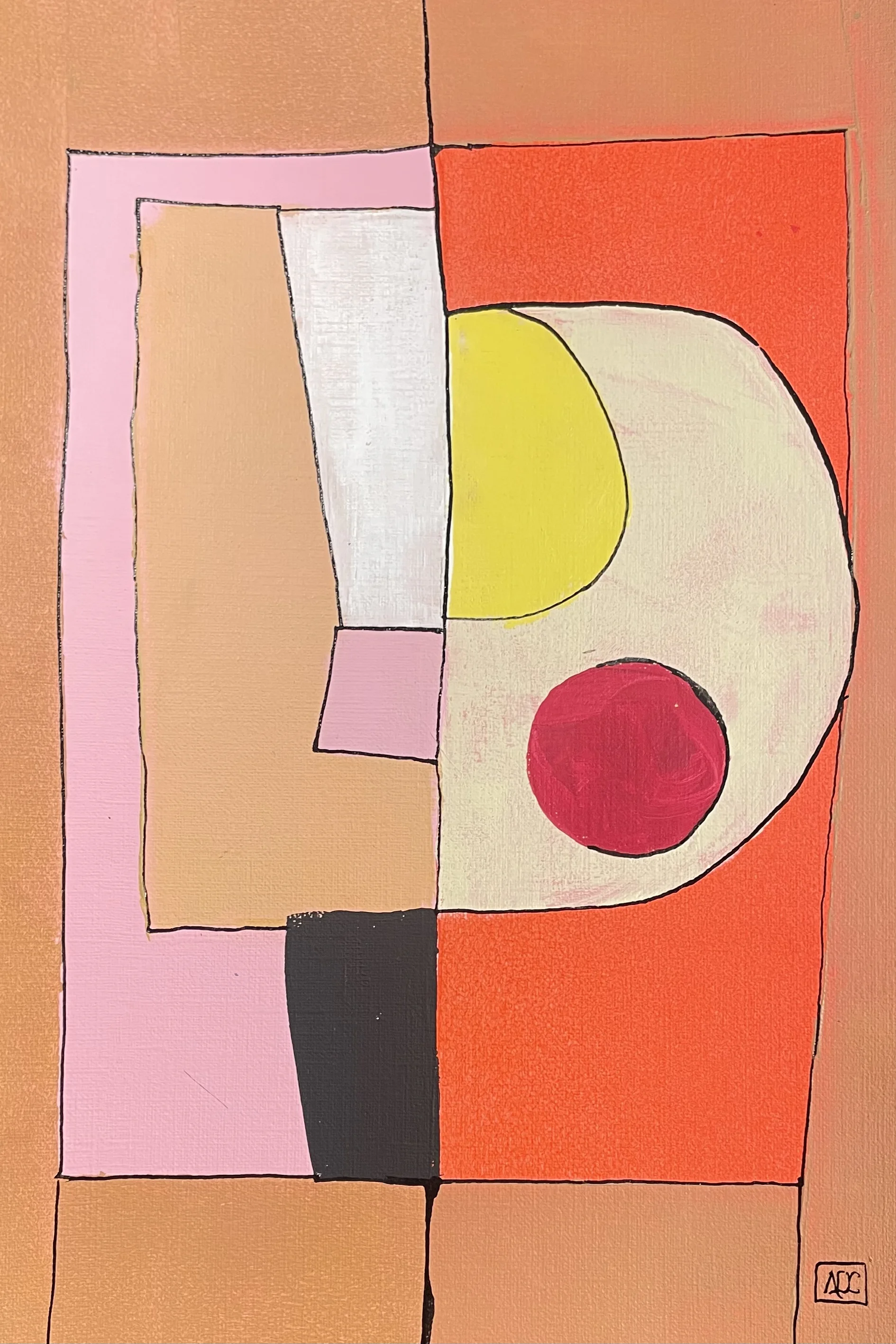
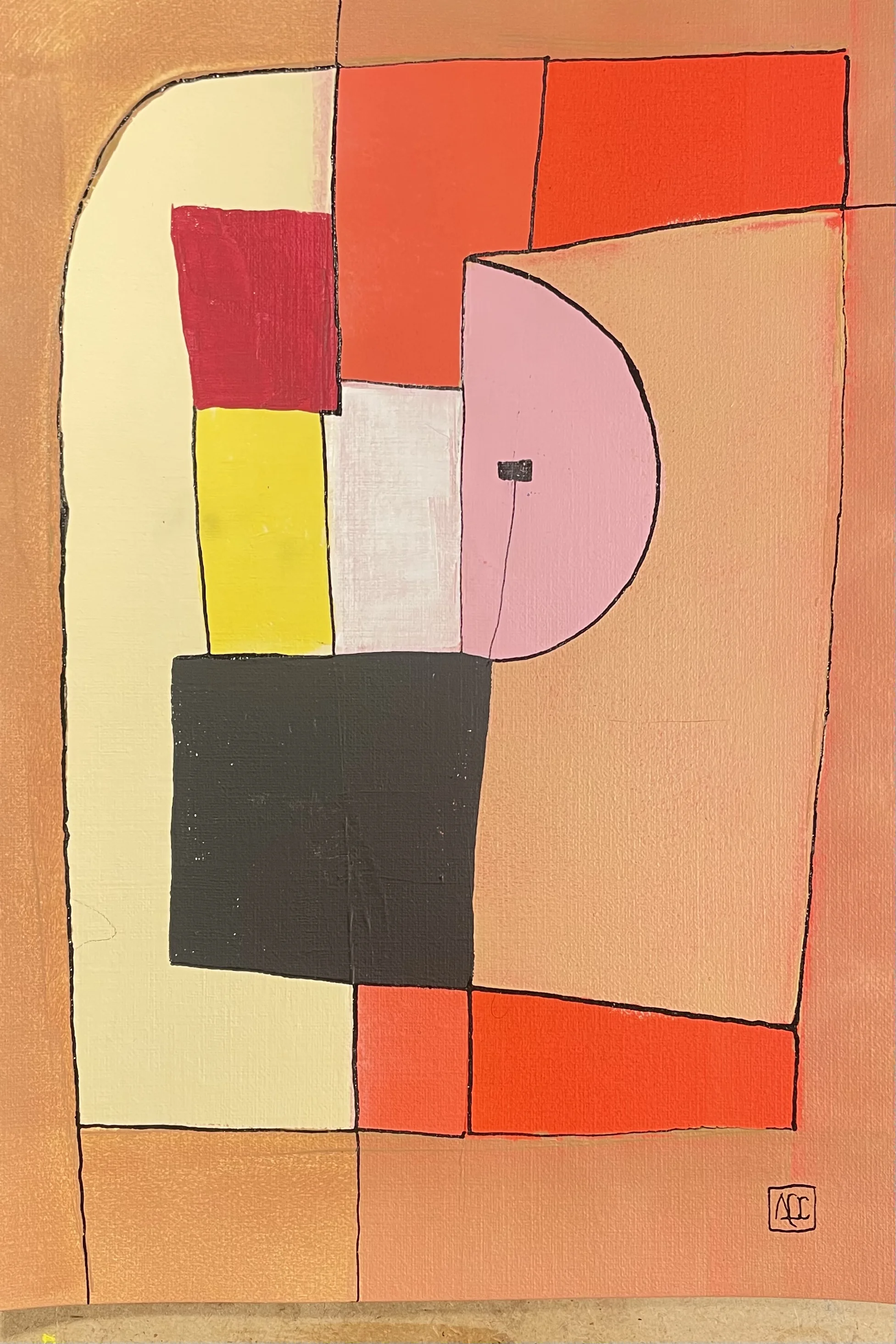
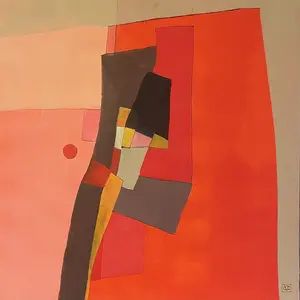
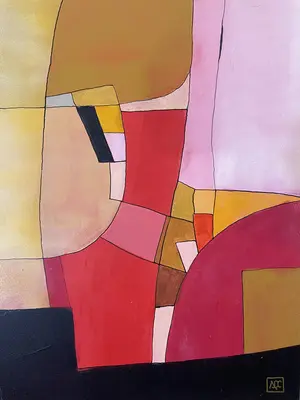
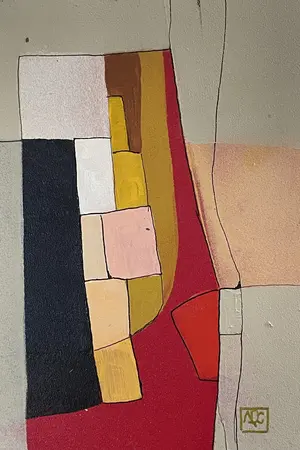
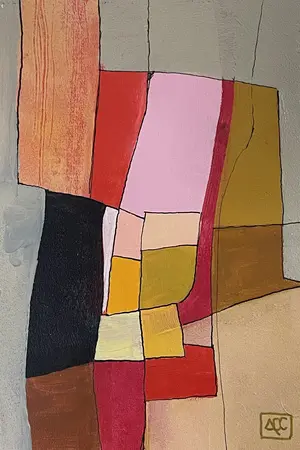
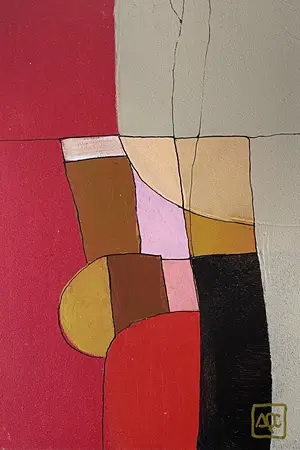
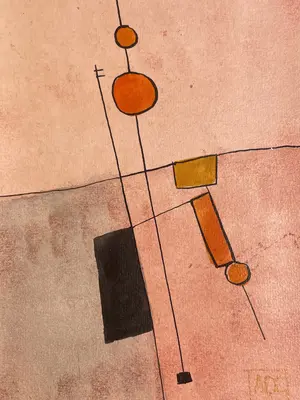
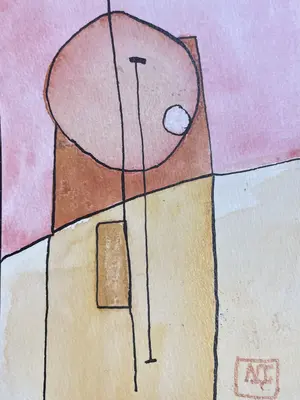
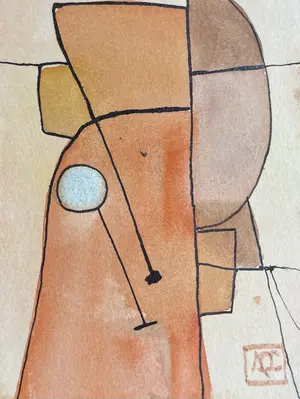
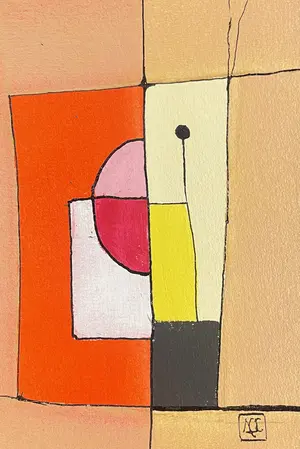
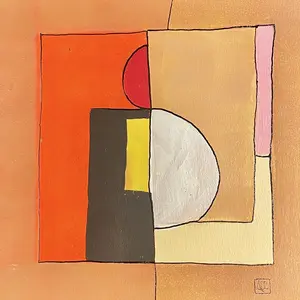
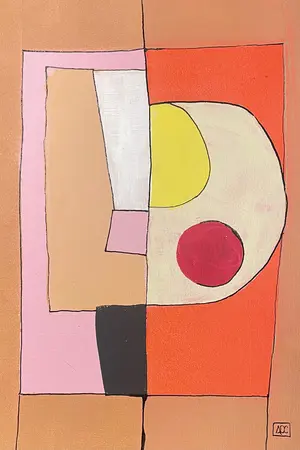
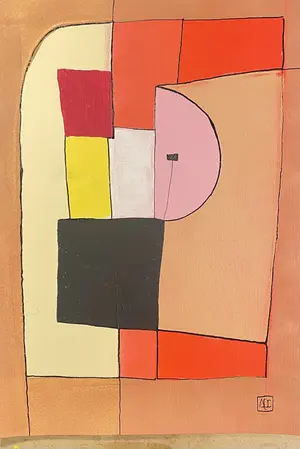
A minor is a series of 15 paintings by Arnaud Quercy, created between 2024 and 2026 in acrylic on linen canvas, acrylic on paper, acrylic on wood panel and watercolor on paper. Formats range from 10×15 cm to 80×80 cm. All 15 works in this series are held in private collections (Switzerland, Paris, France, COLIGNY, Suisse, Sao Paulo, Brazil, Millau, France, UK, Istanbul, Turkey, Detroit, USA, New York, USA). Works presented at: Rencontres au Marché de la Création, Salon d'art contemporain – Metamorphose, Paris and Permanent Collection 2025 – Resonance in Form and 8 more.
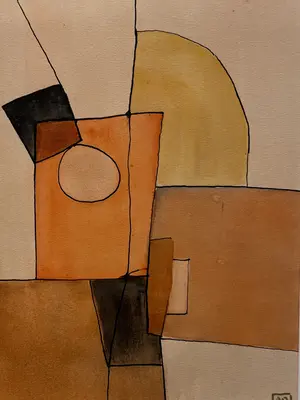
A Minor is the shadow self of C Major. The same white keys, the same absence of sharps and flats, but the center of gravity shifts down a minor third, and everything changes. It is the key of Chopin's Waltz in A Minor, of the opening prelude of the Well-Tempered Clavier's first book, of Beethoven's late Bagatelle "Fur Elise." A minor triad — A, C, E — carries the simplest possible minor interval structure, yet in harmonic-chromatic translation it produces something unexpected: warmth. Yellow-orange at the root, red at the third, yellow at the fifth. Three warm colors, no cool tones anywhere in the chord. The warmest minor key in the system.
The harmonic-chromatic palette maps register to luminosity. A below the third octave darkens toward near-black — a deep yellow-orange felt as weight rather than color. C in the upper octaves lightens through red to pale rose to silver at C7, where the red has bleached almost to white. E sits between them in clear yellow, a stabilizing brightness. The mid-register holds the chord's saturated truth: warm yellow-orange at A4, full red at C4, bright yellow at E4. In the low bass, the triad reads as darkness; in the high treble, as luminous silver. Between those poles, the canvas glows with the paradox of a melancholy key rendered entirely in warm hues.
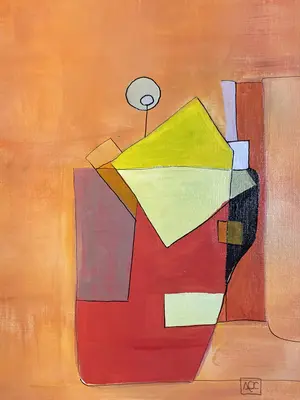
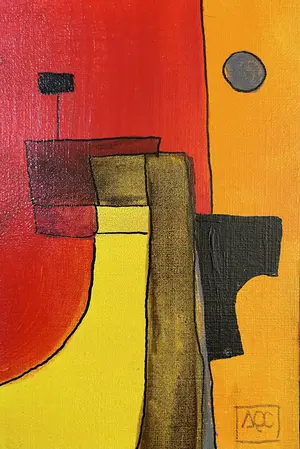
Arnaud Quercy investigates this paradox across fourteen études, painted between 2024 and 2025 in acrylic and watercolor — on paper, on wood panel, one on linen canvas. Every étude is marked Lent, legato — slow and sustained, without exception. The dynamics stay soft: thirteen études at mp or p, with a single mf in Variation 1, the only moment of declarative volume in the series. The contours split between bell arches in four beats and descending waltzes in three. Note counts range from four to eight, with most études holding five to seven tones. Several works use only chord tones — pure A, C, and E in various registers — while others introduce chromatic accents: a blue-violet D# or a blue-green C#, cool interruptions pressing against the surrounding warmth. The register spans from A0, the lowest A on the keyboard, to C7 near the top — nearly the full range of the instrument.
Three works mark the series' poles. Variation 2, the largest canvas at 80 by 80 centimetres on linen, is also the softest — a five-note bell arch at p that peaks on A5, the root rather than the third, giving the painting a settled, circular warmth that turns on yellow-orange alone. At the other extreme, Variation 4 descends in waltz time to A0, what the artist describes as "a rumbling, almost tactile tone" — six notes falling from the upper midrange to a frequency more felt than heard, the painting anchored in near-black. Variation 7 reduces the étude to four notes — the sparsest in the series — "a gesture reduced to its essentials: one dark base, two warm midpoints, one high arrival."
Across the fourteen canvases, a viewer encounters warmth in every register. The low études read as darkness — near-black bass anchoring the lower edge of each painting. The high études glow with pale reds and silvers where C6 and C7 catch the light. Between floor and ceiling, the yellow-orange of A and the red of C repeat in endless recombination, occasionally interrupted by a flash of blue-violet or blue-green from a chromatic accent. The visual rhythm is one of alternation: root and third trading places through the registers, the warm palette shifting in temperature from deep amber to bright silver without ever turning cool. Some canvases are luminous — Variation 8 carries its brightness from C7 downward through three high C's, staying pale almost to the end. Others are anchored in shadow, the bass pulling the painting's weight earthward.
A Minor is the proof that sadness need not be cold. Fourteen études, all slow, all soft, all warm — and yet the minor third bends each phrase toward something that reads unmistakably as melancholy. Quercy's harmonic-chromatic practice reveals this as a quality of interval, not of color: it is the distance between A and C, not their hues, that carries the emotional weight. More than half the series has found homes in collections from Paris to Istanbul, from the south of France to São Paulo — the warmest minor key travelling widely, carrying its quiet contradiction with it.
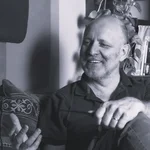
Arnaud Quercy is a Parisian artist working across painting, music, and sculpture. His practice is grounded in Ideamorphism — the principle that a work of art does not carry meaning, but triggers it. Each piece is engineered to diffract differently through each person who encounters it.
He creates and exhibits at Art Quam Anima, his gallery-atelier at 28 rue du Dragon, Saint-Germain-des-Prés, Paris.
Works — A minor
Related hubs
- Collection: Harmonic Crossing
Exhibitions 10
- Rencontres au Marché de la Création (2024-04-23 → 2024-12-31, Marché de la Création – Paris Montparnasse, Paris)
- Salon d'art contemporain – Metamorphose, Paris (2024-12-26 → 2025-01-05, Halle des Blancs Manteaux, Paris)
- Permanent Collection 2025 – Resonance in Form (2025-01-01 → 2025-12-31, arnaudquercy.art, Paris)
- Paris Studio Visit (2025-02-18 → 2025-02-18, Artist's Studio, Paris)
- Marché d'Art Contemporain – Seine Port (2025-05-17 → 2025-05-17, MAC Seine-Port, Seine-Port)
- Nuit des Artistes, St Germain-en-Laye, France (2025-05-24 → 2025-05-24, La Nuit des Artistes, Saint-Germain-en-Laye)
- Marché de l'Art de Saint-Germain-en-Laye, 17ème édition – France (2025-06-14 → 2025-06-14, Marché de l'Art, Saint-Germain-en-Laye)
- Salon d'art contemporain – Metamorphose 2025–2026, Paris (2025-12-26 → 2026-01-04, Halle des Blancs Manteaux, Paris)
- Art Quam Anima – Pre-opening (2026-01-31 → 2026-02-28, Art Quam Anima, Paris)
- Through the Aperture — Research on Harmony (2026-03-09 → 2026-04-30, Art Quam Anima, Paris)
Other series in this collection 35
Documented at 1
Catalogue raisonné entries 15
- A minor - Research on Harmony
- A minor - Research on Harmony - Variation 1
- A minor - Research on Harmony - Variation 2
- A Minor - Research on Harmony - Variation 3
- A Minor - Research on Harmony - Variation 4
- A Minor - Research on Harmony - Variation 5
- A Minor - Research on Harmony - Variation 6
- A minor - Research on Harmony - Variation 7
- A minor - Research on Harmony - Variation 8
- A minor - Research on Harmony - Variation 9
- A Minor - Research on Harmony - Variations 10
- A Minor - Research on Harmony - Variations 11
- A Minor - Research on Harmony - Variations 12
- A Minor - Research on Harmony - Variations 13
- Watercolor Study in A Minor No. 2