E Major series — 12 Paintings by Arnaud Quercy
ART-SER0007
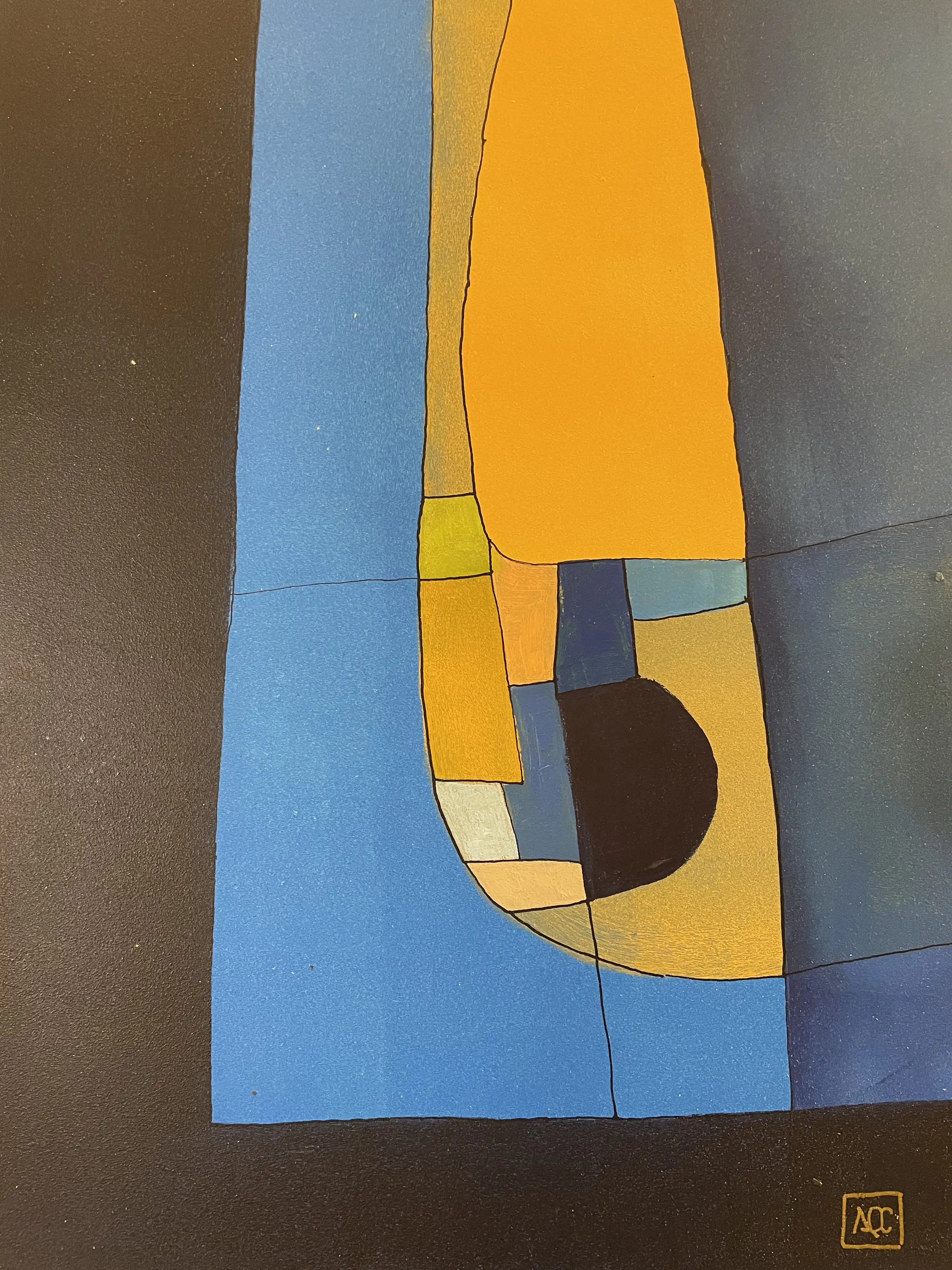
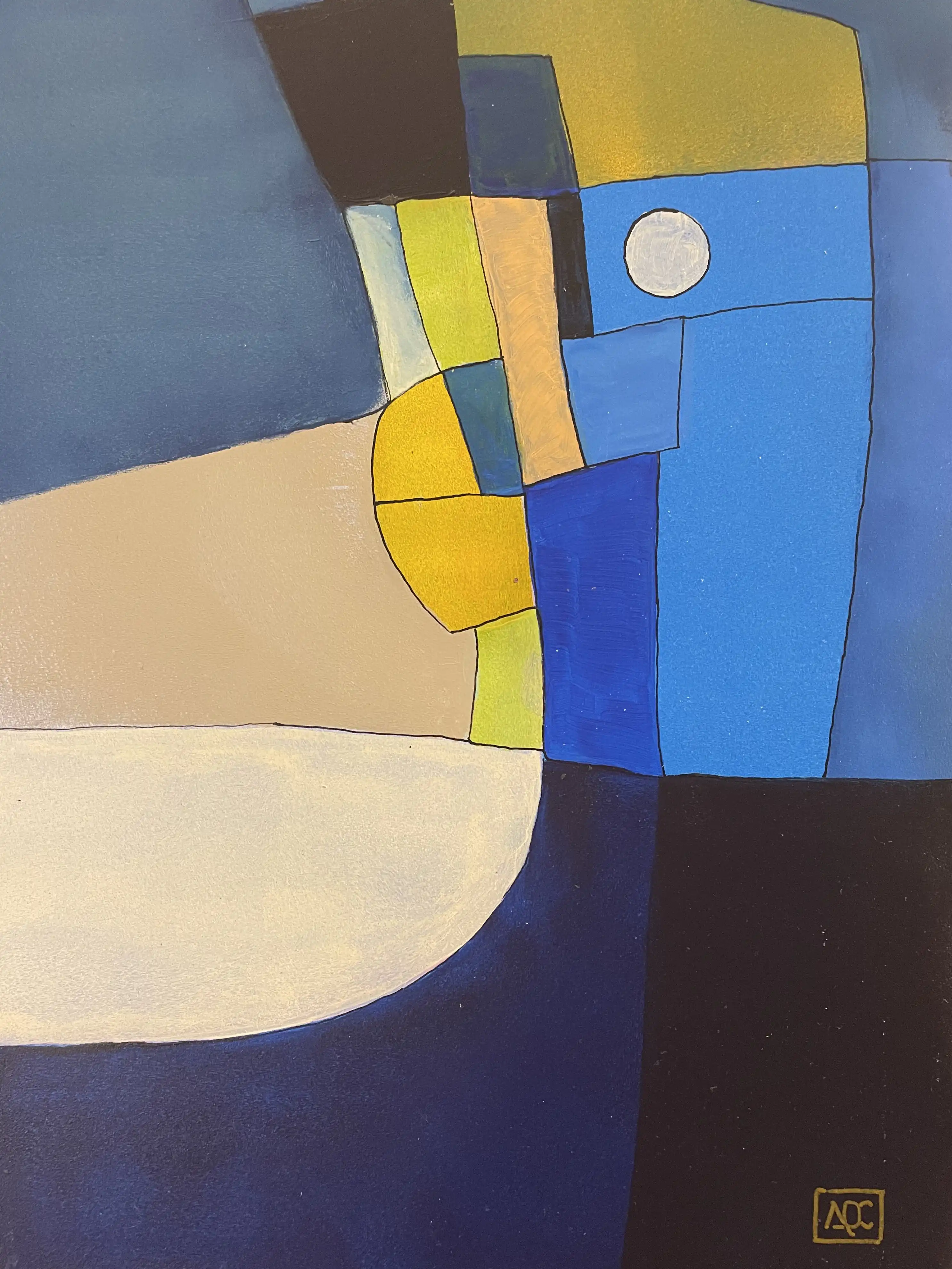
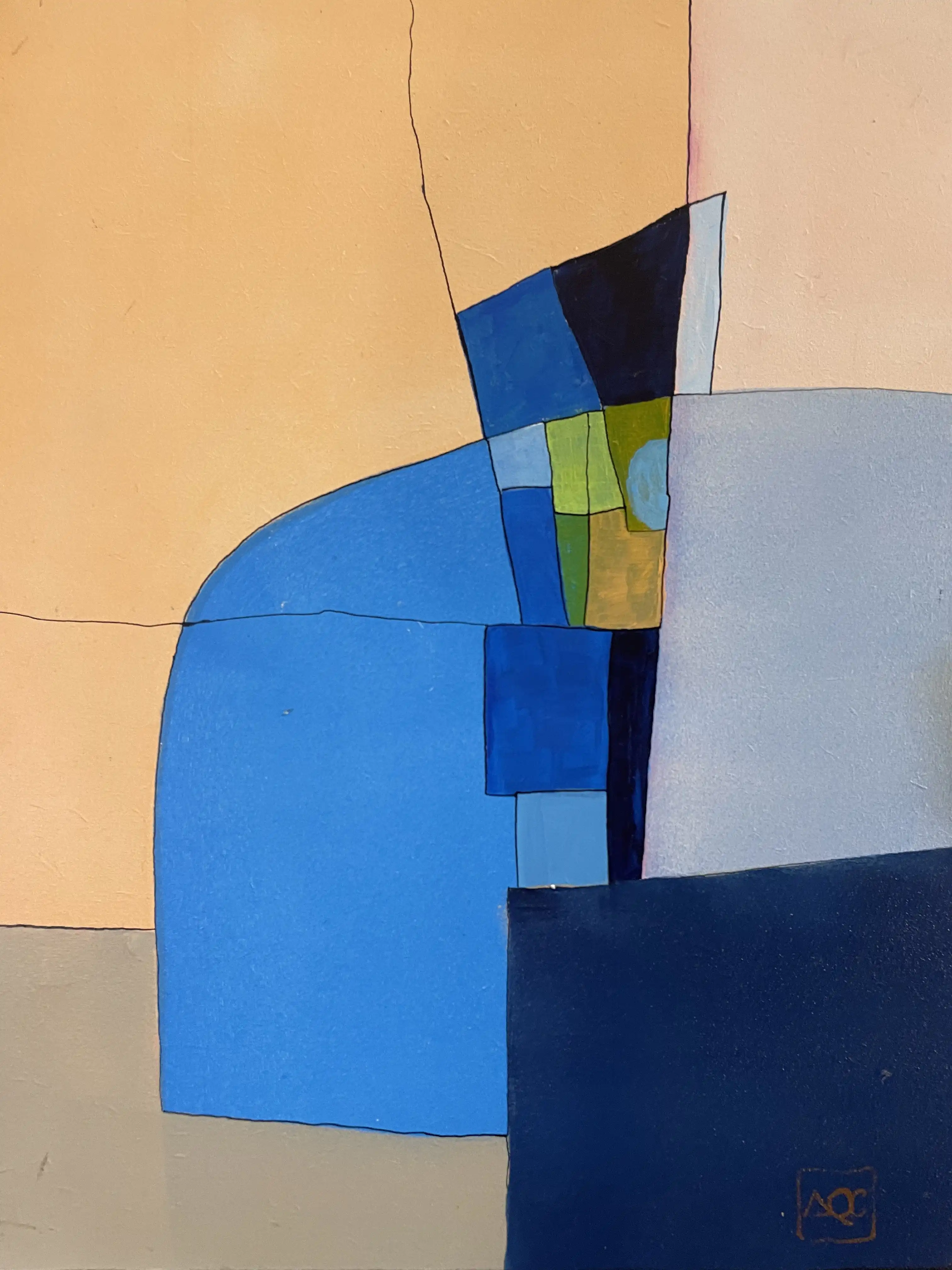
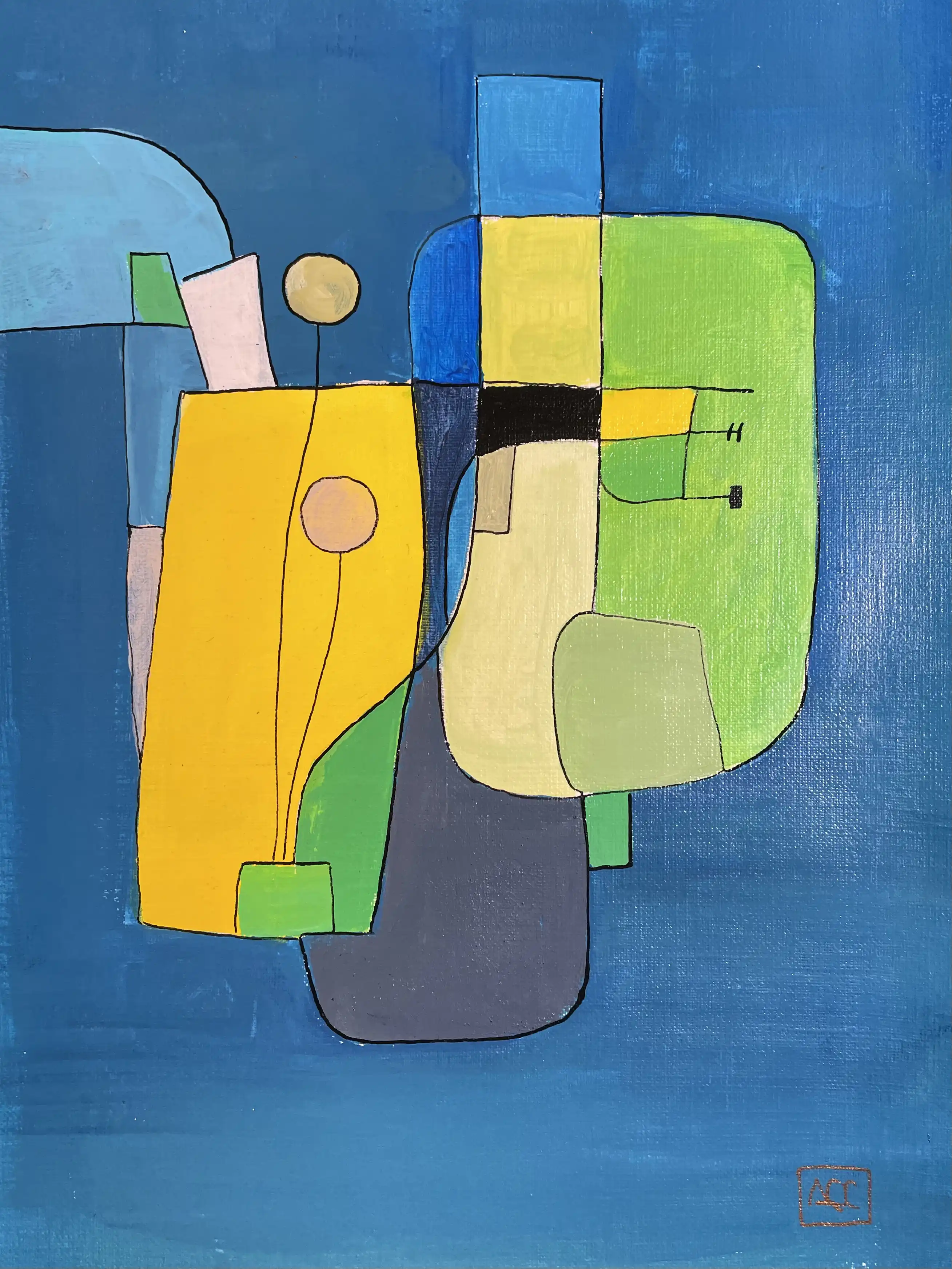
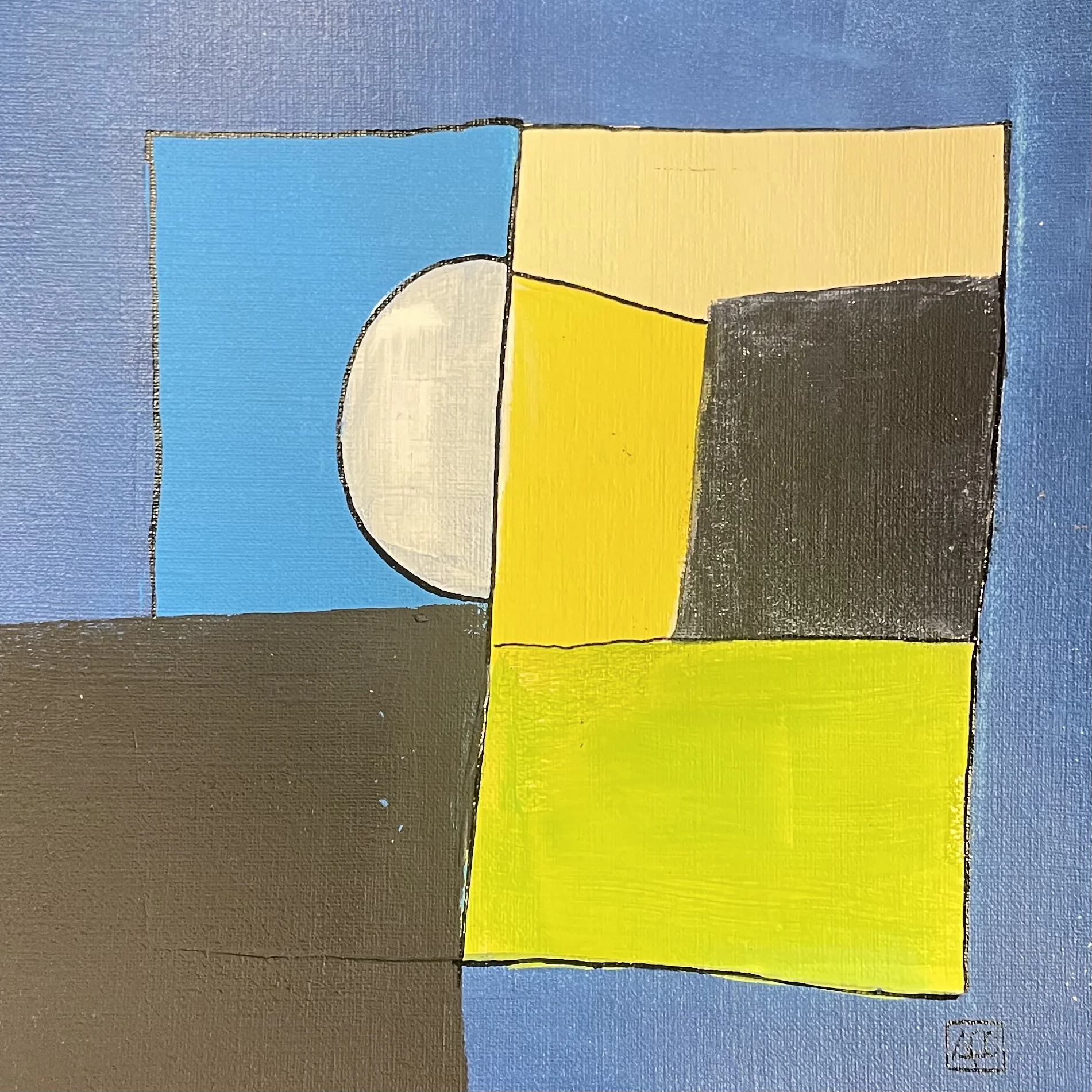
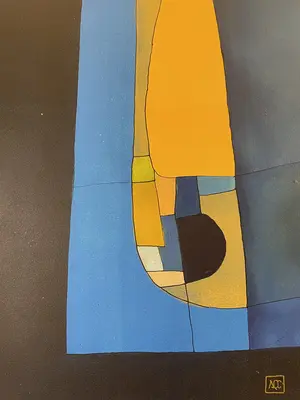
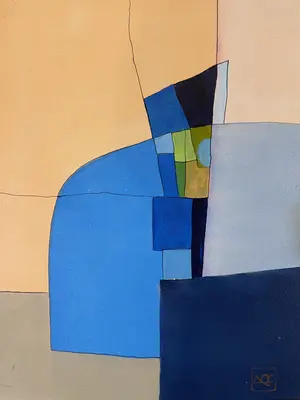
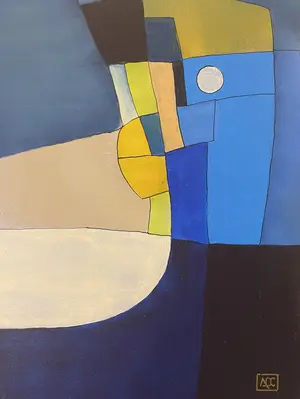
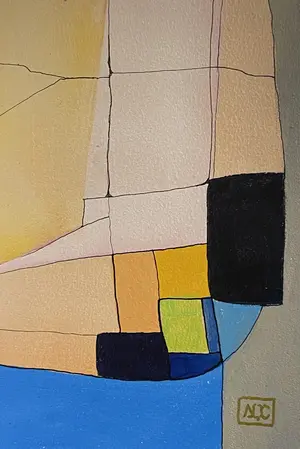
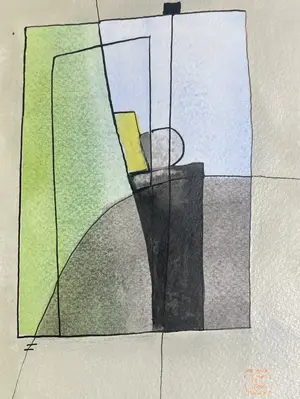
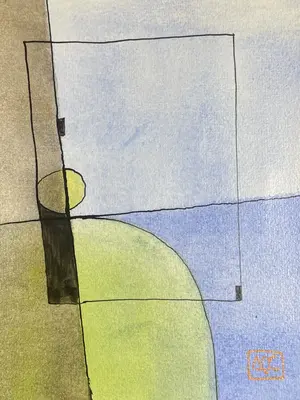
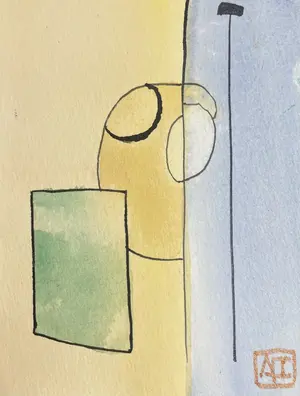
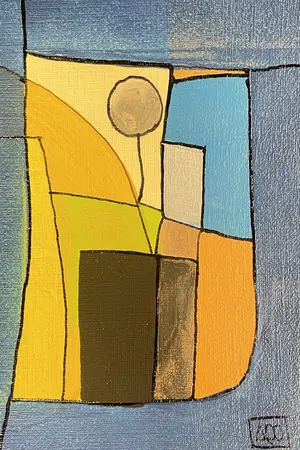
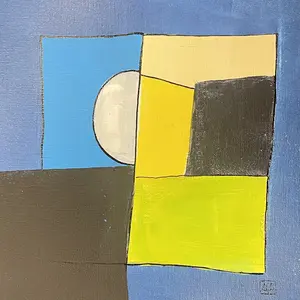
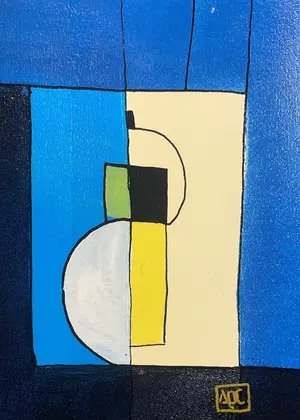
E Major is a series of 12 paintings by Arnaud Quercy, created between 2024 and 2025 in acrylic on paper, acrylic on wood panel and watercolor on paper. Formats range from 10×15 cm to 30×42 cm. 9 works are held in private collections (Geneva, USA, London, United Kingdom, Arcueil, France, Brussels, Belgium, Bali, Indonesia, Sao Paulo, Brazil). 2 remain available for acquisition at Art Quam Anima, 28 rue du Dragon, Paris. Works presented at: Rencontres au Marché de la Création, Salon d'art contemporain – Metamorphose, Paris and Permanent Collection 2025 – Resonance in Form and 7 more.
E Major is the guitar's home key — four sharps, the shape of open strings. In Western harmony it occupies a bright, declarative space: the key of Vivaldi's "Spring," of Chopin's Etude Op. 10 No. 3, of countless hymns that need to sound both luminous and grounded. Built from E, G-sharp, and B, the triad balances stability with a faint strangeness — the enharmonic pull of G-sharp toward A-flat lending the third an ambiguity that pure theory does not advertise.
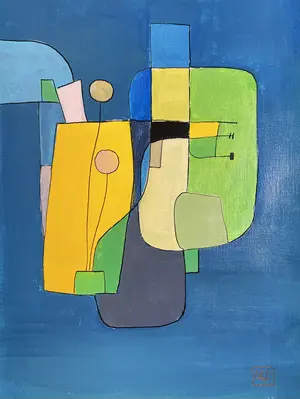
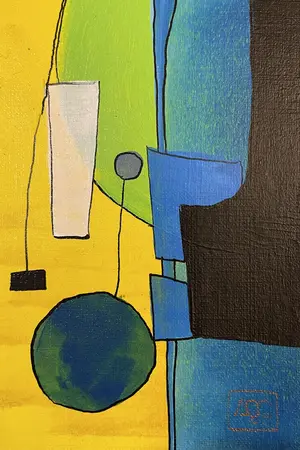
Through harmonic-chromatic, Quercy perceives the root E as yellow, the third G-sharp as blue — closer to its enharmonic twin A-flat on the color wheel — and the fifth B as yellow-green. The resulting palette is split between warm and cool: a sunny foundation disrupted by a blue center where one might expect warmth. Register deepens the effect. In the bass, E1 drops to near-black; in the extreme treble, G-sharp at the seventh octave fades to a pale, almost invisible blue-green. Between those poles, the chord's three color families — yellow, blue, yellow-green — shift through every degree of saturation and light.
Twelve piano etudes investigate this paradox of a sunny key with a blue heart. The dominant character is animated — ten of the twelve are marked Anime at 88 beats per minute, the phrases driven forward with consistent energy. The remaining two provide the series' points of rest: Variation 5 steps back to Modere, and Variation 8 slows to Lent, a meditative 60 beats per minute. Dynamics stay predominantly soft to moderate, ranging from piano through mezzo-piano to a single mezzo-forte in Variation 9 — the loudest study in the set. The meter divides almost evenly between four-beat and waltz time, and the prevailing contour is the inverted bell: phrases that dip into the bass before climbing toward the upper registers. Nearly all are legato, with one notable exception. Several etudes introduce chromatic tensions — an orange D or a violet A-sharp surfacing alongside the triad — while others remain pure, letting the three chord tones speak alone.
The opening study claims the widest span: E1 to G-sharp in the seventh octave, nearly the full keyboard, with both an orange and a violet accent establishing that tensions will be part of the conversation. "This opening etude sets the terms: animated, wide-ranging, the tensions present from the first note." At the opposite extreme, Variation 8 distills the chord to just three pitches — D4, E5, G-sharp at the sixth octave — and is the only true bell arch in the series, the line rising then folding back on itself. "An etude of light, arriving slowly," the artist writes of this most pared-back study. Variation 7 pushes in the other direction, carrying nine notes and three non-chord accents — violet, orange, and red-orange — the densest chromatic palette the series produces.
Across the twelve paintings, the palette tends strongly toward luminosity. The upper registers dominate most compositions, pulling the visual weight upward into pale yellows and faint blue-greens. When darkness appears, it anchors the bass — the near-black of E1, the dark orange of E2 — grounding the image before the line ascends. The chromatic accents — orange and violet — arrive most often in the lower and middle registers, warming the valleys that the chord tones illuminate above. The waltz-time etudes carry a lighter visual rhythm than their four-beat counterparts, and the single study in normal articulation, Variation 11, holds a subtly different surface: the colors touching at their edges rather than blending, each pitch more discrete on the paper.
E Major reveals its character through repetition. Twelve passes over the same three tones, and what emerges is not redundancy but a map of the chord's inner tensions — the blue third that contradicts the sunny root, the pale treble that dissolves into near-silence, the chromatic visitors that test the harmony's boundaries. Works from this series have found homes in collections from Geneva to Sao Paulo, the paradox of a bright key with a cool center traveling further than the studio where these translations began.
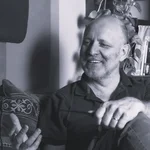
Arnaud Quercy is a Parisian artist working across painting, music, and sculpture. His practice is grounded in Ideamorphism — the principle that a work of art does not carry meaning, but triggers it. Each piece is engineered to diffract differently through each person who encounters it.
He creates and exhibits at Art Quam Anima, his gallery-atelier at 28 rue du Dragon, Saint-Germain-des-Prés, Paris.
Works — E Major
Related hubs
- Collection: Harmonic Crossing
Exhibitions 10
- Rencontres au Marché de la Création (2024-04-23 → 2024-12-31, Marché de la Création – Paris Montparnasse, Paris)
- Salon d'art contemporain – Metamorphose, Paris (2024-12-26 → 2025-01-05, Halle des Blancs Manteaux, Paris)
- Permanent Collection 2025 – Resonance in Form (2025-01-01 → 2025-12-31, arnaudquercy.art, Paris)
- Paris Studio Visit (2025-02-18 → 2025-02-18, Artist's Studio, Paris)
- Marché d'Art Contemporain – Seine Port (2025-05-17 → 2025-05-17, MAC Seine-Port, Seine-Port)
- Nuit des Artistes, St Germain-en-Laye, France (2025-05-24 → 2025-05-24, La Nuit des Artistes, Saint-Germain-en-Laye)
- Marché de l'Art de Saint-Germain-en-Laye, 17ème édition – France (2025-06-14 → 2025-06-14, Marché de l'Art, Saint-Germain-en-Laye)
- Salon d'art contemporain – Metamorphose 2025–2026, Paris (2025-12-26 → 2026-01-04, Halle des Blancs Manteaux, Paris)
- Art Quam Anima – Pre-opening (2026-01-31 → 2026-02-28, Art Quam Anima, Paris)
- Through the Aperture — Research on Harmony (2026-03-09 → 2026-04-30, Art Quam Anima, Paris)
Other series in this collection 35
Documented at 1
Catalogue raisonné entries 12
- E Major - Research on Harmony
- E Major - Research on Harmony - Variation 1
- E Major - Research on Harmony - Variation 2
- E Major - Research on Harmony - Variation 3
- E Major - Research on Harmony - Variation 4
- E Major - Research on Harmony - Variation 5
- E Major - Research on Harmony - Variation 6
- E Major - Research on Harmony - Variation 7
- E Major - Research on Harmony - Variation 8
- E Major - Research on Harmony - Variations 9
- E Major - Research on Harmony - Variations 10
- E Major - Research on Harmony - Variations 11