Db Major series — 14 Paintings by Arnaud Quercy
ART-SER0005
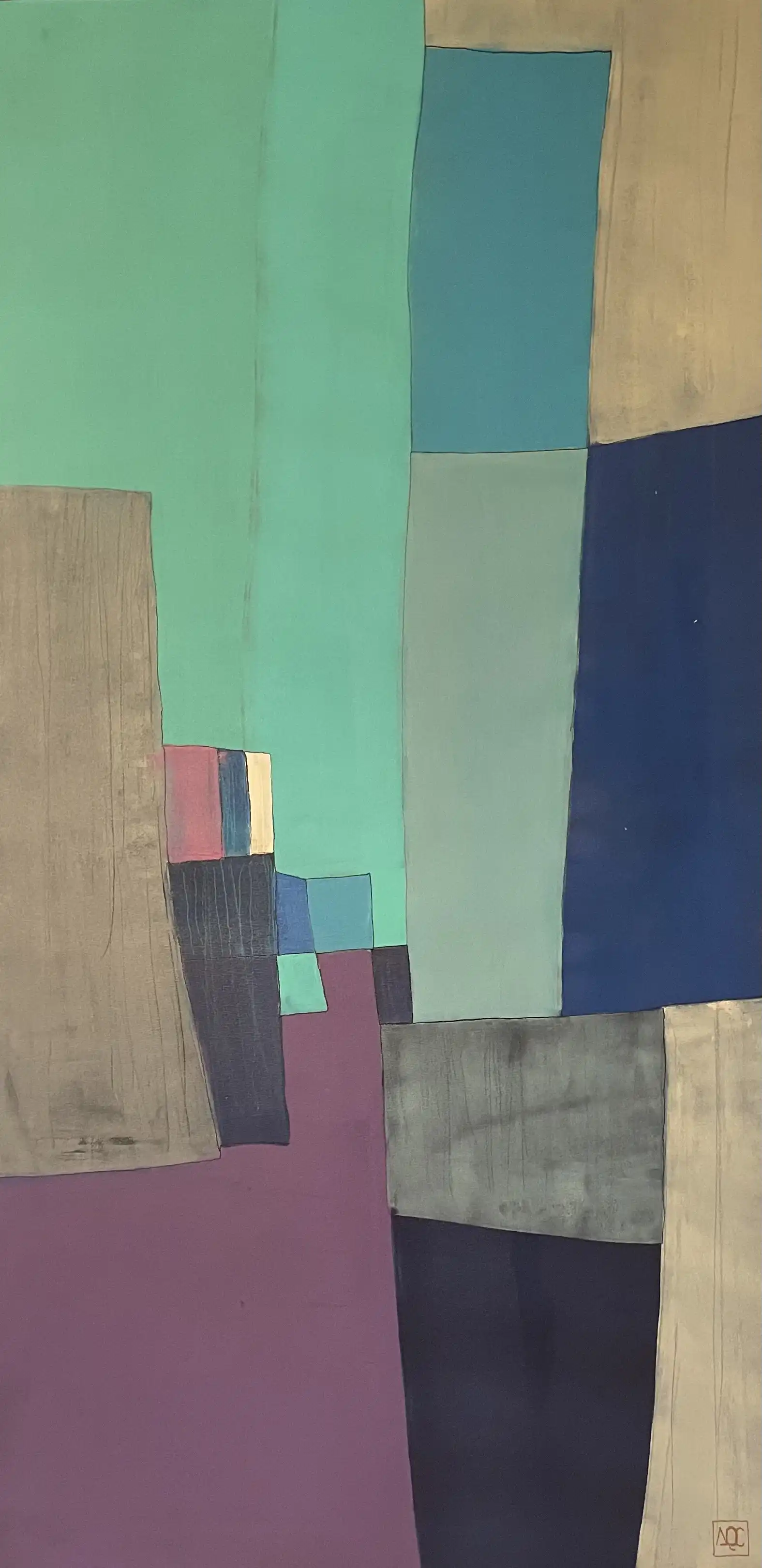
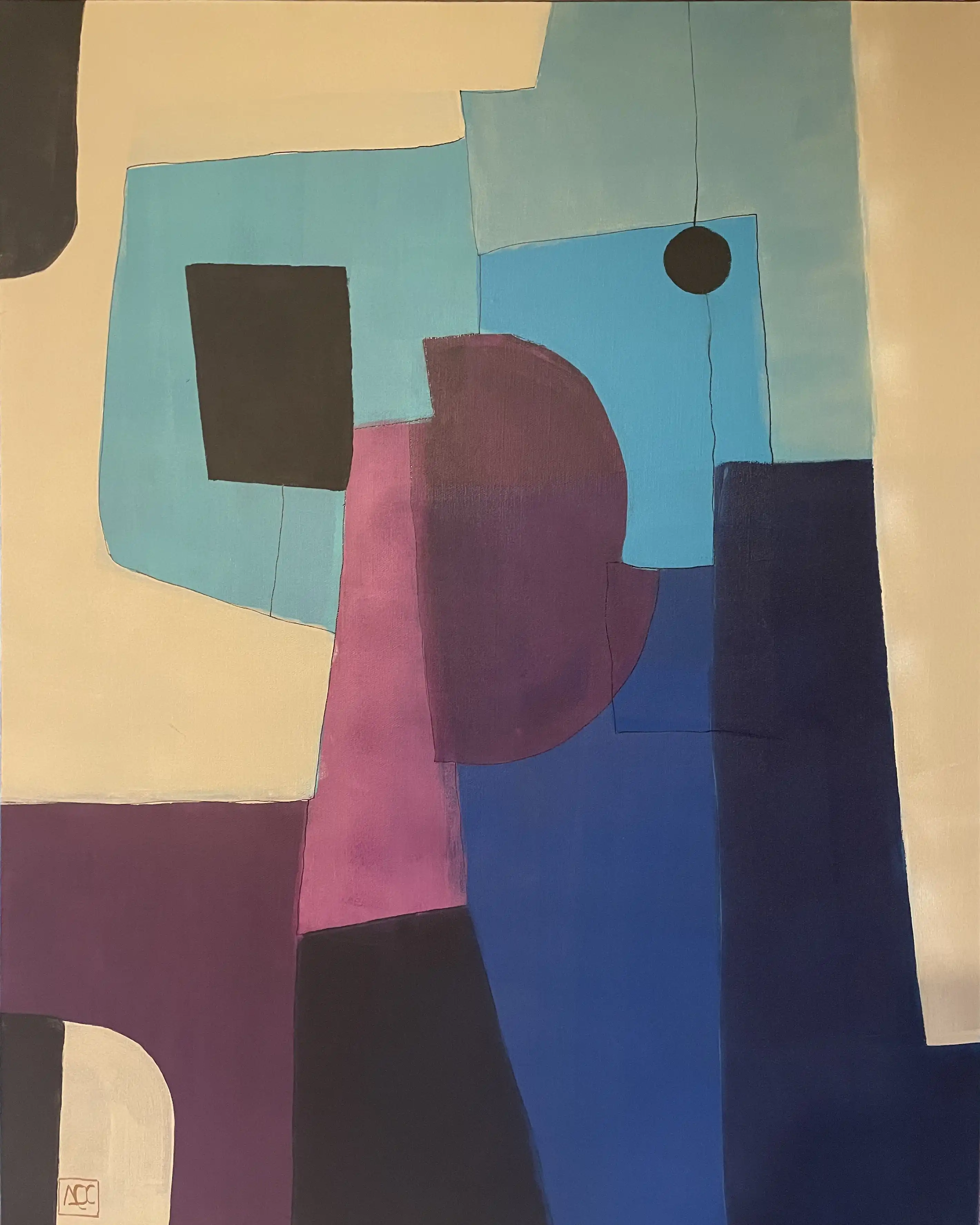
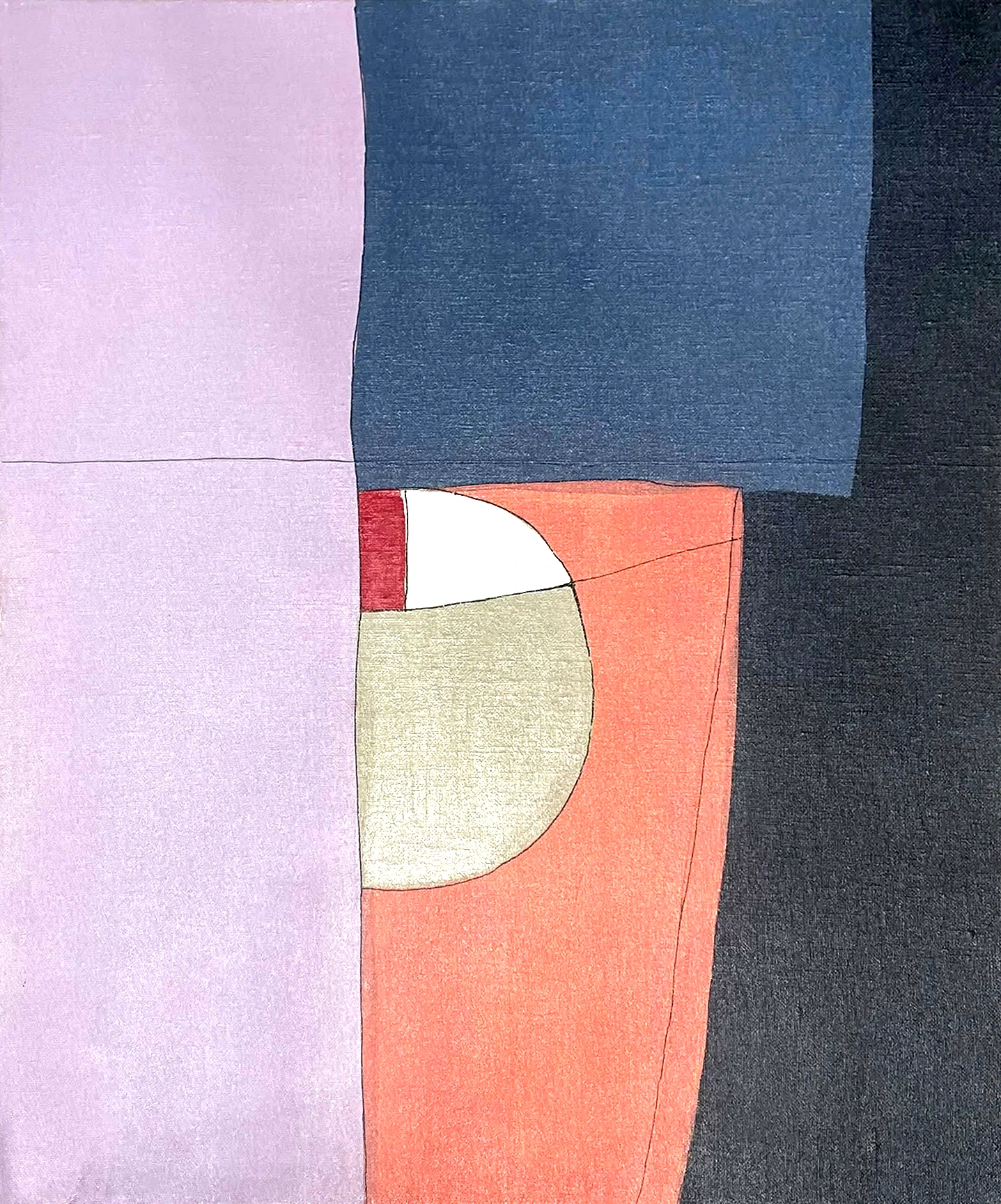
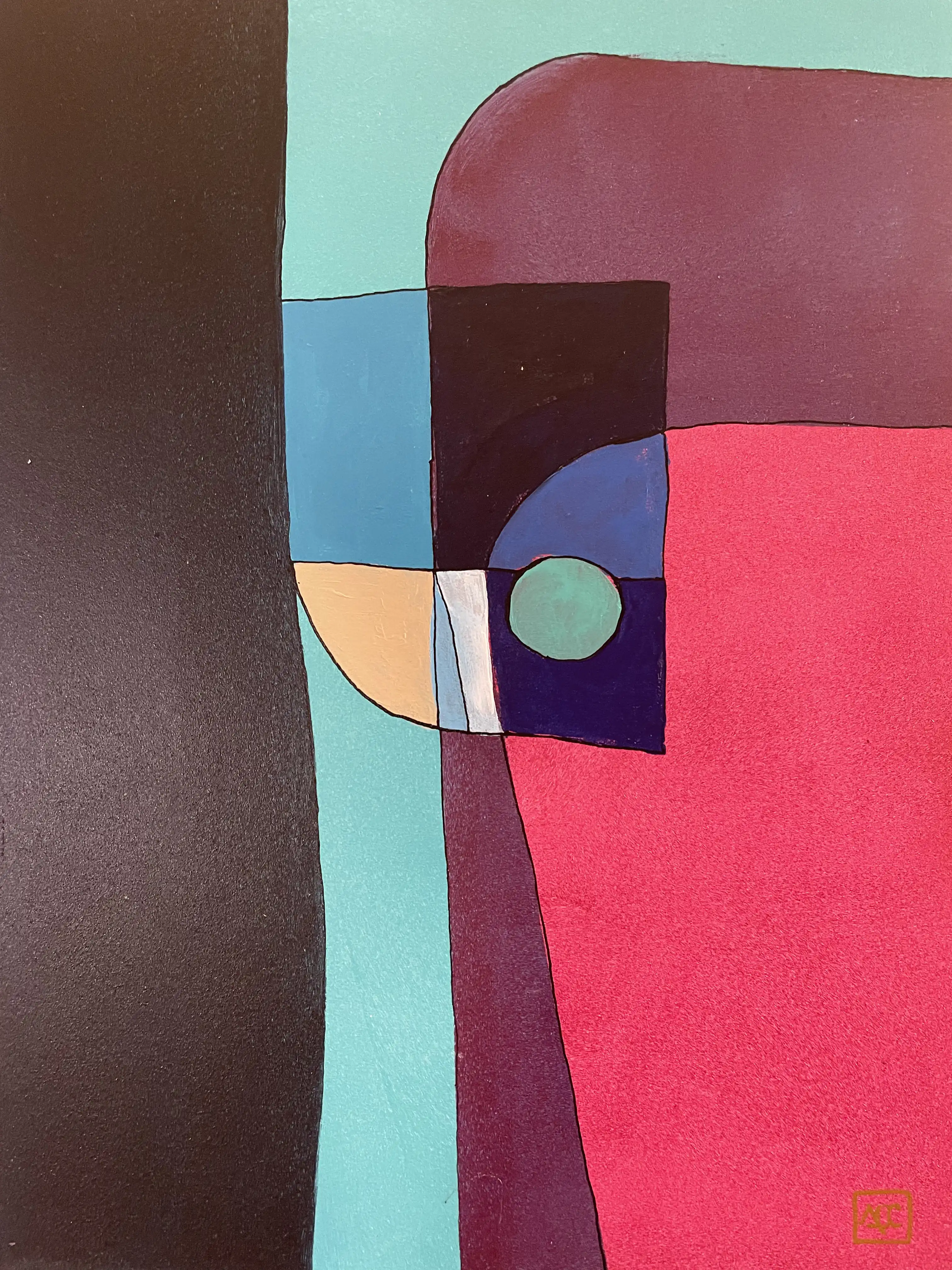
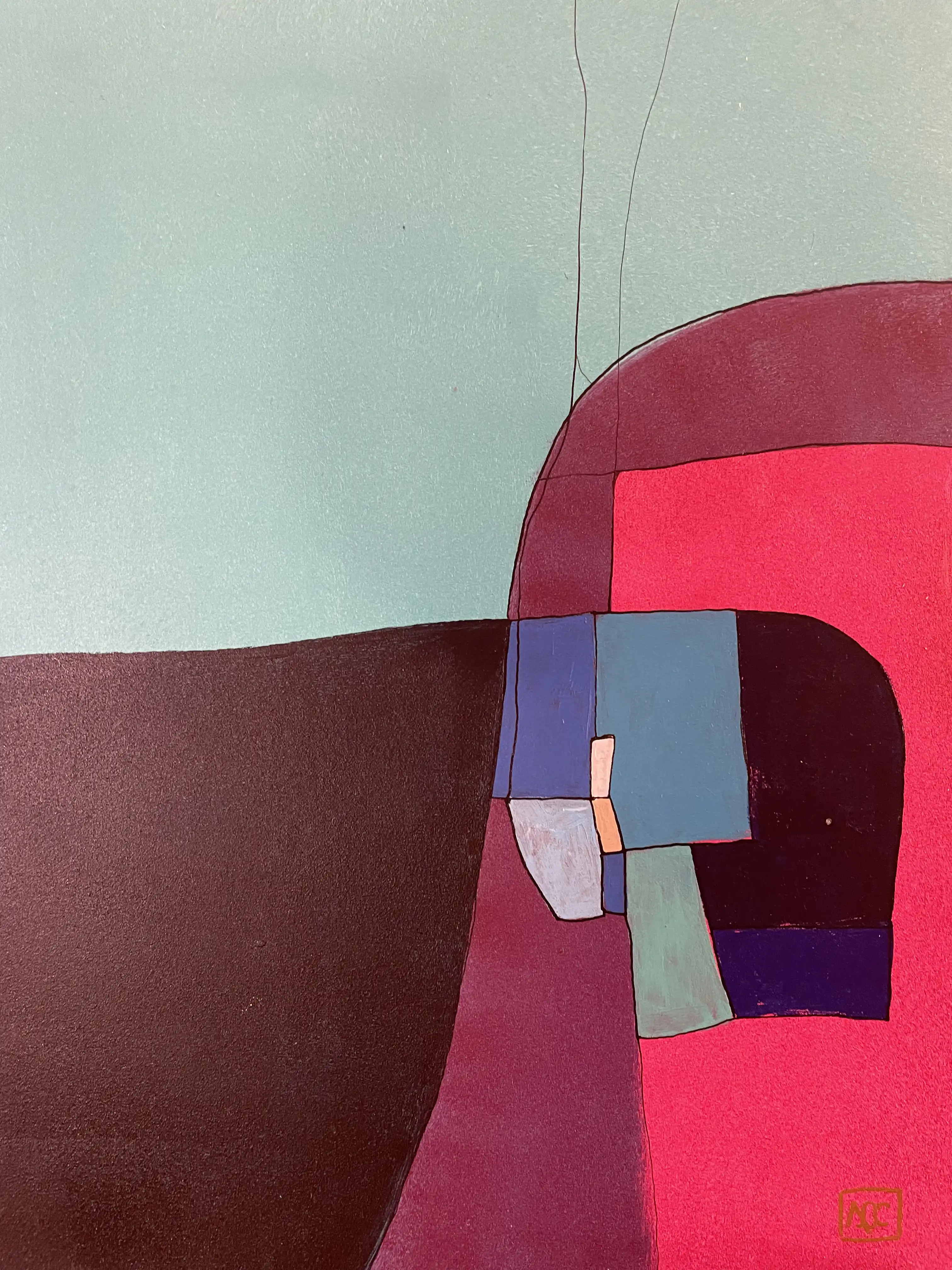
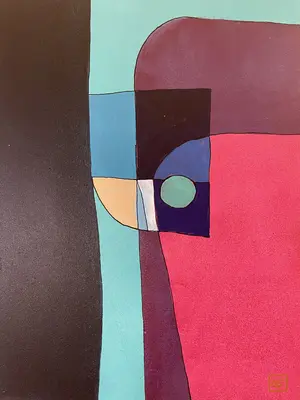
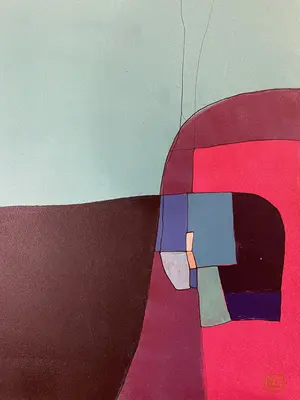
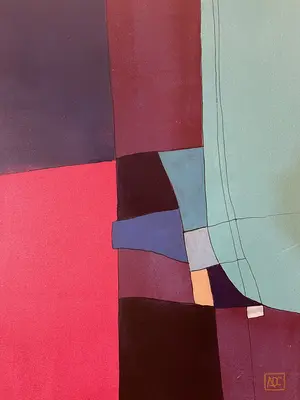
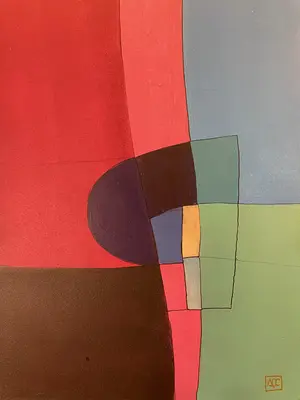
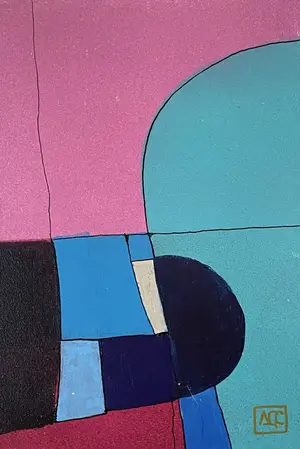
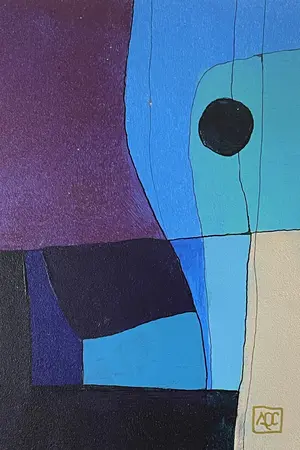
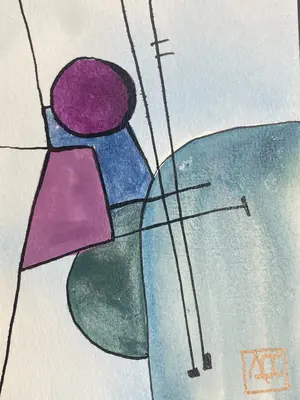
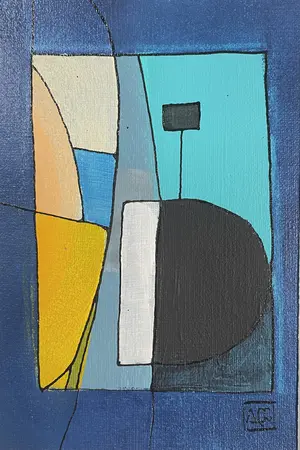
Db Major is a series of 14 paintings by Arnaud Quercy, created between 2024 and 2026 in acrylic on linen canvas, acrylic on paper, acrylic on wood panel and watercolor on paper. Formats range from 10×15 cm to 60×120 cm. 7 works are held in private collections (San-Francisco, USA, Paris, France, Sao Paul, Brazil, Germany). 5 remain available for acquisition at Art Quam Anima, 28 rue du Dragon, Paris. Works presented at: Rencontres au Marché de la Création, Salon d'art contemporain – Metamorphose, Paris and Permanent Collection 2025 – Resonance in Form and 7 more.
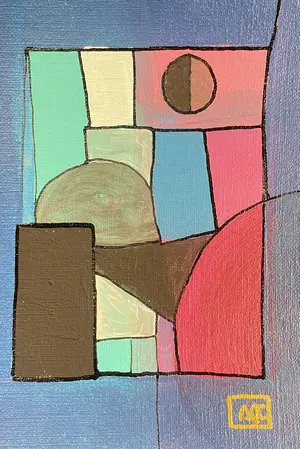
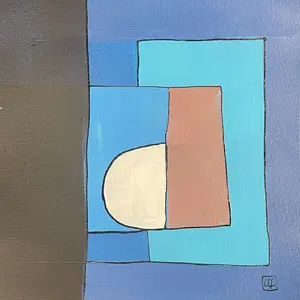
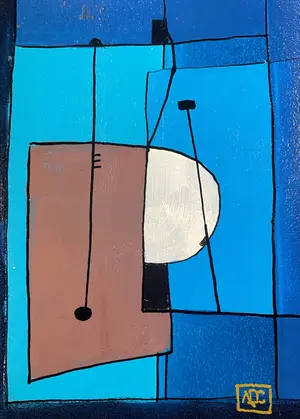
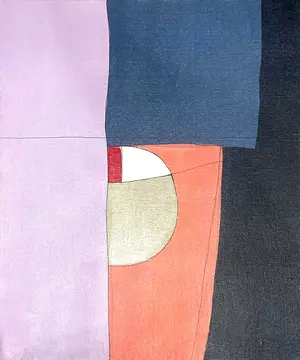
Db Major is built from five flats — a key that lives in the deep end of Western harmony, rich with enharmonic ambiguity and expressive weight. Its interval structure (root, major third, perfect fifth) is shared by every major triad, but the specific placement of Db on the circle of fifths gives it a gravity that composers have long understood. Chopin chose this key for his Raindrop Prelude, letting its low resonance carry the persistent pulse of water against glass. In the Harmonic Crossing, Db Major becomes the subject of thirteen piano études, each one a new translation of that same gravity into color.
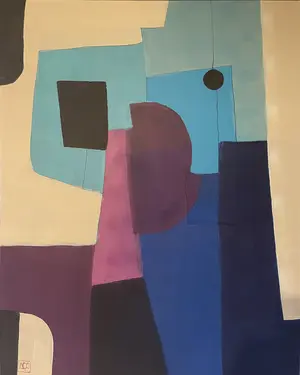
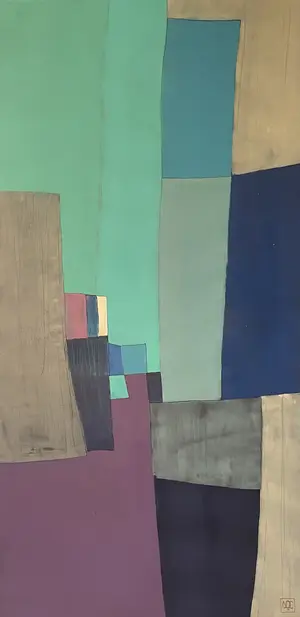
Through harmonic-chromatic, the three chord tones produce an entirely cool palette. The root, Db, registers as blue-green — dark and saturated in the lower octaves, fading toward gray as it rises. The third, F, carries red-violet, the only tone in the triad that edges toward warmth, a twilight hue threading through the middle register. The fifth, Ab, reads as deep blue leaning toward blue-violet, reinforcing the cool foundation. Together they build a palette of oceanic depth, one in which register determines everything: sub-bass pitches compress toward near-black, mid-range tones reach full saturation, and the highest notes dissolve into pale, almost-white light.
The thirteen études span two years of work across formats ranging from large linen canvases to intimate works on paper. The prevailing character is Animé and legato, with soft dynamics — most études speak at piano or mezzo-piano. Bell and inverted-bell contours dominate, the phrases arching and folding within spans that reach from Db0, at the extreme low end of the keyboard, to F6 near its upper limit. Three waltzes break from the prevailing four-beat meter into triple time, their ascending contours lending a lilting momentum absent from the rest. One étude — Variation 2 — slows to Modéré, and three more settle into the patience of Lent. Non-chord tones appear throughout the series: red-orange, orange, yellow-green, yellow-orange — warm accents that punctuate the cool field without overtaking it. The tension between the triad’s cool identity and these foreign intrusions is the series’ central visual drama.
The opening work (AQC0701), the largest in the series at 73 by 92 centimetres on linen, sets the terms with a contradiction. Nine notes across five octaves, an inverted bell, and a commanding warm orange accent at A5 that dominates the canvas — "a lit window in a dark street," as Quercy’s own description puts it. Variation 5 (AQC0725) offers the opposite extreme: the third is absent entirely, no F anywhere in the étude, the red-violet stripped away and replaced by a blaze of red-orange from three repeated G’s. It is the only variation that omits a chord tone, leaving the harmony open and ambiguous. Variation 12 (AQC0938), the final work, resolves the series into its purest expression — six notes, a waltz, the fifth flooding the upper canvas in the most vivid blue of the entire collection.
Across the thirteen canvases, the viewer encounters a palette that shifts between depth and dissolution. Blue-green dominates the lower portions, compressed toward black in the bass registers, softening toward gray in the later variations. Red-violet threads through the middle registers, sometimes leaning toward violet, sometimes bending unexpectedly toward yellow where a neighboring non-chord tone pulls at its hue. The warm accents — red-orange, orange, yellow-green — appear in nearly every étude, but their weight varies dramatically: in some works they are a single flicker, in others they compete with the triad for visual attention. The waltzes tend toward ascending contours and brighter upper registers, while the slow études let darkness settle and linger. Repetition reveals not sameness but range — thirteen ways the same cool chord can absorb, resist, or yield to warmth.
Db Major arrives, across these thirteen études, at something Chopin understood: that a key built on five flats carries its own weather. The series moves from the warm contradiction of its opening to the cool surrender of its close — "Db Major arriving, at last, at the pure expression of its own temperature." Works from the series have entered collections in Paris, São Paulo, and Germany, carrying that blue-green darkness outward into the world. What remains is the question each variation poses differently: how much warmth can a cool key hold before it becomes something else entirely?
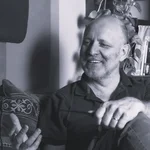
Arnaud Quercy is a Parisian artist working across painting, music, and sculpture. His practice is grounded in Ideamorphism — the principle that a work of art does not carry meaning, but triggers it. Each piece is engineered to diffract differently through each person who encounters it.
He creates and exhibits at Art Quam Anima, his gallery-atelier at 28 rue du Dragon, Saint-Germain-des-Prés, Paris.
Works — Db Major
Related hubs
- Collection: Harmonic Crossing
Exhibitions 10
- Permanent Collection 2025 – Resonance in Form (2025-01-01 → 2025-12-31, arnaudquercy.art, Paris)
- Paris Studio Visit (2025-02-18 → 2025-02-18, Artist's Studio, Paris)
- Rencontres au Marché de la Création (2024-04-23 → 2024-12-31, Marché de la Création – Paris Montparnasse, Paris)
- Salon d'art contemporain – Metamorphose, Paris (2024-12-26 → 2025-01-05, Halle des Blancs Manteaux, Paris)
- Marché d'Art Contemporain – Seine Port (2025-05-17 → 2025-05-17, MAC Seine-Port, Seine-Port)
- Nuit des Artistes, St Germain-en-Laye, France (2025-05-24 → 2025-05-24, La Nuit des Artistes, Saint-Germain-en-Laye)
- Marché de l'Art de Saint-Germain-en-Laye, 17ème édition – France (2025-06-14 → 2025-06-14, Marché de l'Art, Saint-Germain-en-Laye)
- Salon d'art contemporain – Metamorphose 2025–2026, Paris (2025-12-26 → 2026-01-04, Halle des Blancs Manteaux, Paris)
- Art Quam Anima – Pre-opening (2026-01-31 → 2026-02-28, Art Quam Anima, Paris)
- Through the Aperture — Research on Harmony (2026-03-09 → 2026-04-30, Art Quam Anima, Paris)
Other series in this collection 35
Documented at 1
Catalogue raisonné entries 14
- Db Major - Research on Harmony - Variation 3
- Db Major - Research on Harmony - Variation 4
- Db Major - Research on Harmony - Variation 5
- Db Major - Research on Harmony - Variation 6
- Db Major - Research on Harmony - Variation 7
- Db Major - Research on Harmony - Variation 8
- Db Major - Research on Harmony - Variation 9
- Db Major - Research on Harmony - Variation 10
- Db Major - Research on Harmony - Variation 12
- Db Major - Research on Harmony - Variations 15
- Db Major - Research on Harmony - Variations 14
- Db Major - Research on Harmony - Variations 13
- Db Major - Research on Harmony - Variations 14
- Db Major - Research on Harmony - Variations 16