F# Major series — 11 Paintings by Arnaud Quercy
ART-SER0013
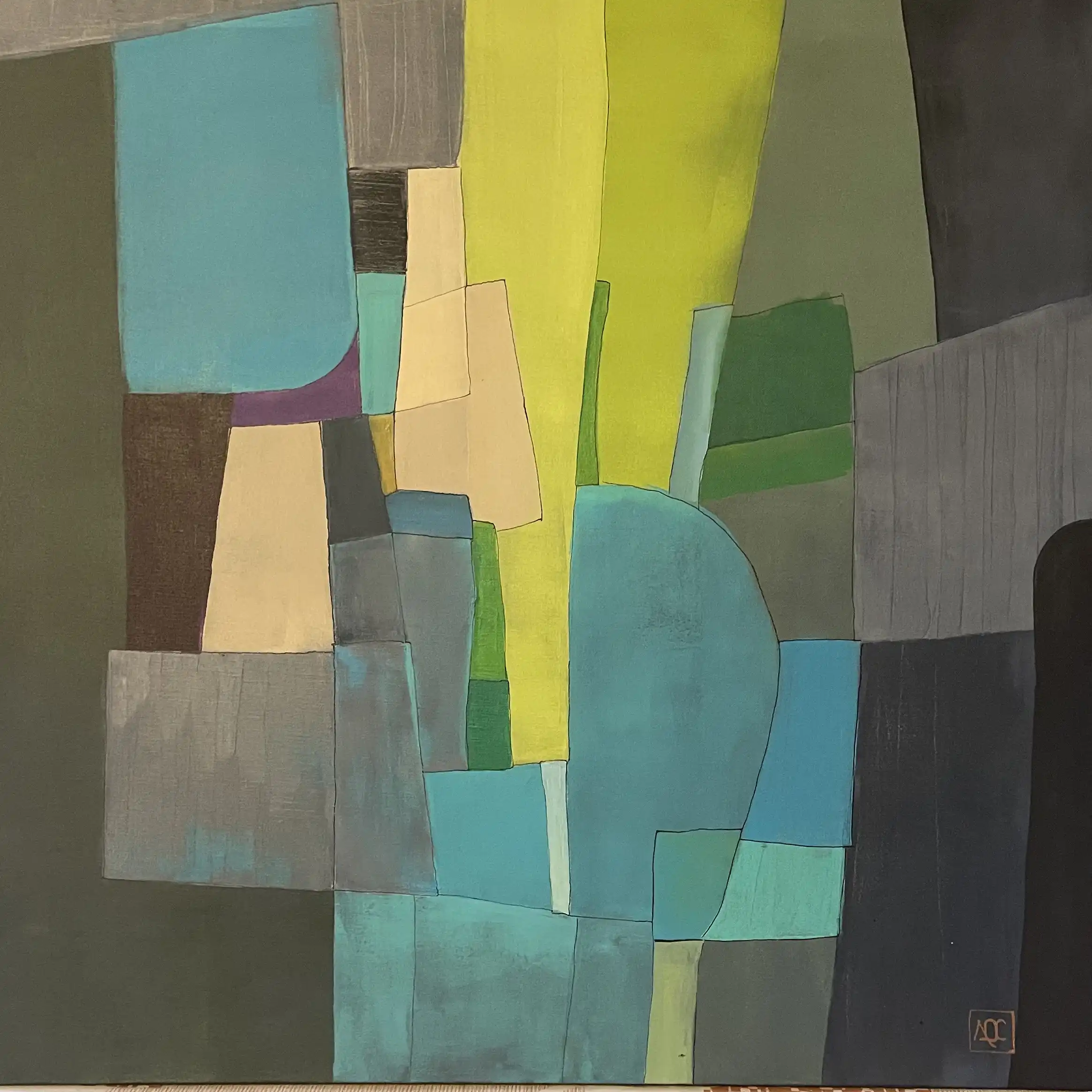
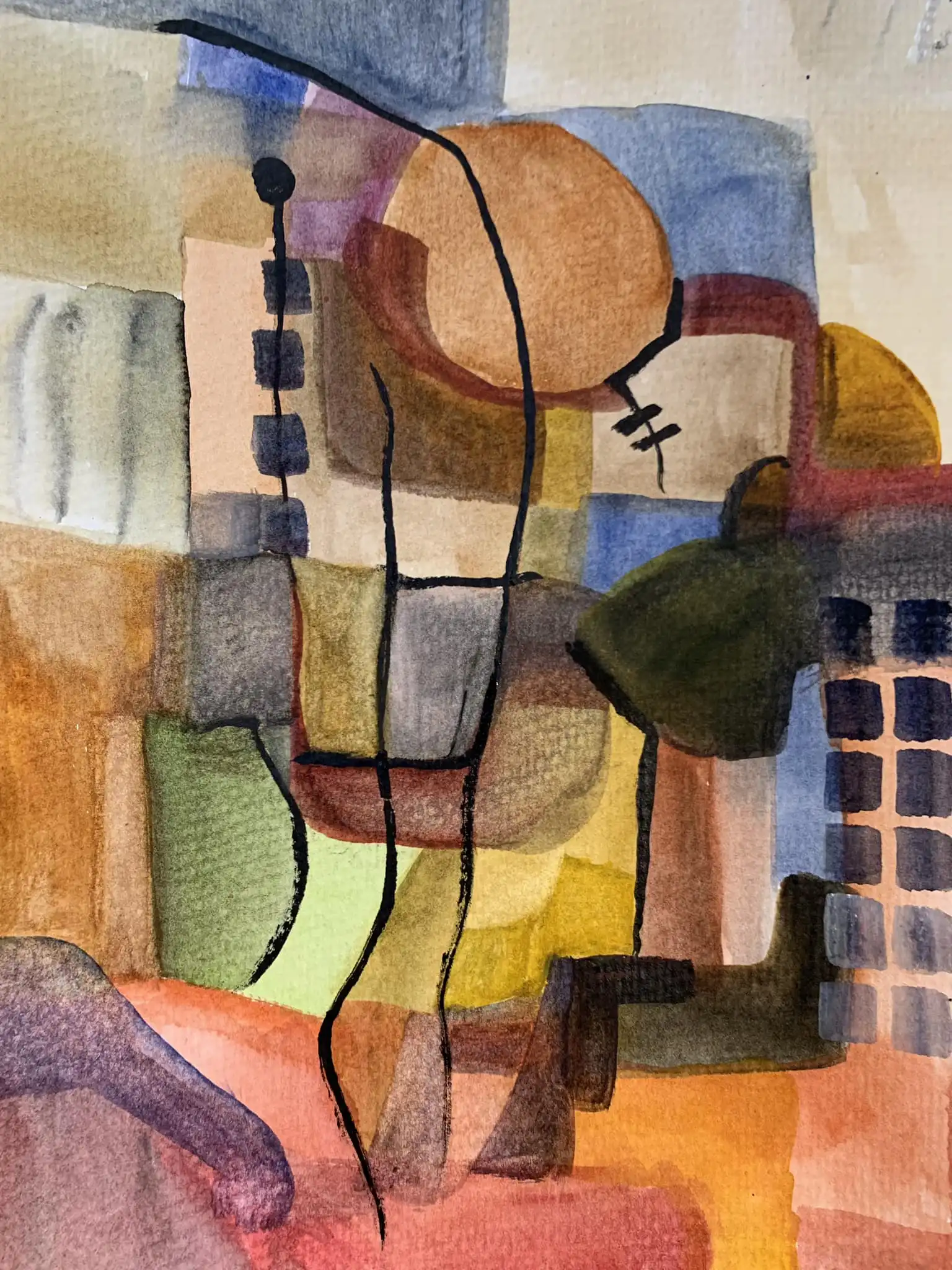
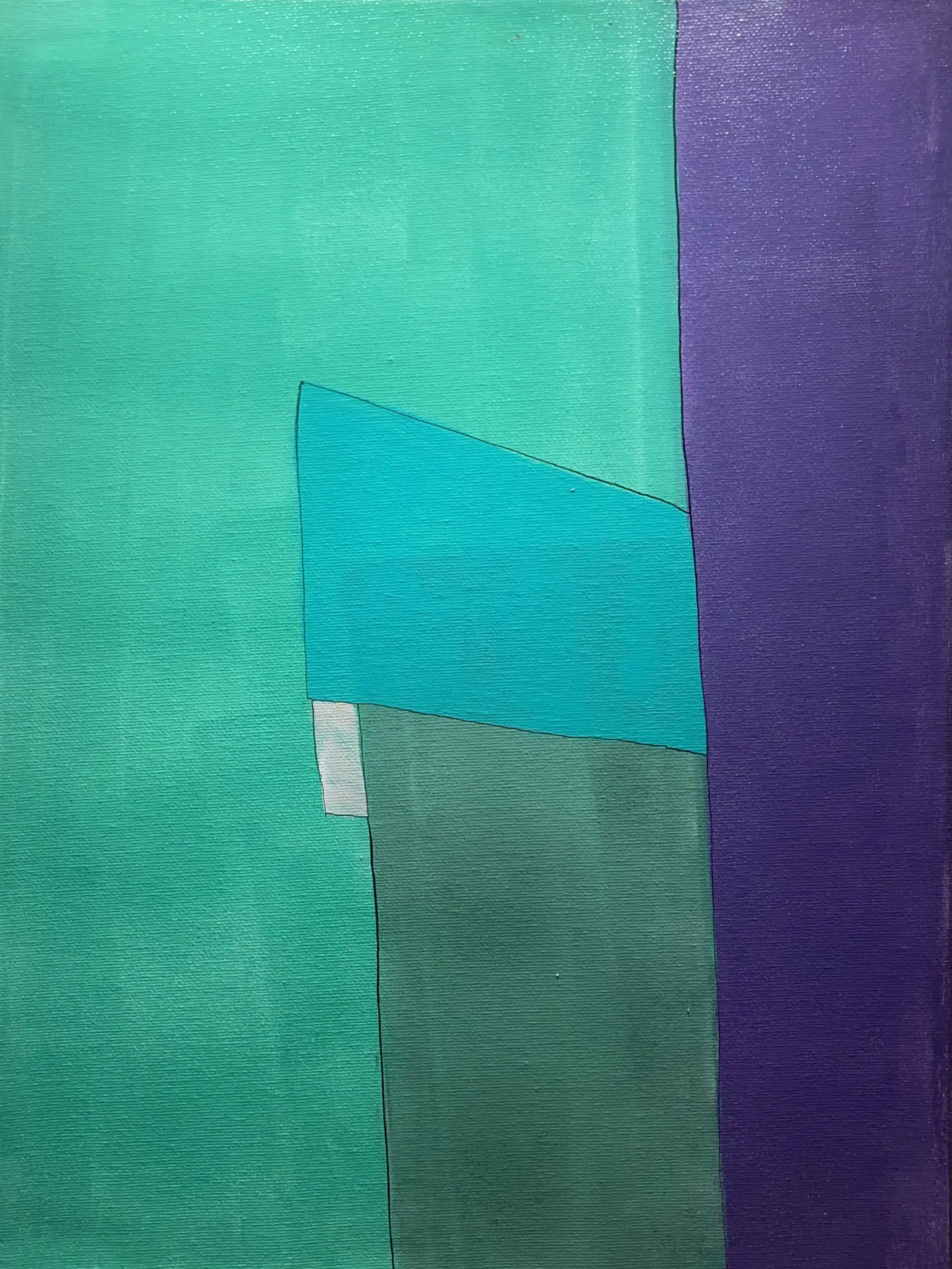
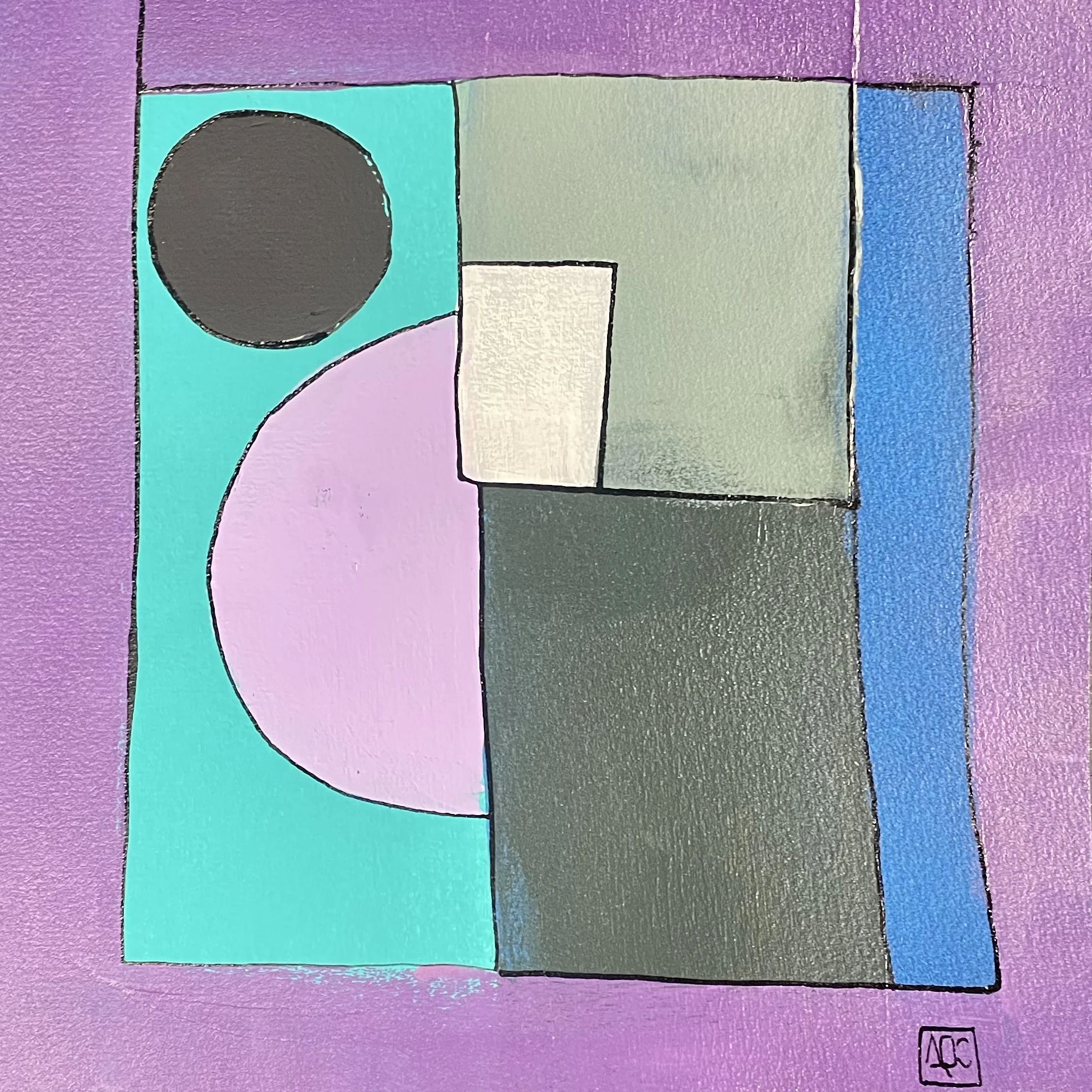
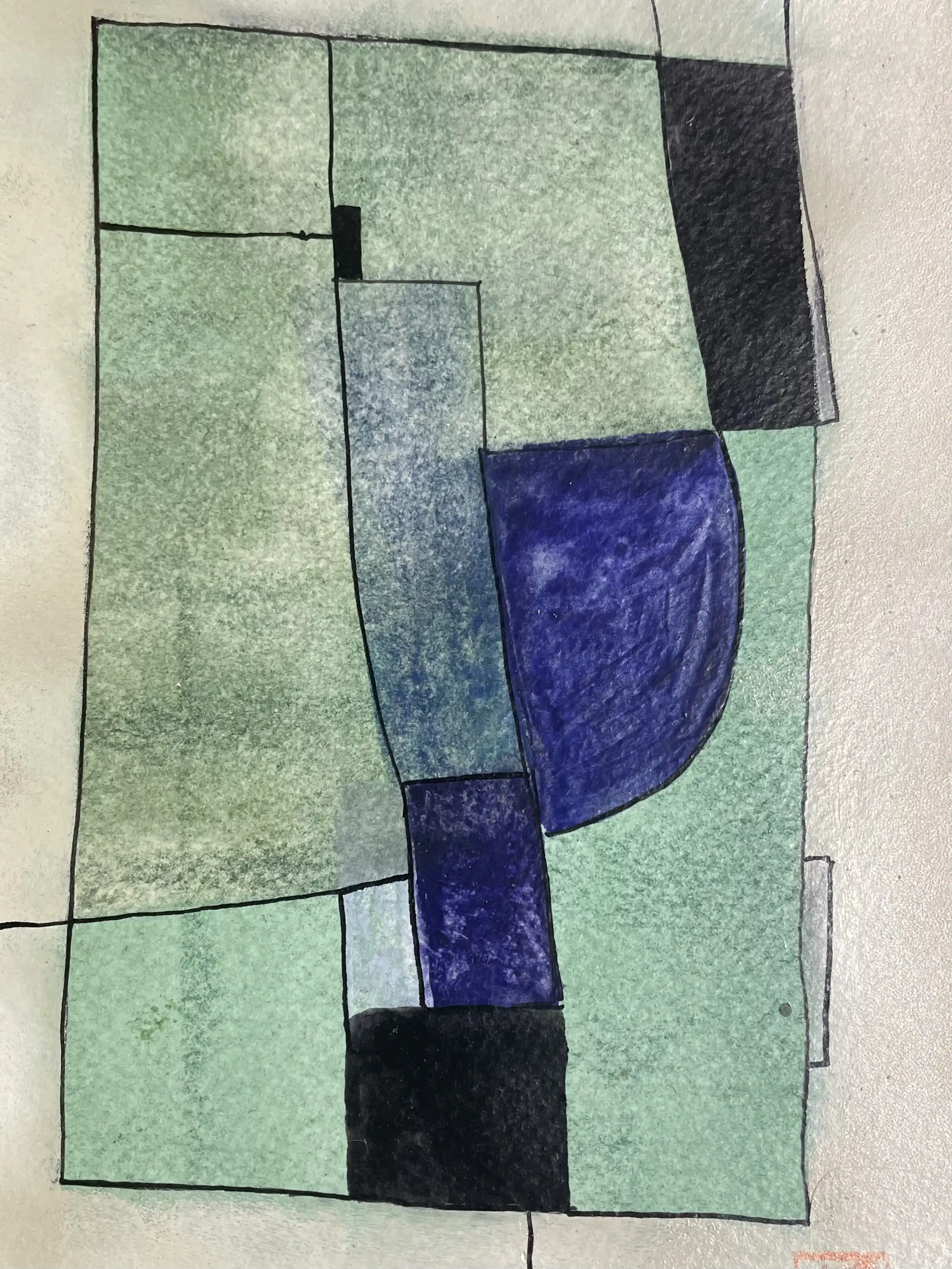
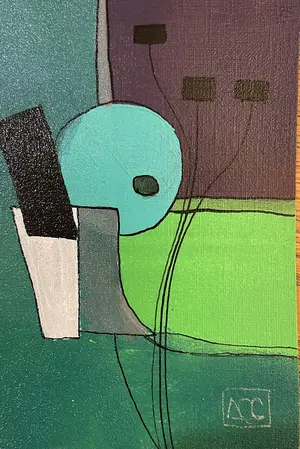
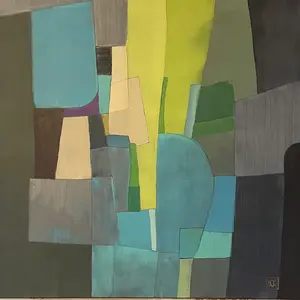
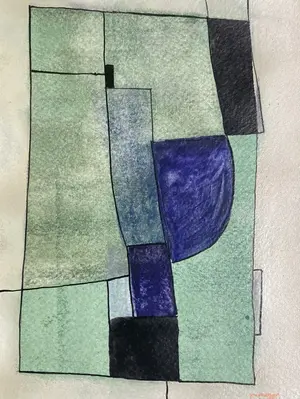
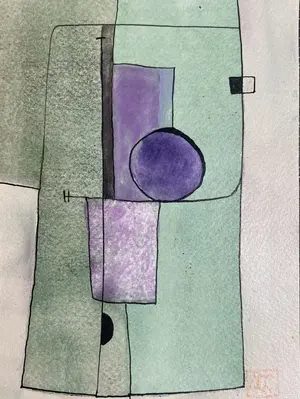
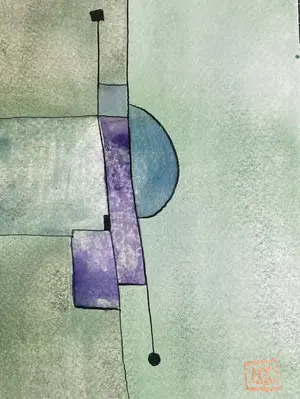
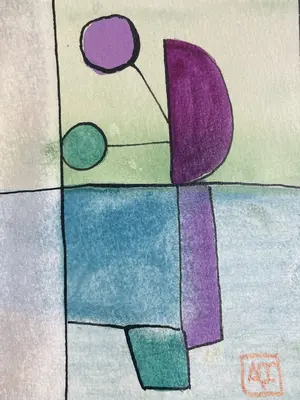
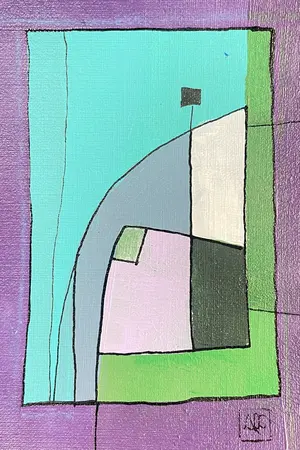
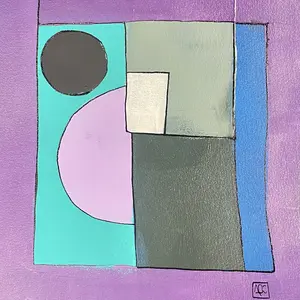
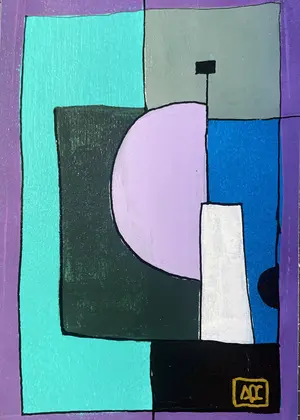
F# Major is a series of 11 paintings by Arnaud Quercy, created between 2022 and 2025 in acrylic on canvas, acrylic on linen canvas, acrylic on paper and watercolor on paper. Formats range from 10×15 cm to 80×80 cm. 6 works are held in private collections (Cremlingen, Germany, Le Lavandou, France, Paris, France, New York, USA, Saudi Arabia). 2 remain available for acquisition at Art Quam Anima, 28 rue du Dragon, Paris. Works presented at: Transcendence – World Premiere of Ephemera Arts, Rencontres au Marché de la Création and Salon d'art contemporain – Metamorphose, Paris and 8 more.
F# Major sits at the far end of the circle of fifths — six sharps, the most remote major key from C. In Western harmony it carries a reputation for brightness and intensity: Chopin's Barcarolle opens there, Scriabin associated its enharmonic twin with luminous blue. Yet in harmonic-chromatic translation the chord reveals something altogether different. F# maps to green, A# to violet, C# to blue-green. No warmth, no red, no orange — only the cool tones of forest, twilight, and deep water. It is the coldest major triad in the entire harmonic-chromatic system.
The harmonic-chromatic palette of F# Major runs cool from bass to treble, but shifts significantly with register. In the sub-bass, F#1 compresses to near-black — the green so deep it reads as absence. Through the middle octaves, the root emerges into its characteristic forest green, while A# in the third and fourth octaves carries a saturated, reddish violet. Higher still, the violet bleaches with altitude: A#6 pales toward lavender, A#7 dissolves into near-white. The fifth, C#, adds blue-green throughout — an aquatic undertone that appears rarely but deepens the palette when it does. There is no warm register in this triad. Every octave stays cool.
Quercy explores F# Major across eleven works, spanning 2022 to 2025, in acrylic and watercolor on paper, canvas, and linen. The Research on Harmony études are uniformly Animé in tempo — lively, forward-moving — and almost entirely ascending waltzes, the phrase climbing from darkness to light in triple time. The exception is the earliest work, Reflexion 3, painted before the series took its final form: a Lent descent in seven notes, the only slow piece and the only falling line in the body of work. Within the Research on Harmony études, dynamics range quietly from p to mf, and most play legato — the notes drawn into one another without separation. Note counts run from four in the nocturnal opening to eleven in the closing Gb Major study. One variation stands apart in meter: Variation 6, the only dense étude in four beats, its walking pulse distinct from the waltzes surrounding it.
Three works trace the series' range. Variation 2 is the largest canvas — 80×80 cm in acrylic on linen — and the most anomalous in color: three of its seven notes are non-chord tones, orange and yellow accents outnumbering the cool triad, giving it a warmth unlike anything else in the series. Variation 4 is the densest statement in sharps: ten notes across seven octaves, root and third each appearing multiple times, the fifth present, the warm intruders D5 and G5 breaking through the center. It is the only moment where, as the artist writes, "the cool-green palette is fully populated for the first and only time." At the opposite pole, the opening étude reduces the chord to four notes — root and third only, no fifth — a nocturnal study in green and violet that establishes the key's character with nothing to spare.
Variation 7 is the étude where the palette finally speaks without compromise. All three chord tones appear at their most saturated in the middle register: clear green at F#5, reddish violet at A#4 and A#5, blue-green at C#5. The mf dynamic — the strongest of any ascending variation — gives the waltz a confident presence the others hold in reserve. "Green, violet, blue-green: F# Major heard clearly for once," the artist writes of it. Variation 9 closes the series in a different alphabet: spelled as Gb Major, eleven notes with a normal articulation that replaces the legato of every preceding work. Five ascending instances of the third shift the violet toward blue-violet, cooler than in the sharp-spelled études — the same key heard through a different notation, with a subtly different touch.
On the canvas, F# Major reads as a cool gradient that rarely warms. The deep bass is always near-black, the green of the root compressed to near-silence. The mid-register holds the most legible color: forest green and saturated violet in dialogue, occasionally interrupted by warm orange accents that the artist introduces as intruders rather than inhabitants. These warm fragments — red-orange at G3 in Variation 1, described as "a spark in a dark room" — heighten the cool field around them by contrast, making the green and violet appear colder still. Where brightness appears, it is in the heights: the violet of A# bleaches toward white in the upper octaves, and the root at F#5 achieves its clearest, most legible green only when lifted far from the bass.
F# Major is the chord where Quercy's harmonic-chromatic practice encounters its own coldest register. Repeating this triad across eleven études reveals something that no single work could show: the palette does not warm with familiarity. Each variation finds a new way to distribute the same three cool colors — across wider spans, in different proportions, through different registers — and each time the result is unmistakably this key. Several works from the series were shown at Through the Aperture — Research on Harmony at Art Quam Anima in Paris, and pieces have since entered collections from Germany to New York. The cool-green key travels well. Its character — restrained, deep, precise — needs no translation.
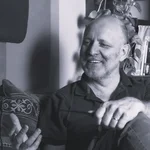
Arnaud Quercy is a Parisian artist working across painting, music, and sculpture. His practice is grounded in Ideamorphism — the principle that a work of art does not carry meaning, but triggers it. Each piece is engineered to diffract differently through each person who encounters it.
He creates and exhibits at Art Quam Anima, his gallery-atelier at 28 rue du Dragon, Saint-Germain-des-Prés, Paris.
Works — F# Major
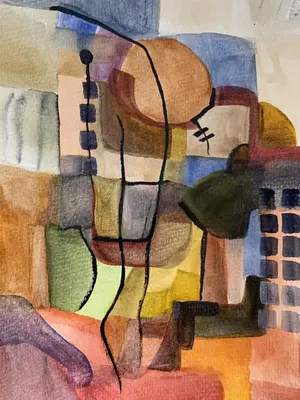
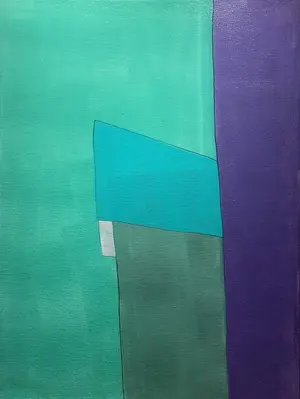
Related hubs
- Collection: Harmonic Crossing
Exhibitions 11
- Salon d'art contemporain – Metamorphose 2025–2026, Paris (2025-12-26 → 2026-01-04, Halle des Blancs Manteaux, Paris)
- Art Quam Anima – Pre-opening (2026-01-31 → 2026-02-28, Art Quam Anima, Paris)
- Through the Aperture — Research on Harmony (2026-03-09 → 2026-04-30, Art Quam Anima, Paris)
- Rencontres au Marché de la Création (2024-04-23 → 2024-12-31, Marché de la Création – Paris Montparnasse, Paris)
- Salon d'art contemporain – Metamorphose, Paris (2024-12-26 → 2025-01-05, Halle des Blancs Manteaux, Paris)
- Permanent Collection 2025 – Resonance in Form (2025-01-01 → 2025-12-31, arnaudquercy.art, Paris)
- Paris Studio Visit (2025-02-18 → 2025-02-18, Artist's Studio, Paris)
- Marché d'Art Contemporain – Seine Port (2025-05-17 → 2025-05-17, MAC Seine-Port, Seine-Port)
- Nuit des Artistes, St Germain-en-Laye, France (2025-05-24 → 2025-05-24, La Nuit des Artistes, Saint-Germain-en-Laye)
- Marché de l'Art de Saint-Germain-en-Laye, 17ème édition – France (2025-06-14 → 2025-06-14, Marché de l'Art, Saint-Germain-en-Laye)
- Transcendence – World Premiere of Ephemera Arts (2023-10-29 → 2023-11-15, Koblenzer Kunstverein e.V., Koblenz)
Other series in this collection 35
Documented at 1
Catalogue raisonné entries 11
- F# major - Reflexions 5
- F# Major - Research on Harmony
- F# Major - Research on Harmony - Variation 1
- F# Major - Research on Harmony - Variation 2
- F# Major - Research on Harmony - Variation 3
- F# Major - Research on Harmony - Variation 4
- F# Major - Research on Harmony - Variation 5
- F# Major - Research on Harmony - Variation 6
- F# Major - Research on Harmony - Variations 7
- F# Major - Research on Harmony - Variations 8
- Gb Major - Research on Harmony - Variations 8