Symposium du Dragon — III
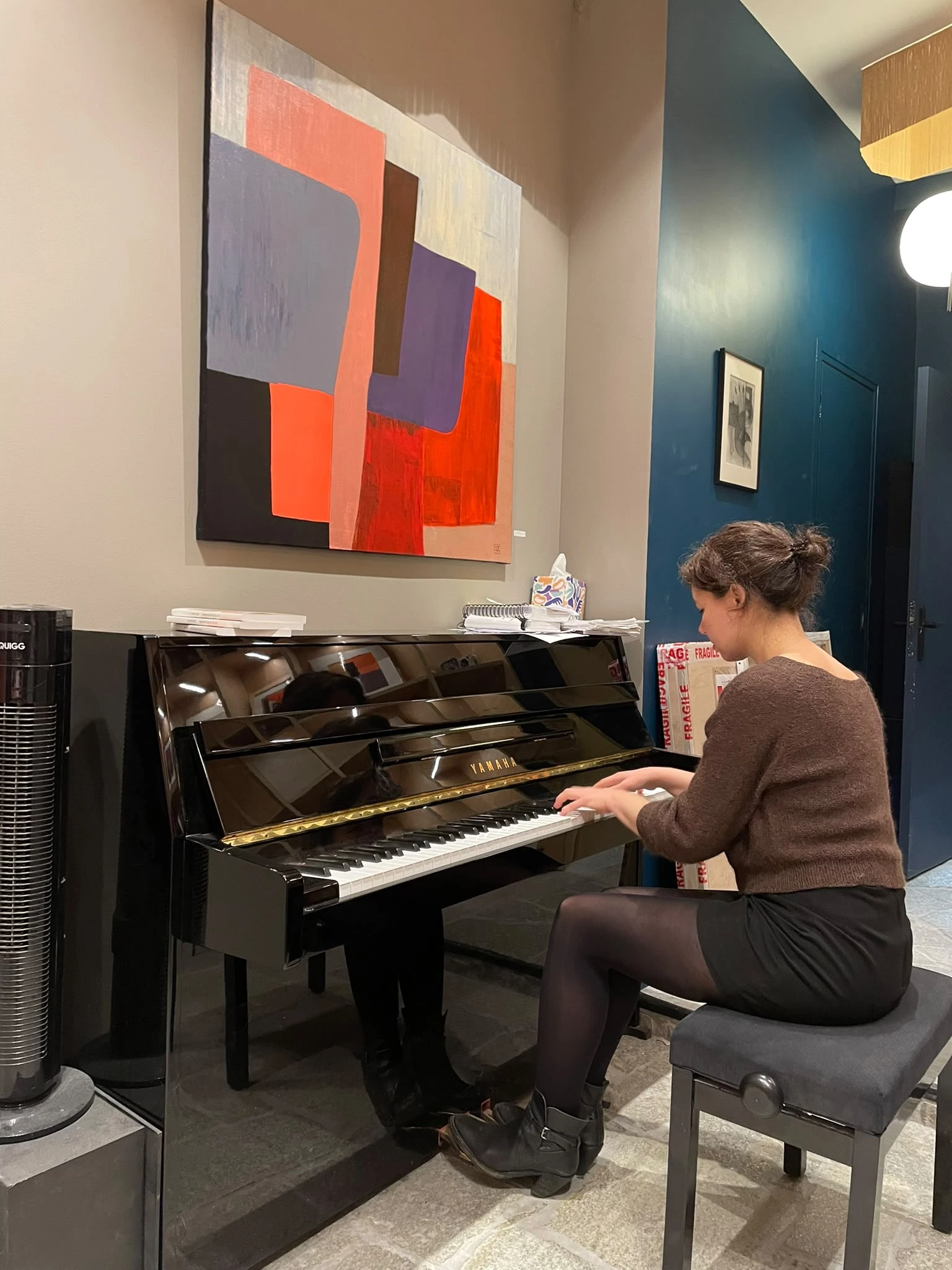
The Creator and His Creature
Saturday 17 October 2026, Art Quam Anima, 28 rue du Dragon, Paris
By Arnaud Quercy, artist and host of the evening.
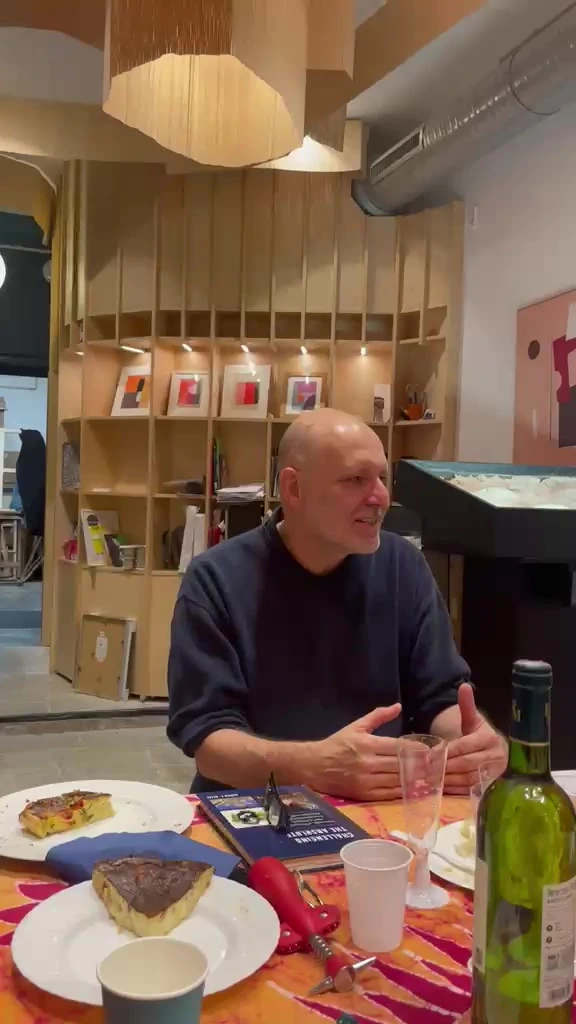
The gallery's third symposium in the Greek manner: drinking, eating and thinking together around one table. Gathered around the philosopher Simon F. Oliai and his book Challenging the Absolute, an evening on the Absolute, rules, impermanence and the gesture, which ended with the destruction of a work by Solabi Vare and an impromptu concert.
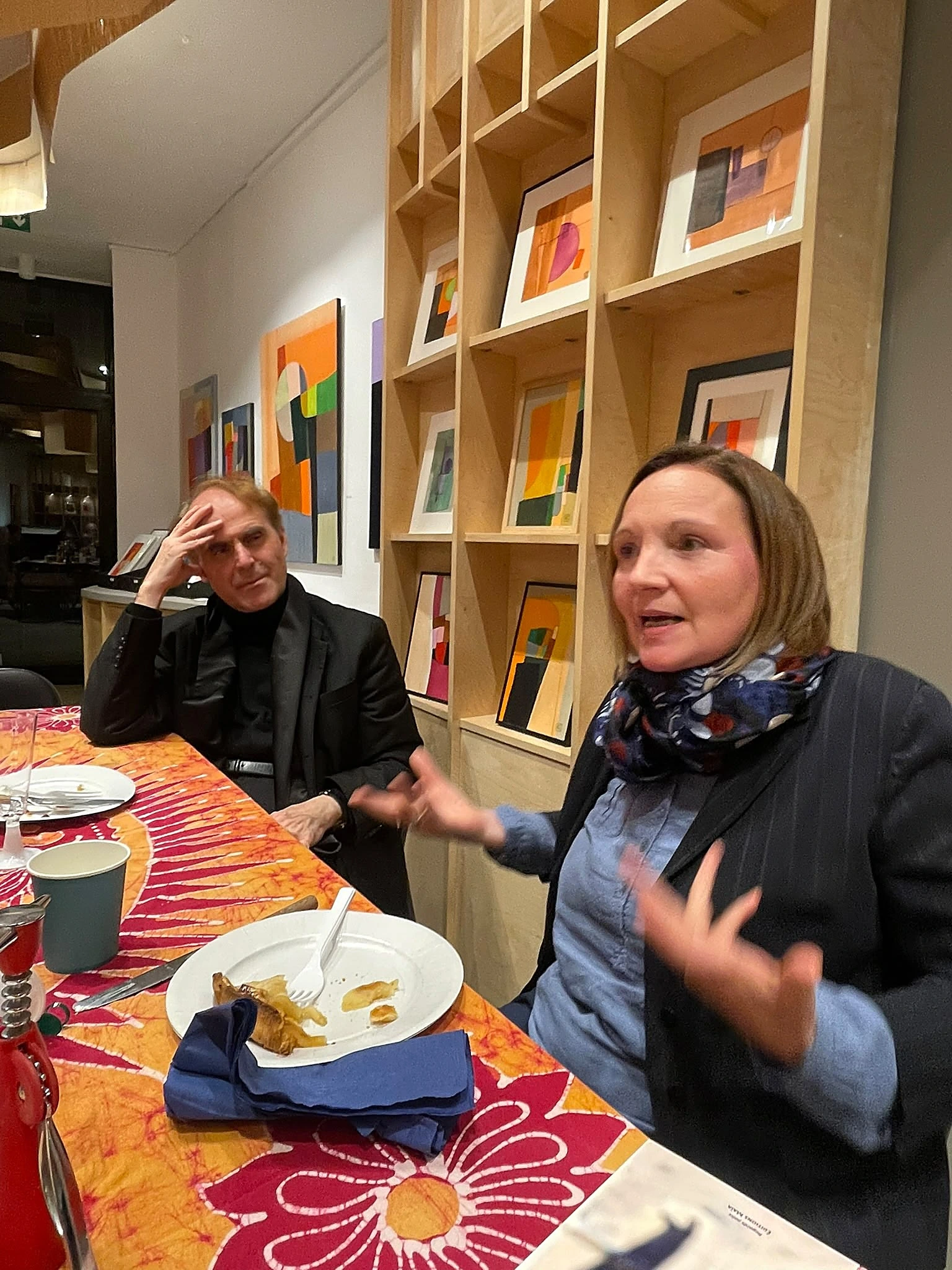
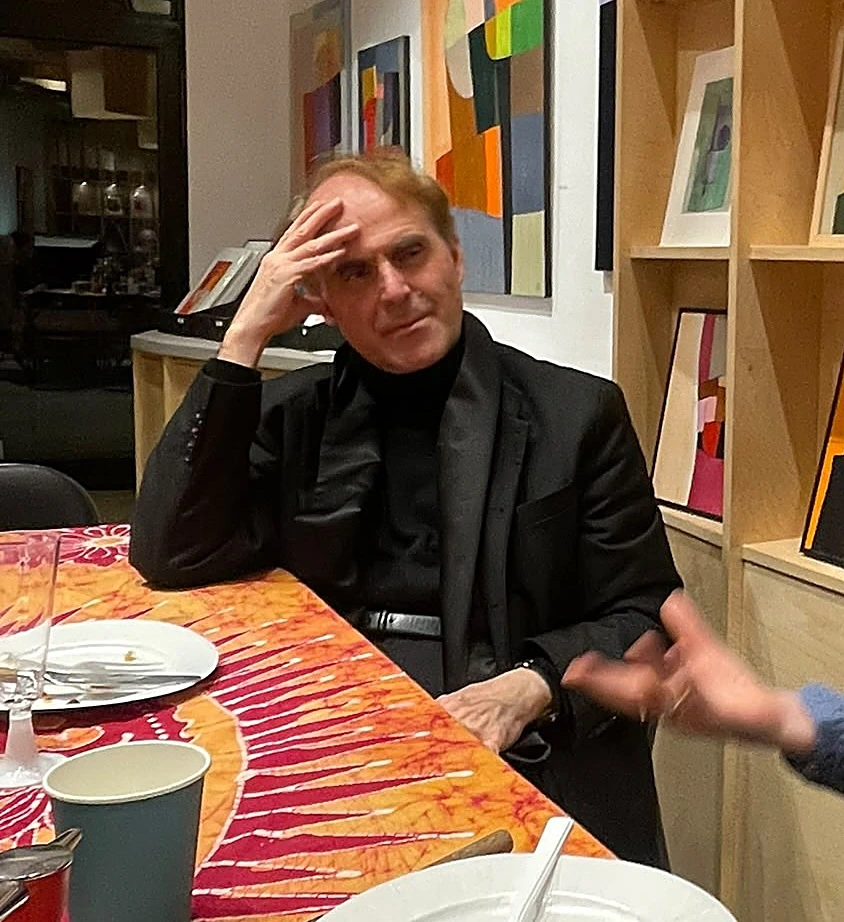
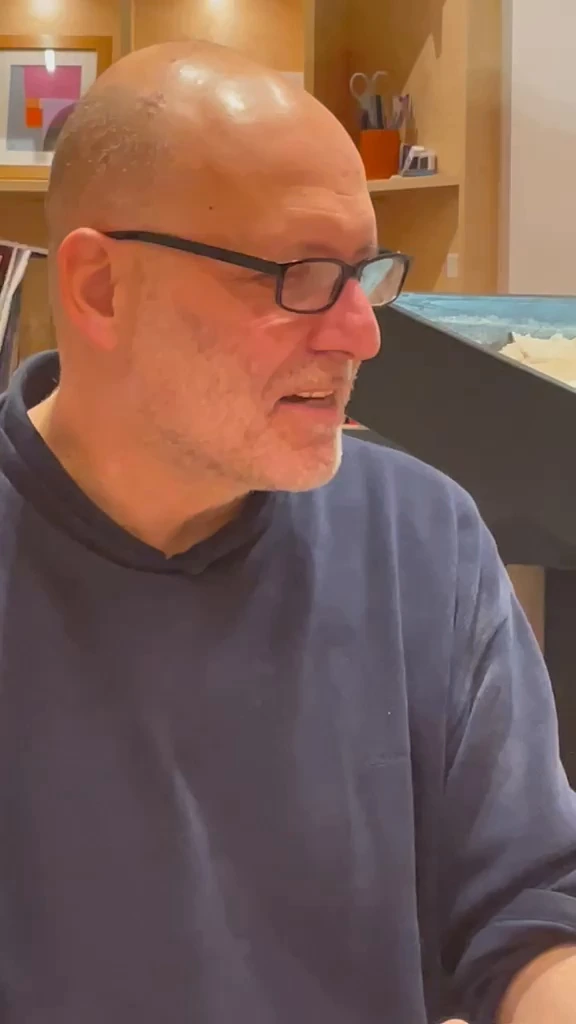
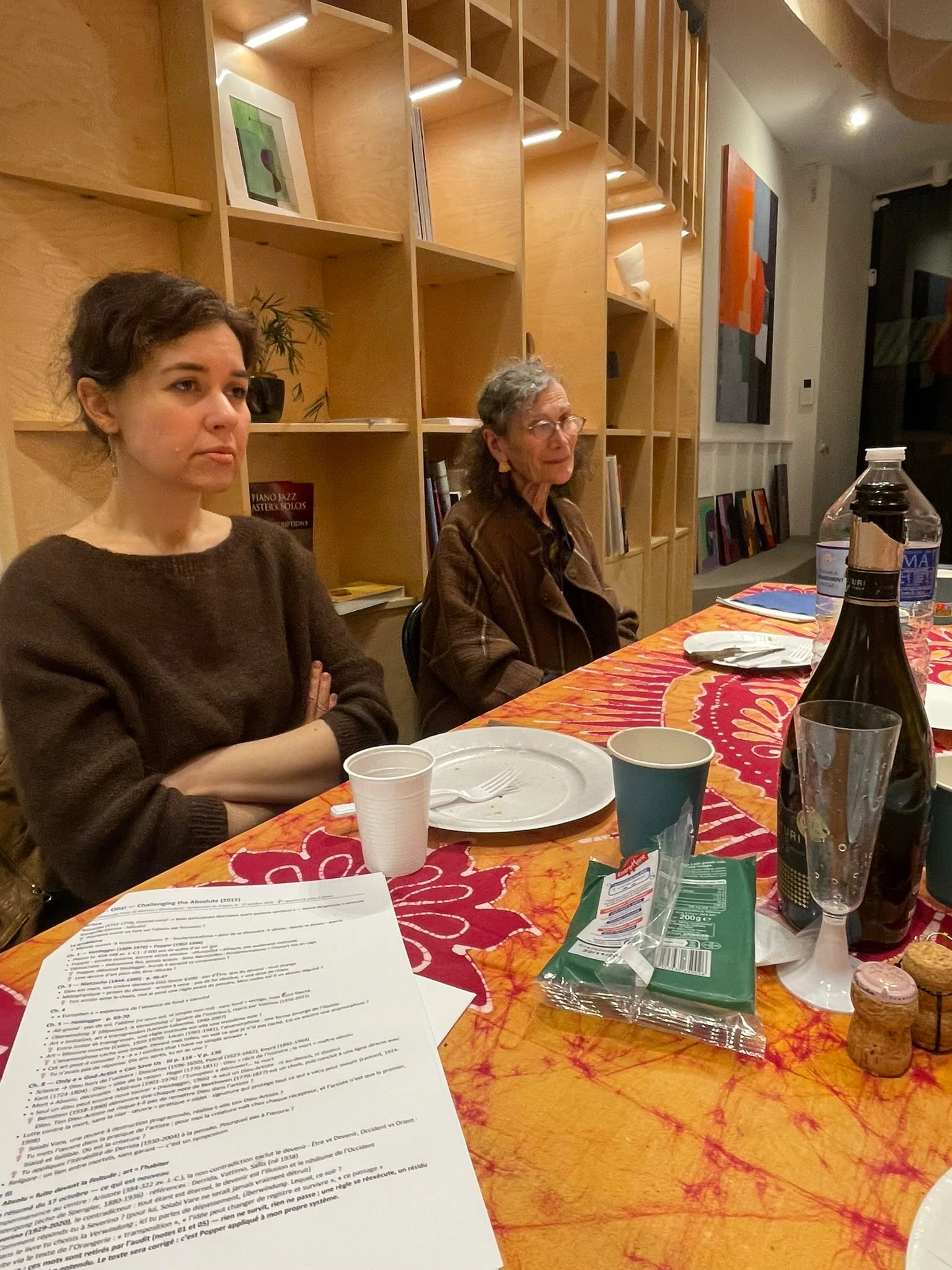
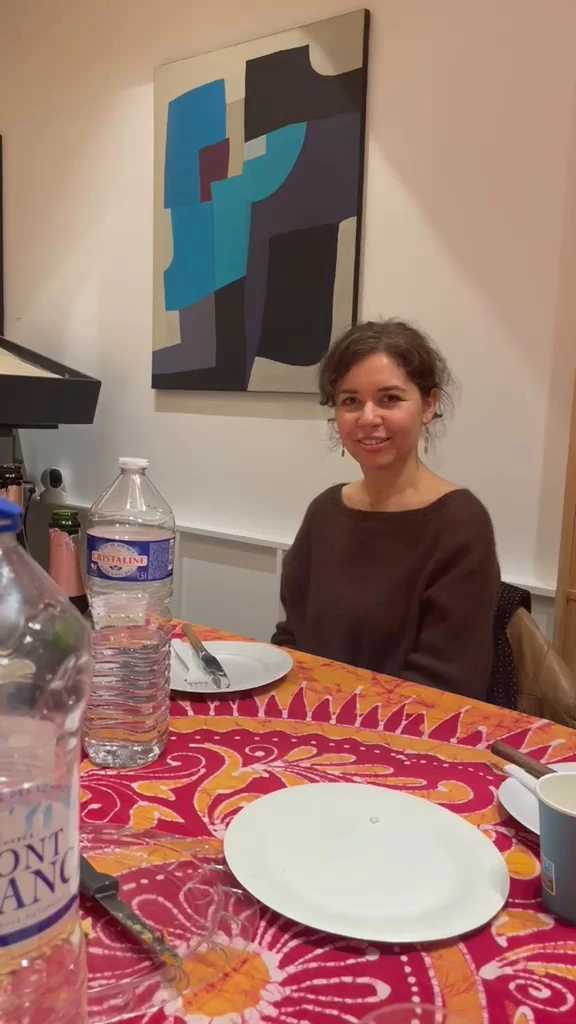
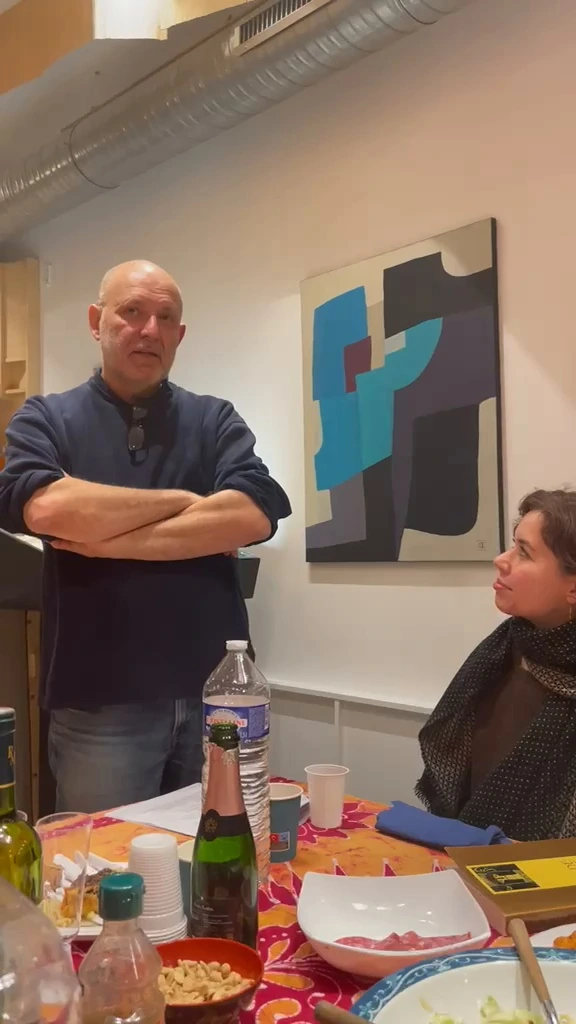
The guests: Simon F. Oliai, philosopher; Maria Bundgård, pianist; Lise Brisson, former curator at the Musée d'Art Moderne de Paris; Élise Mahé, writer; and myself.
The Opening
I opened the evening by sharing my vision of the symposium in the Greek manner. It is an idea I have carried for several years, and one that Art Quam Anima now allows me to put into practice. The dinner was homemade, with Frédérique.
After a round of introductions, I presented Simon's book, Challenging the Absolute. I confessed that I had started it with the conclusion. Discovering that the artist becomes a god in it, I felt concerned, and told myself that Simon was going to talk about me. Simon burst out laughing and judged my ego perhaps even bigger than his own. I did not deny it, not knowing his. My short story Ego will no doubt shed light on the exchange.
The Absolute
We quickly reached the heart of the matter: the Absolute and the death of God. Simon specified what he means by the Absolute. An absolute cannot admit the existence of another. And when it disappears, it leaves a groundlessness, Heidegger's Ab-grund, which arouses the fear of the void. As nature abhors a vacuum, another absolute immediately tries to take its place.
Schoenberg and Rules
I put Carl Schorske's Fin-de-siècle Vienna on the table. Simon gave its historical context: the collapse of the liberal order in Vienna around 1900. I brought in Schoenberg, who replaces collapsed tonality with an order he institutes himself. From there, the question of codices, the rules I give myself: is submission to a rule necessary for creation? A rule is an absolute within its own system. Can one write a novel while escaping grammar? Compose while ignoring harmony, or the physics of the piano?
The debate became passionate. Maria, joined by Élise, rejected the very idea of submission: no rule is immutable as such. She cited alternative notations, prepared pianos, and the fact that even the piano's C is a convention that can be changed. I granted her the point: one can accept a rule or refuse it, and create new ones. But a commonly accepted rule works like a language. One can invent a new alphabet, but it is the common rule that makes it possible to read, to decipher, to pass on. Simon then reframed the problem: submission is not necessarily authoritarian; it is often passed on by default. One is born in a country, one inherits a language. One does not choose to accept it; one submits to it by inheritance.
Heidegger and Popper
We came back to the book's first chapter, which sets Heidegger against Popper. For Simon, Heidegger has no excuse for his compromise with Nazism: he who devoted his life to thinking Being and to undoing the Absolute failed to see in Nazism its exact opposite. He lived this paradox, and more than anyone, he should have condemned it.
I declared myself a "Popperist". Simon invited me to say "Popperian", which I gladly accept, out of aesthetic taste: it sounds more Latin. We talked about Popper's open society, and about the 1990s as a Popperian experiment: the world globalises, and we believe in an open and peaceful world. Simon drew the distinction: globalisation is not mondialisation. The global world is a sum of worlds, some of which cannot be reconciled. The Absolute is still there, but multiple.
Nietzsche and the Codex
God is dead. I then turned the question against myself: when I submit to my own codex, do I tip over into an absolute? Less dramatic, certainly, but is there a similarity? Simon answered no: the codex is a rule that opens onto creation, and I impose it on no one. It is mine.
As a transition, I mentioned Bernstein and Beethoven's Fifth: a masterly demonstration that every note is a choice, which nonetheless ends with a "direct line" to God.
The Artist-God and the End of Boléro
Here we were at last at the Artist-God. God is immortal; does the artist seek to become so? Yes, the ego is back, and so is the struggle against death. I asked whether the work outlives the artist, and where it is to be found: in the object? In the recording, in the concert? Can it die itself? Even the pyramids will disappear one day. So what remains, if the work is mortal?
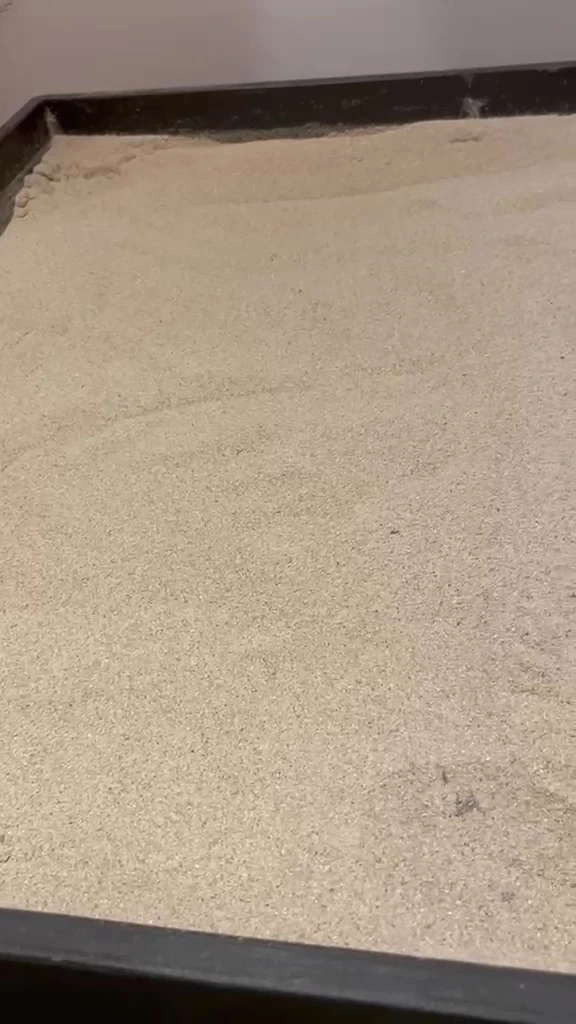
I then destroyed, in front of the guests, Boléro, the work of Solabi Vare. I officially brought it to an end: the bas-relief will have lived three months, and it died a natural death. It no longer exists. Like a piece of music, it began, and it ended. What remains? The gesture?
Impermanence
Simon pointed out what is, for him, the very logic of Solabi Vare and of what I call the Ephemera Arts: the impermanence of Being. It is what Nietzsche calls becoming (Werden), and what Simon, following Derrida and his late friend John Sallis, writes in English as Be-coming. A work like Solabi Vare does not "be" in the sense that Western metaphysics gives the word without ever having examined it: the mere presence of an object, what Heidegger calls Gegenwärtigkeit, the fact of being there. Solabi Vare is not simply there: it becomes. And this becoming presupposes a hiatus, a discontinuity (Spalt). Boléro died a natural death because it simply became. As Simon put it: Solabi Vare Be-came! It is not simply there any more.
The Gesture
Maria exclaimed: yes, the gesture. Everything is in the gesture, intimate, and it is the gesture that remains and defines the work. She took the example of Bach's Chaconne, written for solo violin, then transcribed for piano by Busoni, then played by the pianist: layers of gestures that allow us today to inherit a monumental work. Each gesture is what remains behind the work, and each one is essential to the next.
There is also the gesture that is taken up again and perfected: iteration, Popper again, Derrida again. I illustrated it with D-flat Major, a 2023 canvas that I have redone at least five times, and not only at the margins. The original version has disappeared: the harmonic relationships were wrong, the result disappointing. The current version is, I think, the last; I am satisfied with the chord and its inversions.
The table concluded: the gesture is what remains. It is intimate, human, fallible, perfectible. It is what makes the work a reality.
Lise: Tightrope Walker and Magician
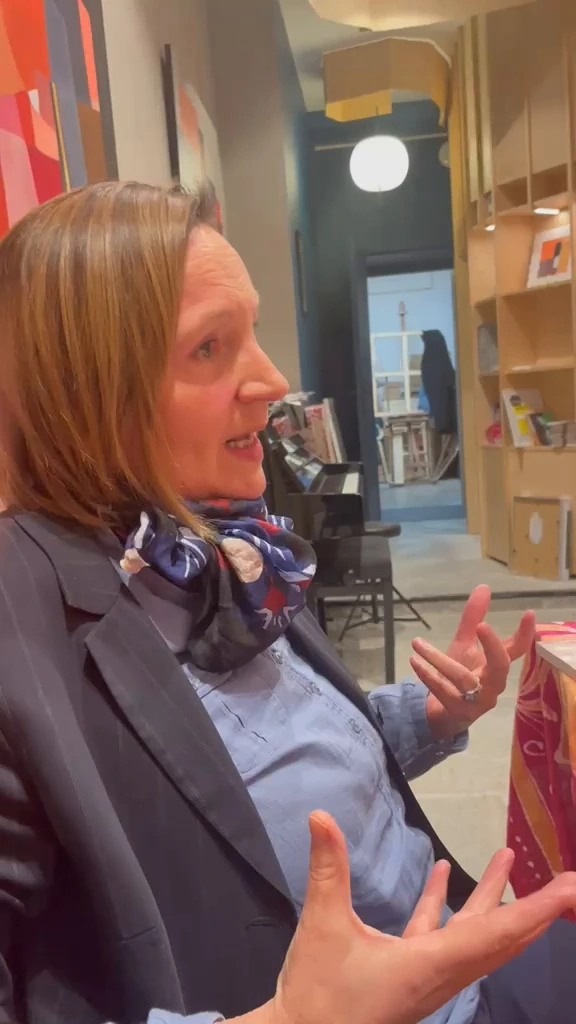
Lise would not speak of God for an artist, but of a tightrope walker, a magician. Before a sunset she sees a de Staël; a dawn becomes a Fauve painting; a cloud could become a Monet. It is an embodied language: the artist creates this language, and once we have learned it, we see it in nature. Very young, before Guernica, she understood the work even before grasping its historical significance. This language moves us, and it transforms our understanding of the world and of history. She takes care not to confuse it with the mystification of the artist.
At the Musée d'Art Moderne de Paris, Lise conceived a great many exhibitions and committed herself to the way they are brought to life. Her work: to transform the gaze, and to create emotion by bringing artists and disciplines together. In 2010 she had Maroussia Vossen, the "pedestrian dancer" of improvisation, dance there in an authentic Sonia Delaunay dress dated 1929. The dress belongs to the world of the robes-poèmes, in which Sonia blended abstraction, movement and literature, and which Joseph Delteil had celebrated in 1924 in La Mode qui vient. The dance took place before canvases by Léger and Robert Delaunay, with a guiding idea: to give Sonia back to Robert, to jazz, the world of their son Charles, a figure of French jazz. Bringing together the art of others in this way is a creation in itself: Lise created, just as the artists themselves did. In the middle of the evening, she also showed us her work on sunsets, an intimate work that is today her gesture.
Élise and Her Cat
We did not have time to address the theory of perception, because I wanted to leave room for Élise to present her work. Élise Mahé writes about memory and family; her book Morte avant deals with Alzheimer's disease. She is also the author of Le Bourdon funambule, Le Silence des cigales and De toi je ne sais rien. We talked about the cat in this last novel, an emblematic character: how can a cat help an investigation while being incompetent, and remain a cat without becoming an anthropomorphic being? It is Élise's successful wager.
The Music
Throughout the dinner, the gallery resounded with jazz: mostly cool, with Gerry Mulligan alongside Chet Baker or Bob Brookmeyer, the 1957 meeting of Mulligan and Stan Getz, Buddy DeFranco and Oscar Peterson; and a foray into bebop with Thelonious Monk. Cool was born in New York in the late 1940s, almost at the same time as bebop, of which it is a kind of counterpoint: slower tempos, a more restrained sound, writing more marked by counterpoint. It took shape with the Birth of the Cool sessions of Miles Davis, Gil Evans and Gerry Mulligan in 1949–1950, then flourished on the West Coast in the 1950s. The next day, Simon asked whether Lester Young, "Mr Cool" himself, should be included. My Popperian answer is yes, since he is one of its sources; the absolutists would answer that he belongs to the swing era. The debate remains open.
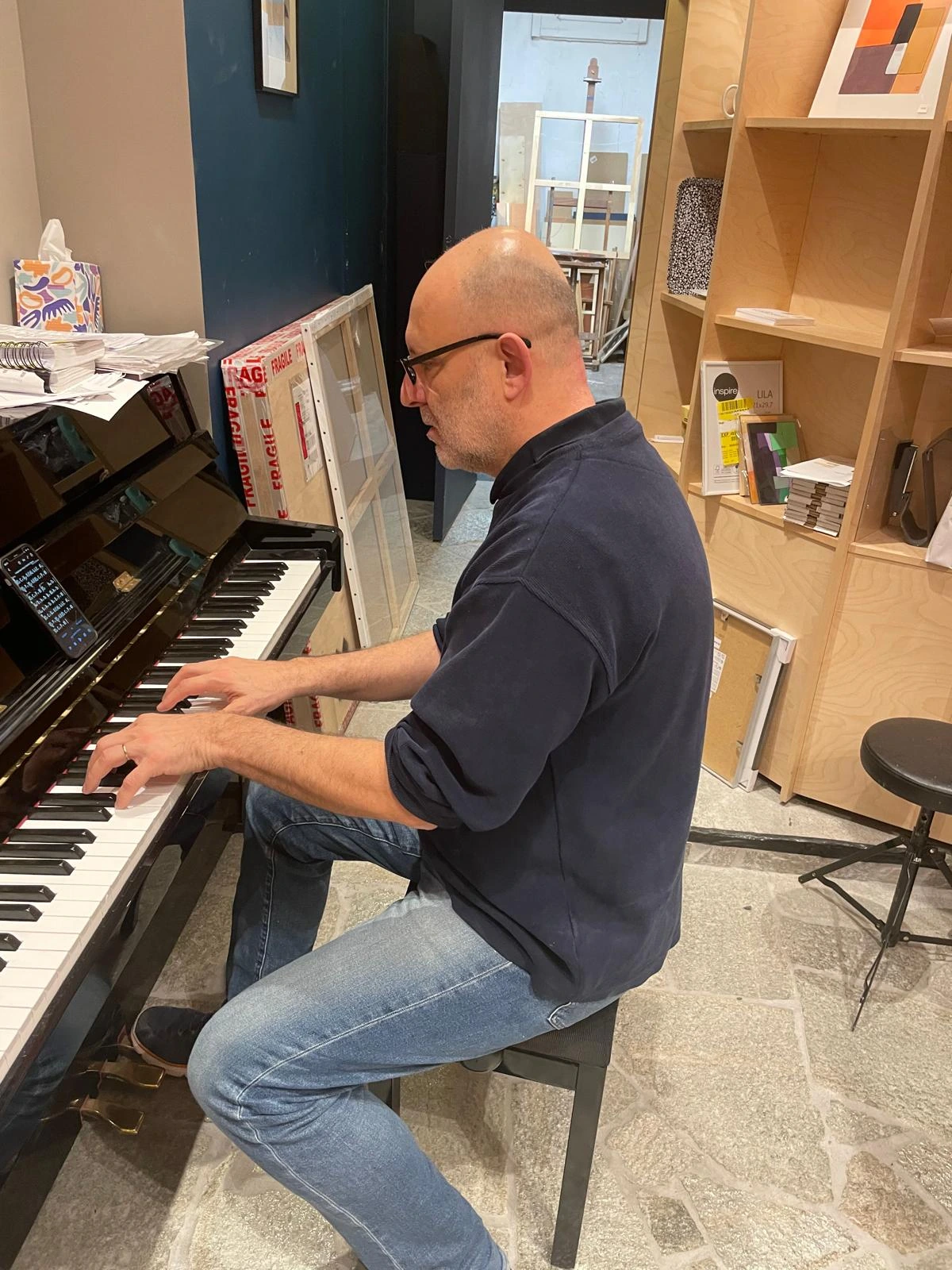
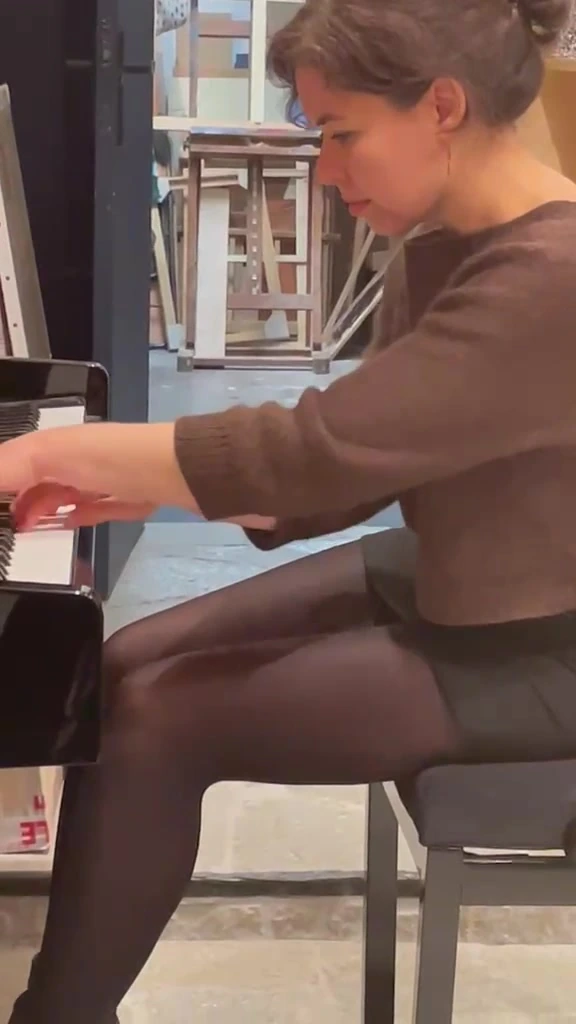
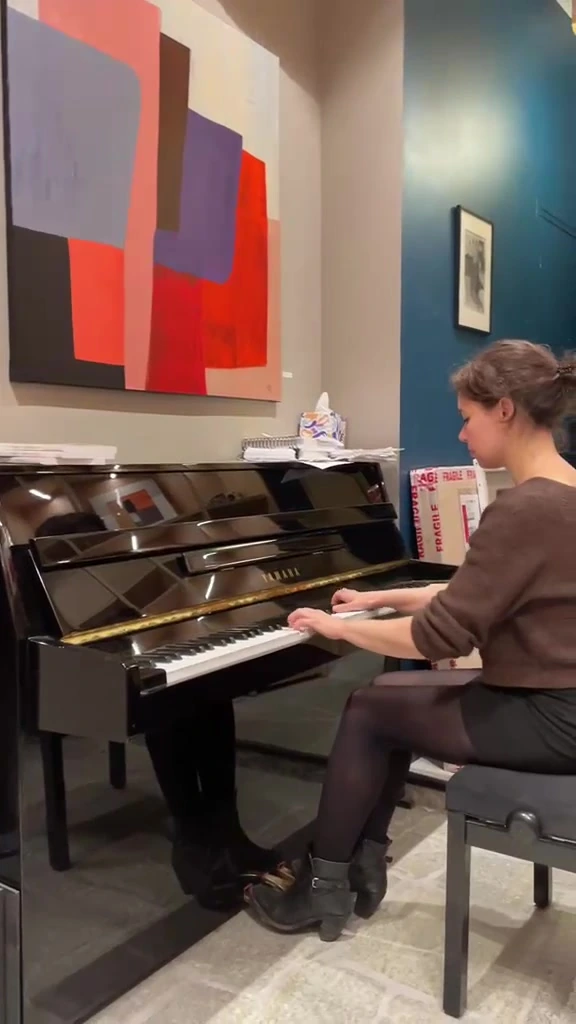
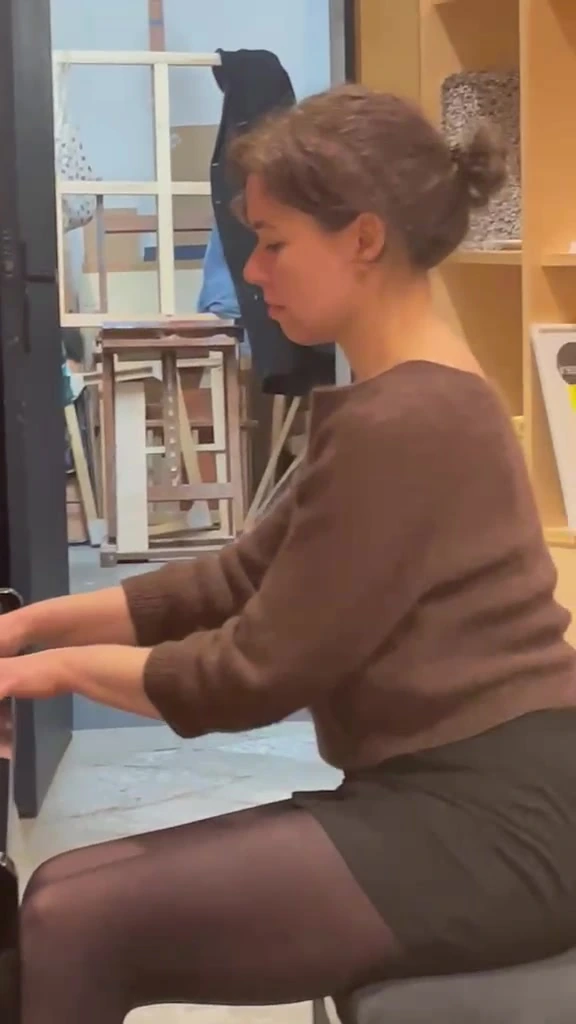
To close, Maria played Debussy's Reflets dans l'eau and Ravel's Jeux d'eau, the two pieces that open her album Sound of Water, as if to show how differently two composers can approach the same subject. This impromptu concert was a suspended moment, full of grace, despite a sticking B-flat and a slightly out-of-tune high E.
After the Evening
The conversation carried on over the following days. For Simon, symposiums keep tradition alive, that is, what history has handed down to us and what it falls to us to keep alive and to enrich.
He returned to the question left open: what is a work of art in an impermanent world? Not one object among others, he answered, but a gesture, which opens a world different from the one in which the work did not exist and from the one in which it will exist no more. Solabi Vare was and shall have been a creative gesture unfolding in the mysterious finitude of the time-space of our impermanent world. For him, from now on, all art is ephemeral: the Mona Lisa as much as Solabi Vare. I replied that everything then depends on the timescale, since nothing is eternal, not even humanity. What sets Solabi Vare apart is not that it dies, but that it chooses its measure: the Mona Lisa undergoes time, Boléro gave it its measure. One question remains between us, which we will keep for the next glass: did fate send me this choice, or did I choose within what fate sends me?
A next symposium is already taking shape: the aesthetics of jazz, bebop versus cool, the influence of Ravel and Debussy against Stravinsky, Bartók and Hindemith.
Logistics
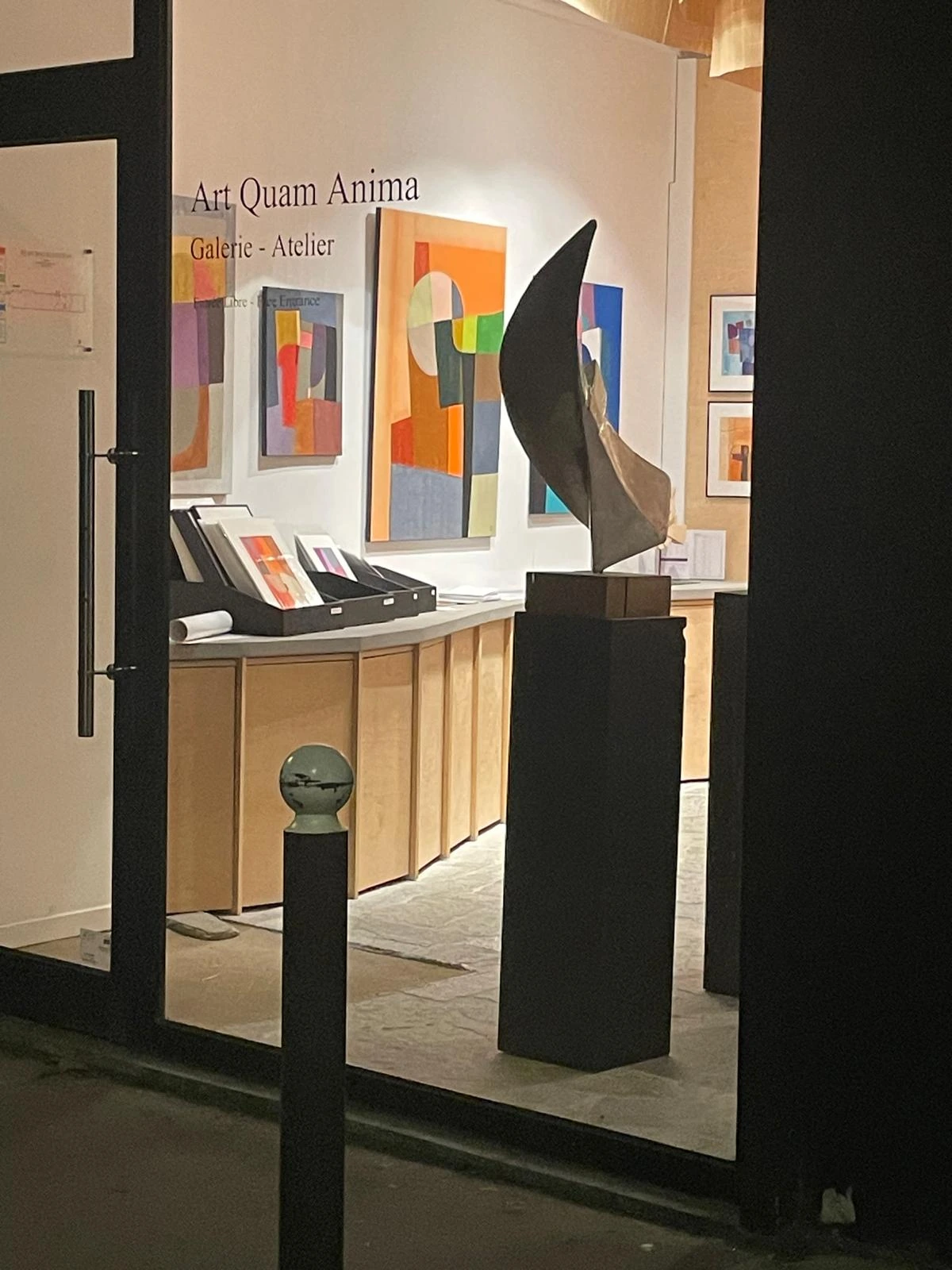
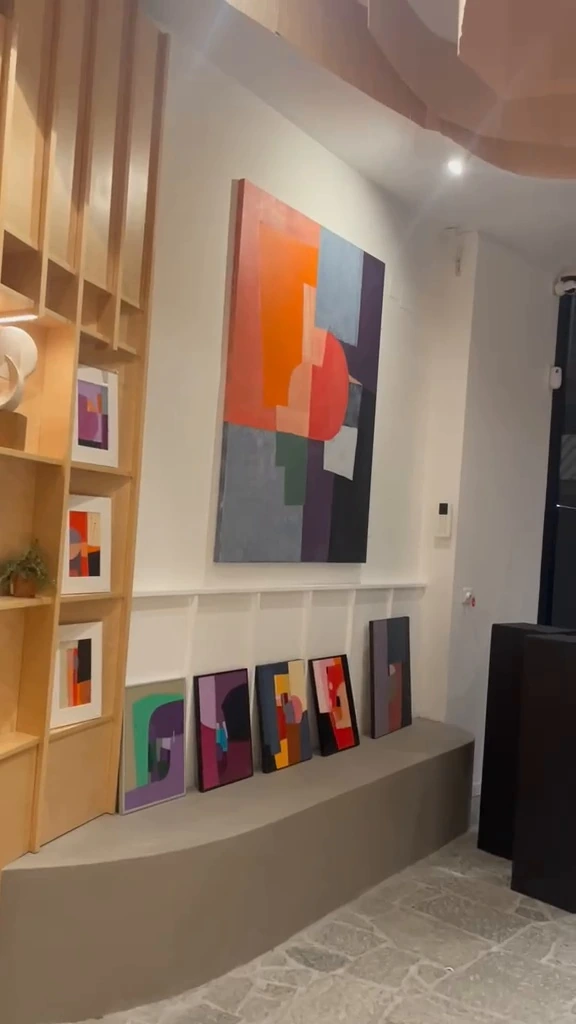
The third Symposium du Dragon, "The Creator and His Creature", took place on the evening of Saturday 17 October 2026 at Art Quam Anima, the gallery-atelier at 28 rue du Dragon in Paris's 6th arrondissement, in Saint-Germain-des-Prés, over a homemade dinner.
The symposium is a recurring format of the gallery: drinking, eating and thinking together around one table. Previous editions: Symposium du Dragon — I and Symposium du Dragon — II.
Resources
Arnaud Quercy
- Solabi Vare — exhibition
- Bolero Of Ravel - Solabi Vare — catalogue raisonné
- Transcendence — world premiere of Ephemera Arts
- Db Major - Research on Harmony - Variation 3
- Quercy, A. (2026). Turning the Wheel by Fifths: A Colour Codex for Pitch. Art Quam Anima Publishing New York. https://doi.org/10.5281/zenodo.23318126
Simon F. Oliai
- Challenging the Absolute: Nietzsche, Heidegger, and Europe's Struggle Against Fundamentalism — University Press of America / Bloomsbury
- Simon F. Oliai — Academia.edu
Maria Bundgård
- Maria Bundgård's website
- Discography: Maria Bundgård plays Rachmaninoff (2024), L'amour au milieu des ruines (2019), From Russia With Love (2016), Sound of Water (2016)
- Books: Lyden af vand, I begyndelsen var Klangen, Mellem sol og måne
Élise Mahé
- De toi je ne sais rien — Éditions Maïa
- Le Silence des cigales — Éditions Maïa
- Le Bourdon funambule
- Morte avant
Readings Mentioned
- John Sallis, Crossings: Nietzsche and the Space of Tragedy — University of Chicago Press
- Carl E. Schorske, Fin-de-siècle Vienna: Politics and Culture (1980)
Around Lise
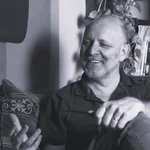
Arnaud Quercy is a Parisian artist working across painting, music, and sculpture. His practice is grounded in Ideamorphism — the principle that a work of art does not carry meaning, but triggers it. Each piece is engineered to diffract differently through each person who encounters it.
He creates and exhibits at Art Quam Anima, his gallery-atelier at 28 rue du Dragon, Saint-Germain-des-Prés, Paris.