Symposium du Dragon — II
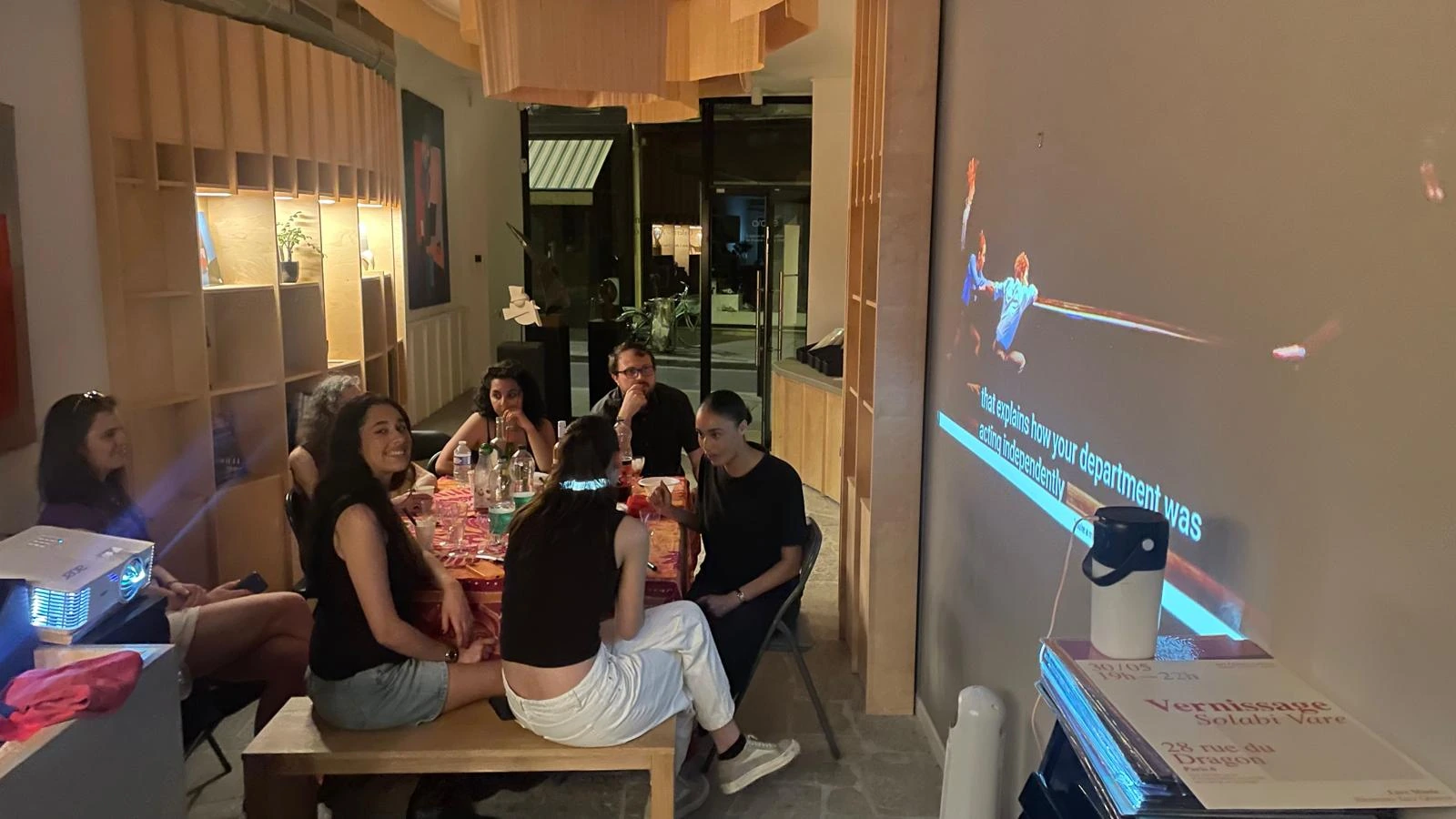
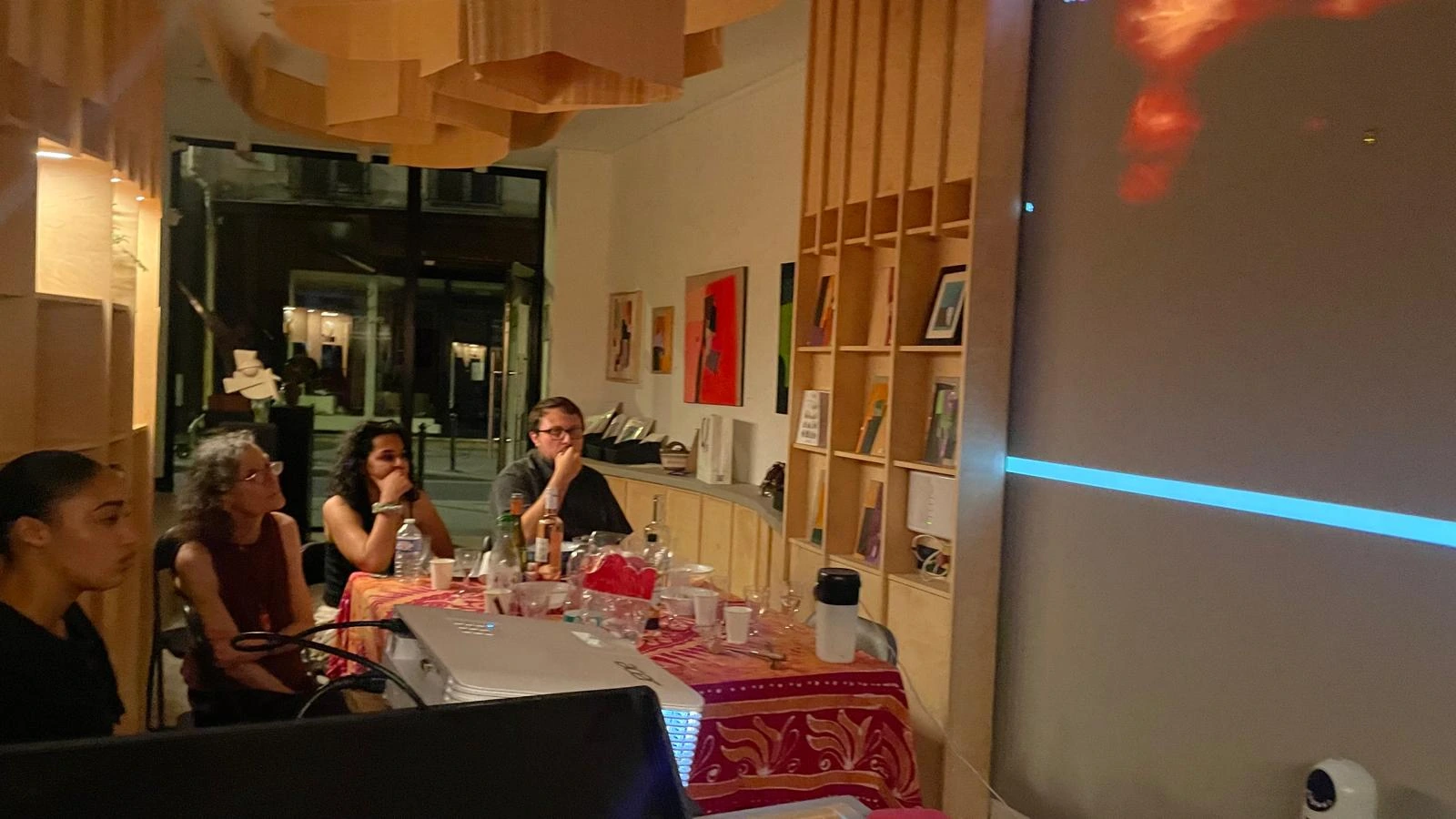
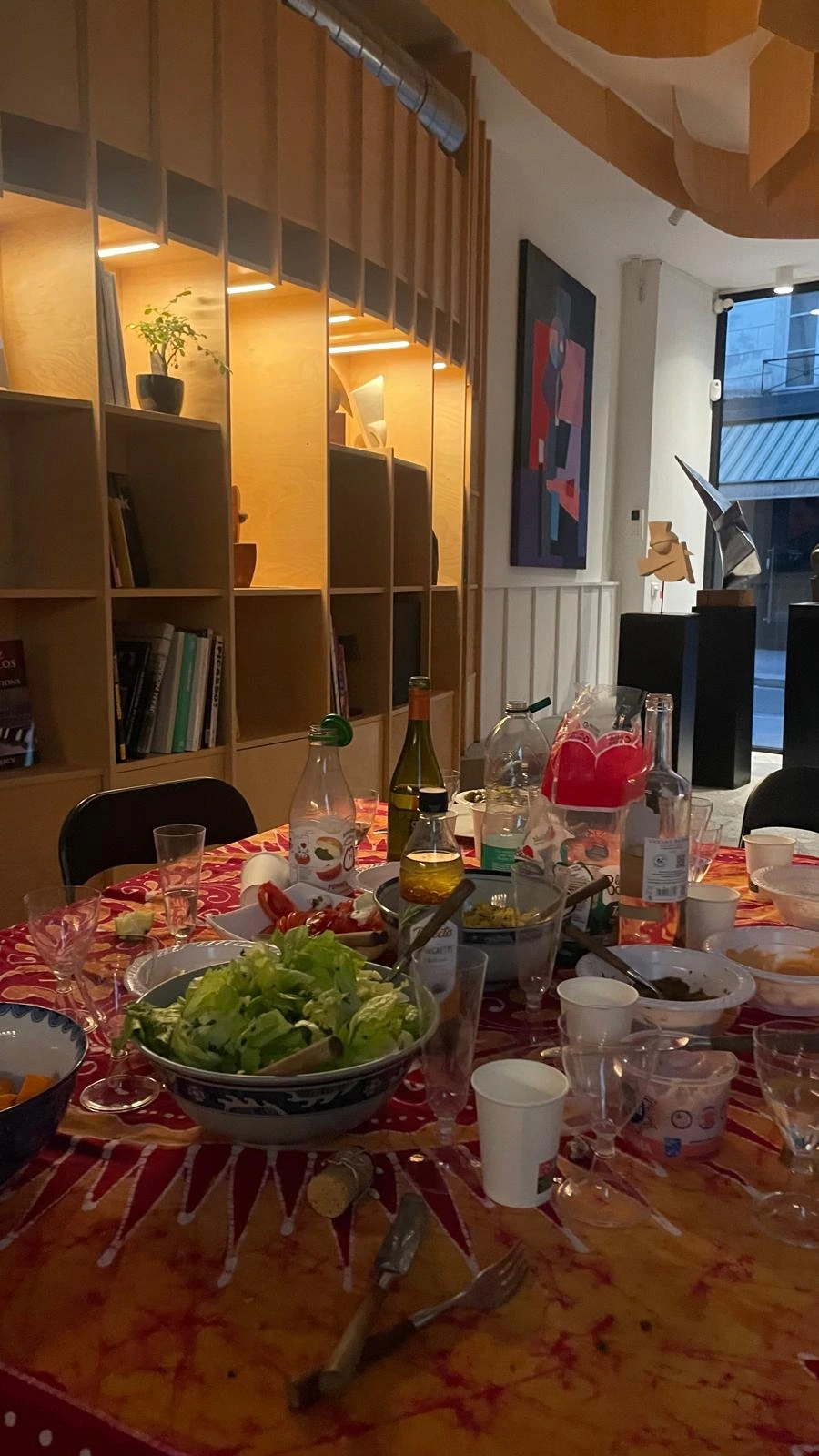
For its second edition, on the evening of 25 May 2026, the Symposium du Dragon changed method. Rather than starting from a question, Lise proposed starting from a work: placing an artist at the centre of the table and letting the philosophical questions come from her, instead of bringing them to her. The choice fell on the Canadian choreographer Crystal Pite. Eight participants gathered around a long table at Art Quam Anima, 28 rue du Dragon: Joséphine, Daphné, Louisa, Maud, Zineb, Adrien, Lise and Arnaud. On an orange and red tablecloth, salads and the bottles each guest had brought; against the gallery wall, between the shelves and the canvases, a projector. That evening, the gallery-atelier became a screening room.
The evening opened without a word, on The Seasons' Canon, created in 2016 at the Palais Garnier for fifty-four dancers of the Paris Opera Ballet, to Max Richter's recomposition of Vivaldi's Four Seasons. Then silence, and a single question: not what it means, but what did you see? Dozens of bodies moving as one. At what point does a sum of individuals become an organism — the question Elias Canetti raises in Crowds and Power. Over aperitifs, a detour through Pite's mentor, William Forsythe. In Synchronous Objects (2009), one of his pieces is filmed from above, the signals passed between dancers annotated on screen: Forsythe reveals the system that organises the movement. Pite, trained in his company at Ballett Frankfurt, took the opposite path, letting the system disappear into the performance. Does showing the structure change what we see? Behind it lay the question that runs through all of Pite's work, from her company Kidd Pivot to the more than fifty pieces she has created for the world's leading houses: what does the body know that language cannot say?
Over dinner, The Statement (2016), created for Nederlands Dans Theater with a text by Jonathon Young and music by Owen Belton, was projected onto the wall. Four characters around a table must draft a statement after a conflict they themselves have fuelled; their lines scroll as subtitles while their bodies twist. A dinner table watched a negotiating table. Does the body say the same thing as the words? For Merleau-Ponty, the body is a first language, prior to thought; for Kleist, consciousness is an obstacle to grace, and the marionette dances better than the dancer. Later came Body and Soul (2019), created for thirty-six dancers of the Paris Opera Ballet, with the voice of Marina Hands, Chopin's Préludes and music by Owen Belton. A voice describes, in French, two men in conflict; the text returns, overlaps, distorts. Does the body illustrate what the voice says, or say something else? What remains when the words fade — that feeling of the familiar turning strange that Freud called the Unheimliche?
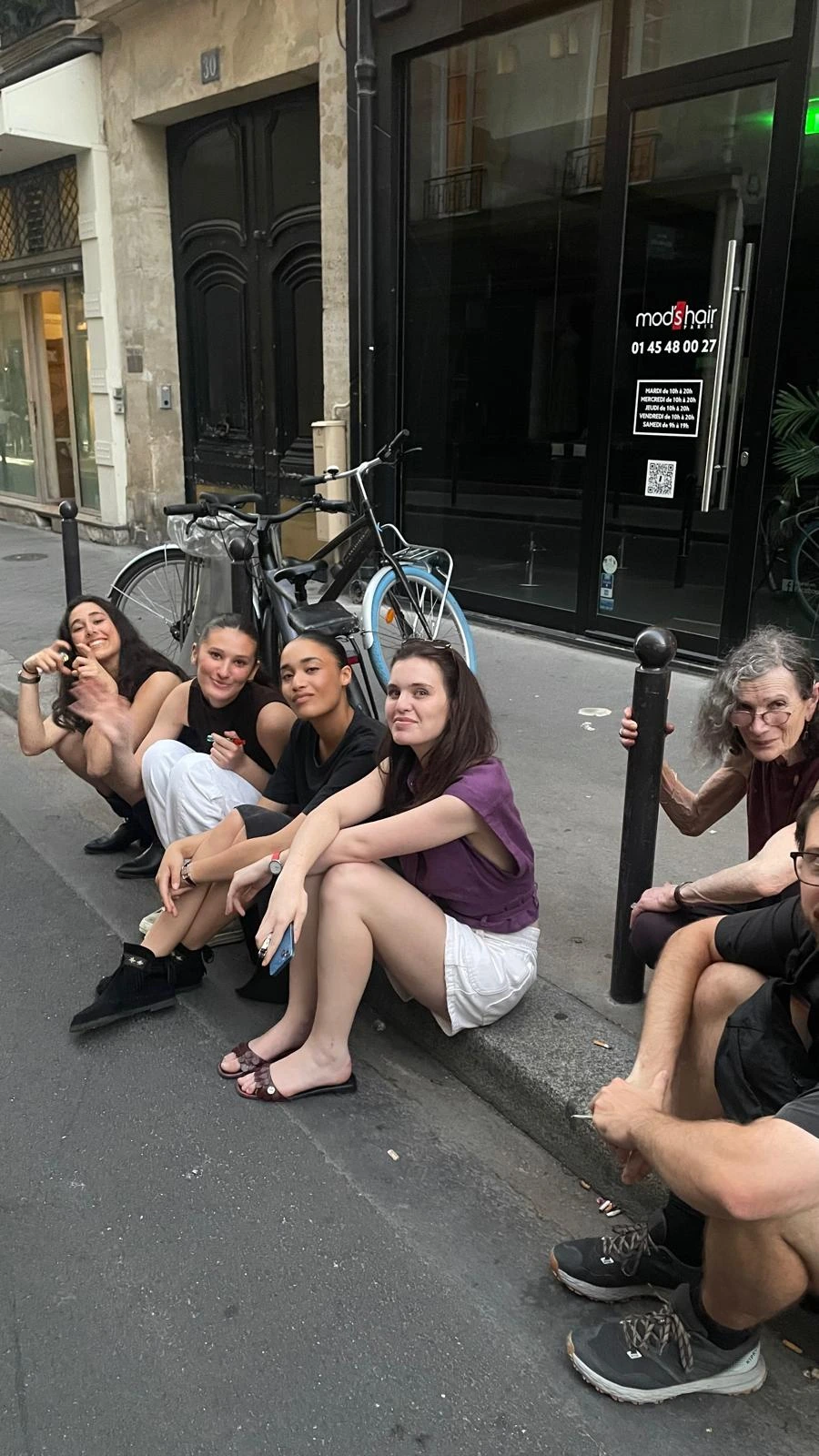
The evening closed on Angels' Atlas (2020), created for the National Ballet of Canada to music by Tchaikovsky, Owen Belton and Morten Lauridsen: no narrative, light as a character, and one last question left open — what a work transmits without naming it, and what each person receives regardless. As the excerpts followed one another, something shifted in the room. The conversation slowed, and for some guests emotion took over. It came from no explanation and no argument, but from the bodies on screen, the music, the light. No one named it; everyone felt it. Perhaps this was the answer to Crystal Pite's question: what the body knows and language cannot say passes all the same, from one body to another, through a screen, in a gallery, on a May evening. Then the conversation left the table and carried on outside, on the pavement of the rue du Dragon. No conclusion — an evening like this succeeds if everyone leaves with a question they did not have when they arrived.
Artist Statement
For this second symposium we changed method: not a question looking for its centre, but a work placed at the centre. The philosophical questions were not to be brought to Crystal Pite's choreography; they had to come from it.
Dance on screen, in a painter's gallery, around a dinner table: the setting was part of the experiment. A table watching a table, bodies seen through light, words dissolving into movement. What we were testing, without saying so, was whether what passes between a body and another body can survive the screen, the distance, the ordinary room. It can.
An evening like this succeeds if everyone leaves with a question they did not have when they arrived. Not an answer. A question.
Logistics
The second Symposium du Dragon took place on the evening of Monday 25 May 2026 at Art Quam Anima, the gallery-atelier at 28 rue du Dragon in Paris's 6th arrondissement, in Saint-Germain-des-Prés. Eight participants shared a dinner around a long table while excerpts of Crystal Pite's work and William Forsythe's Synchronous Objects were projected onto the gallery wall.
Works screened that evening were Crystal Pite's The Seasons' Canon (2016), The Statement (2016), Body and Soul (2019) and Angels' Atlas (2020), alongside William Forsythe's Synchronous Objects (2009). The philosophical references were Elias Canetti's Crowds and Power, Maurice Merleau-Ponty's Phenomenology of Perception, Heinrich von Kleist's On the Marionette Theatre and Sigmund Freud's The Uncanny.
The symposium is a recurring format bringing together artists, writers, students and art professionals. For information about future editions, please contact Art Quam Anima directly at the gallery.
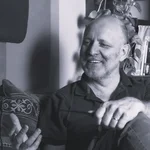
Arnaud Quercy is a Parisian artist working across painting, music, and sculpture. His practice is grounded in Ideamorphism — the principle that a work of art does not carry meaning, but triggers it. Each piece is engineered to diffract differently through each person who encounters it.
He creates and exhibits at Art Quam Anima, his gallery-atelier at 28 rue du Dragon, Saint-Germain-des-Prés, Paris.