Symposium du Dragon — I
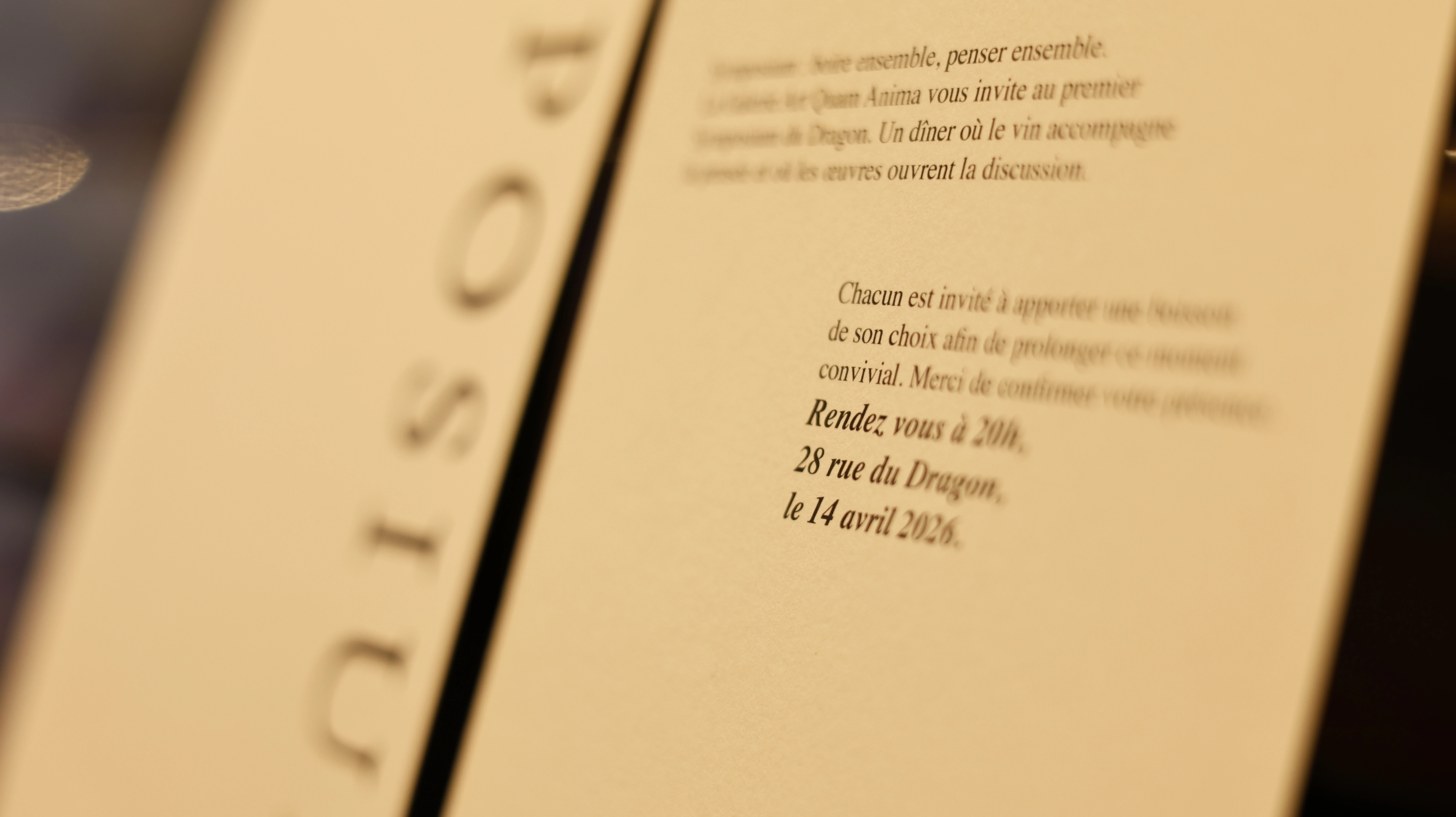
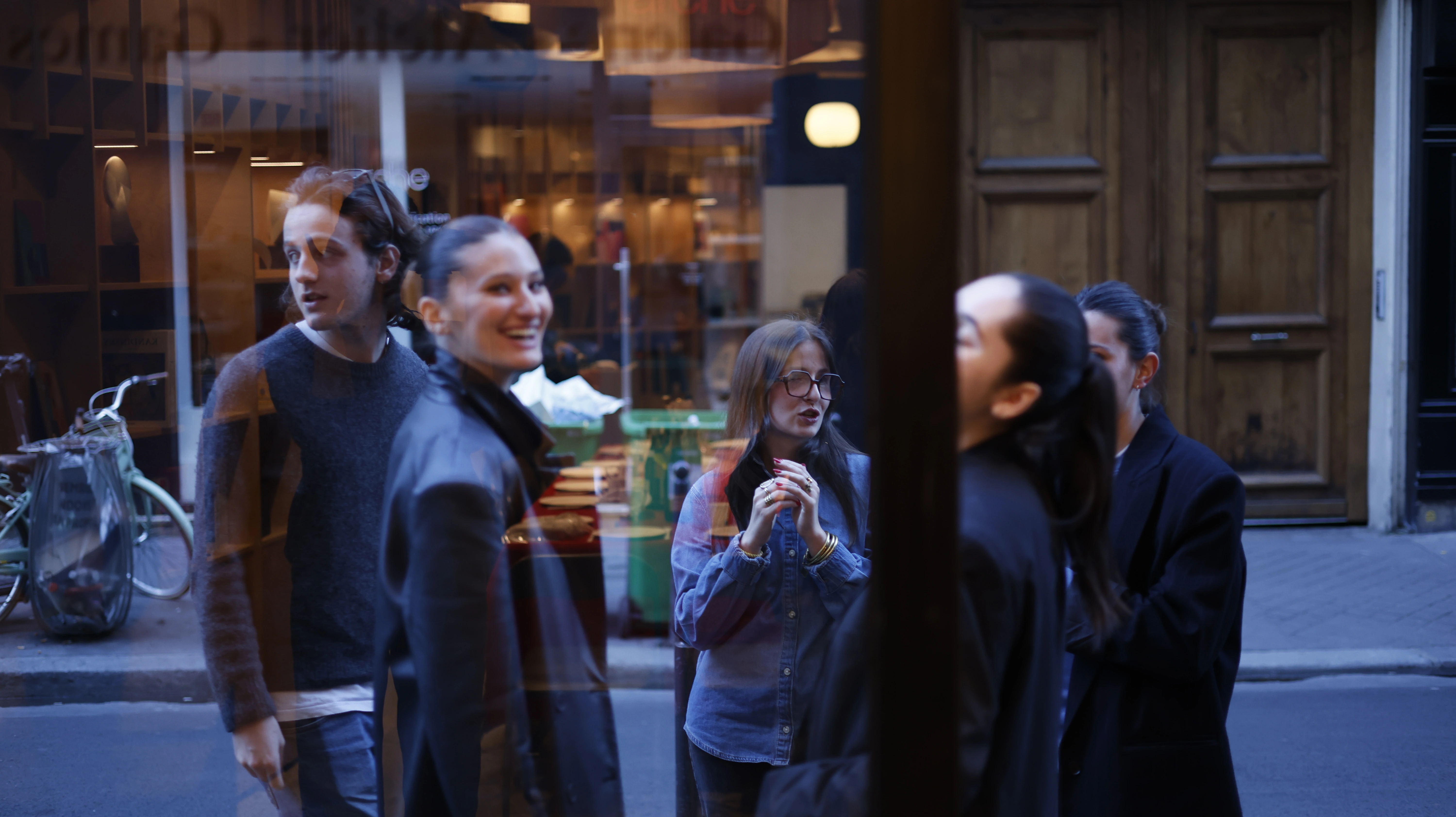
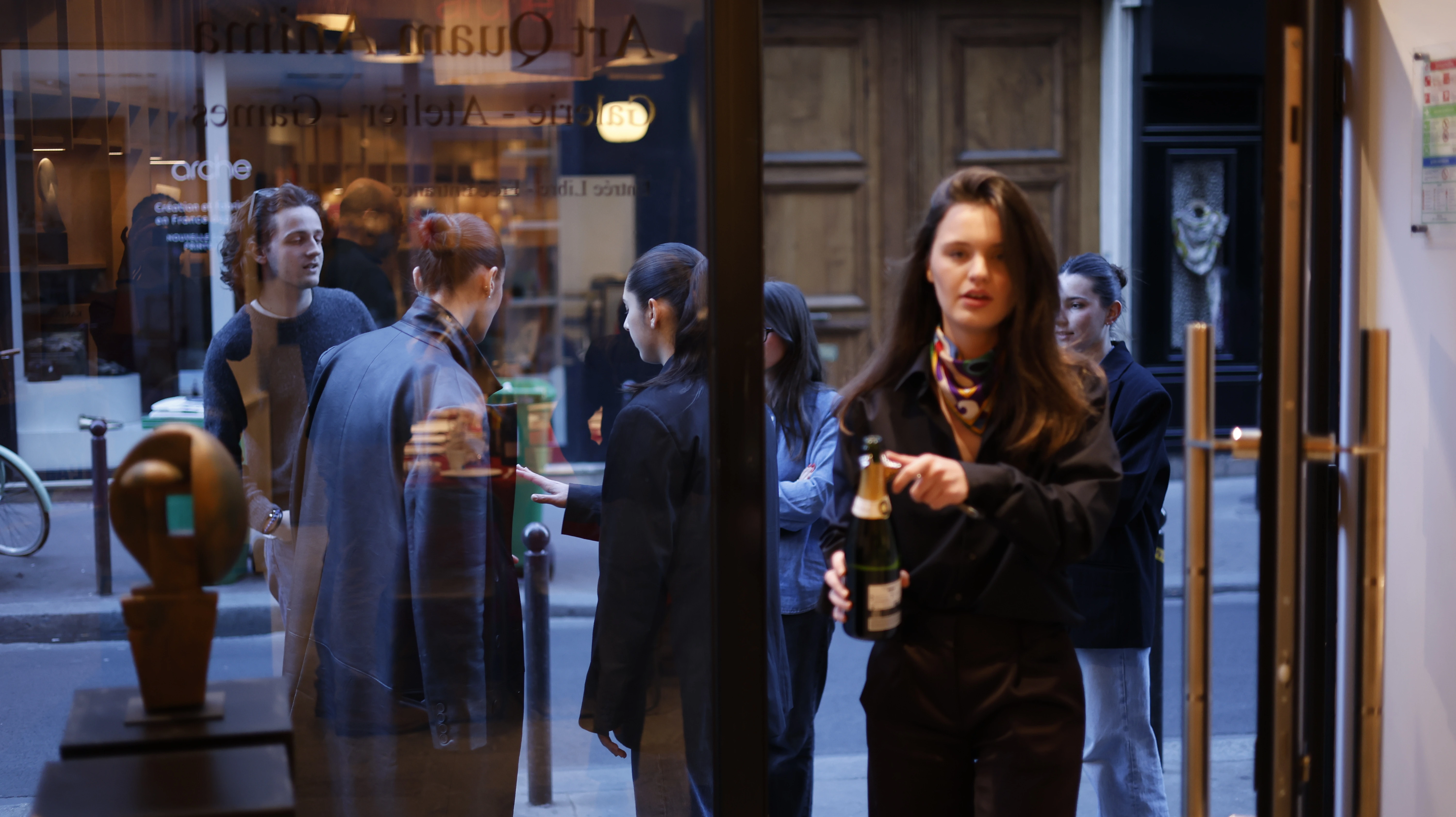
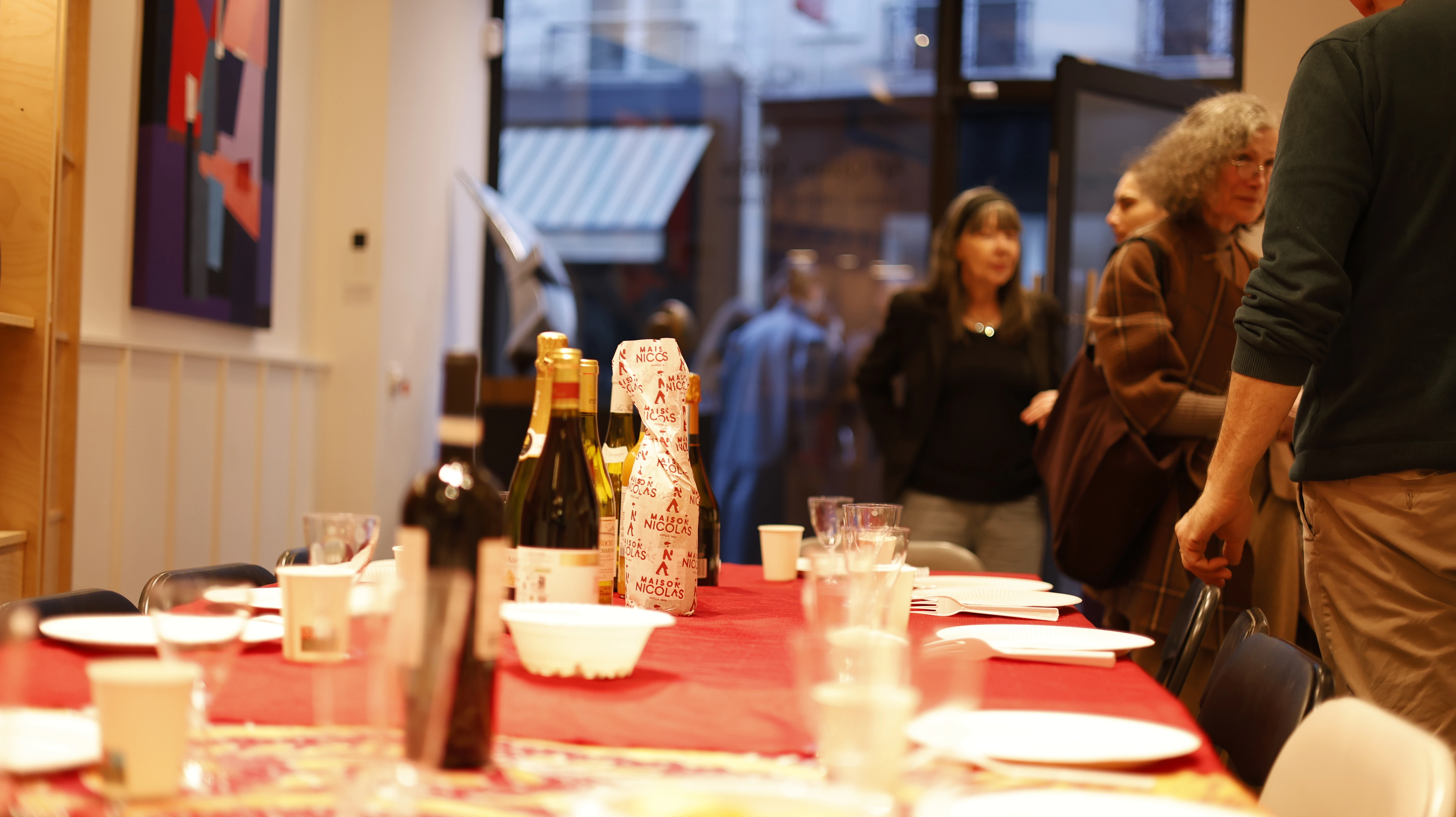
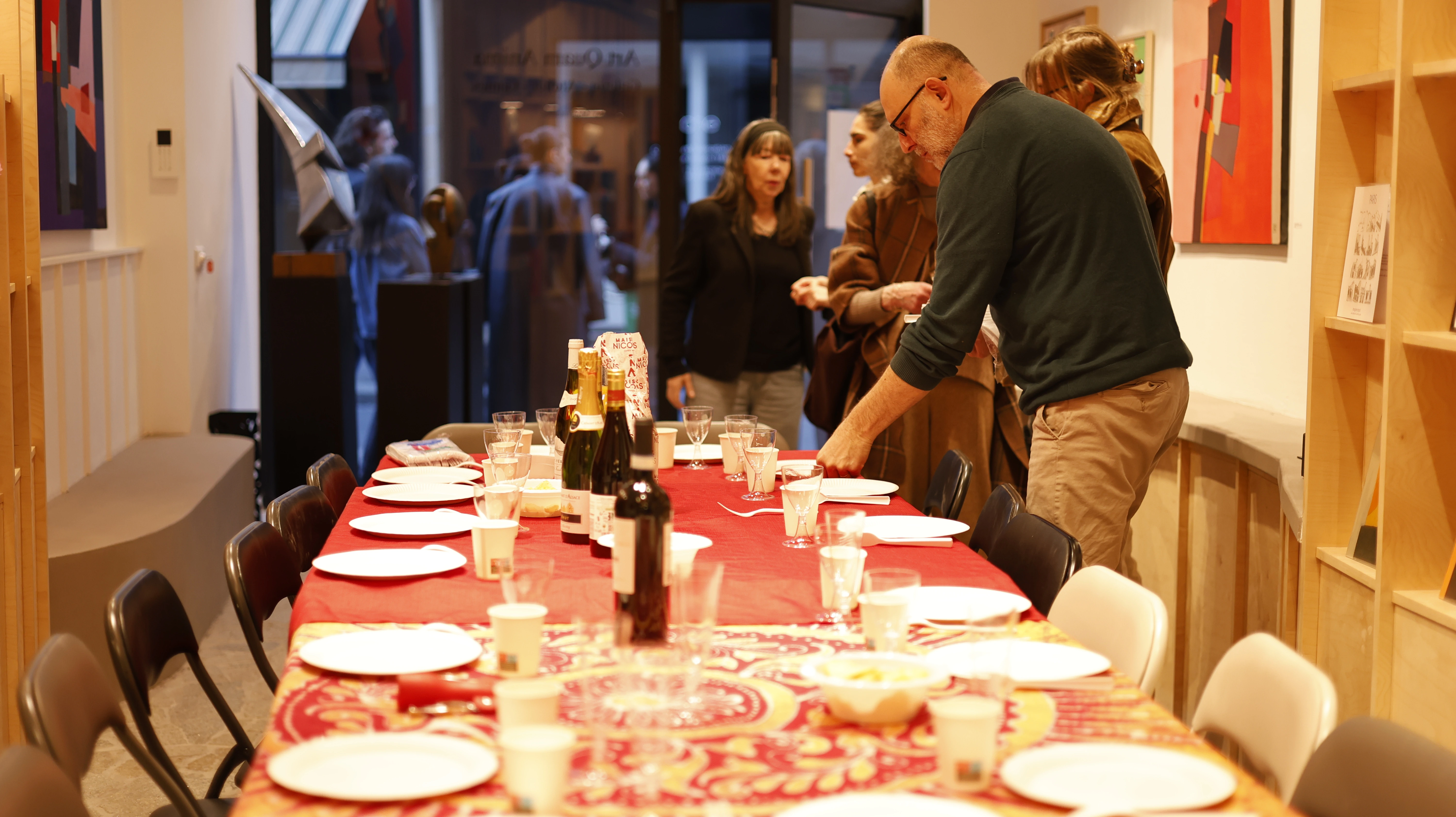
On the evening of 14 April 2026, Art Quam Anima opened its gallery-atelier at 28 rue du Dragon, in the heart of Saint-Germain-des-Prés, to the first Symposium du Dragon: an evening of conversation, music and readings held among the paintings on the walls. Artists, poets, a former museum curator and students from the École Penninghen gathered around a question that sounds simple and never is: what is art for? The evening opened on a question of identity, posed by the artist and poet Caroline Lopez: why do we define ourselves by what we are not? The discussion quickly turned to inheritance. Parental imprint, the group agreed, is not an obstacle to overcome but something constitutive. No one creates from nowhere. Arnaud Quercy recalled a record his father put on one evening, without any particular intention: Charlie Parker's My Old Flame, then Dizzy Gillespie's Salt Peanuts. Played again that night for the group, the two pieces became the shared memory of an original transmission.
The philosophical heart of the evening brought Kant and Adorno into the room. Axel introduced Kant's "purposiveness without purpose": beauty pleases universally and without concept, a disinterested pleasure distinct from the desire to possess, from utility, from the merely agreeable and from moral good. Adrien extended the argument with Theodor W. Adorno, the Frankfurt School philosopher and musicologist, noting that the two thinkers arrive by different roads — one through the pure structure of aesthetic judgment, the other through a dialectical critique of the culture industry that turns everything into consumable goods. Yet both converge: art cannot be reduced to any function. Arnaud then sat at the piano and played two major chords in turn, C major and C-sharp major, each beautiful and complete as an arpeggio. Played together, they collapsed into total dissonance. Meaning does not lie in the elements, he showed, but in their relation — and in the ear that receives them, a direct echo of the ideamorphic principle at the core of his practice.
Lise, a former museum curator, then read a letter from Wassily Kandinsky to Lily Klee dated 7 December 1925, written at the Bauhaus to thank her for a gift of polenta. In Kandinsky's hands the thank-you note becomes a text on total sensory perception: the eye, the nose, the palate, the fingers and the ear are each summoned by a single dish, its yellow carrying the middle tones of a flute. Read in a gallery surrounded by paintings, the letter resonated without anyone needing to point it out. Caroline Lopez presented her entirely handmade artist's books — watercolours and poems published by Éditions Signum, each copy unique — and read from Trottoir, Erreur, Comme tant d'autres, Il, Derrière, Traces and Silence. Zineb gave her first public reading from her collection Demain Dimanche, drawn from the chapters Zaqqum and Moments. These readings moved the evening from theory about art to art itself, in act: a poetics of what remains, what is missing, what goes unsaid — personal, funny and overwhelming at once.
From there the consensus was rebuilt: art has no assignable utility. Whenever one tries to reduce it to a function, it overflows — and precisely because it escapes calculation and the market's saturation of the world, it reaches what nothing else can: pure, irreducible emotion. Irreducible became the word of the night. The strongest answer came without theory. Lise showed photographs of a painted dress by Sonia Delaunay, made in the atelier in 1926–27 in dialogue with Robert Delaunay's rhythms, folded away for decades and never worn — until 2019, when Lise had it danced by Maroussia Vossen at the Musée d'Art Moderne de Paris, to jazz and then a Russian lullaby in homage to Ossip Zadkine. A work in waiting, whose transmission happens only when the right body, space and sound come together. The symposium closed as it had opened, with a round table on identity: who would we be outside of what we do? A traveller, a sailor, an architect, a lover — and friendship, again and again. Three hours later, the collective answer to Caroline's opening question: a definition not by art, not by our parents, but by desire and by being.
Artist Statement
The Symposium du Dragon was conceived as a living test of a hypothesis we never announced: that art exists to produce and to receive emotion. We did not set out to prove it. We gathered people around music, poetry, painting and philosophy, and let the evening do its work.
Two chords, each perfect on its own, become dissonant when superposed. A letter about a dish of polenta becomes a treatise on synaesthesia. A dress folded away for decades waits for the body that will finally carry it. What these moments share is that meaning was never located in the object alone. It arose in the relation — between the elements, and between the work and the person receiving it.
Art does not justify itself. It waits. And in the meantime, it reveals us.
Logistics
The first Symposium du Dragon took place on the evening of Tuesday 14 April 2026 at Art Quam Anima, the gallery-atelier of Arnaud Quercy at 28 rue du Dragon in Paris's 6th arrondissement, in Saint-Germain-des-Prés. The evening combined open discussion, live piano, and readings of poetry and correspondence, held among the works on view in the gallery.
The symposium is conceived as a recurring format bringing together artists, writers, students and art professionals. For information about future editions, visits to the gallery or the works and publications presented that evening, please contact Art Quam Anima directly at the gallery.
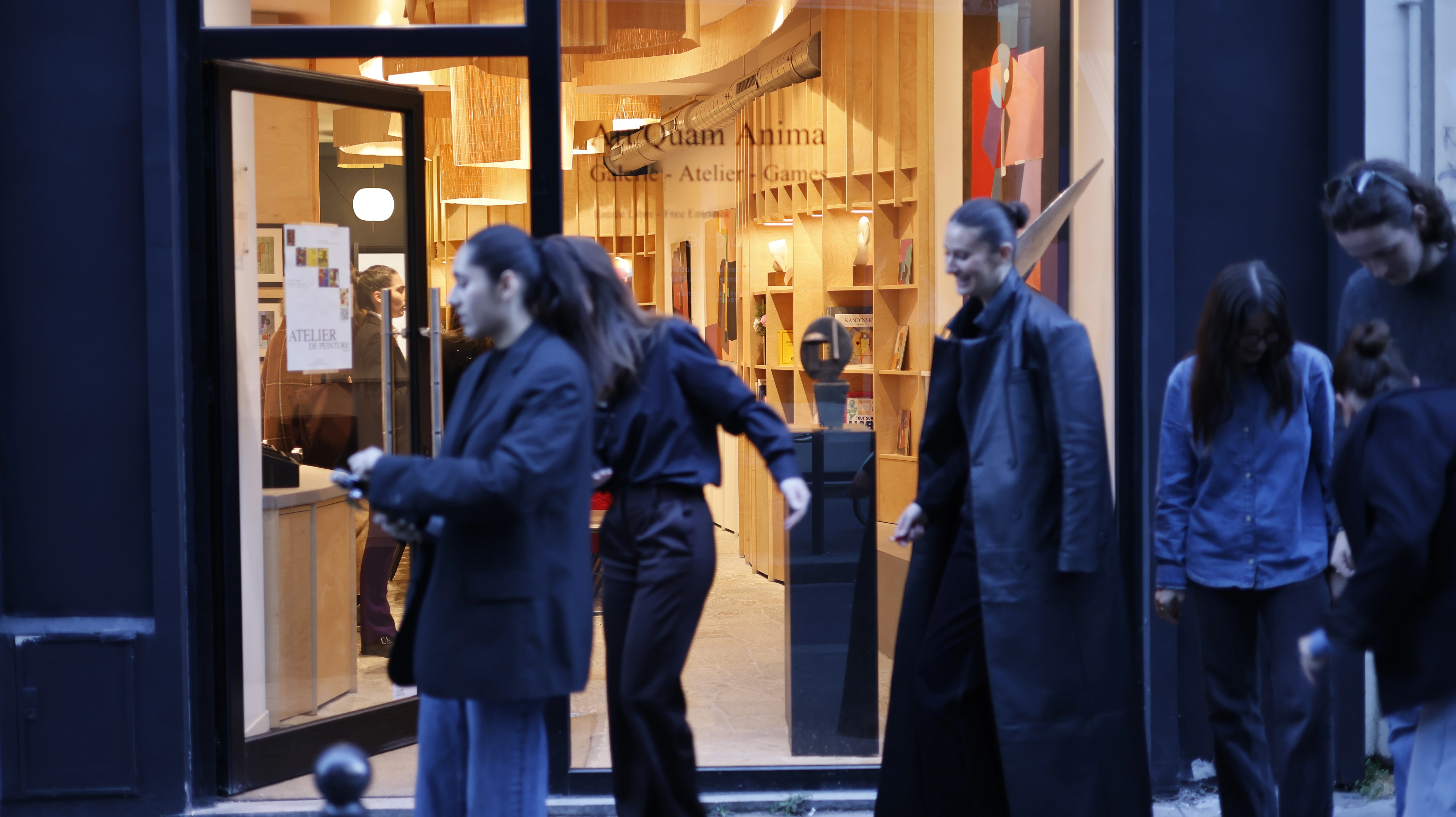
Arnaud Quercy is a Parisian artist working across painting, music, and sculpture. His practice is grounded in Ideamorphism — the principle that a work of art does not carry meaning, but triggers it. Each piece is engineered to diffract differently through each person who encounters it.
He creates and exhibits at Art Quam Anima, his gallery-atelier at 28 rue du Dragon, Saint-Germain-des-Prés, Paris.