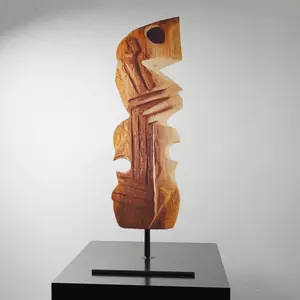
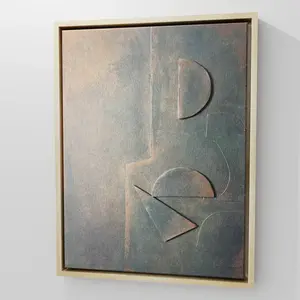
Sculpture — 33 Works · 6 Techniques · by Arnaud Quercy
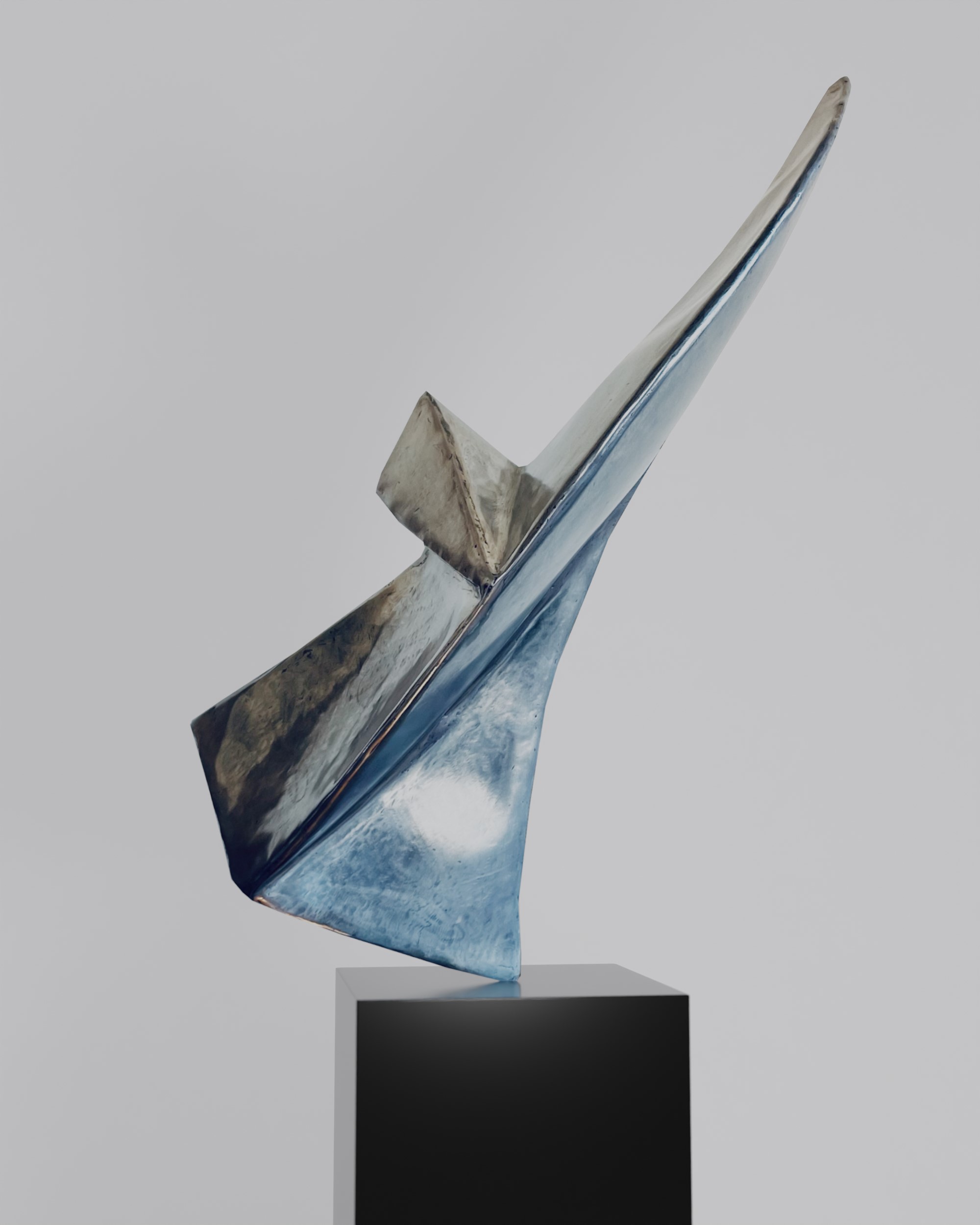
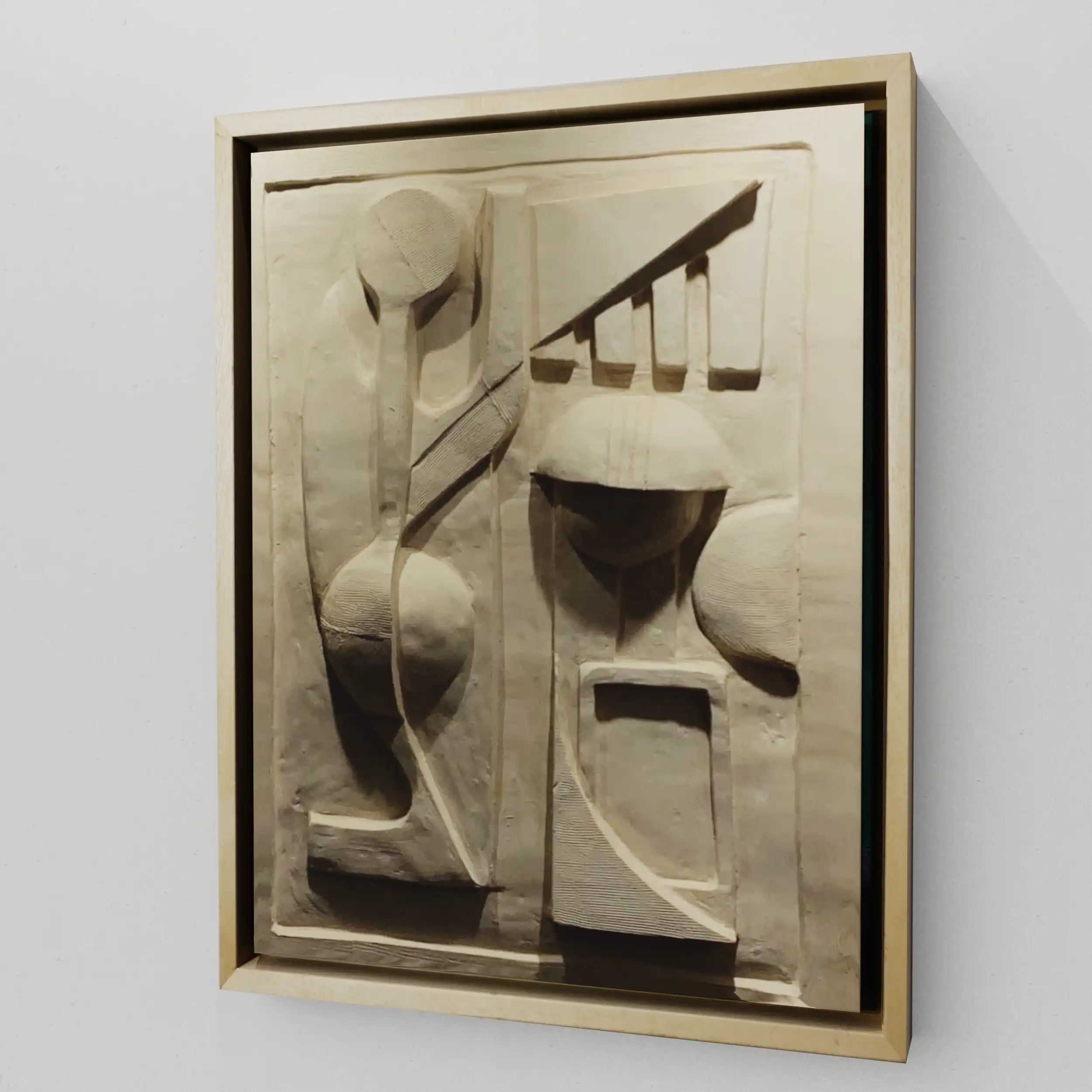
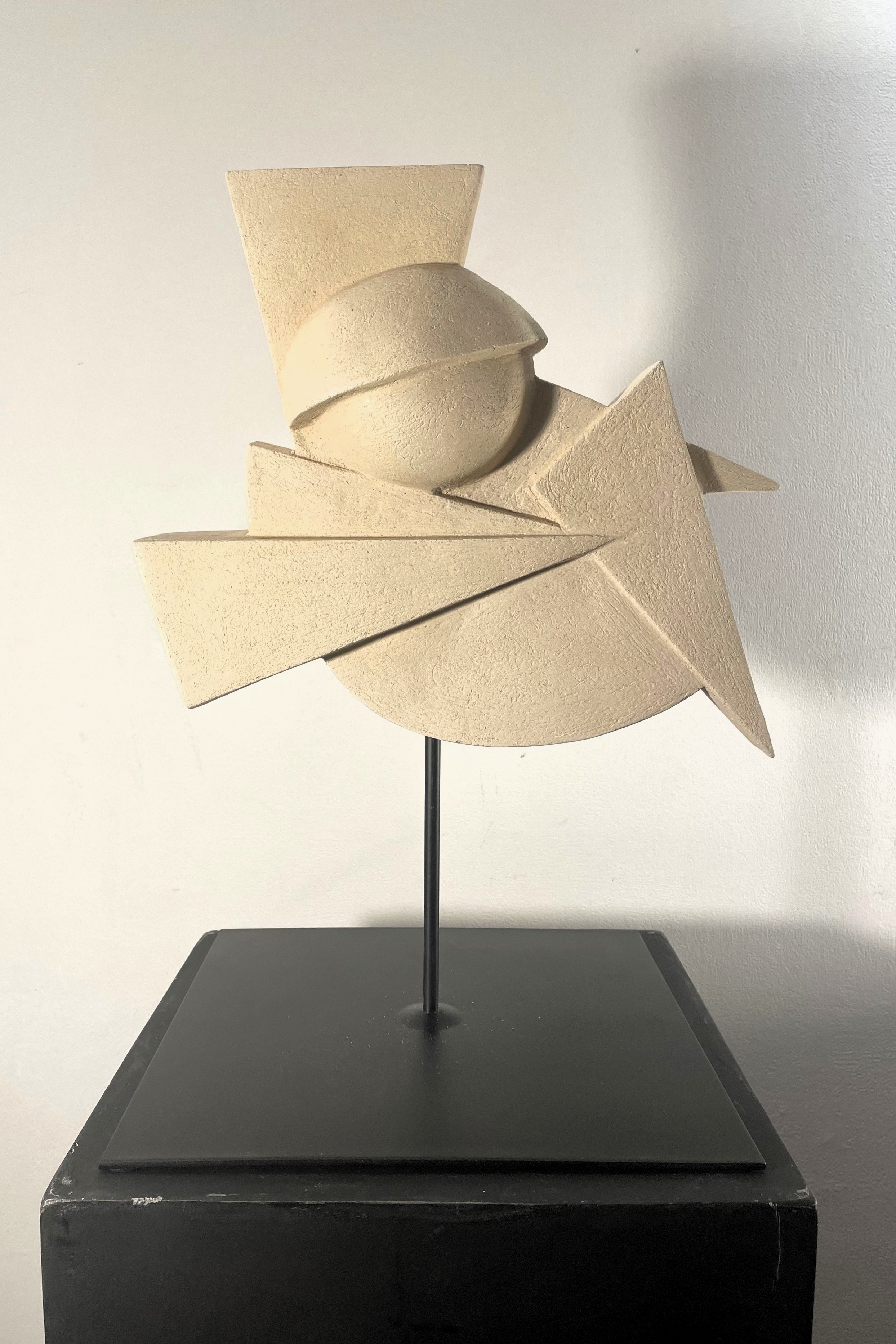
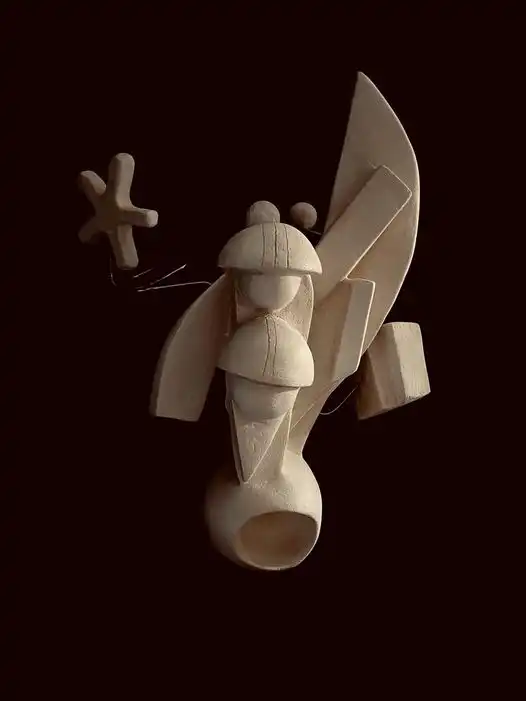
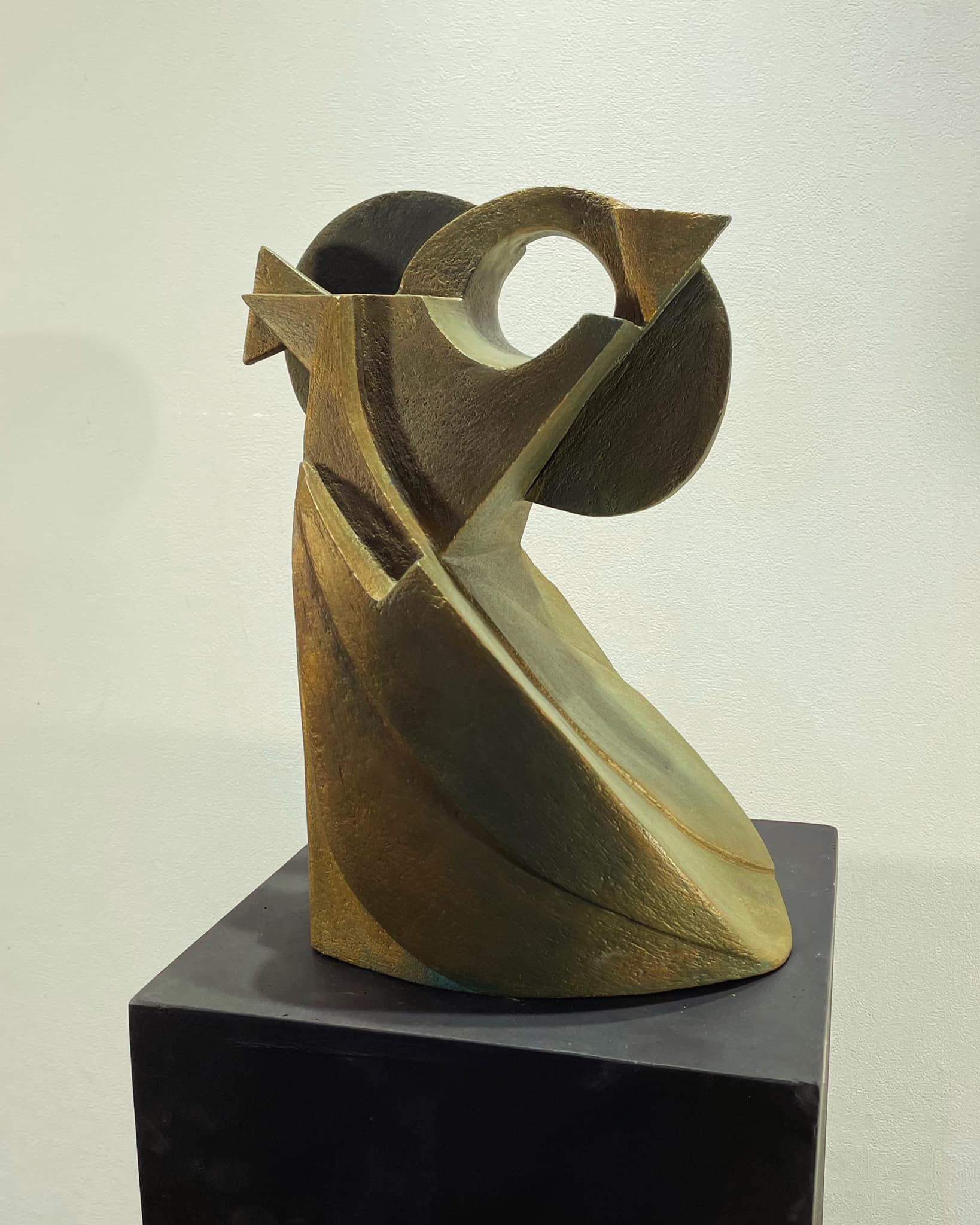
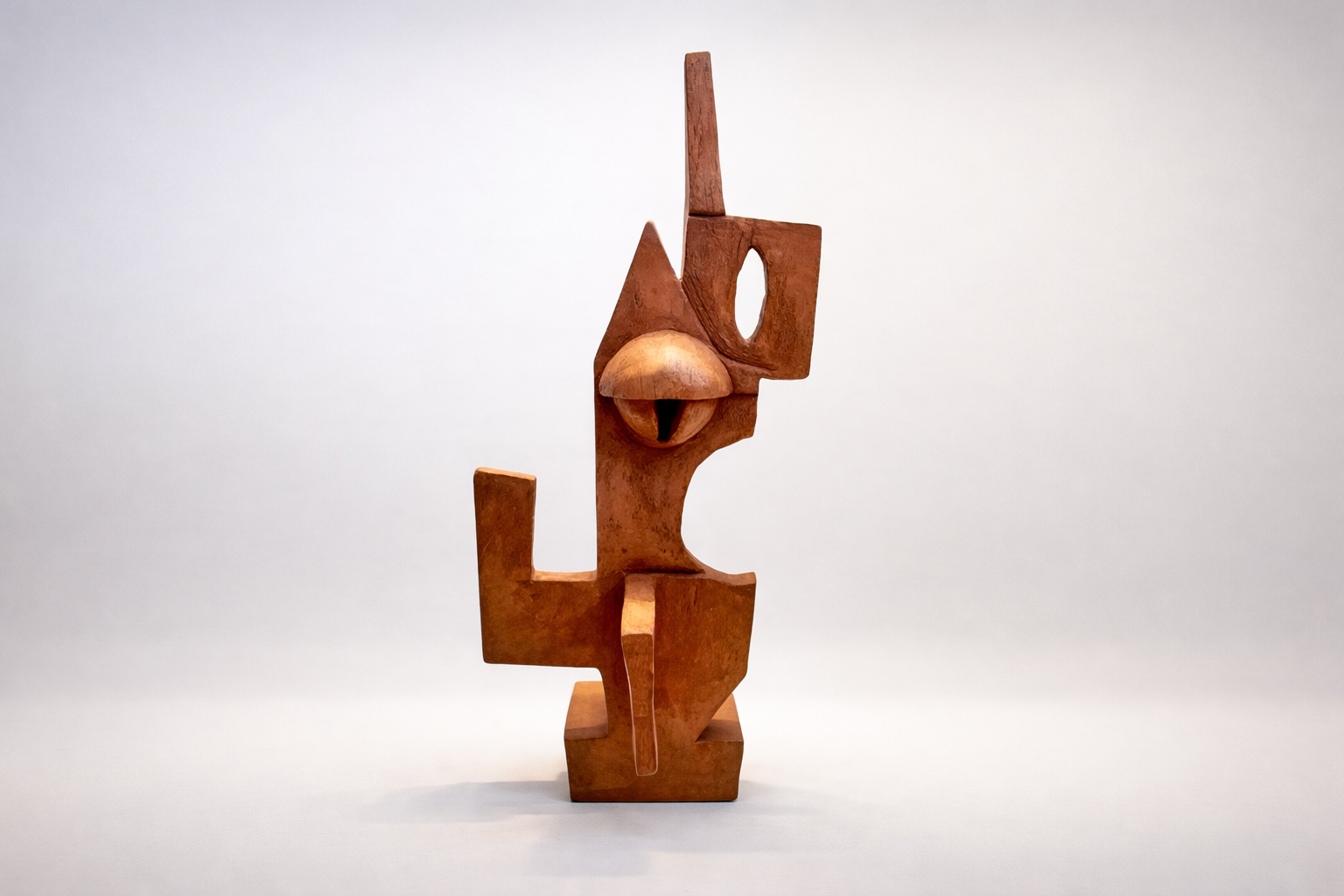
Sculpture brings together 33 works across 6 techniques. 9 works are held in private collections (Frankfurt, Germany, Boulogne-Billancourt, France, Paris, France, Neuilly-sur-Seine, France, USA, and 1 more); 12 remain available for acquisition at Art Quam Anima, 28 rue du Dragon, Paris. Works presented at: Transcendence – World Premiere of Ephemera Arts, Rencontres au Marché de la Création and Salon d'art contemporain – Metamorphose, Paris and 9 more.
There is no sculptural codex. This is the only domain in Arnaud Quercy's practice where no rule is instituted before the work begins. Painting obeys a stipulated correspondence between chords and hues; text, an etymological regression. Clay, steel and sand obey nothing but themselves.
The explanation may be simple. A codex serves where the direct route is closed. Colour, Arnaud Quercy perceives poorly: he needs a rule. Language is too transparent: he needs a constraint to make it opaque. Matter lacks nothing. The hand touches exactly what it makes. Where there is no lack, there is no prosthesis.
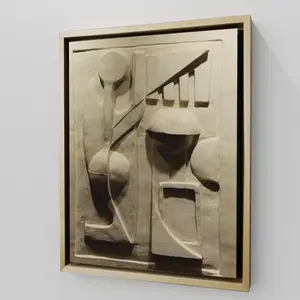
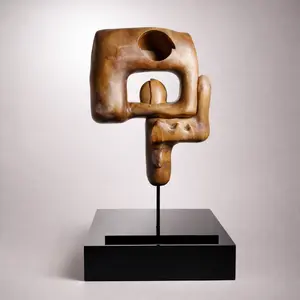
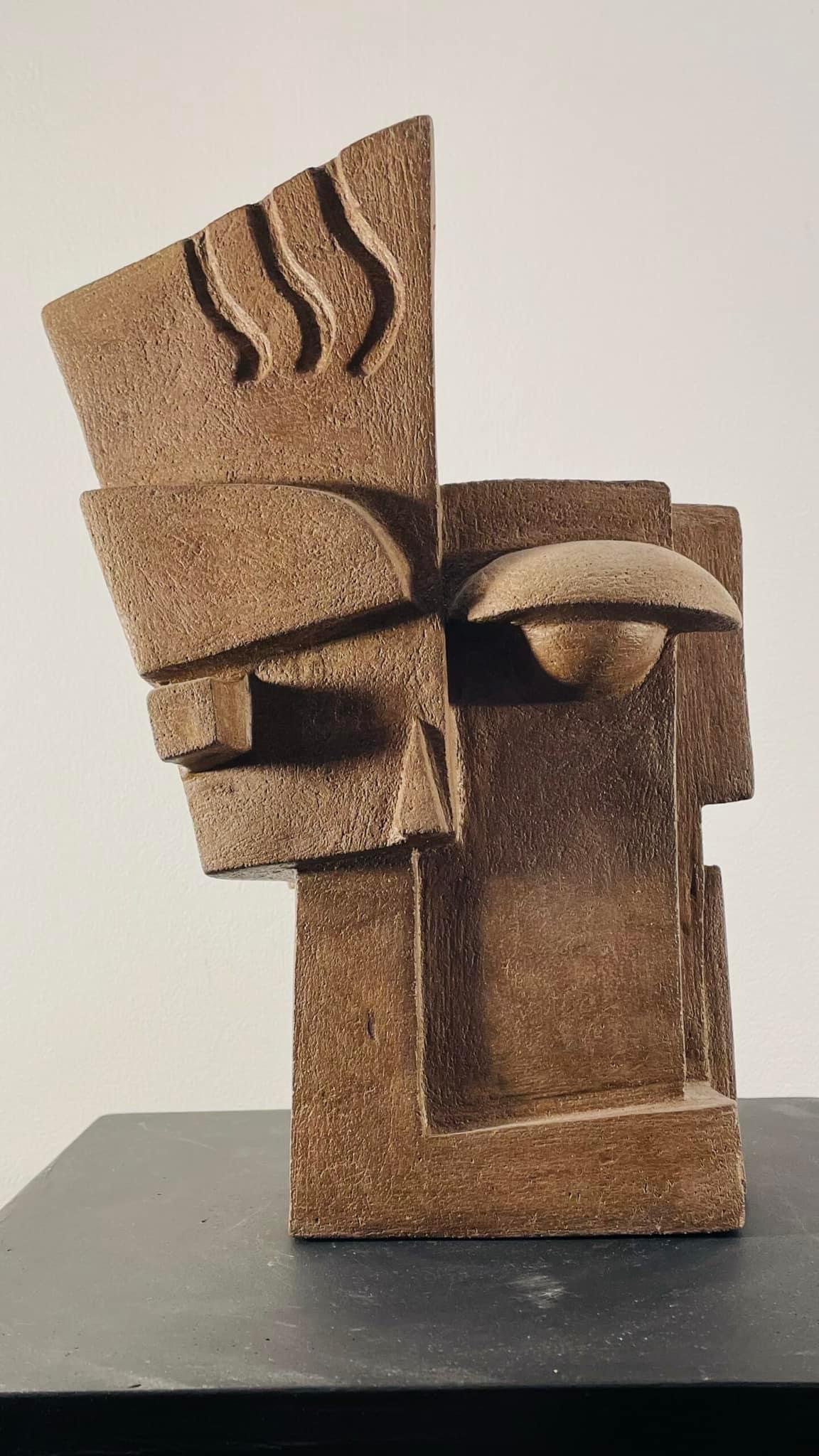
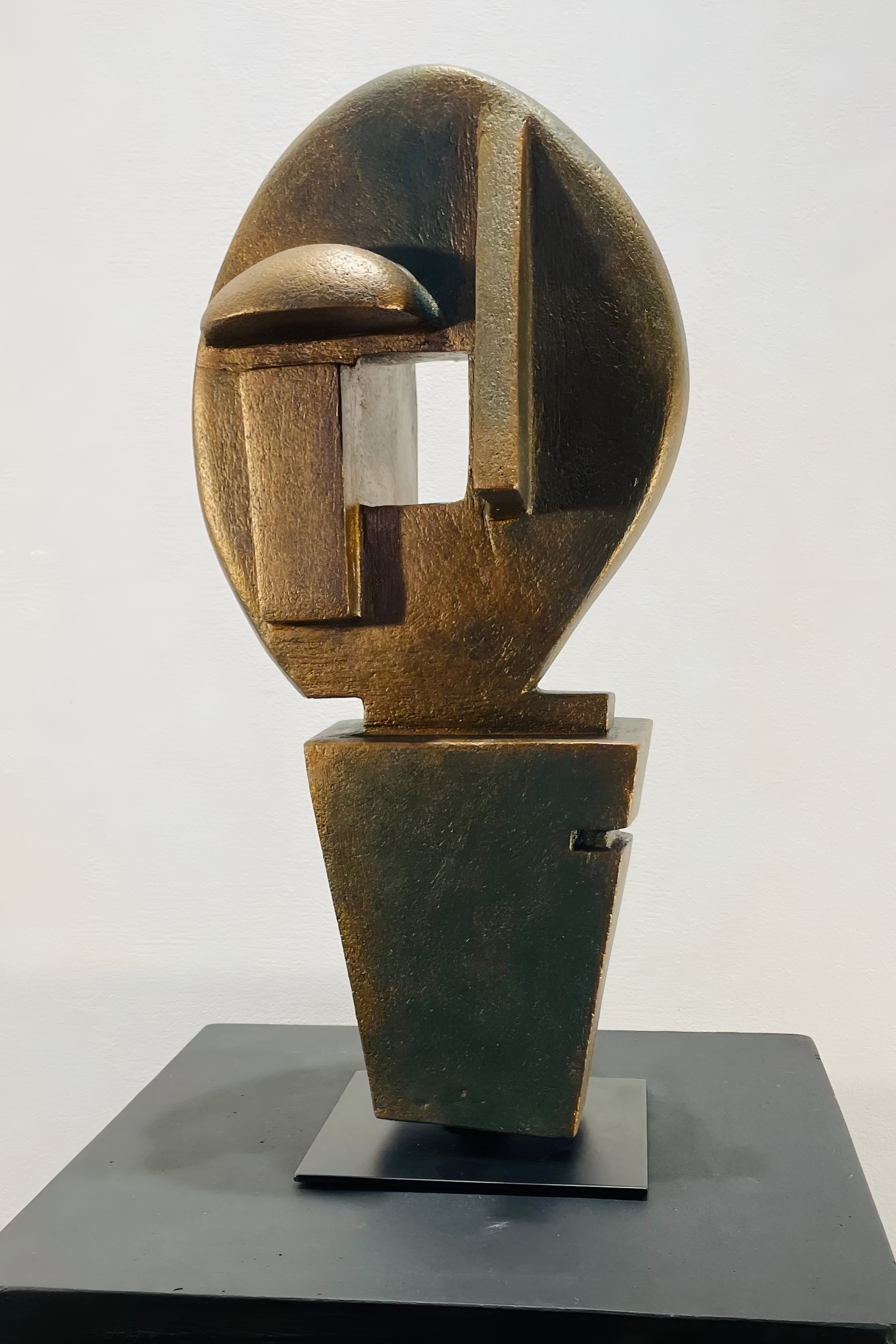
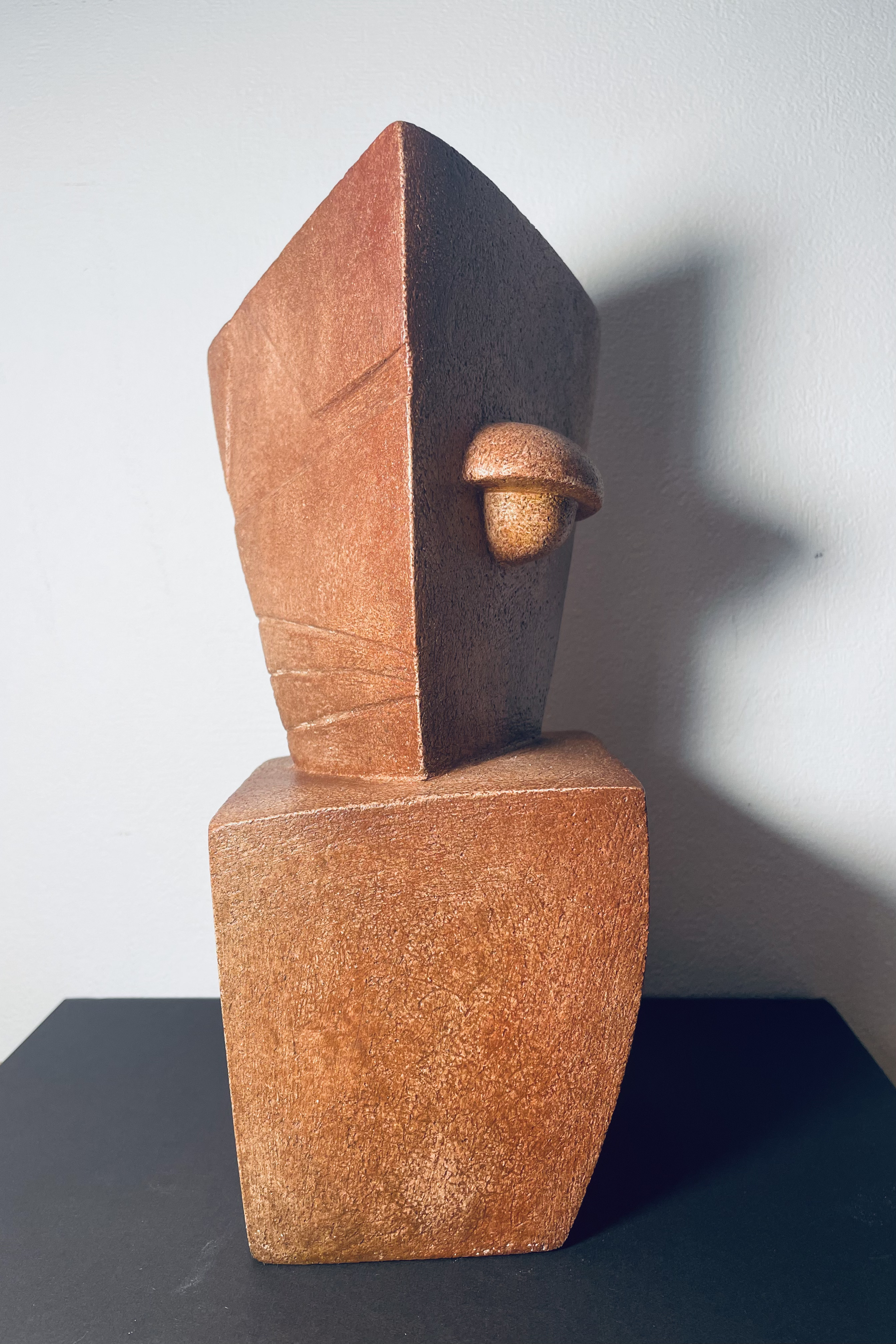
Thirty-two pieces between 2021 and 2026, in almost as many materials: 3D-printed wood PLA, ceramic on metal, ceramic on wood, steel, polystyrene, acid-free paper, found wood, sand on a beach. Formats range from six centimetres to a metre and a half.
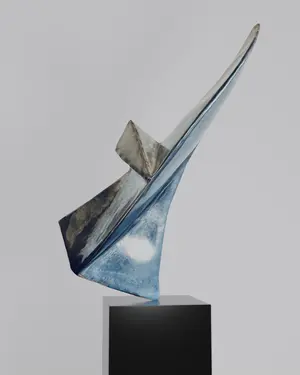
What recurs is not a rule but a reduction: the living brought down to interlocking planes. A cat from Istanbul, an owl named Archimedes, a shih tzu, a dragon, the Douanier Rousseau himself. BIRD (2024) carries the reduction furthest — Charlie Parker in ceramic, angular planes suggesting both wing and saxophone brass, curved bands coiling around a central sphere the way bebop's melodic lines coil through their changes. White chamotte clay, beeswax, an internal chimney for the firing. The gesture is simple; the execution is not.
For matter decides. Grimoire stands only by an internal metal armature, beneath a rhodium enamel. Quietness reaches its surface through hand-sanding, after firing. The Cat of Istanbul wagers on a verticality that clay does not guarantee. None of these constraints was foreseen by a rule; all were encountered.
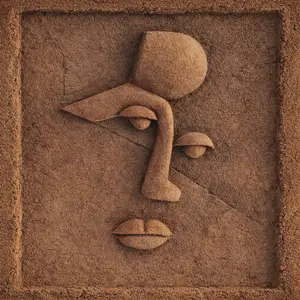
On the beach at Salou, in August 2022, five monumental bas-reliefs — a hundred and twenty by a hundred and fifty centimetres — were modelled directly in the sand: Thelonious Monk, Charlie Parker, a traveller, a sailor, a woman reading. Each was erased by the tide within hours. This is not an accident of the material; it is the material chosen for that. Four years later, Solabi Vare resumes the gesture in the gallery at 28 rue du Dragon: the works are born there, age under the visitors' water spray, and are destroyed by the artist at the moment he chooses. A webcam streams continuously. Nothing remains but the record.
Five regimes of duration coexist, then, within a single body of work: printed plastic, fired ceramic, steel, gathered wood, sand that goes. Sculpture is where the question of a work's lifespan is posed materially, without any theory having to state it.
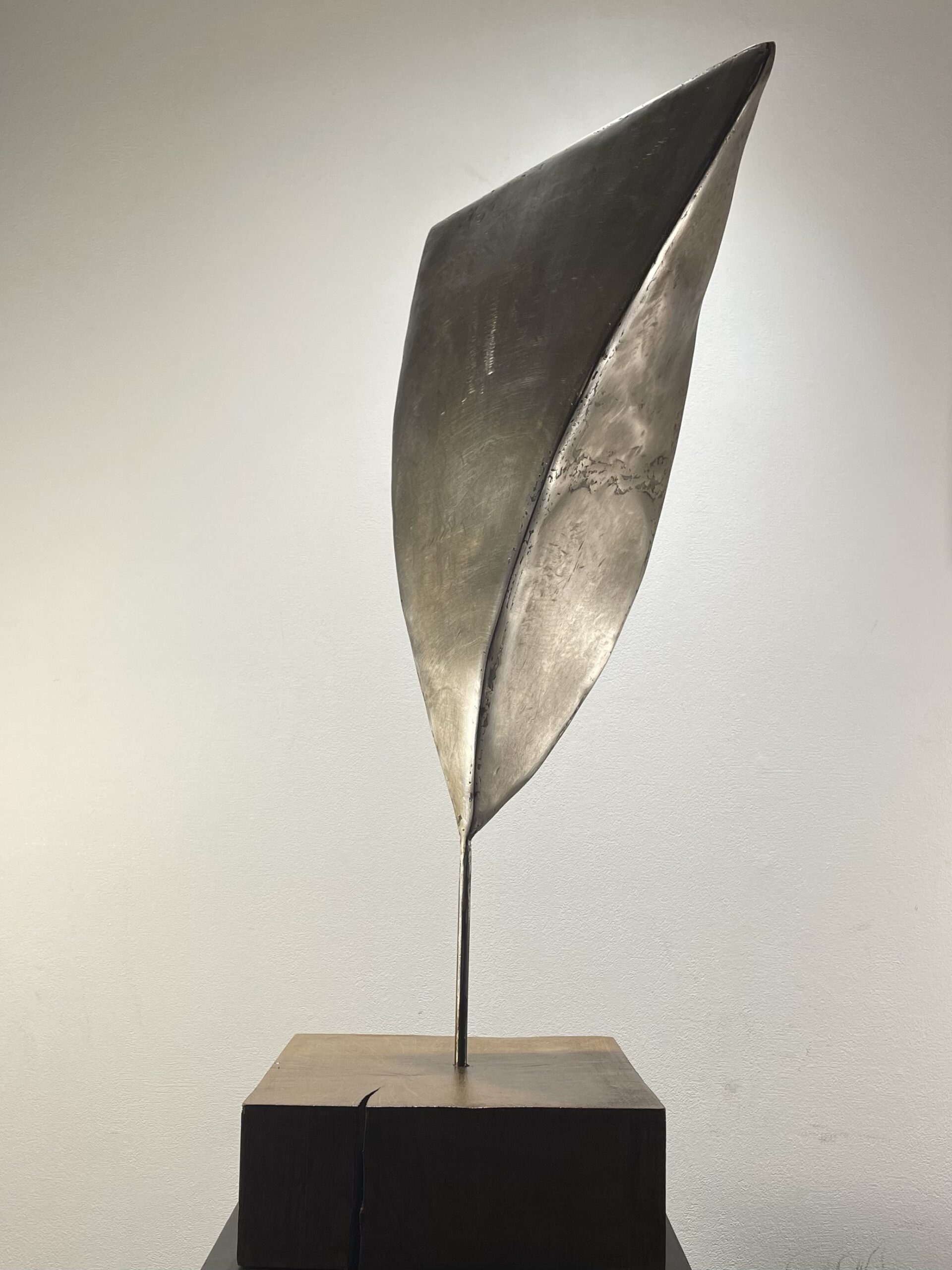
Two recent pieces, made on the same day — 28 March 2026, rue du Dragon — indicate where the work is heading. The Public Scribe assembles three elements: a wooden cube, a ceramic sphere, a feather set at a diagonal. The world, the idea, the instrument. The scribe is neither author nor recipient: he is the relay, the one who makes available a thought that is not his own. The series stages a figure the theoretical framework does not yet name.
After the Crossing goes further, and doubts more. A continuous ceramic surface has opened along its whole length, split along a spiral seam, the two faces rotating around a slightly off-centre axis. The object is still one; it is no longer closed. The artist writes of it: "I was not illustrating a diagram. I was working with clay, trying to find the form that carried the right quality of transformation." And he adds that he does not know whether the openness he built reads as loss or as gain — that determination, he says, belongs to whoever receives it.
Perhaps this is what sculpture brings to the rest: a domain where nothing is prescribed, where matter imposes its conditions, and where the question stays open long enough for someone else to answer it.
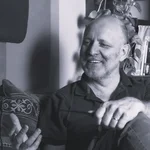
Arnaud Quercy is a Parisian artist working across painting, music, and sculpture. His practice is grounded in Ideamorphism — the principle that a work of art does not carry meaning, but triggers it. Each piece is engineered to diffract differently through each person who encounters it.
He creates and exhibits at Art Quam Anima, his gallery-atelier at 28 rue du Dragon, Saint-Germain-des-Prés, Paris.