« Gus », the Shih Tzu — Cubist Ceramic Sculpture by Arnaud Quercy
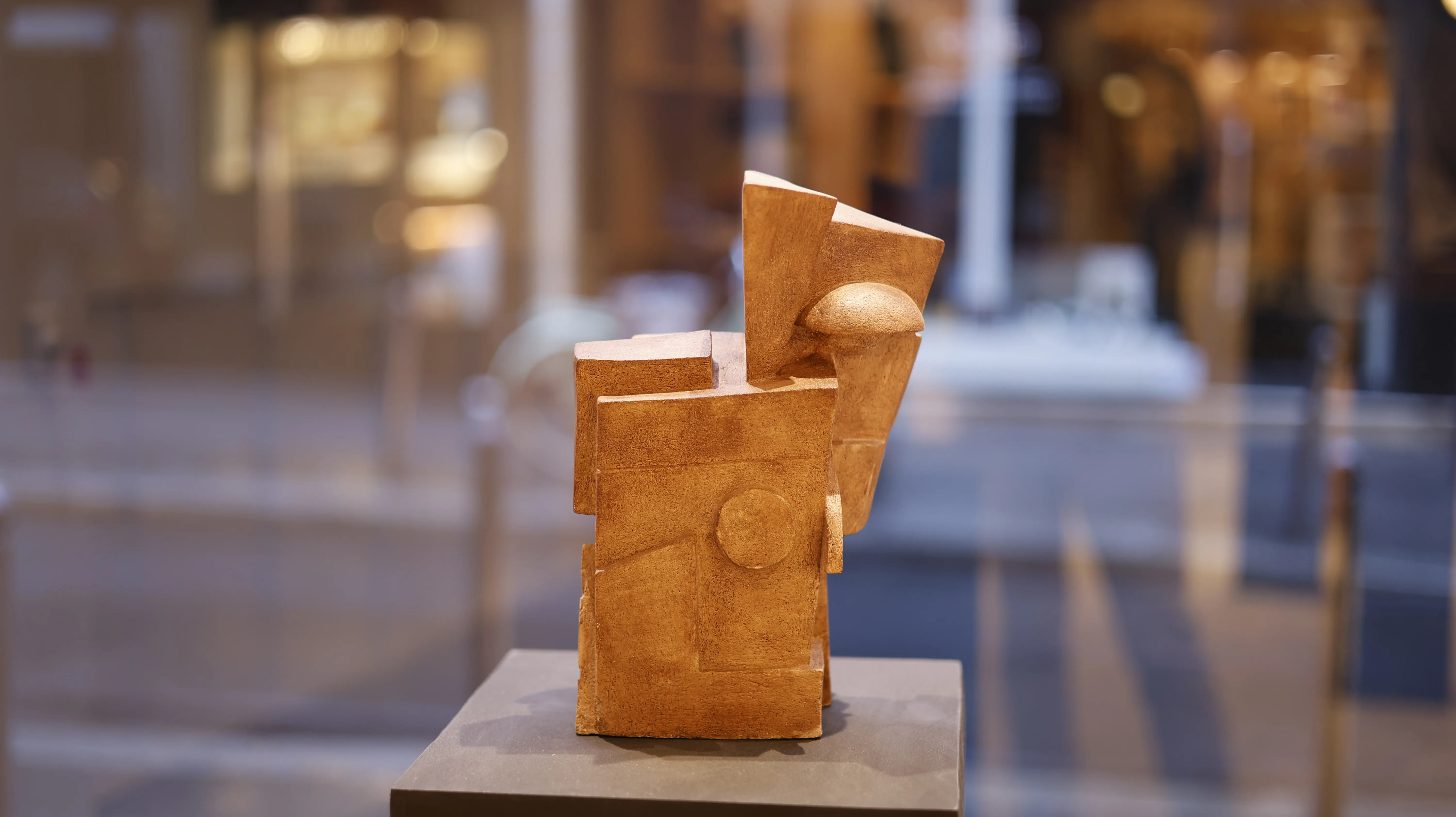
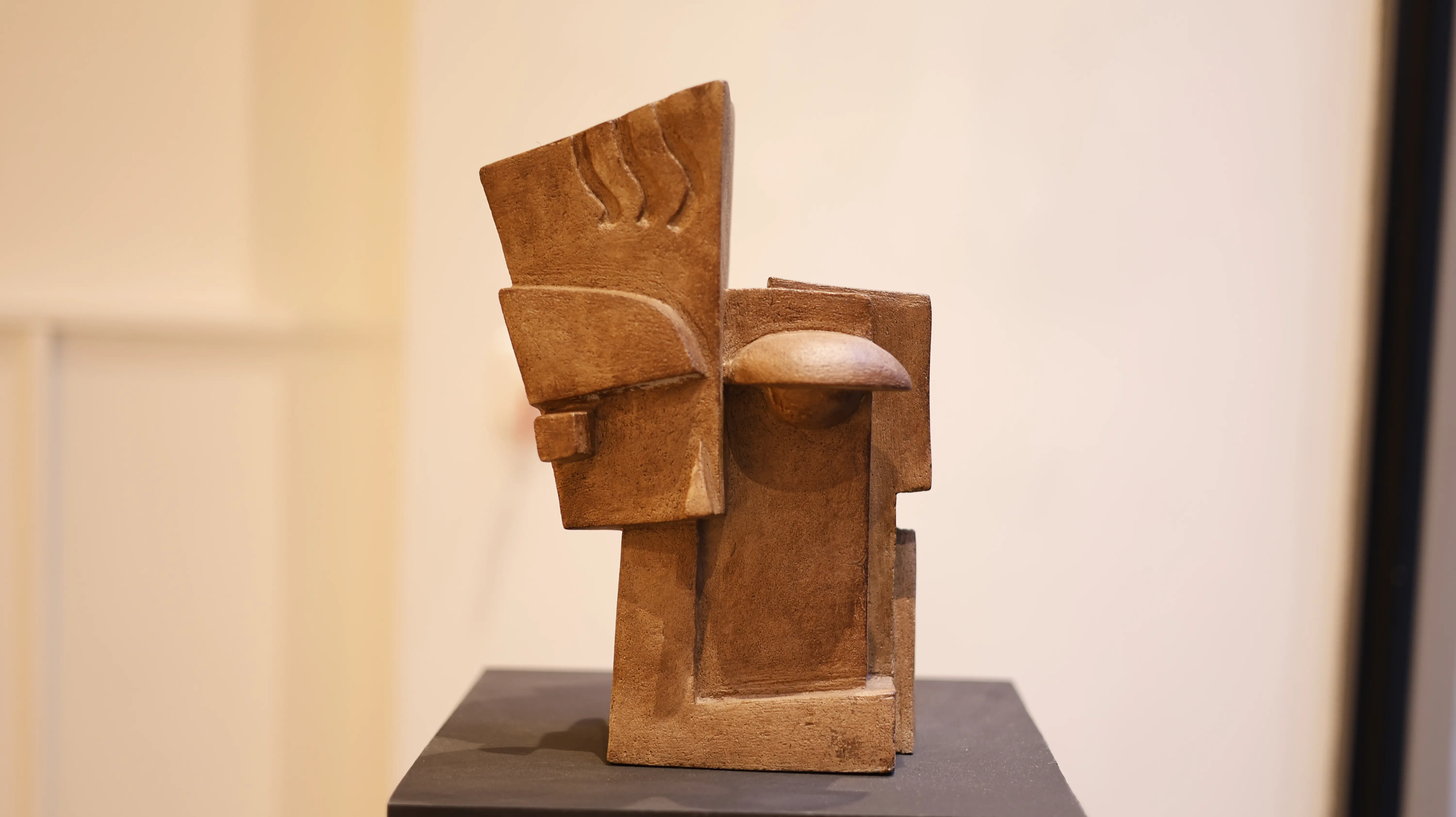
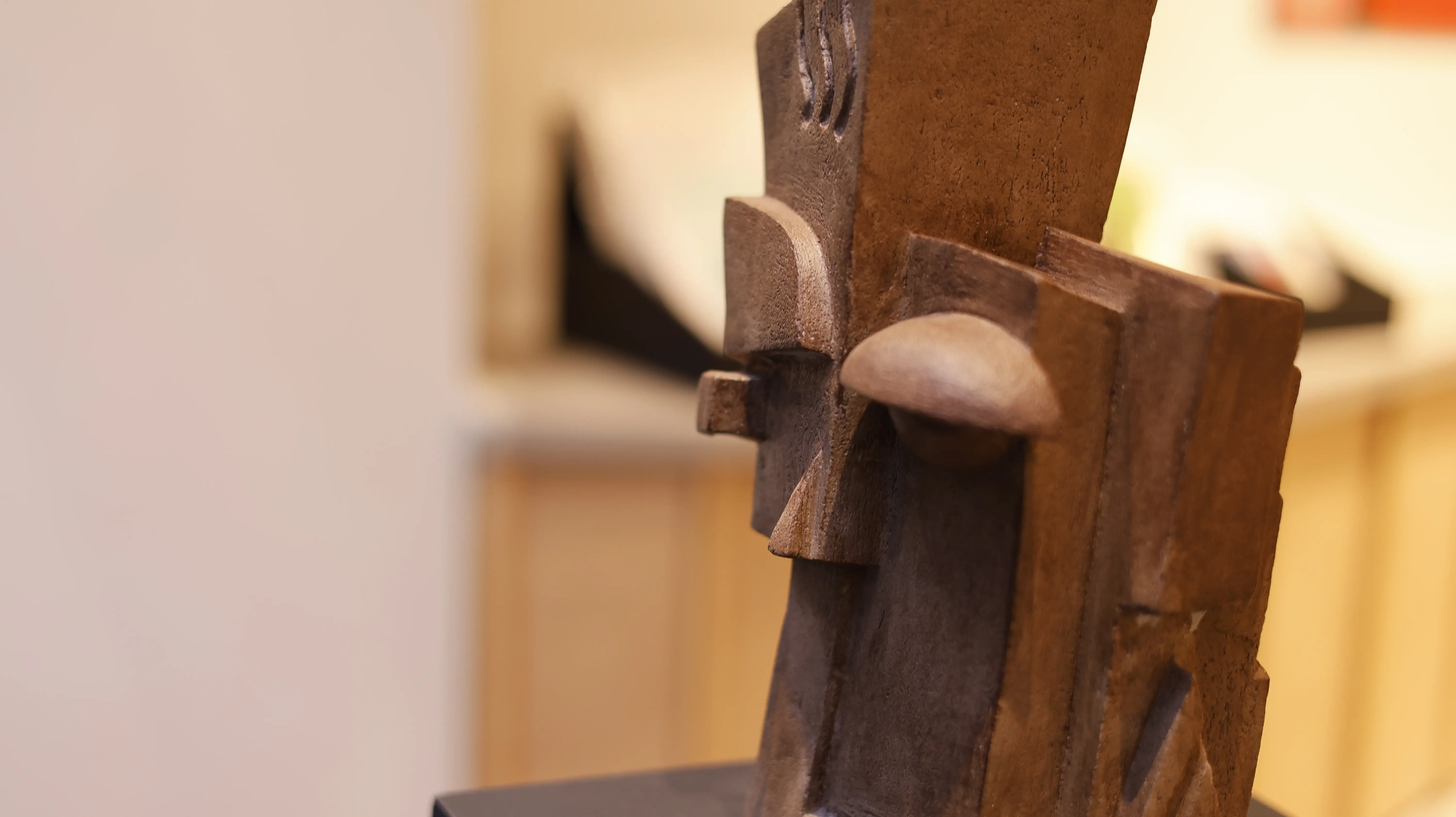
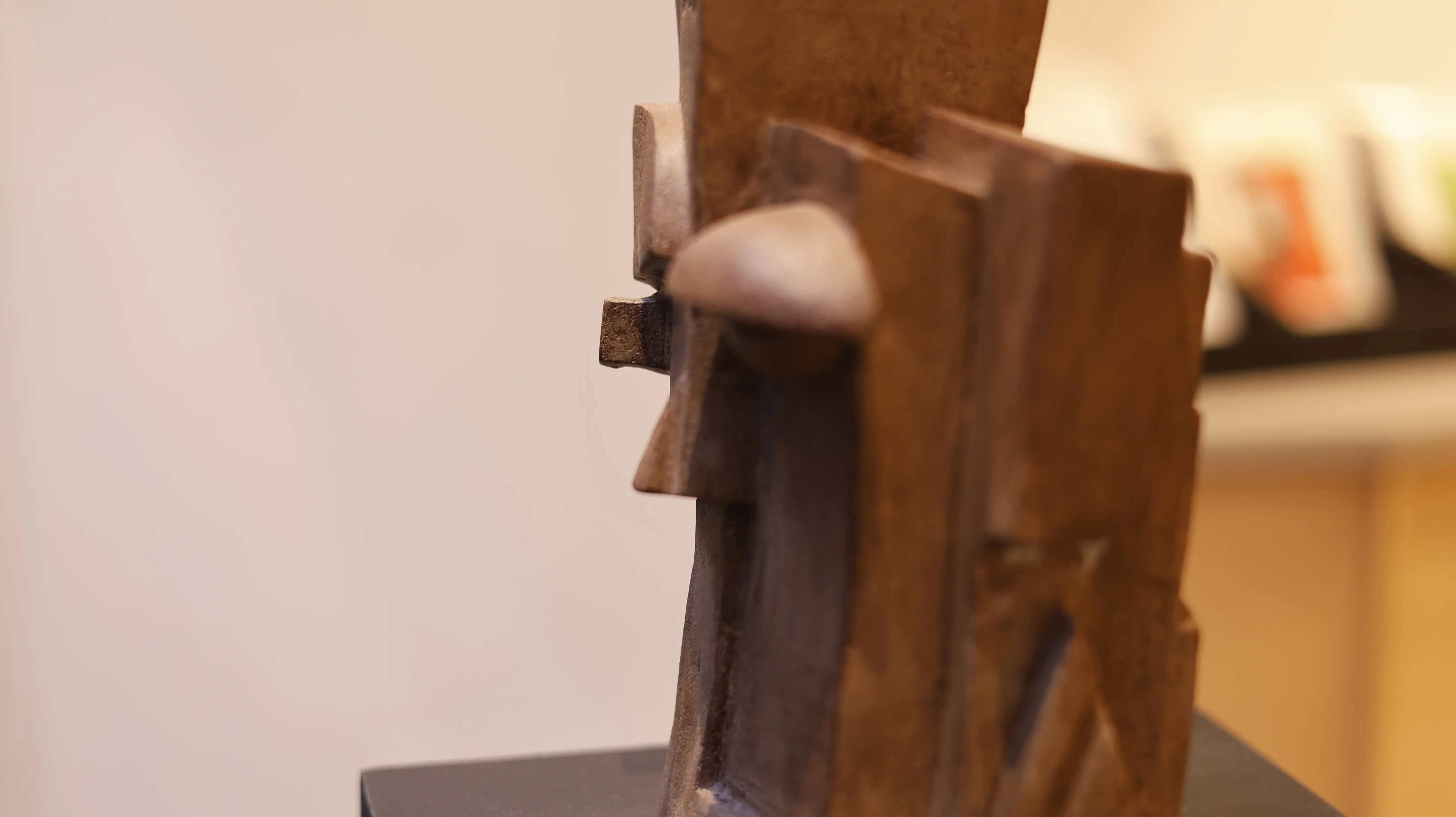
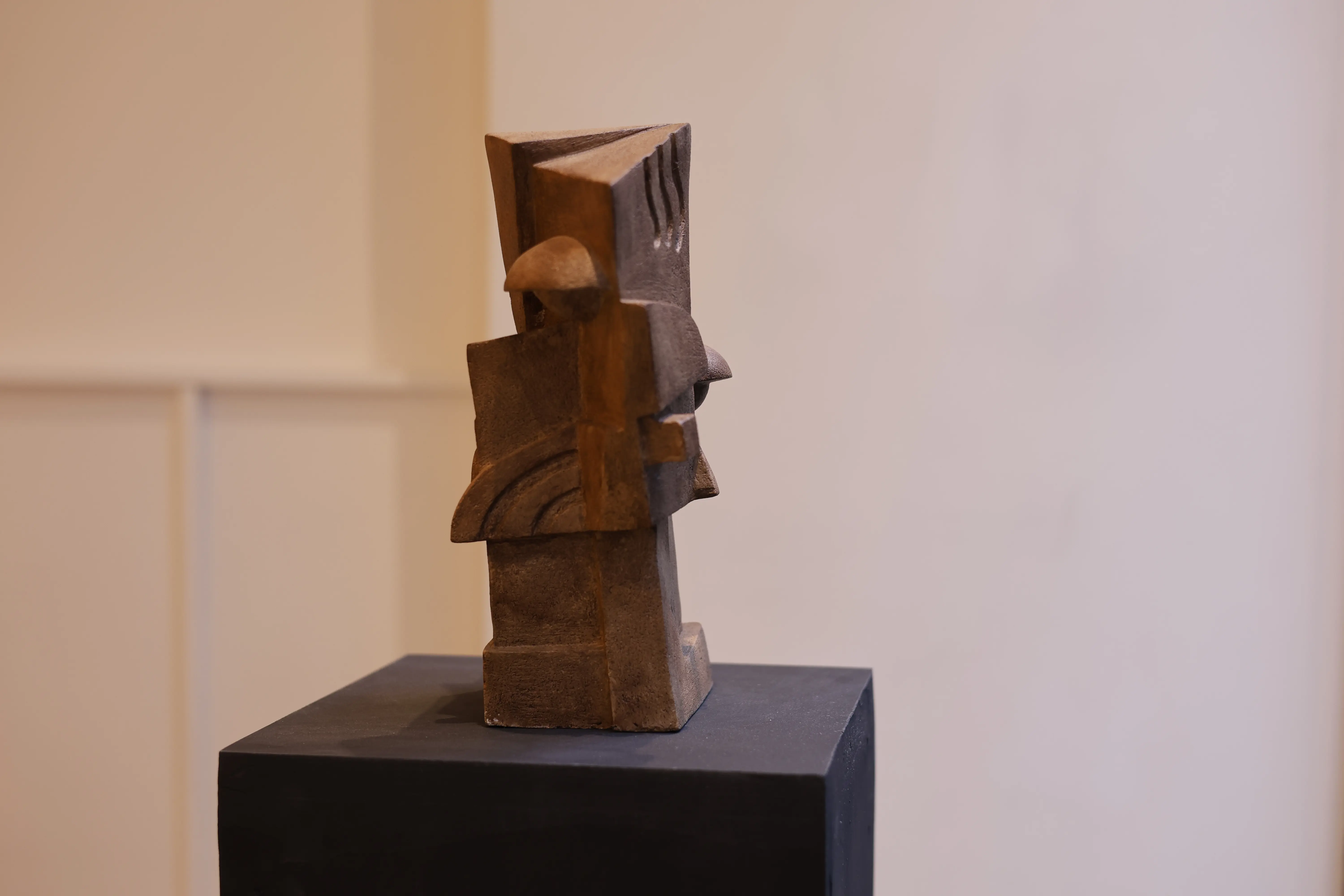
*A unique, one-of-a-kind Cubist ceramic sculpture where the familiar becomes abstract — the essence of a beloved Shih Tzu reimagined through geometric planes and angular facets. Handcrafted at the Atelier Profils et Reliefs in Paris, this original work belongs to Untamed Creations, a collection exploring what happens when art is freed from traditional boundaries.*
The Work
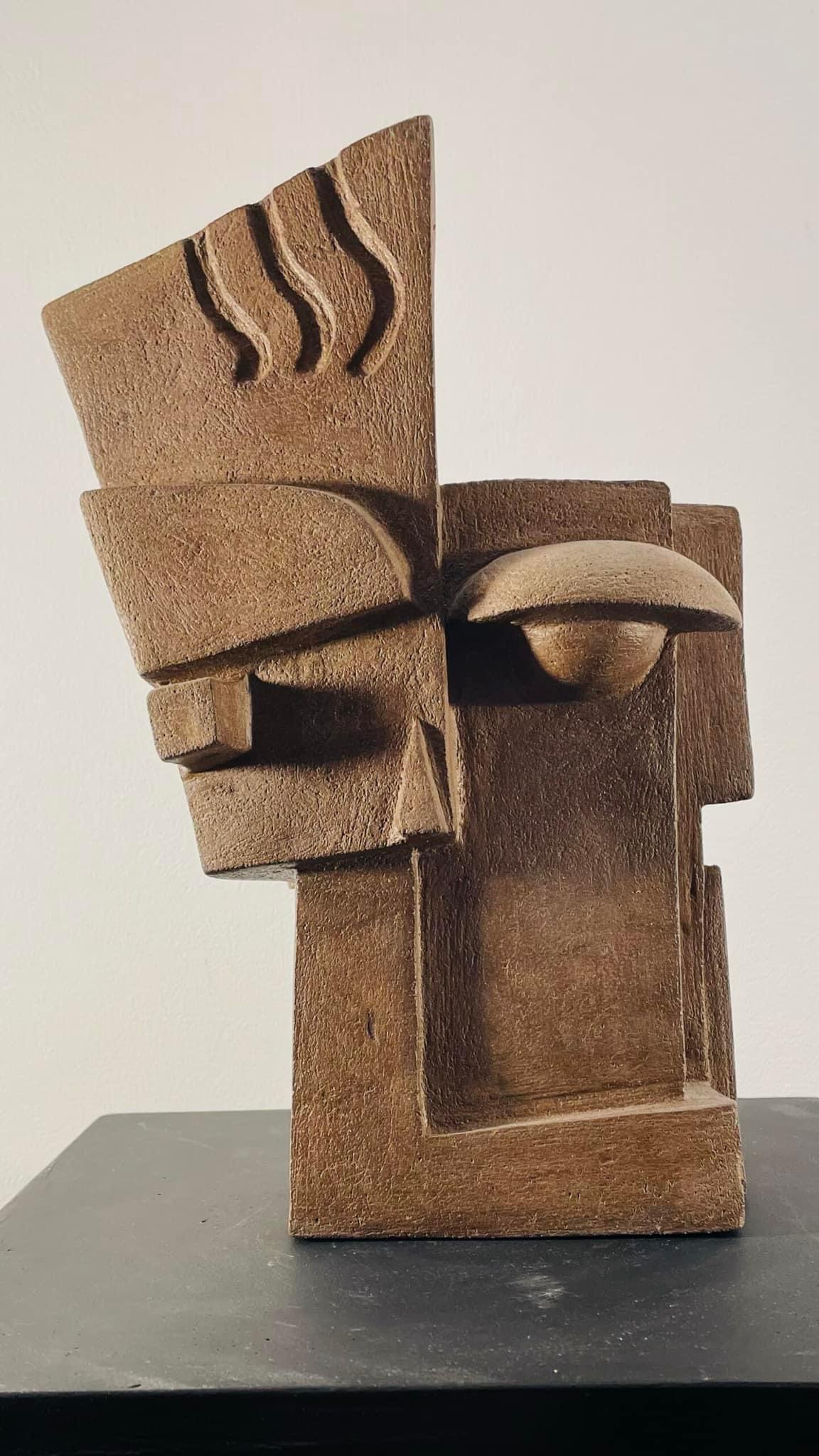
In « Gus, the Shih Tzu », the familiar becomes abstract. The piece captures Gus — the Shih Tzu of Isis Gondoin, master ceramicist and founder of the Atelier Profils et Reliefs in Paris — not through likeness but through structure. Inspired by the Cubist tradition, Gus's essence is reimagined through textured surfaces and geometric planes, capturing far more than the mere appearance of a companion animal.
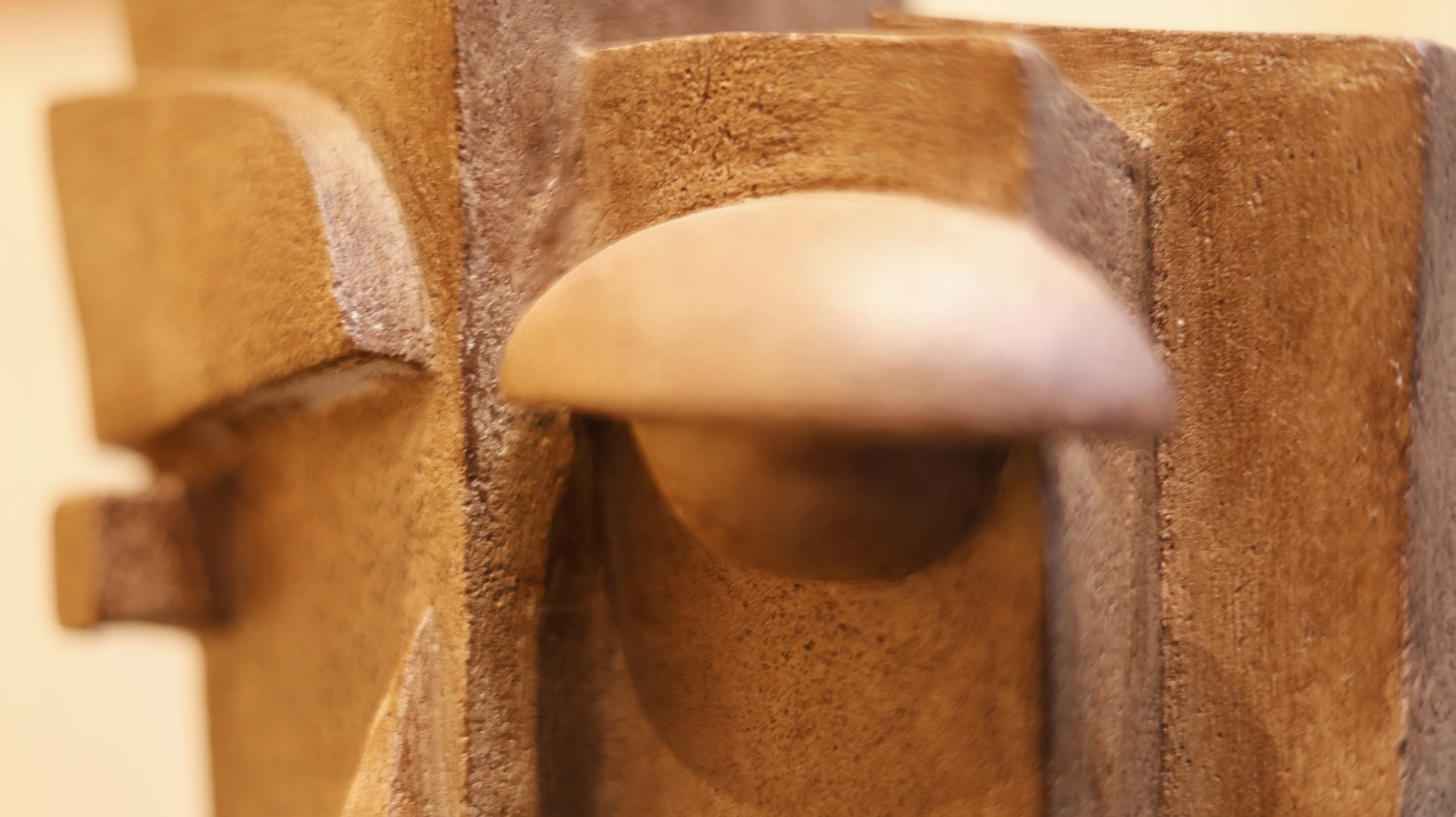
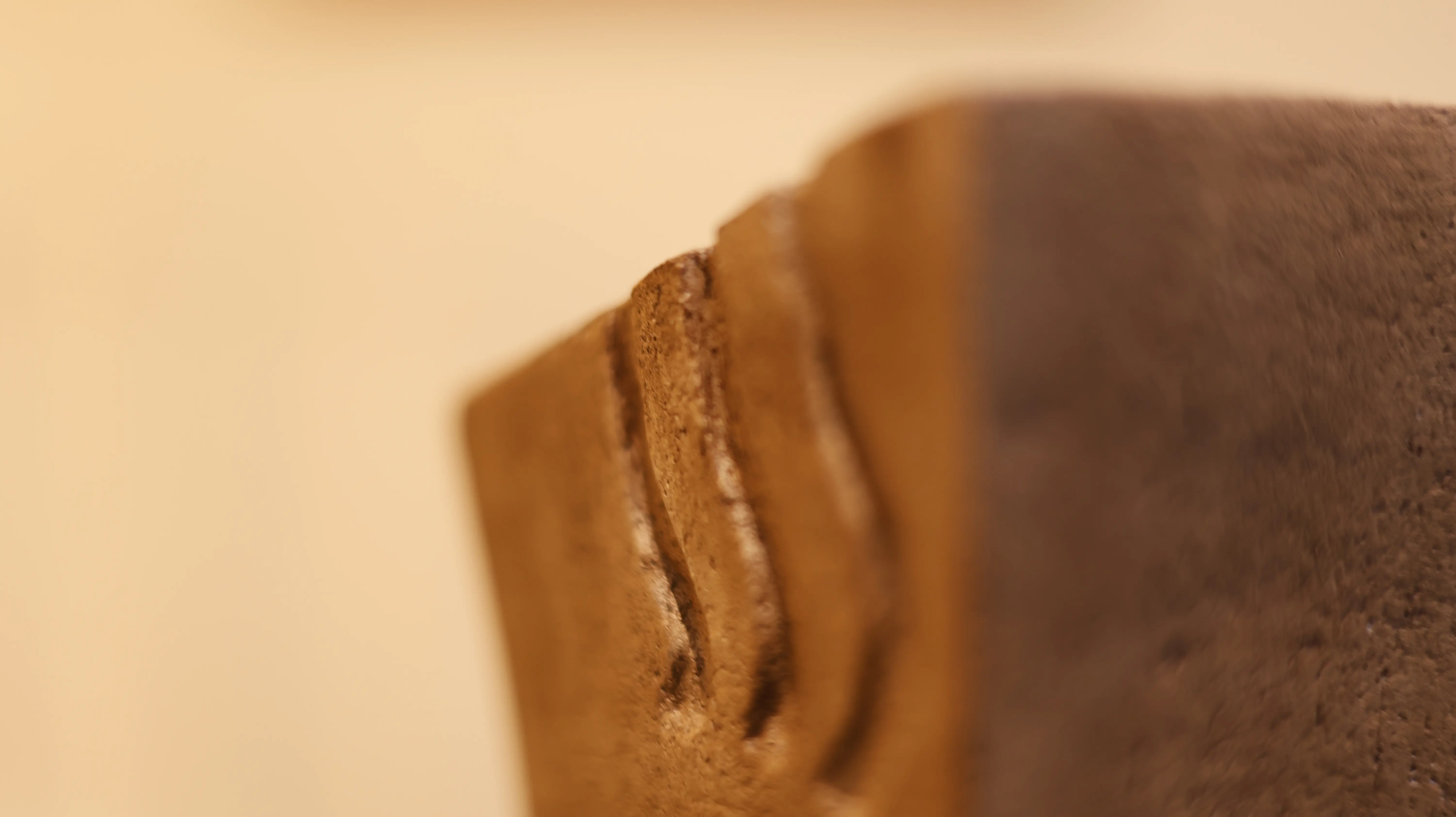
The face emerges as an architectural composition. Broad, flat surfaces intersect at sharp angles, while sinuous grooves evoke the flowing coat of the breed. A single half-closed eye, carved with restrained tenderness, anchors the abstraction in living presence. The angular facets and earthy, unglazed patina suggest a companionship that transcends sentimentality — a reflection of the quiet, unspoken bonds that exist between humans and animals.
Is it simply a representation of a dog, or does it offer something deeper? The figure of Gus defies singular interpretation, inviting viewers to explore it from every angle, each perspective offering something new. Here, the familiar is distilled into form — not reduced, but elevated.
This is a unique, original work — one of a kind, signed and certified by the artist. It is not an edition, not a reproduction, not a cast from a mould. Every surface bears the singular trace of its making.
In the Lineage of Cubist Sculpture
« Gus » participates in a sculptural tradition that stretches back to the radical experiments of early twentieth-century Paris — a tradition in which the animal form became a testing ground for the most advanced ideas about volume, plane, and the relationship between mass and space.
When Jacques Lipchitz arrived in Paris from Lithuania in 1909, he entered the orbit of Picasso, Juan Gris, and Modigliani in Montparnasse and began translating the spatial logic of Cubist painting into three dimensions. Lipchitz described his process as "building up and composing the idea of a figure from abstract sculptural elements of line, plane and volume" — rejecting the classical ideal of a single privileged viewpoint in favour of a sculpture that demanded to be circled, explored, read differently from every angle. His work in clay and stone demonstrated that Cubist sculpture could achieve what he called "architectural mass" while remaining deeply figurative. His later compositions of animals showed that the method could capture not just human anatomy but the essential character of living creatures through geometric synthesis.
Henri Laurens (1885–1954), a Parisian stonemason turned sculptor, approached Cubism from the hands of a craftsman. Where Lipchitz worked outward from an imagined core, Laurens built from the material itself — wood, sheet metal, terracotta — creating what critics called "sculpto-paintings" in which intersecting planes carried their own "interior light." Laurens's formal language was initially rigid and geometric, but after 1921 it evolved toward more organic forms, achieving a monumental compactness in which the strength of the work resided in its simplicity. His trajectory — from rigorous Cubist geometry toward sensuous, earth-bound form — anticipates the very tension at work in « Gus », where geometric discipline and animal warmth coexist in a single object.
The collector Nassim M., viewing « Gus » for the first time, immediately recognized echoes of Henri Gaudier-Brzeska (1891–1915), the French sculptor whose extraordinary four-year career produced some of the most vital animal sculptures of the modernist period. Gaudier-Brzeska was, in the words of art historians, "an exceptional animalier" — an artist who could capture the being of a subject with a few decisive strokes. His animal forms, from the intimate carved Dachshund (1914) to the Vorticist Bird Swallowing a Fish (1914), reduced living creatures to an assemblage of essential planes while preserving an unmistakable tenderness for the subject. Like Gaudier-Brzeska, Quercy insists that the tool marks — the compressions, cuts, and folds of the clay — remain visible on the finished surface, a fingerprint of the maker's encounter with the material.
What « Gus » shares with these masters is not stylistic imitation but a fundamental conviction: that sculpture can simultaneously abstract and honour its subject. That geometric fragmentation is not a loss of presence but a multiplication of it. That the animal — humble, intimate, beloved — is a worthy vehicle for the most serious formal inquiry.
"People think Cubism means breaking things apart. It's the opposite. You have to know a form so intimately that you can rebuild it — plane by plane — and find more of its truth in the geometry than the eye ever caught in the likeness."
Formal Analysis
The sculpture operates through a vocabulary of intersecting planes that recall the spatial experiments of early Cubism while remaining rooted in the tactile immediacy of handmade ceramic. The head is built from broad, flat slabs that meet at decisive angles — a structural logic closer to architecture than to traditional figurative sculpture. There is no attempt to smooth or unify; instead, each plane retains its autonomy, creating a rhythm of surfaces that shifts with the viewer's position.
The treatment of the face is particularly striking. The forehead is composed of three ascending ridges — wave-like forms that suggest both the natural folds of the Shih Tzu's coat and an almost Art Deco ornamental geometry. Below, the eyes are asymmetrical: one fully articulated as a recessed almond shape, the other implied through shadow and angle alone. The nose and mouth are reduced to a single protruding wedge, giving the face a mask-like quality that oscillates between animal and totem.
The patina — warm ochre, unglazed, matte — reinforces the work's tectonic quality. The ceramic surface retains the memory of the maker's hands: every compression, every cut, every moment where the clay was folded, sliced, or pressed is visible. This raw materiality resonates with the terracotta traditions that Laurens explored and the direct-carving philosophy that Gaudier-Brzeska championed — the conviction that the artist's physical engagement with material should remain legible in the finished work. The absence of glaze is a deliberate choice: it grounds the piece in earth rather than in decorative finish, allowing the form to speak through mass and shadow rather than through surface.
Craftsmanship — Atelier Profils et Reliefs, Paris
« Gus » was created at the Atelier Profils et Reliefs, a Paris-based sculpture workshop led by ceramicist and sculptor Isis Gondoin. The atelier specializes in profile and relief techniques — the disciplined craft of building three-dimensional form from clay through slab construction, carving, and surface treatment. The methodology is rigorous: working from observation, the sculptor must translate a living subject into geometric decisions, choosing where to cut, where to leave mass, where to allow the clay's own weight and texture to speak.
This lineage matters. Just as Laurens trained as a stonemason before becoming a sculptor — bringing a craftsman's understanding of material weight and structural integrity to his Cubist experiments — and just as Gaudier-Brzeska insisted that "every inch of the surface is won at the point of a chisel, every stroke of the hammer a physical and mental effort," the Profils et Reliefs atelier grounds sculptural ambition in material discipline. The work produced here is not conceptual first and physical second; it is conceived through the act of making.
It was under Isis Gondoin's mentorship — and in the daily presence of Gus himself, who regularly accompanied his owner to the workshop — that Arnaud Quercy developed his approach to ceramic sculpture. This approach fuses modernist geometric abstraction with an organic sensitivity to animal form and movement. « Gus » is not a sculpture made from photographs or memory, but from sustained observation over months of shared studio presence. The intimacy of the human-animal bond that the piece evokes was built into the process itself.
Gus was there every day at the atelier, watching us work. At some point, the clay started watching him back.
Spatial Qualities and Architectural Context
At 20 × 14 × 30 cm, « Gus » is scaled for intimate architectural settings — a bookshelf, a console table, a reception niche, an office credenza. Yet its presence exceeds its dimensions. The interplay of planes creates shifting profiles as the viewer moves around the piece: from one angle, a monumental head; from another, a puzzle of interlocking volumes; from a third, an almost abstract totem stripped of all figurative reference. This multi-viewpoint quality — the insistence that sculpture be experienced in the round, from every angle — is precisely the principle that Lipchitz championed when he rejected the classical concept of the "ideal viewpoint."
The dark base provides a clean, grounding horizontal that allows the form to assert itself against any backdrop. The sculpture's compact mass and angular silhouette make it particularly suited to spaces defined by clean lines and natural materials — concrete, wood, stone, brushed metal — where its earthy warmth and geometric rigor find a natural dialogue with the architecture. In a space dominated by right angles and smooth surfaces, « Gus » introduces an organic tension: handmade irregularity within geometric discipline, animal warmth within mineral materiality.
For architects and interior designers considering placement: the piece benefits from directional lighting. A single spotlight from above or at a 45° angle will activate the shadow play between the planes, dramatically altering the sculpture's reading depending on the time of day. Natural light from a window produces a similar effect — the piece changes character as the light moves, revealing new facets and concealing others. Laurens himself insisted on the relationship between sculpture and light, painting his planes with different colours to give his works an "interior light." In « Gus », the unglazed ceramic achieves something analogous through purely sculptural means: the matte surface absorbs light unevenly across the faceted planes, creating a subtle chiaroscuro that shifts throughout the day.
The Artist's Practice
Arnaud Quercy is a Paris-based multidisciplinary artist working across painting, sculpture, digital composition, and multimodal research. His practice is grounded in a methodology he terms alchimorphism — the transmutation of sensory experience across creative mediums. His work investigates the perceptual bridges between sound and color, form and meaning, structure and emotion.
Quercy's artistic philosophy centers on the triptych as fundamental structure — balancing what he calls "the diffraction of the mind, the resonance of desire, and the narration of the imaginary." This philosophy finds expression across an extensive body of work spanning over 860 documented artworks in eighteen collections, from the synesthetic translations of the Research on Harmony series — where musical keys are systematically mapped to chromatic palettes — to the philosophical inquiries of Research on Tensions and the sculptural explorations of Untamed Creations.
His formation includes a diploma from the Paris College of Music (Cum Laude), formative periods in Berlin and London, and a lifelong engagement with jazz — a discipline whose improvisational spirit is directly reflected in works like Bird (Charlie Parker), a sibling sculpture to « Gus » within the Untamed Creations collection. His visual art practice has been recognized internationally, with exhibitions from California's O'Hanlon Center for the Arts to the Koblenzer Kunstverein in Germany, as well as regular presence at Parisian contemporary salons.
Part of Untamed Creations
« Gus » belongs to Untamed Creations, a collection that asks: what does it mean for a creation to be untamed? Is it a rejection of conventions, a refusal to be confined by expectations, or is it an expression of something raw and unfiltered — a spirit that resists categorization?
The collection spans media, genres, and emotional registers. A Happy Man distills anticipation and silent joy into geometric ceramic form. Bird (Charlie Parker) gives shape to the unpredictable energy of bebop through dynamic, abstract sculpture — angular and curved forms interacting like musical notes. Quietness embodies contemplative pause through smooth curves and minimalist restraint. Murmuration captures the grace and chaos of birds in flight in sleek, imposing steel. And A Woman on the Beach brings the quiet observation of everyday life into the collection's orbit.
Each piece is a unique original — one of a kind, unrepeatable, signed. The only rule is that there are no rules; each creation is untethered and unapologetic. For collectors and architects interested in acquiring multiple works from this series, the pieces create powerful dialogues when placed in proximity — the warm ceramic of « Gus » against the cold steel of Murmuration, for instance, produces a material conversation that activates any space.
Technical Details
Title: « Gus », the Shih Tzu Artist: Arnaud Quercy Date: 2024 Medium: Ceramic (unglazed) Technique: Slab construction, carving, surface treatment Dimensions: 20 × 14 × 30 cm (W × H × D) Weight: 3 kg Base: Dark stone Collection: Untamed Creations Reference: AQC0563 Certificate of Authenticity: 20240310-0059 Edition: Unique original — one of a kind Status: Available Price: €1,500
What Collectors Say
"A fascinating avant-garde work — grandiose."
— Norbert H., Belgium
"Echoes of Henri Gaudier-Brzeska… a real Art Deco quality."
— Nassim M., United Kingdom
"Stunning art."
— Nadia B., United Kingdom
"Enchanting."
— Mirta S., Spain
Inquiries and Private Viewings
« Gus » can be viewed in person at Art Quam Anima, 28 rue du Dragon, Saint-Germain-des-Prés, Paris 6e. The gallery operates as an open studio where visitors can observe the artist at work while exploring the permanent collection. Coffee is offered; prices are displayed openly. No appointment is necessary, though private viewings for architects and design professionals can be arranged.
For acquisitions, commissions, or to discuss site-specific sculptural projects: 📩 contact@artquamanima.com
© 2026 Arnaud Quercy
Documentation published by Art Quam Anima Publishing New York, LLC
Artwork presented by Art Quam Anima, 28 rue du Dragon, Paris
All rights reserved. Reproduction prohibited without written permission.