Art Quam Anima
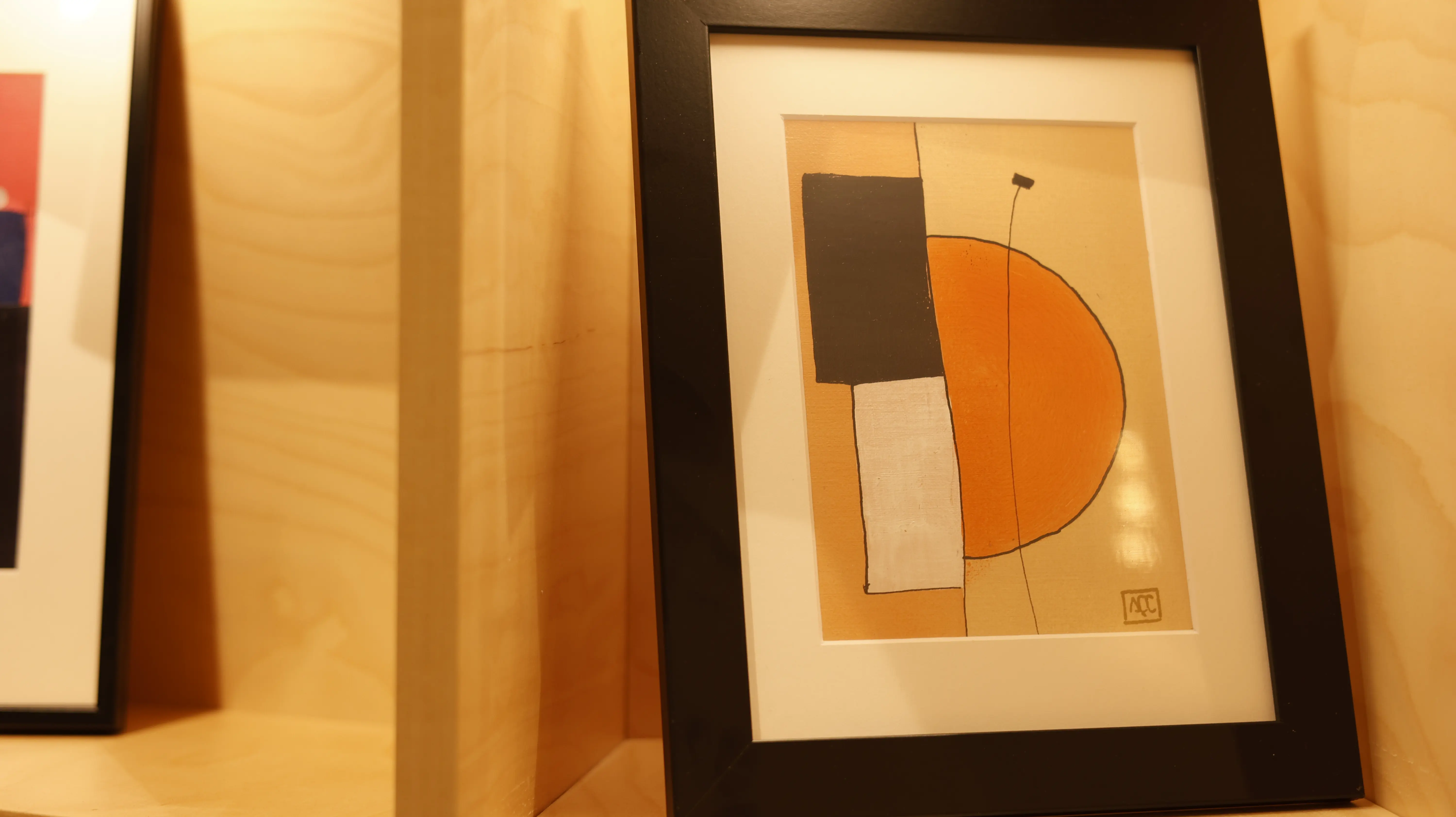
"I don't create art. I follow the idea — through sound, through form, through matter — until it becomes one."
An essay on art and ideas.
Founded in 2025 by Arnaud Quercy at the age of 57, Art Quam Anima is an essay: rediscovering a place where art and ideas circulate together. How an idea takes shape, travels, transforms — this is the question that runs through the gallery. An open studio, exhibitions, conversations.
28 Rue du Dragon, in the heart of Saint-Germain-des-Prés.
Current Exhibition
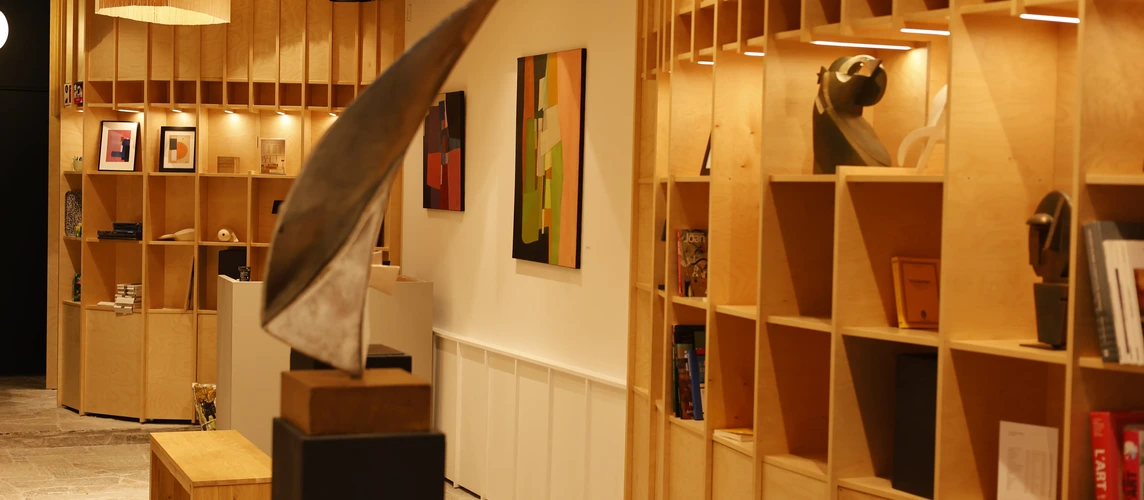
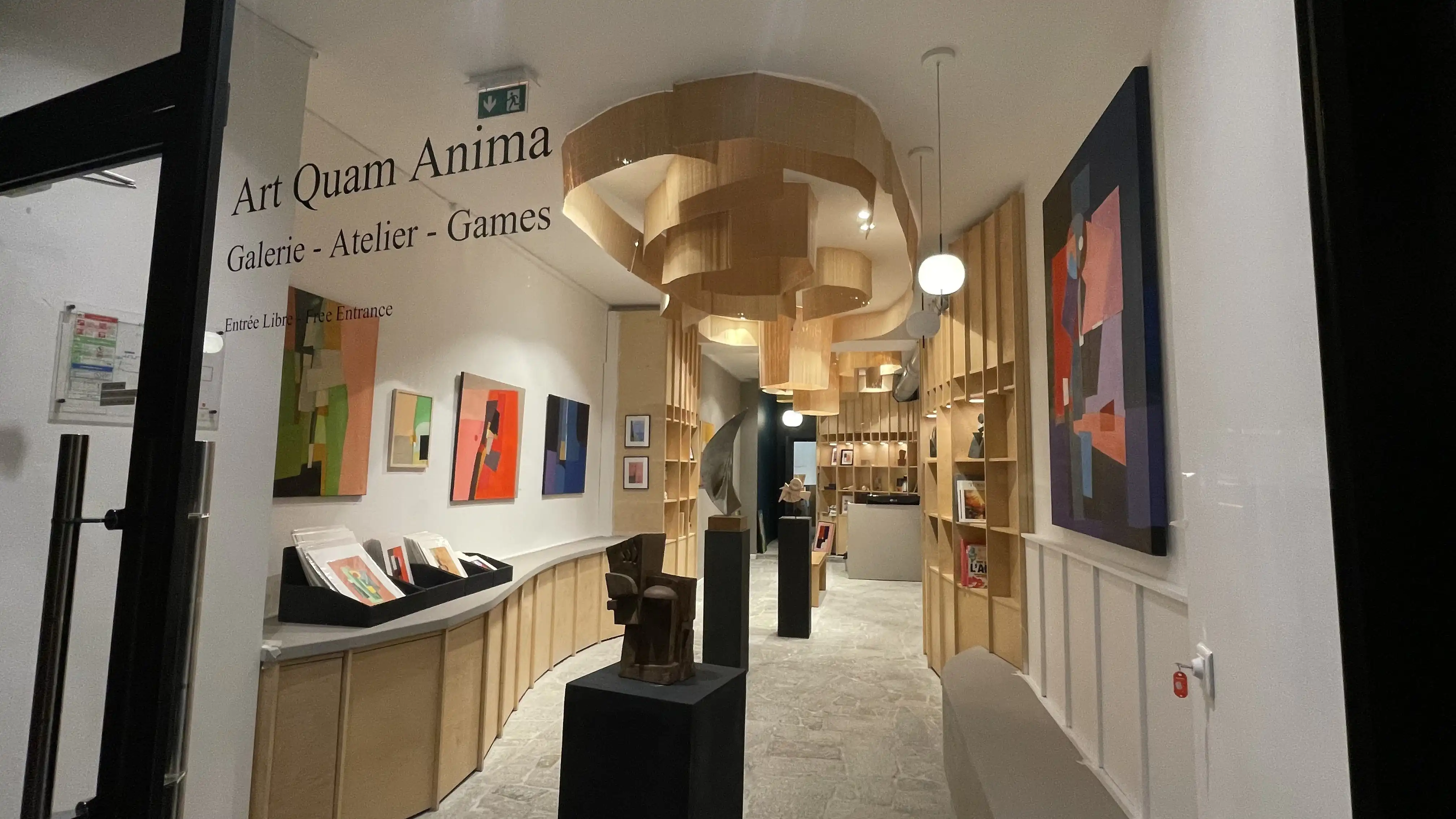
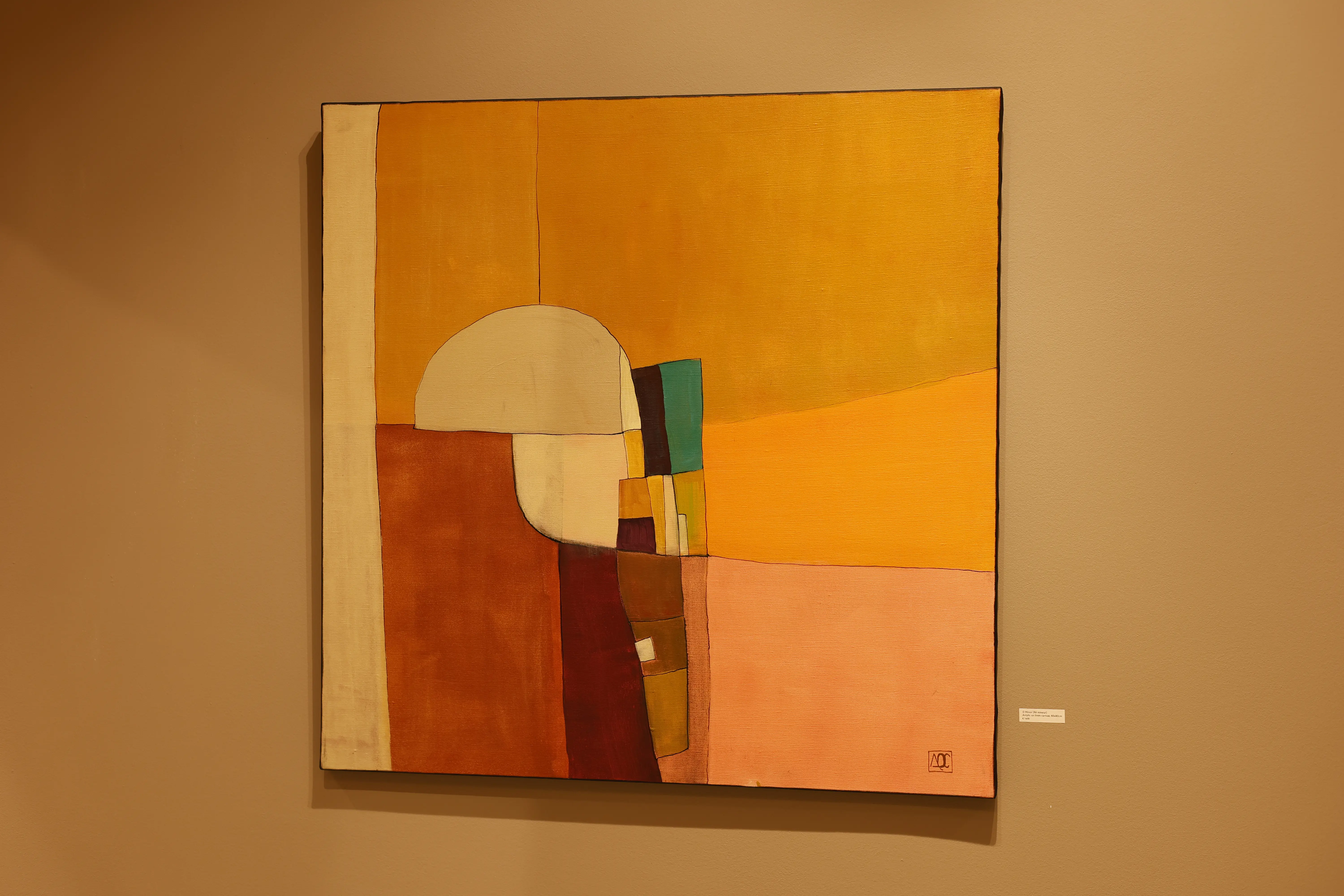
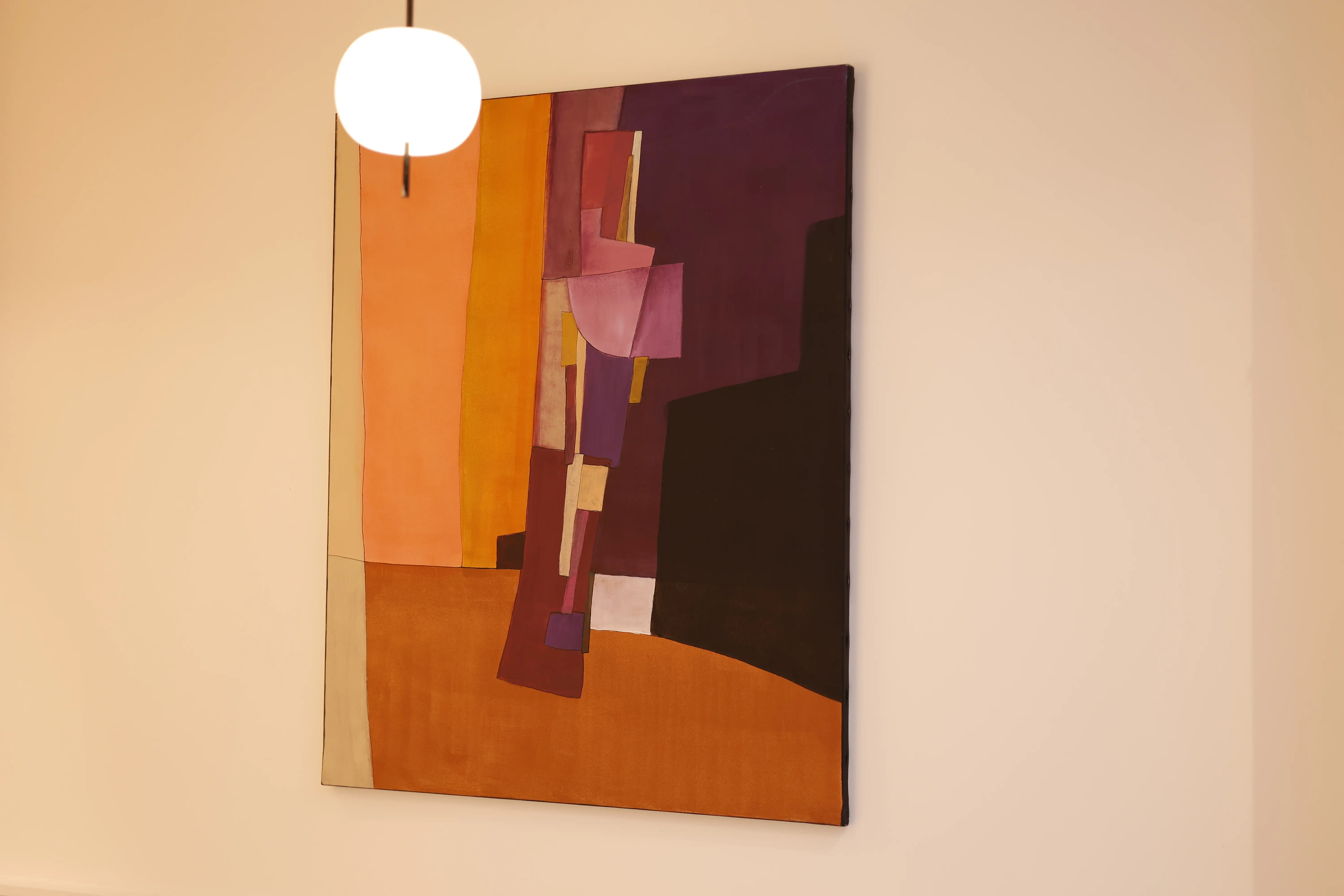
Art Quam Anima opens its doors for the first time on rue du Dragon, inaugurating a gallery space where warm birch joinery, woven light fixtures, and weathered stone floors create a setting as considered as the work it holds. This pre-opening exhibition gathers a concentrated selection of paintings and sculptures that embody the gallery's founding vision: art as soul, as breath, as the animating force that transforms matter into meaning. Canvases from the Synesthetic Explorations and Research on Harmony series line the white walls, their chromatic intensities—coral reds, nocturnal blues, luminous yellows—calibrated to the intimate proportions of the space, each painting translating a specific musical key into visual resonance.
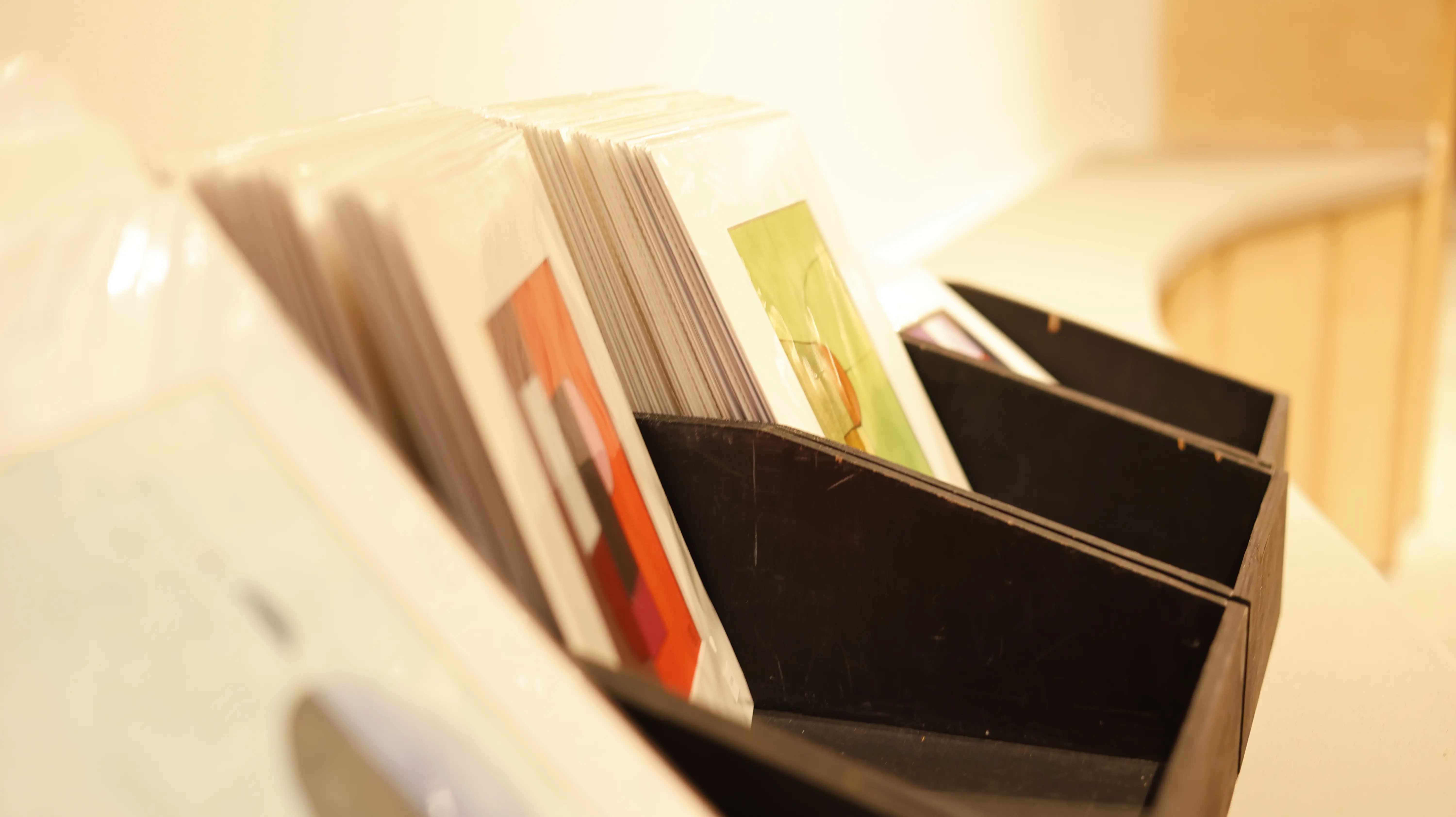
The architecture itself participates in the encounter. Birch shelving wraps the walls, creating alcoves that house art books, smaller studies, and intimate sculptural pieces, while the central corridor is punctuated by black steel plinths bearing the larger works. Overhead, organic pendant lamps in woven rattan diffuse a warm, even light that honors both the saturated hues of the paintings and the textured surfaces of the ceramics. The central axis opens toward rue du Dragon through floor-to-ceiling glass, drawing the street into the gallery and projecting the sculptures' silhouettes outward to passersby. Located in the heart of Saint-Germain-des-Prés, Art Quam Anima proposes a return to slow looking—a space where the boundary between gallery and neighborhood dissolves.
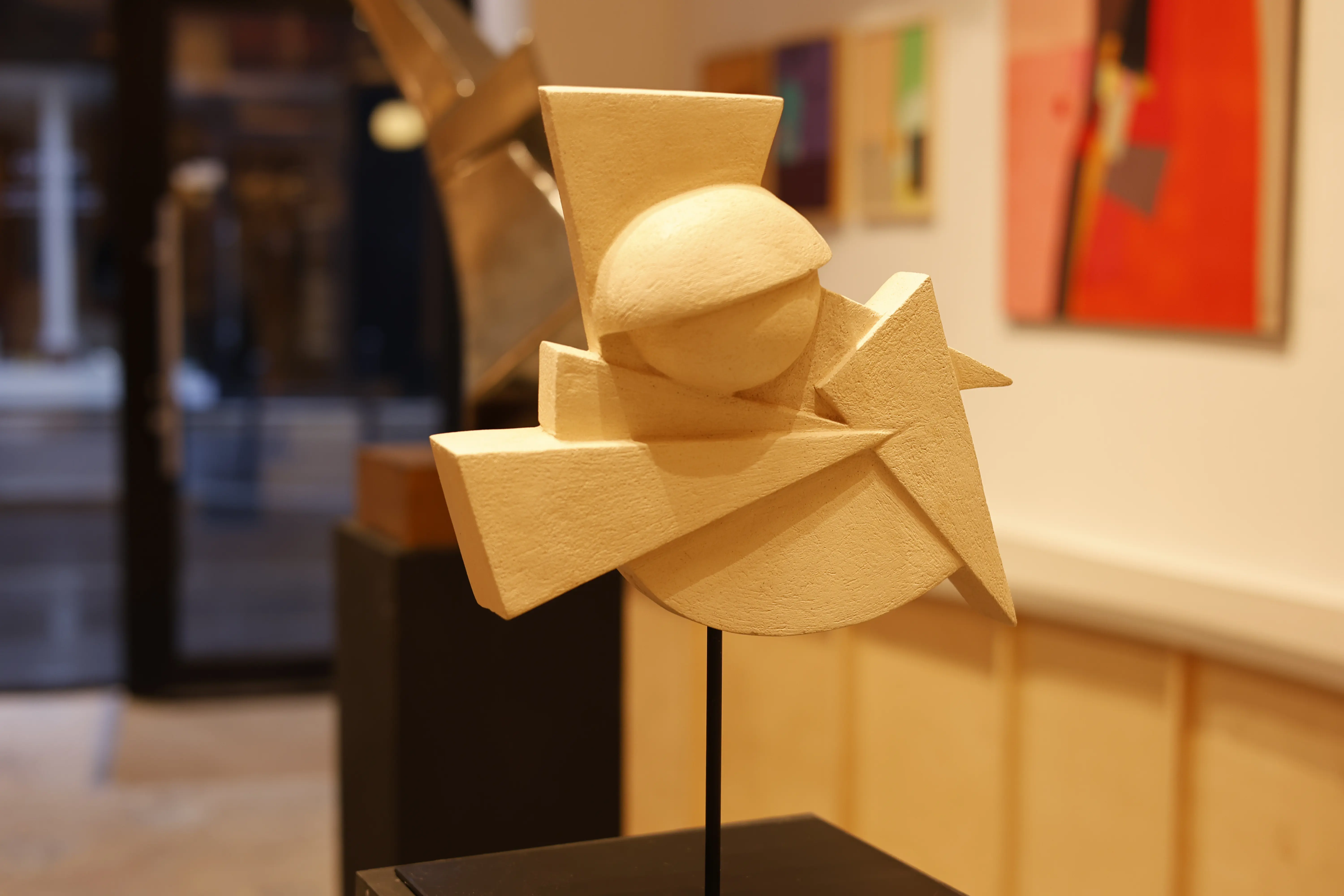
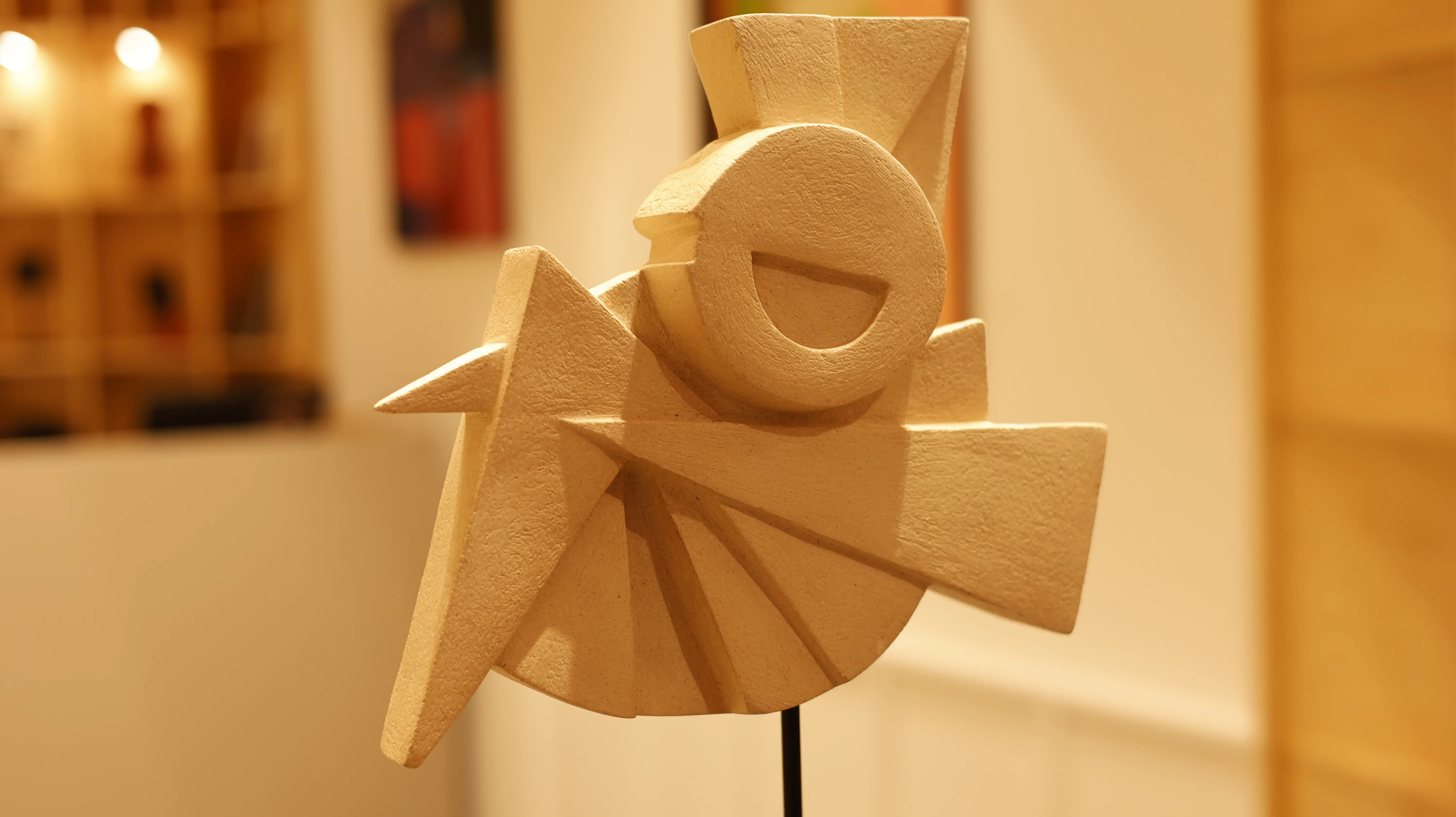
Sculptural works punctuate the central corridor on dark steel plinths. La Mouette de Montparnasse arcs in polished stainless steel near the entrance, catching daylight and casting shifting reflections across the stone floor. Behind it, cream-toned ceramic birds—geometric, almost origami-like—seem poised for flight, their angular wings echoing the birch geometry. Patinated ceramics in earth tones and bronze glazes occupy quieter positions: cubist figures with incised details, stacked volumes suggesting ancient knowledge, forms that reward the sustained attention the space invites. The dialogue between painting and sculpture unfolds naturally as visitors move through—color and form, wall and plinth, warmth and weight.
This pre-opening is both culmination and beginning. The works gathered here represent years of systematic research into synesthetic correspondence and sculptural narrative, yet their installation in this new space opens fresh possibilities for resonance and dialogue. Visitors become witnesses to an origin—the first chapter of a story that will continue through future exhibitions, collaborations, and encounters. Art Quam Anima begins here, in the space between a chord and its color, between myth and the material that gives it weight.
Artist Statement
Opening Art Quam Anima realizes a long-held vision: a space where the work can breathe, where visitors can linger, where the relationship between artwork and viewer can develop without haste. The name itself—Art Quam Anima, art as soul—announces an intention. I believe art functions best not as decoration or investment but as a form of encounter, a meeting between consciousnesses mediated by color, form, and material.
The gallery's design emerged from years of reflection on how space shapes perception. The birch alcoves create intimacy for smaller works and books; the black plinths give the larger sculptures room to breathe; the woven lights honor both the saturated paintings and the textured ceramics; the stone floor and street-facing glass root us in the neighborhood while opening toward the world outside. Every detail serves the encounter between viewer and work.
The paintings in this pre-opening span several series—Synesthetic Explorations, Research on Harmony, Research on Tensions—each canvas translating what I hear into what I see. The sculptures emerged from a different impulse: the desire to give weight to the ephemeral, to hold narrative in three dimensions. Bringing them together in my own space allows me to present them as I have always imagined—in dialogue with each other, with the architecture, with the particular quality of Parisian light that enters through these windows.
This pre-opening is an invitation. Come see what we are building. Come participate in the beginning.
"How an idea takes shape — this is the question that runs through everything."
Works grouped by series and themes.
A way to explore the research behind the art — how an idea takes shape, evolves, and finds its form across different mediums.
Synesthetic Explorations
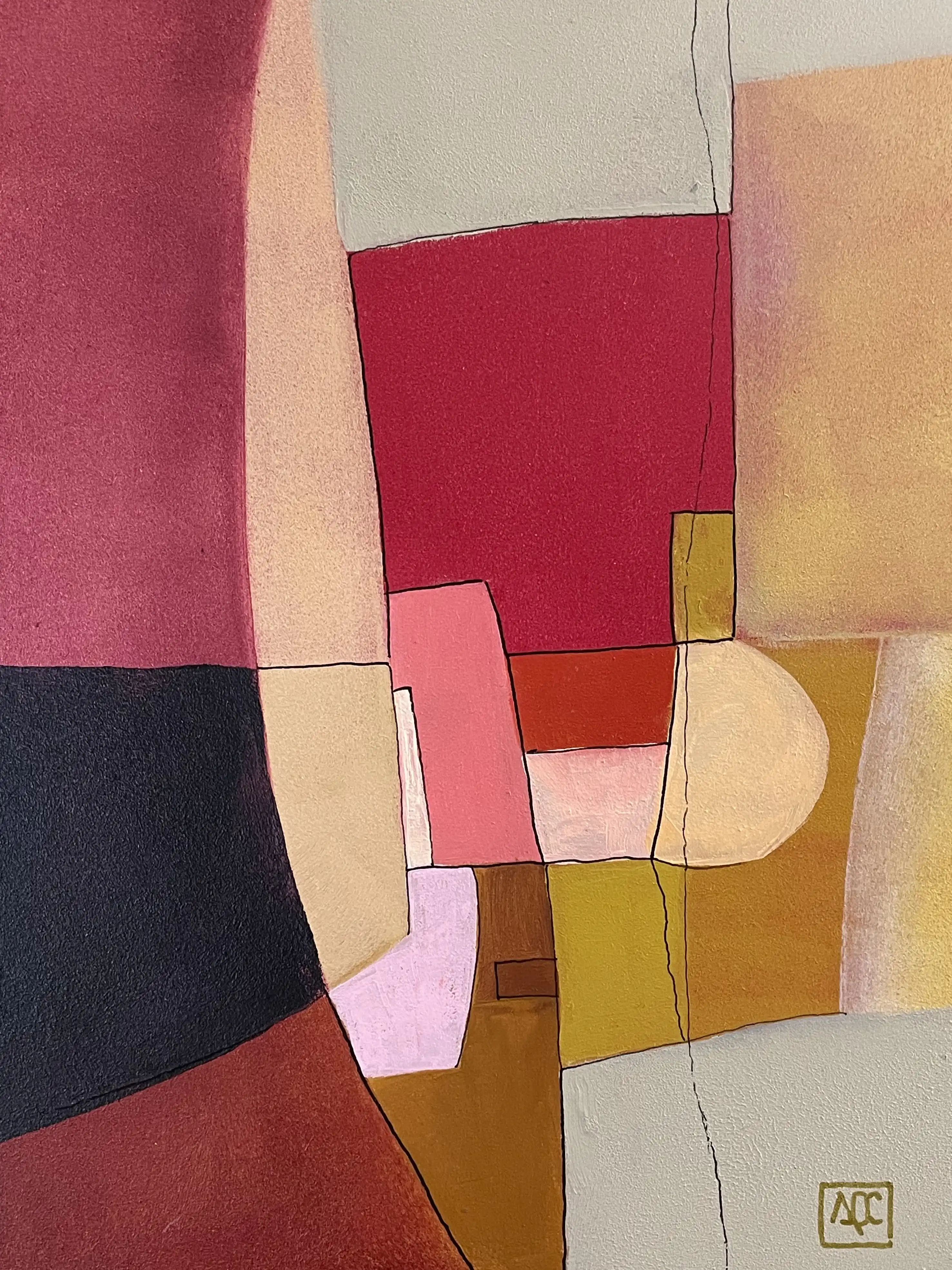
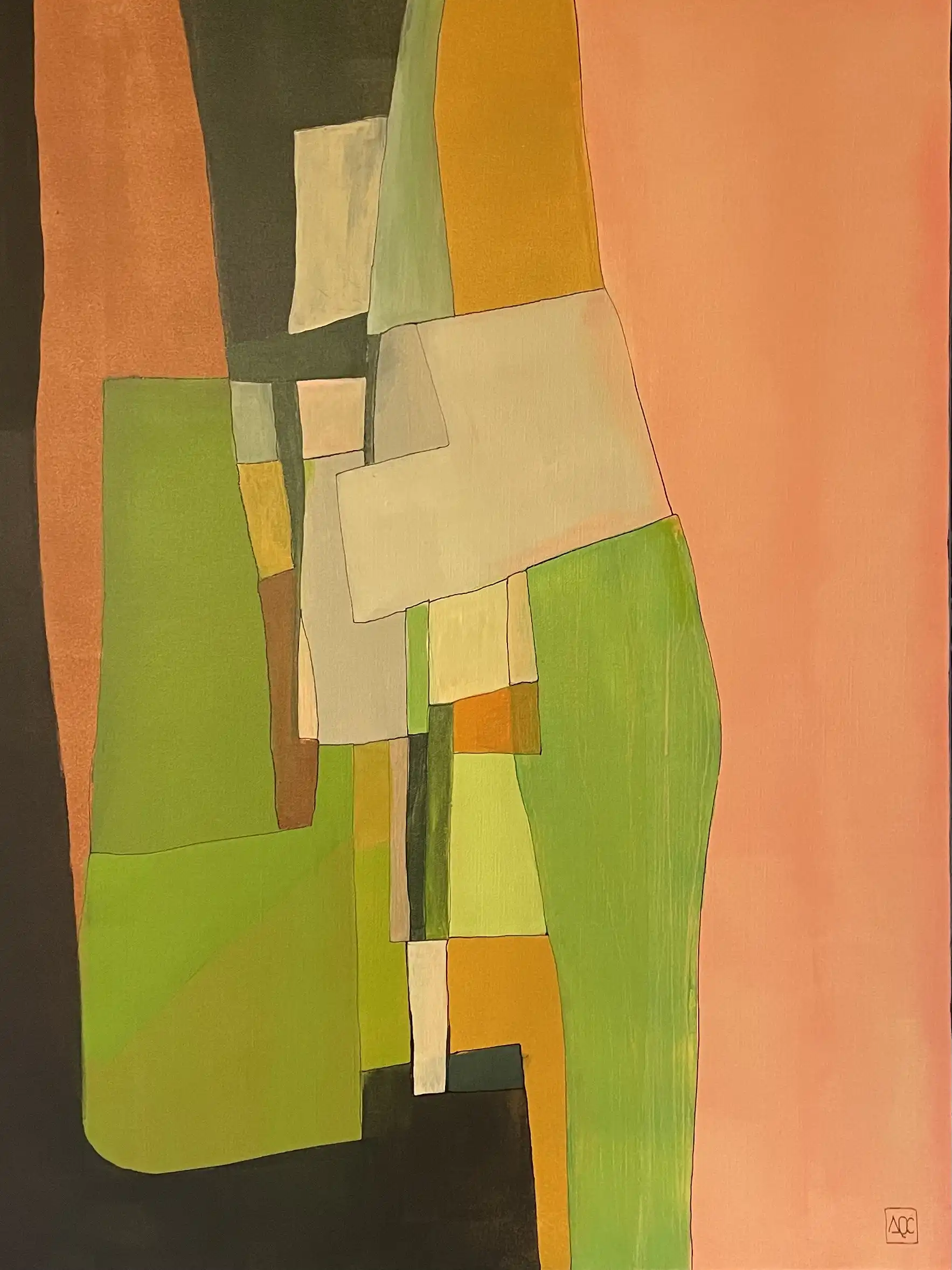
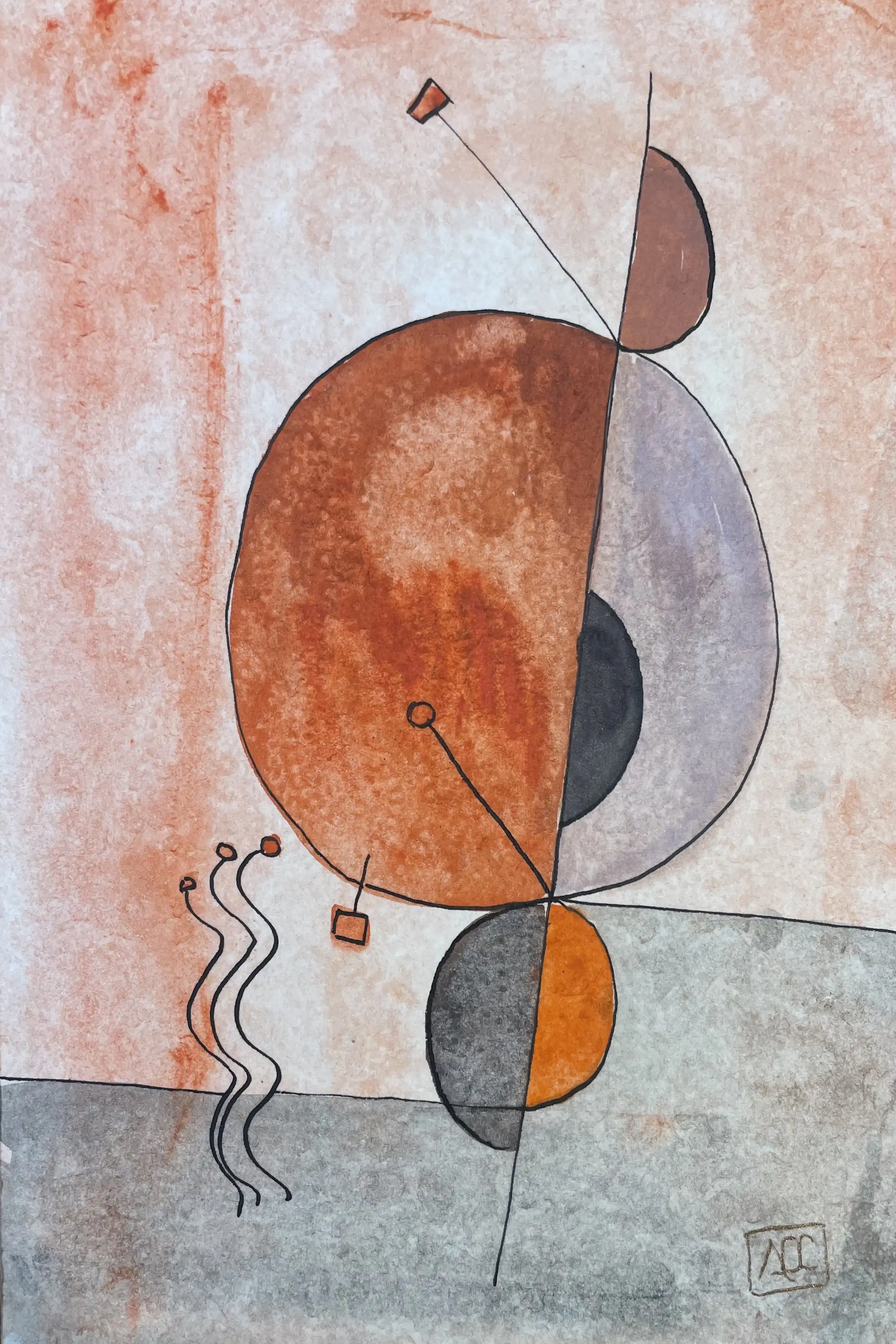
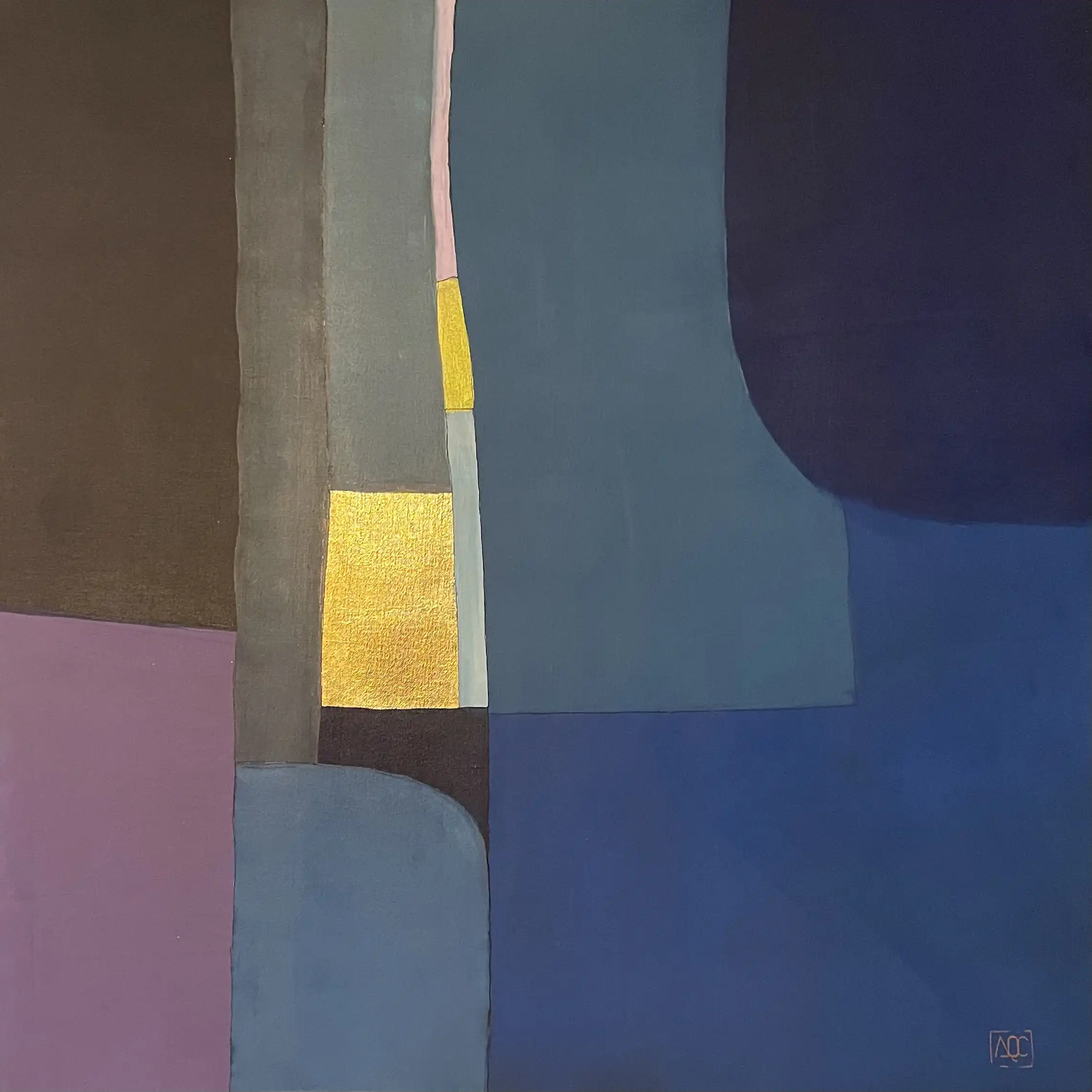
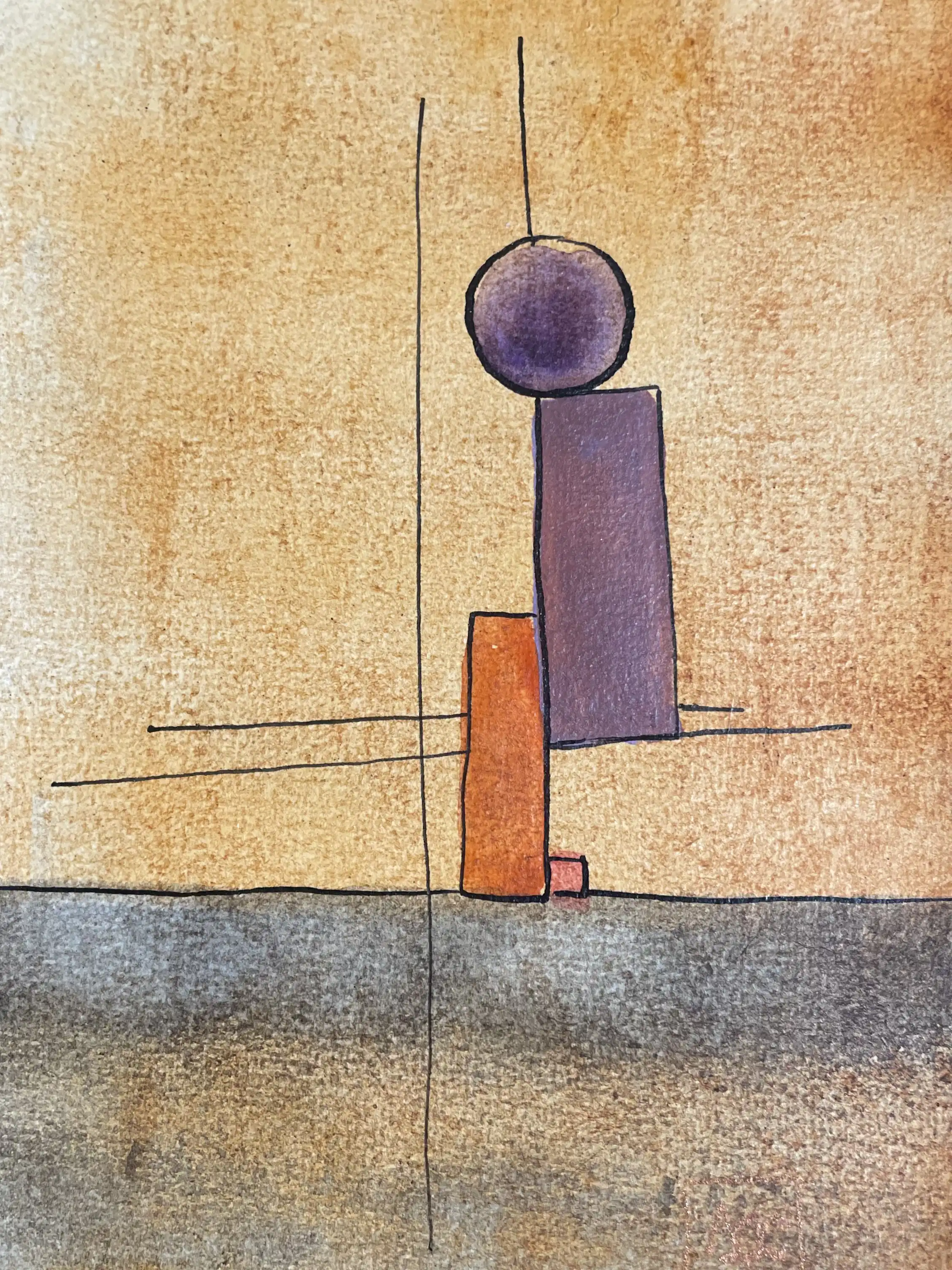
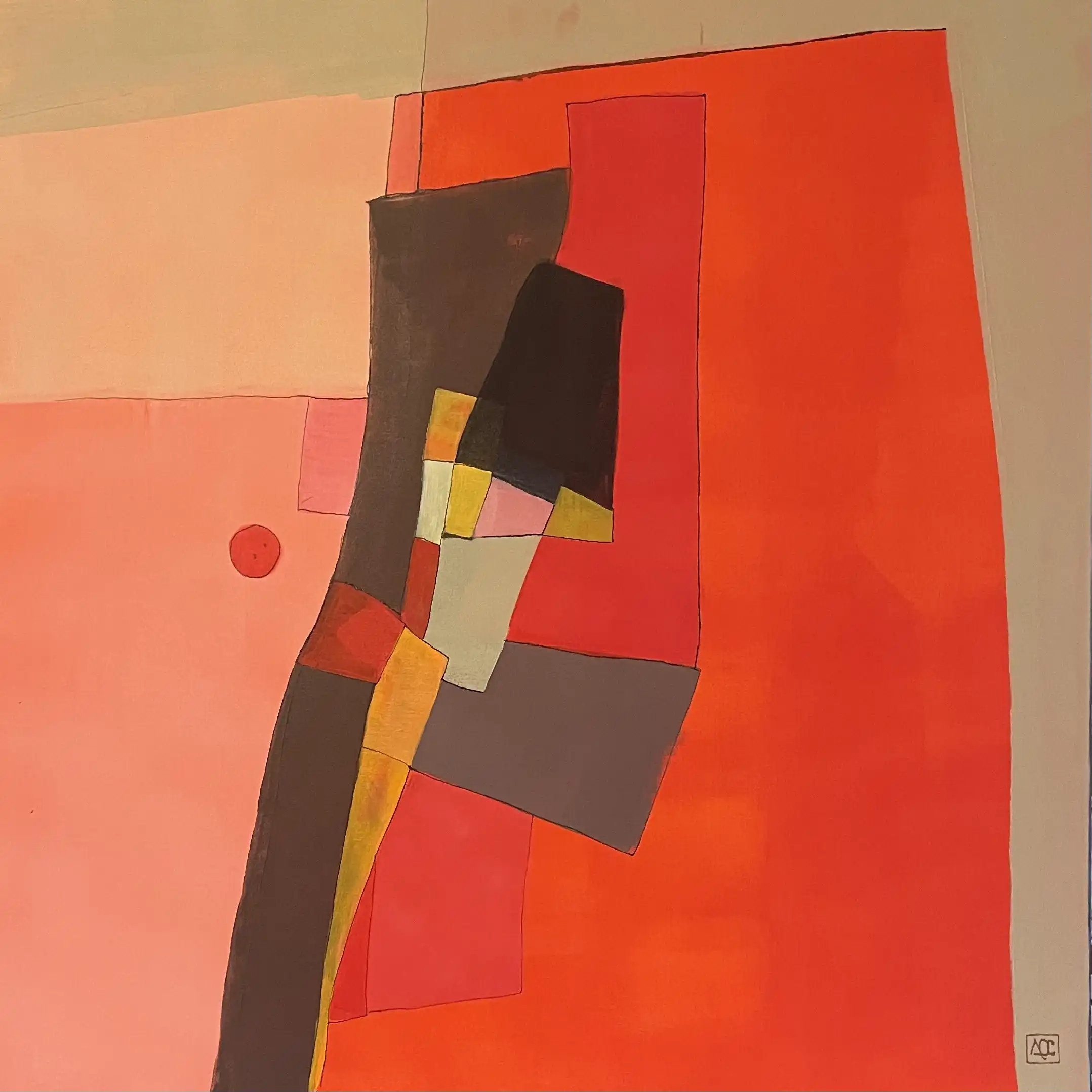
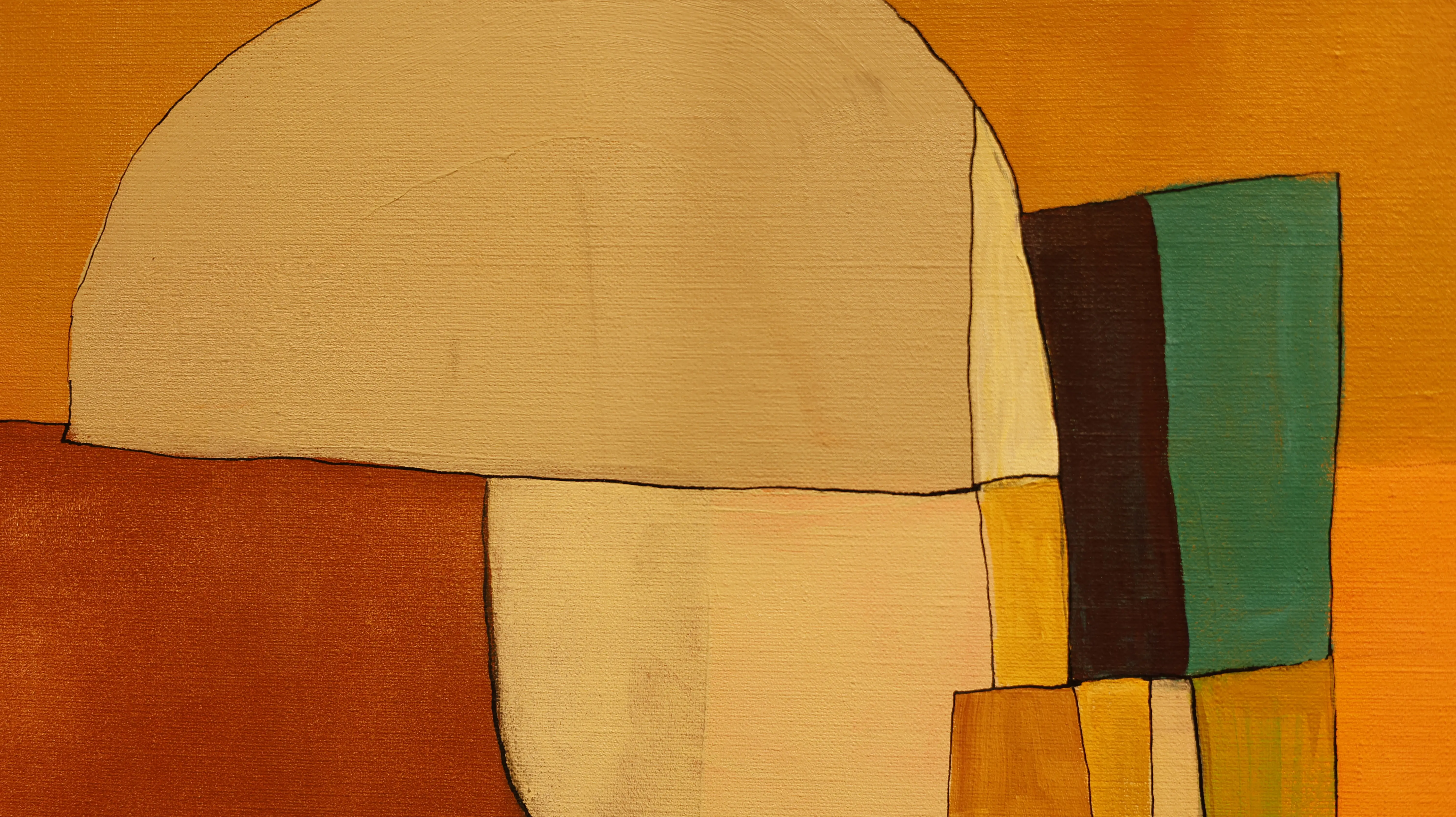
The largest ongoing series in Quercy's practice, Synesthetic Explorations translates musical structures into visual form through chromesthetic mapping. Each painting assigns specific colors to musical notes based on the circle of fifths, then organizes those colors into geometric compositions that make audible relationships visible. The system is rigorous: C maps to red, G to red-orange, D to orange, and so on through the chromatic scale, with each chord generating its own palette of two or three dominant hues.
Within this series, the Research on Harmony cycle applies the method to individual chords — major, minor, and extended — across formats ranging from compact ten by fifteen centimeter watercolors to monumental acrylic canvases exceeding one hundred centimeters. The Réflexions sub-series extends the approach to octave relationships and interval studies, while specific variations draw from composers and performers including Bach, Chopin, and Miles Davis. A watercolor translating F# minor references Chopin's Polonaise in F# minor, Op. 44. An acrylic rendering of Bb Major draws from rhythm changes, the foundational jazz chord progression. A C minor study takes its point of departure from Miles Davis's "Solar."
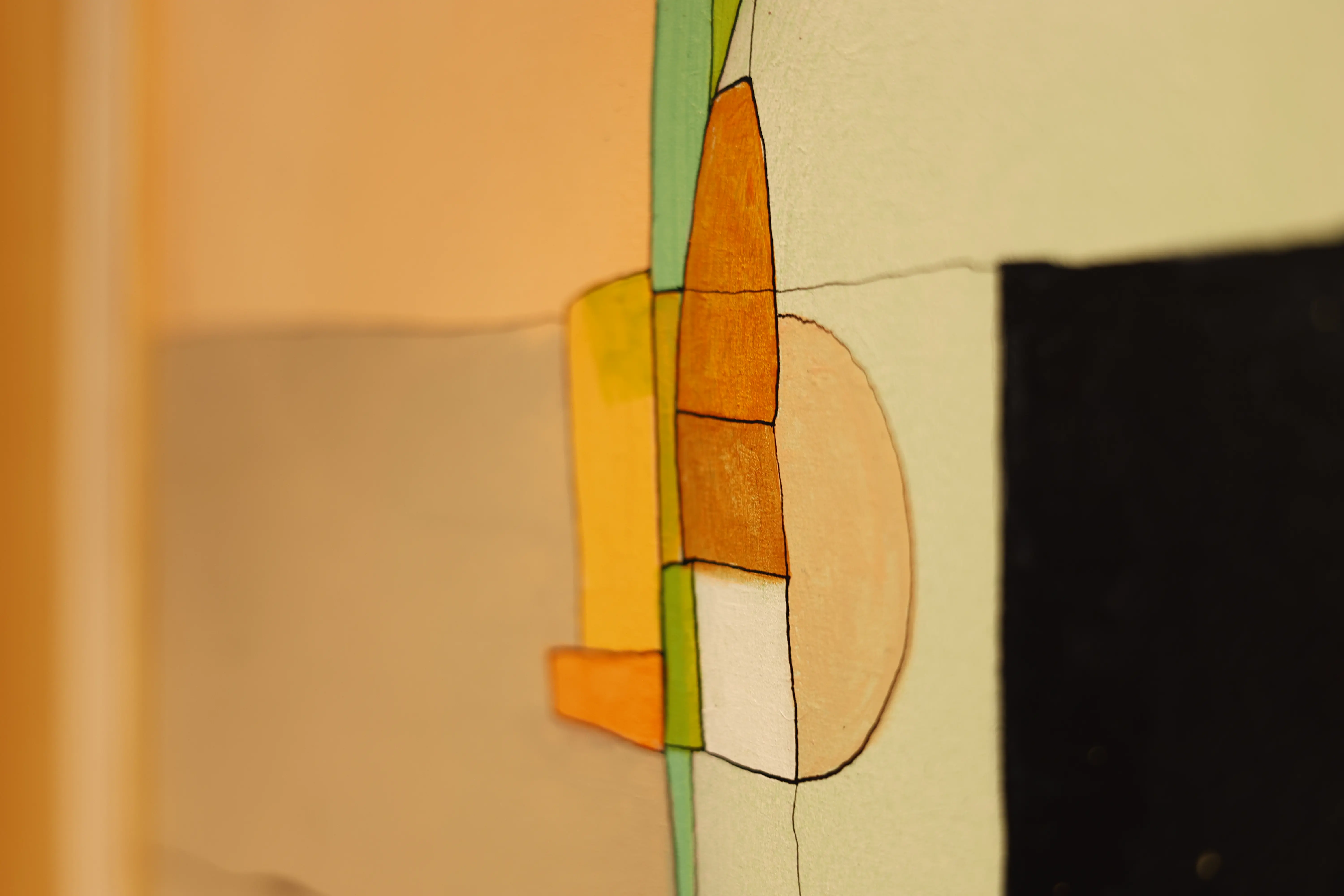
The result is not illustration. These paintings function as independent visual compositions where color relationships carry the same structural logic as harmonic intervals. Whether working in watercolor's transparency or acrylic's opacity, Quercy treats the translation as a generative constraint that produces compositions he would not arrive at through purely visual thinking.
Nature in the City
This collection of steel sculptures examines wildlife adapting to urban environments. La Mouette de Montparnasse captures a seagull — a coastal bird that has colonized the rooftops and market stalls of Paris's 14th arrondissement — through angular steel planes that hover between pure abstraction and recognition. Viewers sometimes perceive a rhinoceros or a shark before the bird's form resolves, a productive ambiguity that mirrors the surprise of encountering marine life in a landlocked city.
Quercy fabricates every sculpture himself, cold-forming two-millimeter steel sheets with hammer against curved wooden blocks, then welding, grinding, and polishing the assembled planes. This direct metal fabrication follows the tradition established by Julio González and Pablo Gargallo, where the artist works the material rather than delegating to foundries or assistants. The knowledge lives in the hands — in understanding how steel responds to hammer blows, where it yields and where it resists. The resulting surfaces shift between polished silver-blue brightness and darker oxidized tones, reading as both industrial material and organic form.
MURMURATION continues this investigation, capturing the collective movement of starlings through an ascending steel composition mounted on a wood block. The vertical format and angular construction translate the flock's synchronized flight into static geometry that retains the sense of coordinated motion.
Transcendence
The Transcendence collection addresses philosophical and spiritual themes through abstract painting. Each work engages with a specific thinker or tradition: Wills Odyssey translates Nietzsche's concepts of self-determination and the will to power into deep tonal contrasts where dark red-gray foundations give way to blue contemplation and orange possibility. Transcendent Nexus explores St. Augustine's relationship between faith and reason, dividing the canvas into warm geometric zones of rational thought and cooler atmospheric spaces where a radiant circle suggests transcendence. Eternal Encompassing draws from Emily Dickinson's poem "Hope" — the thing with feathers that perches in the soul — presenting a pregnant woman as the embodiment of hope's nurturing potential against a fervent red ground.
These paintings share a visual language of geometric forms against saturated color fields, with black lines often serving as structural connectors between conceptual zones. The philosophical content is embedded in formal decisions — color temperature, spatial division, the relationship between containment and openness — rather than narrated through figurative representation.
Spells and Magic
A ceramic collection exploring mythological and symbolic themes through contemporary sculptural form. Archimedes, the owl, takes its name from both the ancient Greek mathematician and the wise owl from Disney's "The Sword in the Stone," presenting the bird through cubist abstraction where smooth curvilinear planes fold into one another to suggest form without literal description. High-temperature firing produces crystalline formations within the glaze, giving each piece an aged metallic patina in yellow-green and warm brown tones. GRIMOIRE sculpts an open book releasing geometric forms skyward — a prism, a hexagon, an oval disc — freezing the moment when a spell leaves the page.
Untamed Creations
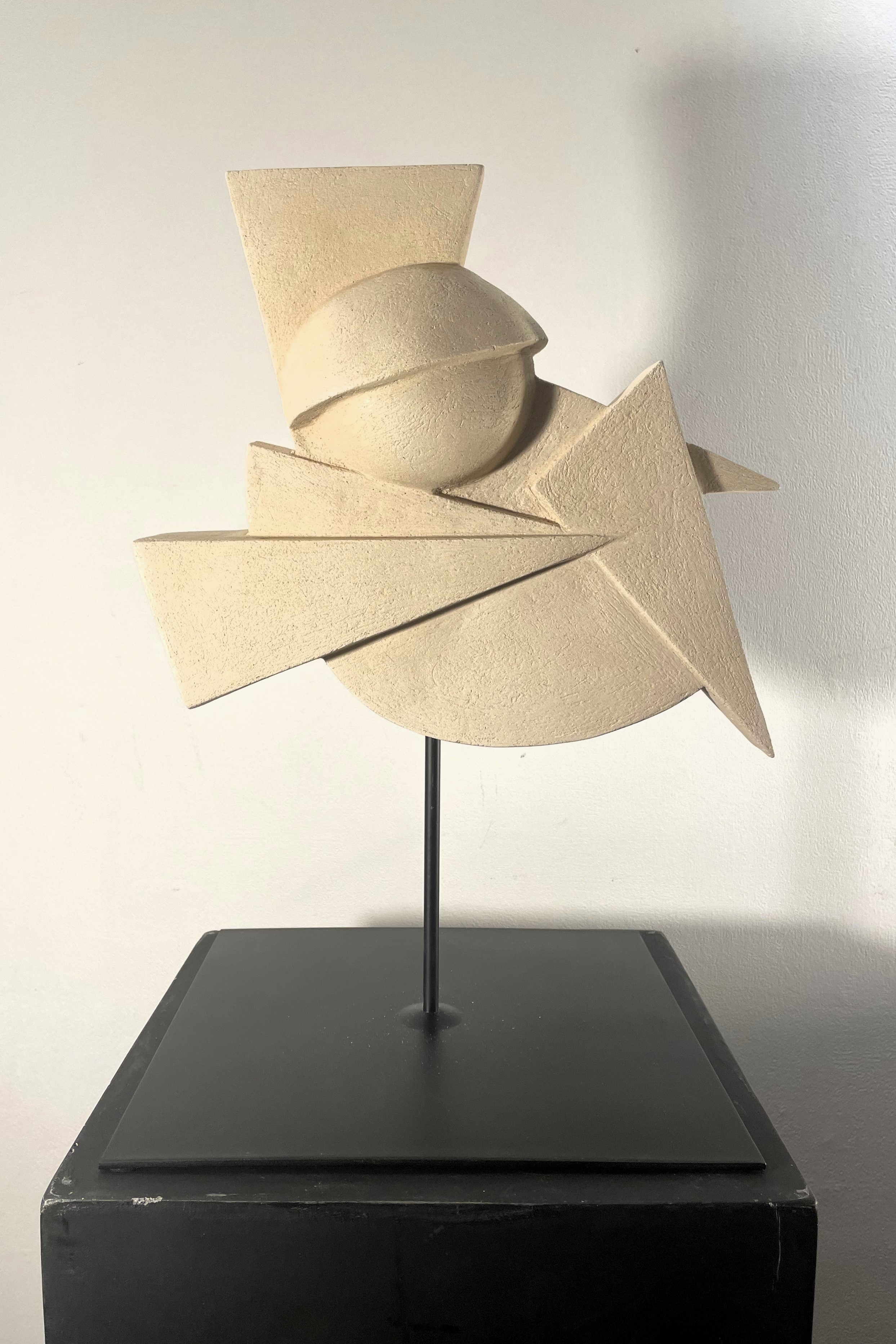
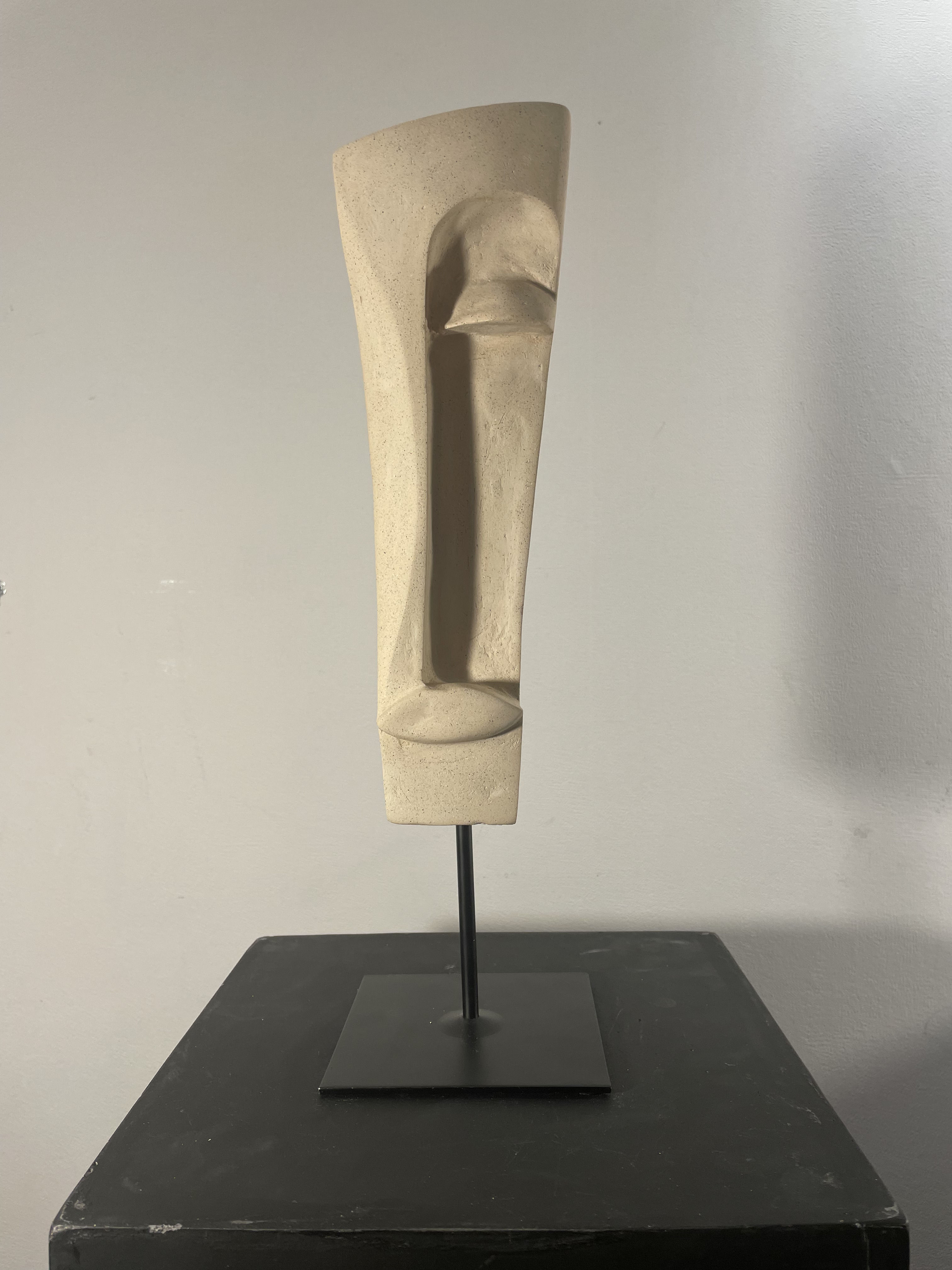
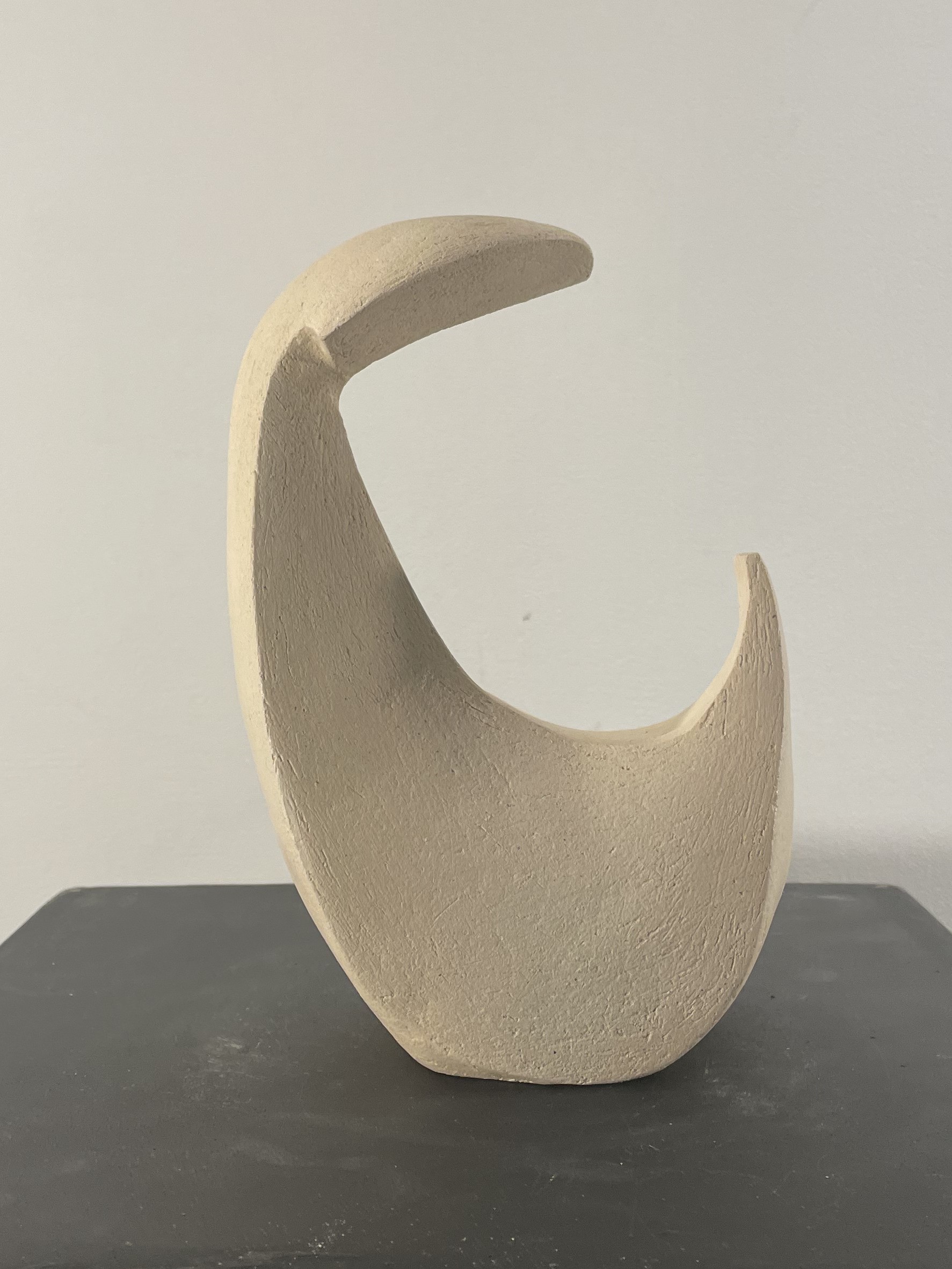
This collection gathers works that explore movement, music, and creative freedom across multiple mediums. BIRD (Charlie Parker) translates the bebop saxophonist's improvisational genius into a ceramic sculpture of interlocking geometric planes on a black metal base — angular shapes extending outward while a central spherical element wrapped in curved bands suggests both musical notation and flight. Reader captures the moment of total absorption in a book through a matte, unglazed ceramic crescent that reads simultaneously as a figure bent over a page and as pages spread open.
The collection also includes portrait commissions like "Gus," the Shih Tzu, a cubist-inspired ceramic created from life at the Paris Profils et Reliefs workshop, where angular facets abstract the dog's features while incised wavy lines reference the breed's flowing coat.
Mediterranean Echoes
In August 2022, Quercy transformed a stretch of Salou Beach in Spain into an open-air gallery, sculpting five monumental sand bas-reliefs over five days. Two works honored jazz legends Charlie Parker and Thelonious Monk through abstract and figurative sand carving at one hundred fifty by one hundred twenty centimeters. Three more explored themes of travel and contemplation: The Traveler, a solitary figure gazing seaward; The Woman Reading, absorbed in her book; and The Sailer, whose form reverses to reveal a fleet of boats.
None of the sculptures survived the tides. Each lived briefly — until seawater, wind, or footsteps erased it. The impermanence was the point. Beauty most present when it cannot last, documentation becoming the lasting artifact rather than the object itself. As Quercy put it: "Sometimes, the tide is the best curator. It teaches us to create, not to possess."
Each artwork is unique, signed, and accompanied by a certificate of authenticity issued through Arnaud Quercy Creations. Prices are displayed in the gallery. For inquiries, exhibition loans, or commissions, contact Art Quam Anima at 28 rue du Dragon, Paris 75006, or write to contact@artquamanima.com.
Available Works
Original paintings, sculptures, ceramics. All works are unique. All are for sale. Prices are displayed.